
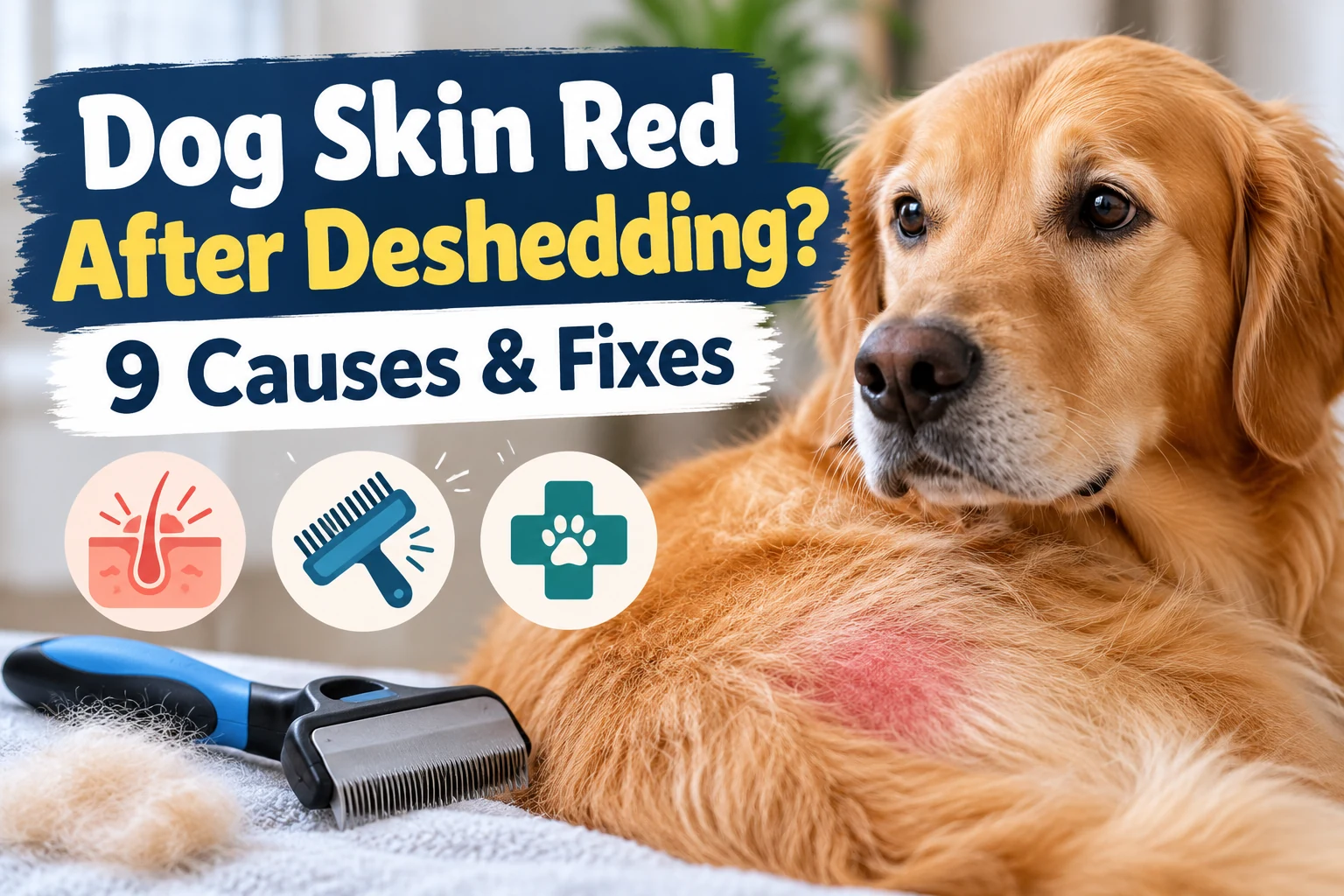
Quick Answer
If your dog’s skin is red after deshedding, stop brushing immediately. Excessive pressure, repeated strokes, an unsuitable tool, or existing skin sensitivity may be responsible. Check for cuts, swelling, painful areas, and persistent itching. Mild surface irritation may settle with rest, but worsening redness, open sores, discharge, or significant discomfort needs veterinary attention.
Noticing red skin beneath your dog’s coat after a deshedding session can be unsettling, especially when your dog seemed comfortable beforehand.
Deshedding should remove loose undercoat hair without injuring the skin. When redness appears, the important question is whether grooming caused irritation or exposed a problem that was already developing.
Here’s how to recognize the difference, protect your dog’s skin, and avoid repeating the problem.
What Should You Do Immediately if Your Dog’s Skin Turns Red After Deshedding?
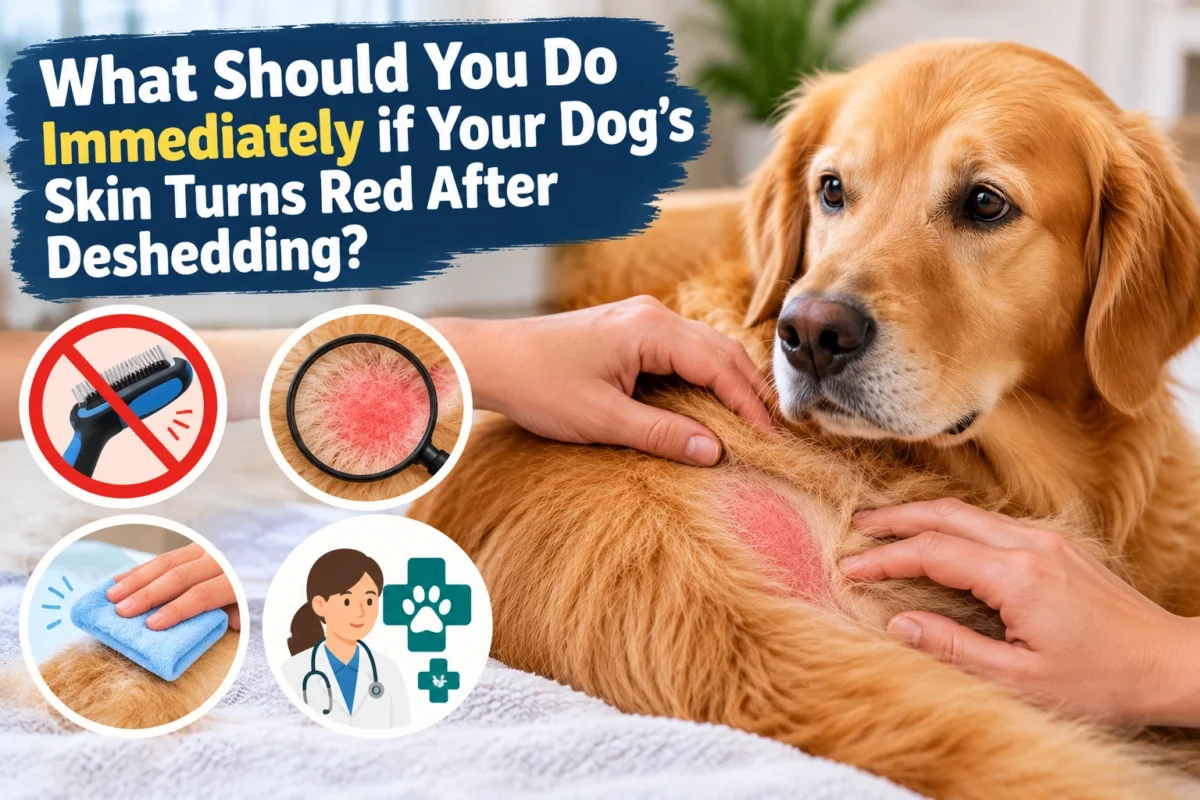
Stop using the deshedding tool and examine the affected area before doing anything else. Continuing to brush irritated skin can worsen discomfort and may damage the skin’s protective surface.
- End the grooming session. Put away the deshedding tool, even if loose hair remains.
- Separate the fur gently. Look for scratches, bumps, broken skin, moisture, swelling, or unusual discharge without rubbing the area.
- Check your dog’s behavior. Repeated licking, scratching, flinching, or pulling away may indicate discomfort.
- Keep the area clean and dry. If the skin is intact and simply looks irritated, avoid unnecessary bathing, scrubbing, or applying new products.
- Prevent further irritation. Discourage licking and scratching. A protective collar may help if your dog repeatedly traumatizes the area.
- Monitor the redness. Take a photograph so you can compare changes. Contact your veterinarian if symptoms persist, spread, or worsen.
Do not use rubbing alcohol, hydrogen peroxide, essential oils, human pain creams, or medicated ointments without veterinary direction.
If redness comes with bleeding, severe pain, rapidly increasing swelling, or a wet, oozing lesion, arrange prompt veterinary care rather than trying additional home treatments.
Why Is Your Dog’s Skin Red After Deshedding? 9 Possible Causes
Redness after deshedding can result from grooming technique, equipment, or an underlying skin condition. The timing and appearance provide clues, but they cannot confirm a diagnosis.
1. Too Much Pressure on the Skin
Pressing a deshedding tool firmly against the coat increases friction between its working edge and the skin. This can cause redness, particularly over bony areas or where the coat is thin.
If the redness follows the path of the brush strokes, excessive pressure is one possible explanation.
What to change: Once the skin has fully recovered, use light strokes in the direction of hair growth. The tool should move through the coat without being forced against the skin.
2. Repeatedly Brushing the Same Area
Even gentle strokes can become irritating when repeated excessively over a small patch of skin.
This commonly happens when an owner continues brushing because loose fur keeps collecting in the tool. However, removing more hair does not necessarily mean the skin can tolerate additional passes.
What to change: Work systematically across the coat, avoid repeatedly scraping one spot, and end the session before irritation develops.
3. Using the Wrong Deshedding Tool
Undercoat deshedding tools are not suitable for every coat type. A tool designed for dense double coats may be inappropriate for dogs without a substantial undercoat or those with especially sensitive skin.
Incorrect tooth length, tool size, or working-edge design can also make grooming uncomfortable.
What to change: Match the grooming tool to your dog’s coat type, length, and condition. Ask a veterinarian or experienced groomer before trying a different deshedding edge on irritated skin.
4. Deshedding Too Frequently
Repeated intensive grooming may expose the skin to more friction than it tolerates, especially when sessions are long or the same areas receive excessive attention.
The right grooming frequency depends on coat type, skin health, seasonal shedding, and the specific tool.
What to change: Follow the manufacturer’s instructions, adjust for your dog’s comfort, and avoid treating heavy shedding as a reason to brush aggressively.
5. Brushing Over Tangles or Mats
When deshedding teeth catch on tangled hair, the pulling force can transfer to the skin.
Dense mats may also conceal irritation, moisture, or sores that become visible only when the coat is separated.
What to change: Resolve tangles before deshedding. Never force a tool through tightly matted fur. Severe matting is better handled by a qualified groomer or veterinarian.
6. Naturally Sensitive or Previously Inflamed Skin
Some dogs have skin that is easily irritated by grooming friction. Areas with thin fur, recent scratching, or existing inflammation may be especially vulnerable.
Redness may appear even when the grooming technique would be comfortable for another dog.
What to change: Avoid deshedding inflamed areas, and discuss recurring sensitivity with your veterinarian before resuming intensive grooming.
7. Allergies or Contact Dermatitis
Allergies and contact dermatitis can cause redness, itching, bumps, and skin inflammation. Potential triggers include environmental allergens, grooming products, and substances that contact the skin.
If the dog was recently bathed or treated with a new grooming spray, the deshedding tool may not be the only possible trigger.
What to check: Look for itching before grooming, redness outside the brushed areas, and recent changes in shampoo or other skin products.
8. Fleas, Mites, or Another Skin Problem
Parasites and other skin disorders may produce redness that becomes easier to see after loose fur is removed.
Possible accompanying signs include frequent scratching, hair loss, crusting, scabs, or irritated areas that extend beyond the grooming site.
What to change: Do not assume deshedding caused every red patch discovered afterward. Veterinary examination may be necessary to identify parasites, infection, or another cause.
9. A Developing Hot Spot or Skin Infection
A hot spot is a rapidly developing area of inflamed, often moist skin. Dogs can worsen these lesions through repeated licking, chewing, and scratching.
Redness accompanied by wetness, discharge, a bad odor, or considerable pain is more concerning than mild color change alone.
What to do: Stop grooming and contact your veterinarian promptly. A suspected hot spot needs assessment and treatment of the underlying cause, not additional brushing.
How Can You Tell Mild Grooming Irritation From a More Serious Skin Problem?
Look at the skin’s surface, your dog’s comfort, and whether the affected area is improving or getting worse.
| What You Notice | What It May Suggest | Recommended Action |
|---|---|---|
| Light redness with intact skin and normal behavior | Possible mild friction irritation | Stop brushing and monitor closely |
| Redness with repeated licking or scratching | Ongoing irritation or itch | Prevent self-trauma and contact a vet if persistent |
| Scratches, scabs, or broken skin | Skin injury or an existing condition | Arrange veterinary advice |
| Wet, painful, spreading redness or discharge | Possible hot spot or infection | Seek prompt veterinary care |
These are practical warning signs, not a diagnostic test. A dog’s coat can hide the true extent of inflammation, so a small visible patch does not always reflect the entire problem.
How Can You Safely Soothe Red Skin After Deshedding?
The safest first step is usually to remove the source of friction and let the affected skin rest while monitoring for worsening symptoms.
If the skin is intact, leave it undisturbed rather than repeatedly checking it with a brush or comb. Avoid another bath unless a veterinarian recommends one or there is a specific substance that needs to be rinsed away.
If the skin feels uncomfortable, a clean cloth dampened with cool water can be held gently against intact skin for a brief period, provided your dog tolerates it. Do not rub, apply ice directly, or press on painful areas.
Keep your dog from repeatedly licking the spot. If licking continues, ask your veterinarian whether a protective collar is appropriate.
Important Safety Warning
Never apply human hydrocortisone creams, antibiotic ointments, numbing sprays, essential oils, or pain medications to your dog’s irritated skin without veterinary approval. Some ingredients may be inappropriate for dogs, particularly if licked or applied to damaged skin.
How Long Should Redness Last After Deshedding?
There is no reliable universal recovery time because the cause and severity of redness vary.
Minor friction-related redness may begin improving after brushing stops. However, redness caused by deeper injury, allergy, infection, or a hot spot may persist or worsen without treatment.
Watch for improvement rather than relying on a fixed number of hours. If the area is not clearly improving within a day, contact your veterinarian for advice. Seek care sooner if the dog seems painful, itchy, or distressed.
Even if the redness disappears, avoid another intensive deshedding session until the skin looks normal and your dog is comfortable.
How Can You Prevent Skin Redness During Future Deshedding Sessions?
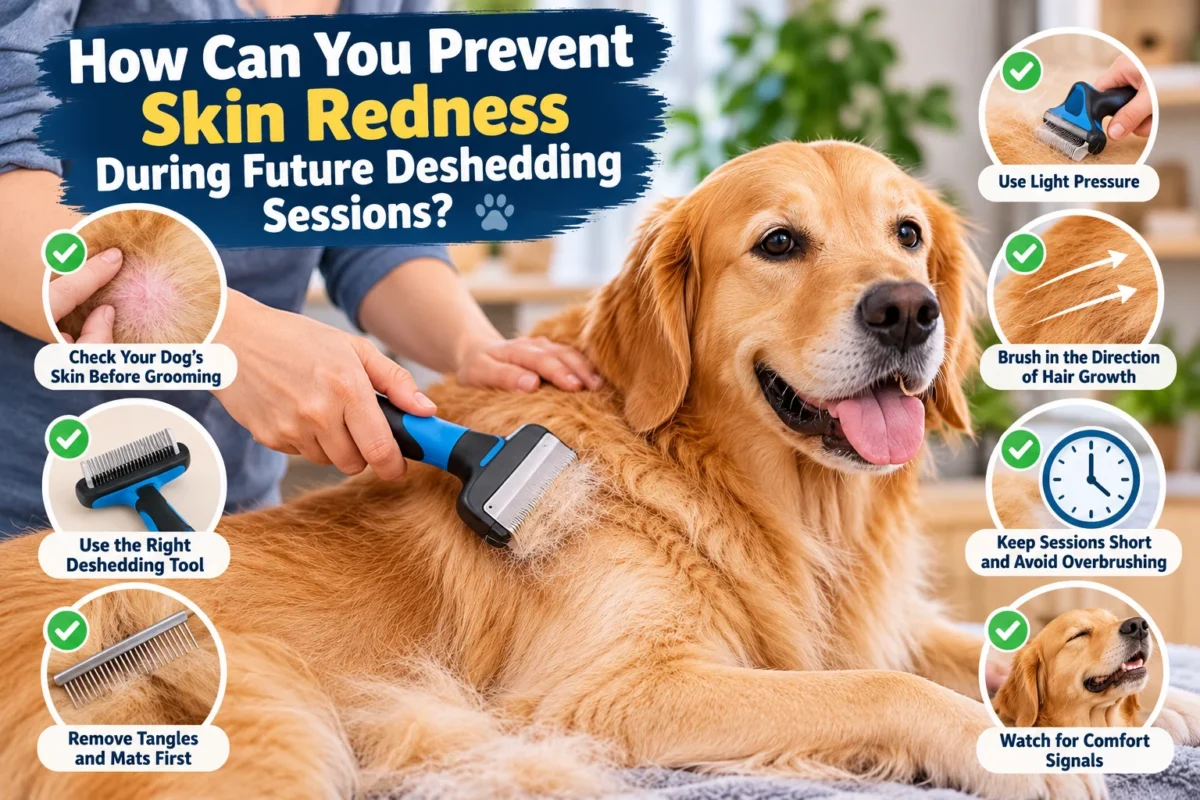
Prevention starts with choosing appropriate equipment and protecting the skin rather than trying to remove the maximum amount of hair.
- Inspect the skin first: Look for redness, sores, scabs, or sensitive spots before grooming.
- Use a coat-appropriate tool: Confirm that your dog has the coat type for which the deshedding tool was designed.
- Remove tangles first: Avoid pulling a deshedding edge through knots or mats.
- Use light pressure: Let the tool pass through the fur without pushing against the skin.
- Follow hair growth: Work in the coat’s natural direction.
- Limit repeat strokes: Move to another section instead of scraping the same area repeatedly.
- Protect sensitive areas: Use particular care around the belly, legs, groin, and bony areas.
- Watch body language: Stop if your dog flinches, moves away, growls, or shows discomfort.
- Inspect the tool: Avoid using equipment with bent, damaged, dirty, or rough teeth.
Manufacturer guidance from FURminator’s official grooming FAQ emphasizes using deshedding tools appropriately for the animal’s coat. Its guidance also warns against using an undercoat deshedding tool on dogs with particularly sensitive skin.
If your dog repeatedly becomes red despite gentler brushing, stop using that tool until a veterinarian has assessed the skin. A softer brush or different grooming approach may be preferable after the underlying problem is resolved.
When Should You Stop Deshedding and Contact a Veterinarian?
Contact a veterinarian promptly if your dog’s redness is spreading, worsening, or accompanied by signs of injury or infection.
Warning signs include:
- Bleeding, cuts, or raw skin
- Persistent scratching, chewing, or licking
- Wet or oozing patches
- Pus, crusting, or unusual odor
- Swelling or significant tenderness
- Rapidly developing hair loss
- Repeated redness after otherwise gentle grooming
- Changes in normal activity, appetite, or behavior
Seek immediate emergency veterinary care if redness is accompanied by facial swelling, breathing difficulty, collapse, or another sign of a severe allergic reaction.
The veterinary guidance from VCA Animal Hospitals on canine hot spots explains why rapidly developing, painful skin lesions need appropriate care and why continued licking can make them worse.
Veterinary examination is particularly important when the problem occurs repeatedly because simply switching brushes will not resolve an underlying allergy, parasite infestation, or infection.
Frequently Asked Questions
Can a deshedding brush cause brush burn on a dog?
Yes. Excessive friction or pressure can cause grooming-related skin irritation sometimes described informally as brush burn. Stop brushing if the skin becomes red or painful.
Should I bathe my dog after noticing redness?
Not automatically. Additional bathing or shampoo may irritate already sensitive skin. Unless a product needs to be rinsed off or your veterinarian advises otherwise, avoid unnecessary bathing.
Can I use aloe vera on my dog’s irritated skin?
Do not apply aloe products without veterinary advice. Formulations differ, and dogs may lick topical products. Your veterinarian can recommend an appropriate skin treatment if needed.
Can dog skin turn red without an obvious scratch?
Yes. Friction, allergic inflammation, and other skin conditions may cause visible redness even when the surface remains intact and no cuts are present.
Is it safe to deshed a dog with sensitive skin?
Not necessarily. Some undercoat tools are unsuitable for particularly sensitive skin. Ask your veterinarian about an appropriate grooming method, especially if redness has occurred before.
When can I start deshedding my dog again?
Wait until the skin has completely returned to normal and your dog is comfortable. If redness was painful, persistent, recurrent, or associated with sores, seek veterinary clearance before resuming.
Final Thoughts
Red skin after deshedding is a reason to stop grooming and investigate, not to continue removing loose hair.
Pressure, repeated strokes, unsuitable tools, and existing skin problems can all contribute to redness. Allow the skin to recover, monitor for worsening symptoms, and seek veterinary care when irritation is persistent, painful, or accompanied by sores.
Once your dog’s skin is healthy, gentle techniques and a coat-appropriate grooming routine can help keep future deshedding sessions more comfortable.


