Quick Answer
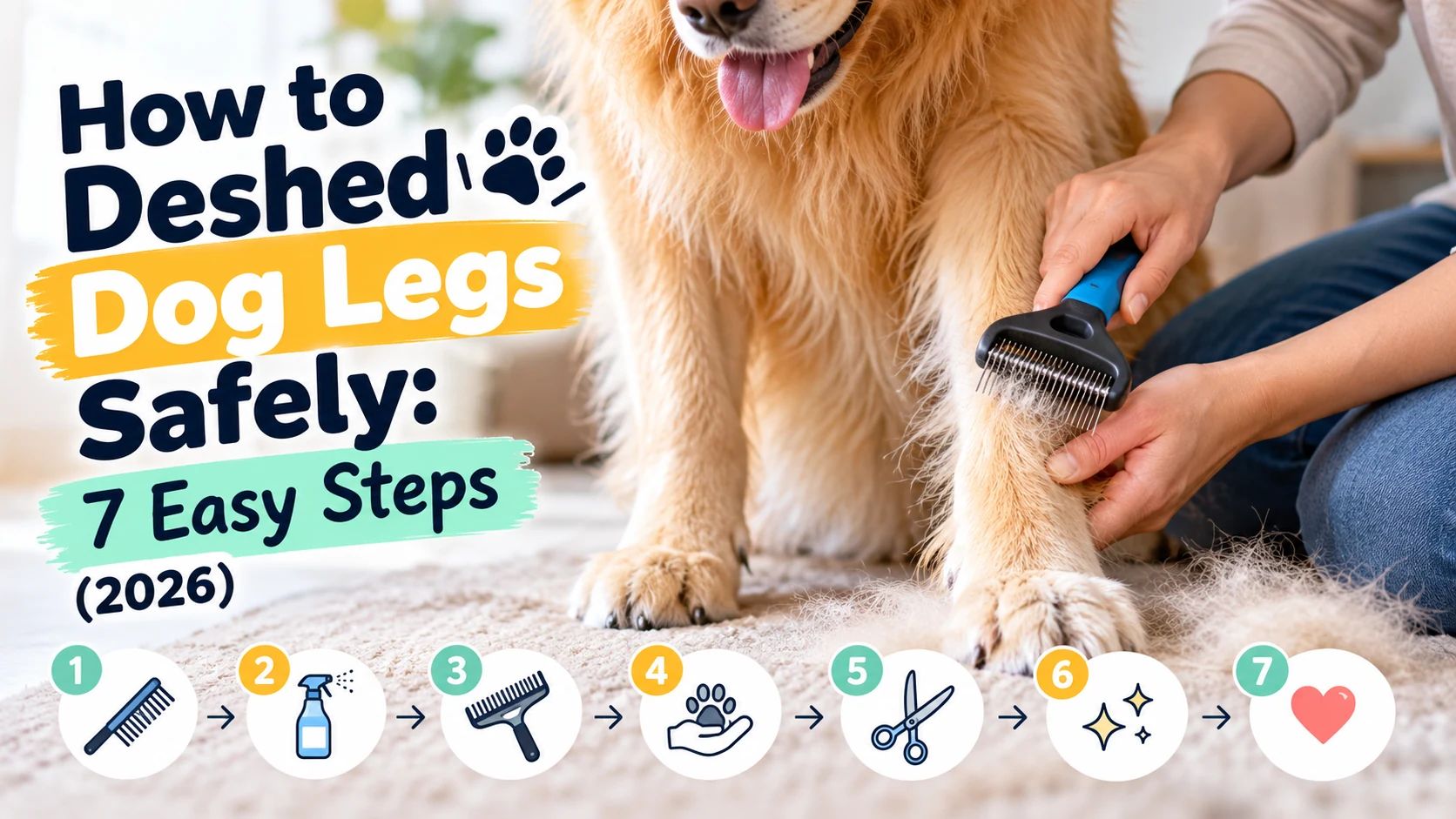
To deshed dog legs safely, choose a brush suited to your dog’s coat, check for tangles and irritated skin, and gently remove loose fur in small sections. Brush with the direction of hair growth, using extra care behind the legs, around joints, and near the paws. Follow a complete dog deshedding guide when grooming the rest of the body.
7 Quick Steps to Deshed Dog Legs
- Prepare your dog: Choose a quiet area with secure footing.
- Inspect the legs: Check for irritation, mats, sores, and sensitive joints.
- Choose the brush: Match your grooming tool to the coat’s length and thickness.
- Remove tangles: Gently separate manageable knots before deshedding.
- Brush in sections: Use short, light strokes in the direction of hair growth.
- Protect sensitive areas: Switch to a softer brush around thin skin and joints.
- Finish and reward: Check the coat and praise your dog for cooperating.
Important Safety Tip
- Never force the brush: Stop if your dog pulls away repeatedly, shows pain, or develops redness.
Dog legs can be surprisingly difficult to groom. Loose fur hides behind the thighs, around the hocks, and beneath longer feathered hair.
I recommend using a gentler approach on the legs than on the back. This guide explains which tools to choose, how to handle sensitive areas, and when to stop brushing.
What Does Deshedding a Dog’s Legs Mean?
Deshedding a dog’s legs means removing loose, naturally shedding hair from the front and back legs without damaging healthy fur or irritating the skin.
For double-coated dogs, this may include removing detached undercoat trapped beneath longer outer hairs. Short-coated dogs usually need gentler surface brushing.
Leg grooming is different from brushing broad areas of the body because the legs have smaller contours and several sensitive regions.
- Front legs: Often have shorter fur, although some breeds develop longer feathering.
- Back legs: May hold substantial loose undercoat around the thighs.
- Feathering: Longer hair behind the legs can trap dead fur and form tangles.
- Armpits: Thin skin and friction make this area particularly sensitive.
- Hocks and joints: Require careful handling because brushes can catch on curved surfaces.
- Paws: Need separate inspection rather than aggressive brushing.
Regular grooming also creates an opportunity to notice lumps, parasites, or skin changes. The VCA Animal Hospitals grooming guidance explains why coat inspection is an important part of routine care.
Why Do Dog Legs Need Special Deshedding Care?
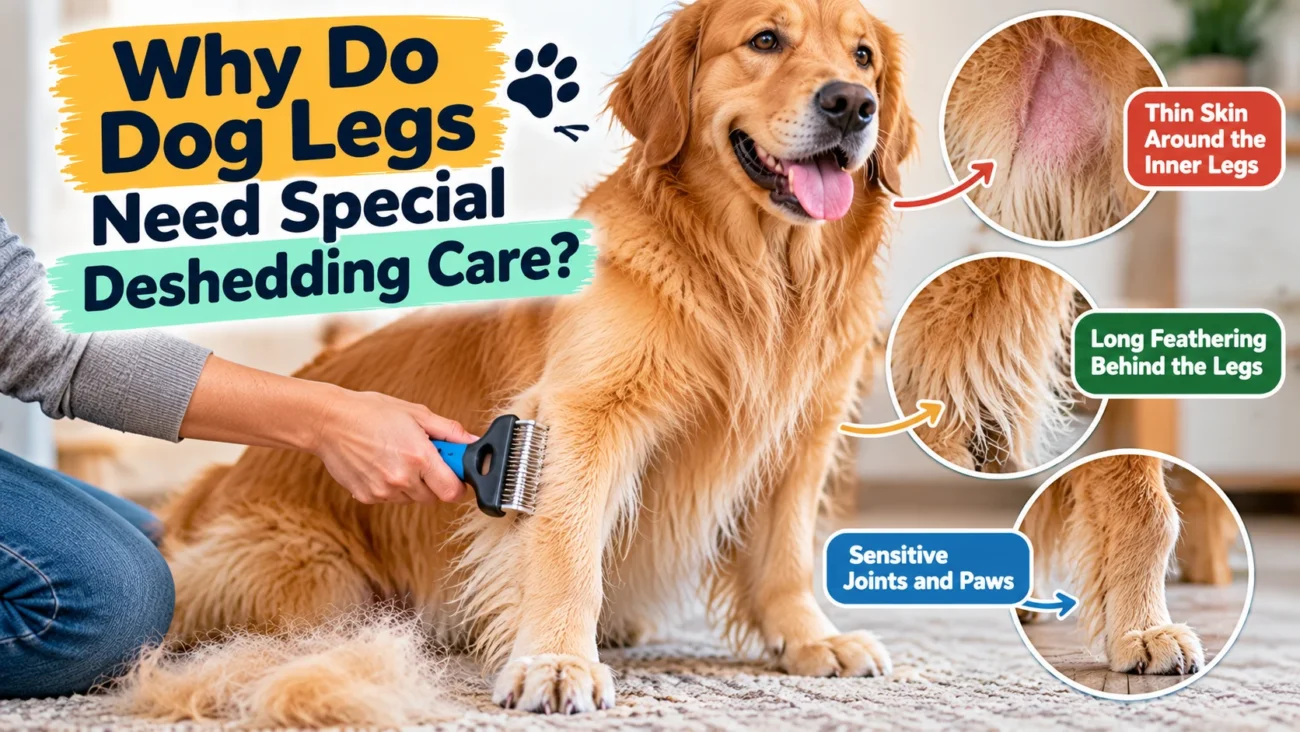
Dog legs need careful deshedding because the skin can be sensitive, hair length varies, and some areas are difficult to reach.
A brush that works comfortably across the back may be too harsh around the ankles or inner thighs. Tool size and pressure matter.
Thin Skin Around the Inner Legs
The inner thighs and armpits have less protection from dense fur in many dogs. Repeated brushing can cause irritation.
Use a soft grooming mitt or a suitable comb when working near these areas. Avoid dragging a sharp or blade-style deshedder across exposed skin.
Long Feathering Behind the Legs
Golden Retrievers, Border Collies, and some spaniels develop longer feathering along their legs. This hair can collect tangles and loose undercoat.
Separate the hair into manageable sections before brushing. Removing tangles first reduces pulling.
Sensitive Joints and Paws
Dogs may dislike having their legs lifted or extended. Older dogs with joint discomfort may find certain positions painful.
Keep the legs in a comfortable, natural position. Never twist a paw or force a dog to stand on three legs.
What Is the Best Brush for Deshedding Dog Legs?
The best brush depends on your dog’s coat type and the area being groomed. A soft slicker brush works well for many feathered coats, while a rubber grooming mitt suits short, smooth hair.
For dense double coats, an appropriately sized undercoat rake may help remove loose fur from well-padded areas. Avoid using a rake on thinly coated sections.
Dog Leg Deshedding Tool Comparison
| Grooming Tool | Best Coat Type | Suitable Leg Area | Important Precaution |
|---|---|---|---|
| Soft slicker brush | Medium, long, curly, or feathered | Outer legs and feathering | Avoid hard pressure or repeated scraping. |
| Undercoat rake | Thick double coats | Furry thighs and dense feathering | Avoid thin skin, mats, and bony areas. |
| Rubber grooming mitt | Short, smooth coats | Front and back legs | Use gentle contact without excessive rubbing. |
| Wide-tooth metal comb | Long or feathered coats | Behind legs and feathering | Do not pull through resistant knots. |
| Soft bristle brush | Short or sensitive coats | Lower legs and finishing | Does not remove deeply trapped undercoat. |
The American Kennel Club’s brush selection guide explains how different brush designs suit particular coat types.
My practical recommendation is to keep two tools available: one for thicker fur and one for sensitive sections. Switching tools is often safer than increasing pressure.
How to Deshed Dog Legs Step by Step
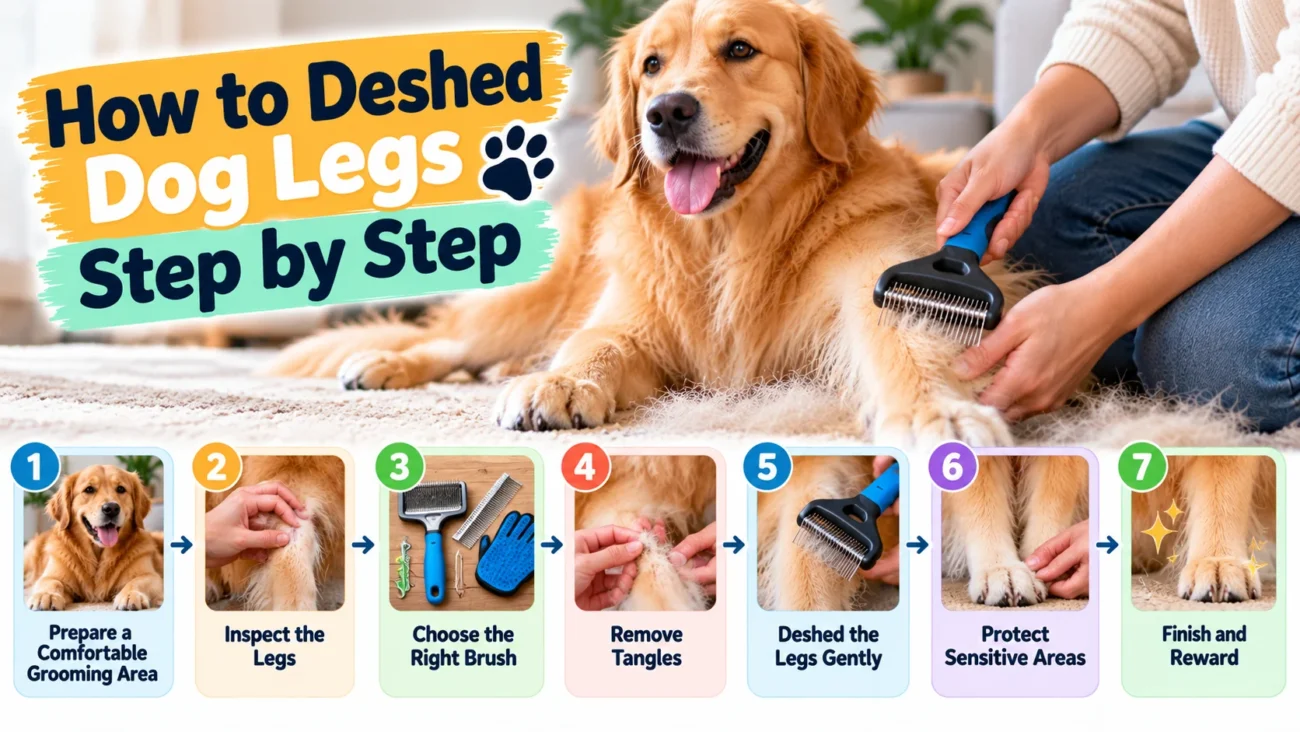
To deshed dog legs, prepare a comfortable grooming area, check the skin, remove tangles, and brush gently through small sections. Pay special attention to feathering and sensitive joints.
The following seven-step method works as a starting point for dogs with healthy skin and normal shedding.
Step 1: Prepare a Comfortable Grooming Area
Choose a quiet location with good lighting and a nonslip floor. Your dog should feel secure while standing, sitting, or lying down.
Keep the grooming session relaxed. Having everything nearby prevents unnecessary interruptions.
- A brush suited to your dog’s coat
- A wide-tooth comb for longer fur
- A soft grooming mitt or bristle brush
- A clean towel
- Small treats for positive reinforcement
Start by gently touching your dog’s legs without using a brush. Reward calm behavior before moving to the next step.
Step 2: Inspect Each Leg Before Brushing
Run your fingers gently through the fur and check the skin underneath. Look for mats, irritated areas, swelling, or painful spots.
Inspect all four legs rather than assuming each has the same coat condition.
- Check behind the front legs for friction-related tangles.
- Inspect the inner thighs for redness or sensitive skin.
- Look for burrs and debris in longer feathering.
- Examine the lower legs for scratches or sore spots.
- Check the paws and between the toes separately.
Stop if you discover a painful lump, swelling, broken skin, or a tightly attached mat. A veterinarian or professional groomer can help determine the safest next step.
Step 3: Choose the Right Brush for Each Area
Use a small, soft slicker brush for manageable feathering or longer fur. Choose a rubber mitt for short-coated legs.
If your dog has a dense double coat, use an undercoat rake only where sufficient fur protects the skin. Select rake teeth suited to the coat length.
For a broader explanation of tool handling, see how to use a deshedding tool on a dog.
Step 4: Remove Tangles Before Deshedding
Gently separate minor tangles with your fingers or a suitable comb. Hold longer hair near its base to reduce pulling on the skin.
Work from the free ends of feathered hair toward the roots, using small sections. Never drag a rake through a knot.
- Loose tangles: Separate carefully with fingers or a wide-tooth comb.
- Small, manageable knots: Work slowly with an appropriate detangling tool.
- Tight mats: Contact a professional groomer rather than forcing the brush.
- Mats close to skin: Avoid household scissors because they can cut folded skin.
Do not continue if detangling causes pain. The goal is comfortable coat maintenance, not complete mat removal at any cost.
Step 5: Deshed the Front and Back Legs Gently
Brush with the natural direction of hair growth, using short and controlled strokes. Work on one small section before moving to another.
Different leg areas need slightly different handling.
Deshedding the Front Legs
Begin around the upper outer leg and work toward the lower leg. Use gentle strokes over flatter, well-covered areas.
Switch to a softer tool where the coat becomes thinner. Do not scrape over the wrist joint or bony contours.
Deshedding the Back Legs
Begin with the outer thigh, where double-coated dogs often carry thicker fur. Part longer hair gently to expose loose undercoat.
Continue toward the feathering behind the leg. Keep the brush away from exposed skin and avoid pulling hair around the hock.
- Use short strokes instead of long dragging motions.
- Keep the brush nearly parallel to the skin.
- Remove collected fur from the tool regularly.
- Change tools when moving into delicate areas.
- Stop before the skin becomes irritated.
Never assume a large pile of removed fur means better grooming. Removing already-loose hair comfortably matters more than the volume collected.
Step 6: Protect the Inner Legs and Paws
Use a soft brush or grooming mitt on the inner legs when the skin is healthy. Avoid blade-style deshedding tools in the armpits, groin, or around exposed joints.
Allow your dog to stand naturally rather than pulling its legs outward. Keep each movement within a comfortable range.
Check the paws for debris, irritation, and tangled hair. The AKC’s home grooming advice also recommends regular paw-pad inspection.
Hair trapped tightly between the toes may require professional attention. Never insert sharp tools between paw pads to remove mats.
Step 7: Finish With a Gentle Coat Check
Use a suitable comb or soft brush to check for remaining loose hair. Stop when the coat moves freely and your dog remains comfortable.
Examine the skin for redness or sensitivity before ending the session.
- Check whether feathering separates without pulling.
- Remove loose hairs collected on the coat surface.
- Look for redness where the brush contacted the skin.
- Clean the grooming tools after use.
- Reward your dog with praise or a favorite treat.
A comfortable grooming experience makes future sessions easier. It also helps your dog associate leg handling with positive attention.
How Do You Deshed Dog Legs With Different Coat Types?
Different coat types require different deshedding methods. Short-haired dogs usually need surface brushing, while long-haired and double-coated dogs may need careful section-by-section grooming.
Short-Haired Dogs
Dogs such as Beagles and Boxers generally benefit from a rubber grooming mitt or soft bristle brush. Their short leg hair usually does not require deep undercoat raking.
Use gentle strokes to lift loose surface hair. Avoid repeated rubbing against the same patch of skin.
Double-Coated Dogs
German Shepherds, Huskies, and Golden Retrievers may develop substantial loose undercoat around the thighs. The quantity varies between dogs and coat regions.
Begin with a suitable slicker brush, then use an appropriate rake on dense, well-covered sections if needed. Read more about deshedding a double-coated dog safely.
Long-Haired and Feathered Dogs
Dogs with long feathering require careful detangling before loose-hair removal. Behind the legs is a common place for knots to develop.
Use a pin brush or suitable slicker brush, followed by a comb. Avoid pulling through feathering in one long stroke.
Curly-Coated Dogs
Poodles and many curly-coated mixes often need regular detangling rather than intensive undercoat removal. Loose hair may remain trapped within curls.
Use a suitable slicker brush and metal comb to maintain the coat. Professional grooming may be necessary for compacted or tightly matted hair.
How Often Should You Deshed Your Dog’s Legs?
Most dogs benefit from regular leg brushing, but the ideal frequency depends on coat type and shedding activity. Intensive deshedding should be less frequent than gentle routine brushing.
As of 2026, there is no universal schedule for deshedding every dog’s legs.
| Coat Type | Starting Brushing Schedule | Targeted Deshedding |
|---|---|---|
| Short, smooth coat | 1–2 times weekly | Usually gentle mitt brushing only |
| Medium double coat | 2–3 times weekly | When loose undercoat builds up |
| Long, feathered coat | Several times weekly or daily | Only when appropriate for the coat |
| Heavy seasonal shedding | Gentle daily brushing if tolerated | Short sessions based on skin response |
These schedules are practical starting points, not strict veterinary rules. Reduce brushing intensity if the skin becomes sensitive.
For more guidance, see how often to deshed a dog throughout the year.
What Mistakes Should You Avoid When Deshedding Dog Legs?
The most common mistakes involve excessive pressure, unsuitable tools, and brushing sensitive skin too repeatedly.
Preventing these problems is easier than treating irritation afterward.
- Using too much pressure: Pressing a slicker or rake against the skin can cause redness and discomfort.
- Brushing over tight mats: Mats pull on the skin and can make grooming painful.
- Ignoring the inner legs: These areas need gentle inspection, not aggressive brushing.
- Using oversized tools: Large brush heads are harder to control around narrow legs.
- Repeatedly brushing one spot: Excessive strokes may irritate skin even when the brush feels soft.
- Forcing awkward positions: Extending or twisting the legs may cause discomfort or injury.
- Using sharp scissors around mats: Skin can fold into tightly matted fur and become injured.
- Trying to remove every loose hair: Normal shedding continues even after a successful session.
If your dog appears uncomfortable, finish the session and reassess the tool and technique. Continuing through obvious resistance can create lasting grooming anxiety.
What Should You Do If Your Dog Hates Having Its Legs Brushed?
Start with gentle handling and positive reinforcement rather than forcing a complete grooming session. Some dogs dislike brushes because of unfamiliar sensations, previous discomfort, or painful joints.
Use a gradual approach to build tolerance.
- Let your dog sniff the brush without using it.
- Reward calm behavior with a small treat.
- Touch one leg gently for a moment.
- Introduce one light brush stroke on a comfortable area.
- Reward the dog and end the practice session.
- Increase brushing gradually over future sessions.
A grooming mitt may be easier for some dogs to accept than a metal-pin brush. However, it should not become a reason to ignore signs of discomfort.
The AKC’s guide to dogs that dislike brushing recommends gradual introduction, rewards, and short positive sessions.
If leg handling suddenly becomes painful, contact your veterinarian. A change in tolerance may signal discomfort that is unrelated to grooming.
When Is Leg Shedding a Veterinary Concern?
Normal shedding usually involves loose hair coming from an otherwise healthy-looking coat. Patchy hair loss, inflamed skin, or persistent licking deserves closer attention.
Do not assume every hair-loss problem can be solved by deshedding.
- Bald patches: Noticeable areas with missing hair rather than ordinary loose shedding.
- Red or inflamed skin: Persistent irritation, swelling, or sores.
- Constant licking: Repeated attention to the same leg or paw.
- Crusting or unusual odor: Possible signs of an underlying skin problem.
- Pain when touched: Pulling away, yelping, or difficulty standing comfortably.
- Sudden excessive shedding: A marked change from your dog’s usual pattern, especially with other symptoms.
Stop deshedding affected areas and consult a veterinarian when these signs appear. Skin disease, parasites, allergies, and other health conditions may require treatment.
Recommended Grooming Tools for Dog Legs
If you’re choosing equipment for leg grooming, prioritize brush size, coat compatibility, and gentle handling. The following tools suit different grooming needs rather than every dog equally.
Affiliate disclosure: As an Amazon Associate, I may earn from qualifying purchases at no additional cost to you. The ratings below are editorial suitability assessments, not verified customer review scores.
🏆 Best for feathered coats
Hertzko Self-Cleaning Slicker Brush
★★★★☆ 4.5/5
This slicker brush uses fine metal bristles and a retractable cleaning mechanism. I recommend considering it for longer feathering and manageable loose fur, while using a lighter tool near thin skin and joints.
🐕 Best for short coats
KONG ZoomGroom Dog Brush
★★★★☆ 4.5/5
Its flexible rubber teeth help collect loose surface hair during gentle grooming. I favor this style for smooth-coated legs because it avoids the rigid metal teeth found on some deshedding tools.
🪮 Best for thick undercoats
KONG Double-Sided Rake & Deshedding Tool
★★★★☆ 4/5
This tool combines detangling and loose-undercoat removal with rounded metal tips. I would reserve it for densely coated thighs and well-padded feathering, avoiding exposed joints and delicate inner legs.
Frequently Asked Questions About Deshedding Dog Legs
Can You Use a Deshedding Tool on a Dog’s Legs?
Yes, but only when the tool suits the coat and the area has enough hair to protect the skin. Use gentle strokes on dense outer thighs or feathering. Avoid aggressive deshedding around joints, paws, armpits, and thinly covered skin. Switch to a softer brush when necessary.
Why Does My Dog Shed So Much Hair on Its Back Legs?
Double-coated dogs often have dense hair around their thighs and hindquarters. During seasonal shedding, detached undercoat may collect in these areas. Regular, gentle brushing can help remove loose hair. However, bald patches, redness, or unusually sudden hair loss should be evaluated by a veterinarian.
Can You Deshed a Dog’s Legs Every Day?
Gentle daily brushing may be appropriate for some dogs, especially during heavy seasonal shedding or when maintaining long feathering. However, daily aggressive deshedding with a rake or blade can irritate the skin. Adjust the routine according to coat condition, tool instructions, and your dog’s comfort.
Should You Brush Dog Legs Before or After a Bath?
Gently brush and remove manageable tangles before bathing. After washing, rinse thoroughly and dry the coat appropriately before using most dry-coat deshedding tools. A final light brushing can remove hair loosened during washing. Avoid bathing over tight, painful mats without professional advice.
How Do You Deshed a Dog’s Legs Without Hurting It?
Use a brush suited to the coat, maintain light pressure, and follow the direction of hair growth. Work in small sections and keep the legs in natural positions. Stop if your dog shows pain, repeated avoidance, or skin irritation. Never force tools through mats or brush against exposed skin.
Final Thoughts: Keep Dog Leg Deshedding Gentle
Learning how to deshed dog legs safely starts with choosing the right tool and understanding sensitive areas. The best results come from gentle, consistent grooming rather than aggressive hair removal.
Focus on removing loose fur, preventing tangles, and protecting healthy skin. Give your dog breaks whenever needed.
Start with one comfortable leg, use a few light strokes, and reward your dog. A short, positive grooming session is a better foundation than trying to finish all four legs at once.