
Quick Answer
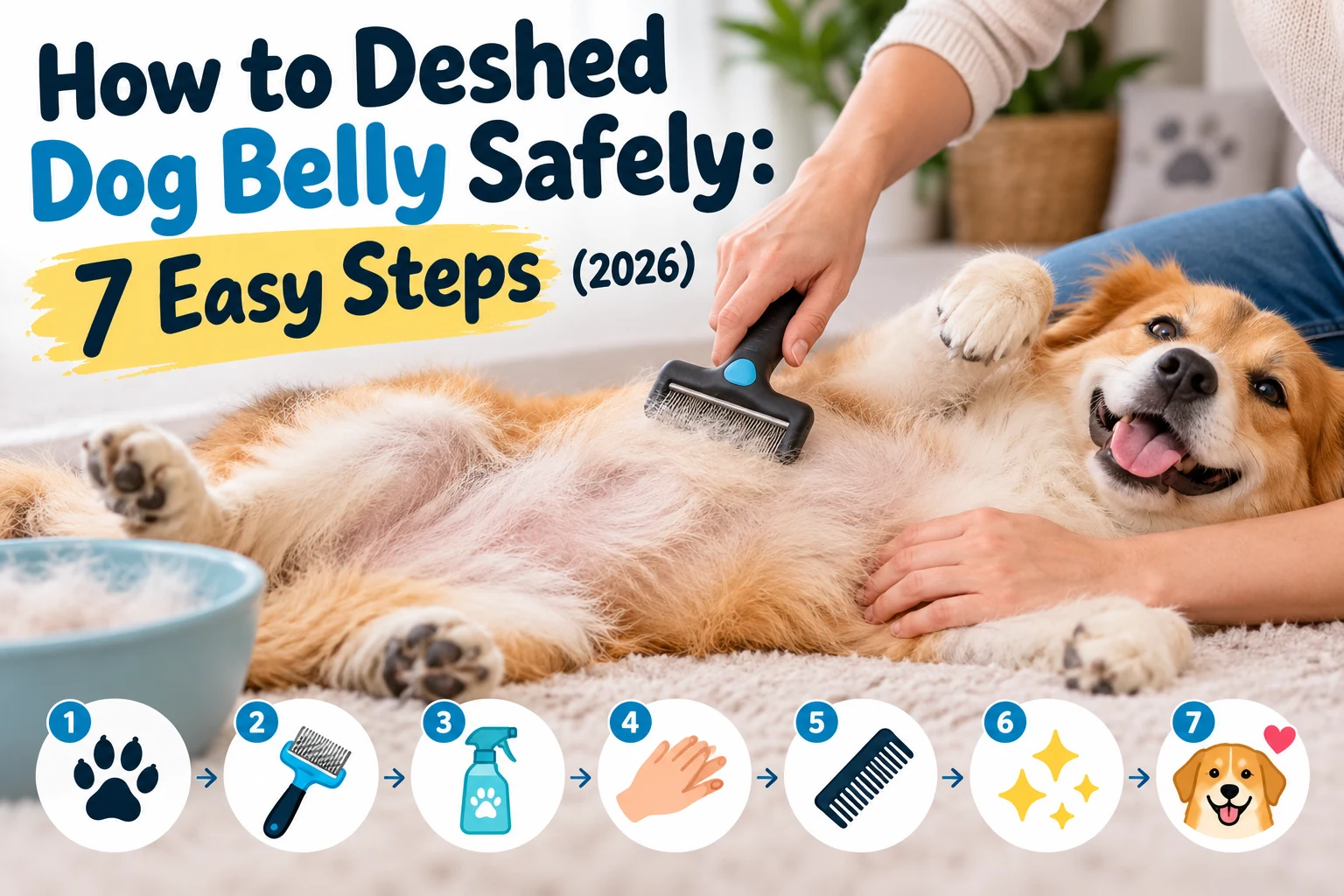
To deshed your dog’s belly safely, use a soft grooming brush or rubber mitt to remove loose fur with short, gentle strokes. Let your dog stand comfortably or rest on their side, follow the direction of hair growth, and avoid nipples, genitals, irritated skin, and other sensitive spots. Never scrape the abdomen with a sharp deshedding blade. For whole-body grooming, follow this dog deshedding guide.
7 Quick Steps to Deshed Your Dog’s Belly
- Settle your dog: Choose a quiet space with secure, non-slip footing.
- Inspect the belly: Look for redness, sores, tangles, nipples, and sensitive skin.
- Select a soft tool: Choose a grooming mitt, soft-bristle brush, or suitable gentle comb.
- Position comfortably: Let your dog stand or voluntarily rest on their side.
- Brush lightly: Use short strokes following the natural direction of hair growth.
- Check frequently: Stop if your dog flinches, struggles, or develops redness.
- Finish positively: Remove loose hair gently and reward calm behavior.
Important Safety Reminder
- Gentle brushing comes first: Belly skin may have much less protective fur than the back, so intensive undercoat-removal tools are often unnecessary.
Loose hair around a dog’s belly can be frustrating, especially during seasonal shedding. However, the belly needs a gentler approach than thickly coated areas such as the back.
My preferred approach is to choose the softest tool that removes loose hair comfortably. This guide explains exactly how to groom the belly, avoid sensitive spots, and recognize when brushing should stop.
What Does Deshedding a Dog’s Belly Mean?
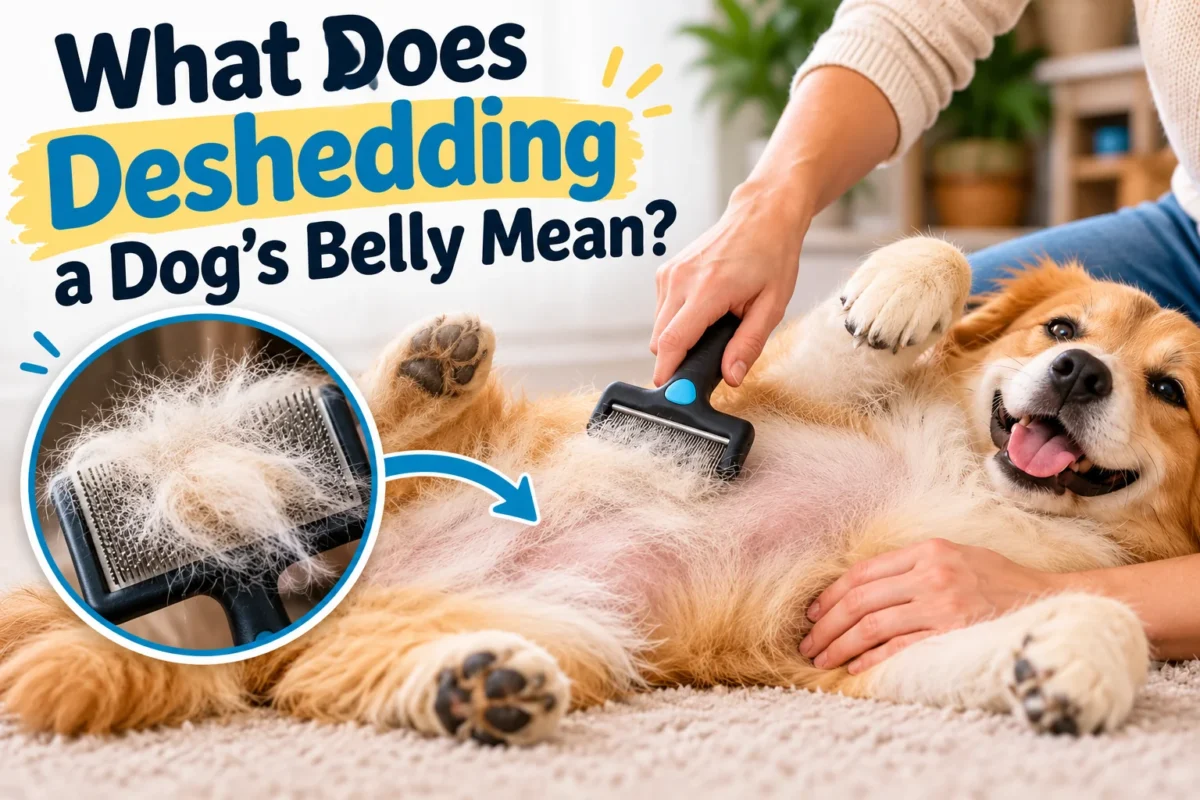
Deshedding a dog’s belly means gently removing loose or dead hair from the underside of the body. Depending on the breed, this may involve soft surface hair, longer belly furnishings, or a small amount of loose undercoat.
The purpose isn’t to remove every hair. Healthy fur protects the skin, and removing attached hair can cause discomfort.
Why Is Belly Grooming Different From Back Grooming?
A dog’s underside often has shorter, thinner, or less densely distributed fur. Areas around the nipples, groin, and armpits may be particularly sensitive.
For that reason, I recommend treating the belly as a separate grooming area rather than continuing with the same tool and pressure used on the back.
- Thinner hair coverage: Brushes may contact exposed skin more easily.
- Sensitive anatomy: Nipples and genital areas require careful avoidance.
- Skin folds: Some dogs have folds that can trap moisture or debris.
- Friction areas: Tangling may occur where the legs meet the chest.
- Different hair growth: Fur can change direction across the underside.
The RSPCA’s dog grooming guidance recommends checking the belly and using soft brushes with reduced pressure on sensitive areas.
How to Deshed Dog Belly in 7 Safe Steps
The safest method combines calm handling, gentle equipment, and frequent skin checks. These seven steps work as a starting routine for dogs that tolerate normal grooming.
Step 1: Prepare a Calm Grooming Area
Choose a quiet room with enough space for your dog to turn and reposition. Put a non-slip mat or towel on the floor to prevent sliding.
I prefer floor-level grooming for sensitive areas because it avoids unnecessary lifting. A stable surface helps the dog relax.
- Keep the grooming brush within reach.
- Prepare small, dog-safe treats.
- Remove distractions from the area.
- Have a soft towel ready.
- Allow your dog to move away if uncomfortable.
Step 2: Check the Belly Before Brushing
Before touching the coat with a tool, inspect the skin. Look carefully without pulling or stretching sensitive areas.
Brushing over an unnoticed sore can make the problem worse. This quick check matters more than removing extra fur.
- Redness: May indicate irritation or inflammation.
- Small bumps: Could be normal structures or a skin concern requiring identification.
- Scabs or wounds: Avoid brushing directly over them.
- Mats: Do not force a deshedding tool through tight knots.
- Unusual sensitivity: Stop if touch causes pain or sudden resistance.
If you find unexplained sores, painful bumps, persistent redness, or hair loss, contact your veterinarian before continuing.
Step 3: Choose a Gentle Belly Grooming Tool
A soft grooming mitt is often a practical starting point. It offers better pressure control than a rigid metal deshedding edge.
For longer belly hair, a soft pin brush or carefully selected comb may work better. Match the tool to the coat rather than the amount of shedding.
- Short smooth coat: Soft rubber grooming mitt.
- Fine belly hair: Soft-bristle brush.
- Long belly furnishings: Gentle pin brush and rounded-tip comb.
- Dense feathering: Appropriate soft slicker used without scraping.
- Exposed or sparse skin: Skip deshedding tools where there is little hair to brush.
The American Kennel Club’s brush guide explains how brush choice depends on coat length and texture.
Step 4: Position Your Dog Without Forcing Them
Many dogs tolerate belly grooming while standing naturally. Others prefer resting on their side with their body supported.
Avoid forcing your dog onto their back. A relaxed position is safer than trying to expose the entire belly at once.
- Standing position: Gently access the reachable sides and lower chest.
- Side-lying position: Brush the exposed area while your dog remains comfortable.
- Small dogs: Work at floor level unless you have a secure grooming setup.
- Older dogs: Avoid positions that strain painful joints or the abdomen.
If your dog repeatedly changes position, work with smaller areas. Never restrain a struggling dog simply to finish brushing.
Step 5: Brush With Short, Light Strokes
Start on the lower chest or a comfortably accessible, fur-covered area. Move gradually toward the belly while following the hair’s growth direction.
Use only enough pressure to contact the fur. The brush should glide without dragging or scratching.
- Begin with one small section of loose fur.
- Move the brush a short distance along the coat.
- Lift the brush before beginning another pass.
- Remove collected hair from the tool.
- Check the skin before moving to the next section.
Never drag a stiff brush across the nipples or groin. If the hair is sparse, there may be nothing to deshed.
For general undercoat work on suitable body areas, see how to use a deshedding tool safely.
Step 6: Watch for Signs of Discomfort
Watch your dog’s body language throughout the process. A quiet dog isn’t necessarily comfortable, especially if they appear tense or frozen.
Stop when the dog shows discomfort. Returning another day is better than creating a negative grooming experience.
- Flinching or pulling away from the brush.
- Repeated turning toward the grooming area.
- Growling, snapping, or attempting to escape.
- Sudden tension or persistent avoidance.
- Visible redness or newly irritated skin.
The AKC’s guidance on dogs that dislike brushing discusses why painful or frightening grooming experiences can cause resistance.
Step 7: Finish With a Skin Check and Reward
Once you’ve removed the easily released hair, stop brushing. You don’t need to collect a large pile of fur to complete a successful session.
Check the belly for irritation and gently remove any remaining loose hairs with your hand or a soft cloth. Reward your dog for cooperating.
- Inspect the brushed areas.
- Remove loose fur from the grooming tool.
- Check that no hair is trapped in skin folds.
- Offer praise or a suitable treat.
- Clean and store the brush.
My practical rule: Finish while your dog is still comfortable. This helps make the next session easier.
What Is the Best Brush for Deshedding a Dog’s Belly?

The best brush is the gentlest one that suits your dog’s coat. A rubber grooming mitt or soft-bristle brush is often preferable for thinly covered belly areas.
Metal tools can be helpful elsewhere on dense coats, but they demand additional caution near exposed skin.
| Grooming Tool | Best Use | Belly Precaution |
|---|---|---|
| Rubber grooming mitt | Loose hair on short coats | Use gentle pressure; avoid rubbing irritated skin |
| Soft-bristle brush | Fine hair and finishing | Avoid friction from repeated strokes |
| Pin brush | Long, untangled belly hair | Choose smooth tips and avoid pressing into skin |
| Soft slicker brush | Dense, longer furnishings | Use very lightly on adequately coated areas |
| Rounded-tip metal comb | Checking longer fur for tangles | Never pull through tight mats |
| Bladed deshedding tool | Compatible dense coats on suitable body areas | Generally avoid on thinly covered belly skin |
These differences explain why one brush shouldn’t automatically be used everywhere. The tool that removes loose fur from a Husky’s back may be unsuitable for its thinner underside.
How Do You Deshed Different Types of Dog Bellies?
Belly grooming changes with coat density, hair length, and skin exposure. A dog with thick feathering needs a different routine from one with a nearly hairless abdomen.
Short-Haired Dogs
Dogs such as Beagles and Boxers often have short belly hair. A soft rubber mitt can collect loose surface fur without needing a sharp metal edge.
- Use light, short strokes.
- Avoid rubbing the same area repeatedly.
- Skip bare or sparsely covered patches.
- Stop when loose hair no longer releases easily.
Double-Coated Dogs
Golden Retrievers, German Shepherds, and Huskies can have dense coats, although the belly may be less thickly covered. Inspect each area before choosing a tool.
For longer belly furnishings, gently separate the hair and work through small sections. Use a soft brush or comb rather than assuming the belly needs intensive raking.
- Remove loose hair without pulling attached fur.
- Check armpits and other friction areas for tangles.
- Use a comb only where coat length makes it appropriate.
- Avoid shaving a healthy double coat to manage ordinary shedding.
Learn more about managing dense coats in this double-coated dog deshedding guide.
Long-Haired Dogs
Long-haired dogs may develop knots around the chest, belly, and inner legs. The main grooming priority is usually preventing tangles rather than removing undercoat aggressively.
Separate loose, manageable tangles gently before brushing. Tight mats close to the skin should be assessed by a professional groomer.
Curly-Coated and Low-Shedding Dogs
Poodles and similar curly-coated dogs need coat maintenance even when they shed less visibly. Loose hairs can remain trapped and contribute to matting.
A suitable slicker and comb may help maintain longer coat sections. Use special care on thin or sensitive belly areas and avoid undercoat-removal blades unless professionally advised.
How Often Should You Deshed a Dog’s Belly?
Most dogs don’t need a separate intensive belly-deshedding schedule. Instead, inspect the underside during routine grooming and remove loose fur when necessary.
As of 2026, there is no universal veterinary rule requiring a particular number of belly-deshedding sessions. Frequency depends on the coat and your dog’s skin tolerance.
| Coat Type | Practical Starting Routine | Main Priority |
|---|---|---|
| Short, smooth coat | Check weekly; brush loose belly fur as needed | Gentle surface-hair removal |
| Short double coat | Inspect during weekly or more frequent brushing | Avoid overbrushing thin areas |
| Long double coat | Check several times weekly when shedding heavily | Prevent trapped fur and tangles |
| Curly or mat-prone coat | Check frequently; daily if needed | Prevent matting |
These schedules are practical starting points, not fixed medical recommendations. Reduce brushing whenever the skin becomes irritated.
For more detailed guidance, read how often to use a deshedding tool.
Can You Deshed Your Dog’s Belly After a Bath?
Yes, but the coat should be appropriately dried before using tools intended for dry fur. Avoid brushing a damp, tangled belly with a stiff deshedding tool.
Bathing can loosen dirt and dead hair, but wet skin and tangled fur still require gentle handling. Follow the manufacturer’s instructions for your particular grooming tool.
Safe Post-Bath Belly Grooming
- Rinse away shampoo and conditioner thoroughly.
- Blot the underside carefully with a soft towel.
- Dry the coat without using uncomfortable heat.
- Check for skin irritation or tangled hair.
- Gently brush suitable areas with a soft tool.
- Allow your dog to rest when finished.
Avoid forceful rubbing when towel-drying longer coats. Friction can tighten existing tangles.
What Mistakes Should You Avoid When Deshedding a Dog’s Belly?
The biggest mistake is treating the belly like a densely furred back. Aggressive grooming can irritate sensitive skin without improving coat health.
1. Pressing Too Hard
Heavy pressure can cause discomfort or abrasion. Use the minimum force necessary to collect already-loose hair.
2. Brushing Over Nipples
Nipples are present in both male and female dogs. Identify their positions before brushing and guide the tool around them.
3. Using a Sharp Deshedding Edge
Bladed tools may be appropriate for certain dense coats, but exposed belly skin needs greater protection. Use a softer alternative where the hair is thin.
4. Pulling Out Mats
Never force a brush or comb through a tight mat near the abdomen. Pulling can hurt, and cutting mats with household scissors risks injury.
5. Continuing After Irritation Appears
Redness, scratching, or sudden discomfort means the session should stop. Persistent symptoms deserve veterinary attention.
6. Assuming More Hair Removal Is Better
Healthy hair should remain attached. The goal is comfortable coat maintenance, not making the belly as hair-free as possible.
The AKC’s home grooming recommendations also stress choosing suitable equipment and leaving difficult sensitive-area grooming to trained professionals.
How Can You Deshed a Dog’s Belly Without Hurting Them?
Use gentle pressure, short sessions, and a tool suited to the amount of hair present. Let your dog’s reactions determine when to pause or stop.
For a dog that dislikes belly handling, begin with brief touch exercises rather than brushing immediately. Reward relaxed behavior and gradually introduce the grooming tool.
A Gentle Introduction for Nervous Dogs
- Show your dog the brush and reward calm interest.
- Touch a comfortable body area briefly.
- Move toward the underside only if your dog stays relaxed.
- Introduce one gentle brush stroke on fur-covered skin.
- Reward and end the exercise before resistance develops.
This progression may take several sessions. Don’t rush it.
If your dog shows intense fear, aggression, or pain, stop the exercise. Ask a veterinarian or qualified fear-free handling professional for advice.
When Should You Stop Deshedding and Call a Veterinarian?
Stop brushing if the belly looks inflamed, painful, wounded, or unusually sensitive. Sudden hair loss and persistent itching may indicate a medical issue rather than ordinary shedding.
Grooming cannot diagnose skin disease. A veterinarian can investigate the cause and recommend appropriate treatment.
- Persistent redness: Skin remains inflamed after grooming stops.
- Sudden bald patches: Hair loss appears unrelated to normal shedding.
- Frequent scratching: Your dog repeatedly licks or scratches the abdomen.
- Open sores: Skin has wounds, discharge, or crusting.
- Painful swelling: Your dog reacts strongly to gentle touch.
- Unusual odor: The skin smells abnormal, especially with moisture or redness.
Do not apply human grooming products or medicated creams without veterinary guidance. They may be unsuitable for dogs.
Recommended Grooming Tools for a Dog’s Belly
If you’re building a gentle grooming kit, start with tools that match your dog’s coat and comfort level. These are practical product options to compare rather than personally tested ratings.
🏆 Best for Short Coats
KONG ZoomGroom Dog Brush
★★★★☆ 4/5 — Editorial Suitability
A flexible rubber grooming brush designed to collect loose hair during routine grooming. I would consider this style first for a short-haired dog’s adequately furred belly, using minimal pressure and avoiding irritated skin.
🐕 Best for Long Hair
Safari Pin Brush for Dogs
★★★★☆ 4/5 — Editorial Suitability
A pin-style grooming brush that may help maintain longer, untangled hair. I would consider this type for belly furnishings where a rubber brush cannot reach through the coat, while keeping the pins away from exposed skin.
🪮 Best for Dense Furnishings
Safari Flexible Slicker Brush
★★★☆☆ 3/5 — Editorial Suitability
A flexible slicker-style brush intended for managing loose hair and tangles. I would reserve this option for adequately coated, longer belly furnishings rather than thin skin, using careful strokes without downward pressure.
Affiliate disclosure: As an Amazon Associate, we may earn from qualifying purchases at no additional cost to you. The suitability scores above are editorial guidance, not verified customer review averages or hands-on test results.
Frequently Asked Questions
Is It Safe to Use a Deshedding Tool on a Dog’s Belly?
Gentle grooming is usually safe on healthy, adequately furred belly areas. However, rigid or bladed deshedding tools may scratch thinly covered skin. A soft grooming mitt or appropriate brush is generally a safer starting choice. Avoid sensitive anatomy and stop immediately if irritation appears.
Can I Brush My Dog’s Belly Every Day?
Some dogs tolerate brief, gentle daily brushing, especially when their long hair tangles easily. Others need less frequent belly grooming. Avoid intensive daily deshedding with sharp-edged tools, and adjust the routine according to coat condition, loose hair, and skin comfort.
Why Does My Dog Hate Having Their Belly Brushed?
Your dog may dislike the sensation, feel vulnerable, have sensitive skin, or remember uncomfortable grooming. Pain from mats or a medical issue can also cause resistance. Try gradual positive reinforcement without restraint, and seek veterinary advice if the reaction is sudden or severe.
Should I Shave My Dog’s Belly to Reduce Shedding?
Shaving the belly solely to reduce normal shedding is generally unnecessary. It removes protective hair and may expose sensitive skin to irritation. Certain medical or hygiene situations require trimming, but a veterinarian or qualified groomer should advise on those needs, particularly for double-coated breeds.
How Do I Remove Matted Fur From My Dog’s Belly?
Do not pull hard on a mat or cut it with household scissors. You may gently separate a small, loose tangle with your fingers and an appropriate comb if your dog remains comfortable. Tight mats, especially near nipples or skin folds, should be handled by a professional groomer.
Final Thoughts: Keep Belly Deshedding Gentle
Learning how to deshed a dog’s belly starts with understanding how sensitive the underside can be. A soft tool, gentle strokes, and regular skin checks are more important than removing large amounts of hair.
Start with a short, comfortable session and adjust to your dog’s coat. If you see irritation or your dog resists, stop rather than forcing the process.
The goal is simple: Remove loose fur while keeping your dog comfortable, healthy, and confident about grooming.


