
Quick Answer
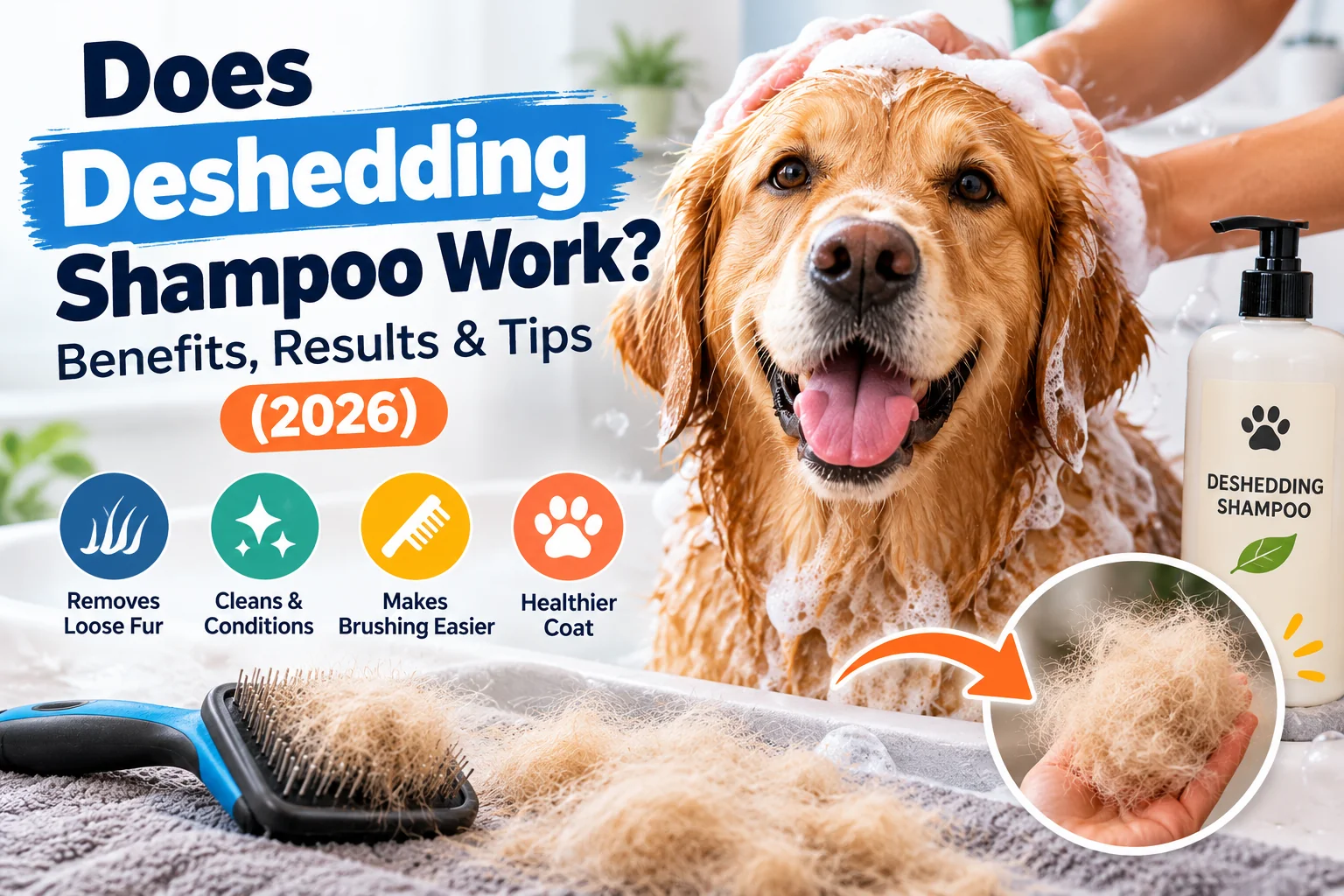
Yes, deshedding shampoo works by helping loosen and wash away dead hair, making loose fur easier to remove during grooming. It can reduce the amount of hair around your home, especially when paired with regular brushing, but it cannot stop natural shedding. For lasting results, combine shampoo with a consistent dog shedding control routine.
What Deshedding Shampoo Actually Does
- Removes loose hair: Helps wash away fur already ready to shed.
- Supports coat cleaning: Removes dirt and debris trapped within the fur.
- Improves manageability: Conditioning ingredients may make brushing easier.
- Helps heavy shedders: Can assist with undercoat removal during seasonal shedding.
- Doesn’t stop shedding: Normal hair growth and replacement continue.
One Important Tip
- Brush after drying: Gently remove the loosened hair using a tool suited to your dog’s coat.
If your dog leaves fur on your sofa, clothes, and floors, you’ve probably wondered whether deshedding shampoo is worth buying. The promise sounds appealing, but the results depend on more than the shampoo bottle.
I think the key is separating loose-hair removal from preventing shedding. This guide explains how deshedding shampoos work, what results to expect, and how to use them safely.
What Is Deshedding Shampoo?
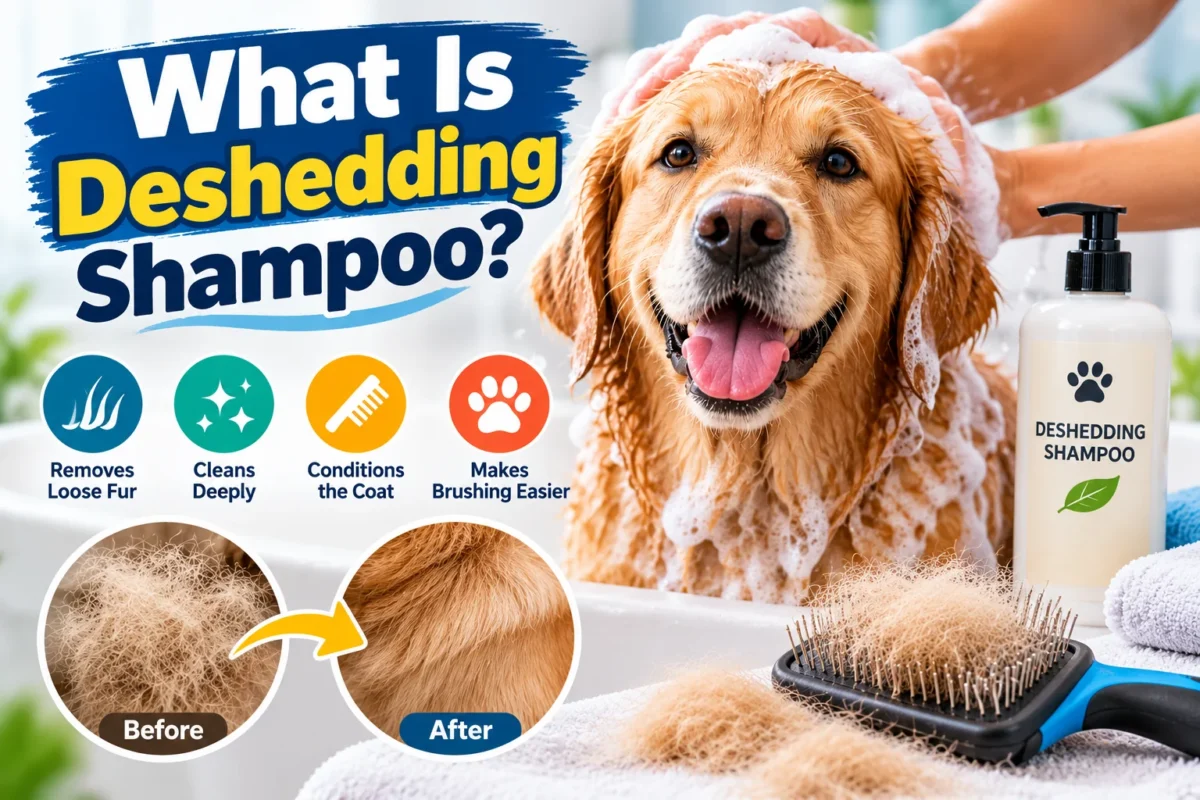
Deshedding shampoo is a dog grooming cleanser designed to help remove loose fur while cleaning and conditioning the coat. Many formulas contain moisturizing or conditioning ingredients that improve hair manageability.
Unlike medicated shampoo, ordinary deshedding shampoo generally targets grooming needs rather than treating a diagnosed skin disease.
Common formula components include:
- Mild cleansers: Remove dirt, oil, and loose debris.
- Conditioning agents: Help soften fur and reduce tangling.
- Omega fatty acids: Support conditioning in products formulated with these ingredients.
- Aloe or botanical extracts: May help condition the coat, depending on the formulation.
- Moisturizers: Help maintain coat softness after washing.
These ingredients don’t switch off your dog’s hair-growth cycle. Their main value comes from making normal grooming and loose-fur removal easier.
Does Deshedding Shampoo Really Reduce Dog Shedding?
Yes, deshedding shampoo can reduce visible loose hair by helping remove fur during bathing and follow-up grooming. It doesn’t permanently reduce the biological process that produces shedding.
The American Kennel Club’s dog shampoo guidance explains that shedding-control shampoos may help reduce excess loose fur without stopping shedding completely.
How Deshedding Shampoo Works
The process involves washing, conditioning, and removing hairs that have already become loose. Most of the noticeable benefit occurs during the bath and subsequent brushing.
- Water penetrates the coat: Thorough wetting helps reach loose hairs and trapped debris.
- Shampoo cleans the fur: Cleansers remove dirt and oils that accumulate within the coat.
- Conditioners improve manageability: Softer hair may be easier to separate and comb.
- Rinsing carries away hair: Some loose strands wash out with the shampoo.
- Brushing finishes the job: A suitable grooming tool collects additional loosened fur after drying.
This explains why you may see considerable fur during bathing. Much of that hair was already loose and would otherwise have fallen out naturally.
Does It Work Immediately?
You may notice loose fur coming away during the first bath. A follow-up brushing session can remove additional hair that remains trapped within the coat.
However, an immediate decrease in household fur isn’t guaranteed. Results vary by breed, grooming technique, coat condition, and seasonal shedding.
How Long Do the Results Last?
Deshedding shampoo has no universal duration of effectiveness. Your dog continues replacing hair after every bath, so loose fur gradually accumulates again.
Instead of expecting several guaranteed shed-free weeks, judge results through normal brushing sessions and the amount of hair collecting around your home.
Which Dogs Benefit Most From Deshedding Shampoo?
Dogs with dense undercoats often benefit most from combining appropriate bathing with gentle undercoat grooming. Short-coated shedding breeds may benefit too, although their tool needs differ.
Coat structure matters more than simply choosing the strongest advertised product.
Double-Coated Dogs
German Shepherds, Golden Retrievers, Siberian Huskies, and Pomeranians can release considerable loose undercoat. A suitable shampoo may help during periods of heavier shedding.
These breeds also require careful brushing to protect their outer coat. Our double-coat deshedding guide explains safe undercoat removal.
Short-Haired Shedding Dogs
Labradors, Beagles, and Pugs can shed noticeably despite having shorter fur. A gentle shampoo and rubber grooming mitt may help collect loose strands.
Aggressive undercoat tools aren’t necessary for every short-haired breed. Choose tools that match the actual coat.
Curly and Low-Shedding Dogs
Poodles and many curly-coated dogs require regular detangling rather than traditional undercoat removal. Their hair can become matted if grooming is neglected.
A moisturizing, coat-appropriate shampoo may be more useful than a specialized deshedding formula. Focus on preventing tangles and maintaining skin comfort.
Deshedding Shampoo vs. Regular Dog Shampoo: What’s the Difference?
Both products clean your dog’s coat, but deshedding formulas emphasize loose-hair management and conditioning. A gentle regular shampoo can also help remove loose fur during bathing.
| Feature | Deshedding Shampoo | Regular Dog Shampoo |
|---|---|---|
| Primary purpose | Cleaning and loose-fur management | Routine coat cleaning |
| Loose-hair removal | Formulated to assist removal | Also possible during washing |
| Conditioning | Often emphasized | Depends on formula |
| Stops natural shedding | No | No |
| Best suited for | Dogs needing extra loose-coat management | General cleaning and routine bathing |
| Needs brushing afterward | Usually beneficial | Usually beneficial |
My practical recommendation is to prioritize a shampoo your dog’s skin tolerates. The word “deshedding” alone doesn’t guarantee better results than a well-formulated regular shampoo.
How Do You Use Deshedding Shampoo for the Best Results?
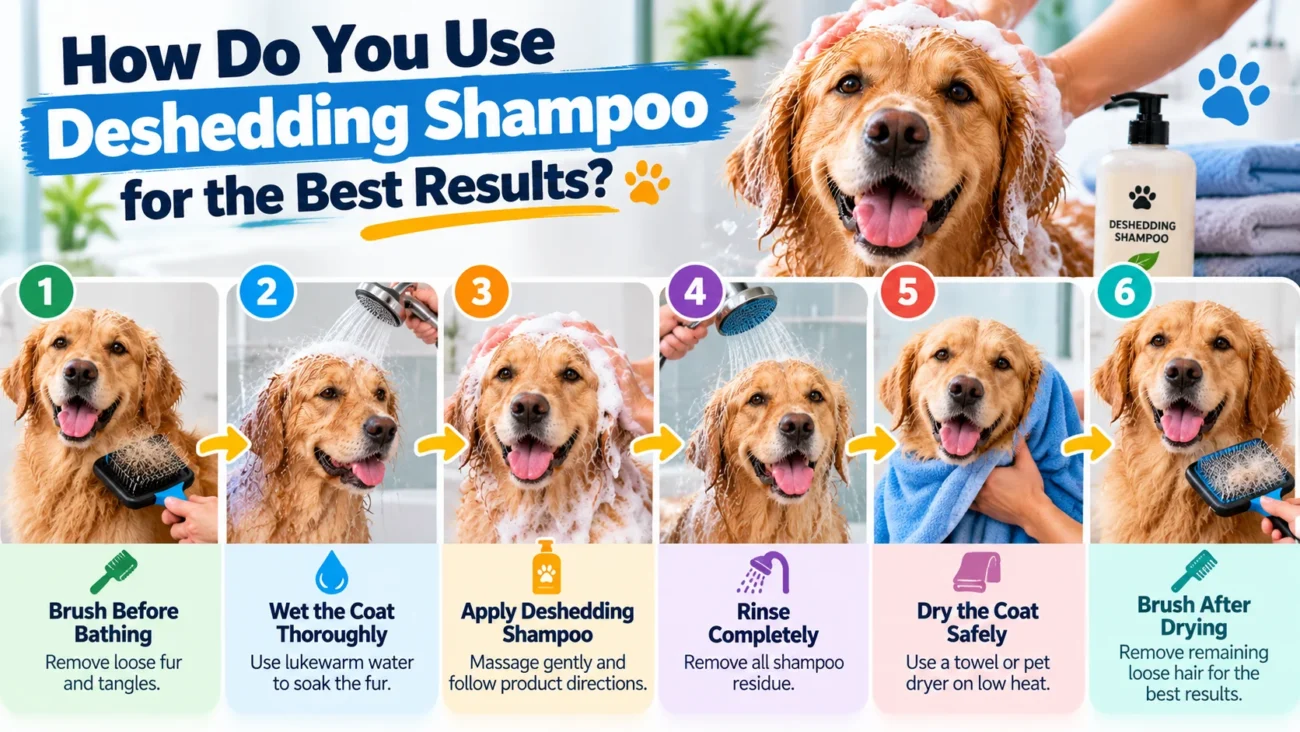
Start with gentle brushing, follow the product’s bathing directions, and rinse thoroughly. Once the coat is dry, remove remaining loose fur with an appropriate tool.
Step 1: Inspect and Brush Before Bathing
Check your dog’s skin for redness, sores, and unusual bald patches. Gently remove loose fur and manageable tangles before introducing water.
Don’t pull forcefully through mats. Tight mats may need professional grooming because wetting them can make management more difficult.
Step 2: Wet the Coat Thoroughly
Use comfortable lukewarm water and wet the fur down toward the skin. Dense double coats may require extra attention to reach the undercoat.
Avoid spraying water directly into your dog’s eyes or ears. Work slowly if your dog feels nervous.
Step 3: Apply the Shampoo as Directed
Massage the recommended amount through the coat using gentle hand movements. Follow the bottle’s dilution and contact-time instructions.
Don’t assume longer contact produces stronger results. Some shampoos recommend a few minutes, while other formulas have different directions.
Step 4: Rinse Completely
Rinse until the coat no longer feels slippery or soapy. Shampoo residue can irritate the skin and make your dog’s coat uncomfortable.
Pay particular attention to thick fur around the neck, chest, legs, and underside. Thorough rinsing matters more than creating extra lather.
Step 5: Dry the Coat Safely
Use absorbent towels to remove excess water. A suitable pet dryer may help with thick coats when used at a comfortable temperature and airflow.
Keep heat away from sensitive skin and don’t force a frightened dog through drying. A professional groomer can help with difficult coats.
Step 6: Brush Out Remaining Loose Hair
Once dry, use a coat-appropriate brush, comb, or undercoat rake. Work gently through small sections without scraping the skin.
For more detail, follow our step-by-step dog deshedding guide.
How Often Should You Use Deshedding Shampoo?
There is no single bathing schedule that suits every dog. Coat type, activity, skin health, product directions, and your veterinarian’s advice should guide frequency.
The AKC’s bathing guidance emphasizes avoiding excessive washing that strips natural oils.
Practical Bathing Considerations
- Normal coat: Bathe when dirty or smelly, according to individual grooming needs.
- Heavy seasonal shedding: Consider a well-timed bath combined with more frequent gentle brushing.
- Dry or sensitive skin: Choose a suitable mild product and discuss repeated bathing with your veterinarian.
- Outdoor dogs: Additional baths may be necessary after significant dirt or contamination.
- Skin conditions: Follow veterinary instructions rather than a general deshedding schedule.
Brushing can often be performed more frequently than bathing. During seasonal coat changes, it may be the most useful part of your routine.
Our guide on how often to deshed during shedding season provides coat-specific starting points.
Why Is My Dog Still Shedding After Using Deshedding Shampoo?
Continued shedding is normal because shampoo doesn’t interrupt the natural hair cycle. New loose hairs can appear soon after a successful bath.
However, certain factors may make shedding particularly noticeable.
- Seasonal coat changes: Dogs may release undercoat over several weeks.
- Dense undercoat: Shampoo alone may not remove deeply trapped loose fur.
- Incomplete brushing: Hair loosened during bathing can remain within the coat.
- Incorrect shampoo: A harsh formula may irritate or dry the skin.
- Underlying health problems: Allergies, parasites, infections, and hormonal problems can contribute to abnormal hair loss.
If shedding suddenly changes, observe your dog’s skin rather than simply switching products. Hair loss with irritation needs a different approach from ordinary seasonal shedding.
Can Deshedding Shampoo Damage Your Dog’s Coat?
A suitable dog shampoo used according to its directions is generally safe, but irritation or dryness can occur. Overbathing and unsuitable products increase the risk of skin problems.
Follow these precautions:
- Use shampoos specifically formulated for dogs.
- Check puppy age restrictions before use.
- Avoid contact with eyes, nose, and mouth.
- Do not use human shampoo as your regular alternative.
- Rinse away all product residue.
- Stop using a shampoo if redness, itching, or irritation develops.
For dogs with allergies or persistent irritation, consult a veterinarian before experimenting with new formulas.
The PetMD guide to excessive shedding also discusses how allergies, grooming choices, and medical conditions can affect hair loss.
Is Deshedding Shampoo Better Than a Deshedding Brush?
Neither tool replaces the other. Shampoo supports cleaning and loose-hair removal during bathing, while a brush physically collects hair between baths.
For many dogs, regular brushing provides the most consistent day-to-day control. Shampoo becomes an additional grooming tool rather than the entire solution.
When Shampoo Makes More Sense
- Your dog needs a bath anyway.
- Loose fur has accumulated throughout a dense coat.
- You want cleaning and conditioning alongside fur removal.
- Your dog tolerates baths better than lengthy brushing sessions.
When Brushing Matters More
- Your dog sheds between baths.
- Loose undercoat collects regularly.
- You want to manage shedding without increasing bathing frequency.
- Your dog’s skin becomes dry with repeated washing.
The most sensible routine uses each method for its own purpose. Brush consistently, and bathe when your dog’s coat needs cleaning.
How Can You Tell Whether Deshedding Shampoo Is Working?
Look for improvements in loose-hair management rather than an unrealistic absence of shedding. The results should become apparent through your ordinary grooming and cleaning routine.
Here is a simple way to evaluate a shampoo without relying on marketing percentages.
- Establish a baseline: Notice how much fur collects during regular brushing before trying the shampoo.
- Keep brushing consistent: Use the same brush and a similar grooming routine.
- Observe bath-time shedding: Check whether loose hair washes out and brushes away easily.
- Monitor coat comfort: Look for softness without redness, flakes, or itching.
- Compare household cleanup: Notice whether furniture and floors collect less fur between grooming sessions.
This comparison cannot prove that shampoo alone caused every improvement. Brushing, season, and natural coat changes may also influence what you observe.
What Are the Common Mistakes When Using Deshedding Shampoo?
Most disappointing results come from expecting shampoo to eliminate shedding or using the wrong grooming routine. Avoid these common mistakes.
- Expecting permanent results: Natural hair replacement continues after every bath.
- Bathing too frequently: Repeated washing may dry the skin.
- Skipping brushing: Shampoo cannot collect every loosened hair.
- Ignoring coat type: Curly coats and dense undercoats need different grooming approaches.
- Using excessive product: More shampoo doesn’t guarantee better shedding control.
- Rinsing poorly: Residue can contribute to irritation.
- Overlooking health problems: Abnormal hair loss may require veterinary care.
The best results usually come from small, repeatable grooming habits. Buying stronger products is rarely a substitute for proper technique.
When Does Excessive Shedding Require a Veterinarian?
Seek veterinary advice when shedding becomes sudden, patchy, or accompanied by skin symptoms. Ordinary seasonal shedding should not produce painful sores or unexplained bald patches.
Warning signs include:
- Sudden or unusually heavy hair loss
- Visible bald spots or thinning patches
- Persistent scratching, biting, or licking
- Red, inflamed, or painful skin
- Scabs, significant dandruff, or unusual odor
- Changes in appetite, energy, or behavior alongside hair loss
Possible causes include allergies, fleas, infections, endocrine disorders, and other medical problems. A shampoo cannot reliably diagnose or correct these conditions.
The AKC’s shedding management guide recommends veterinary assessment when hair loss appears abnormal or skin problems develop.
Best Deshedding Shampoos Worth Considering in 2026
If you’re looking for a dog deshedding shampoo, these three established products offer different advantages. Choose according to coat type, ingredients, and your dog’s skin sensitivity.
These are feature-based recommendations rather than personally tested rankings. The suitability scores below are editorial assessments, not verified customer review averages.
Affiliate disclosure: As an Amazon Associate, we may earn from qualifying purchases at no additional cost to you.
🏆 Best Overall Grooming-System Pick
FURminator deShedding Ultra Premium Shampoo
★★★★☆ 4.5/5
This formula contains omega-3 and omega-6 fatty acids, conditioning agents, and odor-control features. I’d consider it for owners who want shampoo to complement an existing brushing and deshedding routine.
🐕 Best for Thick Double Coats
TropiClean PerfectFur Thick Double Coat Shampoo
★★★★☆ 4.4/5
This shampoo is formulated for breeds with dense undercoats, including German Shepherds and Huskies. Its coat-specific positioning makes it a useful option to consider for heavy seasonal shedders.
🌿 Best for Conditioning-Focused Care
earthbath Shed Control Shampoo
★★★★☆ 4.3/5
This formula includes shea butter, omega-6 fatty acids, and botanical extracts. I’d consider it when coat softness and conditioning matter alongside loose-hair management, though fragrance sensitivity should still be checked.
Frequently Asked Questions About Deshedding Shampoo
Does deshedding shampoo stop dogs from shedding?
No. Deshedding shampoo does not stop normal hair growth or shedding. It helps wash away fur that has already loosened and may make the coat easier to groom. Healthy dogs continue shedding according to their breed, coat type, and seasonal cycle.
How quickly does deshedding shampoo work?
Deshedding shampoo may remove noticeable loose fur during the first bath, particularly when followed by brushing. However, the improvement in household shedding varies. There is no reliable universal timeline or guaranteed percentage reduction for every dog.
Can I use deshedding shampoo every week?
Weekly use may be appropriate for some dogs and products, but it isn’t necessary or suitable for every pet. Follow the product directions and consider your dog’s skin condition. Ask a veterinarian before frequent bathing if your dog has dryness, allergies, or irritation.
Does deshedding shampoo work on Golden Retrievers and Huskies?
Yes, deshedding shampoo can help remove loose hair from Golden Retrievers and Huskies, especially during seasonal coat changes. These double-coated breeds often benefit from thorough bathing and gentle undercoat brushing. The shampoo cannot prevent their normal seasonal shedding.
Is deshedding shampoo worth buying?
Deshedding shampoo can be worthwhile if your dog sheds heavily and needs regular bathing. However, a suitable brush and consistent grooming schedule often provide more ongoing value. If your regular shampoo works well and your dog’s skin is healthy, switching may not be necessary.
Final Verdict: Does Deshedding Shampoo Work?
Yes, deshedding shampoo works as a loose-hair management aid, not a permanent shedding solution. It can make bathing and follow-up grooming more effective while helping keep the coat clean and manageable.
For most owners, I recommend focusing on coat-appropriate brushing first. Add a gentle deshedding shampoo when bathing is needed, and prioritize veterinary care if shedding becomes abnormal.
Next step: Choose a grooming routine that suits your dog’s coat, monitor skin comfort, and judge improvement by manageable loose fur rather than unrealistic promises of zero shedding.


