
Quick Answer
During shedding season, many dogs benefit from gentle brushing three to five times a week, while heavy shedders may need short daily sessions. Intensive deshedding with specialized undercoat tools should generally be less frequent. Adjust your routine to your dog’s coat, loose fur, skin condition, and the tool manufacturer’s instructions.
When your dog starts leaving clumps of fur on the carpet, it’s natural to wonder whether brushing every day is enough or whether more intensive deshedding is necessary.
The important distinction is that ordinary brushing and specialized undercoat removal are not always the same thing. A dog may tolerate daily gentle brushing but develop irritated skin from repeated use of an aggressive deshedding edge.
This guide explains how to adjust your grooming schedule during spring and fall shedding, recognize when your dog needs additional coat care, and avoid overgrooming.
How Often Should You Deshed a Dog During Shedding Season?
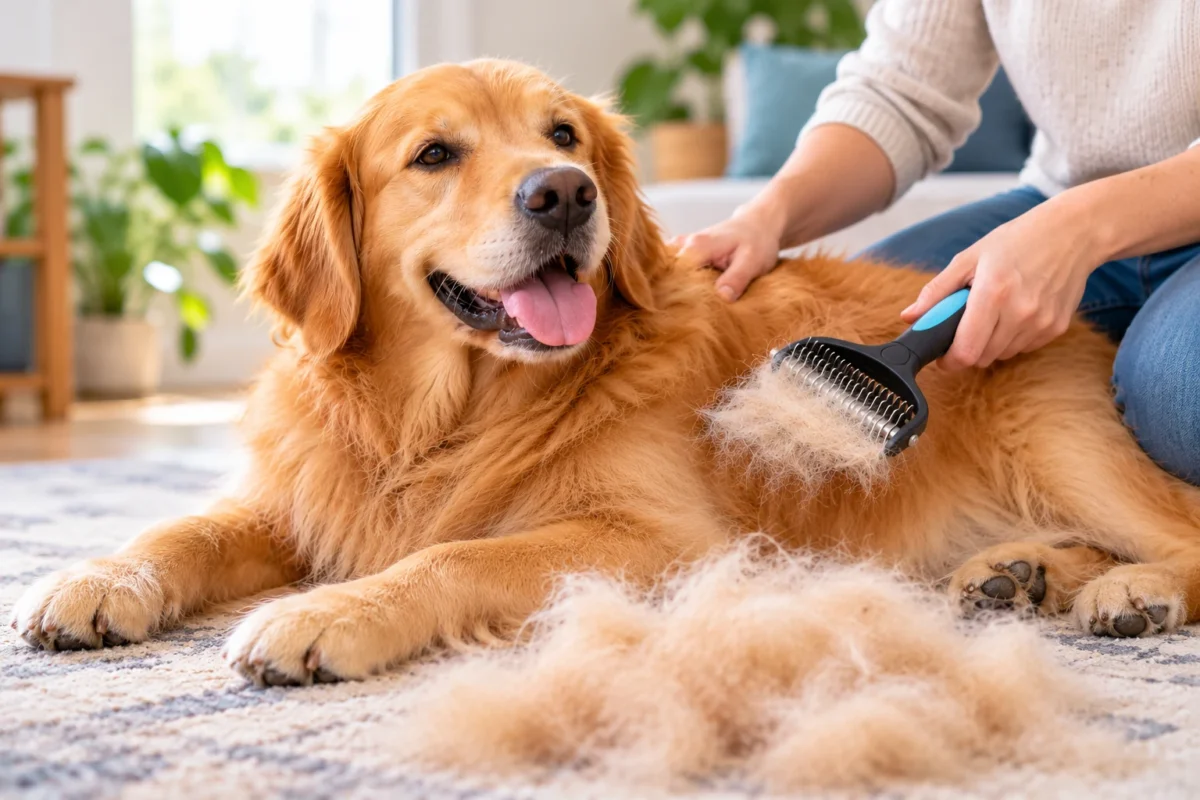
During peak shedding, start with several gentle brushing sessions per week and increase to daily brushing if loose fur continues accumulating and your dog remains comfortable.
The Texas A&M School of Veterinary Medicine describes brushing three to four times weekly for five to ten minutes as a useful general shedding-management routine.
Dogs experiencing particularly heavy seasonal coat changes may benefit from more frequent gentle brushing. However, no single schedule applies to every breed.
Suggested Deshedding Schedule by Coat Type
Use the following ranges as practical starting points rather than strict veterinary prescriptions.
| Coat Type | Gentle Brushing During Heavy Shedding | Specialized Deshedding |
|---|---|---|
| Short, smooth coat | 2–3 times weekly as needed | Usually unnecessary with aggressive undercoat tools |
| Short, dense double coat | 3–5 times weekly; daily if needed | Occasional targeted sessions when loose undercoat builds up |
| Medium double coat | 3–5 times weekly | As needed with an appropriate rake or comb |
| Long, thick double coat | Often daily during peak shedding | Careful, section-by-section removal of loose undercoat |
| Curly or low-shedding coat | Regular detangling according to coat length | Traditional undercoat deshedding often inappropriate |
These are starting ranges, not established intervals for every individual dog. If your dog already has a comfortable routine outside shedding season, increase frequency gradually rather than introducing a completely different grooming process.
For broader year-round guidance, see our dog deshedding frequency guide.
Why Do Dogs Need More Frequent Grooming During Shedding Season?
Many dogs release increased amounts of older coat hair during seasonal changes. Brushing removes some of that loose hair before it settles on furniture, becomes trapped in the coat, or contributes to tangles.
Spring and fall are common periods of noticeable shedding, especially among breeds with dense double coats.
A double coat contains two main layers:
- Outer coat: Longer guard hairs that help protect the skin and repel environmental debris.
- Undercoat: Softer, shorter hairs that provide insulation and may shed heavily during seasonal coat changes.
Dogs such as Siberian Huskies, German Shepherds, Golden Retrievers, and Labrador Retrievers can release substantial amounts of undercoat.
However, living indoors, exposure to artificial lighting, climate, and individual coat characteristics can influence shedding patterns. Some dogs shed relatively steadily instead of experiencing two clearly defined seasonal peaks.
The goal of deshedding is to remove already-loose hair, not force healthy hair out. More frequent grooming is useful only while it continues to improve coat maintenance without irritating the skin.
Should You Brush Your Dog Every Day During Heavy Shedding?
Yes, daily gentle brushing can be appropriate during heavy shedding, especially for dogs with thick double coats. It does not mean every dog needs a specialized deshedding blade used daily.
The American Kennel Club’s seasonal shedding guidance explains that heavier shedders may benefit from grooming several times weekly or even daily during peak periods.
When Daily Brushing Makes Sense
- Your dog is releasing substantial loose fur every day.
- The coat remains comfortable and healthy after brushing.
- You use a gentle, coat-appropriate grooming brush.
- Your dog tolerates the sessions without stress or discomfort.
- Loose undercoat is accumulating faster than occasional brushing can remove it.
Keep each session manageable. A few minutes of comfortable brushing may be more useful than one long session involving repeated passes over the same area.
When Daily Brushing Is Unnecessary
If very little loose hair comes out, the skin appears sensitive, or your dog dislikes frequent handling, reduce the schedule.
A grooming routine should respond to the dog’s actual coat condition rather than following a calendar without adjustment.
How Often Should You Use an Undercoat Rake or Deshedding Tool?
Use a specialized undercoat tool only as often as the coat requires and the manufacturer recommends. Intensive undercoat removal generally needs more caution than light surface brushing.
The tool’s design matters. A rounded-tooth undercoat rake, rubber grooming brush, slicker brush, and bladed deshedding tool do not interact with the coat in identical ways.
Gentle Undercoat Rakes
Suitable rounded-tooth rakes can help release loose undercoat from dense double coats. During heavy shedding, inspect the coat frequently and use short, careful sessions where loose hair has accumulated.
Never drag the rake through a resistant mat or repeatedly scrape one area to collect more hair.
Bladed Deshedding Tools
Tools with specialized metal edges require particular attention to pressure, coat compatibility, and manufacturer instructions.
Repeated aggressive use can irritate the skin or damage coat hair. Avoid treating these tools as ordinary daily brushes unless their specific instructions support that use.
Rubber Brushes and Grooming Gloves
For many smooth-coated dogs, flexible rubber brushes and grooming gloves provide a gentler way to collect loose hair.
They are particularly useful when a dense undercoat is absent or an intensive metal tool would be unnecessary.
For a complete explanation of technique and tool selection, see our dog deshedding guide.
How Can You Tell If Your Dog Needs Another Deshedding Session?
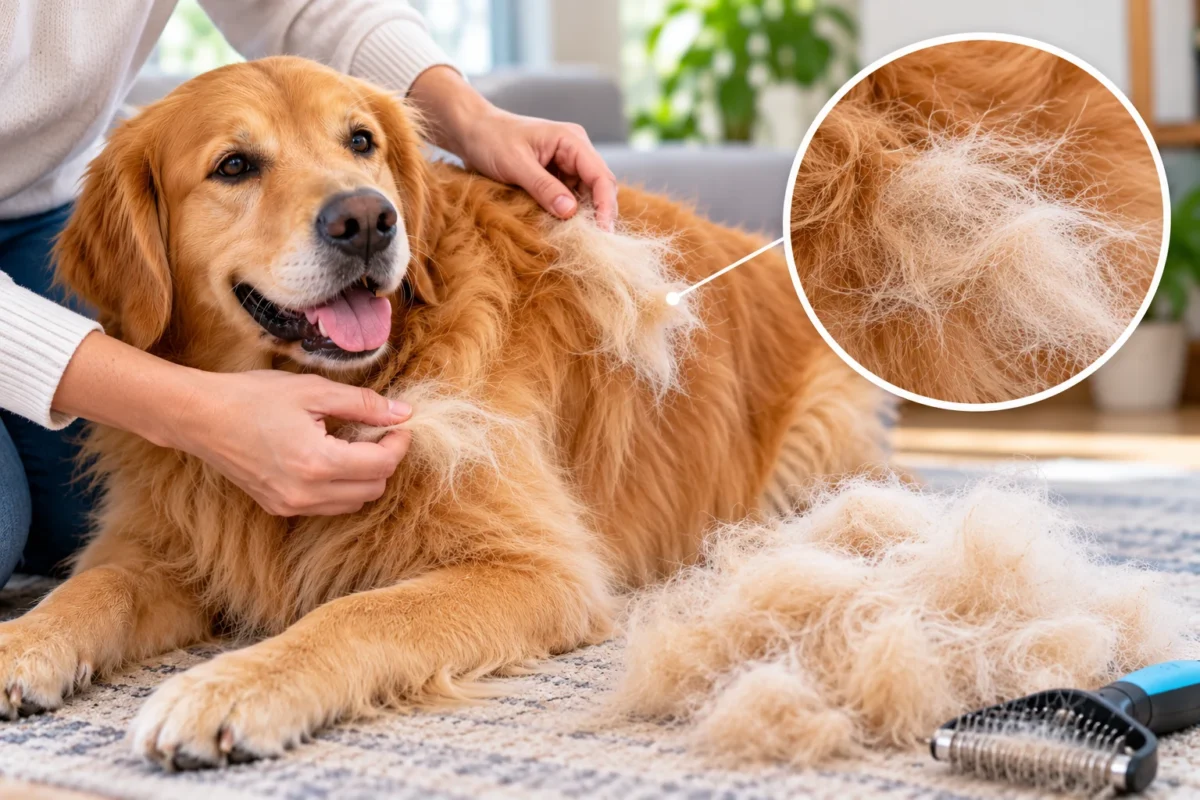
Look at coat condition, loose hair accumulation, and your dog’s comfort rather than relying only on the number of days since the previous session.
Useful signs include:
- Loose tufts appearing around the shoulders or hindquarters.
- Dead undercoat collecting within a dense coat.
- More loose fur coming away during gentle brushing.
- Small tangles beginning to develop in feathered areas.
- A noticeable increase in loose hair on bedding or furniture.
These signs suggest your dog may benefit from another gentle grooming session, but they do not automatically justify a stronger tool.
If the coat looks smooth, little loose hair remains, and your dog seems comfortable, there may be no benefit in extending the session.
Practical Tip
Before grooming, gently separate a small section of coat with your fingers. If loose undercoat lifts away easily, a gentle brushing session may help. If the hair resists or the skin looks irritated, do not force removal.
How Do You Build a Safe Shedding-Season Grooming Routine?
A good routine combines frequent light brushing with occasional targeted undercoat care. Follow these steps to adjust the schedule safely.
- Check the coat and skin. Look for redness, sores, tangles, unusual thinning, and areas that feel sensitive before starting.
- Choose the right tool. Use a rubber brush for suitable smooth coats, or a slicker brush, comb, or appropriate undercoat rake for denser coats.
- Start with a brief session. Work in small sections using gentle strokes, generally following the direction of hair growth.
- Remove only loose hair. Avoid pulling resistant hair or repeatedly brushing one spot.
- Monitor your dog’s response. Stop if your dog flinches, withdraws, becomes distressed, or develops redness.
- Adjust the next session. Increase gentle brushing if loose fur accumulates rapidly; reduce intensive grooming when the coat releases less hair.
You do not need to finish every part of a large dog’s coat in a single session. Breaking the work into comfortable sections can make the experience easier.
What Happens If You Deshed a Dog Too Often?
Excessive or aggressive deshedding can irritate the skin, cause discomfort, and potentially damage coat hair. The risk depends on the tool, technique, coat condition, and frequency.
Warning signs of overgrooming include:
- Redness appearing after brushing.
- Repeated flinching or pulling away.
- Unusual coat thinning where the tool was used.
- Broken hair or an uneven-looking coat.
- Persistent scratching after grooming.
- Visible scratches, sores, or tenderness.
If these signs appear, stop using the tool and allow the skin to recover. Seek veterinary advice for persistent irritation, sores, or unexplained hair loss.
Do not attempt to remove every loose hair in one sitting. Shedding is an ongoing biological process, and additional hair will naturally become ready to release over time.
Should Deshedding Frequency Change Between Spring and Fall?
Yes, grooming frequency should change whenever shedding intensity changes, regardless of the season.
In spring, many double-coated dogs release part of their heavier winter undercoat. Some breeds may produce noticeable quantities of loose hair over a relatively concentrated period.
Fall shedding may also be substantial, although its intensity varies between dogs and climates.
Instead of assigning an identical spring and fall schedule, observe how quickly loose hair returns after brushing.
- Peak shedding: Increase gentle brushing as needed, potentially daily.
- Moderate shedding: Maintain several manageable weekly sessions.
- Low shedding: Return to the dog’s ordinary maintenance schedule.
Dogs living in consistently warm environments or spending most of their time indoors may have less predictable seasonal patterns.
When Is Heavy Shedding a Reason to Contact a Veterinarian?
Normal seasonal shedding usually involves loose hair without significant skin inflammation or sharply defined bald patches.
Excessive hair loss combined with skin symptoms may indicate something beyond ordinary seasonal shedding.
Contact your veterinarian if you notice:
- Sudden bald patches or pronounced thinning.
- Persistent itching, biting, or licking.
- Scabs, inflamed skin, or open sores.
- Unusual odor, discharge, or greasy skin.
- Rapid changes in the coat unrelated to the usual shedding pattern.
Allergies, parasites, skin infections, and certain medical conditions can contribute to abnormal hair loss. Increasing deshedding frequency will not treat these underlying problems.
Stop aggressive grooming of affected areas until the cause has been evaluated.
Key Insight
A successful deshedding session is not measured by the size of the fur pile. Healthy skin, a comfortable dog, and the gentle removal of already-loose hair matter more.
Related Grooming Tool: Undercoat Rake
A properly sized, rounded-tooth undercoat rake can help remove loose hair from suitable dense double coats during shedding season.
Choose a tool designed for your dog’s coat length and density. Follow the manufacturer’s guidance, use light pressure, and avoid irritated or tangled areas.
Frequently Asked Questions
1. Can I Deshed My Dog Twice a Day During Shedding Season?
Two intensive deshedding sessions a day are generally unnecessary and may increase irritation risk. If your dog sheds heavily, divide gentle brushing into shorter sessions instead of repeatedly using an aggressive undercoat tool.
2. Should I Deshed My Dog Before or After a Bath?
Gentle brushing before bathing helps remove loose hair and identify tangles. After bathing, dry the coat appropriately and use a suitable finishing brush if needed. Avoid dragging specialized tools through wet, tangled hair.
3. How Long Should a Deshedding Session Last?
Start with a short session of around five to ten minutes and adjust according to coat density, dog size, tool type, and comfort. Larger or thicker-coated dogs may need several separate sessions rather than one prolonged session.
4. Do Puppies Need Deshedding During Shedding Season?
Puppies benefit from gentle grooming introductions, but intensive undercoat-removal tools may be inappropriate for their developing coats. Use a soft, age-appropriate brush and prioritize comfort and positive handling experiences.
5. Does Professional Deshedding Replace Regular Brushing?
No. Professional grooming can remove accumulated loose undercoat and address difficult areas, but normal coat shedding continues afterward. Regular gentle brushing remains helpful between appointments.
6. Can Deshedding Completely Stop Seasonal Dog Shedding?
No. Deshedding removes loose hair but does not stop the natural hair-growth and replacement cycle. Consistent grooming can help control loose fur around your home, but some shedding is normal and unavoidable.
Final Thoughts: Adjust Deshedding to Your Dog’s Needs
During shedding season, many dogs benefit from brushing several times weekly, and heavy shedders may need gentle daily attention. Specialized undercoat removal should be guided by tool suitability, loose fur accumulation, and skin comfort rather than an aggressive fixed schedule.
Start gently, monitor how much loose hair collects, and reduce the frequency when shedding slows. A consistent, comfortable routine is more effective than trying to remove every loose hair at once.