
Quick Answer
To brush mats out of dog hair, first make sure they are small, loose, and not painful. Gently separate the outer hairs with your fingers, hold the coat near its base to limit pulling, and work from the free ends toward the skin with a suitable comb or soft slicker brush. Stop if the mat resists, hurts, or sits tightly against the skin; a professional should handle those mats.
A knot behind your dog’s ear may look harmless until a brush catches it. Your dog’s comfort matters more than saving every strand.
Can You Safely Brush Out the Mat?
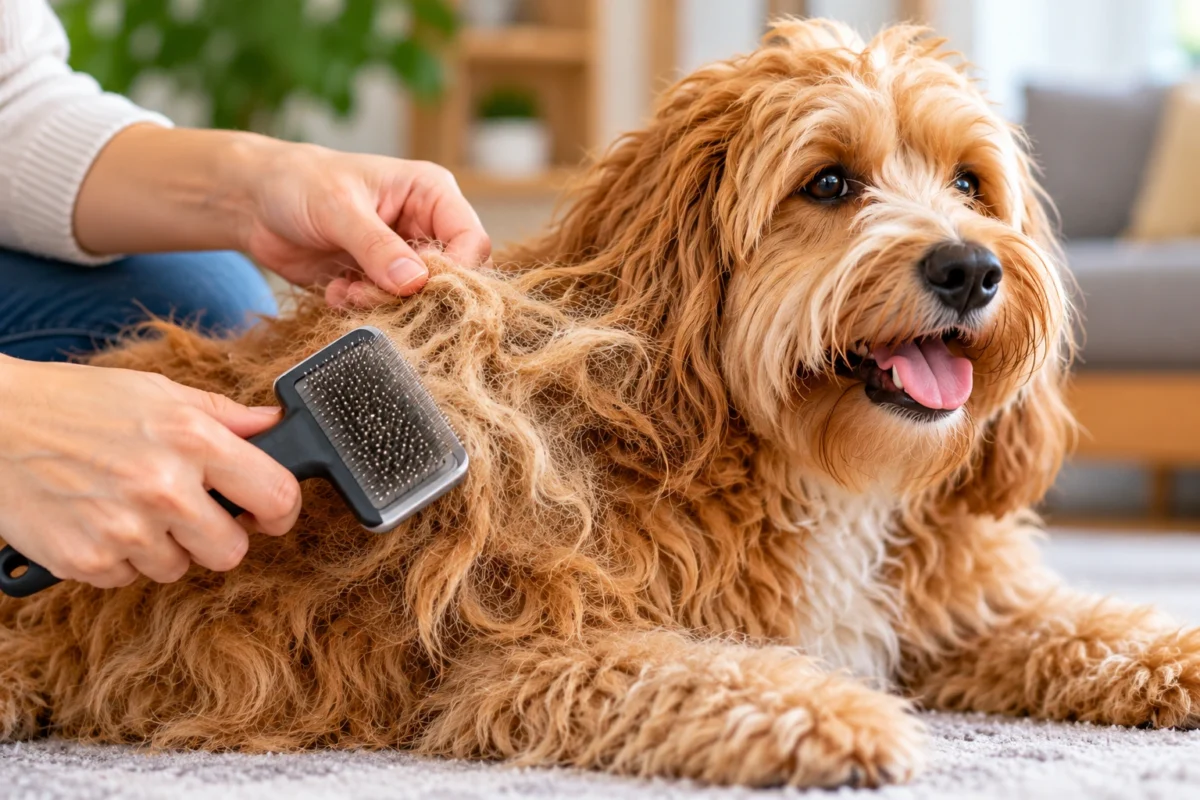
Only small, loose mats that separate without force are suitable for home brushing. A mat is more than an ordinary knot: loose or shed hairs have become packed together, sometimes close enough to pull on the skin every time the dog moves.
Check for these signs:
- Reasonable to try gently: The knot is small, the surrounding hair moves freely, you can find loose strands at its edges, and your dog stays relaxed when you touch it.
- Book a groomer: The mat feels dense, sits flat against the skin, covers a broad patch, or will not separate with light finger work. Do not keep pulling to test it.
- Contact a veterinarian: There is broken or swollen skin, a bad smell, discharge, bleeding, marked tenderness, or your dog seems unwell. A medical problem may be hidden beneath the coat.
Mats near eyes, ears, paw pads, armpits, genitals, and the anus warrant professional caution. Veterinary guidance from PetMD on matting in pets supports professional removal when mats are tight, painful, extensive, or near sensitive body parts.
What Do You Need Before You Start?
Simple tools offer better control than sharp dematting gadgets.
- Your fingers: Separate individual strands at the outer edge before introducing any tool.
- A wide-tooth metal grooming comb: Work through loosened sections with less grabbing than a fine comb.
- A gentle slicker brush: Smooth accessible hair with short, light strokes; never rake into a hard knot.
- Dog-formulated detangling spray: Use only as directed and avoid the eyes, nose, wounds, and irritated skin.
- Rewards and a stable surface: Treats, good lighting, and a non-slip floor can make the session calmer.
Choose tools for your dog’s coat type. The general step-by-step dog brushing guide explains routine brushing outside the mat itself.
How to Brush Mats Out of Dog Hair in 7 Safe Steps
Work on one small, loose knot at a time. If your dog pulls away, flinches, growls, or the tool keeps catching, stop rather than trying to finish the sequence.
1. Settle Your Dog and Examine the Coat
Choose a quiet, well-lit place where your dog can stand or lie comfortably. Let them sniff the comb, offer a reward, and gently part the hair around the knot. Check for redness, scabs, trapped debris, or a lump that may not be a mat at all.
Do not work over a sore or unidentified bump.
2. Find the Mat’s Loose Outer Edge
Use your fingertips to locate where normal hair turns into the knot. Start with the wispy, free ends rather than pressing a brush against the compact center. If you cannot identify any loose edge, the mat may be too tight to detangle comfortably.
3. Support the Hair Closest to the Skin
When there is enough free hair to hold safely, gently support the coat between the mat and your dog’s body. This helps reduce how much movement reaches the skin while you work on the ends. Do not pinch the skin or hold the hair under tension.
If the knot sits flush against the body, stop and seek professional grooming.
4. Loosen a Few Strands With Your Fingers
Pick apart the outermost strands a little at a time, allowing them to separate naturally. Work around the edges rather than trying to split the whole knot in half. You should see small amounts of hair becoming free without your dog reacting.
A dog-safe detangler may help, but will not make a skin-tight mat safe to brush.
5. Comb From the Hair Ends Toward the Base
Once the edge is loose, pass a wide-tooth comb through just the freed hair tips. Gradually move closer to the base as resistance disappears. Keep each stroke short, and lift the comb away instead of dragging through a snag.
If it catches, return to finger separation or stop. Never pull harder to finish a stubborn knot.
6. Use a Slicker Brush Only on Freed Hair
After a section is no longer tightly tangled, lightly brush that section in the direction the coat grows. Keep the pins moving through hair, not scraping the same patch of skin. For longer coats, lift a thin layer so you can see what you are working on.
The American Kennel Club’s home grooming guidance also cautions against cutting mats with household scissors because a moving dog can be injured.
7. Check With the Comb and Finish Early
Gently pass your comb through the finished section from the accessible outer coat toward the base, without forcing it into the skin. If it glides without catching, that section is likely detangled. If it still snags near the skin, do not assume the surface brushing removed the mat.
Offer a reward and end while your dog remains comfortable. A short, successful session is better than prolonged pulling that teaches your dog to fear grooming.
Safety Warning
Never cut a tight mat with household scissors or put clipper blades against matted skin unless you have appropriate professional training. Skin can be pulled up inside a mat and accidentally cut. When brushing becomes painful, the safer option is often professional removal, not more force.
Where Should You Check for Hidden Mats?
The places most likely to mat are often the places a quick brush misses. Run your fingertips through the coat in these areas before you begin a normal grooming session:
- Behind the ears: Fine hairs move against the neck and collar, building small knots.
- Under the front legs: Friction and sensitive skin make the armpits high-risk spots for painful mats.
- Chest and collar line: Collars and harness straps repeatedly rub the same hair.
- Tail base and hindquarters: Longer coat and regular movement can trap loose hairs together.
- Feet and between toes: Dampness and debris may collect in difficult-to-see spaces.
Do not pull a comb through a sensitive fold just to check it. Part the hair gently, and ask your groomer to assess anything you cannot inspect comfortably.
When Is a Groomer or Veterinarian the Safer Choice?
Home brushing has a limit: if the knot will not loosen with light handling, it should not be forced. Professional groomers can assess whether careful detangling or clipper removal will be more comfortable. Veterinary care is appropriate when skin problems or significant pain are present.
| What you notice | Safer next action |
|---|---|
| Small knot with loose edges; dog remains relaxed | Try careful finger separation and gentle combing |
| Hard mat, no loose edge, repeated snagging, or sensitive location | Stop and arrange professional grooming |
| Red, moist, bleeding, swollen, foul-smelling skin or marked pain | Contact a veterinarian promptly for assessment |
Extensive mats sometimes need a short haircut rather than patient brushing. That is not a grooming failure: the decision should prioritize comfort and skin safety over maintaining coat length. If your dog cannot tolerate handling, ask your veterinarian about a safe plan rather than using calming medication on your own.
What Common Mat-Removal Mistakes Should You Avoid?
Several tempting shortcuts can turn a manageable tangle into a worse problem.
- Pulling straight from the roots: This tightens the tug on the skin. Work gradually from free hair tips instead.
- Brushing only the visible surface: A fluffy top layer can hide dense knots underneath. Use a gentle comb check on suitable coats.
- Bathing first: Wet, tangled hair can become harder to manage. Assess mats before washing; see whether to brush a dog before or after a bath for the full sequence.
- Using sharp mat splitters without training: Bladed tools can damage skin or healthy hair. Let an experienced groomer decide if they are suitable.
- Continuing through distress: Panting, struggling, flinching, snapping, or attempting to escape are reasons to stop and reassess.
How Can You Stop Mats From Coming Back?
Prevention means reaching the parts of the coat where knots start, not simply brushing more often. For long or curly hair, part small layers and brush carefully, then check those layers with a comb. A schedule that works for a short-coated dog may leave a Poodle-type coat tangled.
Pay attention to the friction points you found earlier. Check around a collar or harness after walks, and look behind the ears and legs after active play. Keep the coat properly dried after bathing or swimming; persistent dampness can make tangling more likely.
Our guide to brushing a long-haired dog explains section-by-section coat maintenance. For adjusting your routine as the coat changes, see how often to brush your dog.
If mats keep returning, ask a groomer to demonstrate proper technique or suggest a more manageable coat length.
Related Product
Gentle Slicker Brush and Dog Grooming Comb
A coat-appropriate slicker brush and metal comb can help maintain loose, tangle-prone hair between grooming visits; they are not substitutes for professional removal of painful, tight mats.
As an Amazon Associate, we earn from qualifying purchases.
Frequently Asked Questions
Can I use coconut oil or olive oil to loosen dog mats?
Do not rely on household oils to solve matting. They may leave the coat greasy without releasing a dense knot. For small loose tangles, choose a dog-formulated detangler and follow its directions; leave tight mats to a professional.
Is a dematting rake safe for a tightly matted dog?
Not necessarily. Some dematting tools have cutting edges, and pushing them into hair close to the skin can hurt or injure your dog. Ask a professional to assess a dense mat before using a bladed rake.
Can a mat hide fleas, sores, or other skin problems?
Yes. Dense hair can conceal irritated skin, moisture, debris, and parasites. If you notice odor, redness, discharge, or pain around a mat, arrange a veterinary exam instead of probing underneath it.
Is gentle mat removal different for a puppy?
The basic rule is the same, but keep handling especially brief and positive. Work only on an easy, loose tangle while your puppy stays relaxed. A professional groomer can help with tight knots and early grooming practice.
Why do mats appear after my dog wears a harness?
Repeated rubbing can twist coat fibers together, especially around the chest, shoulders, and armpits. Check those areas after removing the harness and discuss fit or coat maintenance with your groomer if matting is frequent.
Should I brush skin immediately after a groomer clips away a mat?
Do not scrub or scrape freshly exposed, tender skin. Follow the groomer’s instructions, and contact your veterinarian if there is irritation, a wound, or persistent discomfort. Resume gentle coat care when the skin is comfortable.
Conclusion
Brushing mats out of dog hair should be a gentle process, never a test of how much pulling your dog can tolerate. Start only with small, loose knots. Separate the ends with your fingers, support the surrounding coat, and use a comb or slicker brush lightly once hair is free.
When a mat lies tight against the skin, causes discomfort, or hides irritated tissue, stop and get professional help. Afterward, regular section-by-section brushing, comb checks, and attention to friction areas will do more for your dog’s comfort than trying to rescue a severely tangled coat at home.


