

Quick Answer
To brush a long haired dog, divide the coat into small sections, brush gently from the ends toward the roots, and finish with a metal comb to find hidden tangles. Pay extra attention behind the ears, under the legs, around the collar, and near the tail. For the broader basics, see this step-by-step dog brushing guide.
How to brush long dog hair in 6 quick steps
- Inspect first: Feel through the coat for mats, sores, burrs, redness, and tender areas.
- Choose the tools: Start with a pin or suitable slicker brush and keep a metal comb nearby.
- Work in sections: Part long hair so you reach deeper layers instead of brushing only the surface.
- Start at the ends: Loosen small tangles near the hair tips before moving closer to the skin.
- Use light pressure: Let the brush travel through the coat without repeatedly scraping the skin.
- Comb to finish: Run a metal comb through each section to check for tangles the brush missed.
One important rule
- Never force a brush or comb through a tight mat that pulls painfully on the skin.
Long hair can look smooth on top while hiding knots close to the skin. That is why I never judge a grooming session only by how the outer coat looks.
I prefer a slow, section-by-section method. It takes a little more attention, but it makes long coat maintenance much more comfortable for the dog.
What Does Brushing a Long Haired Dog Actually Mean?
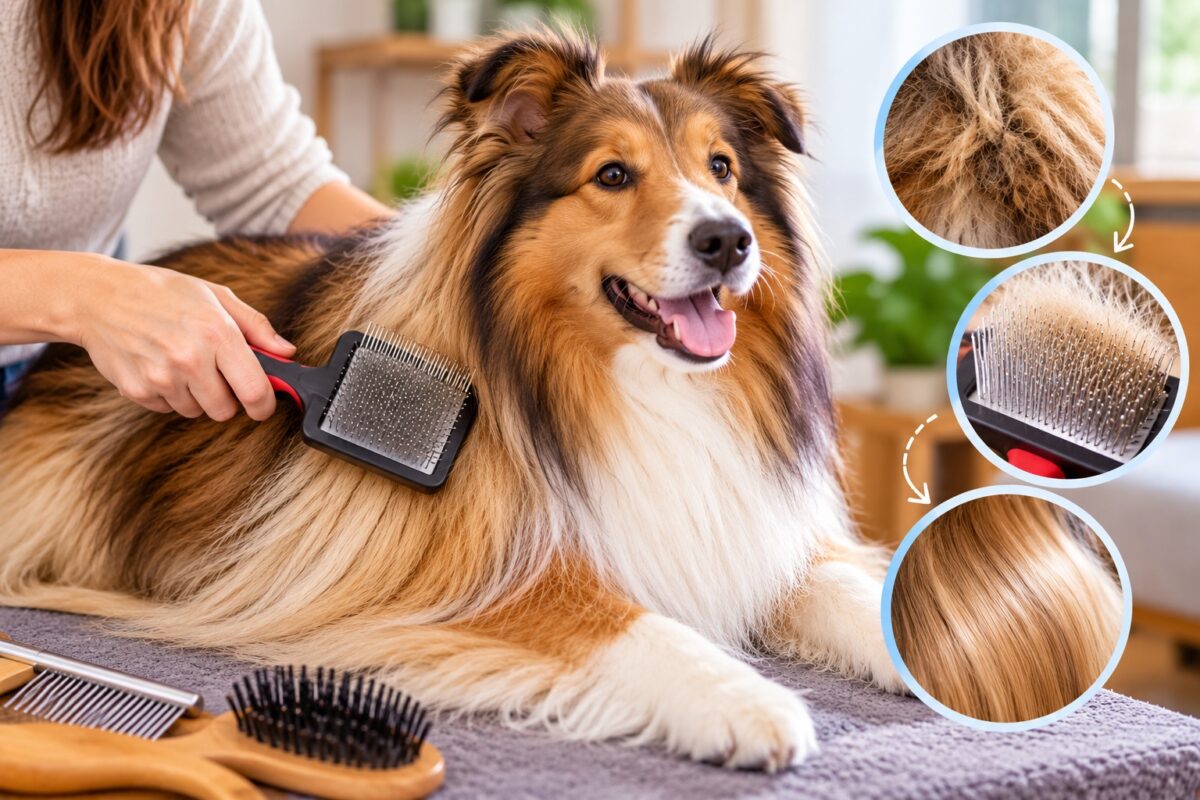
Brushing a long haired dog means separating and grooming the coat from the outer hair down toward the skin without pulling, scraping, or overlooking hidden tangles. The goal is not simply to make the coat look neat.
Long-coated dogs often need both brushing and combing because a brush may pass over a knot underneath the visible surface.
- Brushing removes loose hair, debris, and manageable surface tangles.
- Sectioning lets you reach deeper layers of long or dense hair.
- Combing exposes small knots a brush may have missed.
- Inspection helps you notice redness, sores, burrs, parasites, or tender skin.
- Regular maintenance helps stop small tangles from becoming tight mats.
The American Kennel Club recommends choosing grooming tools according to coat characteristics and notes that pin brushes, slicker brushes, and combs can all have roles in longer coats.
You can also read my complete dog brushing and combing guide if you want to compare techniques across different coat types.
What Do You Need to Brush a Long Haired Dog?
You usually need a coat-appropriate brush, a sturdy metal comb, treats, and a stable grooming area. The exact brush depends on whether the coat is silky, straight, wavy, dense, or double-layered.
I would rather use two appropriate tools gently than expect one aggressive brush to do every job.
| Tool | Best Use | Long-Coat Advantage | Main Caution |
|---|---|---|---|
| Pin brush | Routine brushing | Moves through longer hair with less surface drag | May not remove tight undercoat or mats alone |
| Slicker brush | Loose hair and small tangles | Useful around feathering and tangle-prone areas | Too much pressure can irritate skin |
| Metal comb | Final tangle check | Finds knots hidden below the outer coat | Never pull it forcefully through resistance |
| Undercoat rake | Suitable long double coats | Reaches loose undercoat below guard hairs | Not appropriate for every long-haired dog |
The American Kennel Club’s guide to dog brushes also explains why brush choice should match the dog’s coat rather than following a one-tool-fits-all approach.
How Do You Brush a Long Haired Dog Step by Step?
Start with a dry, inspected coat and work in small sections. Brush from the ends of the hair toward the roots when tangles are present, then check your work with a comb.
Here is the routine I use as a practical starting point in 2026.
1. Set Up a Calm Grooming Area
Choose a stable, non-slip surface where your dog can stand or lie comfortably. Keep your brushes, comb, and treats within reach.
For a nervous dog, keep the first sessions short. A successful five-minute session beats a long struggle.
2. Inspect the Coat Before You Brush
Use your fingers to feel through the coat before introducing the brush. Long hair can hide problems that are difficult to see from above.
- Small tangles
- Tight mats
- Burrs or plant material
- Ticks or other parasites
- Red or irritated skin
- Scabs or wounds
- Areas that feel painful
If touching one spot suddenly causes pain, avoid repeatedly brushing it. Skin problems or unexplained tenderness deserve veterinary attention.
3. Divide the Long Hair Into Small Sections
Part the coat with your fingers so you can see and reach the deeper hair. This is sometimes called line brushing when done systematically in narrow sections.
The important idea is simple. Do not keep gliding a brush across the outer surface while leaving the hair underneath untouched.
4. Brush the Ends Before Moving Toward the Roots
If a section contains a small tangle, begin near the ends of the hair. Gradually work upward as the lower portion becomes smooth.
Hold the hair closer to the skin when needed. This can reduce how much pulling reaches the skin while you loosen the ends.
5. Brush in the Direction the Coat Naturally Lies
Use controlled strokes that follow the coat’s natural direction for routine finishing. Keep the pressure light enough that the pins move through hair instead of scratching skin.
I periodically test pressure against my own hand. If the brush feels harsh there, I don’t want to repeatedly drag it across a dog’s skin.
6. Check the Common Tangle Zones
Movement, moisture, collars, harnesses, and friction make certain areas more likely to knot. These spots deserve extra attention during every long-coat session.
- Behind and below the ears
- Under the collar
- Under the front legs
- Around the chest
- Along the belly
- Behind the rear legs
- Around long leg feathering
- At the base of the tail
- Through long tail hair
The ASPCA’s dog grooming guidance likewise recommends frequent attention for long coats to control tangles and matting.
7. Finish Every Section With a Metal Comb
The comb is my final quality check. I want it to travel through the coat comfortably without repeatedly catching on hidden knots.
If it stops, don’t yank. Go back to your fingers or brush and work on a smaller section.
Should You Use a Slicker Brush or Pin Brush on Long Hair?
A pin brush is useful for routine grooming and longer flowing coats, while a slicker can be more effective for loose fur and manageable tangles. Many long-haired dogs benefit from having both available.
The coat itself should decide which tool gets more use.
| Situation | Pin Brush | Slicker Brush |
|---|---|---|
| Routine coat maintenance | Excellent choice | Useful when loose hair builds up |
| Small manageable tangles | Can help | Often more effective |
| Long silky coat | Often well suited | Use gently where needed |
| Finishing | Good for smoothing | Usually not my final tool |
The AKC’s home dog grooming guidance also lists pin brushes among useful tools for many long-haired dogs.
How Do You Remove Tangles From Long Dog Hair Without Hurting?
Work on small tangles from the outer ends of the hair instead of pulling from the root. Support the coat near the skin and separate manageable knots gradually.
Never turn detangling into a test of strength. If the dog’s skin is moving every time you pull the brush, reduce tension immediately.
- Separate the tangled section from surrounding hair.
- Hold the coat gently between the tangle and the skin.
- Use your fingers to loosen the outer edge.
- Brush or comb only a small amount of hair at a time.
- Work upward gradually as the ends become free.
- Stop if the knot is tight against the skin or causes pain.
Dense mats are different from ordinary tangles. They can sit tightly against the skin and may hide irritation underneath.
Household scissors are risky around tight mats because folded skin can be pulled into the matted hair. An experienced groomer or veterinarian is safer when the mat cannot be separated comfortably.
How Often Should You Brush a Long Haired Dog?
Most long-haired dogs need brushing several times per week, while highly tangle-prone coats may benefit from daily attention. Coat texture, density, activity, weather, and grooming length all affect the schedule.
I use the condition of the coat as feedback rather than relying only on the calendar.
- Daily: Consider this for silky, easily tangled, or heavily feathered coats.
- Every 2–3 days: A useful starting point for many maintained long coats.
- Several times weekly: Often works when the coat stays relatively smooth between sessions.
- After outdoor adventures: Check immediately for burrs, seeds, mud, and knots.
- During heavy shedding: Increase grooming frequency rather than using excessive pressure.
For a coat-by-coat schedule, see my guide explaining how often you should brush your dog.
Should You Brush a Long Haired Dog Before or After a Bath?
Brush a long-haired dog before bathing to remove loose hair and manageable tangles. After the coat is thoroughly dried, a gentle finishing brush and comb can help separate the hair again.
Putting water into an already tangled coat can make the grooming process much harder.
- Inspect the dry coat.
- Remove loose hair and manageable tangles.
- Bathe with a dog-appropriate shampoo.
- Rinse thoroughly through the full coat depth.
- Blot instead of aggressively rubbing long hair.
- Dry the coat thoroughly.
- Finish with gentle brushing and combing.
If bath day is approaching, my guide to bathing a long-haired dog without tangles explains the complete washing and drying order.
What Long-Haired Dog Brushing Mistakes Should You Avoid?

The biggest mistakes are brushing only the surface, forcing through mats, using excessive pressure, and waiting until the coat is badly tangled. Long coats reward consistent, gentle maintenance.
- Brushing only the top: Hidden tangles can remain near the skin.
- Pulling through knots: This transfers force directly to sensitive skin.
- Pressing a slicker too hard: Fine pins can make repeated passes uncomfortable.
- Skipping the comb check: A smooth-looking coat can still hide knots.
- Ignoring friction areas: Ears, armpits, collars, legs, and tails often tangle first.
- Waiting too long: Small knots are easier to manage before they tighten.
- Making sessions endless: Short positive sessions work better for many dogs.
A calm routine matters as much as the tool. The goal is sustainable coat care, not removing the maximum amount of hair in one session.
When Should You Stop Brushing and Call a Groomer or Veterinarian?
Stop home brushing if the coat is tightly matted, the skin looks injured, or grooming causes obvious pain. Professional help is also appropriate when a previously cooperative dog suddenly becomes protective of one area.
- Tight mats sitting against the skin
- Bleeding or open wounds
- Significant redness or swelling
- Persistent bad odor from the skin
- Unexplained hair loss
- Severe itching
- Sudden pain when touched
- Snapping or panic triggered by a particular area
A groomer can help with coat maintenance and difficult matting. A veterinarian should evaluate wounds, painful skin, infections, unexplained irritation, or other medical concerns.
If you’re ready to choose grooming tools for regular long-coat maintenance, these are the types of products I would consider first:
🏆 Best Everyday Option
Chris Christensen Big G Slicker Brush
★★★★☆
A long-pin slicker designed for reaching into fuller coats and lifting loose hair. I would consider it when a long or dense coat needs more reach than a basic finishing brush provides.
💰 Best Budget 2-in-1
Safari Pin & Bristle Combo Brush
★★★★☆
The pin side handles routine longer-coat maintenance while the bristle side helps with finishing. I like the two-sided format for owners who want a simple everyday tool rather than several brushes.
🔎 Best Finishing Check
Andis Steel Pet Comb
★★★★½
A steel comb is useful for checking whether hidden tangles remain after brushing. I consider the comb essential for long coats because it reveals areas a brush can sometimes glide over.
Frequently Asked Questions
Should I Brush a Long Haired Dog Every Day?
Some long-haired dogs benefit from daily brushing, especially when the coat is silky, heavily feathered, or quick to tangle. Others can stay manageable with several sessions per week. Check friction areas daily and shorten the interval if you keep finding new knots.
Is a Slicker Brush Good for Long Haired Dogs?
Yes, a suitable slicker brush can remove loose hair and work through manageable tangles in many long coats. Use light pressure because the fine pins can irritate skin when pressed too hard or repeatedly dragged across the same area.
Can You Brush Mats Out of Long Dog Hair?
Small, loose tangles may be worked apart gradually with your fingers, brush, and comb. Tight mats sitting close to the skin should not be forcefully brushed out. Severe matting is often safer for an experienced professional groomer to handle.
Why Does My Dog Still Have Tangles After Brushing?
You may be brushing only the outer layer of the coat. Part long hair into sections and check each area with a metal comb. If the comb repeatedly catches beneath a smooth-looking surface, hidden tangles are still present.
Should Long Dog Hair Be Brushed Wet or Dry?
Routine detangling is usually easier to assess on a dry coat unless a specific grooming product or coat-care method calls for damp brushing. Before bathing, remove manageable tangles because water can make an already tangled long coat harder to handle.
Final Takeaway
The best way to brush a long haired dog is to slow down, divide the coat into sections, and groom deeper than the visible surface. Start at the hair ends when tangles appear and finish with a comb.
Consistency makes the biggest difference. A few calm maintenance sessions each week can prevent the painful mats that turn a simple brushing session into a major grooming job.


