
Quick Answer
To brush a dog, choose a brush that matches the coat, start with gentle strokes, and work in small sections from the neck toward the tail. Brush down to the coat without scraping the skin, and loosen tangles gently rather than pulling them. If bath time comes next, follow the same preparation explained in our brushing before or after a bath guide.
How to Brush Your Dog in 6 Quick Steps
- Check the coat: Look for mats, sores, ticks, debris, and tender areas before brushing.
- Pick the brush: Match your grooming tool to your dog’s coat length, density, and texture.
- Start gently: Use light strokes and watch your dog’s reaction to the pressure.
- Work in sections: Move through the shoulders, back, sides, chest, legs, and tail.
- Handle tangles carefully: Hold the hair near the skin and loosen small knots from the ends.
- Finish calmly: Check the coat again and reward your dog for staying cooperative.
One Important Rule
- Never force a brush through a painful mat or repeatedly scrape the same patch of skin.
Learning how to brush a dog looks simple until you meet a thick undercoat, stubborn knot, or dog that dislikes the brush.
I prefer a calm, section-by-section approach. It removes loose hair without turning grooming into a wrestling match.
The right technique depends heavily on coat type. As of 2026, that remains one of the most important points in home dog grooming.
What Does Brushing a Dog Actually Do?
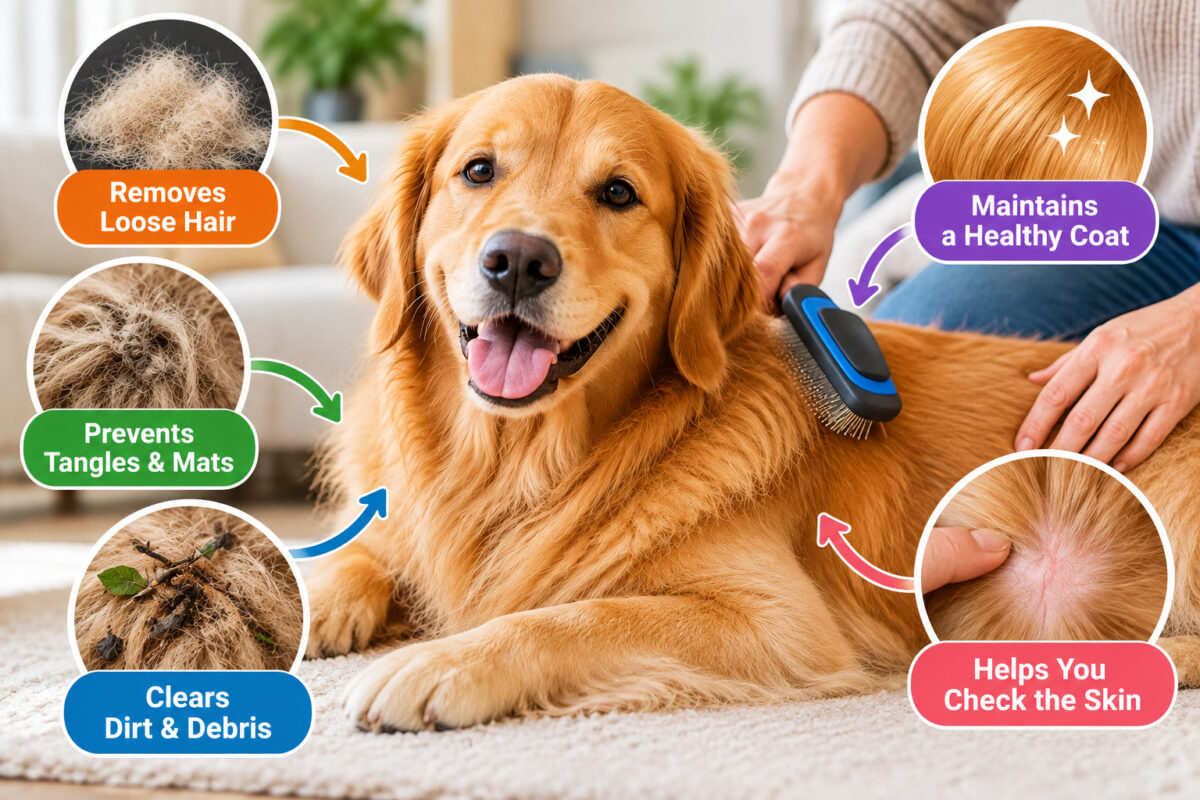
Dog brushing is the process of using a coat-appropriate grooming tool to remove loose hair, dirt, debris, and manageable tangles. It also gives you a regular chance to inspect the skin.
The ASPCA’s dog grooming guidance notes that regular brushing helps remove dirt, spread natural oils, prevent tangles, and keep the skin clean.
- Removes loose hair: Brushing catches fur before much of it reaches your floors and furniture.
- Prevents tangles: Regular grooming can stop small knots from developing into tight mats.
- Clears debris: Grass, dust, burrs, and other material may become trapped in the coat.
- Helps you inspect skin: Brushing exposes areas where you may notice redness, lumps, parasites, or injuries.
- Maintains the coat: The correct brush helps keep individual hairs separated and manageable.
Brushing isn’t only about making a dog look tidy. I treat it as a routine coat-and-skin inspection.
How Do You Brush a Dog Step by Step?
Start with a dry coat, the correct grooming tool, and a dog that’s reasonably calm. Then work through the body systematically instead of brushing random areas.
1. Let Your Dog Inspect the Brush
Place the brush nearby and let your dog sniff it. Reward calm interest with praise or a small treat.
This step matters most for puppies and dogs that already avoid grooming.
2. Check the Skin and Coat First
Run your hands over the body before brushing. Look for mats, burrs, lumps, redness, scabs, wounds, and sensitive areas.
Don’t brush aggressively over irritated or injured skin.
3. Start Around the Shoulders
Begin where your dog is comfortable being touched. For many dogs, the shoulder and upper-back area works well.
Use light pressure at first. The brush should move through the coat rather than repeatedly scratch the skin.
4. Brush in Small Sections
Work through one manageable area before moving to the next. Long and dense coats especially benefit from this approach.
- Shoulders and neck
- Back and sides
- Chest
- Belly, if your dog comfortably allows it
- Front and rear legs
- Hindquarters
- Tail
The American Kennel Club’s home grooming guidance recommends brushing through the coat while checking areas where mats and debris can collect.
5. Pay Extra Attention to Tangle-Prone Areas
Behind the ears, under the front legs, around the hindquarters, and beneath collars can develop tangles quickly.
Check these areas with your fingers before running a brush through them.
6. Deal With Small Tangles Gently
Don’t start at the skin and drag a knot through the entire length of the hair. That pulls the skin and can make grooming painful.
- Hold the coat gently near the skin to reduce pulling.
- Start near the end of the tangled hair.
- Work through a small section at a time.
- Use your fingers or an appropriate comb for manageable knots.
- Stop when the tangle cannot be removed comfortably.
Tight, skin-level mats are different from everyday tangles. Severe matting may need an experienced groomer.
7. Finish With a Final Coat Check
Run your hands over the coat again. Check whether you missed loose hair, debris, or a sensitive area.
End while your dog is still coping well. Short successful sessions often work better than one long stressful session.
Which Dog Brush Should You Use?
The best dog brush depends on coat type. A tool that works well on a Labrador may be a poor choice for a Poodle or Yorkshire Terrier.
The AKC’s guide to dog brush types likewise recommends choosing grooming tools according to coat characteristics.
| Coat Type | Useful Brush Type | Main Goal | Watch For |
|---|---|---|---|
| Smooth, short coat | Rubber grooming tool or bristle brush | Loose hair and surface debris | Too much pressure on exposed skin |
| Medium coat | Slicker or pin-and-bristle brush | Loose fur and light tangles | Hidden knots behind ears and legs |
| Long coat | Pin brush plus comb | Tangle prevention and coat separation | Only brushing the surface |
| Curly coat | Appropriate slicker plus comb | Preventing compact tangles | Matting close to the skin |
| Double coat | Slicker or suitable undercoat tool | Removing loose undercoat | Overworking one area |
How Often Should You Brush Your Dog?
Brushing frequency depends on coat length, density, shedding, activity, and how quickly the coat tangles. There isn’t one perfect schedule for every dog.
The ASPCA, for example, suggests weekly brushing for some smooth short coats while dogs with longer coats may need much more frequent grooming.
- Smooth short coats: Weekly brushing may be enough for many dogs.
- Medium coats: Brush several times weekly when shedding or tangling increases.
- Long coats: Check the coat frequently and brush often enough to prevent knots.
- Curly coats: Frequent brushing and combing may be needed because mats can form close to the skin.
- Double coats: Increase grooming during periods of heavy undercoat shedding.
Your dog’s coat gives better feedback than a calendar. If knots or packed loose fur develop between sessions, shorten the interval.
Should You Brush a Dog Before or After a Bath?
For most dogs, brush before bathing to remove loose hair, debris, and manageable tangles. After the coat has been dried appropriately, a finishing brush may also help.
This is especially important for longer or denser coats because wetting an already tangled coat can make grooming harder.
If bath time is next, follow our complete dog bathing guide for the washing and rinsing steps.
Dogs with dense coats require extra preparation. Our guide to bathing a thick-coated dog explains how brushing fits into that routine.
What Are the Most Common Dog-Brushing Mistakes?
Most brushing problems come from using too much force, choosing the wrong tool, or trying to finish too quickly.
- Pressing too hard: More pressure doesn’t automatically remove more loose hair.
- Pulling through mats: Tight knots pull on the skin and can hurt.
- Using one brush for everything: Different coat structures need different tools.
- Brushing only the surface: A fluffy top layer can hide tangles underneath.
- Ignoring sensitive areas: Armpits, ears, legs, and the tail may require slower handling.
- Continuing when the skin becomes irritated: Repeated passes over one spot can cause discomfort.
- Making sessions too long: A dog that starts calmly can become frustrated during an extended session.
I would rather finish two calm five-minute sessions than push through one unpleasant marathon.
What If Your Dog Hates Being Brushed?
Start with short grooming sessions and pair the brush with positive experiences. Don’t immediately force a complete grooming session on a fearful dog.
The AKC’s guidance on dogs that dislike brushing also emphasizes gradually creating a more positive association with grooming.
- Show the brush without touching your dog.
- Reward calm behavior.
- Touch the shoulder gently with the brush.
- Give another reward.
- Make one or two light strokes.
- End the session before your dog becomes overwhelmed.
Repeat this process and slowly increase the amount of brushing. Watch body language instead of rushing toward a complete session.
If your dog suddenly becomes sensitive to brushing after previously enjoying it, consider discomfort as a possible cause. A veterinarian can evaluate unexplained pain or skin changes.
When Should You Stop Brushing and Get Professional Help?
Routine home brushing has limits. Stop when continuing would mean causing pain, fighting severe matting, or working over unhealthy skin.
- Large or skin-tight mats
- Open sores or bleeding
- Swelling or significant redness
- Strong pain when the coat is touched
- Unexplained patches of hair loss
- Persistent itching or unusual odor
- Snapping, panic, or intense defensive behavior
A professional groomer can help with difficult coat maintenance. A veterinarian is more appropriate when the problem involves pain, parasites, wounds, infection, or other skin concerns.
If your next step is washing the coat, see our guide to bathing long-haired dogs without creating tangles.
Dog Brushes I Would Consider for Home Grooming
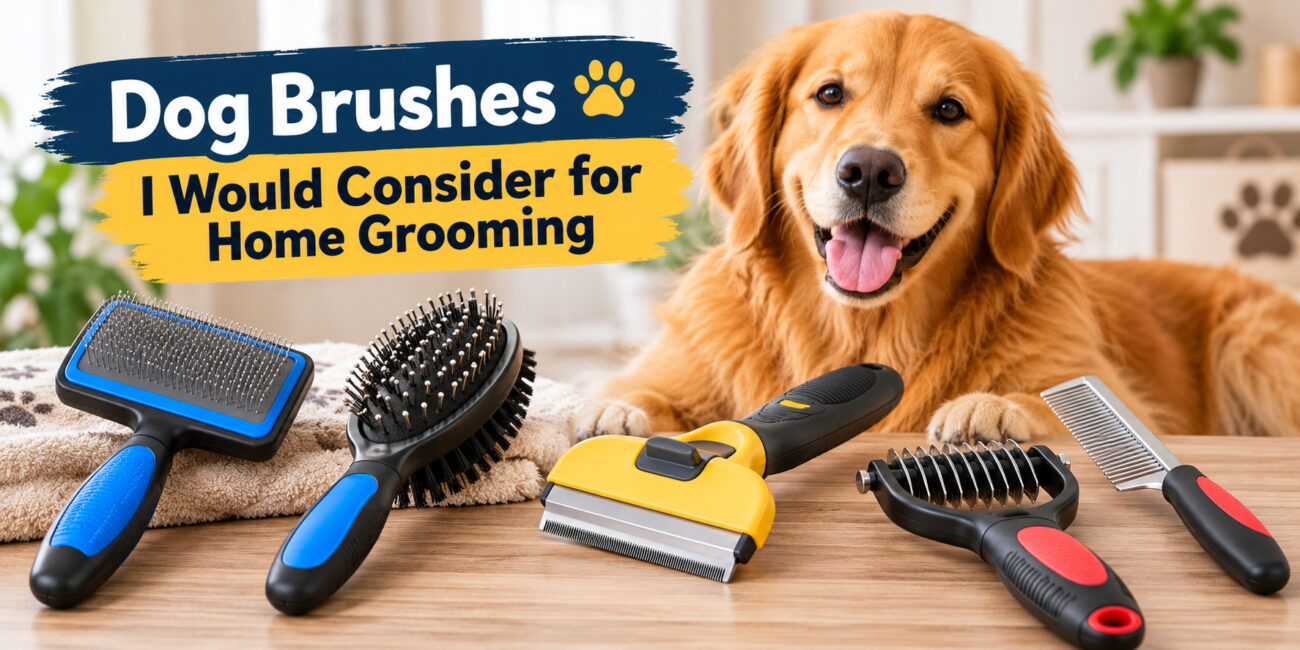
If you’re ready to choose a grooming tool, these three options fit different coat-care needs.
🏆 Best Everyday Slicker
Hertzko Self-Cleaning Slicker Brush
★★★★☆ 4.3/5
Its retractable-pin design makes trapped fur easier to remove after brushing. I like this style for routine grooming on many short-to-medium coats where convenience matters.
💰 Best 2-in-1 Value
Safari Pin & Bristle Combo Brush
★★★★☆ 4.3/5
The pin side handles light detangling while the bristle side works as a finishing tool. I prefer this combination for medium or longer coats that need everyday maintenance rather than heavy dematting.
🐕 Best for Heavy Shedding
FURminator Short Hair deShedding Tool
★★★★☆ 4.4/5
This tool targets loose undercoat rather than acting like a standard everyday bristle brush. I would reserve it for compatible shedding coats and use it gently instead of making repeated aggressive passes.
Frequently Asked Questions
Should you brush a dog against the direction of the hair?
It depends on the coat and grooming tool. Some short-coated dogs can be brushed gently against the hair growth to loosen dead fur, then brushed with the coat to finish. For long, curly, or tangled coats, use a technique suited specifically to that coat instead of applying one rule to every dog.
Can you brush a dog every day?
Some dogs benefit from daily light brushing, especially long-haired dogs that tangle easily. Others need less frequent grooming. The key is using the right tool, light pressure, and stopping before repeated brushing irritates the skin.
Is it better to brush a dog wet or dry?
Routine home brushing usually starts on a dry coat, especially before bathing. Certain coat types may also be brushed during controlled drying by experienced groomers. Avoid forcing an ordinary brush through wet, stubborn tangles because this can pull painfully on the coat and skin.
How do you brush a dog with a double coat?
Work in sections and use a tool suited to reaching loose undercoat without scraping the skin. During heavy shedding, more frequent sessions may help. Don’t repeatedly drag a de-shedding tool over the same area, and never assume more pressure produces better results.
What should you do if you find a severe mat?
Don’t yank the mat or blindly cut close to the skin with household scissors. Dog skin can sit surprisingly close to tightly matted hair. If a mat is skin-tight, extensive, or painful, an experienced groomer or veterinarian can determine a safer removal method.
Final Takeaway
Learning how to brush a dog starts with three things: the right tool, gentle technique, and a routine matched to the coat.
Inspect the skin first, work through small sections, and never force painful tangles. Keep sessions calm enough that grooming becomes normal rather than something your dog learns to avoid.
Once you understand your dog’s coat, brushing becomes much easier. A few careful minutes on a regular schedule can prevent many of the tangles, loose-hair problems, and grooming battles that become harder to handle later.