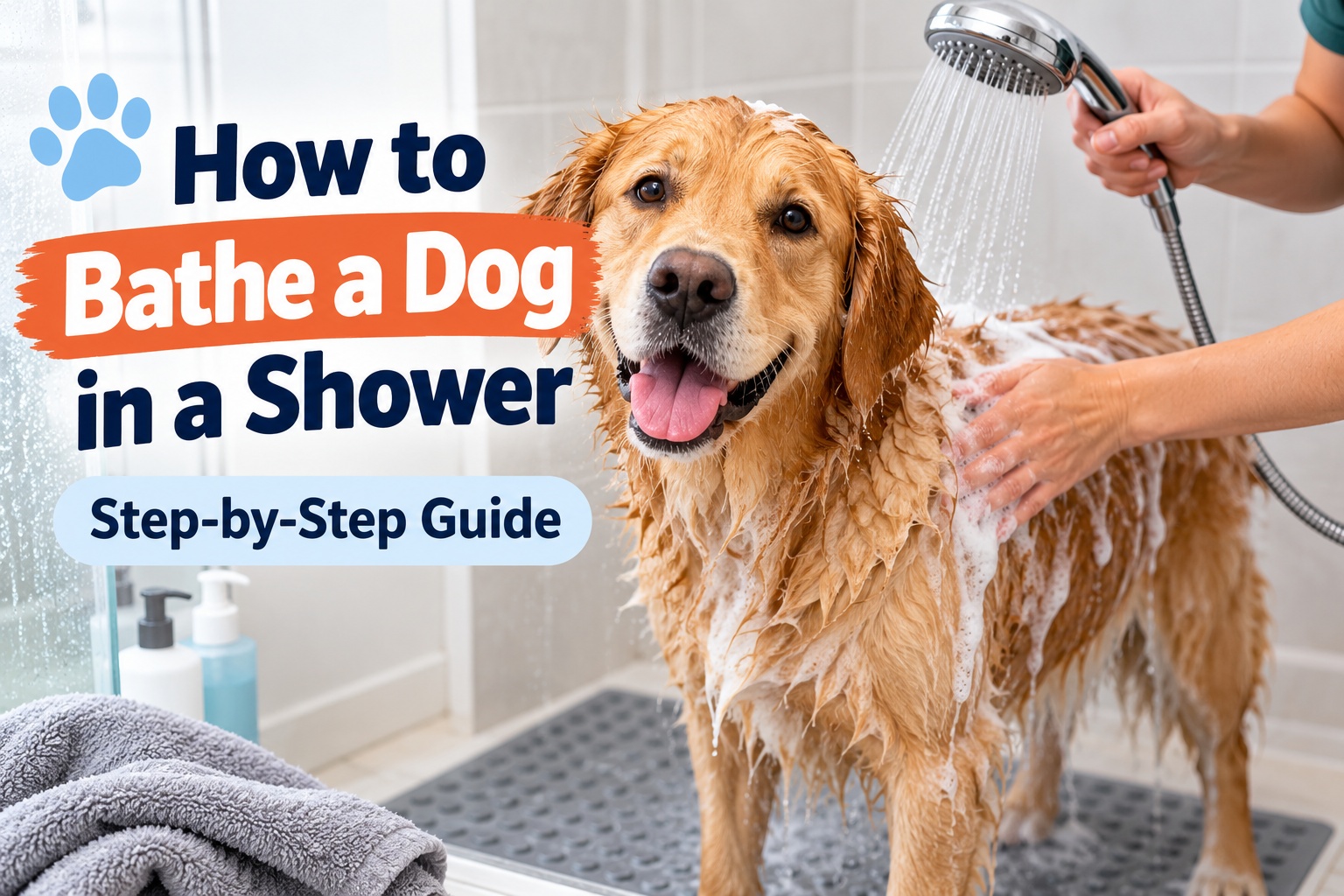
Quick Answer
To bathe a dog in a shower, brush the coat first, provide secure footing, and use comfortably lukewarm water. Wet the body from the neck down, massage in dog-specific shampoo, rinse completely, and dry the coat well. For the broader basics, follow this safe dog bathing guide.
Quick Shower Bath Steps
- Brush first: Remove loose fur, debris, and easy tangles before the coat gets wet.
- Prevent slipping: Put a non-slip mat or secure rubber surface on the shower floor.
- Use lukewarm water: Keep the water comfortable rather than hot or cold.
- Wet below the head: Start near the shoulders and keep direct spray away from the eyes and ears.
- Shampoo gently: Massage dog shampoo through the coat without aggressive scrubbing.
- Rinse and dry: Remove every trace of shampoo, then towel-blot and dry the coat thoroughly.
One Important Shower Tip
- Keep one hand available to steady your dog whenever the shower is running.
A shower can be one of the easiest places to wash a dog at home. The enclosed space keeps water controlled, while a handheld sprayer can make rinsing faster.
The challenge is making the shower feel secure. Wet flooring, loud water, and direct spray can make some dogs nervous very quickly.
I focus on three things before anything else: secure footing, gentle water pressure, and a predictable routine. Those details often matter more than fancy bathing equipment.
Can You Bathe a Dog in a Shower Safely?
Yes. Most healthy dogs can be bathed safely in a household shower when the footing is secure, the water is lukewarm, and the spray is controlled.
A shower can even be easier than a deep bathtub because you don’t need to fill the basin. However, the dog must not be allowed to slide around on a wet floor.
Shower bathing means washing a dog under controlled running water rather than soaking the dog in standing bath water.
- Best for: Medium and large dogs that can stand comfortably in the shower.
- Helpful feature: A handheld showerhead or pet sprayer gives better control.
- Main risk: Slipping on smooth tile or a wet shower tray.
- Main comfort issue: Loud or high-pressure water can frighten sensitive dogs.
The American Kennel Club recommends preparing supplies before bathing and using warm rather than hot water. A detachable spray nozzle can also make washing easier.
You can review the American Kennel Club dog bathing guidance for additional preparation tips.
What Do You Need Before Showering Your Dog?
Set up the entire shower area before bringing your dog inside. Once the coat is wet, leaving to find shampoo or towels becomes difficult.
I prefer to place every item within arm’s reach first. It keeps the bath calmer and prevents a wet dog from escaping while I search for supplies.
- Dog-specific shampoo
- Two or more absorbent towels
- Non-slip shower mat
- Handheld showerhead, hose, or cup
- Dog brush or comb
- Damp washcloth for the face
- Large cotton balls for optional outer-ear protection
- Treats for rewarding calm behavior
Should You Brush Your Dog Before the Shower?
Yes. Brush before bathing whenever the coat type allows it because loose hair and light tangles are easier to remove while dry.
Water can tighten existing mats. That makes later washing, rinsing, and drying harder.
My normal routine is to brush first, check the skin, and then start the water. This also gives me a chance to notice sores, irritated areas, ticks, or unusual lumps before shampoo covers the coat.
For a more detailed coat-preparation routine, see whether to brush a dog before or after a bath.
How to Bathe a Dog in a Shower Step by Step
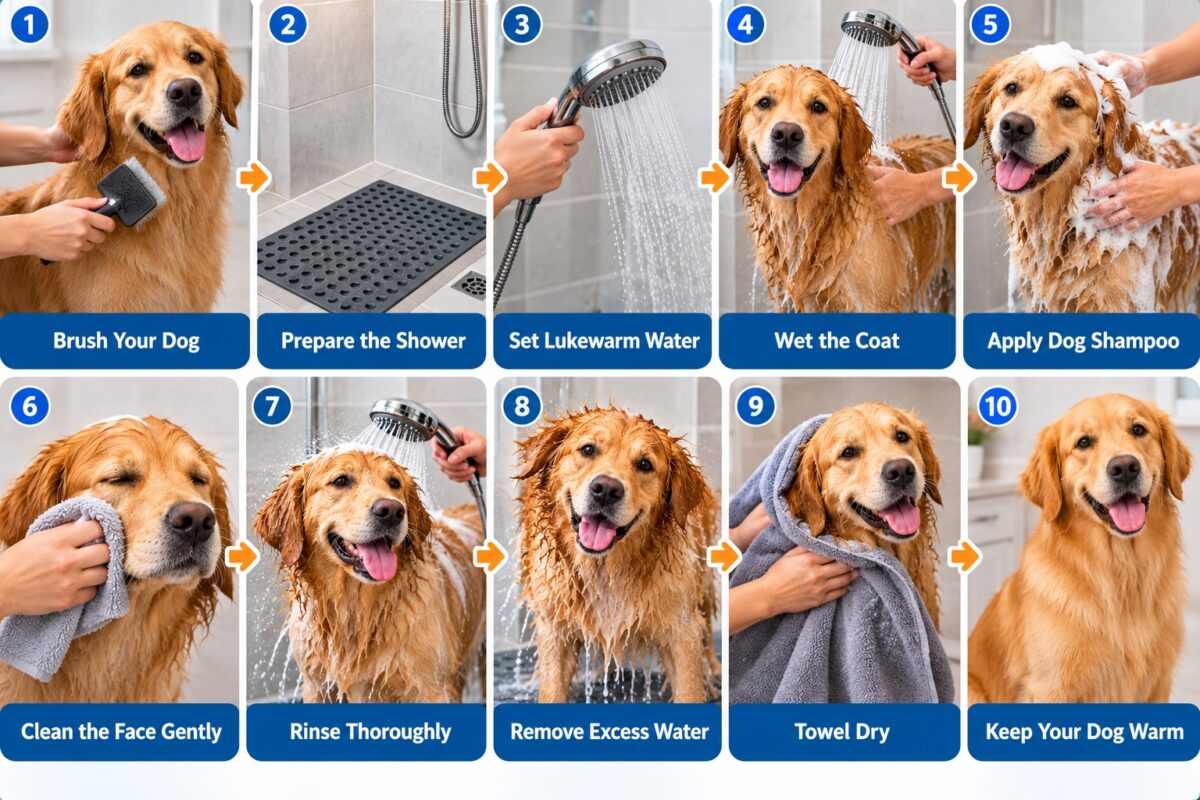
Start with a dry, brushed dog and a prepared shower. Then work from the shoulders toward the tail while keeping direct spray away from the face and ear canals.
- Prepare the shower floor. Put down a non-slip mat and make sure shampoo, towels, and treats are within reach.
- Test the water. Run the shower until it feels comfortably lukewarm against your inner forearm.
- Bring your dog in calmly. Avoid pulling or forcing the dog into the shower if possible.
- Wet the coat from the neck down. Start around the shoulders and move toward the back, chest, belly, legs, and tail.
- Apply dog shampoo. Use the amount recommended on the label and work it through the coat gently.
- Clean the face separately. Use a damp washcloth around the muzzle, cheeks, and forehead instead of direct spray.
- Rinse thoroughly. Continue rinsing until the coat no longer feels slippery and you cannot see shampoo residue.
- Remove excess water. Gently squeeze longer fur or let your dog shake before towel drying.
- Towel-blot the coat. Avoid aggressive rubbing, especially with long or tangled hair.
- Keep your dog warm. Finish drying before allowing the dog into a cold room or outdoor area.
What Water Temperature Should You Use?
Use comfortably lukewarm water. Avoid copying the hot shower temperature you might choose for yourself.
Dogs can respond differently to temperature, so I test the stream on my inner forearm before it touches the coat. I test it again whenever I adjust the faucet.
You can learn more about choosing the right dog bath water temperature.
How Strong Should the Shower Spray Be?
Use a gentle to moderate flow that wets the coat without startling your dog. More pressure isn’t automatically better.
For short coats, a light stream often reaches the skin quickly. Thick and double coats may need closer, slower rinsing.
- Start low: Begin with mild pressure and increase only if your dog stays relaxed.
- Aim downward: Direct water along the coat rather than upward toward the head.
- Stay close: Holding the sprayer near the coat reduces splashing and noise.
- Pause when needed: Stop the water while shampooing if the sound makes your dog anxious.
Shower vs Bathtub: Which Is Better for Bathing a Dog?
Neither method is automatically better for every dog. A shower provides controlled running water, while a bathtub may give more physical containment for smaller dogs.
| Feature | Shower | Bathtub |
|---|---|---|
| Water control | Excellent with handheld sprayer | Good, depending on faucet setup |
| Best dog size | Often easier for medium or large dogs | Often convenient for small dogs |
| Rinsing thick coats | Easy with flexible hose | Depends on sprayer access |
| Slip risk | High without a non-slip mat | Also high on smooth tub surfaces |
| Standing water needed | No | Optional |
I usually prefer a shower for larger dogs because I can stand beside them and direct the water exactly where it’s needed. A handheld sprayer also helps me rinse the chest, belly, and legs without repeatedly filling a cup.
How Do You Keep Water Out of a Dog’s Ears?
Keep the spray below the head and clean the face with a damp cloth. You can also place a large dry cotton ball loosely at each ear opening if your dog tolerates it.
Never push cotton deeply into the ear canal. Remove it as soon as the bath finishes.
- Check the ears before bathing.
- Keep the showerhead aimed downward.
- Use a washcloth around the face.
- Replace a cotton ball if it becomes soaked.
- Dry the visible outer ear gently afterward.
For more detail, follow this guide on keeping water out of a dog’s ears during bathing.
How Do You Shampoo a Dog in the Shower?
Apply shampoo only after the coat is thoroughly wet. Use a product designed specifically for dogs and follow its label directions.
Massage the shampoo through the coat with your fingertips. Avoid scratching the skin with your nails.
- Start around the shoulders and neck.
- Work along the back and sides.
- Wash the chest and belly.
- Clean each leg and paw.
- Finish around the tail and rear area.
Some shampoos need a specific contact time. Medicated products should be used according to your veterinarian’s instructions.
VCA Animal Hospitals notes that prescribed medicated shampoos may require a set contact period before rinsing. See their medicated dog shampoo guidance.
How Long Should You Rinse a Dog?
Rinse until no visible foam remains and the coat no longer feels slippery from shampoo. Dense coats usually need much more rinsing than short coats.
I spend more time rinsing than lathering. The armpits, belly, chest, paws, and underside of the tail are easy places to miss.
- Short coat: Run your hands over the coat while rinsing.
- Long coat: Separate sections so water reaches deeper layers.
- Thick coat: Part the fur and check close to the skin.
- Skin folds: Rinse carefully and dry the folds afterward.
How Should You Dry a Dog After a Shower?
Start by letting excess water drain from the coat. Then use towels to blot rather than aggressively rub the fur.
Short-haired dogs may dry quickly with towels alone. Thick, long, and double coats often need more drying near the roots.
- Let your dog shake inside the shower if space allows.
- Blot the back and sides with an absorbent towel.
- Dry the belly, legs, feet, and tail.
- Check dense fur close to the skin.
- Use cool or comfortably warm airflow if a dryer is needed.
Keep the dryer moving and avoid hot airflow close to the skin. Stop if your dog becomes frightened or uncomfortable.
What Shower-Bathing Mistakes Should You Avoid?
The biggest mistakes are usually related to temperature, footing, pressure, and incomplete rinsing. Fixing those four issues makes shower bathing much safer.
- Using hot water: Choose lukewarm water instead.
- Skipping the non-slip mat: Wet paws can slide suddenly on tile.
- Spraying the face directly: Use a damp cloth instead.
- Using human shampoo: Choose a dog-specific product.
- Scrubbing mats: Handle significant matting before the bath.
- Rushing the rinse: Check hidden areas before stopping.
- Leaving dense fur damp: Check the coat near the skin.
The Merck Veterinary Manual notes that grooming and bathing schedules can vary with the dog’s coat and condition. It also recommends pet shampoo rather than treating every dog with the same routine.
See the Merck Veterinary Manual routine dog care guidance.
What If Your Dog Hates the Shower?
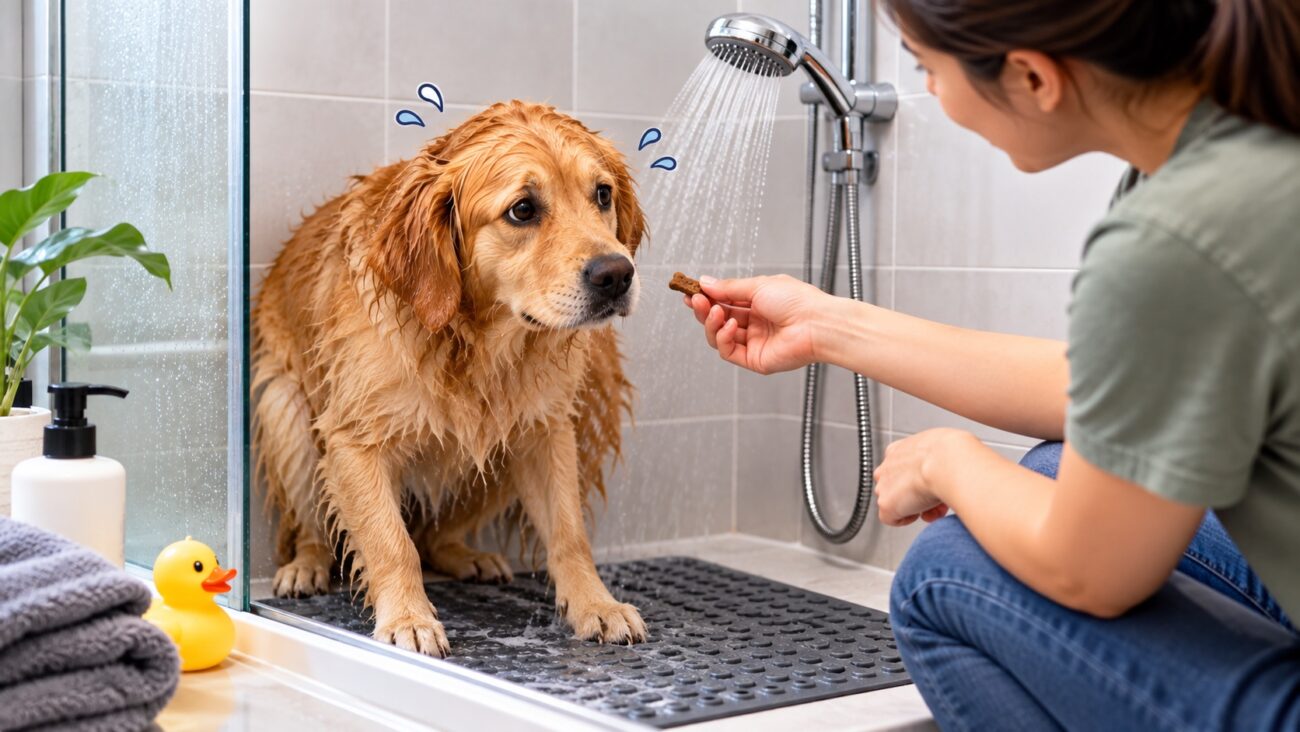
Don’t start by turning the shower on at full pressure. Build comfort with the space before expecting your dog to tolerate a complete bath.
A dog that feels trapped may scramble, jump, or try to bite. Safety matters more than finishing the bath.
- Let your dog enter the dry shower for treats.
- Practice standing on the non-slip mat.
- Turn the water on briefly away from the dog.
- Reward calm behavior.
- Introduce gentle water around the paws.
- Increase exposure slowly over several sessions if needed.
I find that predictable repetition works better than forcing a nervous dog through one stressful bath. Keeping sessions short can make future grooming easier.
When Should You Avoid Bathing a Dog at Home?
Home shower bathing may not be appropriate when a dog has severe pain, open wounds, significant skin disease, or extreme fear. Veterinary or professional grooming help may be safer.
Seek veterinary advice when you notice persistent redness, strong odor, discharge, extensive hair loss, sores, swelling, or severe itching.
Dogs using prescribed medicated shampoos may also need a specific bathing schedule. Don’t replace those instructions with a routine home-bath timetable.
If you’re ready to make shower bathing easier, these are the types of tools I’d consider first:
🏆 BEST FOR SHOWER CONTROL
Waterpik Pet Wand PRO
★★★★☆
The Pet Wand PRO uses an 8-foot flexible hose, adjustable water flow, and separate spray patterns. I like this style for shower bathing because one hand can stay on the dog while the other controls the spray.
✋ BEST ONE-HAND TOOL
Aquapaw Dog Bathing Tool
★★★★☆
Aquapaw combines a wearable sprayer with a scrubbing surface and lets you control water from your hand. I prefer this design when keeping one hand close to a nervous or energetic dog matters most.
🌿 BEST FOR GENTLE ROUTINE BATHS
earthbath Oatmeal & Aloe Shampoo
★★★★½
This dog shampoo uses colloidal oatmeal and aloe and comes in fragrance-free options. I like a mild dog-specific shampoo for routine home showers because it keeps the process simple without adding unnecessary products.
Frequently Asked Questions
Can I wash my dog with a normal showerhead?
Yes. A normal showerhead can work if you can control the pressure and direction safely. A handheld showerhead is usually easier because you can keep the spray close to the coat and away from your dog’s eyes and ears.
Should I shower my dog with warm or cold water?
Use comfortably lukewarm water for a routine dog bath. Avoid hot water and intentionally cold water. Test the stream on your inner forearm before wetting your dog, and recheck it whenever you change the faucet setting.
Can I use human shampoo when showering my dog?
It’s better to use shampoo made specifically for dogs. Human shampoos are formulated for human skin and may not suit canine skin. If your dog has a diagnosed skin problem, use the product and bathing schedule recommended by your veterinarian.
How often should I shower my dog?
There isn’t one perfect schedule for every dog. Coat type, activity, odor, dirt, skin condition, and veterinary treatment all matter. Bathe when needed rather than automatically washing every dog on the same weekly schedule.
Why does my dog still feel slippery after rinsing?
A slippery coat often means shampoo remains in the fur. Keep rinsing while running your fingers through the coat, especially around the chest, belly, armpits, legs, and tail. Thick coats may require several extra minutes of careful rinsing.
Final Takeaway
Bathing a dog in a shower is simple when you control the environment before turning on the water. Secure the footing, use lukewarm water, keep spray away from the face, and rinse longer than you think you need to.
Keep the routine calm and predictable. When your dog learns that shower time is safe, future baths usually become much easier for both of you.