Quick Answer
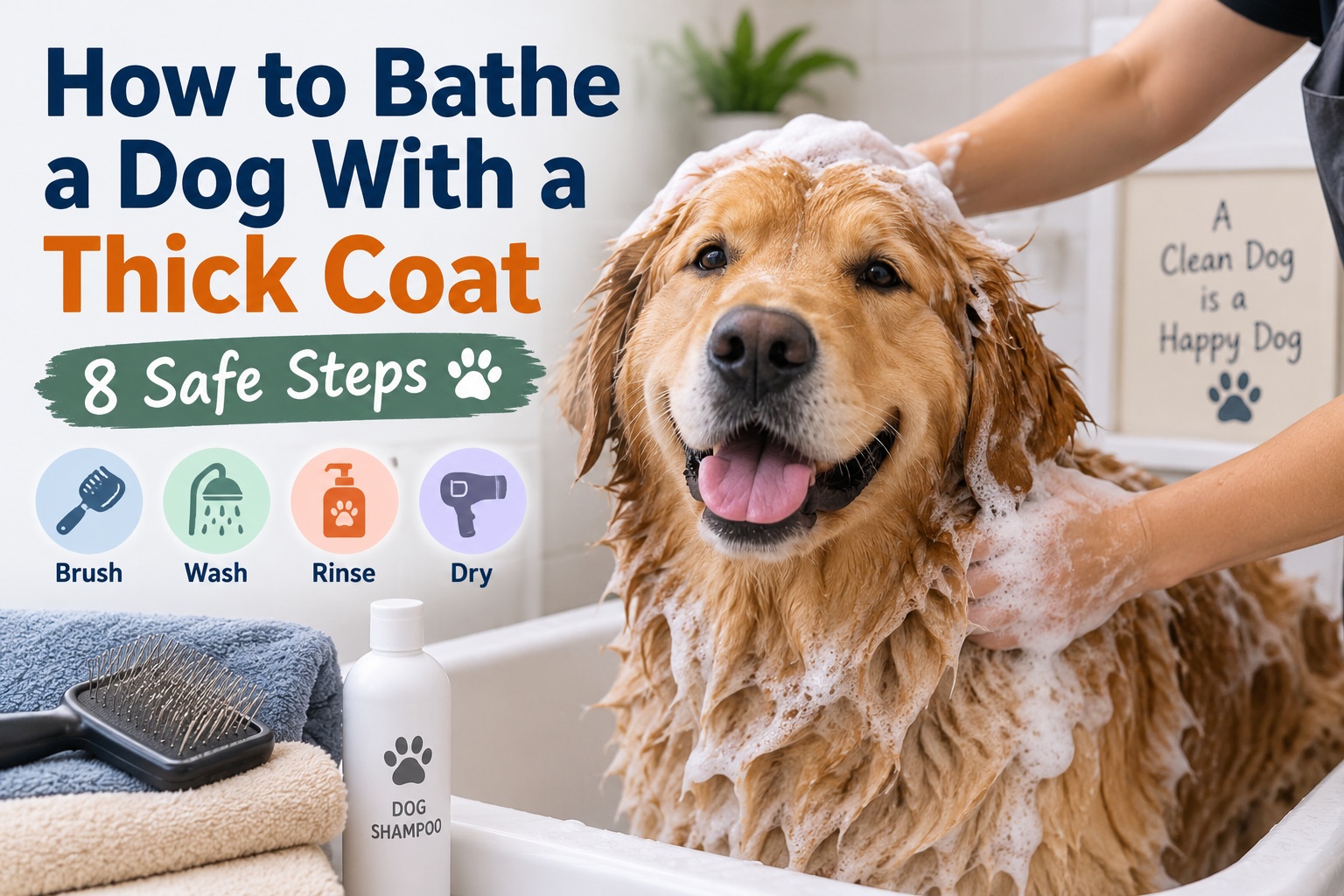
To bathe a dog with a thick coat, brush out loose undercoat first, then soak the fur completely with lukewarm water. Work dog shampoo down to the skin, rinse much longer than you would with a short coat, and dry the dense undercoat thoroughly. The same basics in this safe dog bathing guide still apply, but thick coats need extra attention during wetting, rinsing, and drying.
Quick Thick-Coat Bath Steps
- Brush first: Remove loose fur, small tangles, and compacted undercoat before adding water.
- Soak deeply: Part the coat and make sure water reaches the skin instead of only wetting the surface.
- Use dog shampoo: Massage it through the coat in sections without scratching the skin.
- Rinse completely: Keep rinsing until the coat no longer feels slippery and the water runs clean.
- Remove water gently: Squeeze and blot the coat instead of rubbing it aggressively.
- Dry the undercoat: Use towels followed by cool moving air when needed, checking the roots for hidden moisture.
Thick fur can make a simple dog bath surprisingly tricky. Water may sit on the outer coat while shampoo and moisture remain hidden underneath.
I prefer treating the coat in sections instead of trying to wash the whole dog at once. That one change makes wetting, rinsing, and checking the skin much easier.
What Counts as a Thick Coat on a Dog?
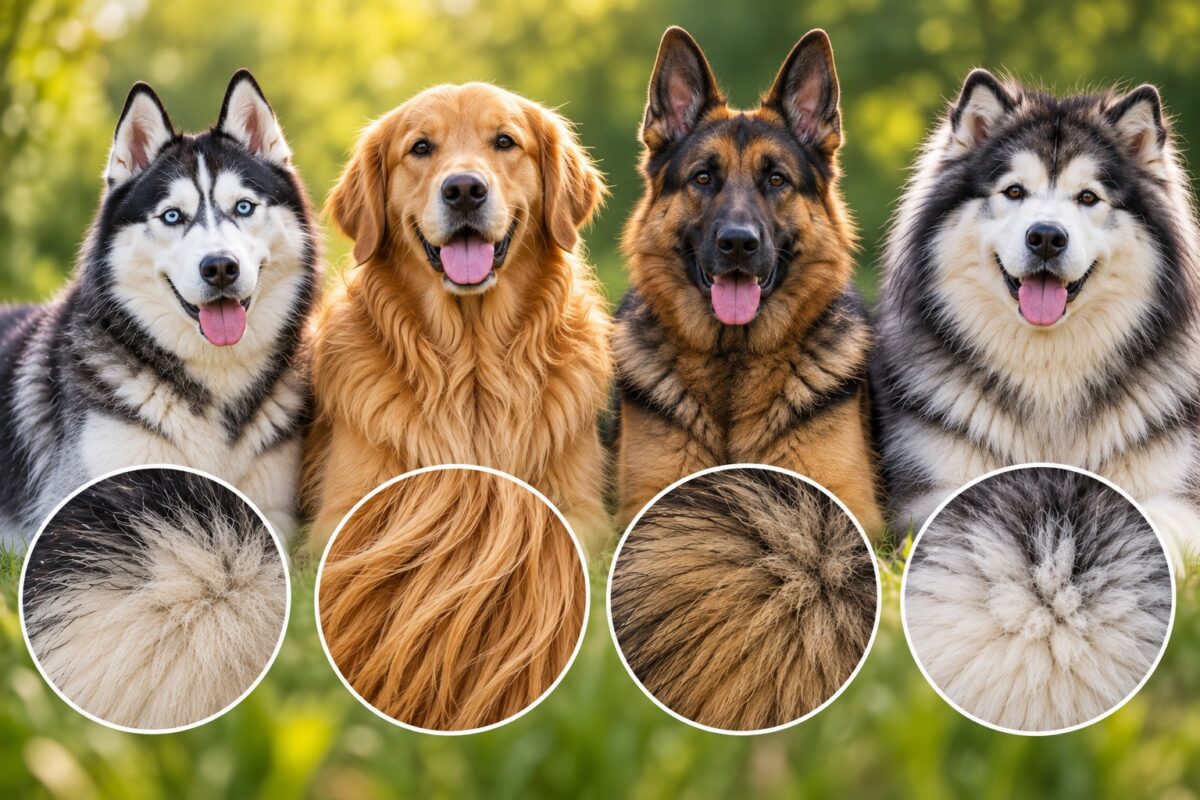
A thick coat is a dense layer of fur that makes it harder to reach the skin during bathing. Many thick-coated dogs also have a soft undercoat beneath longer protective hairs.
Definition: A double coat has two layers: a softer insulating undercoat and an outer layer of guard hairs. Breeds such as Golden Retrievers, German Shepherd Dogs, Huskies, Newfoundlands, and many other working or northern breeds commonly have dense double coats.
The American Kennel Club explains that these layers perform different protective jobs. That is one reason routine grooming should focus on maintaining the coat rather than simply removing as much fur as possible.
If your dog’s coat is both dense and long, the techniques in this long-haired dog bathing guide can also help reduce tangles.
- Dense double coat: Heavy undercoat sits beneath protective guard hairs.
- Long thick coat: Length adds another challenge because wet strands tangle easily.
- Curly dense coat: Water and shampoo may struggle to reach the skin unless you work in sections.
- Arctic-style coat: Extremely dense insulation can take much longer to wet and dry.
What Should You Do Before Bathing a Thick-Coated Dog?
Brush before the bath unless your veterinarian or professional groomer has told you otherwise. Removing loose fur gives water and shampoo a clearer path toward the skin.
Start slowly. A dense coat can hide sore spots, scabs, burrs, parasites, and tangles that are easy to miss from the surface.
- Check the skin. Part the fur in several areas and look for redness, sores, swelling, or unusual irritation.
- Remove loose undercoat. Use an appropriate slicker brush, grooming rake, or comb for your dog’s coat.
- Handle light tangles. Work through manageable knots gently rather than pulling them.
- Gather supplies. Keep shampoo, towels, a non-slip mat, a rinsing tool, and drying equipment within reach.
- Prepare the tub. Good footing matters because a large wet dog can become difficult to control on a slippery surface.
Practical check: Run a comb gently through several coat sections before the bath. If it repeatedly stops near the skin, deal with the compacted coat before soaking it.
How Do You Bathe a Dog With a Thick Coat Step by Step?
The safest routine is brush, wet, shampoo, rinse, remove excess water, and dry. The difference is that every wet step must reach through the dense coat.
1. Put Your Dog on Secure Footing
Place a non-slip mat in the tub or bathing area. Keep the room comfortably warm and organize your supplies before bringing the dog in.
A secure dog usually stands more calmly. That makes it easier to work carefully around the belly, chest, legs, and tail.
2. Use Lukewarm Water
Use comfortably lukewarm water rather than a hot shower setting. The ASPCA also recommends lukewarm water for routine dog bathing.
Water comfort matters throughout the bath, so recheck it whenever you adjust the faucet. See the complete dog bath temperature guide for more detail.
3. Soak the Coat All the Way to the Skin
This is where thick coats differ most from short coats. Surface fur can look soaked while the dense undercoat remains nearly dry.
- Start around the shoulders and work backward.
- Move the spray slowly rather than sweeping it across the surface.
- Use your free hand to separate dense fur.
- Check the chest, neck, rear legs, belly, and tail base.
- Keep direct spray away from the eyes and ear canals.
Part the hair and look at the roots. If the fur next to the skin is still dry, keep wetting before adding shampoo.
4. Work Dog Shampoo Through the Coat in Sections
Use shampoo formulated for dogs. Human shampoo isn’t my default because canine skin and coat have different grooming needs.
VCA notes that some owners of especially thick-coated dogs dilute shampoo with water so it spreads and rinses more easily. Follow the product label rather than guessing a dilution ratio.
- Apply shampoo across the back and shoulders.
- Work it through the chest and sides.
- Massage the legs, belly, and tail area.
- Use your fingers to reach through dense fur without scratching.
- Clean the face separately with a damp cloth when appropriate.
Don’t assume more foam means a cleaner coat. Too much product can simply make the rinse longer.
5. Rinse Until the Undercoat Is Completely Clean
Rinsing is one of the most important parts of a thick-coat bath. Shampoo can remain trapped close to the skin even when the outer coat looks clean.
ASPCA guidance emphasizes rinsing soap from the coat thoroughly. With dense fur, I would give this step more attention than shampooing itself.
- Rinse in the direction the coat grows.
- Part thick fur while the water is running.
- Check under the collar area and behind the legs.
- Feel the roots for a slick or soapy texture.
- Continue until the coat feels clean rather than slippery.
6. Condition the Coat When Appropriate
A dog-specific conditioner can help some long or dense coats remain manageable. Use one only when it suits your dog’s coat, skin, and grooming routine.
Follow the label for contact and rinsing instructions. If your veterinarian prescribed a product, their instructions should take priority.
7. Squeeze and Blot Out Excess Water
Before your dog leaves the tub, use your hands to press excess water from the coat. Don’t twist long fur or scrub it aggressively.
Follow with absorbent towels. Press them against the coat, replacing each towel once it becomes saturated.
8. Dry the Undercoat Thoroughly
Dense coats are difficult to dry with towels alone. A pet dryer using moving air can help push moisture out of the coat without relying on strong heat.
The AKC notes that thicker and longer coats may benefit from towel drying followed by a dog dryer. Their guidance also warns against using excessive heat on canine skin.
For a complete routine, see how to dry a dog after a bath.
- Begin with a low airflow setting if your dog is unfamiliar with dryers.
- Keep the nozzle moving instead of concentrating air on one spot.
- Avoid directing forceful air at the eyes, ears, nose, or other sensitive areas.
- Part the fur occasionally and check moisture near the roots.
- Stop if the dog becomes highly distressed.
How Is Bathing a Thick Coat Different From Other Coat Types?
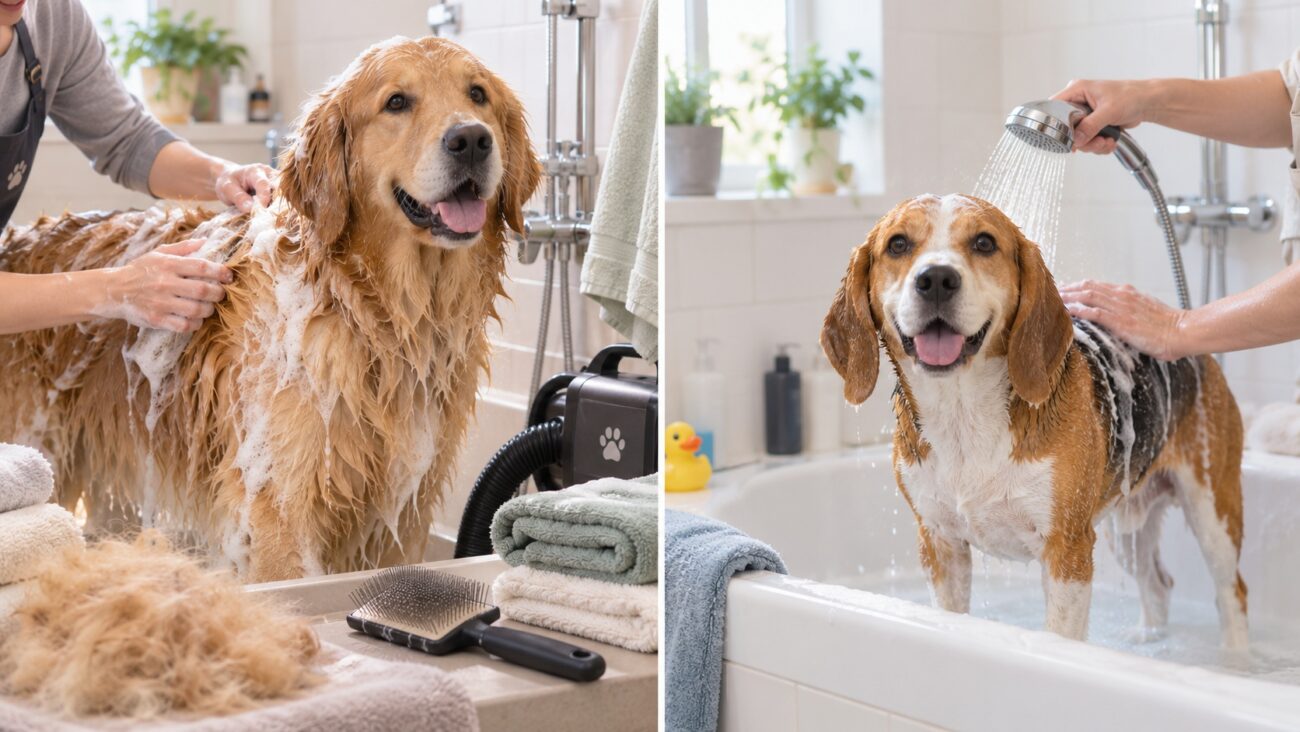
A thick coat demands more preparation, deeper wetting, a longer rinse, and more careful drying. The table below shows where the biggest differences appear.
| Coat Type | Main Bath Challenge | Useful Tool | Drying Priority |
|---|---|---|---|
| Thick double coat | Reaching and rinsing the undercoat | Undercoat rake plus comb | Check moisture at the roots |
| Long dense coat | Tangles and trapped shampoo | Long-pin slicker plus comb | Blot instead of rough rubbing |
| Curly dense coat | Water reaching through compact curls | Slicker and steel comb | Dry section by section |
| Short coat | Usually simpler wetting and rinsing | Rubber or basic grooming brush | Towel drying may be enough |
What Are the Biggest Thick-Coat Bathing Mistakes?
Most problems happen because the outer coat hides what is occurring underneath. A dog can look clean and dry while shampoo or moisture remains near the skin.
- Skipping the pre-bath brush: Loose undercoat makes washing and rinsing harder.
- Only wetting the surface: Shampoo cannot clean properly if water never reaches the skin.
- Using too much shampoo: Extra product creates more residue to remove.
- Rinsing too quickly: Dense undercoat can hold shampoo close to the skin.
- Rubbing hard with towels: Rough friction can encourage tangles in longer coats.
- Using excessive dryer heat: Airflow should do most of the drying work.
- Ignoring hidden dampness: Always check the roots instead of judging the surface alone.
How Often Should You Bathe a Thick-Coated Dog?
There isn’t one correct bath schedule for every thick-coated dog. Coat type, lifestyle, shedding, swimming, dirt exposure, skin health, and veterinarian advice all matter.
The AKC notes that bath frequency varies considerably among dogs. A dog that regularly swims or gets muddy may need a different routine from an indoor dog with a similar coat.
Better rule: Bathe because the coat needs cleaning, not simply because a fixed number of days has passed. Dogs with diagnosed skin conditions may need a veterinarian-directed schedule.
When Should You Ask a Vet or Groomer for Help?
Home bathing is useful for routine coat care, but it isn’t the right answer for every problem. Thick fur can hide skin conditions until they become uncomfortable.
- Strong or persistent odor soon after bathing
- Red, painful, crusted, or oozing skin
- Severe itching or repeated chewing
- Large or tightly compacted mats
- Hair loss or obvious skin inflammation
- A dog that becomes unsafe or extremely distressed during grooming
The ASPCA dog grooming guidance recommends dog-specific grooming practices and careful bathing. Persistent skin problems deserve veterinary attention rather than repeated home shampooing.
For double-coated breeds, the American Kennel Club’s double-coat guidance explains why preserving the natural coat structure matters.
The AKC also provides specific dog drying guidance for choosing a method based on coat type.
Useful Tools for Bathing a Dog With a Thick Coat
If you’re building a practical thick-coat grooming kit, these are three tools I’d consider for different stages of the routine.
🏆 BEST FOR DEEP BRUSHING
Chris Christensen Big G Slicker Brush
★★★★★
The Big G uses long 27 mm pins designed to reach into dense coats and remove undercoat. I like this style when surface brushing isn’t reaching deeply enough, though gentle pressure still matters.
🐕 BEST FOR UNDERCOAT
FURminator Grooming Rake
★★★★☆
Rotating metal teeth are designed for loose undercoat, tangles, and dense double coats. I’d choose it when the main pre-bath problem is packed loose fur rather than coat styling.
💨 BEST FOR HOME DRYING
SHELANDY Groomer Partner Pet Hair Force Dryer
★★★★☆
This force dryer offers adjustable airflow and multiple nozzle options for moving water out of dense coats. I prefer starting at a lower airflow and letting the dog adjust before increasing it.
Frequently Asked Questions
How do you get shampoo through a dog’s thick coat?
Wet the coat completely before shampooing, then part the fur and massage product through small sections. Some thick-coat owners use properly diluted dog shampoo because it can distribute more easily, but always follow the shampoo label rather than choosing your own dilution ratio.
Should you brush a thick-coated dog before or after a bath?
For routine grooming, brushing before the bath helps remove loose undercoat and manageable tangles. You can perform a finishing brush after the coat is mostly or fully dry, depending on coat type and the tools you’re using.
Can you let a thick-coated dog air-dry?
Air-drying may be slow and unreliable for a dense coat because the surface can dry before the undercoat. Towel blotting followed by suitable moving air often gives you more control over moisture trapped close to the skin.
Can I use a human hair dryer on my dog?
A purpose-built dog dryer is the better choice for a thick coat because it relies on controlled airflow. If any drying tool produces uncomfortable heat, stop using it. Keep airflow moving and monitor your dog’s skin and behavior throughout drying.
Why does my thick-coated dog still smell after a bath?
Lingering odor can come from incomplete rinsing, trapped moisture, dirty skin that wasn’t reached during washing, ears, or an underlying skin problem. If the smell returns quickly or comes with redness, discharge, itching, or sores, contact your veterinarian.
Final Takeaway
Learning how to bathe a dog with a thick coat comes down to reaching the skin without turning bath time into a battle. Brush first, soak the undercoat, use dog shampoo, rinse patiently, and remove as much hidden moisture as possible afterward.
Don’t judge the bath by how clean the surface looks. Part the coat, check the roots, and let what you find underneath tell you whether the job is finished.