⚡ Quick Answer
A routine dog bath often takes 15–30 minutes, depending on size and coat type. Short coats usually finish faster. Thick, long, or double coats need more rinsing and drying time. Medicated shampoos can also add 5–10 minutes. Focus on complete rinsing rather than racing the clock.
Typical dog bath timing
- Short coat: Often around 15–20 minutes for a routine home bath.
- Medium coat: Plan about 20–30 minutes for washing and initial drying.
- Thick coat: Full washing and drying can take 30–60 minutes.
Keep bath time safe and efficient
- ✓Brush tangles before turning on the water.
- ✓Give rinsing more time than lathering.
- ✓Dry thick coats completely before finishing.
Warm water hits the coat, and your dog starts shaking everywhere. Bath time can quickly feel longer than expected.
I’m Ashraful, and dog grooming has taught me one useful lesson. A good bath needs enough time, but it should never drag on.
Your dog’s coat, size, behavior, and shampoo all affect the clock. The biggest surprise often comes after washing, because drying can take longer.
📌 Key Takeaways
- →Coat thickness often affects bath length more than the dog’s body size.
- →Complete rinsing helps prevent shampoo residue from irritating your dog’s skin.
- →Medicated shampoo can require 5–10 minutes of contact time.
- →Better preparation shortens bath time without skipping important cleaning steps.
How Long Should a Dog Bath Take From Start to Finish?
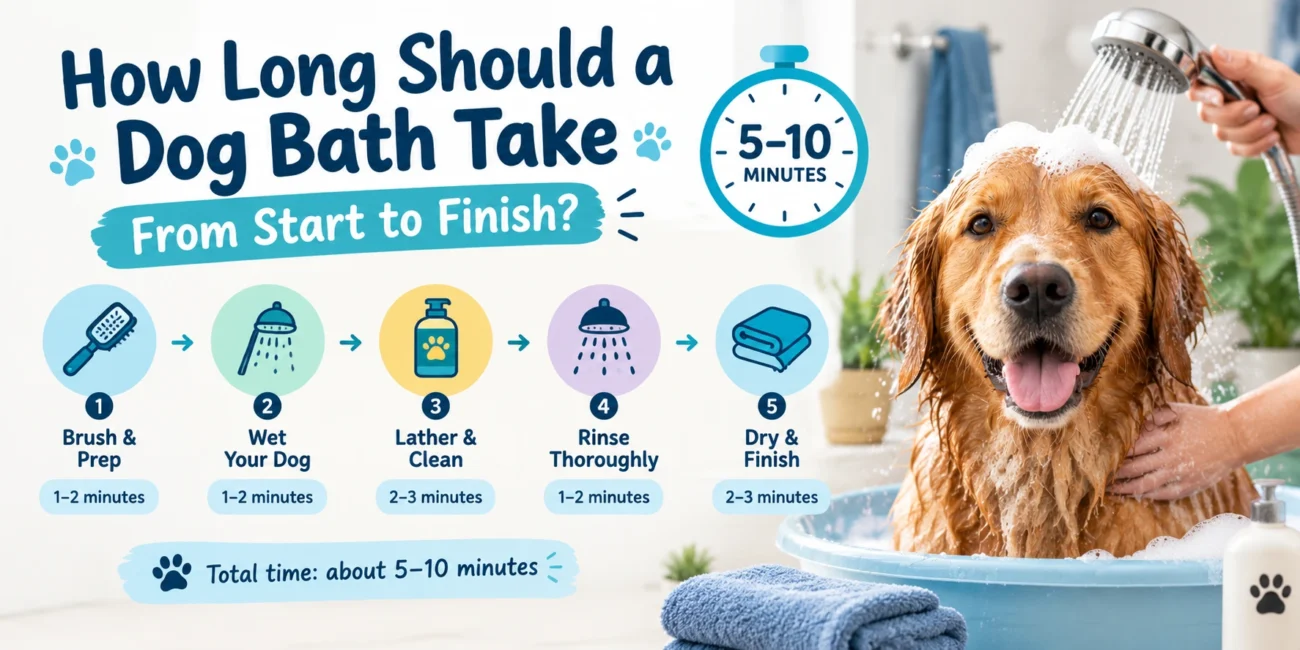
Most routine home baths take about 15–30 minutes for washing and basic drying. Large dogs and dense coats often need more time. A complete thick-coat session can reach 45–60 minutes when careful drying gets included.
These ranges work as planning guides, not strict medical limits. Your dog needs enough time for wetting, cleaning, rinsing, and drying. Never shorten rinsing just to meet a target time. Several grooming guides place routine baths near this general range.
This table gives practical starting estimates for home grooming.
Use the clock for planning, but judge completion by the coat.
You might be thinking faster baths are always better. They aren’t if soap remains inside a dense coat.
So what does this mean for you? Set aside enough time before starting. The next question is where those minutes go.
What Takes the Most Time During a Dog Bath?
Rinsing and drying often consume the largest share of a proper dog bath. Wetting short fur happens quickly. Dense coats need water to reach the skin before shampoo can work well.
Rinsing deserves special care because trapped shampoo can irritate the skin. AKC guidance recommends complete rinsing and says residue should not remain. One AKC guide also advises rinsing longer than lathering.
🔢 Step-by-Step: Where Your Bath Time Goes
- 1
Prepare and brush
Remove loose fur and place every bath item within reach.
- 2
Wet and shampoo
Wet to the skin, then work dog shampoo through the coat.
- 3
Rinse completely
Keep rinsing until suds and slippery product residue disappear.
- ✓
Dry the coat
Blot water gently and finish drying based on coat thickness.
You might be thinking lathering deserves the most attention. Thorough rinsing usually matters more for preventing leftover product.
Here’s why that matters. Saving five minutes during rinsing can create hours of scratching later.
How Does Coat Type Change Dog Bath Time?
Coat type changes how quickly water reaches the skin and leaves again. Short coats wet and rinse quickly. Long, curly, and double coats hold more water and product.
A dense undercoat therefore adds time during both rinsing and drying. AKC also notes different coat types need different bathing routines. Heavy double coats need careful coat care rather than rushed washing.
📋 How different coats affect bath time
- Short coats: Water moves through them quickly, making rinsing and drying easier.
- Long coats: Extra rinsing helps remove shampoo hidden between strands.
- Double coats: Dense undercoats take longer to wet, rinse, and dry.
- Curly coats: Careful pre-brushing reduces tangles before water tightens them.
For puppies, product choice deserves extra care. Our puppy shampoo guide covers suitable bathing options.
So if your dog takes longer, don’t assume you’re moving too slowly. Coat structure can explain the difference.
How Can You Make Dog Bath Time Faster Without Rushing?
Preparation is the safest way to shorten dog bath time. Brush first and gather shampoo, towels, treats, and your sprayer. This prevents repeated stops once your dog gets wet.
Work in sections instead of jumping around the coat. Start at the body and keep water away from sensitive facial areas. A predictable routine also helps nervous dogs learn what comes next.
✅ Tip
Place two towels beside the tub before your dog gets wet.
Brush loose hair before bathing, especially on thicker coats. VCA advises removing tangles before baths because wetting can worsen difficult mats.
A bathing mitt can also help spread shampoo through the coat. See our dog grooming glove guide for suitable grooming uses.
You might be thinking more shampoo makes cleaning faster. Extra product usually creates more rinsing work instead.
The best shortcut is simple preparation. Next, check whether your shampoo changes the bath timer.
How Long Should Medicated Shampoo Stay on a Dog?
Medicated shampoo follows a different clock from normal dog shampoo. Always follow your veterinarian’s directions and the current product label. Many medicated products require several minutes of contact before rinsing.
VCA describes a 10-minute timer for many medicated shampoo baths. The exact contact period can differ by product and condition. Never extend that time because you think longer treatment works better.
⚠️ Warning
Never guess medicated shampoo contact time. Follow the label or veterinary instructions.
Regular shampoo does not automatically need a 10-minute waiting period. Follow the instructions printed on that specific bottle.
For everyday shampoo choices, see our Earthbath shampoo review. Product type can affect both comfort and rinsing time.
So what does that mean? Read the bottle before wetting your dog. That single habit prevents timing mistakes.
How Should You Dry a Dog After the Bath?
Start by gently squeezing water from the coat with your hands. Then press absorbent towels against the fur instead of rubbing hard. Thick coats need more drying than short coats.
AKC recommends thorough drying and appropriate dryer use for the dog’s coat. Proper drying also helps prevent mats, tangles, and persistent wet-dog odor.
Use a dog-safe dryer when your dog’s coat needs one. Keep airflow comfortable and watch your dog’s reaction.
You might be thinking the outer coat feels dry enough. A dense undercoat can still hold moisture near the skin.
Here’s why that matters. Drying isn’t wasted time after the bath. It’s part of completing the bath correctly.
What Most People Get Wrong About Dog Bath Time
Many owners judge a successful bath by speed alone. A fast bath isn’t successful when shampoo remains in the coat. Clean skin and complete rinsing matter more than finishing quickly.
Another common mistake involves treating every coat the same. A Beagle and a Golden Retriever don’t need identical washing time. Their coat depth changes how water and shampoo move.
💡 Key Insight
The right bath ends when your dog is clean and rinsed, not when time expires.
Human shampoo creates another avoidable problem. Dog-specific products better match canine skin and coat needs. PetMD recommends using shampoos designed specifically for dogs.
Owners also rush drying because the washing feels finished. Yet drying remains part of a complete grooming routine.
The clock gives you a guide. Your dog’s coat tells you when you’re done.
When Should You Stop a Dog Bath and Contact a Vet?
Stop the bath when your dog shows sudden pain or severe skin irritation. Also stop after swelling, breathing trouble, or a strong product reaction. Rinse exposed product away unless your veterinarian says otherwise.
Dogs with known skin problems can need special bathing plans. VCA notes that veterinary treatment can include specific shampoo schedules. Those instructions should override general home-grooming advice.
Don’t force an extremely frightened dog through a long bathing session. Short training sessions can build comfort before another full bath.
You might be thinking finishing the bath matters most. Your dog’s safety always matters more than finishing.
Once safety looks good, the final rule becomes simple and easy to remember.
What Should You Remember Before the Next Dog Bath?
A normal dog bath often needs about 15–30 minutes, with coat type changing that range. Thick coats and medicated shampoos need extra time. Never save time by cutting rinsing or drying short. Right now, place your dog’s shampoo and two clean towels beside the bath area.
Frequently Asked Questions
How often should dogs be bathed?
Bath frequency depends on coat, lifestyle, age, and skin health. Many healthy dogs need baths only when dirty or smelly. VCA gives six to eight weeks for some non-shedding dogs. Dogs with skin conditions need their veterinarian’s bathing schedule.
What is the best way to bathe a dog?
Brush your dog first and use lukewarm water. Wet the coat fully, then apply dog-specific shampoo. Work it gently through the fur and skin. Rinse until no product remains. Finish by towel drying and using suitable drying methods for the coat.
How do I calm my dog during a bath?
Keep the room quiet and prepare everything before starting. Use a non-slip surface so your dog feels stable. Speak calmly and reward relaxed behavior with small treats. Never rush or force a frightened dog. Gradual, positive practice can make future baths easier.
Can I use human shampoo on my dog?
Dog-specific shampoo is the safer routine choice. Human products are designed for human skin rather than canine skin. They can cause dryness or irritation in some dogs. Use a shampoo labeled for dogs and follow its directions. AKC also recommends canine-specific shampoo.
How do you dry a dog after a bath?
Gently squeeze excess water from the coat first. Then blot the fur using thick, absorbent towels. Avoid harsh rubbing on long or tangle-prone coats. A suitable dryer can help with dense coats. Keep your dog warm until the coat becomes completely dry.
Should I brush my dog before or after a bath?
Brush before bathing when your dog has loose hair or tangles. This helps prevent wet mats from becoming harder to remove. Many coats also benefit from gentle brushing after complete drying. Never pull through severe mats because professional grooming can be safer.
Can I use Dawn to wash my dog?
Don’t use Dawn as your dog’s normal bathing shampoo. PetMD describes dish soap as a harsh detergent for routine dog bathing. It can remove natural oils and contribute to dryness or irritation. Keep a gentle dog-specific shampoo available instead.