
Quick Answer
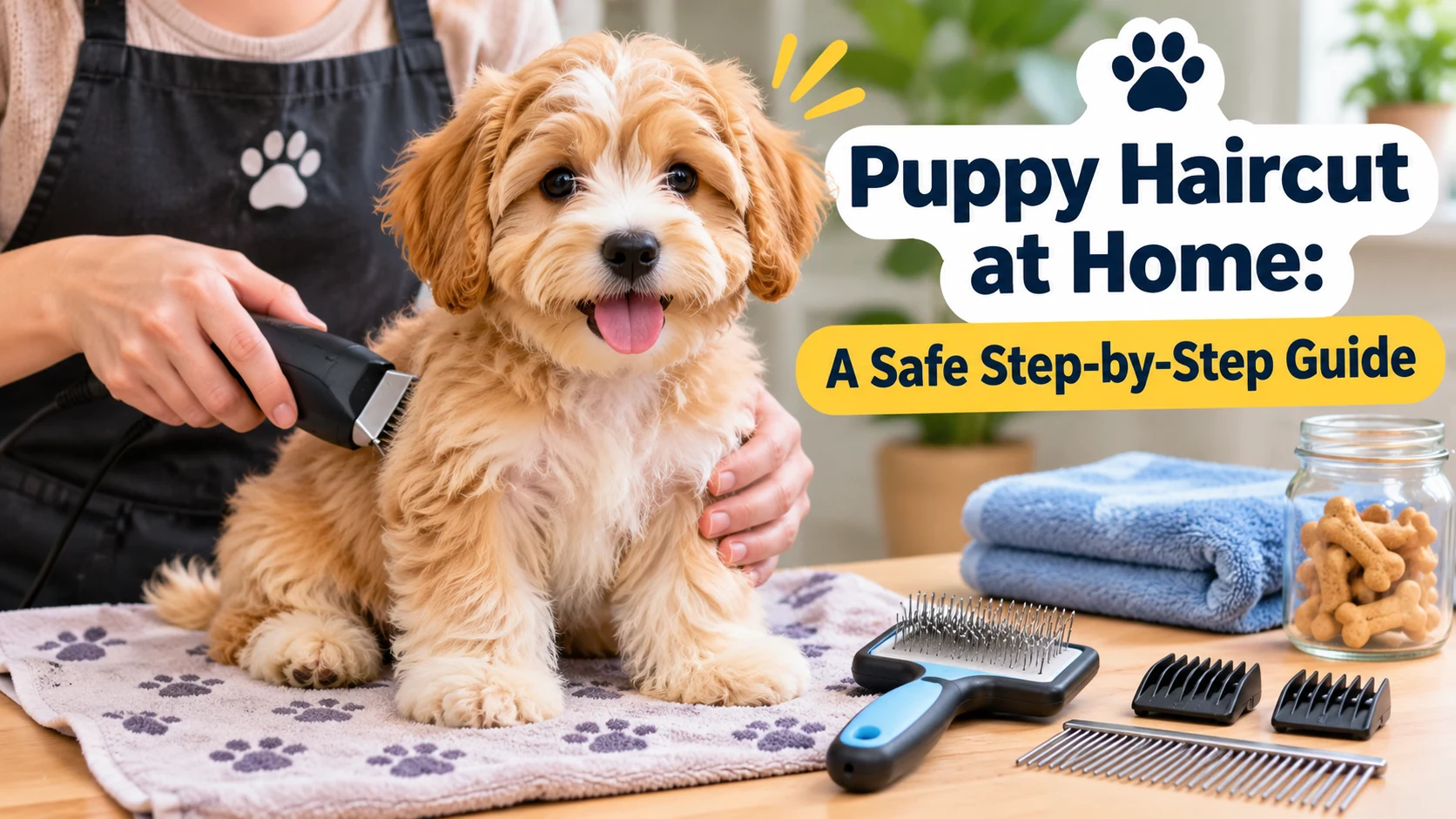
A puppy haircut at home should begin with gentle brushing, positive reinforcement, and gradual introduction to grooming tools. If your puppy has a coat that needs clipping, use dog-specific clippers with an appropriate guard, take off only a small amount of hair, and avoid sensitive areas. Never force a frightened puppy to continue. Leave severe matting and difficult trimming around the face, paws, and sanitary areas to a trained groomer.
Giving your puppy a haircut at home can help keep a growing coat tidy, but the first grooming experience should focus on comfort rather than achieving a perfect style.
Puppies can be sensitive to unfamiliar sounds, handling, and vibrations. Introducing grooming equipment gradually helps them learn that brushing and trimming are ordinary, safe activities.
Not every puppy needs a haircut. The right approach depends on the coat type, the puppy’s behavior, and whether the hair actually requires trimming.
When Is Your Puppy Ready for Their First Haircut?
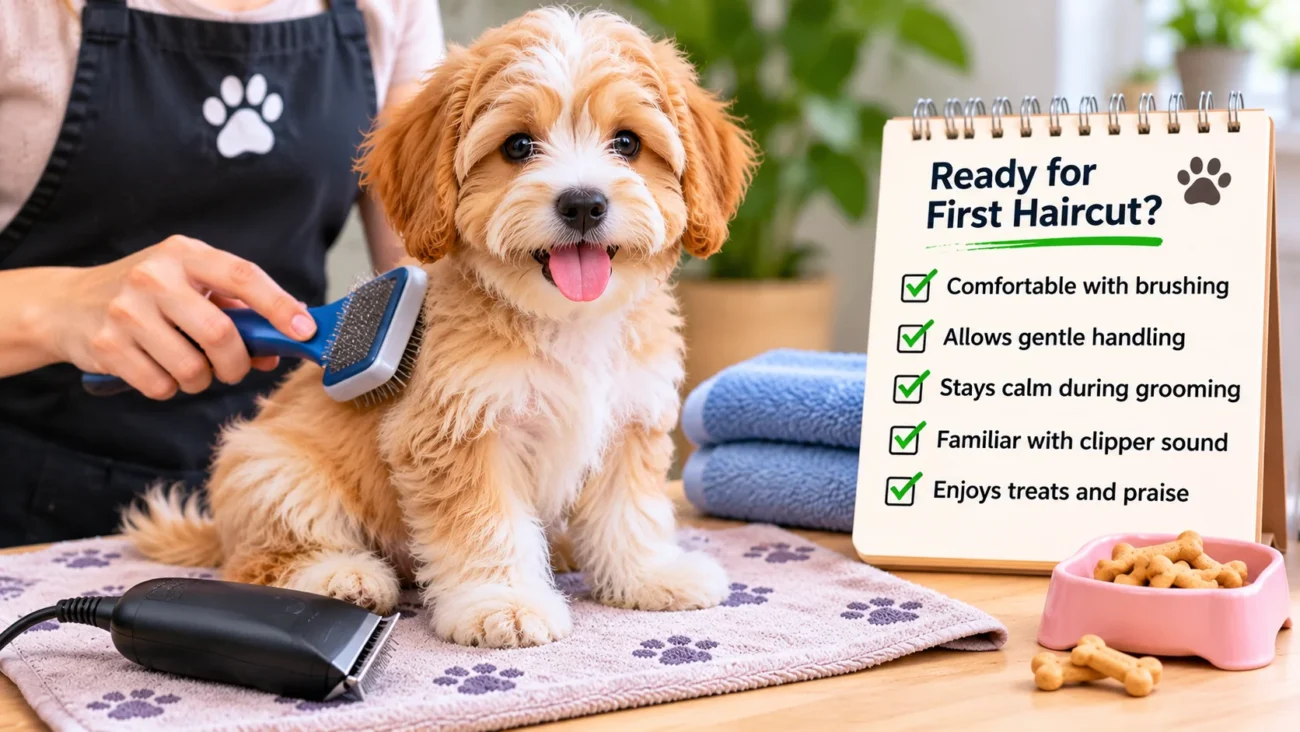
Your puppy is ready for an introductory haircut when they can comfortably tolerate gentle handling, brushing, and the sights and sounds of grooming equipment.
There is no universal age at which every puppy needs a full haircut. Some long-haired breeds benefit from early grooming appointments, while short-haired puppies may never require regular clipping.
For many puppies, early grooming should involve simple activities:
- Brief brushing sessions with a suitable brush.
- Gentle handling of the legs, ears, tail, and paws.
- Practicing standing comfortably on a secure surface.
- Introducing the sound of clippers from a distance.
- Offering treats and praise during calm behavior.
A full haircut may come later, after the puppy has become comfortable with these experiences.
For professional salon visits, discuss vaccination requirements and infectious disease risks with your veterinarian and groomer. You can begin gentle grooming practice at home without waiting for a salon appointment.
According to VCA Animal Hospitals’ puppy hygiene guidance, gradual exposure to grooming procedures helps puppies become accustomed to routine care.
What Supplies Do You Need for a Puppy Haircut at Home?
For a beginner, the safest grooming setup is simple. Choose tools appropriate for your puppy’s size and coat rather than purchasing complicated equipment.
| Grooming Supply | Purpose |
|---|---|
| Puppy-appropriate brush | Removes loose hair and gently works through small tangles. |
| Metal grooming comb | Checks whether the coat is free of tangles before clipping. |
| Dog-specific grooming clippers | Trim suitable coats when the puppy tolerates clipping. |
| Compatible guard combs | Help maintain a consistent coat length. |
| Non-slip mat | Provides secure footing during grooming. |
| Treats and favorite toy | Encourage positive associations with grooming. |
| Soft towel | Keeps the puppy comfortable and helps remove loose hair. |
Choose clippers designed for animal coats. Human hair clippers may perform poorly on dense or fine dog hair.
Do not treat grooming scissors as essential beginner equipment. Sharp blades near loose puppy skin can cause serious injuries, particularly when the puppy moves unexpectedly.
How Do You Give a Puppy a Haircut at Home Step by Step?
Begin with a calm, well-rested puppy and plan only a small, manageable trim. The following process is most appropriate for a healthy puppy with an unmatted coat that actually requires clipping.
Step 1: Prepare a Safe Grooming Space
Choose a quiet room with good lighting and minimal distractions. A non-slip mat on the floor is often safer for beginners than an elevated grooming table.
Keep the tools nearby but out of your puppy’s reach. Make sure electrical cords cannot be chewed or pulled.
If someone is helping you, ask them to provide calm encouragement and treats rather than physically restraining a struggling puppy.
Step 2: Brush and Check the Coat
Brush gently in the direction of hair growth, working through small sections without pulling at the skin.
Use a grooming comb to check for tangles. Pay particular attention to areas where friction can create knots, including behind the ears, under the collar, and around the legs.
Do not pull clippers through tangled or matted hair. A guard comb may catch on knots, while tightly matted hair can hide skin folds that are easily injured.
If you discover significant matting, stop and arrange professional grooming rather than trying to cut the mats out.
Step 3: Introduce the Clippers Slowly
Allow your puppy to see and investigate the switched-off clippers. Reward calm curiosity with treats and praise.
Next, switch the clippers on at a comfortable distance. If your puppy remains relaxed, gradually bring the sound closer over several short practice sessions.
Do not immediately place vibrating clippers against your puppy’s body if they are startled by the noise.
The objective is for your puppy to remain calm when the equipment is nearby, not simply to tolerate it through fear.
Step 4: Choose a Conservative Cutting Length
For a first haircut, preserve more coat than you think you need to remove.
Use a manufacturer-approved guide comb compatible with your clipper blade. Check that it is attached securely before switching on the clipper.
The appropriate length depends on your puppy’s breed, coat texture, and skin condition. There is no single guard size that works safely for every puppy.
A longer trim generally allows more room to correct an uneven appearance, provided the coat is fully brushed and the guard moves through it freely.
Step 5: Start With a Small, Easy Body Area
If your puppy is comfortable and the coat is suitable for clipping, begin with a small section over the back or another relatively flat body area.
Use gentle movements in the natural direction of hair growth. Keep the clipper flat against the coat and avoid applying pressure.
Keep your free hand away from the blade path. Never lift skin folds into the cutting edge or dig the blade into the coat.
After a few passes, stop and check your puppy’s reaction. A brief successful trim is better than finishing a haircut while the puppy is uncomfortable.
Step 6: Avoid Sensitive Areas
Do not attempt close trimming around the eyes, ears, lips, armpits, groin, genitals, or between paw pads without hands-on instruction from a qualified groomer or veterinary professional.
These areas contain delicate skin and body contours that are easy to catch with blades.
If hair around the eyes is interfering with vision or sanitary hair needs shortening, professional assistance is usually the safer choice for an inexperienced owner.
Step 7: Check the Clippers and Take Breaks
Switch the clippers off regularly and check whether the blade or cutting head has become warm. Follow the manufacturer’s cleaning, lubrication, and cooling instructions.
Never apply a hot cutting head to your puppy’s skin.
Also watch for signs that your puppy needs a break, including repeatedly turning away, attempting to escape, freezing, or refusing treats they normally enjoy.
If those signs appear, stop the session rather than rushing to finish.
Step 8: Finish With a Gentle Coat Check
Once the trim is complete, remove loose hair with a soft brush or comb.
Examine the skin for redness, irritation, or accidental scratches. If you notice an injury, stop grooming and seek appropriate veterinary advice.
Reward your puppy for cooperating, even if you completed only a small section of the haircut.
Beginner Grooming Tip
For your puppy’s first session, aim for a positive experience rather than a complete haircut. A few comfortable passes with the clippers can be meaningful progress. You can complete additional grooming on another day.
Does Your Puppy’s Coat Type Change How You Should Cut Their Hair?
Yes. Coat type is one of the most important factors in deciding whether a puppy needs a haircut and how it should be performed.
| Coat Type | Recommended Approach |
|---|---|
| Continuously growing, curly coats | Regular brushing and periodic trimming are often necessary. Professional guidance helps establish the correct clip length. |
| Long, silky coats | Focus on detangling and gentle maintenance. Ask a groomer about practical trimming styles. |
| Short, smooth coats | Usually need brushing and bathing rather than a haircut. |
| Double coats | Prioritize brushing and removal of loose undercoat. Avoid routine shaving unless a veterinarian advises otherwise for a specific reason. |
| Wire coats | May need specialized grooming techniques such as hand-stripping, depending on the breed and desired coat condition. |
A Poodle puppy may eventually need regular clipping, while a Labrador puppy generally needs routine coat care instead of haircuts.
Double-coated breeds require particular caution. The American Kennel Club’s double-coat grooming guidance explains why routine shaving is usually inappropriate for these coats.
If you do not know your puppy’s coat type, ask your veterinarian or an experienced groomer before attempting a full-body trim.
How Can You Keep Your Puppy Calm During a Haircut?
Keeping a puppy calm requires gradual training, short sessions, and positive reinforcement. Forcing an anxious puppy to stay still can increase fear and make future grooming more difficult.
Start by letting your puppy practice standing on the grooming mat without any cutting equipment. Reward relaxed behavior.
Then introduce one new experience at a time: touching a paw, brushing part of the body, hearing the clipper motor, or briefly feeling the clipper vibration.
Useful techniques include:
- Schedule grooming when your puppy is rested and comfortable.
- Use small, puppy-safe treats to reward cooperation.
- Keep sessions brief and end before your puppy becomes overwhelmed.
- Give the puppy opportunities to move away during training.
- Reduce background noise and other distractions.
- Return to easier practice exercises if the puppy shows fear.
The goal is gradual acceptance, not immediate obedience.
The American Kennel Club’s puppy handling guidance also emphasizes introducing grooming and body handling early through positive experiences.
What Are the Most Common Puppy Haircut Mistakes?
Beginners often run into problems by trying to finish too much grooming in one session or using equipment that is unsuitable for the puppy’s coat.
Common mistakes to avoid include:
- Cutting the coat too short: Short clipping can expose sensitive skin and may be inappropriate for certain coat types.
- Clipping through tangles: Knots can snag equipment and conceal vulnerable skin.
- Using scissors near the skin: Puppies can move suddenly, creating a serious risk of cuts.
- Ignoring clipper heat: Warm blades may irritate or burn the skin.
- Forcing the puppy to continue: Prolonged restraint can make grooming more frightening.
- Attempting complex styling immediately: Detailed facial and paw trimming requires technique and control.
Another mistake is assuming that every puppy benefits from a shorter coat during warm weather. For some breeds, removing too much coat can interfere with its normal protective functions.
Important Safety Warning
Never use scissors to cut out tightly matted fur. Mats can pull skin into folds, making accidental injury more likely. If your puppy has tight mats, irritated skin, or an area that requires close shaving, arrange professional grooming or veterinary care.
When Should You Stop a Puppy Haircut and Get Professional Help?
Stop grooming if your puppy becomes distressed, the equipment is catching the coat, or you cannot see clearly where the blade will contact the skin.
Professional grooming is particularly appropriate when:
- Your puppy has severe tangles or tight mats.
- The coat requires intricate trimming around the face or sensitive body areas.
- Your puppy repeatedly struggles, panics, or attempts to bite.
- You are unfamiliar with the correct cutting technique for the breed.
- The skin looks inflamed, painful, or unusually sensitive.
- You are unable to maintain stable, gentle control of the equipment.
If your puppy is injured during grooming, stop immediately. Bleeding, painful skin damage, or an eye injury requires prompt veterinary attention.
For a puppy that is simply nervous, a groomer experienced with young dogs may be able to arrange a gradual introductory session instead of a full haircut.
How Do You Maintain Your Puppy’s Haircut Between Grooming Sessions?
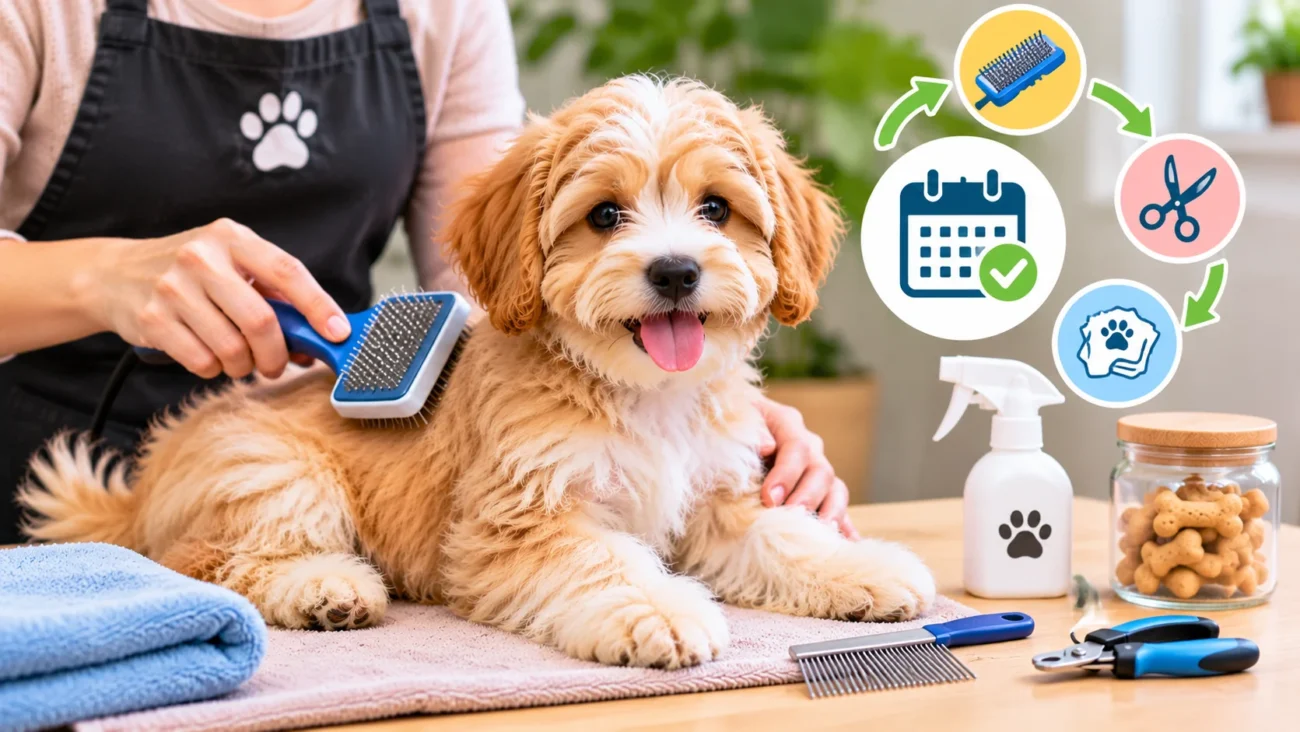
Regular brushing and coat checks are more important than repeatedly trimming the hair.
The frequency of brushing depends on coat texture, length, and how readily tangles develop. Long or curly coats may need frequent attention, while short coats generally require less intensive maintenance.
Build a manageable routine that includes:
- Brushing with a coat-appropriate tool.
- Checking common tangle-prone areas.
- Removing dirt and debris after outdoor activities.
- Monitoring the ears, feet, and skin for changes.
- Introducing bathing and drying gently when needed.
- Scheduling professional grooming when coat maintenance exceeds your skills.
A clean, well-maintained coat makes future grooming easier because the hair is less likely to contain knots and packed debris.
For general coat maintenance recommendations, see VCA Animal Hospitals’ grooming and coat-care guide.
Frequently Asked Questions
Can I give my puppy a haircut before all vaccinations are complete?
Gentle grooming at home can begin before the vaccination series is complete, provided your puppy is healthy and comfortable. For appointments at a grooming salon, ask your veterinarian about infectious disease risks and follow the facility’s vaccination requirements.
Can I use human hair clippers on my puppy?
Dog-specific clippers are generally more appropriate because they are designed for animal coats. Human clippers may struggle with dense fur, snag hair, or overheat. Always use equipment appropriate for your puppy’s coat and follow the manufacturer’s instructions.
Should I bathe my puppy before giving them a haircut?
A clean, completely dry, tangle-free coat is generally easier to clip. However, bathing is not necessary before every small touch-up. Avoid bathing a severely matted coat without professional advice, because wetting and drying can make some mats harder to manage.
What should I do if my puppy’s haircut looks uneven?
Do not immediately attempt to shorten the entire coat to correct a small uneven patch. Brush the hair, inspect it in natural light, and assess whether further trimming is necessary. A professional groomer can help correct more noticeable uneven areas safely.
Is it safe to give a puppy a haircut while they are sleeping?
No. Cutting hair around a sleeping puppy is unsafe because they may wake suddenly and move into the blade. Groom only when your puppy is awake, calm, and comfortable with handling.
How often does a puppy need a professional haircut?
There is no single schedule for every puppy. Continuously growing coats often require regular professional trimming, while short-haired breeds may not need haircuts at all. A groomer can recommend a schedule based on your puppy’s breed, coat condition, and maintenance needs.
Final Thoughts
A puppy haircut at home should be a careful, gradual process that prioritizes comfort and safety over appearance.
Start with brushing and handling exercises, introduce clippers slowly, and trim only the areas you can manage confidently. If your puppy becomes frightened or the coat requires difficult cutting, professional grooming is the safer option.
A positive first grooming experience can help make future coat care easier for both you and your puppy.


