
Quick Answer
A puppy’s first haircut should happen when their coat actually needs trimming and they can tolerate gentle handling. Many puppies can have an introductory professional groom around 12–16 weeks, provided their veterinarian and the salon’s vaccination policy allow it. A first visit may involve only a bath, brush, nails, and a light face or paw trim—not a full haircut.
Your puppy’s first haircut is less about achieving a perfect style and more about teaching them that grooming is safe. Start with brief, positive handling at home, then work with a patient groomer who can adjust the appointment to your puppy’s coat and comfort.
When Should a Puppy Get Their First Haircut?
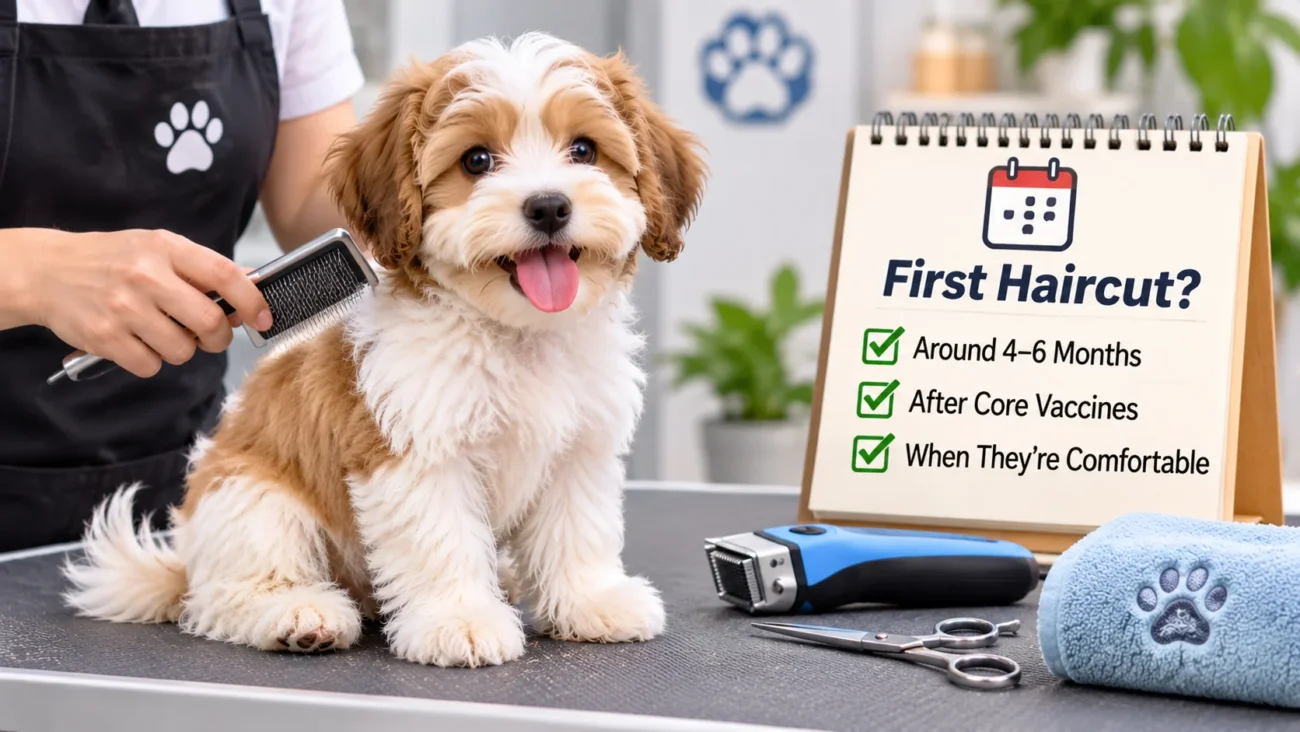
There is no universal first-haircut age. Many owners schedule an introductory grooming appointment at roughly 12–16 weeks, but a full haircut may be appropriate later. Vaccination status, salon rules, coat growth, and your puppy’s response to handling all matter.
For example, the American Kennel Club describes a short first grooming visit for Yorkshire Terriers at about 16–20 weeks, whereas its double-coated dog guidance encourages early grooming visits focused on bathing, brushing, and nails. These are different grooming needs, not conflicting deadlines.
Ask your veterinarian when shared grooming facilities are appropriate for your puppy’s vaccination history and local disease risk. Then check the specific salon’s vaccine requirements before booking. See PetMD’s puppy grooming guide for further background on introductory appointments.
First groom versus first full haircut
An introductory groom teaches your puppy about unfamiliar people, brushes, water, dryers, and grooming sounds. A full haircut involves a larger amount of clipping or scissoring and requires more handling and standing still.
A puppy whose hair is blocking their eyes or trapping debris may need a small professional tidy-up before they are ready for an all-over cut. Conversely, a short-coated puppy may never need a routine body haircut.
Does Your Puppy’s Coat Type Change the Timing?
Yes. Coat type determines whether cutting is necessary at all and how much brushing is needed between visits.
| Coat type | Typical first-groom priority |
|---|---|
| Continuously growing or long hair, such as Poodle-type or Shih Tzu coats | Early brushing practice and a gentle tidy-up as hair grows; plan future trims with a groomer. |
| Double coats, such as Golden Retriever or Husky coats | Brushing, bathing if needed, nail care, and limited sanitary or foot tidying; avoid routine close body shaving. |
| Short, smooth coats, such as Beagle coats | Handling practice, brushing, bathing when needed, and nail care; usually no full haircut. |
The practical question is not simply “How old is my puppy?” but “What coat maintenance does my puppy need right now?” A groomer familiar with your puppy’s breed or coat mix can explain the difference.
How Do You Prepare a Puppy for Their First Haircut?
Start with calm, short practice sessions before the appointment. VCA Animal Hospitals recommends gradually introducing handling and grooming equipment so puppies can become comfortable with the process.
- Practice gentle touch. Briefly touch your puppy’s paws, ears, chin, legs, and tail; reward relaxed responses. Don’t restrain them through panic.
- Introduce the brush. Let your puppy sniff a coat-appropriate brush, make one or two gentle strokes, and offer a treat. Increase duration only while they remain comfortable.
- Introduce grooming sounds at a distance. Allow them to hear a dryer or clipper sound quietly without directing air or blades at them. Reward calm curiosity and stop if the sound worries them.
- Practice standing on a safe surface. Use a stable, nonslip floor mat and brief rewards. Never leave a puppy unattended on an elevated grooming surface.
- Share useful details with the groomer. Mention vaccination records, coat concerns, sensitive areas, past handling experiences, and any fear of noise or touch.
- Choose a manageable appointment. Request a puppy introduction or short tidy rather than insisting on a complete haircut on day one.
Tip
End a practice session after a small success—even one relaxed brush stroke. The goal is a puppy who feels safe coming back, not a perfectly groomed puppy in one attempt.
What Happens During a Puppy’s First Grooming Appointment?
Most introductory visits begin with the groomer meeting your puppy, assessing the coat, and checking how comfortable they are being handled. Depending on the service and your puppy’s behavior, a visit may include:
- Gentle brushing and checking for tangles.
- A bath and careful drying, when appropriate.
- Nail inspection or a small nail trim.
- Light cleaning or tidying around the face, paws, or sanitary area.
- Short exposure to tools, with breaks when needed.
Not every step needs to happen during the first appointment. If the puppy becomes overwhelmed, a responsible groomer may stop after a partial service and plan another visit. That is often more valuable than completing a haircut at the expense of the puppy’s confidence.
What Haircut Should You Ask for the First Time?
For a coat that genuinely needs trimming, ask for a simple, low-maintenance puppy tidy rather than a complicated style. Tell the groomer where hair is causing practical problems—near the eyes, paws, or hygiene areas—and ask them to preserve enough coat for comfort and protection.
Bring a reference photo if you have a preferred look, but treat it as a guide rather than a guarantee. Hair texture, coat maturity, tangles, and your puppy’s ability to stand calmly can limit what is achievable safely.
Remember that “puppy cut” is not a single standardized length across salons. Ask the groomer what they mean by it, and agree on an approximate body length and which areas should be trimmed.
How Can You Tell If Your Puppy Is Too Stressed for a Haircut?
Stop or ask the groomer to pause when your puppy shows escalating distress. Warning signs may include repeated attempts to escape, freezing, frantic movement, trembling, growling, snapping, or refusing normally appealing food alongside other signs of fear.
These behaviors have different possible causes, including pain, so look at the whole situation rather than one signal in isolation. VCA advises stopping handling exercises when a puppy is in extreme distress; pushing through can worsen fear of future handling.
Warning
Do not use scissors near a suddenly moving puppy’s eyes, ears, or skin folds. Avoid cutting tight mats yourself; hidden skin can be caught in blades. Ask a professional groomer or veterinarian for help if the coat is severely matted, the puppy is distressed, or the skin looks injured.
What Should You Do After the First Haircut?
After the visit, give your puppy a quiet chance to rest, check for any unusual redness or discomfort, and reward calm behavior. Ask the groomer which parts of the process went well and which need practice before the next appointment.
Continue coat-appropriate brushing at home and handle the paws, face, and ears briefly with rewards. For a long or curly coat, do not wait until knots become tight before asking for grooming help. The timing of the next visit should reflect coat growth and how your puppy tolerated this one.
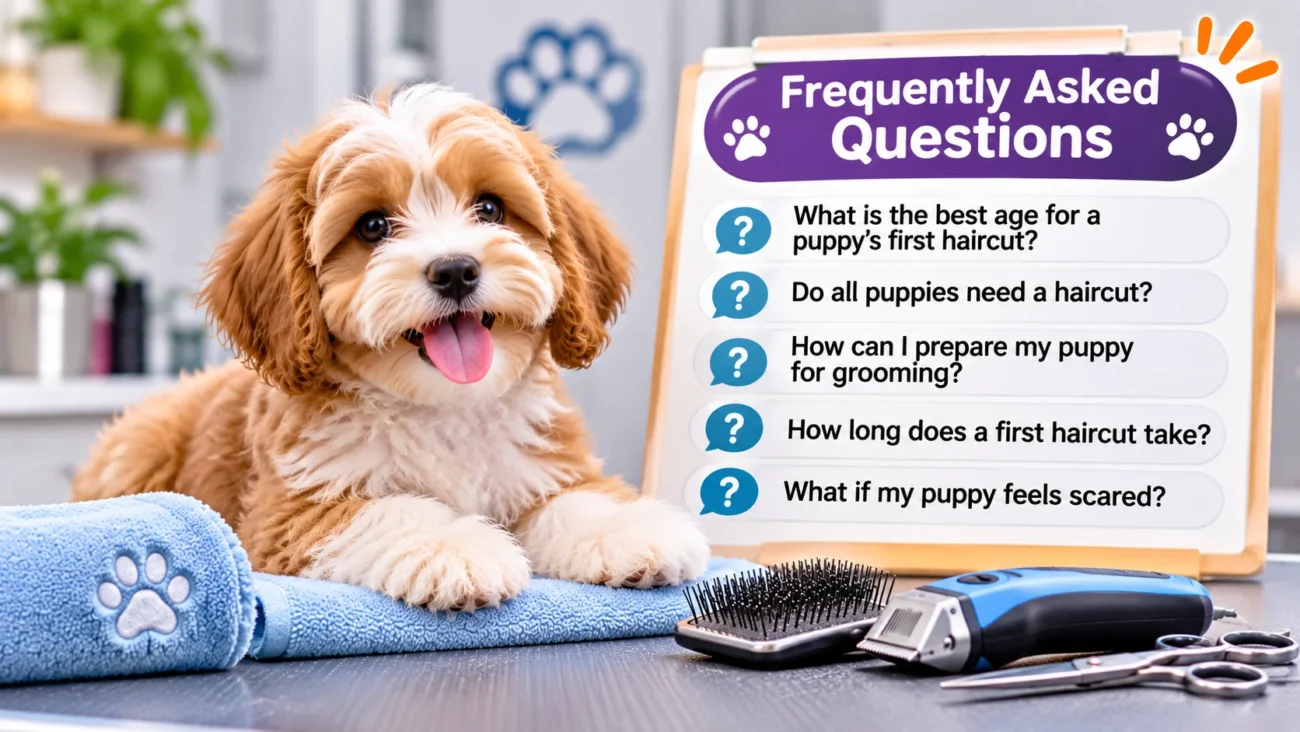
Frequently Asked Questions
Can an 8-week-old puppy have a haircut?
An 8-week-old puppy can begin gentle handling and brushing practice at home. Whether an actual trim is appropriate depends on coat needs, the puppy’s health, and who performs it; ask your veterinarian before using a shared grooming salon.
Does a puppy need all vaccinations before visiting a groomer?
Not every salon has identical rules, and vaccine schedules vary. Check your veterinarian’s advice and the groomer’s requirements before booking, rather than assuming that a particular birthday guarantees safety.
Will a puppy’s coat change after the first haircut?
A puppy’s coat can naturally change in texture, density, and color as the adult coat develops. A haircut does not automatically cause those normal developmental changes.
Can I cut my puppy’s hair with human scissors?
Ordinary household scissors are a poor choice around a wiggly puppy because the blades can injure skin. For eye-area, paw-pad, or mat removal, use a trained groomer rather than attempting a precision trim at home.
What if my puppy won’t sit still for grooming?
Shorten the session and return to easy handling exercises paired with rewards. If your puppy is panicking, snapping, or appears painful, stop and discuss the behavior with your veterinarian or a qualified reward-based trainer.
How often will my puppy need haircuts afterward?
That depends on coat type, growth, style, matting risk, and home brushing. Curly or continuously growing coats often need regular professional trims; short smooth coats may not need body haircuts at all.
Final Thoughts
Your puppy’s first haircut should match their coat’s needs and emotional readiness. Start grooming practice early, confirm health and salon requirements, and accept a short introductory trim if that is all your puppy can comfortably manage. A calm first experience sets up better grooming sessions for years to come.


