

Quick Answer
Yes, deshedding is safe for puppies when it means gently removing loose hair with an age-appropriate brush. You can introduce soft brushing as soon as your puppy settles into your home. However, aggressive undercoat rakes and metal deshedding blades may irritate delicate skin or damage developing fur. Start with gentle brushing and follow a safe dog deshedding guide as your puppy matures.
5 Puppy Deshedding Safety Rules
- Start gently: Introduce a soft brush through short, positive grooming sessions.
- Choose safe tools: Use soft bristles, flexible rubber brushes, or gentle grooming mitts.
- Check the coat: Select grooming tools based on coat type and development, not age alone.
- Use light pressure: Remove loose fur without scraping the skin or pulling attached hair.
- Watch reactions: Stop when your puppy shows discomfort, redness, or repeated avoidance.
Important Safety Tip
- Avoid aggressive deshedding: Ask your veterinarian or qualified groomer before using intensive undercoat-removal tools on a puppy.
If your puppy leaves little tufts of fur around the house, you might wonder whether a deshedding brush is safe. Puppy coats are different from adult coats, so the right grooming approach matters.
I recommend starting with comfort rather than trying to remove as much hair as possible. This guide covers safe grooming ages, puppy coat changes, appropriate tools, and signs that brushing may be causing harm.
What Does Deshedding Mean for Puppies?
Deshedding is the process of removing loose, naturally shedding hair before it falls around your home. For puppies, this should usually mean gentle brushing rather than intensive undercoat removal.
Most puppies begin life with a soft coat that gradually changes as they mature. Their developing skin and fur deserve a gentler approach than an adult dog’s established coat.
There are several reasons to introduce gentle grooming early:
- Loose hair removal: Collects naturally detached fur without pulling healthy hair.
- Coat maintenance: Helps prevent loose hair from becoming tangled in longer coats.
- Skin inspection: Makes redness, parasites, and unusual hair loss easier to notice.
- Handling practice: Teaches your puppy to feel comfortable with routine grooming.
- Positive bonding: Builds confidence when brushing involves gentle handling and rewards.
Deshedding should never mean stripping away healthy puppy fur. The goal is maintaining comfort and coat health.
At What Age Is Deshedding Safe for Puppies?

You can introduce gentle brushing when your puppy comes home, often around eight weeks of age. There is no universal minimum age for intensive deshedding because coat development varies between breeds.
According to the American Kennel Club’s puppy shedding guidance, many puppies begin losing their puppy coat around four to six months. Some start earlier or transition much later.
8 to 12 Weeks: Introduce Gentle Brushing
At this stage, focus on building a positive grooming habit. Your puppy may have little loose fur to remove.
- Choose a soft-bristle puppy brush.
- Let your puppy sniff the brush.
- Begin with a few light strokes.
- Offer praise or a small treat.
- Stop before your puppy becomes restless.
A session lasting only 30 seconds may be enough at first. Increase the duration gradually when your puppy remains comfortable.
3 to 6 Months: Watch for Coat Changes
Some puppies begin shedding their original soft coat during this period. Others show very little visible shedding.
Continue gentle brushing and check for loose hair, tangles, or changes in coat texture.
- Use soft brushes for fine or sensitive coats.
- Try a flexible rubber brush on suitable short coats.
- Use a gentle pin brush or comb for longer fur.
- Avoid forceful pulling through knots.
Don’t introduce a deshedding blade simply because your puppy reaches a particular age. Coat structure and skin sensitivity matter more.
6 to 12 Months: Adjust Grooming as the Adult Coat Develops
Many puppies develop a denser or more mature coat during this stage. Double-coated breeds may begin collecting more loose undercoat.
A qualified groomer can help determine whether an undercoat tool is appropriate. Some breeds need specialized grooming, while others never require intensive deshedding.
Remember: These age ranges describe common development patterns, not permission to use stronger tools automatically.
Which Deshedding Tools Are Safe for Puppies?
Soft-bristle brushes and flexible rubber grooming tools are usually the safest starting choices. Metal slickers and undercoat tools require more care and depend on the puppy’s coat.
The AKC guide to choosing dog brushes recommends soft brushes for fluffy puppy coats. Matching tools to coat type improves comfort and grooming effectiveness.
Puppy Grooming Tool Comparison
| Grooming Tool | Best Use | Puppy Safety |
|---|---|---|
| Soft-bristle brush | Gentle brushing and loose surface hair | Good starting choice |
| Rubber curry brush | Short, smooth coats | Generally gentle when used lightly |
| Grooming mitt | Handling practice and light loose-hair removal | Often beginner-friendly |
| Soft pin brush | Longer or silky coats | Suitable when tips do not scratch |
| Soft slicker brush | Certain curly or longer coats | Use carefully with professional guidance |
| Metal undercoat rake or blade | Suitable mature double coats | Avoid without coat-specific professional guidance |
I prefer recommending the gentlest useful brush first. A stronger tool isn’t automatically better at keeping a puppy’s coat healthy.
How Do You Deshed a Puppy Safely Step by Step?
To deshed a puppy safely, inspect the coat, choose a soft brush, and use light strokes in the direction of hair growth. Keep the session positive and stop before discomfort develops.
Here is a simple seven-step routine suitable for introducing most healthy puppies to brushing.
Step 1: Choose a Calm Grooming Area
Find a quiet space where your puppy feels secure. A nonslip mat on the floor is often a safer choice than an elevated table.
- Keep treats within reach.
- Remove distracting objects.
- Allow your puppy to stand or sit comfortably.
- Never leave a puppy unattended on an elevated surface.
Step 2: Inspect the Skin and Coat
Gently separate the fur and examine the skin. Look for redness, wounds, flaky patches, fleas, or painful tangles.
Don’t brush directly over irritated areas. Contact your veterinarian when you notice unexplained hair loss or skin inflammation.
Step 3: Let Your Puppy Explore the Brush
Place the brush near your puppy and let them investigate it. Reward relaxed interest with praise or a treat.
Touch the brush lightly against the shoulder before making a stroke. This helps reduce surprises and builds trust.
Step 4: Brush in the Direction of Hair Growth
Use soft, short strokes along the coat’s natural direction. Avoid pressing the brush against the skin.
- Begin on the shoulders or upper back.
- Move gradually toward the sides.
- Use lighter pressure near sensitive areas.
- Never scrape repeatedly over one spot.
Step 5: Remove Only Loose Hair
Collect fur that releases easily during brushing. Don’t keep brushing simply to produce a larger pile of hair.
Healthy attached hair should remain in place. If the brush pulls or catches, stop and check for tangles.
Step 6: Keep the Session Short
Begin with a few strokes or a session lasting less than a minute. Gradually extend grooming time as your puppy becomes comfortable.
There is no required number of minutes to reach. A calm, brief session is better than a stressful, prolonged one.
Step 7: Reward and Check Your Puppy
Finish with praise, gentle play, or a suitable treat. Examine the brushed area for unusual redness or sensitivity.
- Check that the skin looks normal.
- Watch whether your puppy remains relaxed.
- Clean loose fur from the brush.
- Store grooming tools safely.
For older dogs with more developed coats, review the step-by-step deshedding tool instructions before considering specialized equipment.
Can Deshedding Damage a Puppy’s Skin or Coat?
Yes, improper deshedding can irritate a puppy’s skin or break developing hair. Excessive pressure, unsuitable tools, and repeated brushing over one area increase the risk.
Young puppies don’t need aggressive coat removal. Their grooming routine should prioritize healthy skin and positive handling.
Common Puppy Deshedding Mistakes
- Using sharp metal tools: Fine teeth or blades may scratch delicate skin when misused.
- Pressing too hard: Excessive force can create redness and discomfort.
- Brushing painful mats: Pulling tangled hair can hurt and damage surrounding fur.
- Grooming irritated skin: Existing inflammation may worsen with friction.
- Brushing for too long: Repetitive strokes may irritate an otherwise healthy area.
- Ignoring stress signals: Forced grooming can create lasting fear of brushes.
- Choosing the wrong tool: A deshedding blade designed for adult undercoats may not suit puppy fur.
The safest grooming routine removes only what releases naturally. Stop immediately if your puppy appears painful or distressed.
What Are the Warning Signs of Over-Deshedding a Puppy?
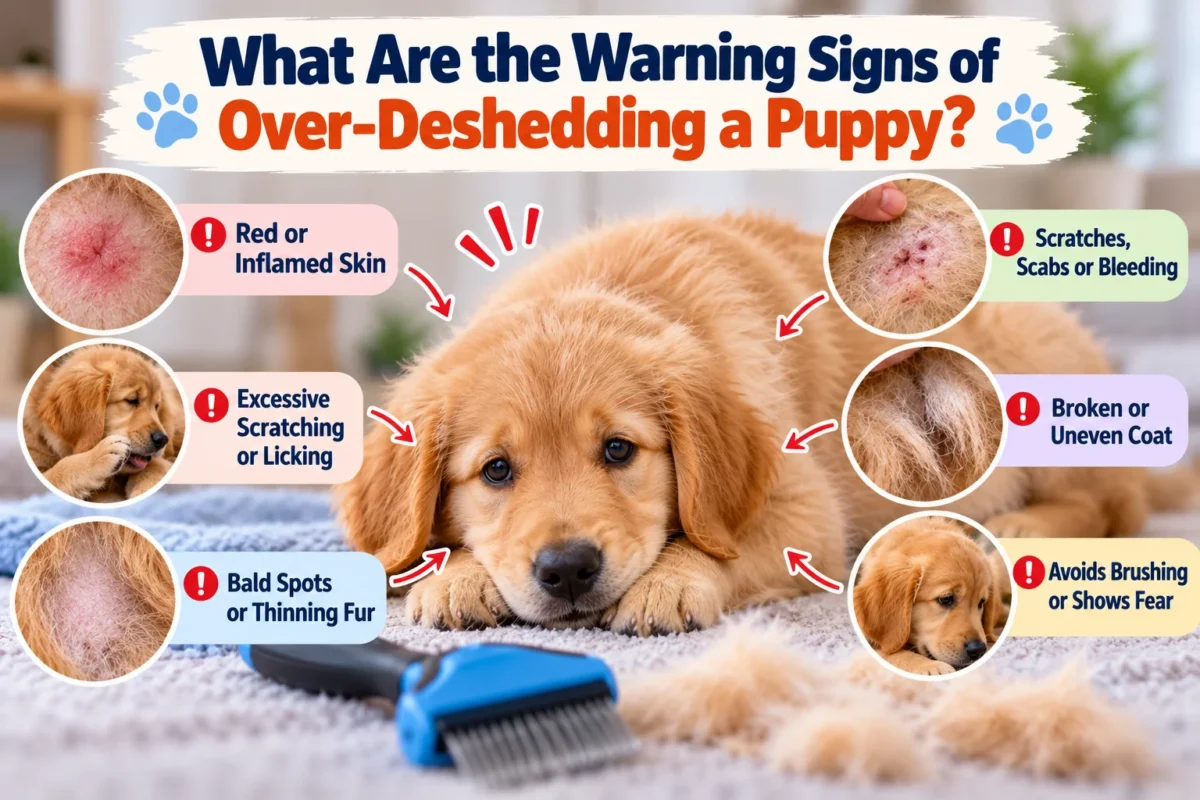
Red skin, repeated scratching, pain, and unusual thinning after grooming may indicate overbrushing or an unsuitable tool. These changes deserve attention rather than more brushing.
Watch for the following warning signs:
- Red or inflamed skin after grooming
- Flinching, crying, or pulling away during brushing
- Repeated licking or scratching of brushed areas
- Broken hair or visibly uneven coat patches
- Bald spots or unexpected hair loss
- Scratches, scabs, or bleeding
- Sudden fear when the grooming brush appears
Pause brushing when irritation occurs. If symptoms persist, worsen, or involve wounds or bald patches, arrange a veterinary examination.
Don’t assume all hair loss comes from grooming. Parasites, infections, allergies, and other conditions can also affect puppies.
How Often Should You Deshed a Puppy?
Most puppies benefit from brief, gentle brushing sessions rather than scheduled intensive deshedding. Frequency depends on coat type, tangles, loose hair, and grooming tolerance.
Some puppies enjoy light brushing every day. Others only need a few sessions weekly to maintain their coat and develop good grooming habits.
Suggested Puppy Brushing Frequency
| Coat Type | Starting Routine | Recommended Tool |
|---|---|---|
| Short, smooth coat | 1–3 gentle sessions weekly | Soft bristle or rubber brush |
| Medium-length coat | Several sessions weekly | Soft pin or bristle brush |
| Long or silky coat | Brief daily checks and brushing as needed | Gentle pin brush and comb |
| Developing double coat | Several gentle sessions weekly as needed | Coat-appropriate gentle brush |
| Curly or tangle-prone coat | Daily coat checks; brush as needed | Suitable soft slicker and comb |
These schedules are practical starting points, not strict veterinary rules. Adjust the frequency based on your puppy’s comfort and coat condition.
As the adult coat develops, read how often to deshed a dog for guidance on heavier shedding and undercoat maintenance.
Do Different Puppy Breeds Need Different Deshedding Methods?
Yes, puppy grooming needs vary significantly between coat types. A Labrador puppy, Poodle puppy, and Golden Retriever puppy should not automatically use the same brush.
Short-Haired Puppies
Beagles, Boxers, and other smooth-coated puppies generally benefit from soft bristles or flexible rubber brushes. These tools help remove loose surface hair without aggressive undercoat stripping.
Double-Coated Puppies
Golden Retrievers, Huskies, and German Shepherds develop coats with a protective outer layer and insulating undercoat. Start with gentle brushing while their coat changes.
When the adult coat develops, ask a professional which undercoat tools suit the individual dog.
Curly-Coated Puppies
Poodles and some Poodle mixes often need regular detangling rather than traditional heavy deshedding. Their coats may trap shed hair, increasing the risk of mats.
Use appropriate brushes and combs without dragging through knots. A professional groomer can demonstrate safe techniques.
Long-Haired Puppies
Shih Tzus, Yorkshire Terriers, and similar long-coated breeds may require frequent gentle brushing. Focus on preventing tangles rather than stripping away undercoat.
When Should You Avoid Deshedding a Puppy?
Avoid deshedding when your puppy has irritated skin, painful tangles, wounds, or unexplained hair loss. Veterinary attention may be necessary before grooming continues.
Postpone brushing over affected areas if you notice:
- Active rashes or inflamed skin
- Open cuts, wounds, or scabs
- Suspected skin infections
- Painful, tight mats
- Unexplained bald patches
- Severe itching or skin sensitivity
- Strong fear or distress during brushing
The PetMD puppy grooming guide explains why gradual, positive grooming introductions matter. A patient approach helps puppies build comfort with handling.
If brushing repeatedly causes distress, reduce the difficulty of the session. Seek veterinary advice if behavior suggests pain.
What Are the Best Gentle Grooming Brushes for Puppies?
Choose puppy grooming tools based on coat texture, soft contact with the skin, and ease of use. For many young puppies, a rubber brush or soft-bristle brush is a practical starting point.
Here are two real grooming products worth considering for different puppy coats. These are editorial suitability ratings, not verified customer-review averages.
🏆 Best for Gentle Short-Coat Grooming
KONG ZoomGroom Dog Brush
★★★★★ 4.5/5 — Editorial Suitability
This flexible rubber grooming brush has smooth, massaging teeth that collect loose hair. I recommend considering an appropriately sized ZoomGroom for puppies with suitable short coats because it avoids rigid metal teeth.
Best for: Gentle loose-hair removal and short-coated puppies. Use light pressure, even with rubber tools.
🐶 Best Versatile Two-Sided Brush
Hartz Groomer’s Best Combo Brush for Dogs
★★★★☆ 4/5 — Editorial Suitability
This brush combines nylon bristles with coated metal pins for different grooming needs. I recommend starting with the bristle side for suitable puppies and using the pin side only when the coat requires it.
Best for: Owners who want separate gentle brushing and detangling options. Check the brush size and pin suitability first.
Affiliate disclosure: This article contains Amazon affiliate links. Qualifying purchases may earn a commission at no additional cost to you.
Frequently Asked Questions About Puppy Deshedding
1. Can you use a deshedding brush on an 8-week-old puppy?
You can introduce gentle brushing to a healthy eight-week-old puppy using a soft, puppy-appropriate brush. However, avoid aggressive metal deshedding blades or undercoat rakes. Keep sessions short, reward calm behavior, and stop if the puppy shows discomfort. The priority is positive grooming practice, not removing large amounts of fur.
2. Can you use a FURminator on a puppy?
Don’t assume a FURminator-style undercoat tool is suitable simply because your puppy sheds. These tools may be inappropriate for soft puppy coats, sensitive skin, or certain coat types. Check the manufacturer’s instructions and ask a qualified groomer or veterinarian whether the specific tool suits your puppy.
3. Is it normal for puppies to shed a lot of hair?
Some puppies shed noticeably as their soft puppy coat transitions into an adult coat. This often begins around four to six months, although timing varies considerably. Normal shedding should not cause inflamed skin, painful itching, or unexplained bald patches. Contact a veterinarian if those signs appear.
4. Can you brush a puppy every day?
Yes, many puppies can enjoy brief daily brushing when the brush suits their coat and the experience remains comfortable. Daily brushing doesn’t mean daily intensive deshedding. Long or curly coats may require frequent detangling, while short coats often need less maintenance. Adjust the routine to your puppy’s needs.
5. Should you deshed a puppy before or after bathing?
Gently removing loose hair or manageable tangles before bathing may help keep the coat easier to clean. After bathing, rinse thoroughly and dry the coat appropriately before using tools intended for dry fur. Young puppies rarely need intensive post-bath deshedding. Prioritize comfortable handling and gentle brushing.
Final Thoughts: Is Deshedding Safe for Puppies?
Deshedding can be safe for puppies when it involves gentle removal of naturally loose hair. The important difference is using soft, coat-appropriate grooming methods instead of aggressive undercoat stripping.
Start with a comfortable brush, introduce short sessions, and reward your puppy’s cooperation. As the adult coat develops, adjust grooming tools and frequency based on breed, coat condition, and professional advice.
Your puppy’s comfort matters more than the amount of hair removed. A gentle grooming routine today can help build healthier grooming habits for years to come.
Ready to begin? Choose a soft puppy brush, introduce a few positive strokes, and build your routine gradually.


