
Quick Answer
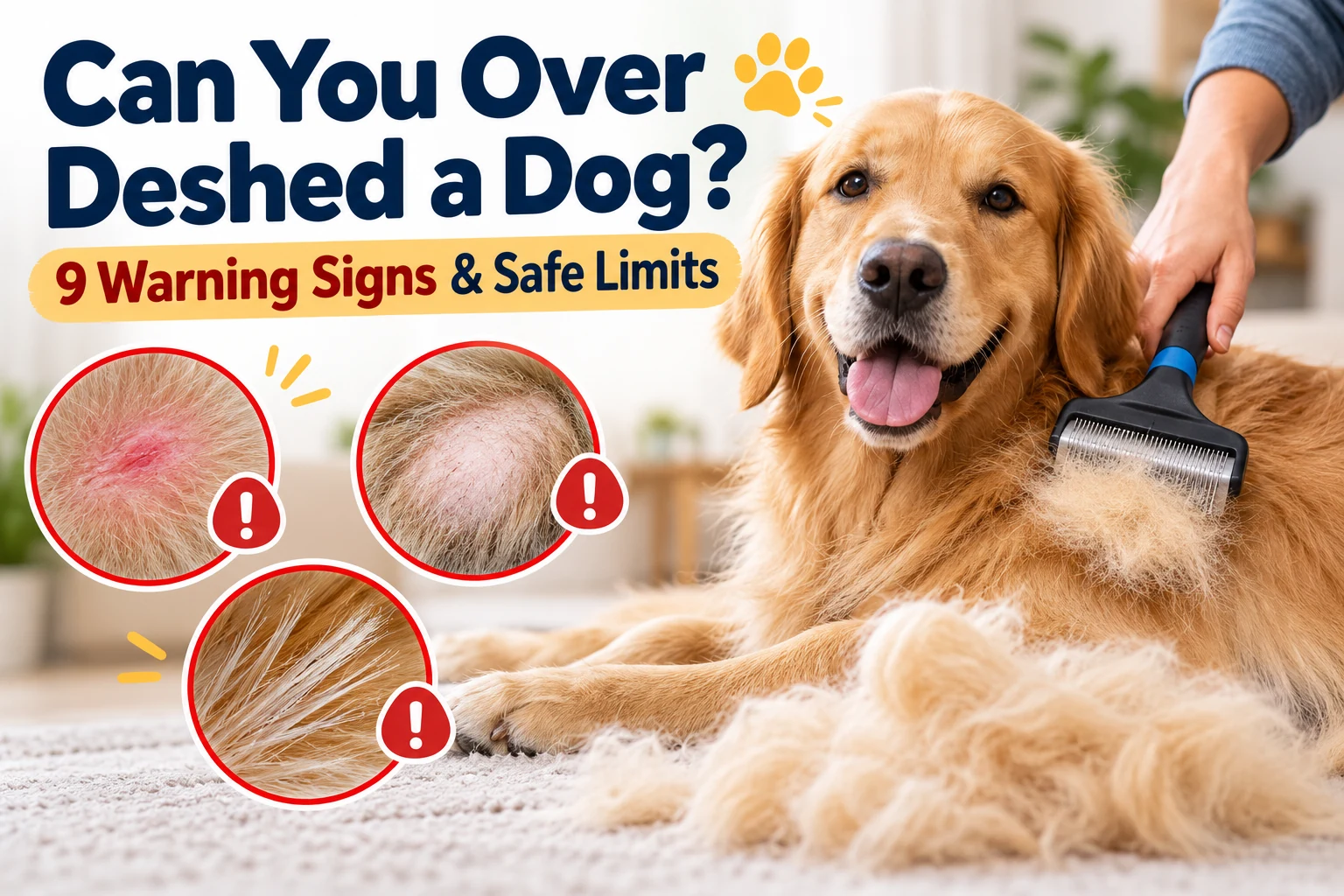
Yes, you can over deshed a dog. Excessive deshedding can irritate the skin, break healthy hair, and leave the coat looking thin or uneven. Using too much pressure or repeatedly brushing the same area increases the risk. Always follow manufacturer grooming guidelines and adjust sessions to your dog’s coat and comfort.
9 warning signs of over-deshedding
- Skin redness: Pink or inflamed areas appear after brushing.
- Coat thinning: The fur looks noticeably less dense.
- Broken hairs: Short, uneven hairs appear in the coat.
- Increased scratching: Your dog becomes itchy after grooming.
- Sensitive skin: Your dog flinches or avoids being touched.
- Patchy fur: Some areas look thinner than others.
- Dry or flaky skin: Dandruff becomes noticeable after brushing.
- Grooming avoidance: Your dog pulls away from the tool.
- Scrapes or sores: Visible skin damage develops.
What should you do?
- Stop deshedding: Give irritated skin a break and contact your veterinarian if redness persists.
- Check your technique: Use gentle strokes and an appropriate coat-specific tool.
- Reduce frequency: Resume only when your dog’s skin is healthy and comfortable.
Removing a huge pile of loose dog hair can feel satisfying. But more hair in the brush doesn’t always mean better grooming.
I’ve found that the most useful question isn’t how much hair you can remove. It’s whether the dog’s skin remains comfortable and the protective coat stays intact.
Here’s how to recognize over-deshedding, understand safe grooming limits, and protect your dog’s coat.
What Does Over-Deshedding a Dog Mean?
Over-deshedding means removing or disturbing more coat than necessary through excessive frequency, pressure, repeated strokes, or inappropriate tools.
It can damage healthy hair and irritate the skin beneath the coat. The risk depends on your dog’s coat type and grooming technique.
Deshedding differs from ordinary brushing because specialized tools target loose undercoat hair.
- Topcoat: Longer guard hairs that help protect the skin from moisture and environmental exposure.
- Undercoat: Softer, denser hair that provides insulation in double-coated dogs.
- Loose undercoat: Hair naturally separating from the coat during shedding.
- Healthy attached hair: Hair that should remain in place until its natural shedding cycle.
Deshedding should focus on loose hair rather than stripping away healthy coat layers.
The American Kennel Club’s double-coat guidance explains why both coat layers are important for skin protection.
What Are the 9 Signs You Are Over-Deshedding Your Dog?
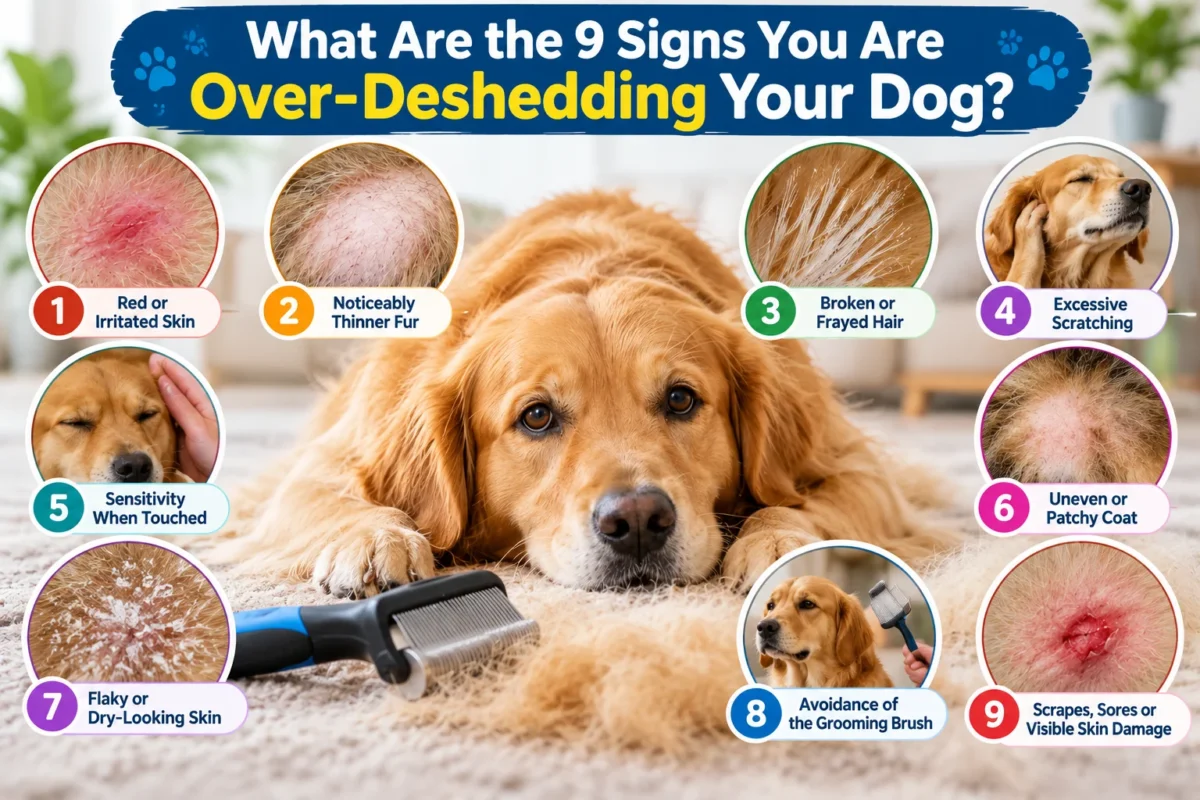
The strongest warning signs include skin irritation, noticeable thinning, pain, and changes in grooming behavior.
Some signs appear immediately. Others become noticeable after repeated grooming sessions.
1. Red or Irritated Skin
Redness after deshedding is a reason to stop. Repeated friction can irritate sensitive skin, especially around bony areas.
Check your dog’s belly, sides, shoulders, and hips. Avoid further deshedding until the skin has been assessed if irritation persists.
2. Noticeably Thinner Fur
Overworking one section may leave the coat looking thin or uneven. This is particularly concerning when the change appears immediately after grooming.
Compare the affected area with nearby fur. A visible difference can indicate excessive hair removal.
3. Broken or Frayed Hair
Healthy guard hairs should not become noticeably rough or broken after grooming. Excessive pulling or an unsuitable tool can damage individual hair shafts.
Watch for shortened, uneven hairs and a rougher coat texture. These changes deserve attention before your next session.
4. Excessive Scratching After Grooming
Scratching after deshedding can indicate skin irritation. However, allergies, fleas, and other skin conditions may cause similar symptoms.
If scratching continues or becomes intense, consult your veterinarian rather than assuming the brush caused everything.
5. Sensitivity When Touched
Your dog may flinch when you touch recently groomed areas. This behavior can suggest tenderness or discomfort.
Stop brushing if your dog reacts painfully. Never force a grooming session through obvious discomfort.
6. Uneven or Patchy Coat Appearance
Repeated brushing over one area can create a visibly uneven coat. Thinner patches may become noticeable around the shoulders or flanks.
Patchy hair loss can also indicate a medical condition. Seek veterinary advice for unexplained bald spots.
7. Flaky or Dry-Looking Skin
Flakes appearing after brushing may accompany irritation. Excessive grooming friction can aggravate skin that is already dry or sensitive.
Persistent dandruff isn’t proof of over-deshedding. Skin allergies, parasites, and other conditions also need consideration.
8. Avoidance of the Grooming Brush
Dogs often communicate grooming discomfort through body language. Pulling away, freezing, growling, or hiding can all indicate distress.
Don’t interpret resistance as stubbornness. Check for discomfort and reconsider the tool or technique.
9. Scrapes, Sores, or Visible Skin Damage
Scratches and sores are serious warning signs. Stop grooming immediately if the tool damages the skin.
Contact your veterinarian for broken skin, bleeding, swelling, or persistent pain. Do not apply human skin treatments without veterinary guidance.
How Much Deshedding Is Too Much for a Dog?
Deshedding becomes excessive when it causes discomfort, visible coat damage, or skin irritation. There is no universal number of safe strokes or sessions for every dog.
For example, FURminator recommends 1–2 weekly sessions of approximately 10–20 minutes for suitable dogs. That is a product-specific guideline, not a requirement for all breeds.
Some dogs need far less work. Others experience heavier seasonal undercoat shedding.
Deshedding Frequency by Coat Type
The following table offers practical starting points for evaluating grooming needs. Frequencies are general guidance, not veterinary prescriptions.
| Coat Type | Routine Care | Deshedding Considerations |
|---|---|---|
| Short, smooth coat | Gentle brushing as needed | Often better suited to a rubber grooming brush |
| Short double coat | Regular brushing, often weekly or more | Use an appropriate undercoat tool conservatively |
| Long double coat | Frequent brushing and detangling | Remove loose undercoat without pulling attached hair |
| Curly or continuously growing coat | Regular brushing and professional trimming | Undercoat deshedding tools are often unsuitable |
| Sensitive or irritated skin | Veterinarian-guided care | Avoid deshedding until cleared |
These recommendations can change with age, health, season, and coat condition.
The safest grooming schedule removes loose hair without creating discomfort or thinning healthy fur.
Can Too Much Deshedding Damage a Dog’s Coat?
Yes. Overusing an unsuitable deshedding tool can damage hair, disturb the coat’s appearance, and irritate the skin.
The risk increases when someone presses forcefully or repeatedly brushes the same section.
Can Deshedding Remove Healthy Hair?
Some grooming tools can pull or break hair that isn’t ready to shed, particularly when used incorrectly.
Hair collected by a brush isn’t automatically all dead undercoat. Watch the coat’s condition rather than judging success by the amount removed.
Can Over-Deshedding Cause Permanent Hair Loss?
Mild grooming-related damage often improves as the coat naturally regrows. However, regrowth depends on the hair cycle and whether the skin or follicles were damaged.
Persistent bald patches should never be dismissed as normal grooming effects. A veterinarian can investigate underlying causes.
Can Over-Deshedding Make a Dog Shed More?
Over-deshedding doesn’t necessarily increase the normal biological shedding cycle. However, hair breakage and irritation may make coat loss more noticeable.
Trying to remove every loose hair can become counterproductive. Dogs naturally continue shedding even after effective grooming.
What Should You Do if You Have Over-Deshedded Your Dog?
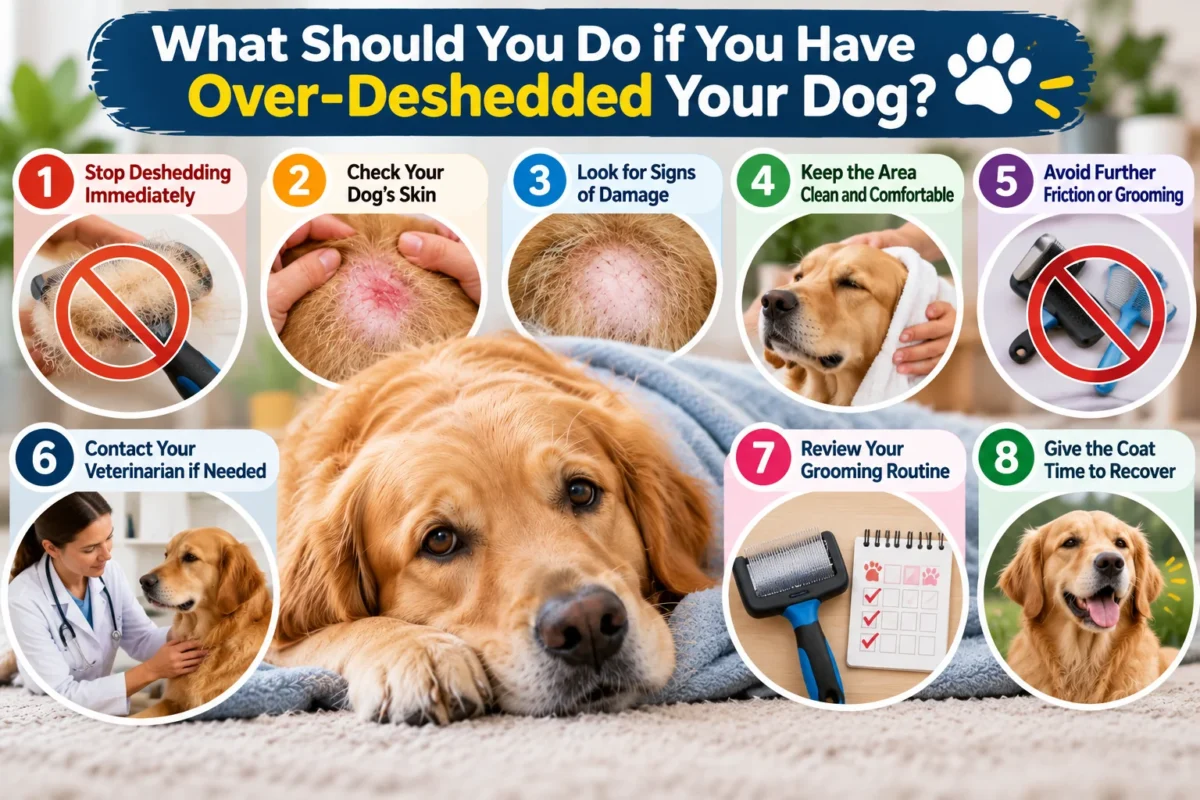
Stop using the deshedding tool and inspect the skin carefully. Further friction may worsen irritation or damage.
These steps can help you decide what to do next.
- Stop the session immediately. Do not continue just to finish grooming the entire coat.
- Inspect the affected areas. Look for redness, swelling, scratches, thinning, and sensitivity.
- Document visible changes. Take clear photographs if the coat appears unusually thin or irritated.
- Avoid additional friction. Do not use another aggressive brush to correct the appearance.
- Keep the skin clean and comfortable. Avoid unnecessary shampoos or topical products.
- Contact your veterinarian when needed. Seek care for sores, bleeding, persistent redness, pain, or unexplained hair loss.
- Review the grooming routine. Select a gentler tool and reduce repeated strokes before resuming.
A dog with painful skin shouldn’t undergo another deshedding session simply because several days have passed.
Resume only after the skin is healthy and the grooming method is appropriate.
How Long Does It Take a Dog’s Coat to Recover From Over-Deshedding?
Recovery depends on the extent of damage, coat type, and hair growth cycle. Mild surface irritation may settle sooner than visible thinning.
Coat regrowth can take weeks or months. Some conditions delay regrowth considerably.
What Affects Coat Recovery?
- Damage severity: Minor hair breakage differs from significant skin injury.
- Coat type: Double-coated and continuously growing coats have different growth patterns.
- Dog’s health: Allergies, infections, and hormonal conditions may affect recovery.
- Age and individual variation: Hair growth rates differ between dogs.
- Ongoing irritation: Continued scratching or aggressive grooming may delay improvement.
Don’t attempt to accelerate recovery through repeated deshedding. Removing more hair won’t repair the coat.
If thinning continues or skin changes worsen, request a veterinary examination.
How Can You Deshed a Dog Safely Without Overdoing It?
Safe deshedding uses gentle pressure, an appropriate tool, and attention to the dog’s comfort.
The goal is to remove loose hair efficiently, not to keep brushing until nothing remains.
Step 1: Identify Your Dog’s Coat Type
Determine whether your dog has a true shedding undercoat. Breeds such as Golden Retrievers and Siberian Huskies commonly have double coats.
Curly-coated dogs may require a different grooming routine. Ask a professional groomer if you’re unsure.
Step 2: Inspect the Skin First
Part the fur and check for irritated areas, bumps, cuts, and parasites.
Do not use a deshedding blade over damaged skin. Seek appropriate treatment before resuming.
Step 3: Remove Tangles Gently
Use a coat-appropriate comb or brush to loosen minor tangles. Avoid pulling hard against the skin.
Severe matting often requires professional attention. Aggressive brushing can make the situation worse.
Step 4: Work on a Dry Coat
Many specialized deshedding tools are designed for use on completely dry fur.
Follow the instructions for your specific tool. Never assume all grooming brushes work the same way.
Step 5: Apply Light Pressure
Move the tool in the direction of hair growth. Let its teeth collect loose fur without digging into the skin.
A light touch is more important than force. Stop if the tool catches, pulls, or causes discomfort.
Step 6: Avoid Repeated Strokes
Work across the coat methodically rather than brushing one spot again and again.
Use extra caution near the belly, legs, joints, and other sensitive areas.
Step 7: Stop Before Irritation Appears
Check the skin periodically and watch your dog’s body language.
End the session when you have removed a reasonable amount of loose hair. Don’t chase every last strand.
Which Dog Breeds Are More Sensitive to Over-Deshedding?
Any dog can experience grooming irritation. However, dogs with delicate skin, sparse coats, or unsuitable coat types may face greater risks.
Double-Coated Dogs
Golden Retrievers, German Shepherds, Huskies, and similar breeds often benefit from proper undercoat management.
However, excessive brushing can still damage their protective coat. Use appropriate tools and avoid stripping healthy fur.
Short-Coated Dogs
Dogs with smooth or sparse coats may have less hair cushioning their skin during brushing.
A soft rubber brush or grooming mitt may be more comfortable than a sharp-edged deshedding tool.
Curly-Coated Dogs
Poodles and similar dogs generally require brushing, detangling, and clipping rather than aggressive undercoat removal.
Using a deshedding blade on an unsuitable coat can pull and damage hair.
Dogs With Skin Conditions
Dogs experiencing allergies, infections, sores, or unexplained hair loss need individualized grooming guidance.
The VCA Animal Hospitals grooming guide recommends choosing tools according to coat type and seeking professional help for skin problems.
What Grooming Mistakes Increase the Risk of Over-Deshedding?
Most preventable problems involve tool selection, technique, or ignoring the dog’s response.
Watch for these common mistakes.
- Using a deshedding blade daily: Frequent blade use may create unnecessary friction.
- Applying heavy pressure: A grooming edge can irritate skin when pressed too firmly.
- Brushing the same area repeatedly: Repeated strokes increase localized friction.
- Using the wrong tool: A brush designed for thick undercoats may be unsuitable for fine or curly coats.
- Ignoring mats: Pulling through tangled fur can cause pain and breakage.
- Grooming irritated skin: Existing skin problems may worsen with brushing.
- Ignoring warning behavior: Flinching, freezing, or moving away can signal discomfort.
Remember that brushing and deshedding are not identical. Some dogs benefit from frequent gentle brushing but need only occasional specialized undercoat work.
Deshedding vs. Regular Brushing: What’s the Difference?
Regular brushing maintains the coat and removes loose surface hair. Specialized deshedding targets shedding undercoat in dogs with suitable coats.
| Feature | Regular Brushing | Specialized Deshedding |
|---|---|---|
| Main purpose | Coat maintenance and detangling | Loose undercoat removal |
| Typical tools | Pin brush, slicker, comb, rubber brush | Undercoat rake or deshedding edge |
| Frequency | Often daily to weekly, depending on coat | Usually less frequent and tool-dependent |
| Main risk | Pulling tangles or scratching skin | Irritation or excessive coat removal |
The AKC dog brush guide explains how different grooming tools serve different coat types.
Choosing a brush for the coat matters more than choosing the most aggressive tool available.
What Are the Best Grooming Tools to Prevent Over-Deshedding?
A suitable grooming tool should remove loose hair while keeping your dog comfortable. No brush is automatically safe for every coat.
Here are three options worth considering, depending on your dog’s grooming needs.
🏆 Best for suitable double coats
FURminator Undercoat deShedding Tool for Dogs
★★★★☆
Its stainless steel edge targets loose undercoat, while the hair-release button simplifies cleaning. I’d consider it for compatible shedding coats, provided the size and hair-length version are appropriate. Use light pressure and follow its instructions.
🌿 Best for gentle short-coat care
KONG ZoomGroom Dog Brush
★★★★☆
This flexible rubber grooming brush helps collect loose surface hair without a metal deshedding edge. I’d favor this style for many short, smooth-coated dogs. Avoid brushing over irritated or broken skin.
🐕 Best for thick-coat maintenance
FURminator Grooming Rake
★★★★☆
Rotating metal teeth help lift loose undercoat and work through thick fur. I’d consider this for routine maintenance on compatible dense coats. It still requires gentle handling and isn’t suitable for painful matting.
Affiliate disclosure: This section contains Amazon affiliate links. I may earn a commission from qualifying purchases at no additional cost to you. Star symbols indicate editorial suitability judgments, not verified customer review averages.
Frequently Asked Questions About Over-Deshedding Dogs
Can you deshed a dog every day?
Daily use of an aggressive undercoat deshedding tool usually isn’t necessary and may increase irritation. Some dogs benefit from daily gentle brushing, but specialized deshedding should follow coat needs and product instructions. Avoid using a blade repeatedly on the same area.
How do I know when to stop deshedding my dog?
Stop when you’ve removed a reasonable amount of loose hair or notice resistance, irritation, or discomfort. You don’t need to eliminate every loose strand. Redness, flinching, and visible coat thinning are warning signs that grooming has gone too far.
Will my dog’s fur grow back after over-deshedding?
Fur often grows back after minor mechanical damage, provided the follicles remain healthy. Regrowth varies by breed, coat cycle, and overall health. If bald areas persist, spread, or develop skin changes, a veterinarian should assess the cause.
Can a FURminator damage a dog’s coat?
A FURminator can cause irritation or coat problems when used too aggressively or on an unsuitable coat. The manufacturer recommends gentle strokes, minimal pressure, and avoiding repeated brushing in one area. Choose the correct model and stop if redness appears.
Is it normal for a lot of hair to come out when deshedding?
Yes, double-coated dogs can release substantial amounts of loose undercoat during seasonal shedding. However, a large pile of fur doesn’t prove the session was safe. Monitor skin comfort, coat density, and hair condition rather than using hair volume as the only measure.
Final Thoughts: How Do You Avoid Over-Deshedding Your Dog?
Yes, you can over deshed a dog, especially when using excessive pressure, unsuitable tools, or repeated strokes in one area.
Effective grooming should remove loose hair while preserving healthy skin and protective fur.
Choose tools that match your dog’s coat, keep sessions gentle, and stop when the dog becomes uncomfortable.
The goal isn’t to remove the most hair. It’s to keep your dog’s coat healthy and comfortable.
If your dog develops redness, bald patches, sores, or persistent itching after grooming, consult your veterinarian before trying another deshedding session.


