
Quick Answer
For dog haircut skin safety, inspect the skin first, use clean and cool pet clippers with an appropriate guard, keep the blade flat, and avoid cutting close to folds, sores, or tight mats. Stop if your dog struggles or the skin turns red. A veterinarian should assess painful, spreading, or infected-looking irritation.
A neat haircut should never come at the expense of your dog’s skin. Even a small nick or irritated patch can become more uncomfortable if your dog keeps licking it.
The safest approach is to decide where not to trim before switching on the clippers. Skin condition, coat type, matting, and your dog’s ability to stand calmly all affect how much grooming is reasonable at home.
What Skin Problems Can Happen During a Dog Haircut?
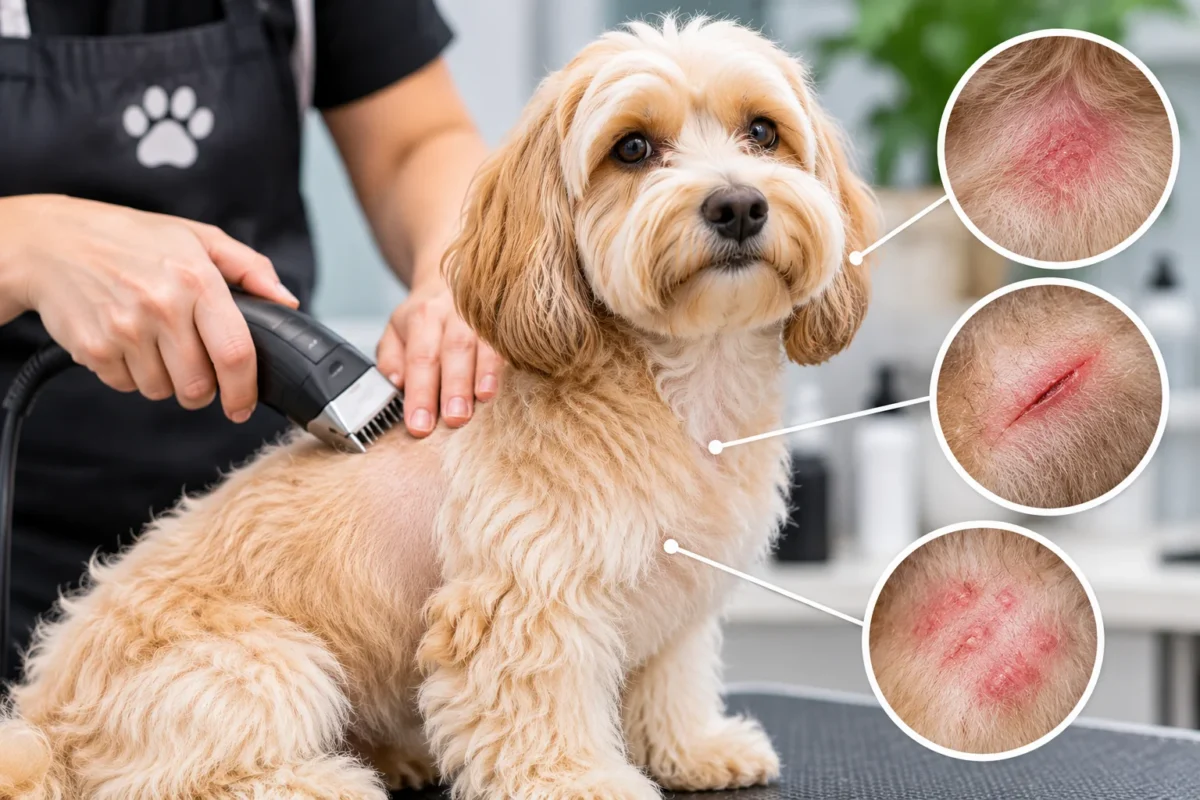
The main haircut-related problems are small cuts, abrasions, clipper irritation, and aggravation of existing skin disease. They do not all have the same cause or need the same response.
- Nicks and cuts: Scissors or clipper teeth can catch thin skin, especially where it folds or moves.
- Clipper heat injury: A running blade can become hot enough to injure skin if its temperature is not checked.
- Friction irritation: Repeated close passes, pressure, or a poorly maintained blade may leave red, tender areas.
- Brush irritation: Aggressive brushing or pulling through tangles can scrape or inflame the skin.
- Product reactions: Shampoo, fragrances, or inadequately rinsed products may produce itching or redness after a groom.
The term “clipper burn” is often used for several kinds of post-clipping irritation, although a genuine heat burn is different from a friction rash. The practical response begins with stopping the irritating activity and checking how severe the skin changes are.
The USDA coat-care guidance specifically cautions that hot clippers can burn skin and that scissors can cut skin hidden beneath mats.
How Should You Check Your Dog’s Skin Before Trimming?
Part the coat and examine the areas you plan to cut. Do not rely on the surface appearance of the fur, because a long coat can conceal tenderness or skin damage.
- Look for visible changes. Check for redness, scabs, crusts, moist patches, swelling, and bald or sore areas.
- Feel gently for hidden issues. Notice lumps, thick mats, unusually warm areas, or spots where your dog flinches.
- Check vulnerable locations. Inspect behind the ears, armpits, groin, belly, tail base, and areas around the legs.
- Observe behavior. Pulling away, crying, snapping, or repeatedly looking at one spot may indicate discomfort.
Do not clip directly over a wound, unexplained lump, inflamed patch, or suspected infection. Ask your veterinarian about a concerning skin condition before attempting a close haircut.
For routine cleaning around grooming, use a gentle dog-specific wash and rinse carefully. The site’s dog bathing guide explains how to avoid shampoo residue and rough handling.
How Do You Give a Dog a Haircut Without Irritating the Skin?
Use controlled, gentle clipping on a clean, dry, detangled coat when that is appropriate for your dog’s coat type. Do not force a full haircut into one session.
- Prepare a non-slip area. Choose good lighting, stable footing, and a quiet space. Keep your dog supported without pinning or frightening them.
- Choose an appropriate cutting length. Use a suitable pet-clipper guard or comb attachment where the coat allows it. Avoid an unnecessarily close shave.
- Check the equipment. Follow the clipper maker’s cleaning, oiling, and blade-fitting instructions. Damaged or snagging blades should not be used.
- Introduce the sound. Let your dog become comfortable with the switched-off tool and then its sound before clipping near the body.
- Keep the blade flat. Guide it gently along the coat instead of digging its teeth toward the skin. Work in short, controlled passes.
- Check blade temperature often. Switch the clipper off and carefully test the blade’s heat away from your dog’s skin. Change to a cool blade or pause if it is hot.
- Stop to inspect. Separate the hair and check the skin as you progress. End the session if irritation or distress develops.
Resist the temptation to press harder when hair does not cut cleanly. The problem may be coat preparation, blade condition, or an unsuitable attachment, not a lack of force.
Safety warning
Never slide scissors beneath a tight mat or pull a mat away from the skin to cut under it. Skin can be trapped inside the mat. Severe matting is safer to assess with an experienced groomer or veterinarian.
Which Areas Need Extra Care During Hair Trimming?
Thin, loose, folded, or difficult-to-see skin requires a different approach from the broad, flatter areas of the back. If you cannot clearly see the skin and control your dog’s movement, leave that area to a professional.
Armpits, groin, and belly
These areas may have folds that can catch on clipper teeth. Avoid stretching a limb into an uncomfortable position or running a blade blindly through a crease. Sensitive sanitary trimming is a good task to demonstrate with a groomer before trying yourself.
Ears, face, and feet
Ear edges can be thin, while eyes, lips, and toes are close to moving tissue. Do not use sharp scissors near the face or between toes without being taught a safe technique. A sudden head movement can turn a minor trim into an injury.
Matted or very short-coated areas
Tight mats may pull on the skin and hide lesions. Very close clipping also leaves less hair between equipment and skin. Do not assume that the shortest cut is the cleanest or safest choice.
Does Coat Type Change the Safest Haircut?
Yes. Coat structure changes how a dog should be groomed, and many dogs do not need a full-body haircut at all.
| Coat situation | Safer priority |
|---|---|
| Continuously growing or curly coat | Regular detangling and an appropriate trim length |
| Double coat | Brushing and removal of loose undercoat rather than routine skin-close shaving |
| Severely matted coat | Professional assessment; avoid home scissor removal |
| Sensitive or diseased skin | Veterinary guidance before close clipping |
For example, a curly-coated dog with easy-to-brush fur may benefit from a maintained trim, while a healthy double-coated dog may be better served by removing shed hair. A medical reason to clip is different from a cosmetic preference.
What Should You Do If Your Dog’s Skin Looks Red After a Haircut?
Stop grooming, keep the area free from further rubbing, and prevent excessive licking or scratching. Red skin after grooming may reflect friction, shampoo irritation, an existing allergy, or another problem; its appearance alone does not establish the cause.
For a small, mildly irritated area without broken skin, gently check for remaining hair or product residue and contact your veterinarian for advice if discomfort persists. Avoid applying human pain relievers, essential oils, alcohol, peroxide, or random medicated creams. Products that are safe for people may irritate dogs or be harmful if licked.
If there is a small cut, apply gentle pressure with clean gauze if bleeding occurs. Seek veterinary help for a deep, gaping, continuously bleeding, or painful wound rather than trying to close it yourself.
The Virginia Tech Veterinary Teaching Hospital’s bathing guidance advises contacting a veterinarian for redness, bumps, persistent scratching, or unusual odor after bathing and grooming-related irritation.
When Is Post-Haircut Skin Irritation an Urgent Concern?
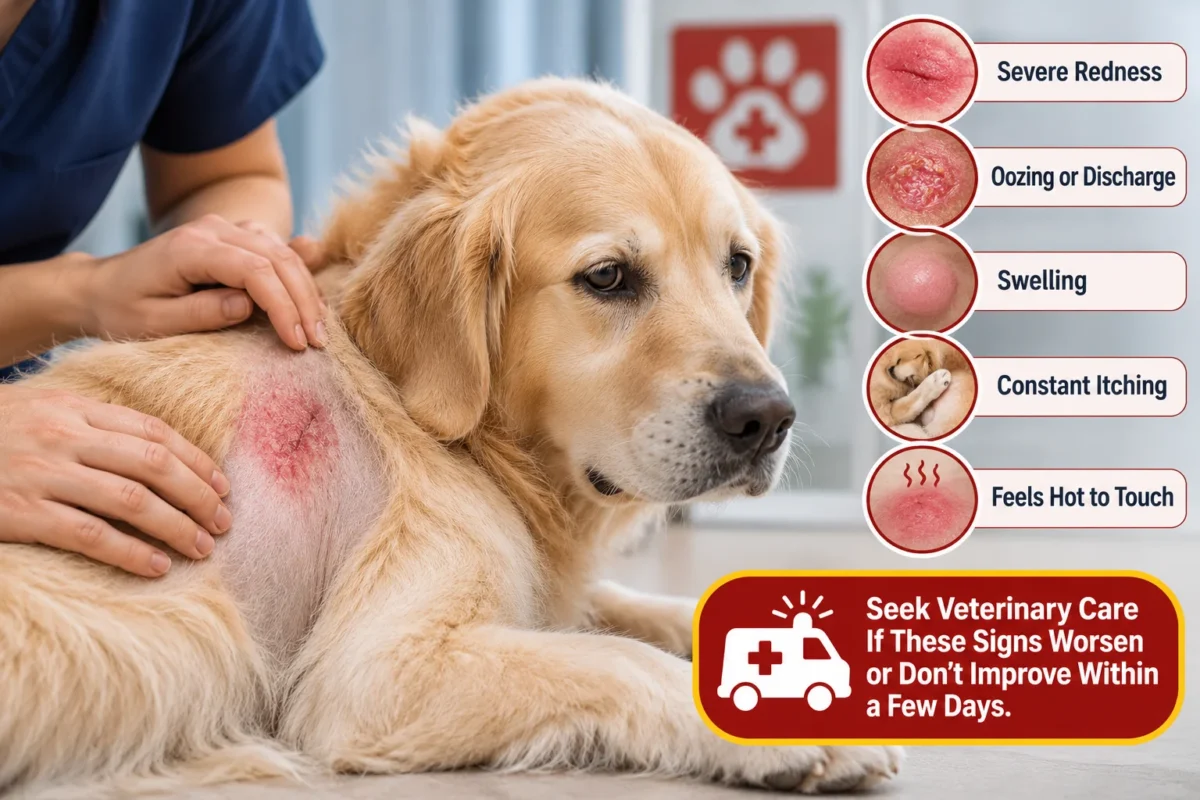
Increasing pain, spreading redness, swelling, pus, a bad smell, significant bleeding, or a dog that becomes lethargic warrants prompt veterinary assessment. Deep wounds, severe burns, and a dog in obvious distress should be evaluated urgently.
Contact a veterinarian if the irritated area becomes wet or raw because of repeated licking. A mild-looking spot can worsen when the dog continually traumatizes it, and a skin infection cannot be ruled out from a photograph alone.
Also seek veterinary advice if new painful bumps or fever develop after grooming. Rare but important deep skin infections can occur following traumatic bathing or brushing. This does not mean every post-grooming itch is an infection; it means worsening signs should not be ignored.
How Can You Prevent Skin Problems at the Next Grooming Session?
Keep a brief note of which body areas reacted, how short the coat was clipped, and which products were used. Share it with the groomer or veterinarian rather than repeating exactly the same routine.
- Brush gently and regularly so tangles do not become tight mats.
- Tell your groomer about allergies, sore spots, previous clipper irritation, and any medical instructions.
- Ask for a longer trim where short clipping previously caused discomfort.
- Request breaks if your dog becomes restless or overwhelmed.
- Keep blades clean, maintained, and cool throughout home sessions.
- After grooming, check the armpits, belly, groin, paws, and behind the ears for unexpected redness.
A skilled professional should be willing to discuss handling, blade choice, hygiene, and what happens if a dog develops a skin problem. Choosing an appropriate grooming approach is more important than requesting one haircut style for every coat.
Frequently Asked Questions
Can dog clippers burn skin even without a visible cut?
Yes. Friction and heated blades can cause discomfort without an obvious open wound. Check blade temperature regularly and stop if the skin looks red or your dog reacts to contact.
Is it safer to shave a dog against the direction of hair growth?
Not automatically. Cutting against growth may produce a closer result, which can increase irritation risk on sensitive skin. Follow coat-specific techniques taught by a qualified groomer rather than aiming for the shortest finish.
Should I use scissors to remove a mat near my dog’s skin?
No. Tight mats can conceal or pull skin into the hair, making scissor cuts dangerous. Ask a professional groomer or veterinarian to assess a mat that cannot be gently separated.
Can a dog lick skin irritation after a haircut?
Repeated licking can make irritation worse and may damage the skin. Prevent persistent licking and ask your veterinarian about appropriate protection if you cannot keep the area undisturbed.
How long should a mild post-grooming rash last?
There is no reliable universal timeline because redness has several possible causes. If the skin is painful, worsening, oozing, or not improving, contact your veterinarian instead of waiting for a fixed number of days.
Should a dog with a skin infection get a haircut?
Ask a veterinarian first. Clipping may sometimes be part of veterinary treatment, but cosmetic grooming over inflamed or infected skin can increase discomfort and may interfere with care.
Final Thoughts
Dog haircut skin safety comes down to skin checks, sensible trim length, cool equipment, gentle handling, and knowing when to stop. If your dog has painful skin, severe mats, or worsening irritation, professional care is safer than finishing the haircut at home.


