
Quick Answer
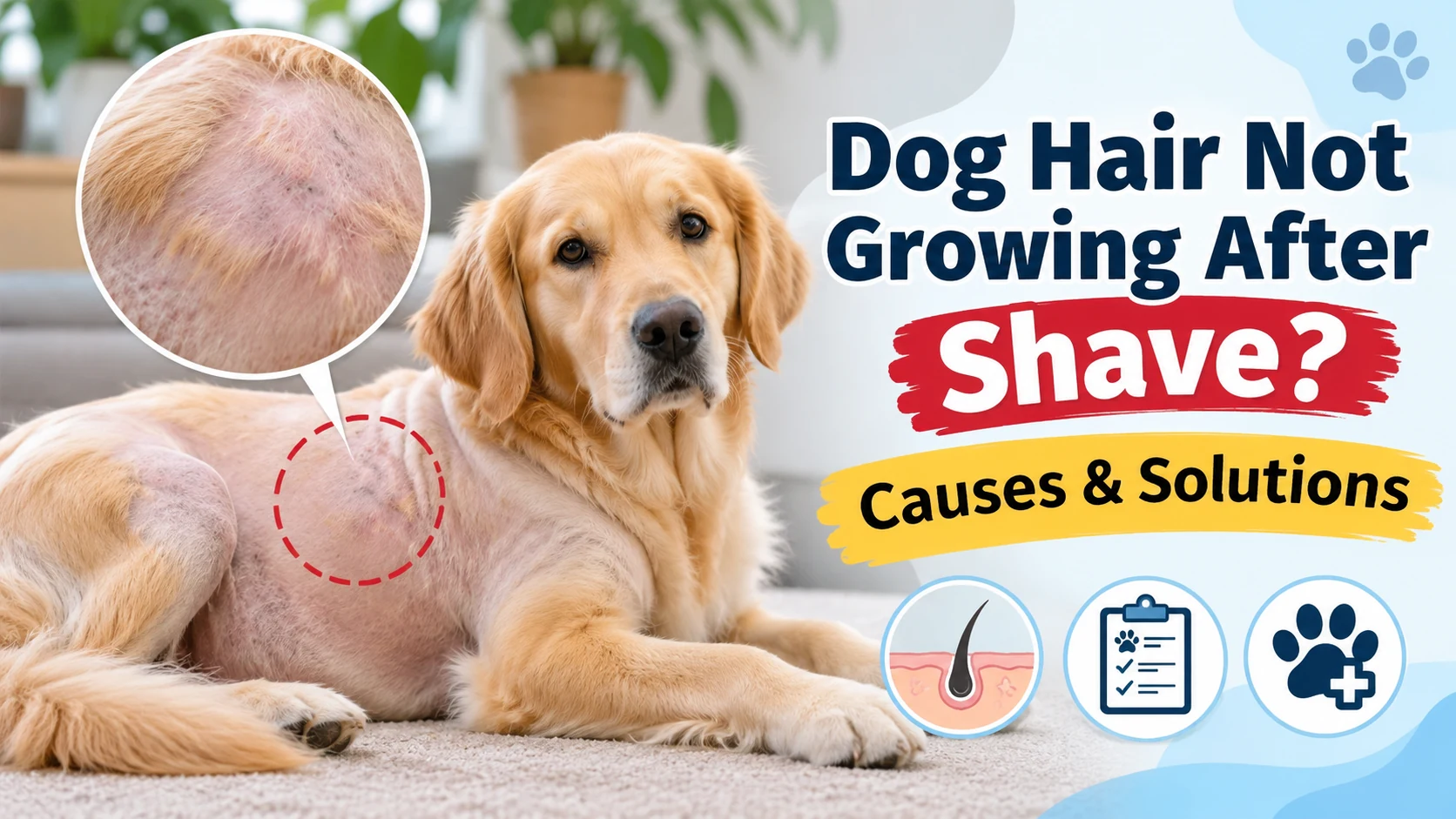
If your dog’s hair is not growing after a shave, slow hair cycling may be responsible, especially in thick, plush-coated breeds. Some dogs develop post-clipping alopecia, in which the shaved area takes many months to regrow. Skin infections, hormone disorders, and other health problems can also delay regrowth. Check for irritation or other symptoms, avoid shaving the area again, and arrange a veterinary exam if the coat remains unchanged after about three to four months or any concerning signs appear sooner.
Seeing a bare patch weeks after a grooming appointment can be unsettling. The important distinction is whether your dog’s coat is simply growing slowly or something is interfering with normal hair growth.
A dog’s breed, coat type, skin appearance, and health history provide more useful clues than the haircut alone. Here’s how to assess the situation without trying potentially harmful treatments.
How Long Does Dog Hair Usually Take to Grow Back After Shaving?
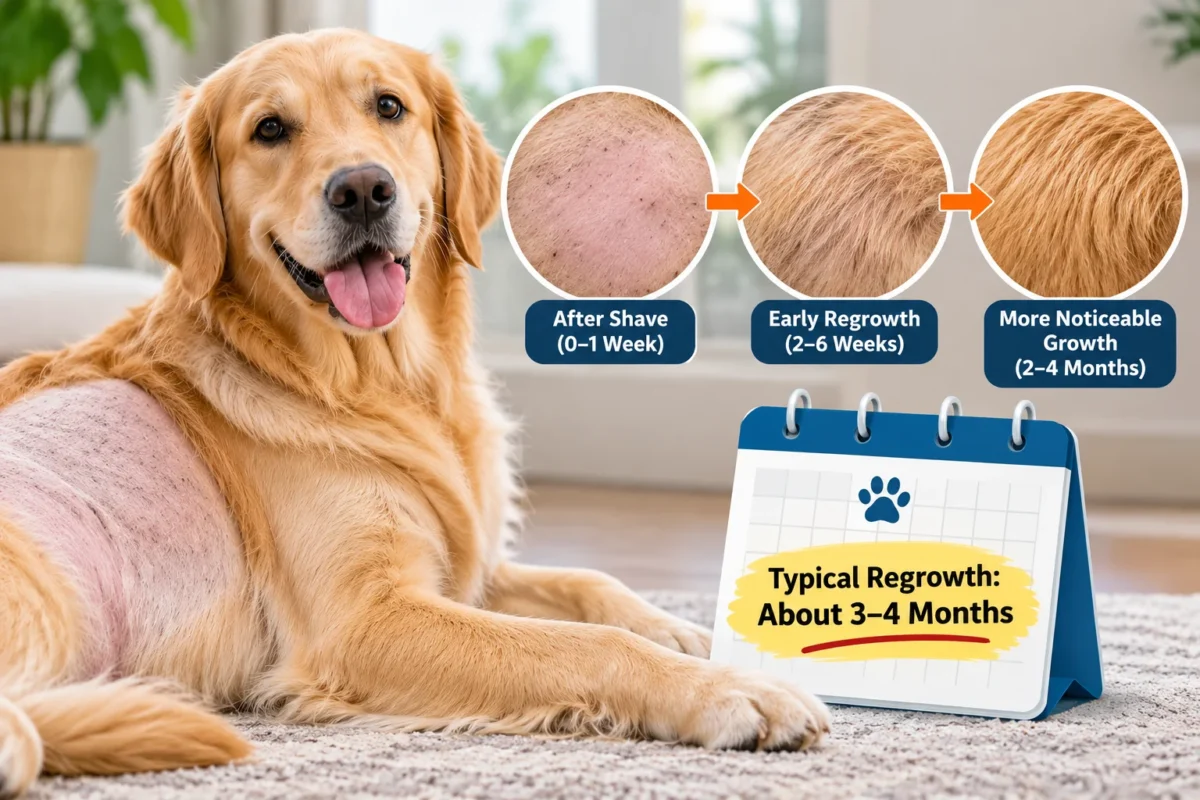
Many dogs show substantial coat regrowth within roughly three to four months, but there is no universal schedule. Hair length, season, individual hair cycles, the area shaved, and underlying health all affect how quickly the original appearance returns.
The University of Minnesota’s veterinary dermatology handbook describes three to four months as a general regrowth period and recommends investigating hair that fails to return within that interval. In confirmed post-clipping alopecia, complete regrowth can take 12 to 24 months.
| Time since shave | What it may mean | Reasonable next step |
|---|---|---|
| First few weeks | Little visible length can still be consistent with normal hair cycling. | Check skin health and document the area. |
| Around 3–4 months | Minimal or absent regrowth deserves assessment. | Book a veterinary examination. |
| 6–24 months | Some diagnosed post-clipping cases recover gradually over this period. | Follow your veterinarian’s monitoring plan. |
These are reference points, not a reason to wait when your dog has itching, sores, spreading hair loss, or changes in general health.
Why Is Your Dog’s Hair Not Growing Back After a Shave?
1. The hair follicles are in a resting phase
Dog hair follicles cycle through growth (anagen), transition (catagen), and rest (telogen). A closely clipped coat can look unchanged when many follicles remain in a long resting period. This is particularly relevant to some breeds with dense coats.
Shaving cuts the visible hair shafts; it does not normally remove the follicles. However, cutting the hair does not force follicles to begin a new growth cycle.
2. Post-clipping alopecia
Post-clipping alopecia refers to unusually delayed hair regrowth in an area that was clipped, sometimes for grooming, surgery, or a medical procedure. The skin may look otherwise normal, and the missing hair generally corresponds to the shaved patch.
It is reported especially in plush-coated breeds such as Pomeranians, Huskies, and Chow Chows, although other dogs can be affected. Its exact mechanism remains uncertain; a delayed return to active hair growth is one proposed explanation.
Importantly, a bare shaved patch does not automatically establish this diagnosis. A veterinarian may need to exclude other causes first.
3. Hormonal conditions affecting coat growth
Hypothyroidism and Cushing’s disease can interfere with the hair cycle. These disorders may become more obvious after a haircut, but the shave itself does not prove or cause either diagnosis.
- Hypothyroidism: Possible clues include a thin or dry coat, reduced activity, weight gain, or thinning on both sides of the body.
- Cushing’s disease: Possible clues include increased thirst and urination, increased appetite, a potbellied appearance, thin skin, and hair loss.
Hormonal testing should be selected and interpreted by a veterinarian based on your dog’s complete symptoms and examination.
4. Skin inflammation, infection, or parasite problems
If the bald area is itchy, crusty, red, smelly, or spreading beyond the shaved region, a skin disorder may be involved. Bacterial infection, fungal infection, mites, allergies, and excessive licking can lead to additional hair loss or damaged follicles.
The Merck Veterinary Manual’s guide to canine hair loss explains how veterinarians distinguish diseases that impair follicle growth from problems that break or remove existing hairs.
5. Other coat or health conditions
Breed-associated hair loss disorders, prior skin injury, and nutritional deficiencies can also play a role. For example, alopecia X is a separate condition that can affect some plush-coated dogs and should not be confused with every case of post-clipping alopecia.
Because several conditions look similar, the timing of the haircut is a useful clue, not a definitive diagnosis.
How Can You Tell Slow Regrowth From a Skin Problem?
Look at both the hair-growth pattern and the skin underneath. Delayed regrowth limited to the clipped area with comfortable, normal-looking skin is different from hair loss accompanied by irritation or illness.
| Observation | What to consider |
|---|---|
| Only the clipped patch is slow to grow, with no discomfort | A hair-cycle delay is possible. |
| Redness, scabs, odor, itching, or pain | Skin disease or inflammation needs prompt assessment. |
| New bald patches away from the shave | Consider a broader dermatologic or systemic problem. |
| Coat changes plus thirst, weight, or energy changes | A health condition, including a hormonal disorder, may need testing. |
Skin that looks darker after clipping is not by itself proof of permanent damage. Still, new pigment changes, scaling, or spreading baldness warrant veterinary evaluation.
What Should You Do If Your Dog’s Hair Is Not Growing Back?
- Record the timeline. Note the shave date, body areas clipped, and whether the coat was cut close to the skin. Take a photograph in similar lighting every few weeks so small changes are easier to recognize.
- Inspect the skin gently. Look for redness, sores, flakes, odor, excessive licking, and parasites. Avoid repeatedly rubbing or scratching the bare skin to check for new hairs.
- Stop unnecessary close clipping. Do not shave the same area again in an attempt to restart growth. Discuss future grooming methods with your veterinarian or an experienced groomer.
- Protect exposed skin. Limit harsh sun exposure and weather extremes while the protective coat is thin. Ask your veterinarian about safe protection if large areas are exposed.
- Maintain ordinary skin and coat care. Feed a complete, balanced diet appropriate for your dog and use gentle, dog-safe grooming products. Brush remaining fur without irritating exposed skin.
- Schedule an examination when indicated. If there is little or no regrowth after approximately three to four months, have the area assessed even when your dog seems otherwise well. Seek care sooner for uncomfortable skin or additional symptoms.
Warning
Do not apply human hair-growth drugs, essential oils, or unprescribed supplements to a dog’s bald skin. These are not established at-home treatments for post-clipping alopecia and may be unsafe.
Can You Make Dog Hair Grow Back Faster?
There is no reliably proven home method that makes post-clipping alopecia resolve quickly. Healthy nutrition and gentle care support normal coat health, but they cannot guarantee that resting follicles will become active sooner.
Melatonin and microneedling have been discussed in veterinary literature for some hair-growth disorders. However, evidence for treating post-clipping alopecia remains limited; the University of Minnesota handbook notes that melatonin’s effectiveness is unproven and the published microneedling evidence is small and methodologically limited.
Do not start hormone-related products, melatonin, or procedures without a veterinarian’s assessment. The most useful intervention is to identify and treat an underlying illness if one is present.
When Should You Take Your Dog to the Vet?
Arrange veterinary care promptly if your dog develops sores, pronounced redness, pain, repeated scratching, unpleasant odor, rapid or spreading hair loss, or other signs of illness. A skin problem can require treatment even when only a small area is affected.
For a comfortable dog whose only symptom is a slowly returning shaved coat, an examination is appropriate if little or no progress is evident by roughly three to four months. This does not mean every dog requires extensive testing: the vet will decide what is justified.
A diagnostic visit may involve a skin and coat examination, review of grooming and medication history, skin scrapings or other skin tests, and selected blood tests if hormonal disease is suspected. Some complex cases need a veterinary dermatologist or additional testing.
How Can You Avoid Regrowth Problems With Future Haircuts?
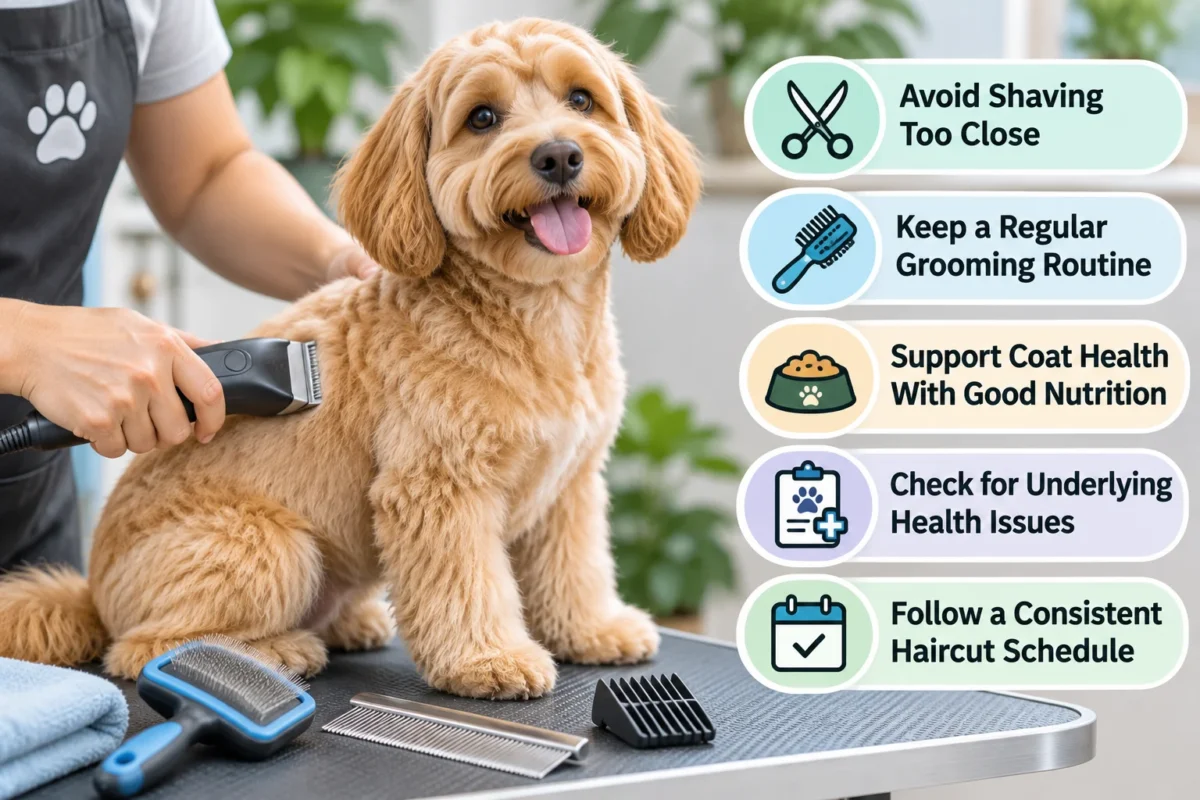
Choose the grooming method to fit the coat type rather than using a very short shave for every dog. Thick double coats often benefit from regular brushing, removal of loose undercoat, and appropriate bathing rather than routine shaving.
If a close clip is medically necessary—for example, for an operation or severe matting—necessary veterinary care takes priority over cosmetic regrowth concerns. Discuss the dog’s coat history with the veterinary team or groomer so future clipping can be planned sensibly.
Never attempt to cut tight mats off with scissors against the skin. Such mats are safer to handle with appropriate professional equipment and technique.
Frequently Asked Questions
Can a dog’s hair grow back a different color after shaving?
Yes. Regrowing fur may temporarily look darker, lighter, or different in texture from the surrounding coat. Color changes alone do not confirm disease, but persistent patchy loss or skin changes deserve a veterinary check.
Why does the undercoat seem to grow back before the topcoat?
Undercoat and longer guard hairs can have different growth patterns. On some double-coated dogs, this makes new fur look soft, woolly, or uneven before the coat has recovered its usual appearance.
Can a dog have post-clipping alopecia after surgery?
Yes. The condition can become apparent after an area is clipped for surgery or other medical care, not just after a grooming appointment. A veterinarian should still check prolonged non-regrowth for other possible causes.
Does brushing a shaved patch stimulate hair growth?
There is no good evidence that brushing bare skin makes follicles restart growth. Gentle brushing is useful for maintaining existing fur, but avoid friction or irritation on exposed skin.
Will vitamins or fish oil fix slow coat regrowth?
Not necessarily. Supplements will not correct a hair-cycle disorder simply because the coat is slow to return. Ask a veterinarian to evaluate the diet or a possible deficiency before adding supplements.
Can post-clipping alopecia become permanent?
Many affected dogs eventually regrow hair, sometimes over 12 to 24 months. However, not every bald patch is post-clipping alopecia, and some other conditions can cause persistent or permanent hair loss. A diagnosis matters more than waiting indefinitely.
Conclusion
Dog hair not growing after a shave does not necessarily mean the follicles are permanently damaged. Some coats take longer to cycle back into growth, and post-clipping alopecia can cause a prolonged delay, especially in thick-coated breeds.
Monitor the shaved area, protect the skin, and avoid unnecessary repeat shaving or unproven treatments. If regrowth is minimal after three to four months, or if you notice irritation, spreading baldness, or other health changes, ask a veterinarian to check for an underlying cause. A clear diagnosis is the safest route to deciding whether the coat needs treatment or simply more time.


