
Quick Answer
To prepare a puppy for a haircut, start with gentle handling, short brushing sessions, and positive rewards. Gradually introduce grooming tools, clipper sounds, and standing still. Keep practice brief, stop when your puppy becomes distressed, and arrange a gentle first grooming visit when your veterinarian and groomer agree it is appropriate.
Your puppy’s first haircut should be a positive introduction to grooming, not a test of how long they can sit still. Unfamiliar brushes, buzzing clippers, and handling around sensitive areas can feel overwhelming to a young dog.
The best preparation happens before any hair is cut. A few comfortable practice sessions can help your puppy learn what grooming feels like without being frightened or physically restrained.
Here are nine practical steps to prepare your puppy for a haircut at home and help make that first professional appointment easier.
When Should You Start Preparing a Puppy for a Haircut?
Start gentle grooming preparation as soon as your puppy settles into your home. You do not need to wait until their coat is long enough for a haircut.
Early preparation can involve touching the paws, brushing the coat lightly, and letting the puppy investigate grooming equipment.
According to PetMD’s veterinary-reviewed puppy grooming guide, puppies can begin learning to accept grooming from the time they arrive home.
The age for a first professional appointment is a separate question. Some puppies can have an introductory visit at around 12–14 weeks if their vaccination status and the salon’s requirements allow it. Others may need to wait longer. Ask your veterinarian about the risks in your area before arranging a shared grooming environment.
A puppy with a continuously growing coat may need earlier coat maintenance than a puppy with short, naturally shedding fur. However, even short-haired puppies benefit from learning to tolerate grooming.
How Do You Prepare a Puppy for a Haircut Step by Step?
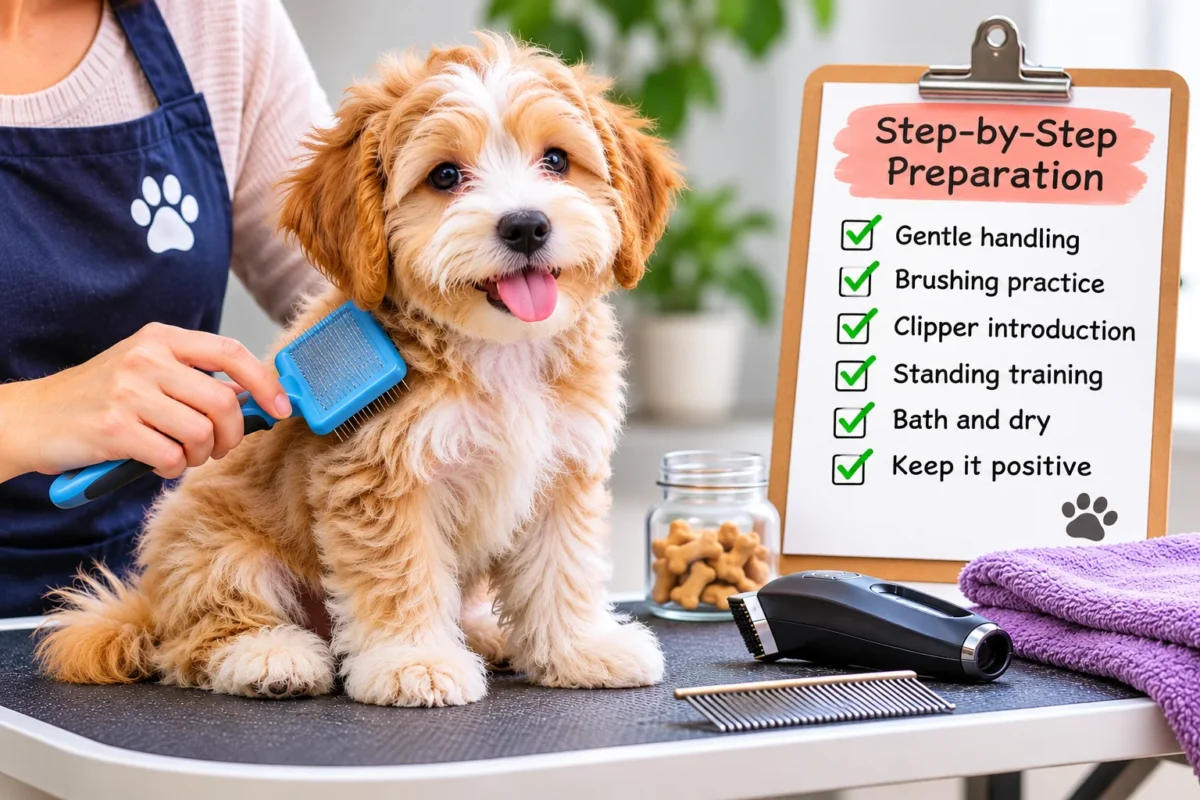
The following nine steps build familiarity gradually. Move forward when your puppy is relaxed rather than trying to complete every exercise on a fixed schedule.
1. Help Your Puppy Feel Comfortable Being Touched
Begin by teaching your puppy that gentle handling predicts something pleasant. Choose a quiet place where they already feel secure.
Briefly touch the shoulders, back, legs, paws, ears, and chin, rewarding comfortable responses with a small treat or calm praise.
For example, touch one paw, reward your puppy, and release it. Over several sessions, gradually practice holding the paw for a little longer.
Pay particular attention to areas groomers often need to handle:
- Paws and the spaces around the toes
- Ears and the sides of the head
- Chin and muzzle
- Tail and rear legs
- Chest and belly
If your puppy pulls away, reduce the difficulty. Do not hold them in place until they give up resisting. Voluntary cooperation is a more useful goal than forced stillness.
2. Introduce a Suitable Grooming Brush
Let your puppy sniff the brush before using it. Reward curiosity, then try one gentle stroke along an easy-to-reach area such as the back or shoulder.
Start with a brush suited to your puppy’s coat. Soft brushes or grooming mitts may be useful for initial handling practice, while longer or curly coats may also require a suitable comb to detect tangles.
Increase the number of strokes gradually as your puppy becomes comfortable.
Keep the experience gentle. Pulling through knots can make brushing painful and create an unpleasant association with grooming.
If the coat is already tangled, ask a groomer how to remove the tangles safely rather than forcing a brush through them.
3. Introduce Clipper Sounds Without Cutting Hair
Electric clippers can be unfamiliar because they produce both sound and vibration. Introduce those sensations separately before expecting your puppy to tolerate a trim.
- Place switched-off clippers at a comfortable distance and reward your puppy for calmly noticing them.
- Allow your puppy to investigate the stationary tool voluntarily.
- Switch the clippers on briefly at a distance where your puppy remains relaxed.
- Reward calm responses and turn the clippers off.
- Gradually reduce the distance during later sessions, only if your puppy continues to feel comfortable.
There is no need to press a running clipper against your puppy during initial training. Familiarity with the noise comes first.
Training Tip
If your puppy notices the clippers but can still take treats and respond comfortably, that may be a suitable starting distance. If they retreat, freeze, or become distressed, switch the tool off and make the next introduction easier.
4. Practice Standing on a Safe, Non-Slip Surface
Groomers often need dogs to stand while their coats are brushed, dried, or trimmed. Practicing this position can make future grooming easier.
Use a stable, non-slip surface at floor level. Encourage your puppy to stand naturally and reward a moment of comfortable stillness.
Gradually build toward standing for several seconds while you gently touch the shoulders or legs.
Do not leave a puppy unattended on an elevated grooming table. A sudden jump or fall can cause injury.
A stable floor-level training setup is sufficient for ordinary preparation at home.
5. Make Face and Paw Handling Familiar
Trimming near the eyes, muzzle, and paws requires particular care because puppies may turn or pull away unexpectedly.
Practice gently touching the chin and lifting a paw for a moment, followed by a reward and immediate release.
A calm puppy may eventually learn to rest their chin briefly on your hand, giving a groomer a more predictable position for working around the face.
These exercises are preparation, not permission to start cutting around sensitive areas. Avoid using sharp scissors near the eyes or ears of a moving puppy.
If hair around the eyes affects visibility, arrange an appropriate professional trim rather than attempting a risky cut at home.
6. Introduce Bathing and Drying Separately
A first haircut may involve washing and drying before trimming. Introduce these experiences gradually so your puppy does not encounter everything for the first time at the salon.
Begin with standing on a non-slip mat in a dry bathing area. Reward calm behavior before introducing a small amount of comfortably warm water.
When bathing is needed, use puppy-appropriate dog shampoo and rinse thoroughly. Keep water and shampoo out of the eyes and ears.
Drying may require its own introduction. Start with gentle towel drying, then introduce dryer sounds from a comfortable distance if your puppy will encounter a dryer at the groomer.
Avoid directing hot air at the puppy or forcing them to remain near a loud dryer when frightened.
7. Keep Practice Sessions Short and Rewarding
Short sessions are usually easier for a young puppy than extended grooming practice. A useful starting point is a few comfortable repetitions rather than a complete grooming routine.
PetMD recommends brief handling sessions of less than five minutes, with frequent praise and rewards.
For one session, you might practice touching two paws and making three gentle brush strokes. Another session could focus only on hearing the clippers from a distance.
Stop while your puppy is still comfortable whenever possible. Their behavior matters more than completing a predetermined number of repetitions.
Use tiny, puppy-safe training rewards appropriate for their diet, and count those rewards as part of their daily food intake.
8. Arrange a Gentle First Grooming Appointment
Choose a groomer who is comfortable working with puppies and is willing to prioritize a calm introduction over finishing a complicated haircut.
Before booking, ask whether the first session can include a bath, gentle brushing, nail assessment, or a small tidy-up instead of a full haircut.
Explain how your puppy reacts to brushes, handling, clippers, and dryers. Tell the groomer about any areas your puppy dislikes having touched.
Also confirm vaccination requirements, cleaning practices, and how the salon separates dogs during their appointments.
As the Schwarzman Animal Medical Center explains, balancing early grooming exposure with infectious-disease protection requires consideration of the puppy’s vaccination status and the grooming environment.
Discuss timing with your veterinarian rather than assuming every puppy can safely visit the same type of salon at the same age.
9. Prepare Your Puppy on the Day of the Haircut
On appointment day, maintain a familiar routine and give your puppy a chance to toilet before leaving.
Follow the groomer’s instructions about feeding and arrival time. Bring vaccination records if required, along with any information about your puppy’s skin sensitivities or previous grooming reactions.
Tell the groomer what your puppy has successfully practiced at home and which experiences still cause concern.
Keep the handoff calm. After the appointment, ask which parts of grooming were comfortable and what needs further practice.
Success may mean completing only part of the planned service. A positive first experience is more valuable than insisting on a particular hairstyle that day.
What Should You Have Ready Before Your Puppy’s First Haircut?
You do not need a large grooming kit to prepare your puppy. A few suitable items and a safe practice area are enough to begin.
| Item | Why It Helps |
|---|---|
| Coat-appropriate brush | Introduces brushing without unnecessary pulling. |
| Suitable comb | Helps check longer coats for tangles near the skin. |
| Small training treats | Builds positive associations with handling and equipment. |
| Non-slip mat | Provides stable footing during standing practice. |
| Switched-off clippers | Allows safe visual introduction before introducing sounds. |
The most important preparation tool is a patient, predictable routine. Buying equipment cannot replace gradual practice.
How Can You Tell If Your Puppy Is Ready for a Haircut?
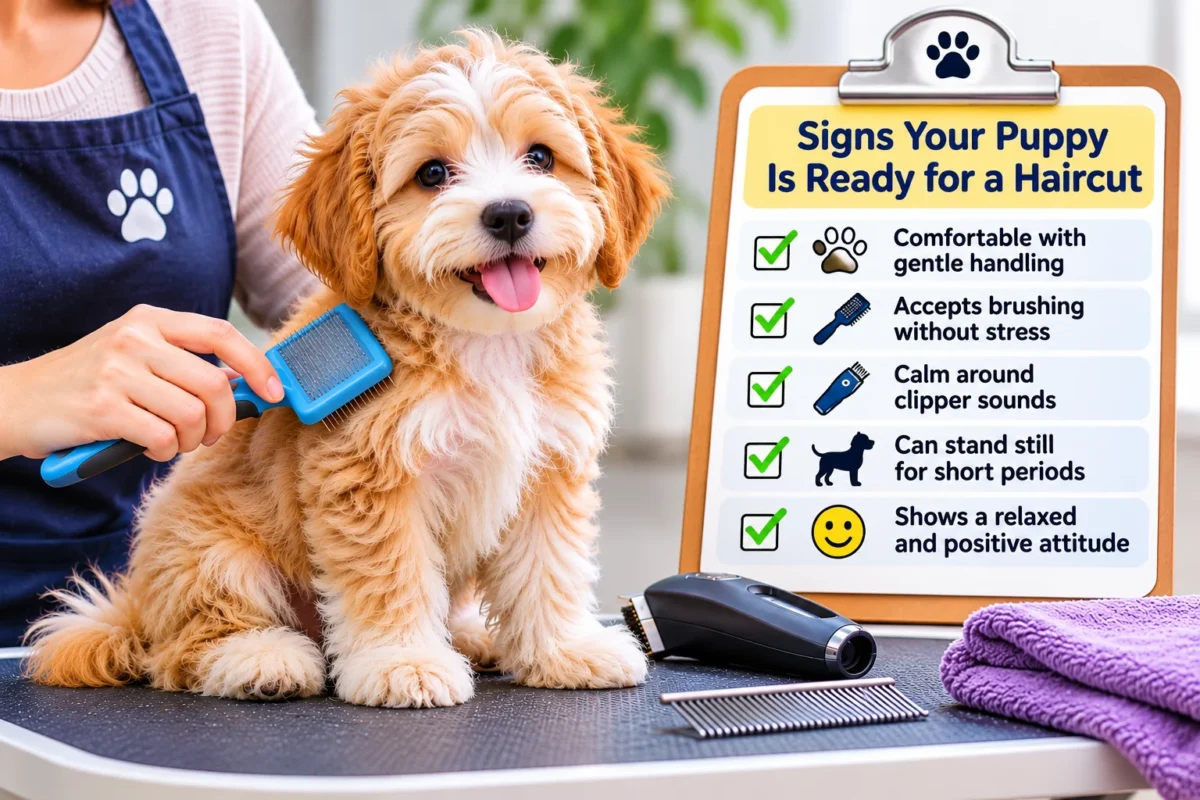
Your puppy is more prepared when they can remain comfortable with basic handling, brushing, and mild grooming-related sounds. Perfect obedience is not required.
Use these observations to decide whether to progress, repeat an easier exercise, or arrange additional help.
| What You Notice | What to Do |
|---|---|
| Relaxed body, voluntary approach, accepts rewards | Continue gently at the current difficulty. |
| Repeated pulling away or avoiding the tool | Pause and return to an easier exercise. |
| Trembling, freezing, frantic escape, or growling | Stop the exercise and reassess the approach. |
| Pain or extreme sensitivity when touched | Seek veterinary advice before attempting a haircut. |
Some puppies remain playful and restless even when they are not frightened. In that case, practice in a quieter setting or after an appropriate rest period rather than increasing restraint.
If distress repeatedly occurs, a veterinarian or qualified reward-based behavior professional can help determine the next steps.
What Mistakes Should You Avoid When Preparing a Puppy?
Preparation becomes less effective when the puppy is repeatedly pushed past their comfort level. Avoid these common mistakes:
- Introducing everything at once: Separate handling, brushing, water, sound, and vibration into manageable exercises.
- Forcing a frightened puppy to stay still: Restrained silence does not necessarily mean the puppy feels safe.
- Using scissors around a moving face: A sudden movement can result in injury.
- Pulling through mats: Tangled hair can be painful and may require professional treatment.
- Assuming every coat needs a short haircut: Coat care varies by breed and type. Some double-coated dogs generally need brushing and shedding management rather than routine close clipping.
- Ignoring vaccination or illness concerns: A grooming salon is a shared animal environment, so safety policies matter.
Safety Warning
Do not attempt to cut tightly matted hair against the skin or use sharp scissors near a puppy’s eyes, ears, or skin folds. If a puppy is severely matted, injured, or too distressed to handle safely, seek assistance from a qualified groomer or veterinarian.
What Does a Simple First-Week Grooming Preparation Routine Look Like?
If your puppy is comfortable with the earliest exercises, this example can help organize practice. It is a flexible training plan, not a deadline for haircut readiness.
- Day 1: Reward gentle shoulder and back touching.
- Day 2: Practice brief paw and ear handling.
- Day 3: Introduce the brush and try a few gentle strokes.
- Day 4: Practice standing on a non-slip surface.
- Day 5: Introduce switched-off clippers and reward relaxed investigation.
- Day 6: Introduce a brief clipper sound at a comfortable distance.
- Day 7: Repeat whichever exercise your puppy enjoys and assess what still needs practice.
Some puppies will need several sessions for a single step. Others may progress more easily. Repeat earlier exercises whenever needed instead of advancing simply because the next day has arrived.
A puppy who is comfortable with brushing but frightened by clippers can continue brushing practice while clipper training remains at an easier level.
How Should You Care for Your Puppy After the First Haircut?
After the appointment, let your puppy return to a familiar environment with access to water and a comfortable resting place.
Check the skin and coat gently when your puppy is relaxed. If you notice persistent redness, swelling, cuts, unusual discomfort, or excessive scratching, contact your veterinarian.
Ask the groomer which grooming activities went well. Use that feedback to adjust home practice before the next visit.
For example, if your puppy accepted brushing but was uncomfortable with the dryer, focus future training on quiet, gradual exposure to drying sounds.
Maintain appropriate brushing between visits, particularly for coats that tangle easily. Consistent, positive maintenance can prevent future grooming appointments from becoming more difficult.
Relevant Product
Gentle Puppy Grooming Brush
A soft, coat-appropriate grooming brush can help introduce comfortable brushing sessions before your puppy’s first haircut.
As an Amazon Associate, we earn from qualifying purchases.
Frequently Asked Questions
Can a Puppy Have a Haircut Before All Vaccinations Are Complete?
Sometimes, but the decision depends on veterinary advice, local infection risk, and salon vaccination requirements. Home grooming preparation can begin earlier in a controlled environment without exposing your puppy to unfamiliar dogs.
Should You Feed Your Puppy Before a Grooming Appointment?
Follow your groomer’s feeding instructions and maintain your puppy’s normal feeding routine unless advised otherwise. Avoid making abrupt dietary changes, and tell the groomer about any medical or feeding needs.
Can You Use Human Hair Clippers on a Puppy?
Human hair clippers are not a reliable substitute for dog grooming equipment because their design and performance may not suit canine coats. For an actual haircut, use appropriate dog grooming tools and professional guidance. Switched-off equipment can still be used for controlled familiarization when safe.
What if Your Puppy Bites the Grooming Brush?
Pause and redirect your puppy toward an appropriate chew toy, then restart with a shorter, easier brushing exercise. If biting is accompanied by fear, growling, or repeated avoidance, stop and reassess rather than pushing through the behavior.
Does Every Puppy Need a Full Haircut?
No. Haircut needs depend on coat type. Some puppies need regular trimming to manage continuously growing hair, while others mainly need brushing, bathing, and occasional hygiene-related grooming.
What if Your Puppy Cannot Finish the First Grooming Appointment?
Ask the groomer which parts were completed comfortably and which caused difficulty. A shorter introductory session may be more appropriate than forcing a full groom. Continue gradual preparation at home before arranging the next visit.
Conclusion
Learning how to prepare a puppy for a haircut begins with comfort and trust, not cutting hair. Gentle handling, suitable brushing, positive rewards, and gradual exposure to unfamiliar grooming sounds can make the process easier for both your puppy and the groomer.
Keep sessions short, watch your puppy’s body language, and adjust the difficulty whenever they become uncomfortable. Check vaccination requirements before booking a salon appointment, and consider a simple introductory groom before a full haircut.
A calm, manageable first experience gives your puppy a better foundation for the grooming routine they may need throughout life.


