
Quick Answer
To fix an uneven dog haircut, first brush and comb the dry coat to reveal the actual length differences. If your dog is calm and the skin is healthy, carefully correct minor uneven areas using suitable grooming equipment and a longer guard setting, provided you already know how to use it safely. Avoid trying to match every section to the shortest patch. For very short spots, sensitive areas, matting, or a distressed dog, stop trimming and consider professional help.
An uneven dog haircut can leave visible clipper lines, choppy patches, mismatched legs, or areas that look shorter than the surrounding fur. Fortunately, not every uneven haircut requires another complete grooming session.
The safest solution depends on what caused the unevenness, your dog’s coat type, and how much hair remains. Sometimes brushing is enough to improve the appearance. Other times, careful blending by an experienced groomer is the better choice.
What Should You Check Before Fixing an Uneven Dog Haircut?
Before making another cut, check whether the problem is simply uneven hair length or something that could make further grooming unsafe.
- Inspect the skin. Look for redness, scratches, sores, swelling, or tenderness. Stop if anything looks irritated or painful.
- Brush the coat gently. Loose or flattened hair can make an otherwise consistent haircut appear patchy.
- Identify the shortest area. Check whether surrounding hair can be blended without cutting a large amount more.
- Check for tangles and mats. A comb that cannot pass through the coat may indicate a problem that needs attention before any trimming.
- Observe your dog’s behavior. A dog that pulls away, freezes, growls, or repeatedly tries to escape may not be comfortable enough for another grooming session.
Examine the haircut in natural, even lighting while your dog stands or sits comfortably. Compare corresponding sections on each side without forcing your dog into an uncomfortable position.
If the coat looks acceptable after brushing and the remaining difference is purely cosmetic, leaving it alone may be the safest option.
How Do You Fix an Uneven Dog Haircut Step by Step?
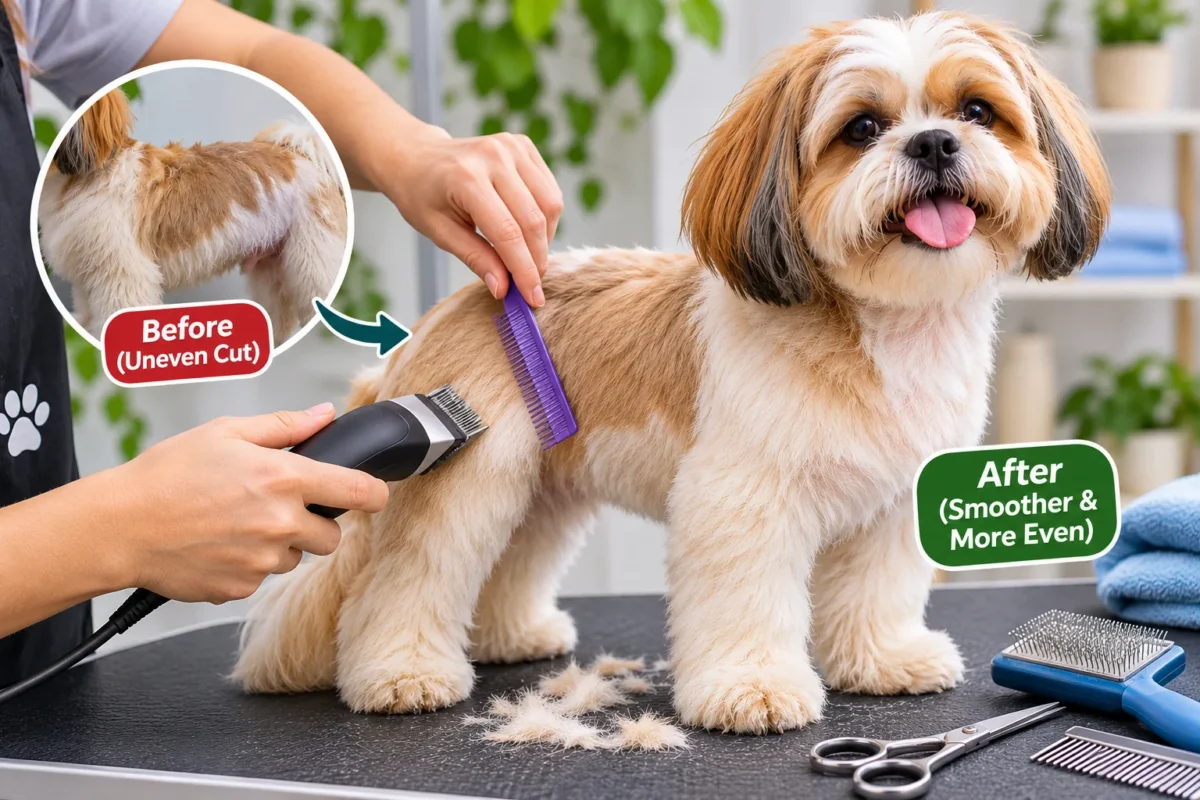
For a minor uneven haircut, the basic approach is to prepare the coat, identify the problem areas, and make only necessary corrections. Additional cutting should be limited to techniques you have already learned to perform safely.
Step 1: Let Your Dog Settle Before Starting
Do not restart grooming immediately if your dog is tired or nervous from the original haircut. Choose a quiet location with a nonslip surface and allow your dog to relax.
Keep the session short and use rewards for calm behavior. If your dog resists handling, postpone any corrective trimming.
Step 2: Brush and Comb the Entire Coat
Brush gently in the direction appropriate for your dog’s coat, then use a suitable comb to check the hair’s condition. On some curly or fluffy coats, carefully lifting the hair reveals areas missed during the original haircut.
Work with clean, fully dry fur. If bathing is necessary, use dog-safe products and dry the coat thoroughly before reassessing the haircut.
Never force a comb through a tight mat. Pulling can hurt your dog and may make further grooming more difficult.
Step 3: Identify the Exact Areas That Need Correction
Look at the haircut from above, from each side, and from the front. Determine whether you are seeing raised tufts, abrupt length changes, or genuinely short patches.
Correcting one isolated section is different from trying to reshape the entire body. Mark the problem mentally or take a reference photograph before reaching for grooming tools.
Step 4: Correct Minor Body Unevenness Conservatively
If you have been taught how to use pet clippers safely, you may be able to tidy a small, well-combed area using an appropriate longer guide comb. Follow the coat’s natural growth direction and avoid repeatedly working over the same skin.
Keep the clipper positioned as instructed for your equipment rather than pressing a blade edge into the skin. Stop if the attachment catches, the clipper becomes hot, or your dog moves unpredictably.
Do not switch to a shorter blade merely to erase a visible line. Doing so may create a much larger short patch.
Step 5: Blend Raised Tufts Only When Safe
On a well-brushed, longer coat, an experienced groomer may use blending shears or controlled comb-and-scissor techniques to soften uneven transitions.
For a beginner, brushing and leaving minor tufts alone is generally safer than attempting detailed scissor work. Sharp tools should not be used near moving skin, skin folds, or areas where the blade’s path is unclear.
Keep household scissors away from your dog’s coat, especially around mats.
Step 6: Recheck the Coat and Know When to Stop
Brush the corrected section again and compare it with the surrounding hair. A minor transition may be barely noticeable once the coat settles.
Stop when the remaining difference would require substantial additional cutting or when your dog becomes uncomfortable. A slightly uneven haircut is preferable to irritated skin or an accidental injury.
Practical Tip
Take a photograph after brushing but before corrective trimming. Comparing the original and current appearance helps you identify whether the unevenness has improved without repeatedly cutting more fur.
How Can You Fix Different Types of Uneven Dog Haircuts?
The best correction depends on the kind of unevenness. This quick reference helps separate minor cosmetic problems from situations that need professional attention.
| Haircut Problem | Possible Reason | Safer Next Step |
|---|---|---|
| Raised fluffy patches | Coat lying unevenly | Brush and reassess before trimming. |
| Visible clipper lines | Uneven passes or coat preparation | Comb the fur; seek experienced blending if needed. |
| One leg looks fuller | Different shaping or coat density | Compare naturally; use a groomer for precise shaping. |
| Very short bald-looking patch | Overclipping or possible hair loss | Do not shave surrounding fur to match. Check the skin. |
| Short, uneven facial hair | Uneven facial shaping | Avoid further cutting near eyes and ears; seek a groomer. |
| Patchiness with red skin | Possible skin irritation or injury | Stop grooming and obtain veterinary advice. |
Short patches are especially important to identify. Hair cannot be restored by additional trimming, so making the surrounding coat equally short is rarely necessary for a cosmetic correction.
Why Does a Dog Haircut Turn Out Uneven?
Uneven dog haircuts commonly result from inconsistent coat preparation, clipper handling, cutting length, or movement during grooming. Understanding the cause helps prevent a second mistake.
The Coat Was Not Fully Combed or Dried
Tangled, flattened, or damp hair may not feed consistently through a clipper attachment. Once the coat is brushed or dries completely, differences in length become easier to see.
The Clipper Position Changed
Changing the clipper’s angle or pressure may produce uneven results. Body contours and changes in hair-growth direction can make maintaining a consistent finish challenging.
Different Cutting Lengths Were Used
Switching guards or clipping against the coat’s growth pattern can produce a different finish. Even with the same attachment, actual cutting results can vary with coat texture and technique.
The Dog Moved During Grooming
A sudden movement can interrupt a pass and leave an uneven section. Repeated movement is also an important signal that the session may need to end.
The Coat Has Different Textures or Densities
Curly, wavy, straight, and dense coats do not always settle in the same way after cutting. Some variation may reflect the coat’s natural texture rather than a mistake.
Can You Fix Uneven Dog Hair Without Cutting More?
Yes. Brushing and careful coat preparation can sometimes improve uneven-looking dog hair without additional cutting, particularly when the apparent problem comes from hair lying in different directions.
- Brush gently: Lift flattened hair and remove loose hair so you can see the true shape.
- Comb through: Check for missed tangles and separate clumped strands without pulling.
- Allow the coat to settle: A freshly groomed coat may look different after normal movement and brushing.
- Accept very short spots temporarily: Further cutting cannot lengthen an overclipped area.
- Choose professional reshaping: A groomer may improve the overall silhouette without excessively shortening the entire coat.
Where the shortest section is already close to the skin, letting it grow is often a more sensible choice than trying to create immediate uniformity.
What Should You Avoid When Correcting a Dog’s Uneven Haircut?
The biggest mistake is continuing to cut until the entire coat matches the shortest section. That approach may turn a small cosmetic problem into an unnecessarily short haircut.
Also avoid these common errors:
- Using household scissors near the skin or tight knots.
- Cutting near the eyes, ear edges, groin, or skin folds without proper training.
- Running hot clipper blades repeatedly over the same area.
- Pressing a clipper into a mat or forcing a blade through tangled hair.
- Continuing when your dog is frightened, struggling, or showing pain.
- Shaving a double coat simply to disguise uneven trimming.
- Applying human skin products to irritated areas without veterinary guidance.
Safety Warning
Never cut tight mats with scissors close to your dog’s skin. Skin can become trapped inside the mat and may be injured. If you discover a wound, bleeding, painful skin, or significant irritation, stop cosmetic grooming and contact a veterinarian.
The American Kennel Club’s home grooming guidance emphasizes appropriate training for clipping and trimming, particularly around sensitive areas. The ASPCA’s pet grooming guidance also warns against using scissors to cut mats close to the skin.
Does the Right Fix Depend on Your Dog’s Coat Type?
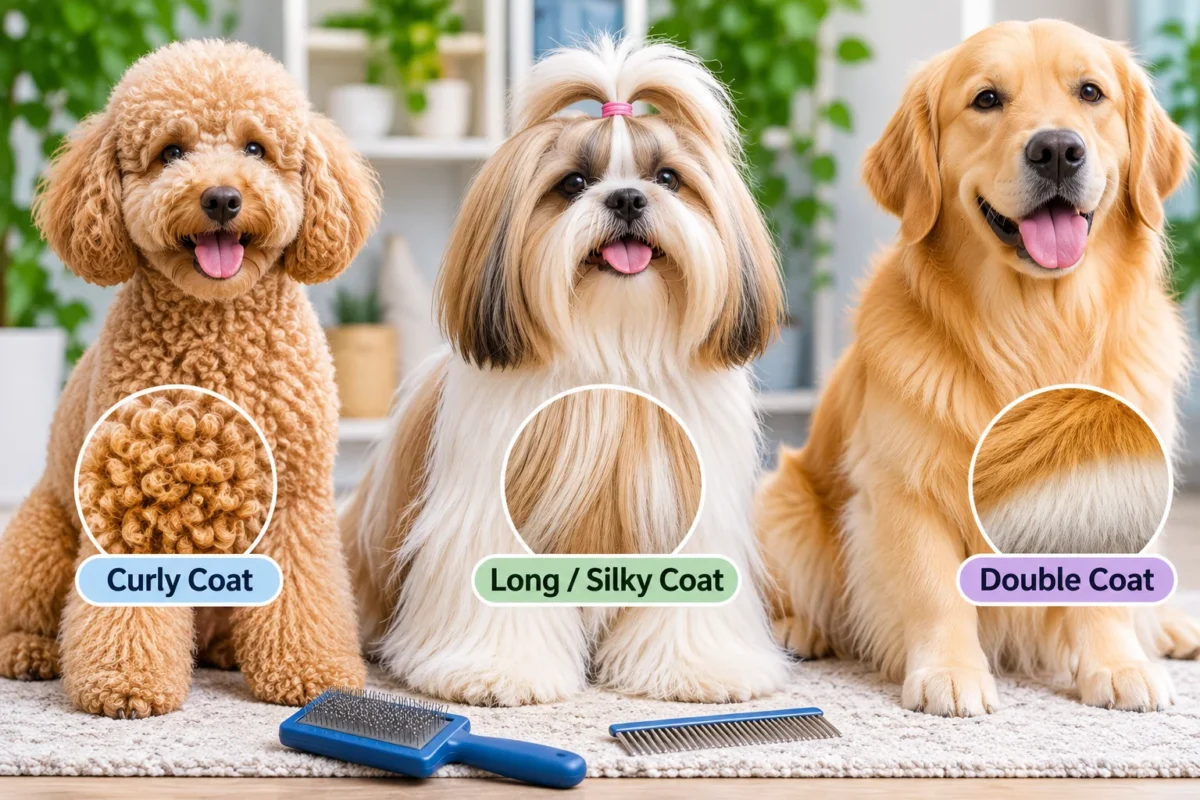
Yes. Coat texture and structure affect both how an uneven haircut looks and which corrections are appropriate.
Curly Coats
Curly-coated dogs, including many Poodles and Poodle mixes, can show missed tufts when the coat has not been thoroughly prepared. Gentle brushing and combing may reveal the areas that actually need attention.
Precise reshaping and blending are better handled by someone experienced with curly coats.
Long, Straight, or Silky Coats
Longer hair may show abrupt scissor marks, uneven ends, and differences between the legs or sides. Because visible lines can be difficult to correct without removing extra length, conservative adjustments are best.
Double Coats
Double-coated breeds need special consideration. Their undercoat and outer guard hairs perform different functions, and routine body shaving may not be appropriate.
For many double-coated dogs, brushing and coat maintenance are preferable to trying to make the entire body uniformly short. Ask a breed-knowledgeable groomer or veterinarian before further clipping.
When Should You Stop Trying to Fix an Uneven Dog Haircut?
Stop when further grooming is likely to create discomfort, require risky cutting, or make the haircut unnecessarily shorter.
Professional help is particularly appropriate when:
- The uneven area is around the eyes, ears, paws, or groin.
- The coat contains tight mats that cannot be gently combed apart.
- Your dog becomes increasingly fearful or difficult to handle.
- The existing haircut is extremely short.
- A correction would require complex scissor shaping or close clipping.
- Repeated attempts have made the haircut progressively shorter.
If you notice bleeding, open sores, painful redness, swelling, or unexpected hair loss, seek veterinary advice rather than treating the issue as a haircut problem.
Even an experienced groomer may recommend allowing some hair to grow before attempting a more balanced style.
How Can You Prevent an Uneven Dog Haircut Next Time?
Good coat preparation, suitable tools, and realistic grooming goals help reduce the chances of uneven results.
- Prepare the coat thoroughly. Brush and comb before clipping, addressing tangles safely.
- Work on completely dry hair. A dry, properly prepared coat makes length differences easier to assess.
- Choose the correct grooming method. Coat types differ, so not every dog benefits from the same clipper or scissor technique.
- Use consistent equipment settings. Avoid switching cutting lengths without a clear plan.
- Maintain your equipment. Clean clipper blades and attachments according to the manufacturer’s instructions, and check blade temperature.
- Prioritize a calm dog. Use short, positive handling sessions rather than forcing a complete haircut.
- Learn from a professional. Ask a groomer to demonstrate coat-specific handling and suitable trimming techniques before attempting them independently.
Regular brushing between haircuts helps prevent tangles and keeps the coat easier to assess. The American Kennel Club’s everyday dog grooming guide explains how brushing needs vary with coat type.
Frequently Asked Questions
Can an uneven dog haircut grow out naturally?
Yes. Unevenly cut hair generally becomes less noticeable as it grows, although regrowth speed and appearance vary by breed, coat type, and individual dog. New or persistent bald patches should be assessed by a veterinarian.
Should I shave my dog shorter to fix a bad haircut?
Not automatically. Shortening the entire coat to match one patch can create unnecessary skin exposure and may be inappropriate for some coat types. Minor unevenness can often be left to grow or assessed by a professional groomer.
Can brushing make an uneven dog haircut look better?
Yes. Brushing may improve the appearance when hair is flattened, tangled, or lying inconsistently. It cannot repair hair that has actually been cut too short.
How soon can I try to correct my dog’s haircut?
There is no fixed waiting period for cosmetic corrections. The decision depends on your dog’s comfort, skin condition, and how much further trimming is necessary. If the dog is stressed or the skin is irritated, postpone grooming and seek appropriate advice.
Can a professional groomer fix a very short uneven haircut?
A professional groomer may improve the shape and transitions, but cannot immediately restore missing length. In some cases, waiting for regrowth gives a better result than further trimming.
Why does my dog’s coat still look patchy weeks after grooming?
Coat texture and uneven regrowth can affect the appearance, but persistent patchiness may also involve skin or hair-growth problems. If there are bald areas, itching, redness, or unusual hair loss, arrange a veterinary examination.
Final Thoughts
Fixing an uneven dog haircut starts with knowing when not to cut. Brush the coat, identify the actual problem, and consider whether a minor difference will improve naturally as the hair settles or grows.
Only attempt corrections that match your grooming skills and your dog’s comfort level. For severe unevenness, sensitive areas, or skin problems, professional help is a safer choice than repeatedly shortening the coat.


