
Quick Answer
Many puppies can have an introductory professional grooming visit at around 12–16 weeks old, once their veterinarian and groomer agree their vaccinations and health make the visit appropriate. Their first visit may involve only brushing, a bath, nail care, and a small tidy-up—not a full haircut. Start gentle handling and brushing at home earlier, and choose the timing of a full trim according to coat type and comfort.
If your puppy’s hair is covering their eyes or collecting dirt around their paws, you may wonder whether they are old enough for a haircut. The answer depends on what kind of grooming they need. A short introduction to the groomer is quite different from a lengthy all-over clip.
What Age Can a Puppy Get Their First Haircut?
About 12–16 weeks is a useful planning range for a first professional grooming appointment, but it is not a universal minimum age for cutting hair. At this stage, the priority is often helping a puppy feel safe with handling, grooming sounds, and unfamiliar equipment.
PetMD suggests an initial professional grooming visit by about 12–14 weeks for appropriately vaccinated puppies. Veterinary guidance from Vets4Pets describes first groomer visits from roughly 12 weeks after the relevant primary vaccination course. These are guidelines for an introductory grooming visit, not an instruction that every puppy needs a full-body haircut at that age.
The puppy’s coat also matters. A fast-growing, continuously growing coat may need earlier tidying than a short, naturally shedding coat. A long session that requires considerable restraint may be better divided into shorter appointments while the puppy learns to cooperate.
How Does Puppy Haircut Age Change by Grooming Stage?
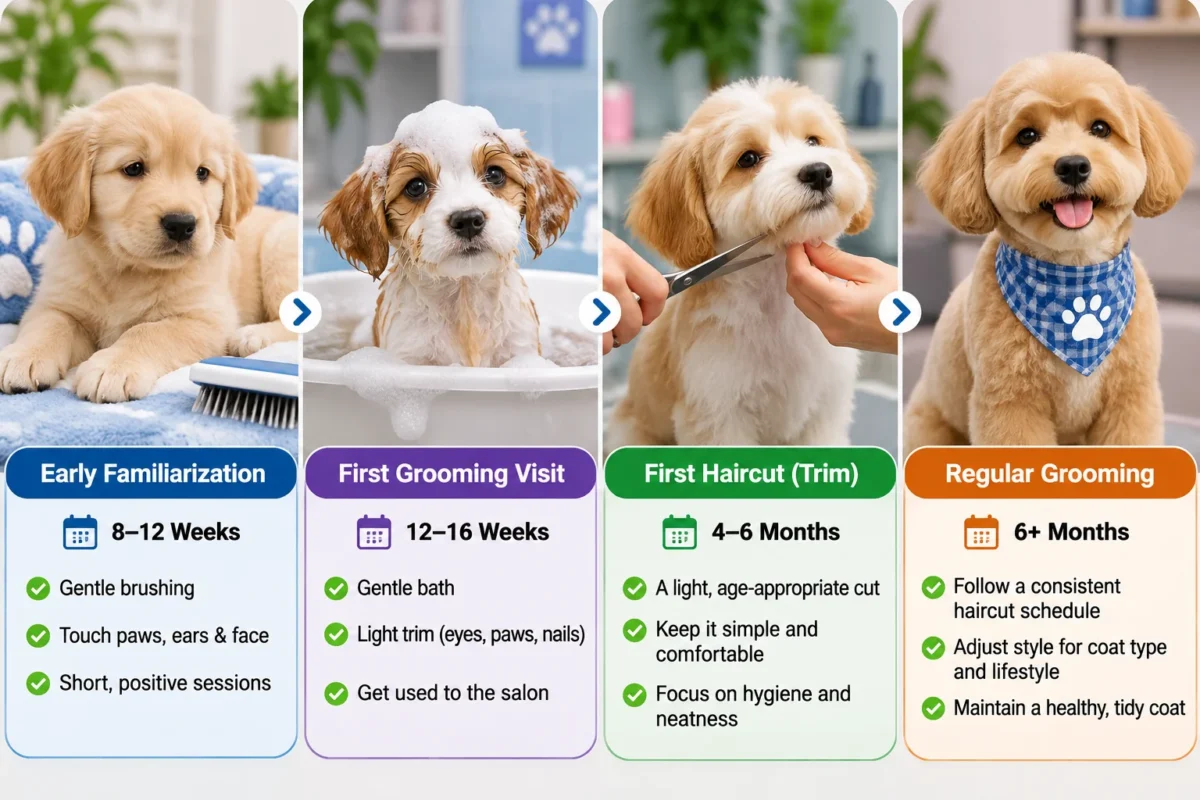
Use this age guide to plan what to introduce rather than treating each range as a deadline.
| Approximate age | Appropriate focus | Important condition |
|---|---|---|
| 8–12 weeks | Brief home brushing, paw handling, comb introduction, rewards | Keep practice gentle; avoid crowded salon exposure without veterinary clearance |
| 12–16 weeks | Possible first professional introduction, bath, nail care, light face/feet/sanitary tidy | Follow the veterinarian’s advice and the salon’s vaccination policy |
| 4–6 months | Further tidy-ups or a fuller haircut if coat length and tolerance justify it | Do not postpone needed mat removal or eye-area care merely to reach an age milestone |
| 6 months and beyond | Establish a coat-specific maintenance schedule | Adult-coat development varies widely by breed and individual |
These age ranges are planning examples, not mandatory veterinary cutoffs. A puppy who is comfortable with a brush may still find a dryer or clippers overwhelming.
Does Your Puppy’s Coat Type Change When They Need a Cut?
Yes. Haircut timing depends at least as much on coat growth and tangling as on age. Some puppies require regular clipping; others mainly need brushing and occasional tidying.
Poodles and many long-growing coated breeds
Poodles and some other long-growing coats often need regular professional trimming to stay manageable. Start coat handling and combing early. A groomer may recommend an introductory face, feet, or sanitary trim before attempting a complete style. Do not leave mats in place while waiting for the puppy to get older.
Shih Tzus, Maltese, and similar long-haired puppies
Hair near the eyes, mouth, and paws may require careful tidying before an all-over haircut is necessary. If hair is obstructing vision or trapping debris, arrange professional help rather than trying close scissor work on a moving puppy.
Double-coated puppies
Breeds with protective outer hairs and a dense undercoat generally need appropriate brushing and coat maintenance, not routine close shaving. Ask a coat-knowledgeable groomer before choosing a haircut that substantially removes the protective coat.
Short-coated puppies
Many short-coated dogs do not require routine haircuts at all. They still benefit from gentle brushing, nail checks, and practice with being handled.
Key Insight
A first grooming appointment does not have to be a first full haircut. Early positive exposure and timely coat maintenance can happen together.
Does a Puppy Need All Their Vaccinations Before Going to the Groomer?
Not every salon follows the same rule. Some facilities require completion of a puppy’s initial vaccination course; others may accept younger puppies with age-appropriate vaccines or offer controlled introductory appointments. The safest timing depends on your puppy’s vaccine record, local infection risk, and how the facility manages contact with other dogs.
The 2024 WSAVA vaccination guidelines recommend a series of core puppy vaccinations, commonly beginning at 6–8 weeks and continuing at intervals until at least 16 weeks of age. That schedule explains why a 12-week-old puppy may not yet have completed their vaccinations.
Before booking, ask your veterinarian whether a salon visit is appropriate now. Ask the groomer which vaccines they require, whether puppies share waiting or drying areas with adult dogs, and whether a quiet puppy-only appointment is available.
Warning
Do not treat a salon’s willingness to accept your puppy as proof that the visit is medically appropriate. Your veterinarian should guide exposure decisions for a puppy still completing vaccinations.
How Can You Prepare a Puppy for Their First Haircut?
Start with brief, pleasant practice at home. The goal is cooperation and familiarity, not getting the puppy to tolerate a complete haircut immediately.
- Introduce touch: Gently touch paws, ears, chest, and muzzle for a moment, reward calm behavior, and release.
- Show the brush: Let the puppy sniff a suitable soft brush. Make one or two gentle strokes and reward them.
- Practice standing briefly: Reward a calm stand on a safe, nonslip surface while you stay beside the puppy.
- Introduce sounds at a distance: Allow the puppy to hear grooming-related sounds at a comfortable volume; stop or move farther away if they are frightened.
- Build duration gradually: Add a few seconds only while the puppy remains relaxed. Finish before they become restless or upset.
- Book an introduction first: Tell the groomer your puppy’s age, coat type, vaccine status, and reactions to brushing or noise.
Never force prolonged restraint just to complete a grooming practice session. If the puppy is struggling, barking in panic, freezing, or repeatedly trying to escape, end the session and retry at an easier level later.
What Should Happen at the First Grooming Appointment?
A first appointment should be tailored to the puppy’s tolerance. It may include a short introduction to the grooming table, brushing or combing, a gentle wash and dry when appropriate, nail care, and a small tidy around the paws or hygiene areas.
A complete breed-style haircut is not essential on day one. For a puppy who has never heard a dryer or felt clippers, finishing calm and comfortable is more useful than achieving a particular hairstyle.
Explain any tangles, skin irritation, or resistance before the groom begins. Agree that the groomer can shorten the session if your puppy becomes distressed. If the coat is heavily matted, ask the groomer and veterinarian about the safest removal approach rather than insisting on a cosmetic finish.
When Should You Trim Earlier or Wait Longer?
Arrange earlier professional attention if growing hair is interfering with the eyes, there are painful knots, or soiled hair is creating hygiene problems. These issues should not be ignored until an arbitrary birthday. Veterinary assessment may be needed if the skin is inflamed or painful.
Delay or simplify a cosmetic haircut if your puppy is ill, has not been cleared for the grooming environment, or is too frightened to tolerate handling safely. In these cases, focus on appropriate care and gradual desensitization instead of an extended styling appointment.
If there is an urgent matting or hygiene issue but salon exposure is not appropriate, call your veterinarian to discuss a safe alternative.
How Often Will a Puppy Need Haircuts After the First One?
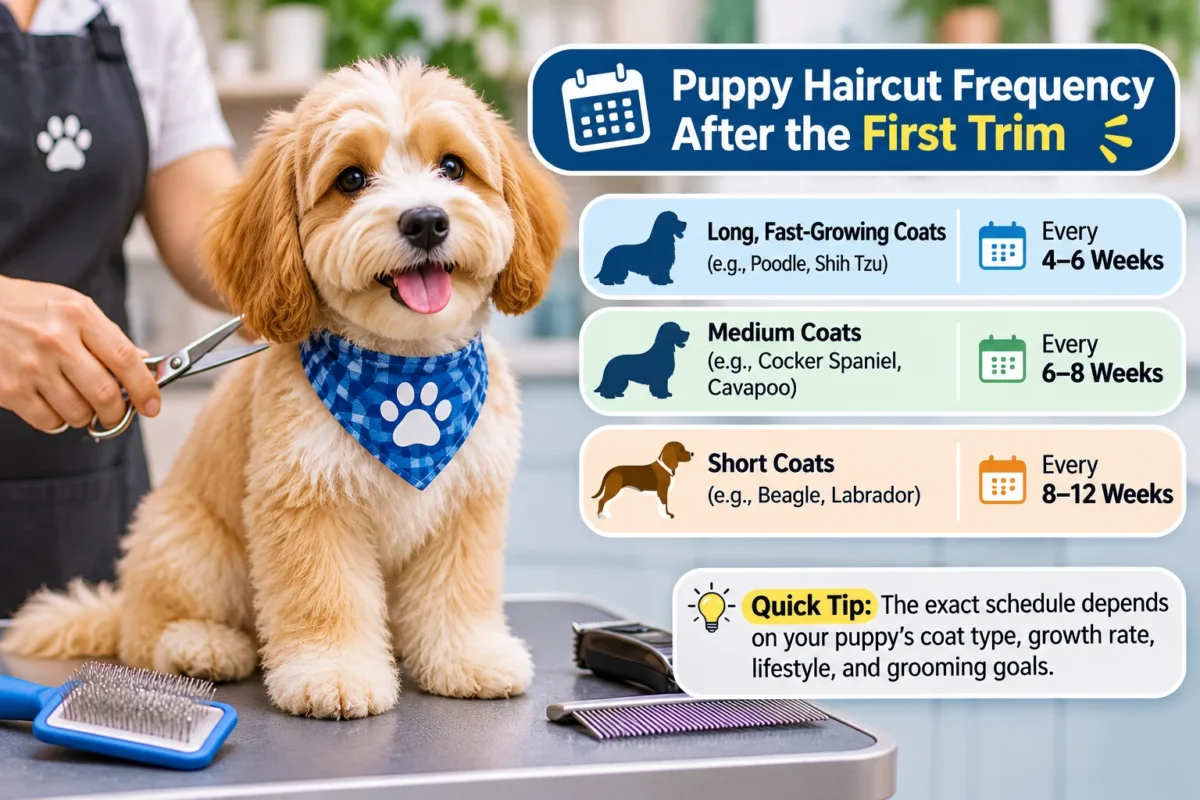
There is no single schedule for all puppies. Coats that continue growing may need regular trims, often planned every several weeks. Short coats may never need routine haircuts, and double coats commonly need brushing rather than all-over clipping.
Ask your groomer for a coat-specific plan that covers brushing between visits, problem areas to check, and the appropriate interval for tidy-ups. Adjust the schedule as the puppy grows and the coat changes.
Frequently Asked Questions
Can an 8-week-old puppy get a haircut?
An 8-week-old puppy can begin gentle grooming handling at home, but a professional salon haircut may be inappropriate because of vaccination status and the puppy’s ability to tolerate the session. Ask your veterinarian before arranging salon exposure.
Is 3 months too early for a puppy groom?
Not necessarily. Around 12 weeks, some puppies can attend a short introductory appointment if their veterinarian agrees and the salon’s vaccine requirements are met. The session need not include a full haircut.
Should a puppy wait until 6 months for a first haircut?
No universal rule requires waiting until 6 months. Puppies with growing or tangled coats may need an earlier tidy-up, while those without a haircut need can focus on brushing and handling practice.
Will cutting puppy fur damage the adult coat?
A suitable trim does not automatically damage future coat growth. However, coat type matters, especially for double-coated breeds, where close shaving is generally avoided unless there is a specific medical or grooming reason.
Can a puppy be groomed while teething?
Yes, if the puppy is comfortable and healthy, but teething may make some puppies less tolerant of face handling. Tell the groomer and choose a shorter session when necessary.
What if a puppy is scared of clippers?
Do not force the clipper haircut. Introduce the sound from a comfortable distance, pair calm responses with rewards, and build up gradually. A groomer experienced with puppies can suggest a shorter introductory visit.
Final Thoughts
For many puppies, the first professional grooming introduction falls around 12–16 weeks, subject to veterinary clearance and salon policies. Do not confuse that first introduction with the need for a full haircut. Begin calm handling at home early, address real coat or hygiene problems promptly, and let your puppy’s coat and confidence determine how much grooming happens at each visit.


