
Quick Answer
If your dog won’t stay still for a haircut, stop trimming whenever they move, check for fear or discomfort, and practice short grooming sessions with treats and gentle handling. Use a secure, non-slip surface and introduce tools gradually. Never force a struggling dog to stay still while using sharp equipment. Persistent fear, sudden resistance, or aggressive behavior may require veterinary or professional grooming support.
A dog that twists away from clippers, sits down repeatedly, or tries to escape can make even a simple haircut difficult. More importantly, unexpected movement increases the chance of an accidental cut.
The solution is not necessarily teaching your dog to remain motionless. It is helping them feel comfortable enough to cooperate with grooming. The following steps explain what to change, how to practice safely, and when a haircut should wait.
Why Won’t Your Dog Stay Still During a Haircut?
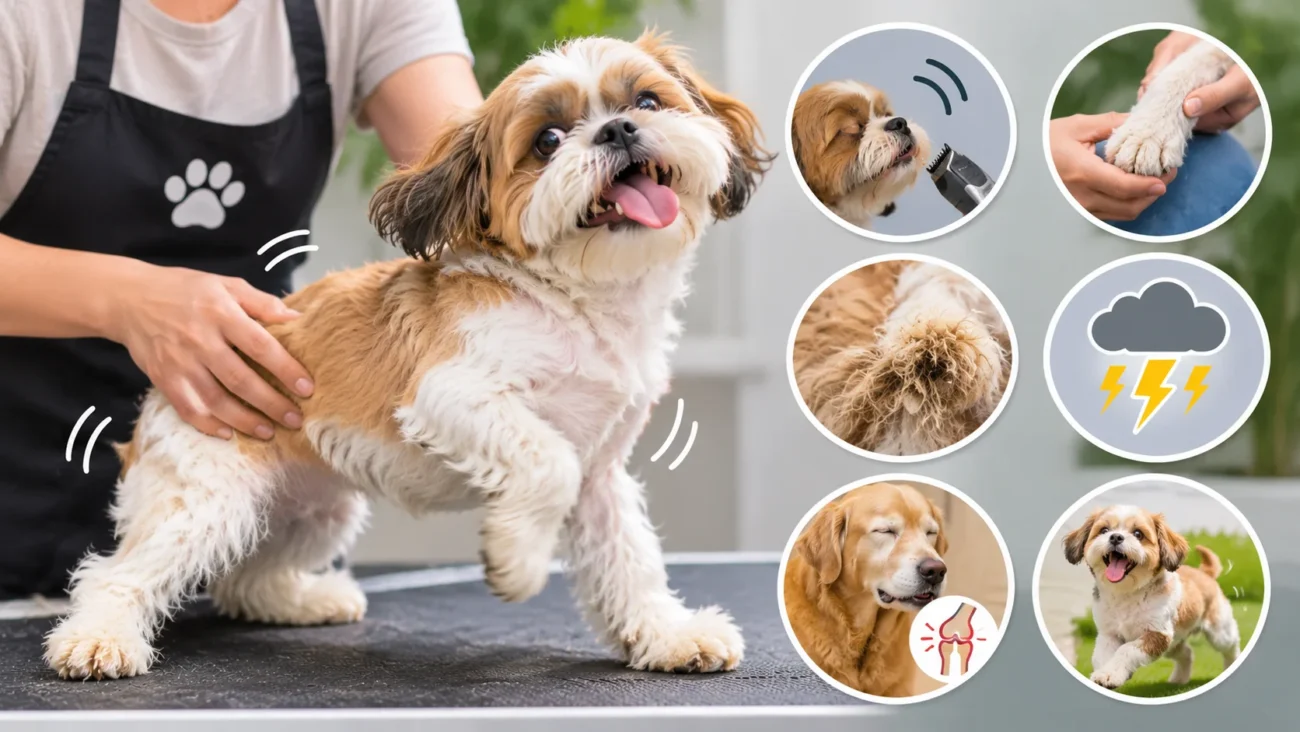
Dogs often move during haircuts because of fear, unfamiliar sensations, discomfort, excitement, or difficulty maintaining a position. The reason matters because each problem requires a slightly different response.
- Fear of clippers: The buzzing sound, vibration, or movement of equipment may frighten your dog.
- Unfamiliar handling: Your dog may dislike having their paws, face, tail, or legs touched.
- Physical discomfort: Tangled fur, irritated skin, painful joints, or other medical problems can make grooming uncomfortable.
- Excess energy: An excited dog may find it difficult to remain in one position.
- Previous negative experiences: Painful brushing, frightening restraint, or an unpleasant grooming appointment can create lasting associations.
- Unstable footing: Slippery surfaces may make your dog shift position to maintain balance.
Watch when the movement starts. A dog that moves only when clippers turn on may be reacting to the noise. A dog that pulls away when one leg is touched may be experiencing discomfort or fear of handling.
A sudden change in grooming tolerance, especially in an older dog, deserves attention because pain or illness can contribute to new avoidance behaviors.
What Should You Do Immediately When Your Dog Keeps Moving?
Stop moving the cutting tool, give your dog space, and identify what triggered the movement before continuing.
If scissors are near the face, paws, or other sensitive areas, withdraw them safely as soon as the dog begins moving. Turn off the clippers and wait until your dog is comfortable before attempting another step.
Check these three things:
- Body language: Is your dog relaxed and curious, or tense, trembling, panting, or trying to escape?
- Comfort: Is the surface slippery, the coat tangled, or the area being handled painful?
- Task difficulty: Are you trying to trim a sensitive area before your dog accepts basic touching and brushing?
If your dog settles comfortably, switch to a simpler task such as rewarding a brief, voluntary stand. If your dog remains distressed, end the haircut.
Safety Warning
Never continue cutting around a dog’s eyes, ears, skin folds, paws, or sanitary areas while the dog is struggling. Do not pin the dog down or attempt to cut through tightly matted fur with scissors. A professional groomer or veterinarian is the safer option when movement makes these tasks hazardous.
How Can You Help a Dog Stay Still for a Haircut? 10 Safe Tips
The most effective approach combines a comfortable setup, gradual handling practice, rewards, and realistic expectations. Work through these tips at your dog’s pace rather than trying everything in one session.
1. Choose a Quiet, Familiar Grooming Area
Begin in a place where your dog already feels comfortable. Reduce distracting noises, sudden movements, and interruptions from other pets.
Use a secure, non-slip mat on the floor or another suitably safe surface. Floor-level grooming can be preferable when a dog might jump or fall from an elevated table.
Allow your dog to explore the area without immediately starting the haircut. Reward calm investigation so the location does not predict an unpleasant experience.
2. Start When Your Dog Is Comfortable
Choose a time when your dog is relaxed rather than highly excited, hungry, or exhausted. A gentle walk or quiet activity beforehand may help some dogs settle.
Do not attempt grooming immediately after a stressful event. Give your dog access to water and ensure the room is comfortably ventilated.
A dog that appears sleepy is not automatically comfortable with trimming. Continue watching for signs of avoidance.
3. Practice Standing Before Using Clippers
Teach your dog that briefly standing in one place earns a reward. Begin without grooming tools.
- Invite your dog onto the non-slip surface.
- Reward a comfortable standing position.
- Wait for a brief moment of calm before rewarding again.
- Gradually increase the duration only while your dog remains relaxed.
- Use a consistent release cue to end each repetition.
Do not expect a long stay immediately. A few successful seconds can provide a better foundation than repeatedly demanding a position your dog cannot maintain.
4. Introduce Grooming Tools Without Cutting
Show your dog a brush or switched-off clipper and reward calm interest. Put the tool away before the interaction becomes stressful.
Once your dog accepts the tool visually, practice gentle contact with a safe, non-cutting part of the equipment.
For electric clippers, introduce the sound at a comfortable distance before gradually bringing the tool closer. Avoid combining loud noise, body handling, and cutting all at once.
This approach follows the principles of desensitization and counterconditioning explained by VCA Animal Hospitals.
5. Use Treats to Reward Voluntary Cooperation
Offer small, dog-safe treats when your dog willingly approaches the grooming area, accepts handling, or remains relaxed around a tool.
Some dogs enjoy licking a dog-safe food from a securely positioned mat. Check ingredients carefully and avoid products containing xylitol, also called birch sugar.
Food should support positive associations, not distract a frightened dog while an unsafe haircut continues. If your dog cannot comfortably eat or repeatedly attempts to escape, reduce the difficulty or stop.
6. Keep Haircut Sessions Short
Start with very brief practice sessions and finish before your dog becomes overwhelmed. During early training, simply touching a brush to the coat or completing one easy grooming action may be enough.
The ideal session length depends on the dog’s response, not a fixed number of minutes. Some dogs tolerate several gentle steps; others need to stop after one.
Several comfortable sessions are more useful than forcing one complete haircut that creates additional fear.
7. Begin With Easy-to-Handle Areas
Once your dog accepts grooming equipment, begin with an accessible area where they already enjoy being touched, such as part of the back or shoulder.
Practice gentle handling without cutting first. Progress toward more sensitive areas only when your dog remains comfortable.
Do not assume that accepting brushing on the back means your dog is ready for scissors around the eyes or clippers near the paws.
8. Use Calm, Minimal Handling
Support your dog’s balance without squeezing, pinning, or forcibly holding them in position.
Introduce any necessary handling gradually. If your dog withdraws, reduce the pressure or end the attempt.
For dogs with a history of panic or biting, seek qualified assistance rather than attempting physical restraint at home. The goal is safe cooperation, not overpowering resistance.
9. Offer Breaks Before Your Dog Becomes Distressed
Pause between successful steps so your dog can change position, relax, or leave the grooming area.
Watch for increasing tension, repeated head turns, attempts to walk away, or reduced willingness to participate.
If your dog becomes worried, return to an easier step at another time. A break is useful only when it genuinely reduces stress.
10. Finish With a Positive Experience
End after a comfortable interaction whenever possible, even if the haircut remains unfinished.
Reward calm cooperation and let your dog leave freely. Do not continue trimming simply because the coat looks uneven.
Over time, successful low-pressure experiences can help your dog become more confident with grooming. Progress may be gradual, especially after previous frightening experiences.
How Can You Tell Whether Your Dog Is Excited or Afraid?
Look at the complete body-language pattern rather than judging movement alone. Excitement and fear can both involve wiggling, panting, or difficulty remaining still.
The following observations can help you decide what to do next.
| Behavior | Possible Meaning | Safer Response |
|---|---|---|
| Wiggling and seeking interaction | Possible excitement | Practice brief calm-standing exercises. |
| Retreating when clippers start | Possible noise sensitivity or fear | Switch off clippers and practice at a greater distance. |
| Pulling away from one body area | Possible discomfort or handling sensitivity | Stop handling that area and assess whether veterinary care is needed. |
| Trembling, freezing, or repeated escape attempts | Possible significant fear | End the session and seek appropriate support. |
No single behavior proves a dog’s emotional state. Consider the situation, facial expression, posture, and whether the dog voluntarily returns to the activity.
What Grooming Mistakes Make Dogs Move More?
Trying to complete too much grooming before a dog is comfortable often makes resistance worse. Avoid these common mistakes:
- Turning on clippers beside an unprepared dog’s face.
- Holding a struggling dog tightly to finish a haircut.
- Scolding, startling, or punishing movement.
- Continuing after clear signs of fear or pain.
- Using sharp tools near moving skin or sensitive areas.
- Expecting a fearful dog to complete a full haircut in one session.
Another mistake is assuming that a dog standing completely still must be relaxed. Some frightened dogs freeze instead of actively resisting.
Look for comfortable posture and voluntary participation. The Best Friends Animal Society guide to grooming and handling explains how gradual exposure can help dogs tolerate routine care.
When Should You Stop Trying to Cut Your Dog’s Hair?
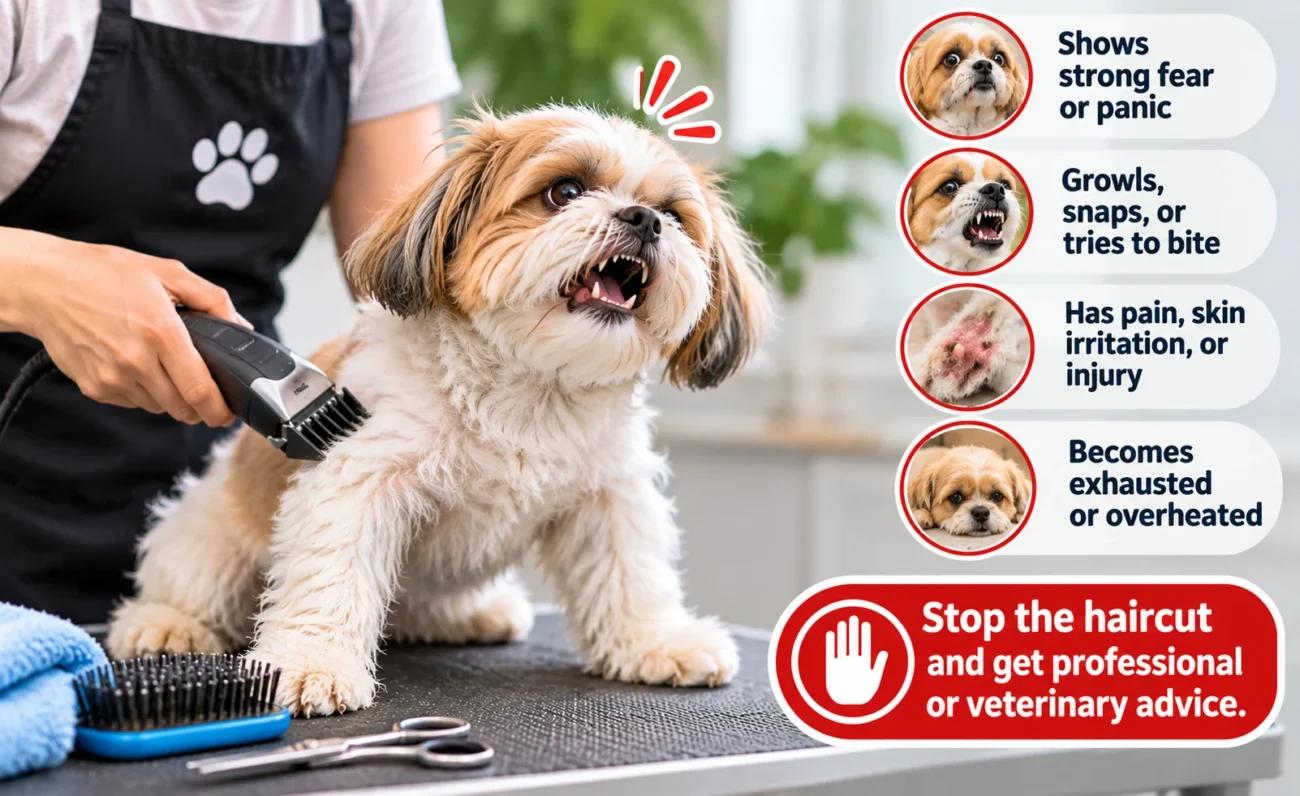
Stop the haircut when your dog shows sustained distress, repeatedly attempts to escape, becomes aggressive, or moves too unpredictably for safe tool use.
Other reasons to stop include:
- Yelping or reacting sharply to touch.
- Sudden resistance in a previously cooperative dog.
- Visible skin irritation, injury, or painful matting.
- Growling, snapping, or attempts to bite.
- Exhaustion, overheating, or difficulty remaining comfortable.
Do not attempt to complete an urgent or heavily matted haircut through force. Tight mats can pull on sensitive skin and require experienced handling.
Key Insight
A successful grooming session is not measured only by how much hair you remove. Comfortable, voluntary participation helps build the trust needed for safer grooming in the future.
When Should You Ask a Groomer or Veterinarian for Help?
Contact a veterinarian when resistance appears suddenly, your dog seems painful, or fear becomes severe. Medical discomfort should be investigated before assuming the problem is purely behavioral.
An experienced professional groomer may help with routine coat care when your dog cannot safely tolerate home trimming. Explain your dog’s triggers and previous experiences before booking.
For intense grooming fear, a veterinarian or qualified behavior professional can help develop an individual training plan. In some situations, a veterinarian may recommend medication or medically supervised grooming to make essential care safer.
Never give your dog human sedatives or calming medications without veterinary direction.
Frequently Asked Questions
Can I Cut My Dog’s Hair While They Are Sleeping?
No. A sleeping dog may wake suddenly and move toward sharp equipment. Grooming should happen when your dog is awake, comfortable, and able to respond to handling.
Should I Use Scissors or Clippers on a Dog That Moves?
Neither is safe to use against a struggling dog’s body. Both can cause injuries when movement is unpredictable. Stop the task and work on calm handling before attempting further cutting.
Can a Second Person Help Hold My Dog During a Haircut?
A second person may help provide rewards and gentle support if your dog is already comfortable. They should not forcibly restrain a frightened or struggling dog. Stop if handling increases distress.
How Long Does It Take to Teach a Dog to Accept Haircuts?
Progress varies with temperament, past experiences, discomfort, and the difficulty of grooming tasks. Some dogs improve after repeated gentle practice, while others need a longer individual training plan.
Why Does My Dog Tolerate Brushing but Hate Clippers?
Clippers introduce additional noise, vibration, and physical sensations. A dog comfortable with brushing may still need separate, gradual training to accept electric grooming equipment.
Can an Older Dog Learn to Stay Calm During Grooming?
Yes, older dogs can learn through gradual, reward-based practice. However, joint pain, reduced mobility, and other age-related changes may affect tolerance. Ask your veterinarian about new handling sensitivities.
Final Thoughts
If your dog won’t stay still for a haircut, focus on comfort and cooperation before appearance. Begin with a safe surface, reward voluntary handling, introduce tools gradually, and finish before your dog becomes overwhelmed.
A partial haircut completed safely is better than a finished haircut achieved through fear or force. When pain, severe anxiety, or unpredictable movement makes grooming unsafe, professional support is the right next step.


