
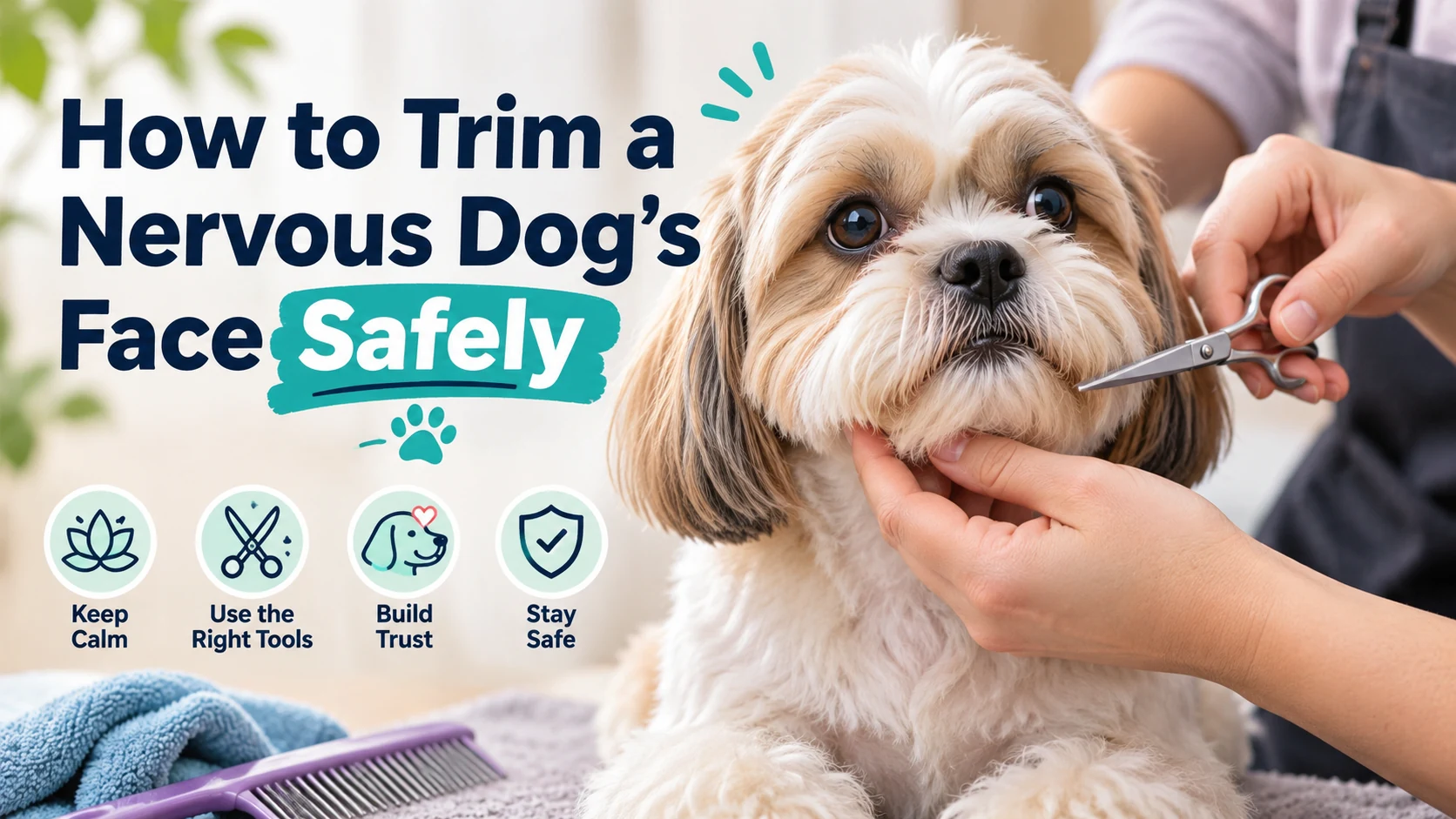
Quick Answer
To trim a nervous dog’s face safely, first help your dog feel comfortable with gentle facial handling, a comb, and grooming tools. Reward relaxed behavior and work in very short sessions. Only trim clearly visible, loose hair when your dog can remain still. Never force a frightened dog to accept scissors near the eyes or mouth. If your dog pulls away, panics, or snaps, stop and seek professional grooming help.
A dog that turns its head, backs away, or trembles during facial grooming needs a different approach from one that willingly sits still.
The delicate skin, eyes, ears, and mouth make facial trimming especially risky when a dog moves unpredictably. The priority is not achieving a perfectly shaped haircut. It is keeping your dog comfortable and preventing injury.
With gradual training, some nervous dogs become comfortable enough for small maintenance trims at home. Others need an experienced groomer or veterinary support.
Why Do Dogs Get Nervous During Face Trimming?
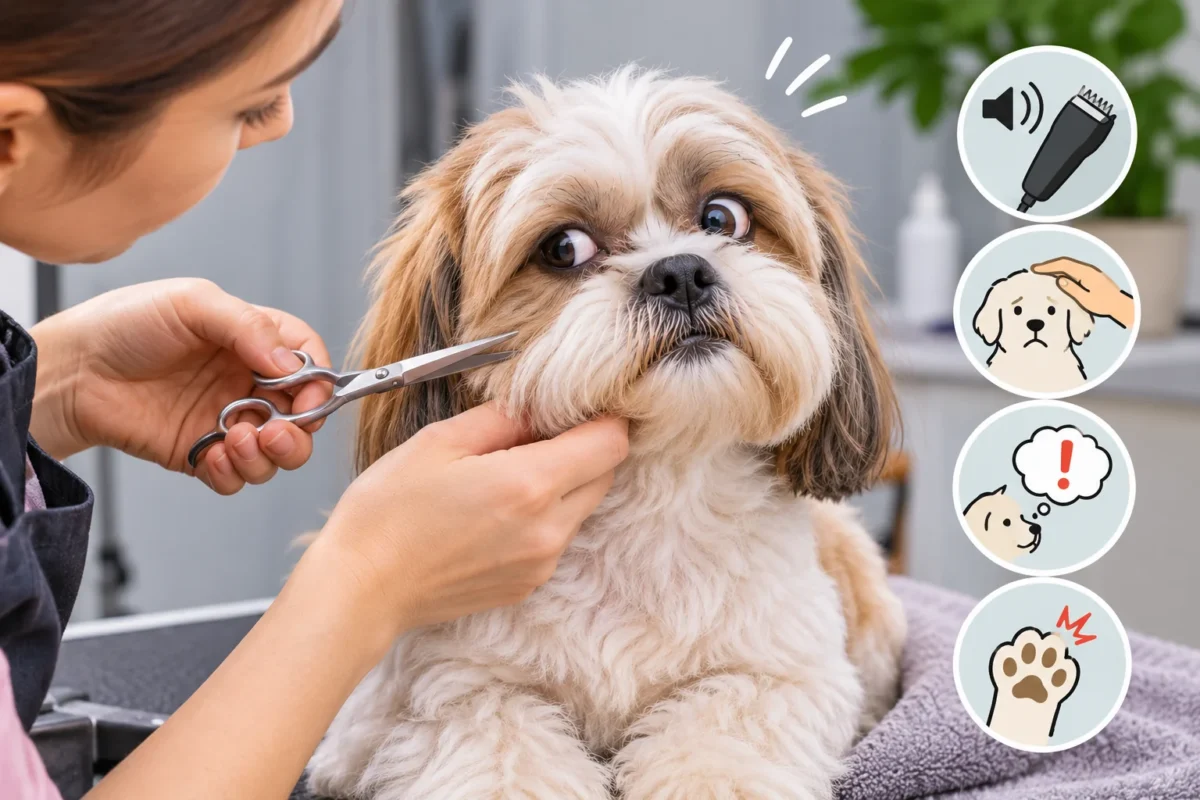
Dogs may become nervous during facial trimming because they dislike unfamiliar objects near their eyes, feel uncomfortable with head handling, or associate grooming with a previous frightening experience.
Several factors can contribute:
- Unfamiliar tools: Scissors, combs, and electric trimmers can look or sound threatening.
- Facial sensitivity: Some dogs dislike having their muzzle, ears, or cheeks touched.
- Restricted movement: Holding a dog’s head firmly can increase fear.
- Previous experiences: Painful brushing, hair pulling, or stressful grooming may create negative associations.
- Physical discomfort: Ear infections, dental pain, skin irritation, or eye problems can make facial handling uncomfortable.
Fear does not necessarily mean your dog is being stubborn. Avoidance is often an attempt to escape something uncomfortable.
If your dog suddenly becomes resistant after previously accepting grooming, arrange a veterinary examination to investigate possible pain.
How Can You Tell Whether Your Dog Is Too Nervous to Trim?
A nervous dog may show subtle stress signals before growling or attempting to escape. Recognizing those early signs helps you stop before grooming becomes unsafe.
Watch for lip licking, repeated yawning, head turning, a tucked tail, pinned-back ears, trembling, or refusing normally desirable treats.
| Dog’s behavior | Recommended response |
|---|---|
| Loose body, relaxed expression, voluntarily staying | Continue gentle preparation or a brief, safe task. |
| Turning away, lip licking, repeated yawning | Pause handling, increase distance, and make the task easier. |
| Trembling, freezing, repeated attempts to escape | End the trimming attempt and return to confidence-building training. |
| Growling, snapping, lunging, or biting | Stop immediately and obtain qualified professional help. |
A dog can remain motionless because it is frightened rather than relaxed. Look at the entire body, not just whether the head stays still.
VCA Animal Hospitals explains additional warning signs in its guide to fear and anxiety in dogs.
What Should You Prepare Before Trimming a Nervous Dog’s Face?
Prepare a quiet, familiar grooming area with secure footing, gentle lighting, appropriate tools, and rewards your dog enjoys.
A simple setup includes:
- A non-slip mat on a stable, low surface.
- A suitable dog grooming comb.
- Small, rounded-tip grooming scissors for carefully controlled work.
- Soft treats or another reward your dog values.
- A clean cloth for gently removing facial debris.
- A quiet environment without unnecessary interruptions.
Rounded-tip scissors reduce the danger of a pointed tip, but they cannot prevent injury if a dog suddenly moves into the cutting blades.
A small electric pet trimmer may be useful in some facial areas when a dog has been gradually accustomed to its sound and vibration. However, never operate unfamiliar clippers near a frightened dog’s eyes.
Before considering a trim, gently comb out loose hair. Avoid pulling knots around the muzzle or ears.
Safety Warning
Never use scissors to cut tightly matted facial hair. Skin can be hidden inside a mat, creating a serious cutting hazard. Ask an experienced groomer or veterinarian to assess difficult mats.
How Do You Calm a Nervous Dog Before Face Grooming?
Help your dog build a positive association with facial handling before attempting any haircut. Begin with simple movements your dog already accepts, and reward voluntary participation.
The process uses two training methods: desensitization, which introduces a potentially frightening experience gradually, and counterconditioning, which pairs it with something pleasant.
- Introduce the grooming area. Reward your dog for approaching and standing comfortably on the mat without any tools present.
- Practice brief facial touches. Touch a cheek gently, offer a reward, and remove your hand before your dog becomes uncomfortable.
- Introduce the comb. Show the comb from a comfortable distance. Reward relaxed behavior before gradually moving it closer.
- Practice one gentle comb movement. Only proceed if your dog willingly accepts contact.
- Introduce the scissors separately. Keep the scissors closed and away from the face. Pair their appearance and sound with rewards.
- Finish on a comfortable step. Stop while your dog is still participating willingly rather than pushing toward a difficult task.
Your dog may need multiple sessions before scissors can safely approach the face. There is no fixed schedule for progress.
Cornell University’s cooperative grooming guidance emphasizes starting below the dog’s stress threshold.
How Do You Trim a Nervous Dog’s Face Step by Step?
Only attempt a small facial tidy when your dog willingly accepts grooming tools and remains comfortably still. If your dog is actively frightened, use the preparation exercises instead of cutting hair.
Step 1: Check Your Dog’s Comfort
Invite your dog into the prepared area. Allow time to settle naturally, and reward relaxed participation.
Do not begin while your dog is panting from stress, trembling, or repeatedly backing away.
Step 2: Comb the Facial Hair Gently
Use a suitable comb to separate loose hair on the cheeks, beard, and other accessible areas. Work slowly without pulling the skin.
If a tangle causes discomfort, stop rather than forcing the comb through it.
Step 3: Start With an Easy, Low-Risk Area
Choose a small section of loose cheek or outer beard hair well away from the eyes, lips, and ears.
For an owner who already knows safe scissor technique, make only a tiny cut through clearly visible hair while the dog remains motionless and relaxed. Keep the blades away from the skin and all sensitive facial structures.
If you cannot clearly see what is beneath the hair, do not cut it.
Step 4: Reward and Recheck
Pause after the small trim. Offer a treat and observe whether your dog willingly stays or chooses to move away.
If your dog leaves, let the session end. Do not pull the dog back into position to finish the haircut.
Step 5: Leave Difficult Areas to a Professional
Hair immediately beside the eyelids, inner eye corners, lips, and delicate ear edges demands particularly precise handling.
For a nervous dog, these areas are better trimmed by a qualified professional rather than attempting risky last-minute cuts at home.
Step 6: Finish Before Stress Increases
Put the tools away, reward your dog, and allow a normal break. An unfinished haircut is preferable to an injury or a worsening fear response.
Practical Tip
Treat one calm grooming action as a successful session. You do not need to complete both cheeks, the beard, and the entire face in one attempt.
What Should You Do About Hair Covering a Nervous Dog’s Eyes?
Hair that obscures vision or repeatedly touches the eyes deserves attention, but using scissors near the eyes of a moving dog is unsafe.
When the hair can be moved comfortably, gentle combing may temporarily improve visibility. Avoid pulling hair tightly or fastening it in a way that irritates the skin.
Arrange a professional facial trim if your dog cannot tolerate safe handling around the eyes.
The American Kennel Club’s eye-care guidance explains why controlling hair around the eyes can help reduce irritation and buildup.
Redness, squinting, eye discharge, or persistent rubbing should prompt veterinary attention rather than simply cutting more hair.
What If Your Dog Keeps Moving or Tries to Bite?
Stop using cutting tools immediately if your dog repeatedly moves its head, struggles, growls, or attempts to bite.
Do not hold the muzzle shut, pin the head down, punish growling, or use excessive restraint to complete the haircut.
Instead, return to easier training exercises. For example, practice briefly touching a cheek without scissors and rewarding your dog for remaining comfortable.
If your dog has bitten during grooming, consult your veterinarian and an experienced fear-aware grooming or behavior professional before attempting further facial cutting.
Veterinary guidance may also be necessary when severe anxiety makes essential grooming impossible. Never give sedatives or other medications without veterinary direction.
How Can You Make Future Face Trims Easier?
Regular, gentle practice between haircuts can make facial handling more familiar. Separate training from actual cutting so every interaction does not predict a stressful procedure.
Useful habits include rewarding a voluntary chin rest, practicing short cheek touches, introducing combing gradually, and stopping whenever your dog withdraws.
Keep the face clean with gentle, appropriate care. For washing techniques that avoid directing water into the eyes or ears, see our dog bathing guide.
Do not wait until heavily overgrown hair or painful mats make grooming urgent. Plan routine maintenance with a professional if your dog’s coat needs frequent facial shaping.
Remember that some dogs improve quickly, while others require extended training. Progress depends on their previous experiences, comfort, and individual temperament.
When Should You Choose a Professional Groomer or Veterinarian?
Professional help is the safer choice when your dog cannot remain comfortable around facial tools, has serious matting, or requires precise trimming close to the eyes.
Look for a groomer experienced with fearful dogs who is willing to use short, low-stress appointments and stop when handling becomes unsafe.
Speak with a veterinarian first when grooming resistance develops suddenly, facial touching appears painful, or your dog has eye, ear, dental, or skin symptoms.
For severe fear, a veterinarian may recommend a behavior treatment plan or discuss medically appropriate support. Never attempt sedation yourself.
The best result is a dog that receives necessary coat care without avoidable fear or injury, even if the final haircut takes more than one appointment.
Frequently Asked Questions

Can I trim my dog’s face while they are sleeping?
No. A sleeping dog may startle awake and move unexpectedly. Wait until your dog is awake, relaxed, and willingly participating.
Are rounded-tip scissors completely safe for nervous dogs?
No. Rounded tips reduce some puncture hazards, but the cutting blades can still injure skin, eyelids, or lips during sudden movement.
Should I use treats while trimming my dog’s face?
Yes, treats can support positive training when your dog is comfortable enough to eat. However, treats should not be used to distract a frightened, moving dog while scissors are close to sensitive areas.
Can a nervous dog eventually learn to accept facial grooming?
Many dogs can improve with gradual desensitization, counterconditioning, and cooperative care. Progress varies, and some dogs continue to need professional support.
Is it safe to use a muzzle during facial trimming?
A muzzle is not a substitute for safe handling or behavioral training. It may also obstruct the area being groomed. Ask an experienced professional whether muzzle training is appropriate for your dog’s situation.
What should I do if I accidentally cut my dog’s skin?
Stop grooming immediately. Apply gentle pressure with clean gauze to a minor bleeding skin wound and contact your veterinarian for guidance. Seek urgent veterinary care for eye injuries, deep wounds, uncontrolled bleeding, or significant pain.
Final Thoughts
Trimming a nervous dog’s face requires patience, careful preparation, and the ability to recognize when your dog needs a break. Practice comfortable handling first, keep cutting tasks small, and never prioritize appearance over safety.
If your dog cannot tolerate scissors near the face, stop and seek professional help. A safe, positive grooming experience matters more than finishing the haircut today.


