
Quick Answer
Dog haircut breaks help prevent stress, physical fatigue, and unsafe movements during grooming. Pause whenever your dog appears uncomfortable, needs to change position, or begins resisting handling. There is no universal break schedule: use shorter sessions for puppies, senior dogs, and anxious pets. Resume only when your dog is relaxed and willing to participate. If distress persists, end the haircut and arrange appropriate professional help.
A dog may stand patiently during the first part of a haircut and become restless as grooming continues. Clippers make unfamiliar sounds, sensitive areas require careful handling, and standing in one position can become tiring.
Taking dog haircut breaks allows you to reassess your pet’s comfort instead of rushing to finish. The goal is not simply to complete the haircut. It is to make grooming manageable and safe so future sessions do not become harder.
Why Are Breaks Important During a Dog Haircut?
Breaks give dogs opportunities to recover from the physical and sensory demands of grooming. They also give the person handling the clippers time to check equipment, reassess difficult areas, and decide whether the haircut should continue.
Different dogs experience grooming differently. Some willingly tolerate a full session, while others become uncomfortable after only brief handling.
Regular pauses can help with several practical concerns:
- Stress: Temporarily stopping unfamiliar sounds and handling can reduce the intensity of the experience.
- Standing fatigue: Rest periods let a dog change position instead of standing continuously.
- Movement: Pausing when a dog becomes restless can reduce the risk of sudden movement near cutting tools.
- Equipment checks: Breaks provide opportunities to inspect clipper blades for excessive heat or accumulated hair.
- Positive learning: Ending manageable grooming steps calmly can make later practice easier.
Rest breaks are particularly relevant for dogs with reduced mobility. Veterinary pharmaceutical company Zoetis explains that professional groomers may allocate additional time for senior dogs and dogs with mobility difficulties so they can rest from standing.
For more information about what happens during a professional appointment, see the Zoetis guide to professional dog grooming.
How Often Should You Give a Dog a Break During a Haircut?
Give your dog a break whenever their behavior or physical comfort indicates they need one. There is no evidence-based interval that suits every dog, haircut, or grooming environment.
A relaxed, experienced dog may comfortably participate for longer periods than a nervous puppy or an older dog with joint problems. The condition of the coat and the type of grooming also matter.
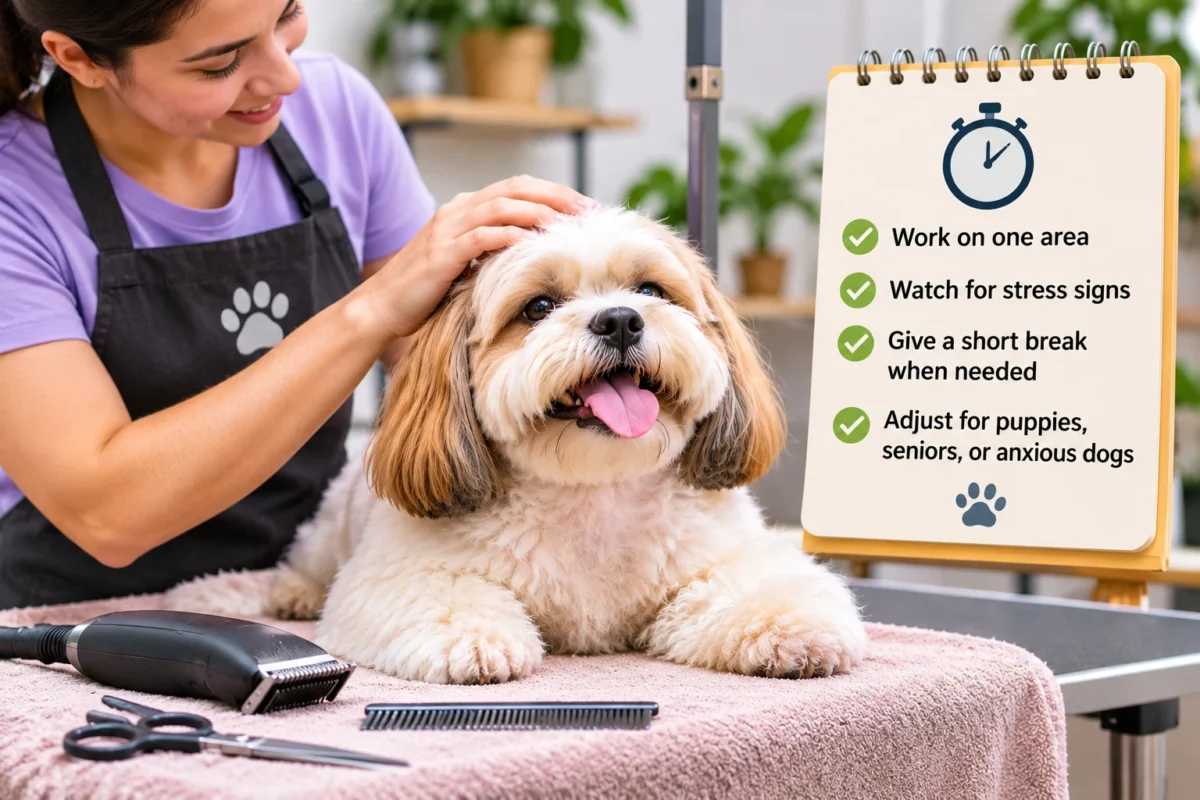
For home grooming, a useful approach is to work on one manageable area, pause to assess your dog’s comfort, and then decide whether to continue.
| Dog’s situation | Break strategy | What to monitor |
|---|---|---|
| Relaxed, experienced adult | Pause between grooming areas and whenever needed. | Comfortable posture and willingness to participate. |
| Puppy learning grooming | Use very short, positive practice sessions. | Curiosity, relaxation, and recovery after handling. |
| Senior dog | Offer frequent opportunities to sit, lie down, or change position. | Stiffness, weakness, trembling, or difficulty standing. |
| Anxious dog | Stop at early signs of stress; make the next attempt easier. | Avoidance, tension, fear, and willingness to re-engage. |
| Dog with painful matting | Stop uncomfortable handling and seek professional assessment. | Pain reactions, skin irritation, and unsafe handling. |
These are behavior-based strategies, not prescribed time intervals. A dog that needs a break after a few strokes should not be expected to finish a full haircut simply because the session has only just started.
Should you follow a fixed timer?
A timer can remind you to check your dog’s comfort, but it should never override what your dog is communicating.
If a dog starts trembling, pulling away, or resisting before the timer sounds, pause immediately. Conversely, a comfortable dog does not necessarily require a lengthy interruption after every few minutes.
What Signs Show That Your Dog Needs a Grooming Break?
Dogs often communicate discomfort through subtle changes in body language before they bark, growl, or attempt to escape.
Signs that may indicate stress during a haircut include:
- Repeated lip licking without food present.
- Yawning in a tense or unfamiliar situation.
- Turning the head away from the grooming tools.
- Pulling away from handling.
- Ears held back or a tucked tail.
- Sudden freezing or unusually stiff posture.
- Repeated attempts to leave the grooming area.
- Panting when the dog is not hot or physically active.
- Growling, snapping, or other escalating defensive behavior.
These signals need to be interpreted in context. A single yawn does not automatically mean a dog is distressed, but several stress-related behaviors occurring during handling deserve attention.
The VCA Animal Hospitals guide to canine stress signals explains why a dog’s usual behavior and the surrounding situation matter.
Warning
Do not force a dog to remain still while it growls, snaps, struggles, or shows signs of pain. Stop using cutting tools, secure the equipment, and allow the dog to disengage safely. A frightened or struggling dog is at greater risk of an accidental grooming injury.
How Do You Give Your Dog a Safe Haircut Break?
A safe break involves more than turning the clippers off. Your dog should have a genuine opportunity to relax without being forced to remain in the same uncomfortable position.
- Stop cutting immediately. Turn the clippers off and put scissors or other sharp equipment in a secure location.
- Release grooming restraints safely. If your dog is on a grooming table, support them and move them to a stable, safe surface before allowing free movement. Never leave a dog unattended on a table or attached to a grooming loop.
- Let your dog change position. Allow sitting, lying down, or comfortable movement where appropriate.
- Offer water and a toilet opportunity. This may be particularly helpful during longer appointments.
- Reduce stimulation. Turn off noisy equipment and provide a quiet area away from unnecessary activity.
- Watch for relaxed behavior. Look for a softer posture, voluntary engagement, and an absence of escalating stress.
- Decide whether to resume. Restart with an easier task only if your dog appears comfortable and willing. Otherwise, finish the session.
Some dogs appreciate a small reward during a calm pause. Others may prefer space rather than additional interaction.
Do not use food to distract a frightened dog while unexpectedly cutting hair. Rewards are most helpful when they support predictable, comfortable handling rather than conceal something the dog fears.
How do you know when a break is long enough?
The break is long enough when your dog has recovered sufficiently to participate comfortably again. This may happen quickly after a simple position change, or the dog may need to stop grooming altogether.
Check whether your dog voluntarily approaches, accepts gentle handling, and remains relaxed when the tools are visible.
A dog that continues avoiding contact, trembling, or resisting is not ready to resume, regardless of how much time has passed.
Can You Split a Dog Haircut Into Multiple Sessions?
Yes. Splitting a non-urgent dog haircut into shorter sessions can be helpful when a complete haircut would require more handling than the dog can comfortably tolerate.
This approach may work particularly well for home grooming, where the owner has flexibility to complete different tasks on different days.
For example, a dog that already tolerates clipping could follow this flexible plan:
- First session: Gently prepare and brush a manageable section of the coat.
- Second session: Trim an accessible body area if the coat and dog’s behavior allow it.
- Third session: Finish remaining simple body areas as tolerated.
- Separate appointment: Arrange professional help for sensitive or difficult areas if necessary.
This is an example of dividing work, not a schedule every dog should follow. Even brushing may be too difficult for a dog with severe matting or handling sensitivity.
Never leave tight mats pulling against the skin simply to extend a grooming project over several days. Painful matting may require timely attention from a qualified groomer or veterinarian.
Tip
Choose a small, achievable grooming goal before beginning. A comfortable partial trim is preferable to an entire haircut completed through repeated struggles. Keep a brief note of which tools, areas, and handling steps your dog tolerated well.
Do Puppies, Senior Dogs, and Anxious Dogs Need Different Breaks?
Yes. A dog’s age, health, grooming experience, and emotional response should influence how the haircut is organized.
Puppies: Keep early experiences positive
Puppies benefit from gradual introductions to brushes, handling, grooming surfaces, and clipper sounds.
Instead of immediately attempting a complete haircut, begin with short interactions your puppy can tolerate comfortably.
For example, let the puppy observe switched-off clippers, reward relaxed behavior, and end the exercise. More challenging steps can follow as confidence develops.
When a puppy is fearful, repeated exposure without sufficient recovery can make future grooming more difficult.
Senior dogs: Consider physical comfort
Older dogs may have arthritis, reduced stamina, balance difficulties, or other health concerns that affect their ability to stand during grooming.
They may benefit from shorter handling periods, supportive non-slip surfaces, and opportunities to rest in comfortable positions.
If your dog shows pain, sudden weakness, or difficulty standing, stop the haircut and seek veterinary guidance rather than assuming another short break will solve the problem.
Anxious dogs: Reduce difficulty before increasing duration
A nervous dog’s primary difficulty may be fear of the clippers, grooming location, noise, touch, or restraint rather than the length of the session itself.
In these cases, short rest periods alone may not be sufficient. The dog may need a gradual behavior-training plan that teaches tolerance of grooming-related experiences.
The VCA guide to low-stress nail trimming explains how small, reward-based handling steps can help reduce grooming fear. Although it focuses on nail care, its gradual-training principles are relevant to preparing dogs for other handling procedures.
What Should You Check Before Restarting the Clippers?
Before resuming a haircut, verify that both the dog and the grooming equipment are ready.
- Dog’s posture: Your dog is standing or resting comfortably on a stable, non-slip surface.
- Willingness: Your dog is not showing persistent avoidance, panic, or defensive behavior.
- Clipper temperature: The blade is not excessively hot. Check it carefully and follow the manufacturer’s cooling and maintenance instructions.
- Blade condition: Remove trapped hair and inspect the blade for damage or obvious performance problems.
- Coat condition: Make sure the area to be trimmed is appropriate for the chosen tool and that the skin is not caught in mats or folds.
- Work area: Cords, tools, and loose equipment do not create a tripping or movement hazard.
Restart away from particularly sensitive areas when possible, using a task the dog already tolerates.
If the clipper blade repeatedly overheats, do not continue using it against the dog’s skin. Follow the equipment manufacturer’s guidance for cooling, cleaning, lubrication, or replacement.
When Should You Stop the Haircut Instead of Taking Another Break?
End the haircut when a break does not restore comfortable, safe participation or when continuing could cause injury.
Important reasons to stop include:
- Persistent growling, snapping, or attempts to escape.
- Repeated trembling, panic, or extreme distress.
- Apparent pain when touching or moving a body area.
- Significant weakness or difficulty supporting body weight.
- Bleeding, an accidental cut, or another grooming injury.
- Severe matting that cannot be managed without painful pulling.
- Equipment that cannot be operated safely.
Some situations need more than a grooming adjustment. For example, persistent pain may require veterinary assessment, while severe grooming fear may benefit from a veterinarian-guided behavior plan.
Seek prompt veterinary care for significant injury, collapse, breathing difficulty, or other acute signs of illness.
A professional groomer can also help determine whether a different haircut, handling method, or appointment structure would be more appropriate.
How Can You Make Future Dog Haircuts Easier?
Short, positive handling practice between haircuts can help dogs become more comfortable with the grooming process.
The aim is to build familiarity before the next full haircut, rather than waiting until the dog’s coat urgently needs attention.
- Practice touching and gently supporting the legs when the dog is relaxed.
- Introduce grooming tools without immediately using them.
- Reward comfortable, voluntary participation.
- Practice on a stable, non-slip surface.
- Keep handling sessions short enough to avoid escalating stress.
- Increase difficulty gradually instead of introducing several challenging steps together.
- Stop or reduce the difficulty when avoidance or distress appears.
A dog may tolerate brushing but still fear electric clippers. Treat those as different skills instead of assuming comfort with one guarantees comfort with the other.
Regular coat maintenance can also reduce the amount of detangling needed on haircut day. For bathing preparation and gentle handling, see the SuperDwelling guide to bathing a dog safely at home.
Gradual training should happen at a pace the dog can manage. The purpose is not to make the dog tolerate an increasingly unpleasant procedure, but to develop a predictable routine that feels safe.
Frequently Asked Questions About Dog Haircut Breaks
1. Can a dog have too many breaks during grooming?
There is no universal maximum number of grooming breaks. If your dog needs repeated pauses to remain comfortable, shorten the session or spread the work across multiple appointments. Frequent distress is a reason to reconsider the grooming approach, not to reduce breaks by force.
2. Should you give your dog treats during a haircut break?
Yes, if your dog is relaxed, interested in food, and able to eat safely. Small rewards can support positive associations with gentle handling. Do not use treats to conceal frightening procedures or pressure a distressed dog to continue.
3. Is it okay to finish a dog haircut the next day?
Yes, when the remaining coat can safely wait and your dog is comfortable. Split grooming into manageable sessions rather than forcing completion. Painful matting, hygiene problems, or skin concerns may require more timely professional attention.
4. Should a dog stay on the grooming table during a break?
Only when the dog is safely supervised, properly supported, and comfortable. For a genuine rest break, many dogs benefit from being moved carefully to a secure floor-level area. Never leave a dog unattended on a grooming table or attached to a grooming restraint.
5. What if my dog refuses to return after a grooming break?
Do not drag or force your dog back. End the session if necessary and work on easier, reward-based grooming practice separately. Repeated refusal or severe fear may justify guidance from a veterinarian or qualified behavior professional.
6. Are grooming breaks enough for a dog that hates clippers?
Not always. Breaks reduce continuous exposure but do not necessarily resolve fear of noise, vibration, or handling. A gradual desensitization and reward-based training plan may be needed before another complete haircut is attempted.
Final Thoughts
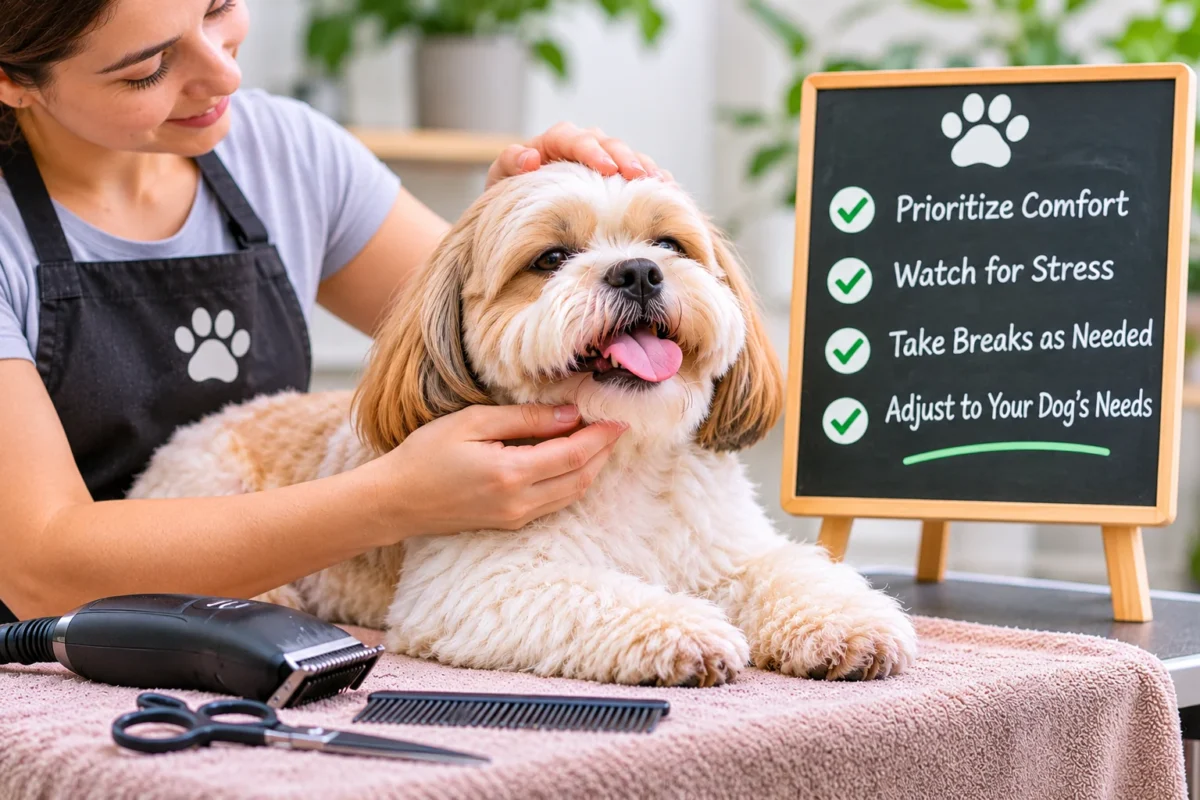
Dog haircut breaks should be guided by comfort, behavior, and safety rather than a rigid schedule. Puppies may need very short introductions, senior dogs may need extra opportunities to rest, and anxious dogs may require gradual training before a full haircut is realistic.
Watch your dog’s body language, stop cutting before handling becomes unsafe, and resume only when the dog is comfortable. A shorter haircut completed calmly is a better outcome than a finished style achieved through fear or struggle.


