
Quick Answer
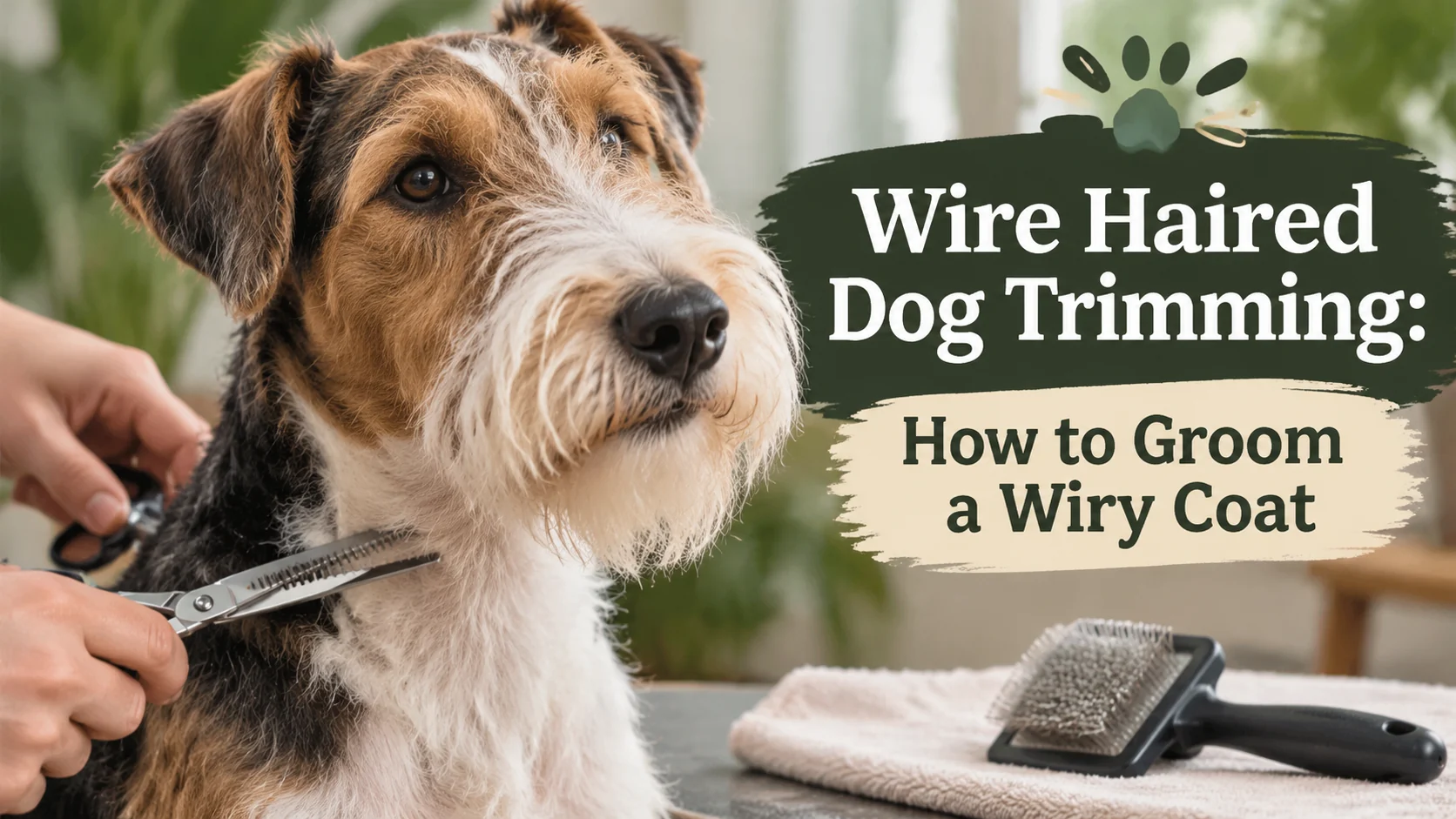
Wire haired dog trimming is best performed through hand stripping when preserving the natural coarse coat is a priority. This technique removes loose, mature outer hairs rather than cutting them. Clipping is a practical alternative for companion dogs, particularly those that cannot comfortably tolerate stripping. Regular brushing, careful trimming around sensitive areas, and grooming based on individual coat condition help maintain a comfortable, manageable coat.
Trimming a wire-haired dog requires a different approach from cutting a curly or silky coat. Removing too much hair or choosing the wrong grooming method can change the coat’s appearance and texture.
Understanding which hairs need removing, which areas need trimming, and when to leave the coat alone makes grooming easier for both you and your dog.
What Makes Wire-Haired Dogs Different to Groom?
Many wire-haired dogs have a coarse outer coat covering a softer undercoat. The outer hairs create the characteristic rough texture, while the undercoat provides additional insulation.
As mature outer hairs loosen, they can remain trapped among the newer hairs. This contributes to an untidy appearance, particularly when the coat becomes overgrown.
Traditional grooming focuses on removing these loose hairs rather than simply shortening everything with clippers.
Breeds commonly associated with wire-coat grooming include:
- Wire Fox Terriers
- Border Terriers
- Wirehaired Dachshunds
- Scottish Terriers
- Miniature Schnauzers
- German Wirehaired Pointers
- Wirehaired Pointing Griffons
However, breed alone does not determine the correct grooming method. A mixed-breed terrier may have a combination of soft and coarse hairs that cannot all be treated the same way.
Assess the actual coat before choosing how to trim it.
Should You Hand Strip or Clip a Wire-Haired Dog?
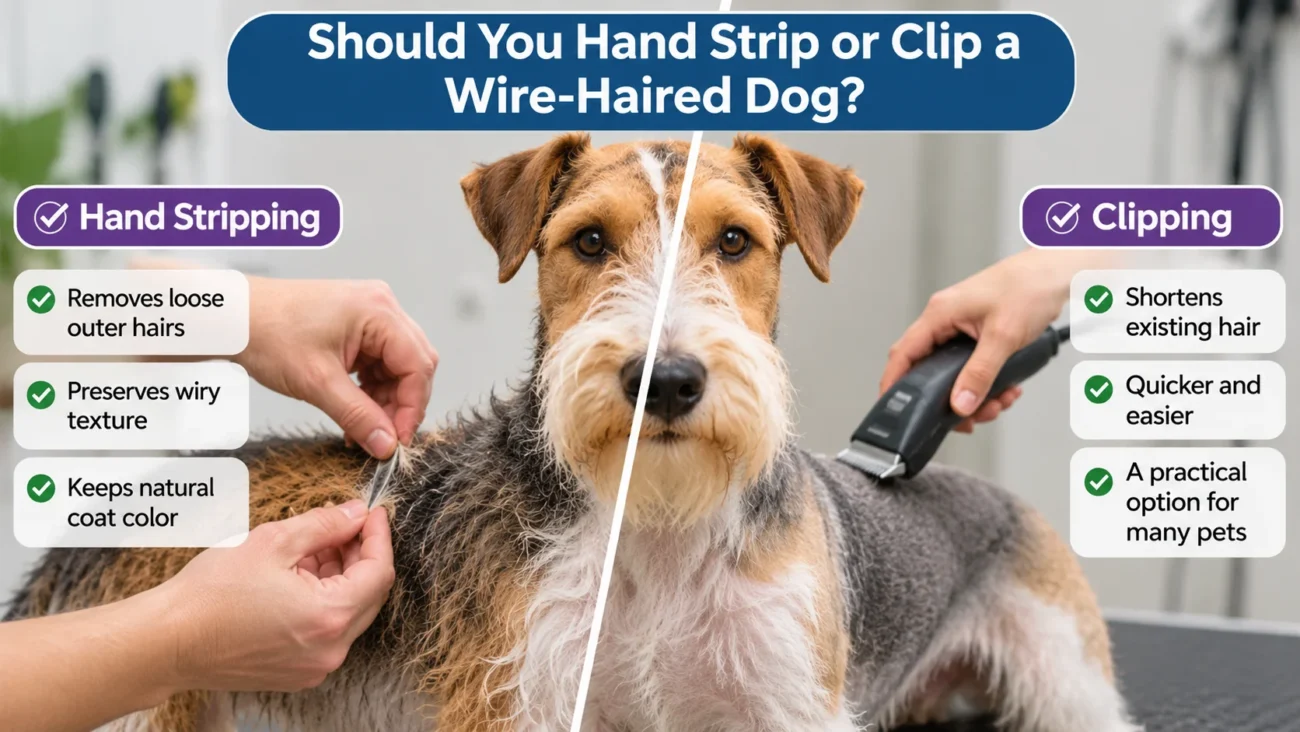
Choose hand stripping when maintaining the natural wiry texture is important and your dog’s coat is suitable. Choose clipping when comfort, convenience, or easier maintenance is the greater priority.
The methods produce different results because they remove hair in different ways.
| Feature | Hand Stripping | Clipping |
|---|---|---|
| Method | Removes loose outer hairs | Shortens existing hair |
| Coat texture | Preserves wiry appearance | May become softer |
| Time required | Generally longer | Generally shorter |
| Skill level | Specialized technique | Standard grooming skills |
| Suitable for | Suitable wire coats and show dogs | Many companion dogs |
| Coat color | Helps preserve characteristic appearance | May appear lighter or duller |
The American Kennel Club’s hand-stripping guide also describes an alternative approach combining clipping with carding for companion dogs.
You do not necessarily have to choose between stripping the entire dog and clipping the entire dog. Different body areas may benefit from different techniques.
How to Tell When a Wire Coat Is Ready for Trimming
A wire coat is ready for hand stripping when mature outer hairs release readily without force. An untidy appearance alone does not establish that every hair is ready to be removed.
Look for these general indicators:
- Long, coarse hairs extending beyond the surrounding coat.
- A noticeably uneven outer coat.
- Loose hairs that come away during ordinary grooming.
- An overgrown jacket that has lost its neat outline.
After a professional demonstration, you can check a small section of the back by gently gripping a few loose hairs. If they resist removal or your dog reacts uncomfortably, stop.
Different sections can mature at different times. The back may be ready for attention while the shoulders still contain firmly attached hairs.
Key Insight
Coat readiness matters more than hair length. Removing firmly attached hair simply because it looks too long can cause discomfort. A wire coat should be maintained according to which hairs are ready to release, not just its appearance.
What Tools Do You Need for Wire-Haired Dog Trimming?
A basic grooming kit should include tools for brushing, checking tangles, and maintaining the areas that need regular attention.
- Pin brush: Helps separate hairs and loosen surface debris.
- Metal grooming comb: Checks for hidden tangles beneath the rough outer coat.
- Slicker brush: Assists with loose hair removal when used gently.
- Rubber finger grips: Provide better traction when handling mature outer hairs.
- Stripping knife: Helps grip suitable hairs but requires correct technique.
- Dog clippers: Useful for appropriate pet trims and sensitive areas when handled safely.
Beginners do not need every specialized tool immediately. A suitable brush and metal comb are sufficient for routine maintenance between professional appointments.
Stripping knives and carding tools require instruction because incorrect use can damage hair or irritate the skin.
How to Trim a Wire-Haired Dog Safely at Home
Start with brushing and coat assessment before attempting any trimming. If you have never hand stripped a dog, have an experienced wire-coat groomer demonstrate the technique first.
1. Prepare Your Dog and Grooming Area
Choose a quiet space with good lighting and a secure, nonslip surface. Keep your grooming tools nearby so you do not need to repeatedly interrupt the session.
Allow your dog to become comfortable with handling before working on the coat. Short sessions are preferable when a dog becomes restless.
2. Brush and Inspect the Entire Coat
Brush gently in the natural direction of hair growth. Use a metal comb to check the coat beneath the surface, paying particular attention to the beard, legs, chest, and areas behind the ears.
Check for redness, sores, parasites, and tightly matted hair. Do not strip over irritated or injured skin.
3. Remove Small Amounts of Loose Outer Hair
If a groomer has confirmed that the coat is suitable, begin with a small section of mature hair along the back.
- Support the surrounding skin gently.
- Select a few loose outer hairs.
- Draw them smoothly along their natural growth direction.
- Stop if the hairs resist or your dog shows discomfort.
- Move gradually between small sections to avoid creating patches.
Do not attempt to remove the entire outer coat during your first home grooming session. Learning to recognize suitable hairs is more important than producing a perfectly finished haircut.
4. Maintain the Face, Feet, and Sensitive Areas
Comb the facial furnishings and check the feet for debris. Hair around the eyes, ears, paw pads, and sanitary areas requires particular care because sudden movement can result in injury.
Leave close trimming in these locations to a professional if you cannot safely control the equipment and your dog’s movement.
5. Check the Finished Coat
Comb through the groomed areas again and inspect the skin. The coat should lie more neatly without obvious irritated patches or unintended bald spots.
Finish the session while your dog remains comfortable rather than continuing simply to achieve a more symmetrical appearance.
How Should You Trim Different Body Areas?
Wire-haired dogs do not need a uniform grooming method across their entire body. Coat thickness, sensitivity, and breed-specific furnishings influence what should be shortened or removed.
| Body Area | Grooming Approach |
|---|---|
| Back and sides | Strip suitable mature hairs or use an appropriate pet clip. |
| Beard | Comb regularly and maintain a manageable outline. |
| Eyebrows | Maintain visibility with careful professional trimming. |
| Legs | Comb furnishings and tidy excessive growth. |
| Belly and groin | Prioritize comfort and careful hygiene trimming. |
| Feet | Check between toes and maintain excess pad hair safely. |
For example, a Schnauzer can retain its distinctive beard and eyebrows while receiving a practical clip on the body. The objective is not to make every section equally short.
How Often Should You Trim a Wire-Haired Dog?
Trimming frequency depends on coat maturity, breed, grooming method, and the appearance you want to maintain.
Wirehaired Dachshunds may receive several stripping sessions annually, while clipped Miniature Schnauzers commonly follow a grooming schedule of approximately five to eight weeks.
A dog maintained through rolling may need smaller, more frequent adjustments instead of occasional extensive grooming.
Rolling the Coat vs. Full Hand Stripping
Rolling involves maintaining different lengths of outer hair by periodically removing small amounts of mature coat. It helps avoid having to remove a large quantity of overgrown hair at once.
A full strip removes a larger proportion of suitable mature outer coat during a grooming session or several planned sessions.
The Wire Fox Terrier Association’s grooming tutorials explain how ongoing stripping is used to maintain coat condition and traditional breed presentation.
For everyday pets, the right schedule is one that maintains manageable hair without requiring uncomfortable or excessively long grooming sessions.
Common Wire-Haired Dog Trimming Mistakes
The most consequential mistakes involve removing unsuitable hair, overlooking skin condition, or treating every wire-haired dog as though it has an identical coat.
- Pulling too many hairs together: Makes it harder to distinguish loose hairs from firmly attached ones.
- Stripping against resistance: Can cause unnecessary discomfort.
- Clipping without considering the desired finish: May produce unwanted changes in texture and color.
- Ignoring the undercoat: Allows loose hair and tangles to accumulate beneath a tidy-looking surface.
- Continuing when the dog becomes distressed: Can make future grooming sessions more difficult.
Warning
Never use scissors to cut out tight mats close to your dog’s skin. Skin can become caught within the tangled hair. Seek professional grooming assistance for severe matting and veterinary attention if the skin is painful, wounded, or inflamed.
How to Maintain the Coat Between Trims
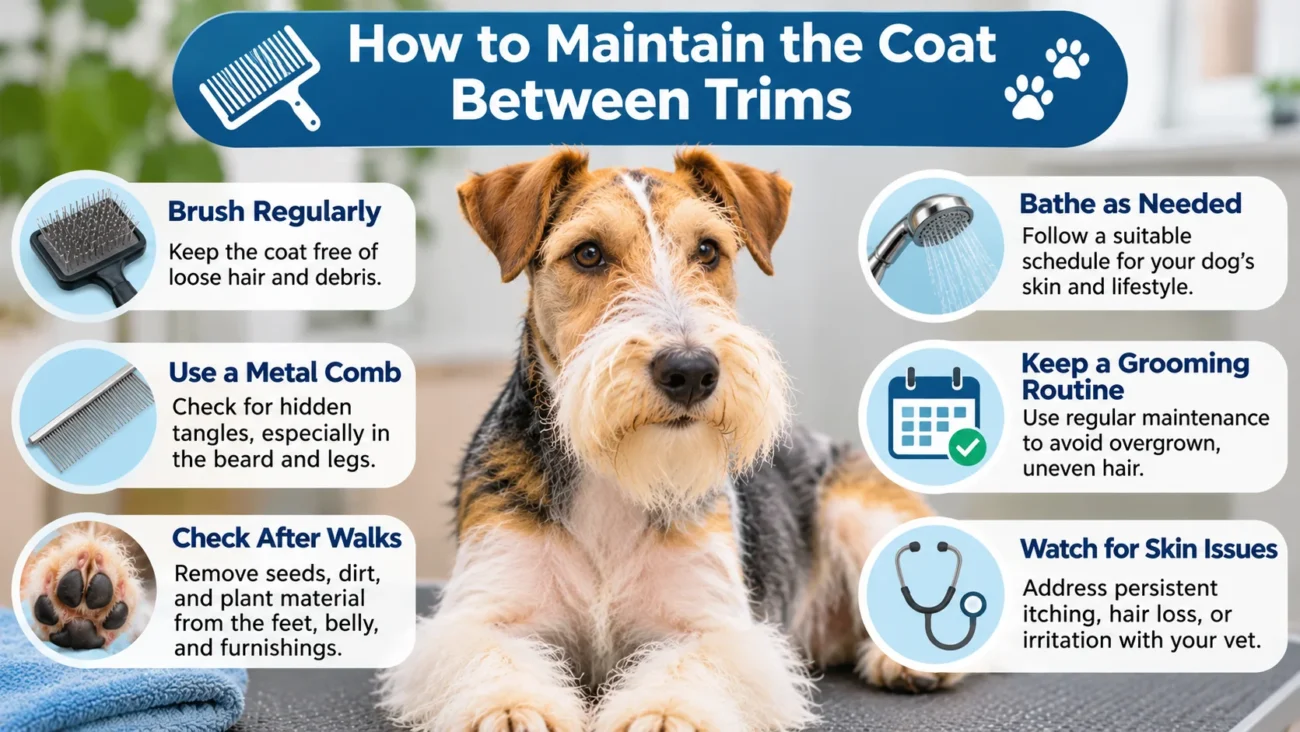
Regular brushing and combing keep a wire coat manageable regardless of whether you choose stripping or clipping.
Check the coat at least weekly, increasing grooming frequency when your dog spends considerable time outdoors or has longer facial and leg furnishings.
After walks, inspect the feet, belly, and beard for seeds, dirt, and plant material. Removing debris promptly prevents it from becoming embedded in tangled hair.
Follow appropriate bathing advice for your dog’s skin and lifestyle. The VCA Animal Hospitals guide to canine coat care recommends addressing tangles before bathing because washing can make them more difficult to remove.
Persistent itching, hair loss, or recurring skin irritation warrants veterinary assessment rather than increasingly aggressive grooming.
When Is Professional Grooming the Better Choice?
Professional grooming is preferable when you cannot confidently identify suitable mature hairs, when your dog has extensive matting, or when you want to preserve a traditional breed-specific appearance.
Before booking, ask whether the groomer has experience with wire coats, what their hand-stripping service includes, and whether they offer combined stripping and clipping.
Explain any previous clipping, skin problems, or grooming sensitivities. This information helps the groomer select an appropriate approach rather than concentrating solely on the finished appearance.
A comfortable, manageable pet trim is a reasonable outcome even when it differs from the traditional show style.
Related Product
Metal Dog Grooming Comb
A rounded-tooth grooming comb helps detect hidden tangles and maintain facial furnishings between professional wire-coat grooming sessions.
As an Amazon Associate, we earn from qualifying purchases.
Frequently Asked Questions
Does hand stripping hurt wire-haired dogs?
Correctly performed hand stripping of suitable loose hairs should not cause significant discomfort. Pulling firmly attached hairs or working on sensitive skin can be painful. Stop immediately if your dog shows signs of distress.
Can a clipped wire coat become wiry again?
Some previously clipped coats can recover part of their coarse texture through appropriate coat management. Recovery varies with the individual dog, coat condition, and grooming history. A complete return to the original texture is not guaranteed.
Should you bathe a wire-haired dog before hand stripping?
Hand stripping is commonly performed before bathing because the natural texture makes mature hairs easier to grip. The coat should still be free of excessive dirt and tangles before grooming begins.
Do wire-haired puppies need hand stripping?
Puppies benefit from gentle brushing and positive grooming experiences. The appropriate time to begin stripping depends on coat development and individual suitability. An experienced groomer can assess when the puppy coat is ready.
What is the difference between carding and hand stripping?
Carding primarily removes loose undercoat, while hand stripping targets suitable mature outer hairs. The techniques can complement each other, but they serve different purposes within wire-coat maintenance.
Should you shave a wire-haired dog during summer?
Routine close shaving is not necessary simply because the weather is hot. Maintain an appropriate coat length and provide shade, drinking water, and cooler exercise times. Medical needs or severe matting may justify a different grooming approach.
Conclusion
Successful wire haired dog trimming starts with understanding the coat rather than choosing a haircut based solely on appearance. Hand stripping helps preserve the natural coarse finish when the coat is suitable, while clipping provides a practical maintenance option for many companion dogs.
Focus on regular brushing, removing suitable loose hairs, and keeping sensitive areas clean and comfortable. If you are unfamiliar with hand stripping, arrange a professional demonstration before attempting extensive grooming at home. The most appropriate routine is one that respects your dog’s coat characteristics, tolerance, and everyday needs.


