
Quick Answer
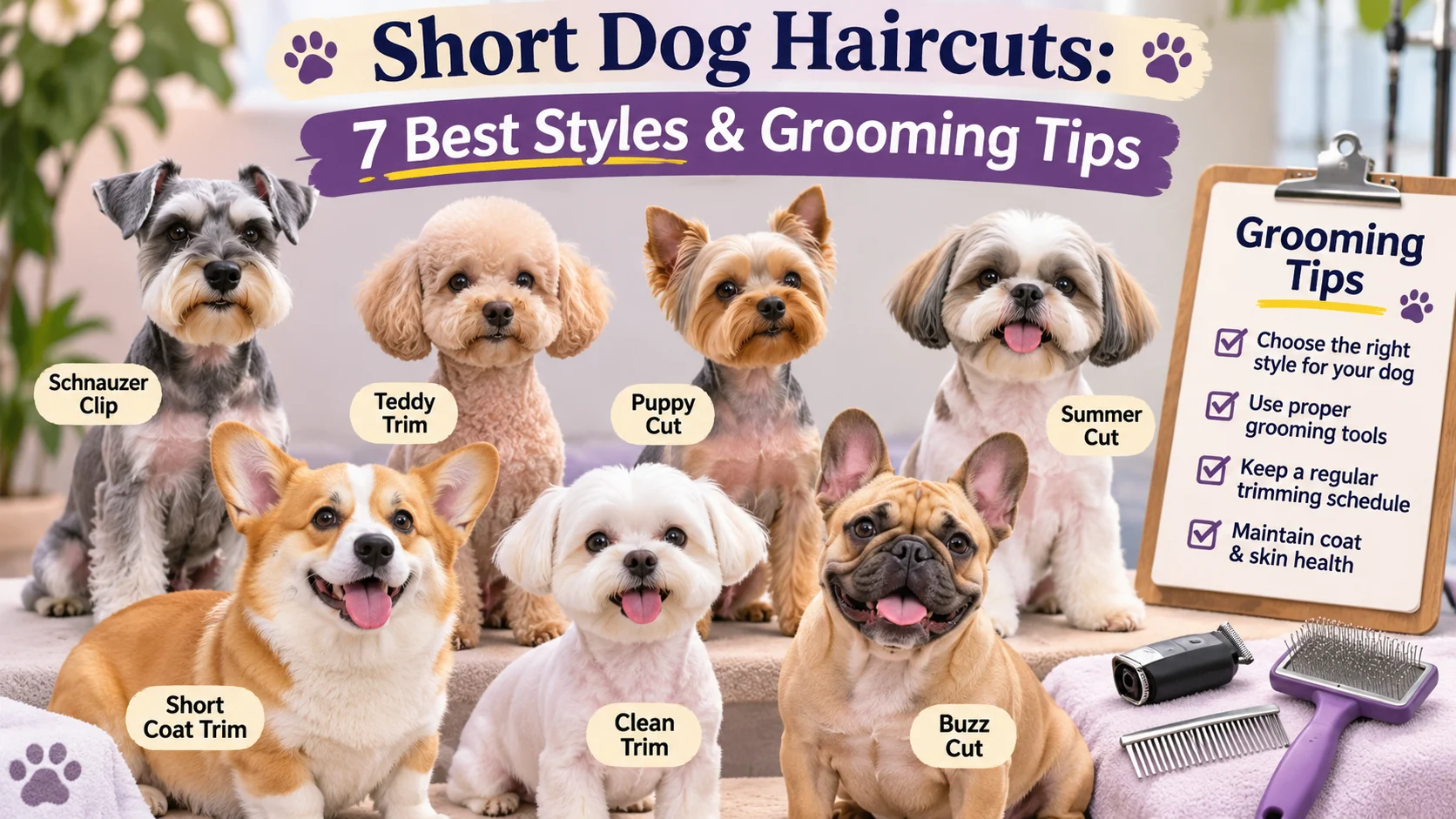
A short dog haircut reduces coat length to make brushing, cleaning, and everyday maintenance easier. Popular options include the kennel cut, short puppy cut, teddy bear cut, and summer trim. For suitable long-haired dogs, leaving about one inch of hair provides a practical starting point while maintaining skin protection. Avoid shaving double-coated dogs for cosmetic or seasonal reasons.
A shorter haircut can make muddy paws, tangled fur, and daily brushing much easier to manage. However, the shortest haircut is not necessarily the best one for your dog.
Coat texture, skin sensitivity, outdoor activity, and natural hair growth all affect which grooming style makes sense. Choosing the right combination of body length and facial styling can give your dog a neat appearance without sacrificing comfort.
What Is a Short Dog Haircut?
A short dog haircut is a grooming style that reduces the length of a dog’s existing coat while maintaining an appropriate amount of protective hair. The body may be clipped evenly, or the groomer may leave certain areas longer to create a particular appearance.
For example, a short teddy bear cut combines a tidy body with a rounded face. A kennel-style cut generally keeps more of the coat at a consistent, shorter length.
Short haircuts can offer several practical benefits for dogs with suitable coats:
- Less time spent brushing long body hair.
- Easier removal of dirt and outdoor debris.
- Fewer opportunities for long hair to become tangled.
- Better visibility when checking the skin for irritation.
- Easier cleaning around the paws and rear.
A short haircut is different from shaving a dog down to the skin. It also differs from grooming a naturally short-haired breed that does not normally require body clipping.
7 Best Short Dog Haircut Styles
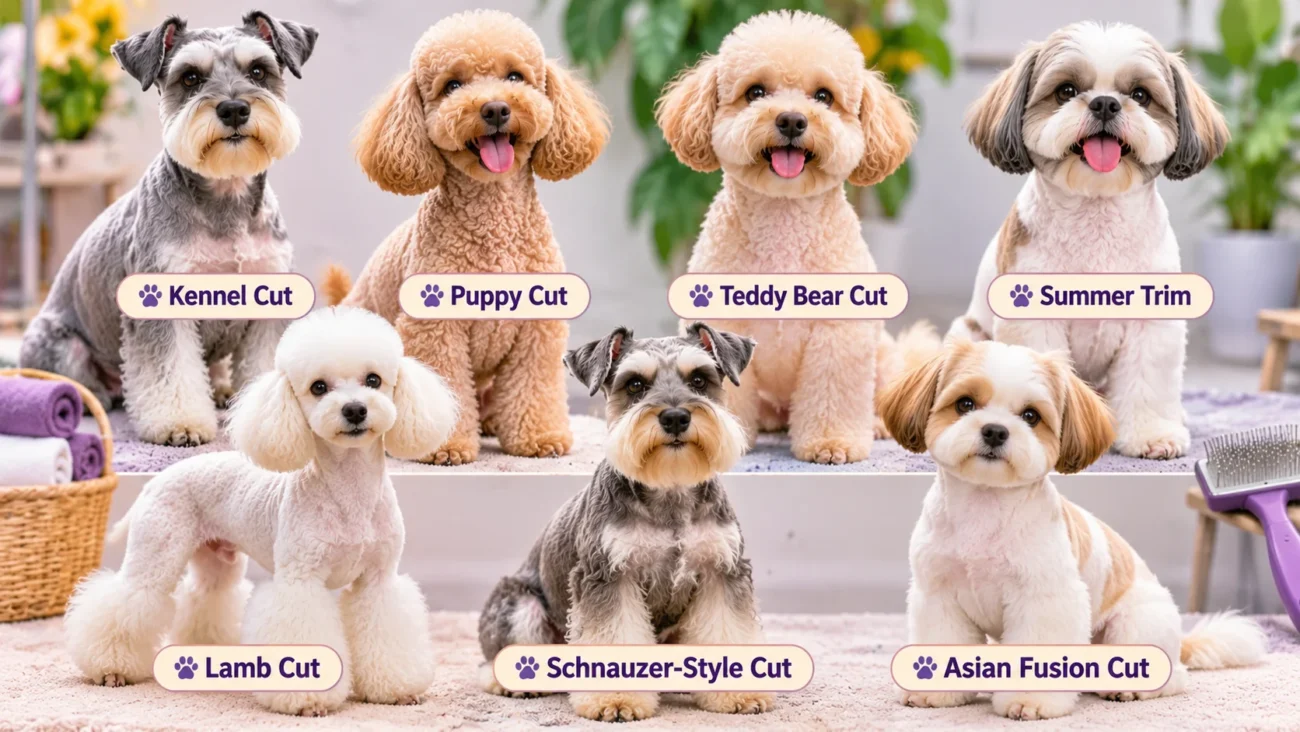
The most suitable short haircut depends on whether you prioritize easy maintenance, a rounded appearance, or a breed-specific shape. These seven styles offer different combinations of practicality and appearance.
1. Kennel Cut
The kennel cut is a simple, closely trimmed grooming style designed to reduce everyday coat maintenance. The body, legs, and other areas are generally kept relatively short.
It works well for suitable curly and continuously growing coats when owners prefer a practical appearance over elaborate styling.
- Best for: Active dogs and owners who prefer simpler brushing routines.
- Appearance: Neat, compact, and practical.
- Maintenance: Relatively low.
Ask your groomer for a protective coat length rather than assuming a kennel cut requires shaving close to the skin.
2. Short Puppy Cut
A short puppy cut keeps the body hair at a relatively even length, creating a soft and youthful appearance. Despite its name, adult dogs can wear this style too.
It is a versatile option for dogs such as Maltese, Poodles, and Yorkshire Terriers with coats that benefit from regular trimming.
- Best for: Owners who want an everyday haircut with some remaining fluff.
- Appearance: Soft, balanced, and natural.
- Maintenance: Low to moderate.
A puppy cut has no universally standardized length. Confirm the desired finished length before grooming begins.
3. Short Teddy Bear Cut
The short teddy bear cut combines a shorter body with fuller facial hair shaped into a rounded outline. This creates a cuddly appearance without requiring a long body coat.
It is particularly adaptable to curly and wavy coats, including those of many Poodles and Doodle mixes.
- Best for: Dogs with sufficient facial hair to create a rounded shape.
- Appearance: Plush face with a tidy body.
- Maintenance: Moderate around the face and ears.
The longer facial hair still needs regular cleaning and combing, even when the body is clipped short.
4. Short Summer Trim
A summer trim removes unnecessary length from an appropriate coat to simplify maintenance during warmer weather.
Unlike a complete shave, a sensible summer trim preserves sufficient hair to protect the skin. For double-coated breeds, brushing and removing loose undercoat are generally preferable to shortening the entire body.
- Best for: Suitable long-haired dogs that spend time outdoors.
- Appearance: Light, tidy, and easy to manage.
- Maintenance: Relatively low.
A summer haircut does not replace shade, drinking water, or safe exercise temperatures.
5. Short Lamb Cut
A short lamb cut keeps the torso relatively short while retaining additional length on the legs. The difference in length creates a balanced silhouette rather than a uniformly clipped appearance.
Curly-coated dogs can suit this style because their remaining leg hair provides shape and volume.
- Best for: Poodles and suitable curly-coated dogs.
- Appearance: Trim body with fuller legs.
- Maintenance: Moderate.
Check the longer leg hair after walks, especially near the ankles and underarms, where friction can encourage tangles.
6. Short Schnauzer-Style Cut
The Schnauzer-style cut features a shorter torso with a distinctive beard, shaped eyebrows, and varying amounts of hair on the legs.
A practical pet version can reduce the length of the furnishings while retaining the recognizable facial appearance.
- Best for: Schnauzers and dogs with compatible coat characteristics.
- Appearance: Defined facial features and a neat body.
- Maintenance: Moderate.
For wire-coated dogs, discuss clipping versus hand-stripping with a groomer because the methods can affect coat texture differently.
7. Short Asian Fusion Cut
An Asian fusion haircut can combine a compact body with carefully shaped facial hair, rounded ears, or fuller legs. The finished appearance emphasizes customized proportions rather than traditional breed patterns.
This style can suit small dogs with coats that hold a sculpted shape, particularly some Poodles and Maltese.
- Best for: Owners who prefer a customized, expressive appearance.
- Appearance: Rounded, sculpted, and distinctive.
- Maintenance: Moderate to high for shaped areas.
Although the body may be short, maintaining the detailed silhouette can require frequent professional styling.
Short Dog Haircut Styles Compared
Use the following comparison to narrow down your choices based on appearance and the amount of coat maintenance you can realistically manage.
| Haircut Style | Main Feature | Maintenance |
|---|---|---|
| Kennel cut | Short, practical outline | Low |
| Short puppy cut | Even, soft appearance | Low to moderate |
| Teddy bear cut | Rounded, fluffy face | Moderate |
| Summer trim | Reduced coat bulk | Low |
| Lamb cut | Fuller legs | Moderate |
| Schnauzer-style cut | Beard and eyebrows | Moderate |
| Asian fusion cut | Customized shaping | Moderate to high |
Choose a kennel-style or short puppy cut when simplicity matters most. If you enjoy a fuller facial appearance and can maintain the extra hair, a short teddy bear cut offers a useful compromise.
How Short Should You Cut Your Dog’s Hair?
For suitable long-haired dogs receiving a routine summer haircut, leaving approximately one inch of hair is a sensible protective starting point. The appropriate length can change according to coat type, skin condition, climate, and grooming needs.
VCA Animal Hospitals’ grooming and coat care guidance recommends retaining at least one inch of coat when shortening long hair for summer to reduce exposure to sun damage.
These measurements illustrate how different finished lengths compare. They are not universal safety recommendations.
| Remaining Length | Appearance | Considerations |
|---|---|---|
| 1/4 inch (6.4 mm) | Very close trim | Reduced protective coverage |
| 1/2 inch (12.7 mm) | Compact coat | Requires coat-specific safety assessment |
| 3/4 inch (19.1 mm) | Short with some volume | May provide limited coverage on sparse coats |
| 1 inch (25.4 mm) | Short but fuller appearance | Common protective starting point for suitable long-haired dogs |
A one-inch haircut on a curly Poodle may look different from the same length on a straight-haired Maltese. Hair density, curl pattern, and growth direction influence how much skin remains covered.
Key Insight
The finished length matters more than the haircut name. Instead of requesting a short puppy cut alone, show your groomer a reference photo and agree on the amount of hair that should remain.
Which Dog Breeds Are Suitable for Short Haircuts?
Dogs with continuously growing hair are generally good candidates for regular body trimming. Dogs with naturally short fur or protective double coats usually benefit from a different grooming approach.
Dogs With Curly or Continuously Growing Coats
Breeds that can often benefit from appropriately shortened hair include:
- Poodles
- Bichon Frises
- Maltese
- Yorkshire Terriers
- Some Doodle mixes
Coat characteristics vary considerably among mixed-breed dogs. A Doodle with a dense, shedding undercoat may require a different grooming plan from one with a Poodle-like coat.
Dogs With Naturally Short Coats
Beagles, Boxers, and smooth-coated Dachshunds already have relatively short body hair. Clipping their coats shorter generally offers little routine grooming benefit.
Brushing, bathing, nail trimming, and appropriate hygiene care are usually more useful than a full-body haircut.
Dogs With Dense Double Coats
Huskies, Golden Retrievers, German Shepherds, and Pomeranians have protective coat structures that should generally remain intact.
Loose undercoat removal, appropriate brushing, and limited tidying of excess feathering are usually better options than a short body clip.
Is It Safe to Give a Double-Coated Dog a Short Haircut?
Routine close clipping or shaving is generally unsuitable for double-coated dogs. Their outer guard hairs and softer undercoat work together to provide protection against environmental exposure.
Removing excessive hair can interfere with that protection and may lead to uneven regrowth.
The American Kennel Club’s guidance on shaving dogs explains why removing protective coat layers can increase vulnerability to sunlight and affect normal coat function.
Instead of requesting a short body haircut, consider:
- A professional de-shedding treatment.
- Regular removal of loose undercoat.
- Light trimming of excessive feathering where appropriate.
- Paw and sanitary-area maintenance.
Warning
Do not shave a double-coated dog simply to reduce shedding or keep it cool. Severe matting or necessary medical procedures can justify exceptions, but these situations require professional assessment.
How to Choose the Right Short Haircut for Your Dog
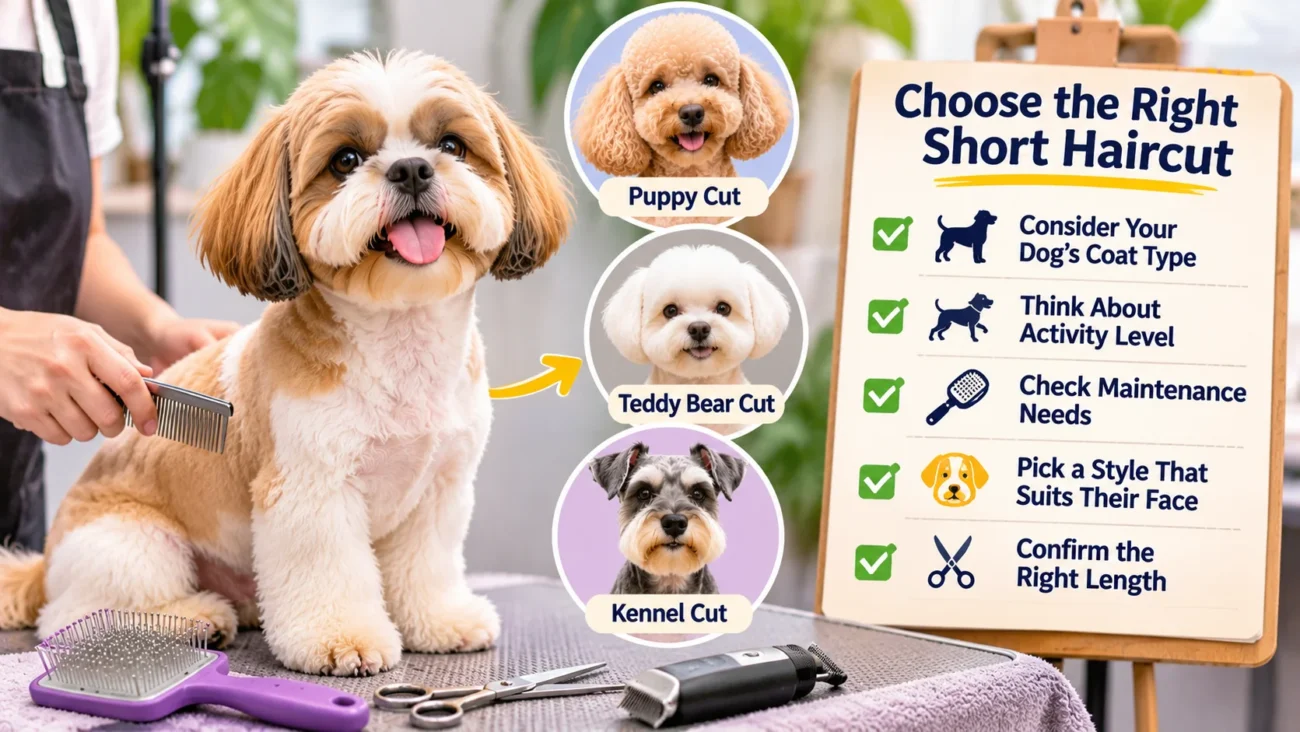
Start with coat suitability, then choose a style that matches your dog’s activity level and your available grooming time.
- Identify the coat type. Determine whether your dog has a continuously growing, naturally short, wire, or double coat.
- Check for tangles. Existing mats may limit how much hair a groomer can safely retain.
- Consider outdoor activities. Dogs that spend substantial time outside need appropriate protection from sunlight and environmental exposure.
- Decide how much brushing you can manage. Longer facial and leg furnishings require more attention than a uniformly short body.
- Choose the facial shape. Decide between a rounded face, breed-specific styling, or a simpler natural outline.
- Agree on finished length. Confirm the amount of remaining hair with the groomer before clipping begins.
For example, an active Poodle that frequently collects mud on walks may benefit from a short, evenly trimmed body with tidy legs. A less active dog whose owner enjoys brushing may suit a teddy bear style with fuller ears and facial hair.
What Should You Tell Your Groomer?
Tell your groomer the desired finished body length, facial shape, and which areas you want to leave longer. Requesting a specific result prevents confusion because haircut names can mean different things at different salons.
Here is an example request for a dog whose coat is suitable for body clipping:
Please leave about one inch of hair on the body, keep the legs tidy, and shape the face into a natural rounded outline. Keep the ears and tail slightly fuller if the coat condition allows. Let me know before going shorter.
Bring a photo of a dog with similar coat texture whenever possible. A haircut that looks good on a dense, curly coat may not produce the same shape on a fine, straight coat.
If your dog has severe tangles, discuss safe alternatives before insisting on a particular length.
Can You Give Your Dog a Short Haircut at Home?
Minor trimming may be manageable at home for a calm dog with a clean, tangle-free coat. However, a complete short haircut requires suitable equipment, safe handling, and an understanding of the dog’s anatomy.
Before attempting any trimming, gather pet grooming clippers, suitable guide combs, a brush, a grooming comb, and a secure non-slip surface.
Keep these precautions in mind:
- Check the coat for mats, wounds, and unusual skin lumps.
- Use equipment designed for pet grooming.
- Begin with a longer appropriate guide comb.
- Check clipper blade temperature frequently.
- Avoid clipping sensitive areas without appropriate training.
- Stop if the dog struggles, shows pain, or becomes increasingly frightened.
Do not use scissors to remove mats close to the skin. Skin can become trapped inside tangled hair, making accidental cuts more likely.
Professional grooming is the safer option for severely matted coats, difficult handling, and detailed clipping around the eyes, ears, groin, or skin folds.
How to Maintain a Short Dog Haircut
Short hair still requires regular brushing, appropriate bathing, and skin inspections. Hair growth and coat texture determine how quickly your dog’s haircut needs attention.
For many regularly clipped dogs, a grooming appointment approximately every four to eight weeks can serve as an adjustable planning interval rather than a fixed requirement.
| Grooming Task | Suggested Approach |
|---|---|
| Body brushing | Adjust to coat texture and tangling |
| Face and leg combing | Daily when furnishings are long or tangle-prone |
| Bathing | According to activity, cleanliness, and skin health |
| Skin inspection | During regular grooming |
| Professional haircut | Approximately every 4–8 weeks, adjusted individually |
Pay particular attention to areas behind the ears, beneath the collar, under the front legs, and around the tail. These areas can develop tangles even when most of the body remains short.
Use dog-specific shampoo and dry the coat thoroughly after washing. Our dog bathing guide explains how to maintain a clean coat without unnecessary irritation.
Common Short Dog Haircut Mistakes
Most avoidable problems come from choosing an unsuitable length, overlooking coat characteristics, or assuming shorter hair eliminates grooming needs.
- Cutting too close to the skin: Choose an appropriate length that maintains protective coverage.
- Ignoring coat type: Avoid applying the same clipping technique to every breed.
- Clipping to stop shedding: Shorter hair does not stop the natural shedding cycle.
- Ignoring friction areas: Continue checking beneath collars, harnesses, and longer furnishings.
- Using a haircut name without measurements: Confirm the desired remaining length and shape.
- Ignoring skin irritation: Persistent redness, swelling, sores, or intense itching warrant veterinary attention.
The aim is to make your dog’s coat easier to manage while preserving its protective function, not to remove as much hair as possible.
Frequently Asked Questions
What is the lowest-maintenance short dog haircut?
A kennel-style cut is often one of the simplest options for dogs with coats suitable for clipping. An evenly shortened puppy cut can also reduce brushing while maintaining a softer appearance.
Can a short haircut make a dog cold?
Yes. Removing excessive hair can reduce insulation, particularly in cold weather. Small dogs, dogs with sparse coats, and dogs accustomed to longer hair may need additional protection when temperatures drop.
How long does a short dog haircut take to grow back?
Many continuously growing coats show noticeable regrowth within several weeks, but full recovery of the previous length may take months. Breed, coat type, health, and individual growth rate affect the timeline.
Do short haircuts stop dogs from shedding?
No. Short haircuts reduce the length of the hair but do not stop normal shedding. Appropriate brushing and undercoat removal are usually more useful for managing loose fur.
Can puppies have short haircuts?
Puppies with suitable coats can receive gentle, age-appropriate trims. Early grooming sessions should prioritize comfort, positive handling, and gradual introduction to grooming equipment rather than an elaborate or extremely short haircut.
Why does my dog look different after a short haircut?
Removing coat volume can reveal a dog’s natural body shape, color variations, and facial proportions. The same haircut may also look different depending on hair density, curl pattern, and texture.
Final Thoughts
The best short dog haircut balances easy maintenance with appropriate skin protection and coat care. A short puppy cut or kennel-style trim can simplify everyday grooming, while teddy bear and lamb cuts retain more distinctive styling.
Choose the haircut according to your dog’s coat rather than appearance alone. Agree on a safe finished length with your groomer and maintain regular brushing between appointments.


