
Quick Answer
A pet trim for dogs is a practical grooming style designed for everyday comfort, cleanliness, and manageable coat maintenance rather than strict dog show standards. It can include shortening the body coat, shaping the face and legs, and tidying the paws and sanitary areas. The ideal length depends on your dog’s coat type, lifestyle, and brushing routine.
A beautifully styled dog does not necessarily need a complicated haircut. Many dogs benefit from a practical pet trim that preserves their natural appearance while making daily coat care easier.
Unlike some named grooming styles, a pet trim does not describe one specific haircut. Understanding what the term means helps you communicate with your groomer and avoid unexpected results.
What Is a Pet Trim for Dogs?
A pet trim is a customized grooming haircut intended for companion dogs. It prioritizes manageable coat length, comfort, hygiene, and the owner’s preferred appearance.
Depending on the breed and coat condition, a pet trim may involve clipping, scissor shaping, light tidying, or a combination of these techniques.
A typical pet trim may include:
- Shortening or shaping the body coat.
- Tidying hair around the paws.
- Shaping the face, beard, or muzzle.
- Trimming excess hair around the sanitary areas.
- Balancing the length of the legs and body.
- Neatening the ears and tail where appropriate.
Bathing, brushing, nail trimming, and ear cleaning may also be included in a grooming appointment, depending on the salon’s service package.
The term describes the purpose of the haircut rather than a fixed appearance. For example, Andis grooming education demonstrates a lamb trim on a Poodle as one example of a pet trim.
What Does a Pet Trim Look Like on a Dog?
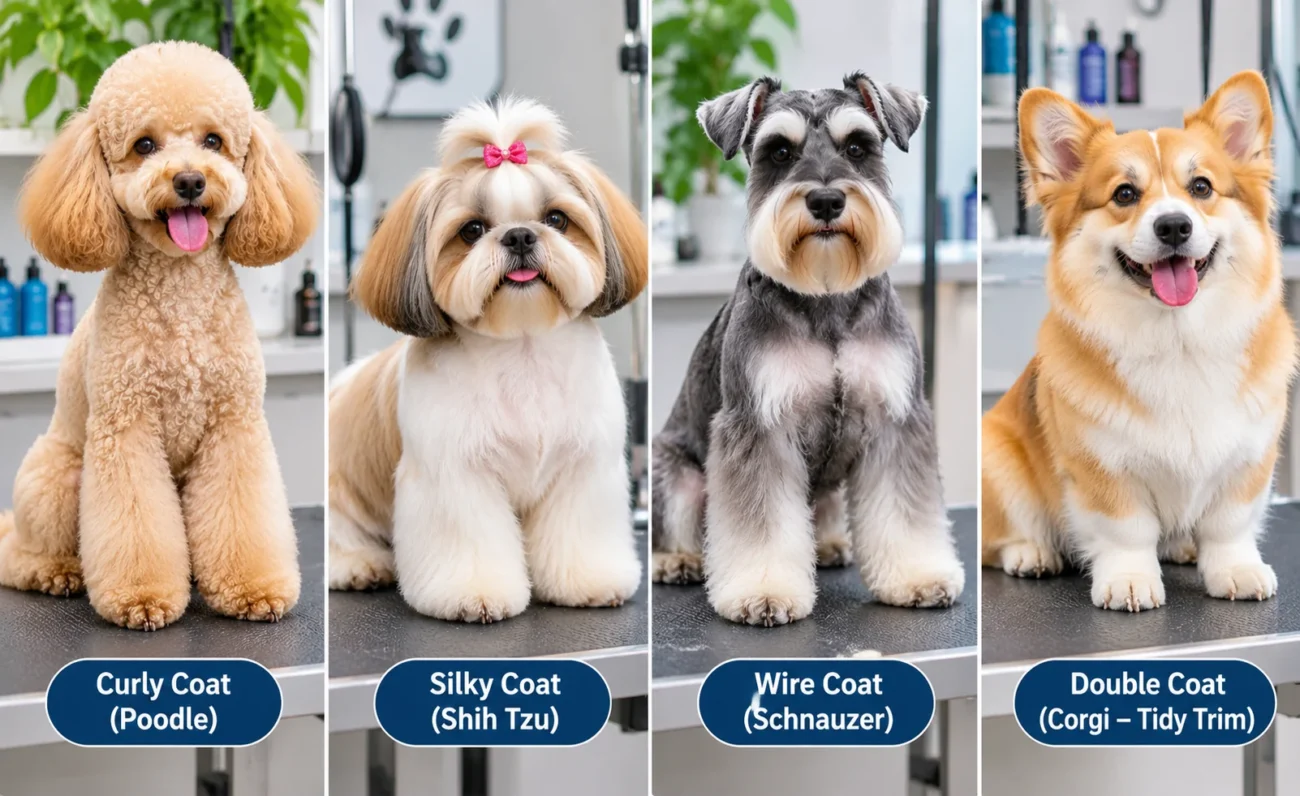
A pet trim generally gives a dog a clean, balanced appearance without requiring the elaborate styling associated with competition grooming.
The finished appearance depends on the dog’s natural coat texture and the amount of hair left on different parts of the body.
- Curly-coated dogs: A soft, rounded appearance with shaped legs and a manageable body coat.
- Silky-coated dogs: Neatly shortened hair that may retain longer ears, facial hair, or tail furnishings.
- Wire-coated dogs: A tidy outline that may preserve characteristic eyebrows and beards.
- Double-coated dogs: A natural silhouette with selective tidying rather than extensive body clipping.
Two dogs receiving a pet trim can look completely different because their hair texture, facial structure, coat density, and grooming requirements are different.
Pet Trim vs Show Trim: What Is the Difference?
A pet trim focuses on everyday practicality, while a show trim follows the appearance and grooming requirements associated with a particular breed’s competition standards.
The following comparison explains how their priorities differ.
| Feature | Pet Trim | Show Trim |
|---|---|---|
| Purpose | Everyday coat management | Breed presentation and competition |
| Coat length | Flexible | Depends on breed requirements |
| Maintenance | Generally more manageable | Can be extensive |
| Styling flexibility | High | Limited by competition requirements |
| Best suited for | Companion dogs | Dogs participating in conformation shows |
A pet trim can still preserve recognizable breed characteristics. For example, a pet Schnauzer may retain its beard and eyebrows while receiving a less demanding body haircut.
Similarly, a pet Poodle can have a rounded face or a simplified sporting appearance without maintaining a full competition coat.
The Standard Poodle Club’s trimming guidance illustrates how grooming techniques can differ according to a dog’s role and intended appearance.
Popular Pet Trim Styles for Dogs
Several familiar dog haircuts fall under the broader category of pet grooming styles. Each offers a different balance between appearance and maintenance.
Puppy Cut
A puppy cut usually leaves a relatively even, manageable length across much of the body. It creates a youthful appearance and can be suitable for adult dogs as well as puppies.
There is no universal puppy cut length, so discuss the desired finish with your groomer.
Teddy Bear Cut
A teddy bear cut emphasizes a soft, rounded face, often with a fluffy but manageable body coat.
This style works particularly well with coats that naturally hold rounded shapes, such as those of many Poodles, Bichons, and Doodle crosses.
Kennel Cut
A kennel cut is generally a shorter, functional haircut that reduces the amount of coat requiring maintenance.
It can be a useful option for active dogs with suitable coat types, provided enough hair remains for appropriate skin protection.
Lamb Cut
A lamb cut combines a shorter body coat with fuller legs. The transitions are blended to create a balanced silhouette.
It offers a styled appearance while keeping the body relatively easy to maintain, although the longer leg hair still requires regular combing.
Modified Breed Trim
A modified breed trim preserves recognizable breed features while simplifying areas that require more intensive grooming.
Examples include a shortened Schnauzer skirt, a manageable Cocker Spaniel outline, or a simplified West Highland White Terrier trim.
How Long Should a Pet Trim Be?
A practical pet trim on a dog with a suitable coat may leave anywhere from approximately one-quarter inch to more than one inch of hair. However, pet trims have no standardized length, and these measurements do not apply to every breed.
Use the following lengths as discussion points with your groomer rather than universal grooming instructions.
| Approximate Length | Appearance | Maintenance |
|---|---|---|
| 1/4 inch (6 mm) | Short and neat | Relatively low |
| 1/2 inch (13 mm) | Soft and tidy | Moderate |
| 3/4 inch (19 mm) | Fuller and fluffy | Regular brushing needed |
| 1 inch or longer | Natural or plush appearance | More frequent brushing |
The actual appearance can vary considerably. A curly coat cut to half an inch may appear fuller than a straight, fine coat trimmed to the same measurement.
Remember that the shortest haircut is not automatically the best haircut. Coat health and suitability should determine how much hair is removed.
Which Dog Breeds Are Suitable for a Pet Trim?
Many dogs can receive some form of pet trim, but substantial body haircuts are generally better suited to breeds with continuously growing or regularly maintained hair.
Common examples include:
- Poodles
- Bichon Frises
- Shih Tzus
- Maltese
- Yorkshire Terriers
- Havanese
- Lhasa Apsos
- Miniature Schnauzers
- Goldendoodles and other Poodle crosses
Breed alone does not determine the correct grooming approach. Mixed-breed dogs can inherit different coat characteristics, even within the same litter.
A dog with a soft, curly coat may benefit from a regular haircut, while another dog with a dense undercoat may need brushing and undercoat removal instead.
Warning
Avoid routinely shaving double-coated dogs such as Siberian Huskies, Golden Retrievers, and Pomeranians. Their natural coats provide important protective functions. Choose brushing, undercoat removal, and appropriate light tidying unless a veterinarian or qualified groomer identifies a justified reason for clipping.
The American Kennel Club’s double-coat grooming guidance explains why regular shaving can interfere with the natural function of these coats.
How to Choose the Right Pet Trim for Your Dog
Choose a pet trim by evaluating your dog’s coat type, daily activities, coat condition, and the amount of grooming you can realistically maintain at home.
1. Consider the Coat Type
Curly and continuously growing coats often need regular length management. Silky coats may benefit from shorter furnishings, while double coats usually require a different maintenance approach.
Wire-coated breeds may also need specialized grooming techniques if preserving their natural coat texture is important.
2. Match the Haircut to Your Dog’s Lifestyle
A dog that regularly walks through muddy trails may benefit from manageable leg and body hair, provided the coat type allows it.
A dog that spends less time outdoors and receives consistent brushing may comfortably maintain a fuller style.
3. Assess the Current Coat Condition
Existing mats can limit the available haircut options. Dense tangles close to the skin may make it impossible to preserve a longer style without causing unnecessary discomfort.
In these situations, a shorter professional haircut may be preferable to prolonged and painful brushing.
4. Be Realistic About Maintenance
If you cannot brush and comb your dog consistently, a shorter coat may be more practical for a breed that can safely receive one.
Longer hair around the ears, legs, beard, and tail often requires additional attention even when the body coat is short.
5. Consider Your Dog’s Grooming Tolerance
Senior dogs, nervous dogs, and dogs with mobility limitations may benefit from simpler grooming sessions that require less prolonged standing and handling.
Comfort should take priority over intricate styling or achieving a perfectly symmetrical finish.
What Should You Tell Your Groomer?
Ask for specific coat lengths and styling details rather than requesting a pet trim without further explanation.
Before the appointment, discuss:
- The approximate body coat length you want.
- Whether the legs should match the body or remain fuller.
- Whether the face should look rounded, natural, or closely trimmed.
- How much ear and tail hair should remain.
- Whether sanitary and paw tidying is needed.
- Any sensitive areas, skin problems, or previous grooming difficulties.
- What the groomer should do if significant matting is discovered.
Providing a reference photograph of a dog with a similar coat type can make the desired result easier to communicate.
Tip
For a dog with a suitable coat, you could request: “Please leave approximately half an inch on the body, keep the legs slightly fuller, round the face naturally, and preserve the tail length. Let me know if matting prevents this style.” This is more specific than asking for a pet trim alone.
How Often Does a Dog Need a Pet Trim?
For dogs that require regular haircuts, a four-to-eight-week interval is a reasonable starting point. The appropriate schedule depends on coat growth, desired length, matting tendency, and home maintenance.
A dog may need an earlier grooming appointment if:
- Hair begins interfering with comfortable movement or hygiene.
- The coat becomes increasingly difficult to comb.
- Hair around the eyes affects visibility.
- Frequent tangles develop behind the ears or under the legs.
- The original haircut becomes difficult to maintain.
Dogs with longer coats may require more frequent brushing even when they do not need another haircut.
Use coat condition rather than the calendar alone to decide when the next grooming appointment is necessary.
How to Maintain a Pet Trim Between Grooming Appointments
Regular brushing, careful combing, and appropriate bathing help maintain the haircut and reduce the likelihood of painful tangles.
Brush According to Coat Type
Use a brush suited to your dog’s hair texture and density. Long, curly, and mat-prone coats may require daily attention.
Work gently through small sections rather than brushing only the visible surface.
Check the Areas Most Likely to Tangle
Pay particular attention to the areas behind the ears, under the collar, around the armpits, inside the legs, and near the tail.
Friction and movement can contribute to tangles in these locations, even when the rest of the coat appears tidy.
Use a Comb to Check Your Brushing
For a suitable longer coat, a rounded-tooth grooming comb can help reveal tangles that a brush may have missed.
The comb should move through the coat without force. If it repeatedly catches near the skin, stop pulling and assess the area carefully.
Remove Tangles Before Bathing
Check the coat before washing your dog. Water can make existing tangles more difficult to remove.
According to VCA Animal Hospitals’ coat care guidance, regular brushing and appropriate grooming tools help maintain a healthy, manageable coat.
Can You Give Your Dog a Pet Trim at Home?
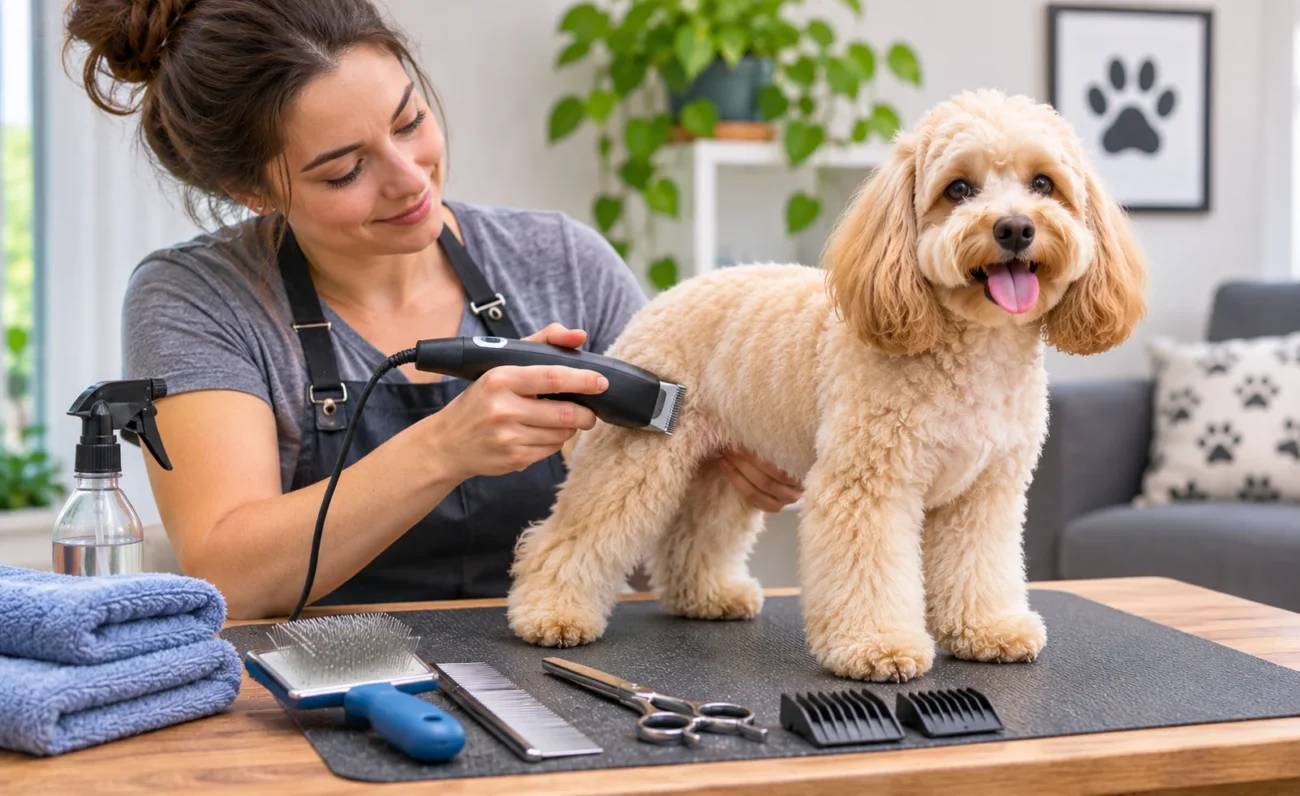
Basic coat maintenance may be suitable for home grooming, but a complete pet trim requires appropriate equipment, safe handling, knowledge of the coat type, and sufficient experience.
Beginners should concentrate on low-risk maintenance tasks such as brushing, gentle combing, and checking for developing tangles.
Professional grooming is preferable when:
- The coat contains tight mats close to the skin.
- The dog moves unpredictably during grooming.
- Hair needs to be trimmed near the eyes, ears, or genitals.
- The dog has a complicated coat type.
- You are unfamiliar with safe clipper or scissor handling.
Do not attempt to cut tight mats away with scissors. Skin can become trapped within a mat, making accidental cuts difficult to avoid.
Stop grooming if you discover sores, swelling, bleeding, or painful skin. A veterinary evaluation may be necessary before further coat work.
Common Pet Trim Mistakes to Avoid
- Choosing a haircut based only on appearance: Consider whether the dog’s coat can safely support the style.
- Assuming every pet trim is identical: Grooming terminology can vary between salons.
- Leaving decorative areas too long: Fuller ears, legs, and tails may develop tangles if they are not maintained.
- Waiting until the coat is severely matted: Early grooming can preserve more haircut options.
- Using unsuitable human grooming equipment: Use equipment intended for the dog’s coat and grooming needs.
- Ignoring signs of stress: Stop or simplify the session if the dog becomes uncomfortable or difficult to handle safely.
A successful pet trim should remain comfortable and manageable after the dog leaves the grooming salon, not simply look attractive on the day of the appointment.
Frequently Asked Questions
Is a pet trim the same as a full groom?
Not necessarily. A pet trim describes the haircut or styling, while a full groom may also include bathing, drying, nail trimming, ear cleaning, and other services. The exact package varies by salon.
Is a pet trim suitable for puppies?
Yes. A gentle, age-appropriate pet trim can help puppies become familiar with grooming. Early sessions should prioritize positive handling and comfort rather than complicated styling.
Does a pet trim stop a dog from shedding?
No. Shortening the coat may change how noticeable loose hair is, but it does not stop the natural shedding process. Brushing and appropriate coat care remain necessary.
Can a pet trim retain a dog’s long ears and tail?
Yes. You can request longer ear and tail hair while keeping the body shorter, provided those areas are healthy and free from significant matting.
Does a pet trim cost less than a show trim?
It can, particularly when the style requires less grooming time. However, prices depend on dog size, coat condition, styling complexity, and the groomer’s service rates.
Can you change your dog’s pet trim at the next appointment?
Yes. Pet trims are flexible, and the style can usually be adjusted as the coat grows. Moving from a shorter haircut to a fuller style may require additional growth and consistent brushing.
Final Thoughts
A pet trim gives owners the flexibility to choose a grooming style that matches their dog’s coat, comfort, and lifestyle. Whether you prefer a short kennel cut, a fluffy teddy bear appearance, or a modified breed trim, the best choice is one that you can maintain comfortably between appointments.
Discuss the desired length and appearance with your groomer, prioritize coat health, and adjust the grooming routine as your dog’s needs change.


