
Quick Answer
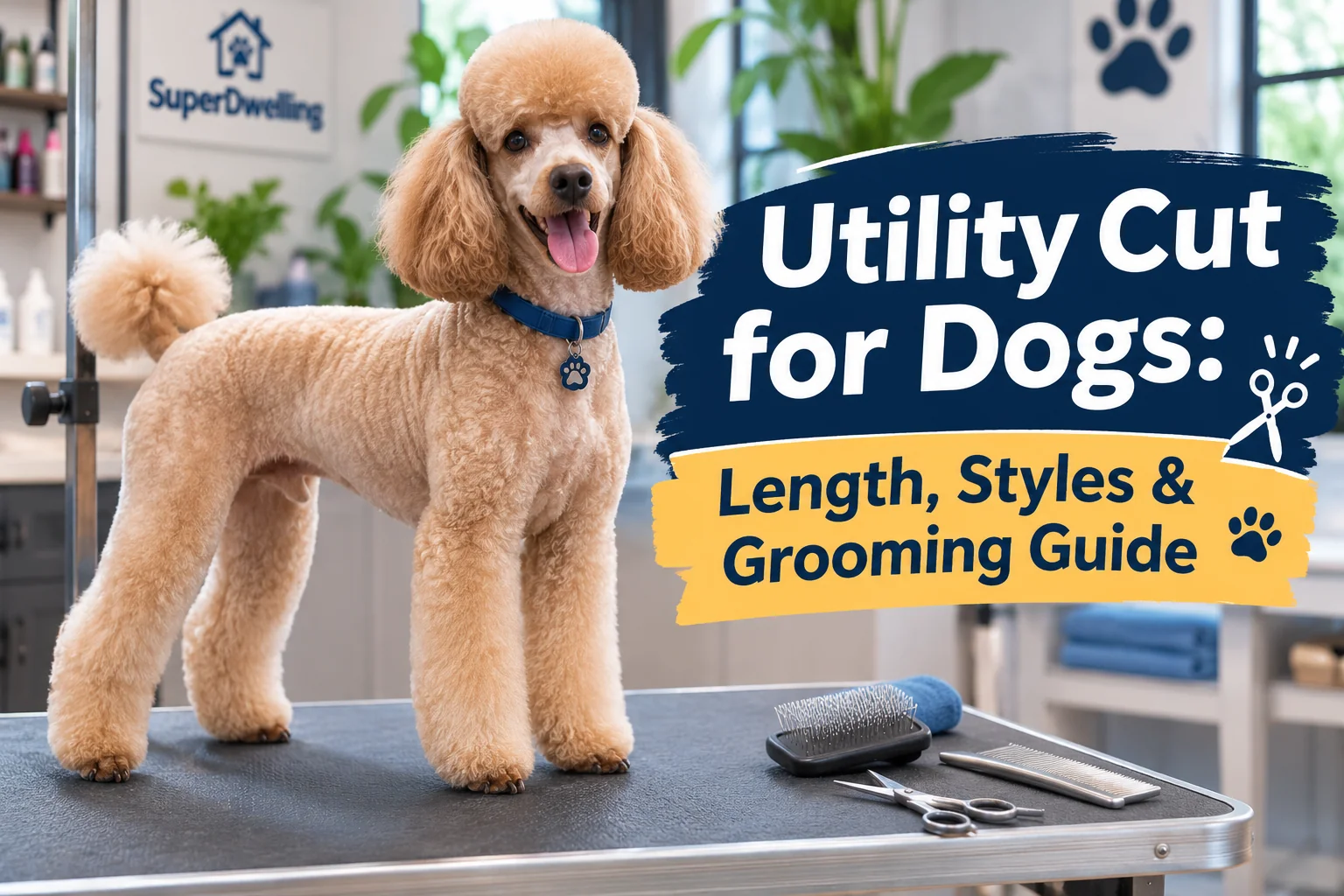
A utility cut for dogs is a practical, low-maintenance haircut that keeps the body coat short and manageable. Depending on the style, the groomer may leave extra hair on the head, ears, tail, or lower legs. It is particularly suitable for Poodles and other dogs with continuously growing coats, but it is not appropriate for every coat type.
A utility cut prioritizes everyday comfort and easier coat maintenance over elaborate styling. It can be an excellent choice for dogs that enjoy outdoor activities, frequently get dirty, or develop tangles in longer hair.
However, the name can mean different things depending on your groomer. Understanding the available variations helps you request a haircut that suits your dog’s coat, lifestyle, and grooming needs.
What Is a Utility Cut for Dogs?
A utility cut is a functional dog grooming style designed to reduce the amount of hair that requires regular brushing, washing, and detangling.
It is closely associated with Poodle grooming, where it may also be called a sporting clip or kennel clip. The exact appearance varies between grooming traditions.
A typical modern utility haircut includes:
- A short, manageable body coat.
- Neatly trimmed shoulders, chest, and sides.
- Short or moderately trimmed leg hair.
- A tidy face that allows clear vision.
- Customized ear and tail lengths.
- Carefully trimmed paw and hygiene areas.
According to the Standard Poodle Club’s grooming guidance, the traditional utility or sporting trim is particularly useful for active Poodles and can include a shaped topknot and hair around the lower legs.
Modern pet versions often simplify these features to make everyday maintenance easier.
What Does a Utility Cut Look Like on a Dog?
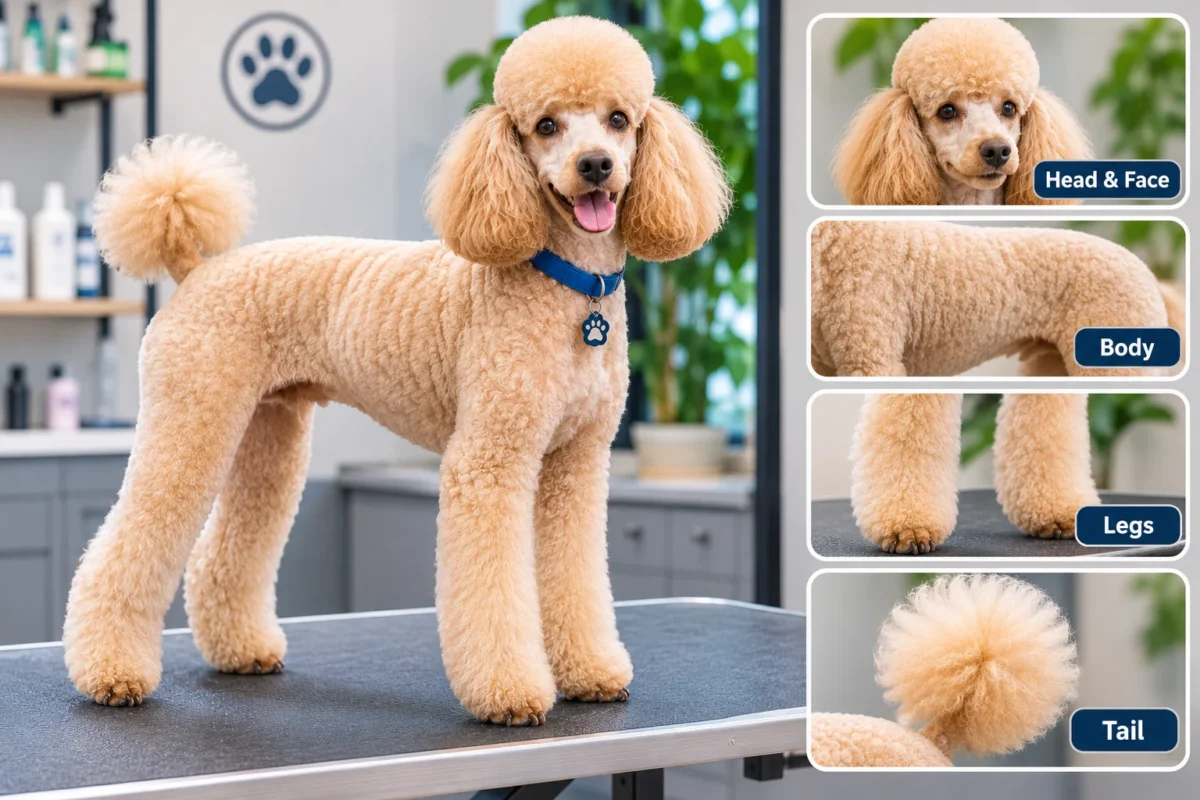
A utility cut usually gives a dog a neat, athletic appearance, with less bulk around the body than a teddy bear or lamb cut.
The finished appearance depends on the dog’s coat texture and which areas retain additional length.
| Body Area | Typical Appearance |
|---|---|
| Body | Short and evenly trimmed |
| Legs | Short, natural, or finished with small bracelets |
| Face | Clean Poodle face or softly trimmed muzzle |
| Head | Short, rounded, or shaped topknot |
| Ears | Natural or shortened ear furnishings |
| Tail | Natural, shortened, or pom-pom finish |
The important feature is manageable coat length rather than a specific decorative pattern. You can retain some personality without keeping unnecessary hair in areas that become tangled easily.
How Long Should a Utility Cut Be?
There is no universal utility cut length. For suitable continuously growing coats, approximately 1/4 to 1/2 inch of remaining body hair can provide a useful starting point for discussing a practical pet trim with your groomer.
Longer versions may be preferable when you want additional coverage or a softer appearance.
| Remaining Length | Appearance | Consider When |
|---|---|---|
| 1/4 inch (6 mm) | Short and neat | Reducing coat maintenance is a priority |
| 3/8 inch (10 mm) | Compact and soft | Balancing appearance and convenience |
| 1/2 inch (13 mm) | Fuller coverage | Preserving a slightly fluffy finish |
| 3/4 inch (19 mm) | Longer practical trim | Regular brushing is manageable |
These are illustrative length options, not mandatory grooming standards or guarantees of suitability.
Coat density, curl pattern, clipping direction, skin condition, and matting can all affect the final result. The same nominal length may look noticeably different on two dogs.
Grooming Tip
Tell your groomer how much hair you want to remain rather than requesting a specific clipper blade number. Remaining coat length is easier to visualize and reduces misunderstandings.
Popular Utility Cut Styles
A utility cut can be customized according to how much grooming work you want to manage between appointments.
Traditional Sporting Utility Cut
The traditional Poodle sporting trim combines a short body with a shaped topknot, closely trimmed face and feet, and optional lower-leg bracelets.
It preserves recognizable Poodle styling while reducing the amount of long hair on the main body.
All-Over Utility Cut
This variation keeps the body and legs at approximately the same manageable length. The head, ears, and tail may be slightly longer.
It makes sense for owners who prefer a simple appearance with fewer areas requiring detailed brushing.
Soft-Face Utility Cut
A soft-face utility trim retains some muzzle hair and a rounded head while keeping the body relatively short.
It offers a practical alternative for owners who like the appearance of a teddy bear face but do not want an equally fluffy body.
Longer Utility Cut
A longer utility trim preserves more body coverage while removing unnecessary bulk. It may suit dogs whose owners can maintain a consistent brushing routine.
The tradeoff is that longer hair generally requires more attention to prevent tangles.
Which Dog Breeds Are Best Suited to a Utility Cut?
Utility cuts are particularly well suited to Poodles and other dogs with coat types that benefit from regular clipping.
Potential candidates include:
- Standard Poodles: Especially those with active outdoor lifestyles.
- Miniature Poodles: Suitable for practical styling without elaborate coat patterns.
- Toy Poodles: Can benefit from shorter, easily managed body hair.
- Goldendoodles: Depending on their individual coat characteristics.
- Labradoodles: Particularly those with curly or fleece-like coats.
- Bichon Frises: A modified utility trim can simplify maintenance.
- Shih Tzus: A practical pet trim may suit owners who cannot maintain a long coat.
- Maltipoos: Depending on coat texture and density.
Mixed-breed dogs can inherit different coat characteristics from their parents. A Poodle mix does not automatically have a coat that should be clipped short.
Ask your groomer to evaluate the actual coat rather than choosing a haircut based entirely on breed name.
Utility Cut vs. Kennel Cut, Puppy Cut, and Teddy Bear Cut
The main difference between these grooming styles is the amount and distribution of remaining hair. However, salons frequently use overlapping terminology, particularly for utility and kennel cuts.
| Haircut | Typical Style | Maintenance |
|---|---|---|
| Utility Cut | Short body with customizable features | Relatively low |
| Kennel Cut | Short, practical body trim | Relatively low |
| Puppy Cut | Generally even, youthful pet trim | Low to moderate |
| Teddy Bear Cut | Rounded face and fluffy finish | Moderate to high |
| Lamb Cut | Shorter body with fuller legs | Moderate |
Choose a utility cut when practicality matters more than a fluffy appearance. A lamb or teddy bear cut may be more appealing if you enjoy maintaining longer coat furnishings.
A utility cut and kennel cut may produce virtually identical results at some grooming salons.
What Are the Benefits of a Utility Cut?
The biggest benefit is reduced daily coat maintenance. Shortening suitable hair can make routine care more manageable without requiring an elaborate haircut.
- Easier brushing: Shorter hair generally offers less opportunity for tangles to develop.
- Easier cleaning: Dirt and outdoor debris may be simpler to remove.
- Faster drying: A shorter coat may require less drying time after bathing.
- Better skin visibility: Owners can more easily inspect accessible areas for irritation, ticks, or unusual changes.
- Practical styling: The haircut can be adapted for different activities and maintenance routines.
These benefits are particularly useful for dogs that regularly hike, play outdoors, or collect debris in longer hair.
However, shorter hair does not eliminate grooming requirements. The remaining coat, ears, paws, and hygiene areas still need regular attention.
When Should You Avoid a Utility Cut?
A traditional short utility cut is generally unsuitable for dogs with protective double coats that are not normally clipped short.
Examples include:
- Siberian Huskies.
- Alaskan Malamutes.
- Samoyeds.
- Golden Retrievers.
- Pomeranians.
- Australian Shepherds.
These dogs have coat structures that serve different functions from regularly clipped Poodle-type coats.
The American Kennel Club’s double-coat grooming guidance advises against routine shaving because it can interfere with the coat’s natural protective functions.
Regular brushing, undercoat maintenance, and appropriate light trimming are generally more suitable alternatives.
Coat Safety Warning
Never assume that removing more hair will automatically keep your dog cooler. Avoid routine close shaving of double-coated dogs. Severe matting or medical conditions may require a different approach under professional guidance.
How to Ask Your Groomer for a Utility Cut
Describe your preferred coat length and individual styling choices instead of relying only on the term utility cut.
Before the appointment, decide on the following:
- Body length: Specify approximately how much hair you want to remain.
- Leg styling: Choose evenly short legs, fuller legs, or traditional bracelets.
- Face shape: Request a clean Poodle face or a softly rounded muzzle.
- Ear length: Decide whether to preserve or shorten the ear furnishings.
- Tail styling: Choose a natural tail, short finish, or pom-pom.
- Hygiene areas: Ask for appropriate trimming around the paws and sanitary areas.
For example, you could request a short, even body and leg trim with approximately half an inch of remaining hair, a softly rounded face, tidy ears, and a natural tail.
Bring a reference photograph showing a dog with a similar coat texture. Ask whether your preferred length is achievable given your dog’s current coat condition.
If significant matting is present, the groomer may need to modify the planned haircut to remove the mats safely.
How Often Does a Utility Cut Need Grooming?
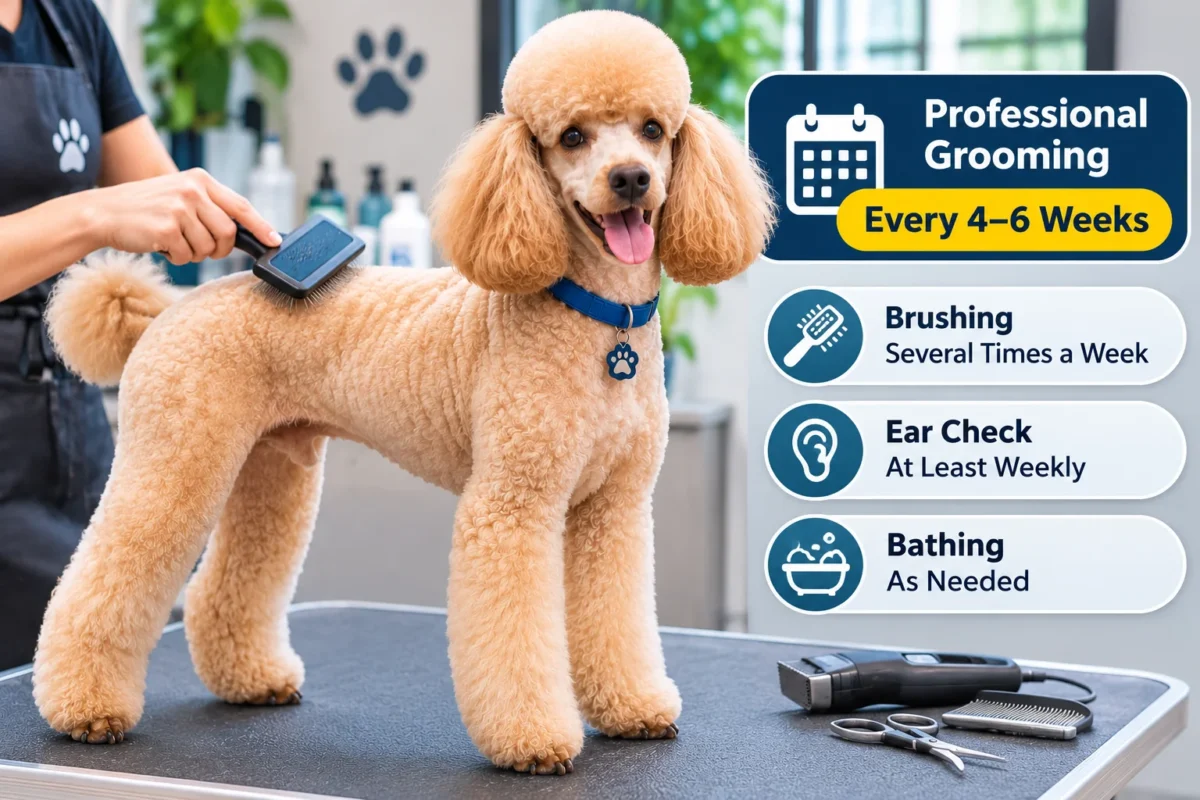
A professional grooming appointment approximately every four to six weeks is a reasonable starting point for many pet Poodles with a utility cut.
The ideal schedule depends on hair growth, coat condition, activity, and the amount of hair left on the head and legs.
Between appointments, follow a simple maintenance routine:
| Grooming Task | Suggested Routine |
|---|---|
| Check paws and coat | After outdoor activities |
| Brush and comb | Several times weekly or more often as needed |
| Inspect ears and skin | At least weekly |
| Bathing | As needed for coat and skin condition |
| Full grooming | Approximately every 4–6 weeks initially |
Dogs with longer ear furnishings, topknots, or leg bracelets may need daily attention in those areas even when the body remains short.
Follow an appropriate dog bathing routine to keep the coat clean without unnecessary skin irritation.
Check regularly behind the ears, under the collar, around the armpits, and beneath the harness. These friction-prone areas can develop mats before the rest of the coat looks untidy.
Can You Give Your Dog a Utility Cut at Home?
Experienced owners may maintain a simple utility trim at home, but beginners should learn safe clipping techniques before attempting a full-body haircut.
Basic grooming supplies include:
- Dog grooming clippers.
- Suitable guide comb attachments.
- A coat-appropriate grooming brush.
- A stainless steel grooming comb.
- Dog shampoo.
- A non-slip grooming surface.
- Clean towels.
Home grooming is safer when the dog’s coat is clean, completely dry, free of significant mats, and the dog is comfortable being handled.
Avoid clipping close to loose skin, nipples, genitals, eyes, and ear edges without appropriate training. Clipper blades can also become hot during use.
The RSPCA’s dog grooming guidance recommends professional assistance when mats are difficult to remove safely or sit close to the skin.
For a first utility haircut, a professional groomer can establish the style. Owners can then focus on brushing, bathing, and routine coat checks between appointments.
Common Utility Cut Grooming Mistakes
A practical haircut should make coat care easier without sacrificing skin protection or comfort. Avoid these common mistakes:
- Clipping too short: Excessively short hair can reduce skin coverage and increase irritation risks.
- Ignoring coat type: Not every breed benefits from an all-over clip.
- Skipping brushing: Short coats can still develop knots and mats.
- Leaving difficult furnishings: Long ears or leg bracelets may defeat the purpose of a low-maintenance haircut.
- Using scissors near tight mats: Skin can be pulled into a mat and accidentally cut.
- Waiting too long between appointments: Coat regrowth can gradually increase grooming requirements.
The best utility haircut is one that you can maintain consistently while keeping your dog comfortable.
Frequently Asked Questions
Is a utility cut the same as a sporting clip?
In traditional Poodle grooming, utility cut and sporting clip are often used interchangeably. Modern salons may also use utility cut to describe a simplified, short pet trim without traditional leg bracelets.
Can a puppy have a utility cut?
Yes, a suitable puppy can receive a modified utility trim. The groomer should consider the puppy’s developing coat, comfort, age, and ability to tolerate grooming rather than immediately choosing a very short haircut.
Is a utility cut suitable for winter?
Yes, a longer utility cut may be suitable during winter for dogs with appropriate coat types. Small dogs and dogs with short remaining hair may require additional protection in cold conditions.
Does a utility cut completely prevent matting?
No. Shorter hair can reduce tangling, but mats may still develop around the ears, legs, collar, harness, and tail. Regular brushing and combing remain necessary.
How much does a utility cut cost?
The cost depends on your location, dog size, coat condition, grooming salon, and requested styling. Severe matting or additional grooming work may increase the price. Ask for an estimate before booking.
Can you keep a teddy bear face with a utility cut?
Yes. A short utility body combined with a rounded teddy bear face is a practical customized grooming style. The longer facial hair will require more frequent brushing and maintenance than the body.
Final Thoughts
A utility cut for dogs offers a practical balance between appearance, comfort, and manageable grooming. It works particularly well for Poodles and other suitable continuously growing coats when the remaining length is selected carefully.
Choose a style that matches your dog’s coat type, activity level, and your ability to maintain it. A clear conversation with your groomer about body length, facial styling, and coat condition can help you achieve a comfortable, functional haircut.


