
Quick Answer
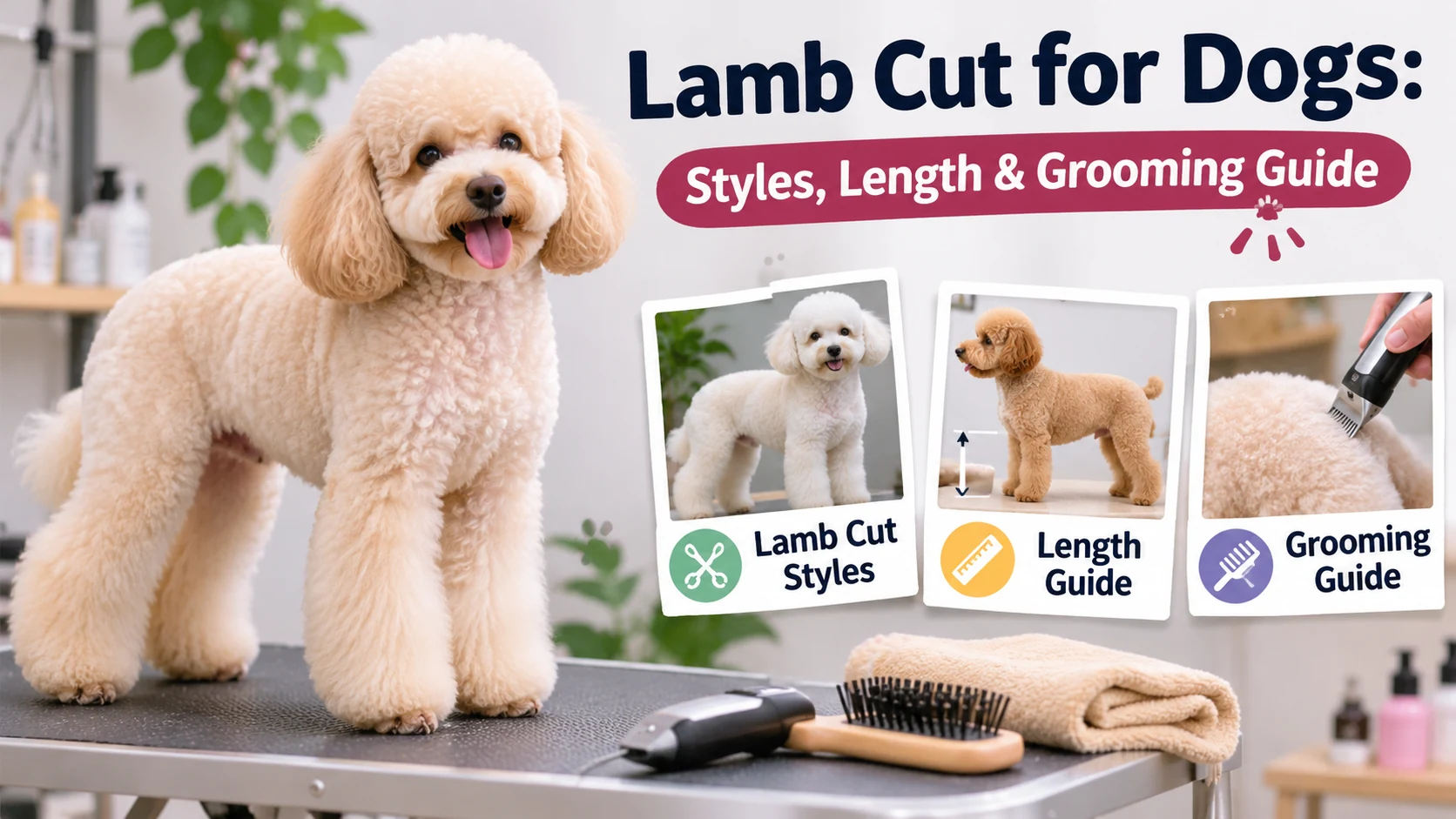
A lamb cut is a dog grooming style featuring a shorter body coat and longer, fluffy legs that blend smoothly into the shoulders and hips. It is particularly suitable for Poodles, Doodles, and other dogs with curly or continuously growing hair. The exact coat length is customizable, but the longer leg hair requires regular brushing to prevent matting.
The lamb cut gives your dog a neat body and soft, rounded legs without removing all its natural fluff. It offers a middle ground between a closely clipped kennel cut and a fuller teddy bear haircut.
However, choosing the right body length, leg proportions, and maintenance routine makes a significant difference in how the haircut looks and feels between grooming appointments.
What Is a Lamb Cut for Dogs?
A lamb cut, also called a lamb trim or lamb clip, is a grooming style in which the dog’s torso is trimmed shorter while the legs retain noticeably more hair. The longer leg hair creates a soft, woolly appearance resembling a young lamb.
The haircut is commonly associated with Poodles but can be adapted to other breeds with suitable coat textures.
A typical lamb cut includes:
- Body: A short, even coat across the back, chest, and sides.
- Legs: Longer, rounded hair shaped to complement the dog’s natural proportions.
- Shoulders and hips: Smooth transitions between shorter and longer hair.
- Paws: Neatly shaped feet with excess hair removed where appropriate.
- Face: A clean-shaven, rounded, or natural-looking finish.
- Tail: A balanced trim, fluffy plume, or traditional Poodle-style finish.
The distinguishing feature is the difference between body and leg lengths. The face, ears, and tail can be customized without changing the basic lamb-cut appearance.
What Does a Lamb Cut Look Like on a Dog?
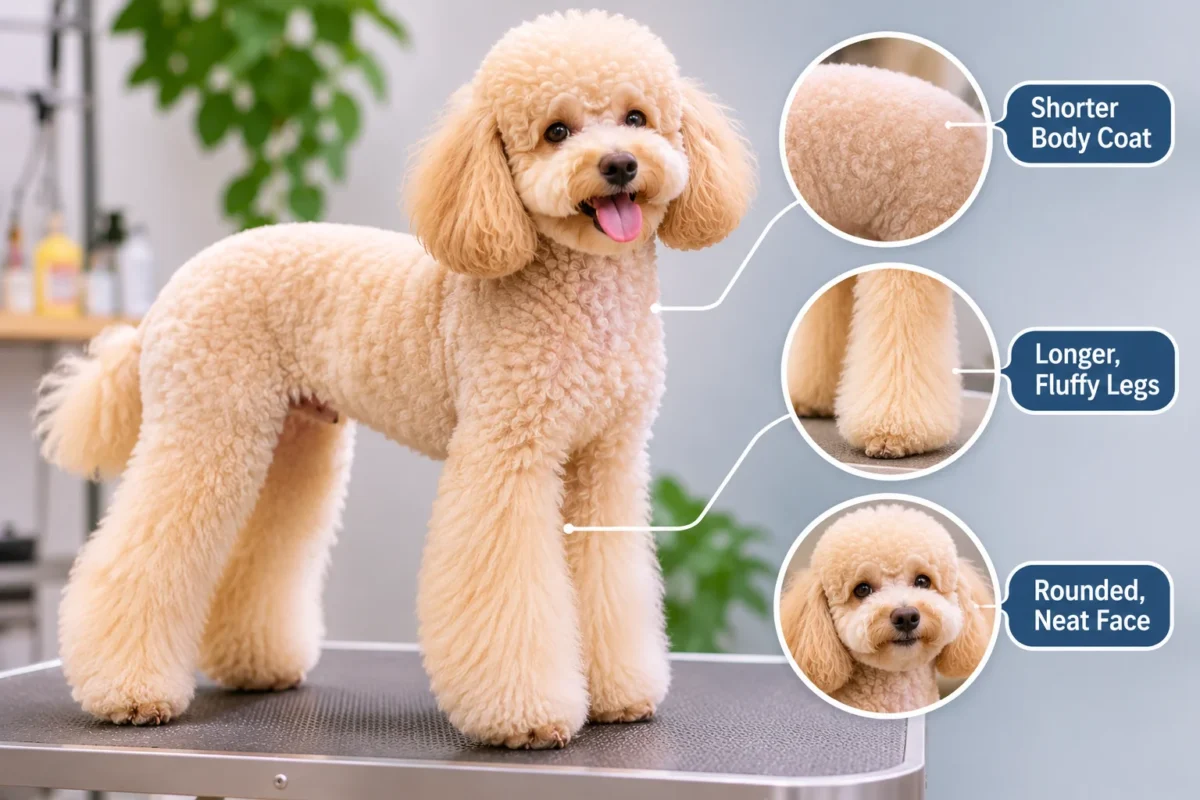
A properly blended lamb cut creates a compact-looking torso with fuller legs. Rather than having an abrupt line where short body hair meets long leg hair, the coat gradually transitions across the shoulders and upper thighs.
The front legs generally have a rounded, column-like appearance, while the hind legs are shaped to follow the dog’s natural structure.
The final appearance depends on three main factors:
- How much longer the legs are than the body.
- The density, curl pattern, and texture of the coat.
- The amount of shaping performed around the shoulders, hips, and feet.
A tightly curled Poodle may develop a more sculpted appearance, while a wavy Goldendoodle can have a softer, less defined finish even with similar coat lengths.
How Long Should a Lamb Cut Be?
There is no universally required length for a lamb cut. The groomer selects the body and leg lengths according to the dog’s coat condition, proportions, lifestyle, and the owner’s preferred appearance.
The following measurements are illustrative starting points rather than official grooming standards.
| Lamb Cut Style | Body Length | Leg Length |
|---|---|---|
| Short lamb cut | 1/4 inch | 1/2–3/4 inch |
| Medium lamb cut | 1/2 inch | 3/4–1 inch |
| Long lamb cut | 3/4–1 inch | 1–2 inches |
| Fluffy lamb cut | Customized | Fuller, hand-shaped legs |
Shorter versions generally require less leg maintenance, while longer versions provide a more dramatic contrast but increase the amount of brushing needed.
Grooming Tip
For your dog’s first lamb cut, show the groomer a reference photo and discuss the finished body and leg lengths separately. This is more reliable than requesting the haircut by name alone.
Which Dog Breeds Are Suitable for a Lamb Cut?
The lamb cut works particularly well on dogs with dense, curly, wavy, or continuously growing coats that can hold a rounded shape after trimming.
Poodles
Poodles are especially suitable for lamb trims. Their dense curly hair can be shaped into rounded legs and blended neatly into a shorter body coat.
Standard, Miniature, and Toy Poodles can all wear variations of the cut.
Goldendoodles and Labradoodles
A lamb cut gives Doodles a more defined body shape while preserving fluffy legs. It can be useful for owners who enjoy a soft appearance but find a long body coat difficult to maintain.
Coat textures vary considerably among Doodles, so the groomer may need to adjust the leg length to suit the individual dog.
Bichon Frises and Maltipoos
These dogs can wear modified lamb cuts that retain a rounded head and soft legs. Dogs with sufficient coat density generally achieve a fuller finish.
Other Suitable Dogs
Depending on their individual coat type, modified lamb trims may also suit:
- Cavapoos
- Cockapoos
- Schnoodles
- Bernedoodles
- Havanese
- Other Poodle mixes
Dogs with very short coats cannot achieve the same fluffy contrast. For breeds with dense double coats, a closely clipped body should not be treated as a routine styling choice without breed-specific grooming advice.
Lamb Cut vs. Puppy Cut vs. Teddy Bear Cut
The main difference between these haircuts is where the groomer leaves additional length. The lamb cut emphasizes the legs, the puppy cut generally maintains a more uniform coat, and the teddy bear cut emphasizes a rounded facial appearance.
| Feature | Lamb Cut | Puppy Cut | Teddy Bear Cut |
|---|---|---|---|
| Body | Shorter | Mostly uniform | Short to medium |
| Legs | Noticeably fuller | Similar to body | Variable |
| Face | Customizable | Natural or rounded | Rounded and fluffy |
| Appearance | Sculpted and balanced | Simple and youthful | Soft and plush |
| Maintenance focus | Legs and transitions | Entire coat | Face and longer areas |
These styles are not mutually exclusive. You can request a lamb cut with a teddy bear face, combining shorter body hair, fuller legs, and a rounded muzzle.
A short puppy cut may be more practical if you struggle to keep your dog’s legs free of tangles.
What Are the Pros and Cons of a Lamb Cut?
A lamb cut reduces the amount of long hair across the torso while preserving fullness around the legs. Its primary trade-off is that the longer areas still need considerable attention.
Advantages
- Creates a neat, balanced appearance.
- Preserves a fluffy look without requiring a long coat everywhere.
- Allows customizable body and leg lengths.
- Can make brushing the shorter torso easier.
- Works with several face, ear, and tail styles.
- Can visually balance dogs with naturally slender legs.
Disadvantages
- Longer leg hair can develop tangles and mats.
- Fluffy legs collect moisture, mud, and outdoor debris.
- Maintaining an even shape requires regular trimming.
- Blending the shoulders and hips can be difficult for inexperienced groomers.
- Detailed hand-scissoring may increase grooming time and cost.
The cut is most practical when you want a neat body but are willing to maintain longer leg hair between appointments.
How to Give a Dog a Lamb Cut
Creating a lamb cut involves preparing the coat, clipping the body, retaining additional length on the legs, and blending the different sections into a continuous shape.
Beginners should consider having a professional establish the initial haircut, particularly if their dog has a dense coat or struggles to remain still during grooming.
Tools You Need
- Dog grooming clippers with compatible guide combs.
- A slicker brush suitable for the coat.
- A stainless steel grooming comb.
- Dog-safe shampoo.
- A suitable pet dryer.
- Grooming scissors and blending shears for experienced users.
- A stable, nonslip grooming surface.
Step 1: Inspect and Brush the Coat
Examine the dog’s skin and coat before trimming. Work through manageable tangles and check the armpits, feet, backs of the legs, and areas around the collar.
If the coat contains tight mats close to the skin, seek professional help rather than forcing a brush or comb through them.
Step 2: Bathe and Dry Your Dog
Once the coat is free of problematic tangles, wash your dog with a suitable shampoo and rinse thoroughly. Dry the coat completely before clipping.
Brush manageable curly or wavy hair during drying to help prepare it for an even finish.
Step 3: Clip the Body
Select a guide comb appropriate for the desired body length. Start with a conservative length and trim the back and sides using controlled strokes in the direction of hair growth.
Leave enough coat around the upper legs to create gradual transitions. Check the clipper blade temperature frequently to avoid overheating against the skin.
Step 4: Preserve and Shape the Leg Hair
Use a longer guide comb or professional hand-scissoring techniques to retain additional fullness on the legs.
The goal is to achieve balanced leg proportions rather than simply leaving all leg hair untrimmed. Recomb the coat as needed to reveal uneven areas.
Step 5: Blend the Shoulders and Hips
Gradually reduce excess hair where the legs meet the shorter body coat. This prevents an abrupt step between the two lengths.
Check the dog’s appearance while it stands naturally. The transitions should complement its shoulders and hindquarters without creating bulky patches.
Step 6: Finish the Head, Paws, and Tail
Choose a facial and tail style that complements the haircut. Experienced groomers can shape the feet to create a neat outline and address excess hair where necessary.
Leave detailed trimming near the eyes, skin folds, paw pads, and sanitary areas to a professional if you are unfamiliar with these techniques.
Step 7: Check the Final Shape
Comb through the finished coat and examine it from the front, sides, and rear. Look for uneven leg lengths, abrupt transitions, and remaining tangles.
Stop if the dog becomes distressed or difficult to handle safely. Minor styling imperfections can be corrected later without risking an injury.
Safety Warning
Never use scissors to cut tight mats close to your dog’s skin. Skin can become trapped inside a mat, making accidental cuts more likely. Severe matting should be handled by an experienced groomer, with veterinary attention if the skin is damaged or irritated.
How Often Does a Lamb Cut Need Maintenance?
For many Poodles wearing a lamb cut, a professional grooming appointment every four to six weeks is a reasonable starting point. Dogs with slower coat growth or shorter styles may tolerate longer intervals if their coats remain manageable.
The American Kennel Club’s Poodle breed guidance describes a four-to-six-week professional grooming schedule as a common routine for pet Poodles.
Between appointments, the longer leg hair will generally need more attention than the shorter torso.
| Maintenance Task | Suggested Routine |
|---|---|
| Brush and comb longer legs | Daily for dense or curly coats |
| Check armpits and upper legs | Daily |
| Inspect and clean paws | After muddy or wet walks |
| Bathing | According to coat condition and skin needs |
| Professional haircut | Approximately every 4–6 weeks to start |
Adjust the schedule if the leg hair starts developing knots before the next appointment. Shortening the legs slightly may be more practical than trying to maintain a length that repeatedly becomes tangled.
How to Prevent Matting in a Lamb Cut
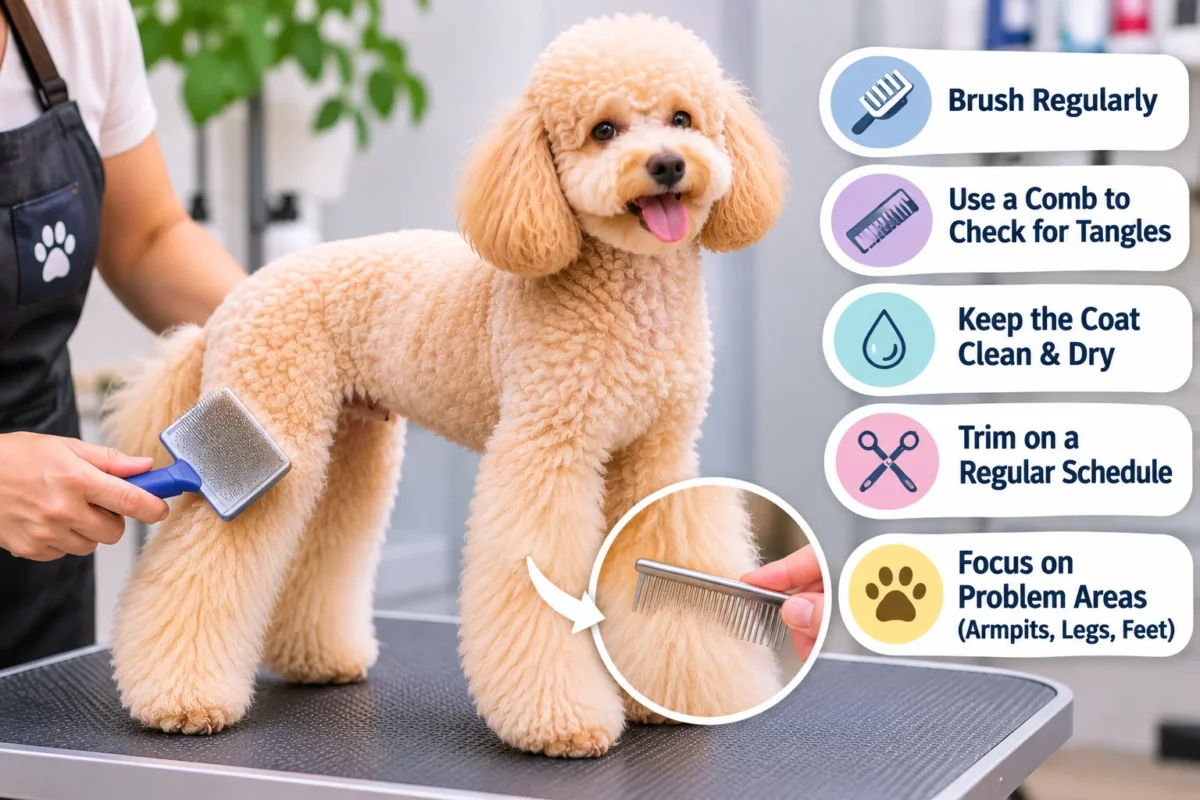
Preventing matting requires brushing through the longer hair rather than simply smoothing its surface. Pay particular attention to friction points where the legs meet the body.
Follow this routine:
- Separate the longer coat into manageable sections.
- Gently brush each section without repeatedly scraping the skin.
- Check the brushed area with a suitable metal grooming comb.
- Pay extra attention to the armpits, inner legs, ankles, and behind the ears.
- Remove outdoor debris and dry wet leg hair after walks.
According to VCA Animal Hospitals’ coat care guidance, long and curly coats benefit from daily brushing, particularly in areas prone to tangling.
If a comb repeatedly catches near the roots despite the surface appearing smooth, the coat may contain hidden tangles. Address these promptly rather than allowing them to tighten.
How to Ask Your Groomer for a Lamb Cut
Describe the body length, leg length, blending, and facial style separately. Grooming terms can vary between salons, so requesting a lamb cut by name may not produce exactly the appearance you expect.
For example, you could say:
I’d like a lamb cut with about half an inch of hair on the body, fuller legs around one inch if the coat allows, smoothly blended shoulders and hips, rounded feet, and a teddy bear face.
Bring a reference photograph showing the entire dog rather than just its face. A side-view image helps the groomer understand the difference between the body and leg lengths.
Discuss your dog’s current coat condition and how much brushing you realistically perform at home. A responsible groomer may suggest shorter legs if the preferred length is likely to become matted.
Common Lamb Cut Grooming Mistakes
- Trimming the legs too short: Removes the defining contrast between the torso and legs.
- Leaving abrupt transitions: Creates uneven lines around the shoulders and hips.
- Ignoring coat density: A thin or loosely waved coat may not produce the same rounded shape as dense Poodle hair.
- Keeping excessive leg length: Increases the grooming workload unnecessarily.
- Brushing only the visible surface: Allows tangles to remain closer to the skin.
- Copying another dog’s haircut exactly: Overlooks differences in coat texture, body shape, and maintenance needs.
The most successful lamb trim is not necessarily the fluffiest one. It is the version that creates balanced proportions while remaining comfortable and manageable for the individual dog.
Relevant Grooming Tools
Dog Slicker Brush and Stainless Steel Grooming Comb
A coat-appropriate slicker brush helps maintain fluffy legs, while a metal grooming comb helps identify tangles that remain beneath the brushed surface. Choose tools suited to your dog’s size and coat density.
As an Amazon Associate, we earn from qualifying purchases.
Frequently Asked Questions
Is a lamb cut suitable for puppies?
Yes, puppies with suitable coat types can have a gentle, modified lamb cut. Early grooming sessions should prioritize comfort, cooperative handling, and gradual introduction to grooming equipment rather than achieving a complex finished style.
Is a lamb cut good for summer?
A shorter lamb cut can make coat maintenance easier during summer for suitable breeds. However, a haircut does not replace shade, drinking water, and protection from excessive heat, and dogs should not be shaved unnecessarily close to the skin.
Does a lamb cut require a shaved face?
No. A lamb cut can be combined with a traditional clean-shaven Poodle face, a rounded teddy bear face, or a softer natural muzzle. The difference between body and leg lengths defines the haircut.
How much does a lamb cut cost?
The price depends on your location, groomer, dog’s size, coat condition, and the amount of shaping required. Request a personalized grooming quote, particularly if the style involves extensive hand-scissoring.
Can a lamb cut be done on a matted dog?
Only if enough healthy, tangle-free coat can be preserved to create the style safely. Severe matting may require a shorter clip, followed by gradual regrowth before fuller lamb-style legs can be achieved.
Does a lamb cut reduce dog shedding?
A lamb cut does not change the dog’s natural shedding cycle. Shorter body hair may make loose hair and coat maintenance easier to manage, but shedding still depends on breed, genetics, health, and other individual factors.
Final Thoughts
A lamb cut is an attractive grooming option for dogs with suitable curly or continuously growing coats. Its shorter body and fuller legs provide a distinctive appearance that can be customized to suit different lifestyles.
Choose manageable leg lengths, communicate your preferences clearly to your groomer, and maintain a consistent brushing routine. A comfortable, tangle-free coat should always take priority over preserving a particular haircut.


