
Quick Answer
A kennel cut is a short, practical dog haircut that typically leaves around 1/8 to 1/2 inch of hair across the body. It reduces brushing requirements, helps prevent tangles, and makes cleaning easier. It works particularly well for suitable long-haired and curly-coated dogs but is generally unsuitable for healthy double-coated breeds.
A kennel cut prioritizes comfort, cleanliness, and easy maintenance over elaborate styling. It can be a practical choice for active dogs, pets that develop tangles frequently, and owners who prefer a shorter coat.
However, kennel cuts are not identical at every grooming salon. The finished length, facial styling, and amount of hair left on the legs can vary considerably.
What Is a Kennel Cut for Dogs?
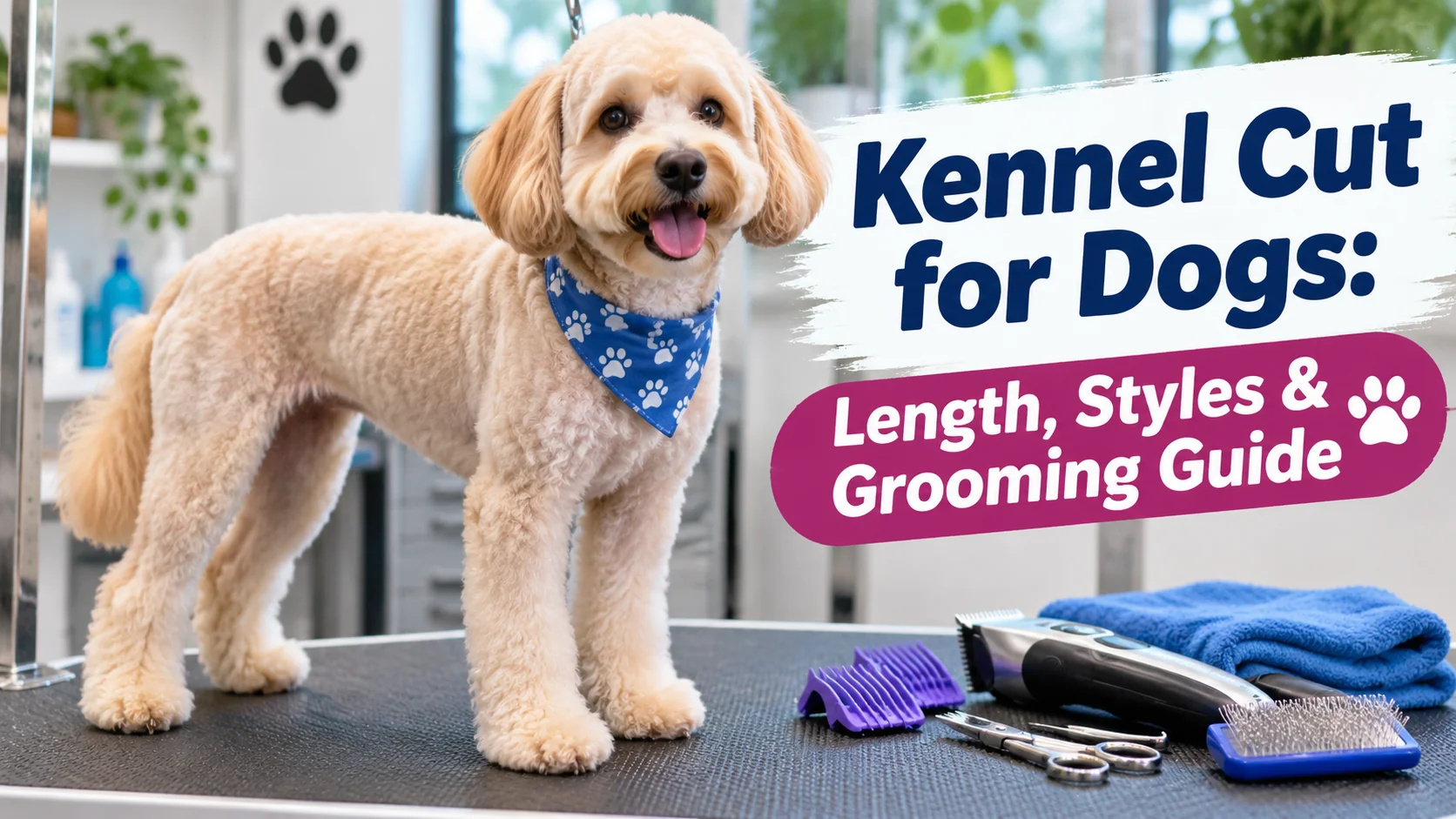
A kennel cut, sometimes called a kennel clip or utility trim, is a grooming style in which a dog’s body hair is clipped relatively short for easy everyday care.
Unlike decorative haircuts that require extensive shaping, the kennel cut focuses on maintaining a manageable coat with minimal excess length.
A typical kennel cut features:
- Short, relatively uniform body hair.
- Neatly trimmed legs and paws.
- A tidy chest, belly, and sanitary area.
- Short or customized facial hair.
- Ear and tail hair styled according to the owner’s preferences.
Some groomers leave a rounded head, longer ears, or a fluffy tail to preserve the dog’s appearance while making the body easier to maintain.
The term does not mean your dog needs to live in a kennel. It simply describes a functional, low-maintenance grooming style.
How Long Is a Kennel Cut?
A kennel cut commonly leaves approximately 1/8 to 1/2 inch of hair on the body. However, there is no universal length that every groomer follows.
The appropriate length depends on your dog’s coat condition, skin sensitivity, lifestyle, and the appearance you want.
| Blade or Attachment | Approximate Length | Finished Appearance |
|---|---|---|
| #10 blade | 1/16 inch (1.5 mm) | Very close clip |
| #7FC blade | 1/8 inch (3.2 mm) | Short, close-fitting coat |
| #5FC blade | 1/4 inch (6.3 mm) | Short, tidy finish |
| #4FC blade | 3/8 inch (9.5 mm) | Softer, fuller appearance |
| 1/2-inch attachment comb | 1/2 inch (12.7 mm) | Longer utility trim |
These measurements represent approximate remaining hair lengths rather than the amount of hair removed. Clipping direction, coat texture, equipment, and grooming technique can influence the result.
For a dog with a healthy, suitable coat, starting with a slightly longer kennel cut gives you the option of requesting a shorter finish at the next appointment.
A #10 blade produces a particularly close cut and should not automatically be selected for routine whole-body grooming.
What Does a Kennel Cut Look Like on Different Dogs?
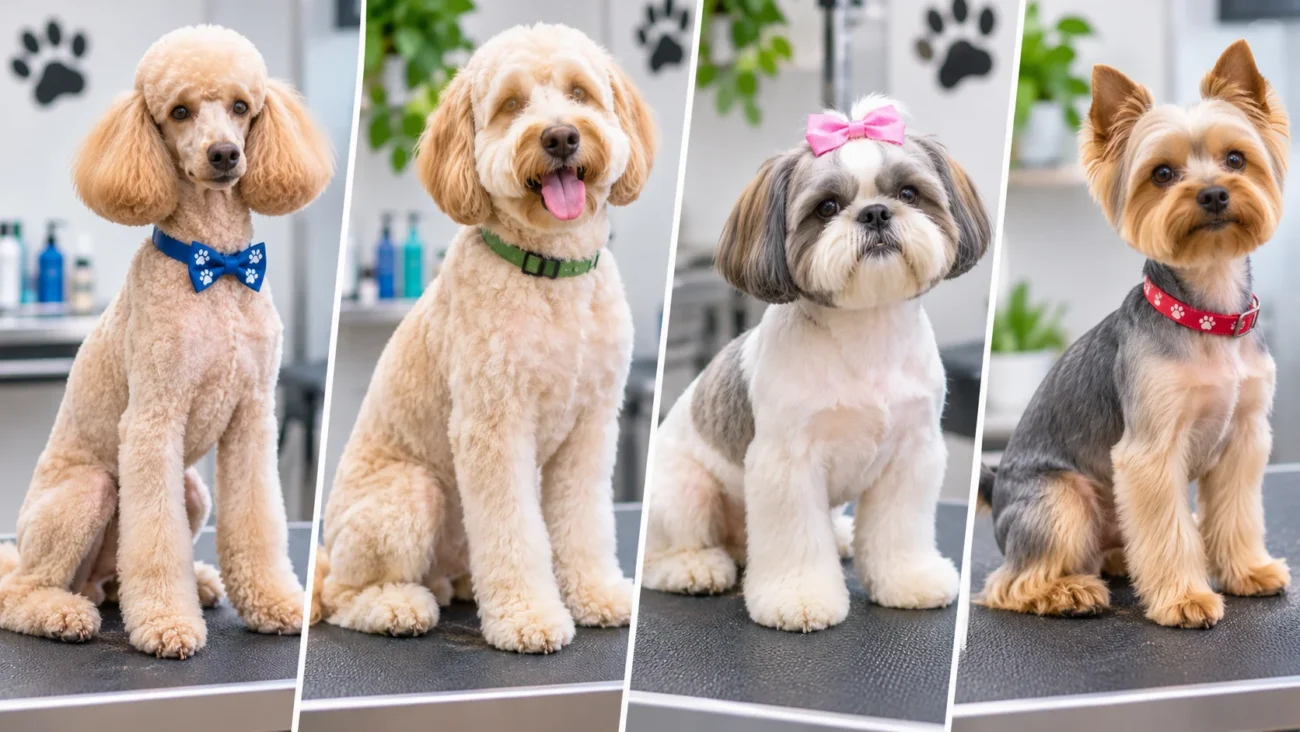
The same kennel-cut length can look surprisingly different depending on the dog’s natural hair texture and density.
Poodles
A Poodle kennel cut typically features short body hair that follows the dog’s natural shape. The groomer may retain a fuller topknot and tail while clipping the face and feet closely.
This creates a practical alternative to longer, more elaborate Poodle trims.
Goldendoodles and Labradoodles
A kennel cut can reduce the maintenance demands of curly or wavy Doodle coats. A short body combined with a rounded face often preserves some of the breed mix’s characteristic fluffy appearance.
Doodle coats vary considerably, so the groomer should assess the individual dog’s coat before selecting a clipping length.
Shih Tzus and Maltese
Short utility trims can replace long, flowing hair that otherwise requires frequent detangling. Longer ear hair or a rounded muzzle can soften the overall appearance.
Yorkshire Terriers
A kennel cut gives a Yorkie a compact, tidy appearance while reducing the maintenance associated with its long, silky coat.
Because fine hair can expose the underlying skin more visibly, an extremely short clip may look different from the same length on a dense-coated Poodle.
Kennel Cut vs. Puppy Cut vs. Teddy Bear Cut
The main difference is the intended finish. A kennel cut emphasizes practical shortness, a puppy cut generally creates a more natural and youthful appearance, and a teddy bear cut emphasizes rounded, fluffy styling.
| Feature | Kennel Cut | Puppy Cut | Teddy Bear Cut |
|---|---|---|---|
| Body length | Usually short | Short to medium | Variable, often fuller |
| Face | Short or customized | Natural and soft | Rounded and fluffy |
| Brushing needs | Generally lower | Moderate | Often higher |
| Main purpose | Easy maintenance | Balanced appearance | Decorative styling |
Choose a kennel cut if reducing coat maintenance is your main priority. Choose a puppy or teddy bear style if maintaining a fuller appearance matters more and you can commit to regular brushing.
These categories overlap, and grooming salons may define them differently. Always confirm the actual length and styling rather than relying on the haircut name alone.
Which Dogs Are Best Suited to a Kennel Cut?
Kennel cuts are generally best suited to dogs with regularly trimmed long, silky, curly, or similar coat types.
Potential candidates include:
- Poodles with high-maintenance curly coats.
- Shih Tzus with long body hair.
- Maltese dogs prone to tangling.
- Yorkshire Terriers with long, silky coats.
- Suitable Bichon Frises and Havanese dogs.
- Doodle mixes with coats that require routine clipping.
Breed alone does not determine whether a kennel cut is appropriate. Coat density, previous grooming history, skin health, and the dog’s tolerance for clipping also matter.
Which Dogs Should Avoid a Kennel Cut?
Healthy double-coated breeds generally should not receive a close kennel cut as part of routine grooming.
Examples include Siberian Huskies, Golden Retrievers, German Shepherds, Pomeranians, Samoyeds, and Australian Shepherds.
These dogs have an insulating undercoat and a protective outer layer. Closely clipping both layers can interfere with their natural protective functions and may lead to uneven regrowth.
The American Kennel Club’s double-coat grooming guidance recommends appropriate brushing and undercoat maintenance rather than unnecessary shaving.
Warning
Do not request a close kennel cut for a double-coated dog simply because the weather is hot. Severe matting or medical treatment may justify clipping, but those situations require an individual professional assessment.
What Are the Benefits of a Kennel Cut?
The biggest advantage of a kennel cut is that suitable dogs become easier to groom and keep clean between professional appointments.
Less Brushing and Detangling
Short body hair has fewer opportunities to develop large tangles than longer hair. This may help owners who struggle to maintain a lengthy coat consistently.
Easier Cleaning After Outdoor Activities
Mud, leaves, and other debris are generally easier to remove from a short coat. This makes kennel cuts practical for suitable dogs that hike, play outdoors, or visit daycare regularly.
Simpler Bathing and Drying
Shorter hair can make washing, rinsing, and drying more manageable. Proper drying remains necessary, particularly around the ears, armpits, and skin folds.
Easier Skin Inspections
With less hair covering the body, owners may find it easier to notice ticks, scratches, redness, and other visible skin changes.
A haircut does not prevent skin disease or replace parasite prevention, but it can make routine inspections easier.
What Are the Disadvantages of a Kennel Cut?
A kennel cut has practical benefits, but removing too much hair can reduce the coat’s protection and create an appearance you did not intend.
- Reduced sun protection: Closely clipped areas may be more exposed to sunlight.
- Less cold-weather insulation: Some dogs become more sensitive to low temperatures after a haircut.
- Visible skin: Fine or sparse coats can appear thinner than expected.
- Clipping irritation: Improper techniques or overheated blades may irritate or injure the skin.
- Changes in coat appearance: Certain coat types may not grow back with the same texture or evenness.
- Loss of breed-specific styling: A short utility trim may remove features associated with traditional breed haircuts.
The goal should be the shortest practical length that meets your dog’s needs without unnecessarily removing its protective coat.
Can a Kennel Cut Help a Matted Dog?
Yes. A short professional clip may be necessary when a dog’s coat has developed extensive mats that cannot be comfortably untangled.
However, routine kennel clipping and removing a severely matted coat are different grooming situations.
During a normal kennel cut, the owner and groomer can usually choose the finished length. With severe matting, the groomer may need to clip beneath the tangled hair, leaving a much shorter coat than originally requested.
Areas particularly vulnerable to matting include:
- Behind the ears.
- Under the front legs.
- Around the collar and harness.
- The belly and groin.
- The backs of the legs.
- The base of the tail.
Never use scissors to cut tight mats away from the skin. Matted hair can pull skin into the tangled area, making accidental cuts more likely.
According to VCA Animal Hospitals’ grooming and coat-care guidance, mats should be removed with appropriate clippers rather than scissors. Extensive matting warrants professional assistance.
If the skin underneath the mats appears infected, wounded, swollen, or unusually painful, arrange a veterinary assessment.
How to Ask Your Groomer for a Kennel Cut
To receive the haircut you want, specify the remaining body length and explain how you want the head, ears, legs, and tail styled.
- Choose a suitable body length. Discuss the length in inches or millimeters rather than simply requesting a short cut.
- Describe the leg finish. Decide whether the legs should match the body or retain additional fullness.
- Choose a facial style. Request a short face, rounded muzzle, or retained beard according to preference and suitability.
- Discuss the ears and tail. Explain whether these areas should remain longer or be shortened.
- Bring a reference photograph. Ideally, choose a dog with a similar coat texture.
- Confirm coat condition. Ask whether matting or skin concerns could require a different length.
Grooming Tip
For a softer kennel cut, try requesting: “I’d like approximately 3/8 inch left on the body, tidy legs, a rounded face, and natural-looking ears and tail, provided that length is suitable for my dog’s coat.”
Discuss your dog’s grooming history and any sensitive areas before the appointment begins. The groomer may recommend adjustments based on coat condition and comfort.
Can You Give Your Dog a Kennel Cut at Home?
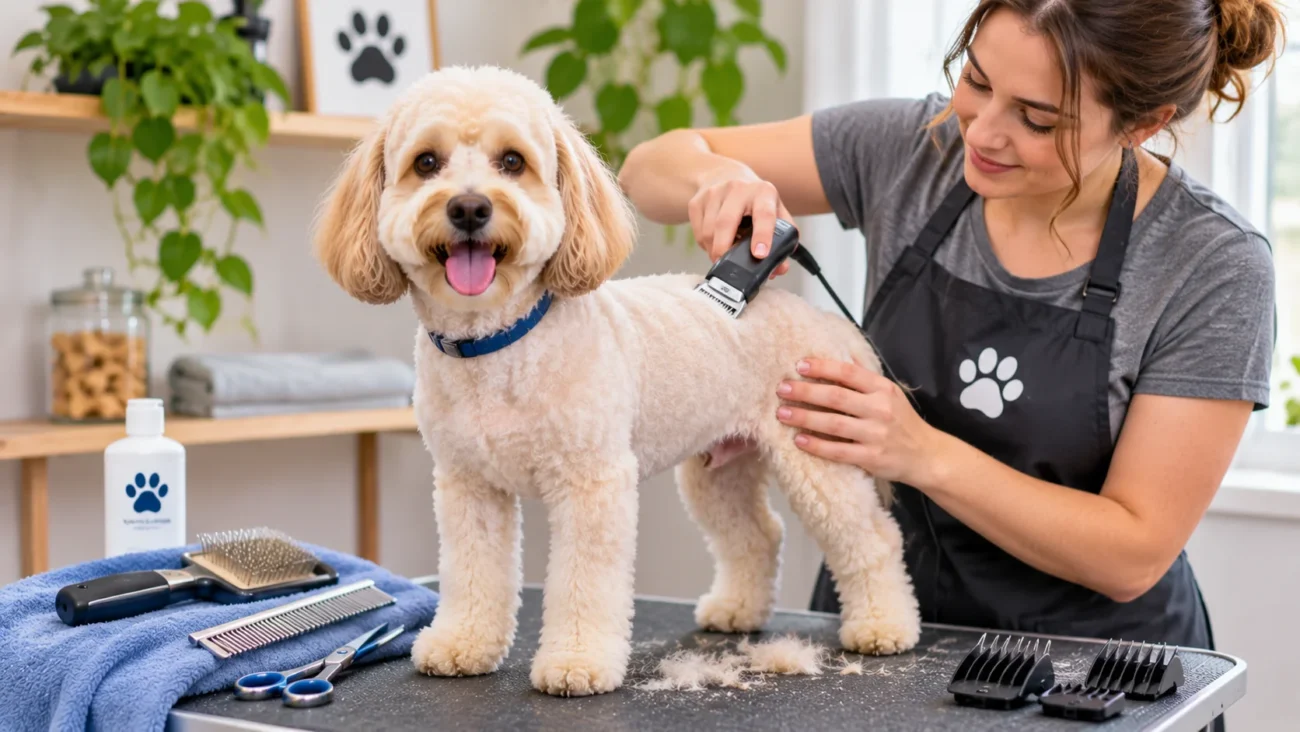
Experienced owners may be able to perform a simple utility trim at home on a cooperative dog with a healthy, suitable coat. However, professional grooming is the safer option for beginners, nervous dogs, and dogs with extensive matting.
Basic equipment includes pet grooming clippers, suitable blades or attachment combs, a coat-appropriate brush, a grooming comb, and a stable, nonslip work surface.
If you perform routine body clipping at home:
- Inspect the skin and coat for wounds, irritation, and tight mats.
- Brush and comb the coat gently before clipping.
- Wash and completely dry an unmatted coat when appropriate.
- Choose a suitable conservative clipping length.
- Work slowly on broad, accessible body areas.
- Check blade temperature frequently and stop if it becomes hot.
- Stop if the dog struggles, becomes distressed, or shows signs of pain.
Leave delicate areas such as the eyes, lips, ear edges, armpits, groin, and skin folds to an experienced groomer if you are unfamiliar with safe clipping techniques.
For coat preparation and cleaning, follow this step-by-step dog bathing guide to help avoid common bathing mistakes.
How Often Does a Dog Need a Kennel Cut?
For dogs that require regular haircuts, approximately four to eight weeks can be a reasonable starting interval between kennel cuts. The ideal schedule depends on individual hair growth, coat texture, and maintenance needs.
Consider scheduling another grooming appointment when:
- The body hair becomes difficult to comb.
- Hair starts tangling around frequently rubbed areas.
- Facial hair interferes with visibility or cleanliness.
- Hair around the paws or sanitary area becomes difficult to maintain.
- The coat grows beyond your preferred length.
There is no need to wait until the coat becomes matted. Regular maintenance visits can help keep grooming sessions more manageable.
Dogs with longer facial, ear, or tail furnishings may need attention in those areas before the short body requires another full haircut.
How to Maintain a Kennel Cut Between Grooming Appointments
A kennel cut reduces coat maintenance, but it does not eliminate it. Regular brushing, skin inspections, and appropriate bathing remain necessary.
- Brush regularly: Adjust brushing frequency to the coat’s texture and growth. Longer curly or silky sections may need daily attention.
- Comb friction areas: Check behind the ears, beneath the harness, and under the legs.
- Bathe when needed: Use dog-appropriate shampoo, rinse thoroughly, and dry the coat properly.
- Check the skin: Look for redness, scratches, parasites, and persistent irritation.
- Manage sun exposure: Give closely clipped dogs access to shade and avoid prolonged exposure to intense sunlight.
- Monitor cold sensitivity: Provide appropriate warmth if your dog becomes uncomfortable in cooler weather.
Pay attention to retained longer hair on the head, ears, and tail. These areas can become tangled even when the rest of the coat is easy to maintain.
Frequently Asked Questions
Is a kennel cut the same as shaving a dog?
Not necessarily. A kennel cut usually leaves a short layer of hair, whereas a shave generally describes a much closer clip. The terms may overlap when very short blades are used.
Is a kennel cut good for summer?
It can make coat maintenance easier for suitable long-haired or curly-coated dogs during summer. However, it is not a substitute for shade, drinking water, and heat precautions, and healthy double coats should not be closely shaved for cooling.
How long does it take for a kennel cut to grow back?
Visible regrowth may occur within several weeks, but returning to a longer coat can take several months or more. Breed, coat type, health, and individual hair growth affect the timeline.
Does a kennel cut stop a dog from shedding?
No. Clipping shortens existing hair but does not stop the natural shedding cycle. It may make loose hair less noticeable or easier to manage in some dogs.
Can a kennel cut have a teddy bear face?
Yes. A groomer can combine a short kennel-style body with a rounded teddy bear face, provided the facial coat is healthy and long enough to achieve the desired shape.
Can a puppy get a kennel cut?
A puppy with a suitable coat may receive a short utility trim, but early grooming should prioritize comfort and gradual introduction to grooming equipment. A groomer can help determine the appropriate length and timing.
Final Thoughts
A kennel cut is a practical choice for suitable dogs that need an easy-to-maintain haircut without elaborate styling. Selecting an appropriate length can reduce tangles, simplify cleaning, and keep routine grooming manageable.
Rather than requesting the shortest possible haircut, choose a length that balances coat protection, comfort, appearance, and maintenance. Communicate your preferences clearly with your groomer and continue regular coat care between appointments.


