
Quick Answer
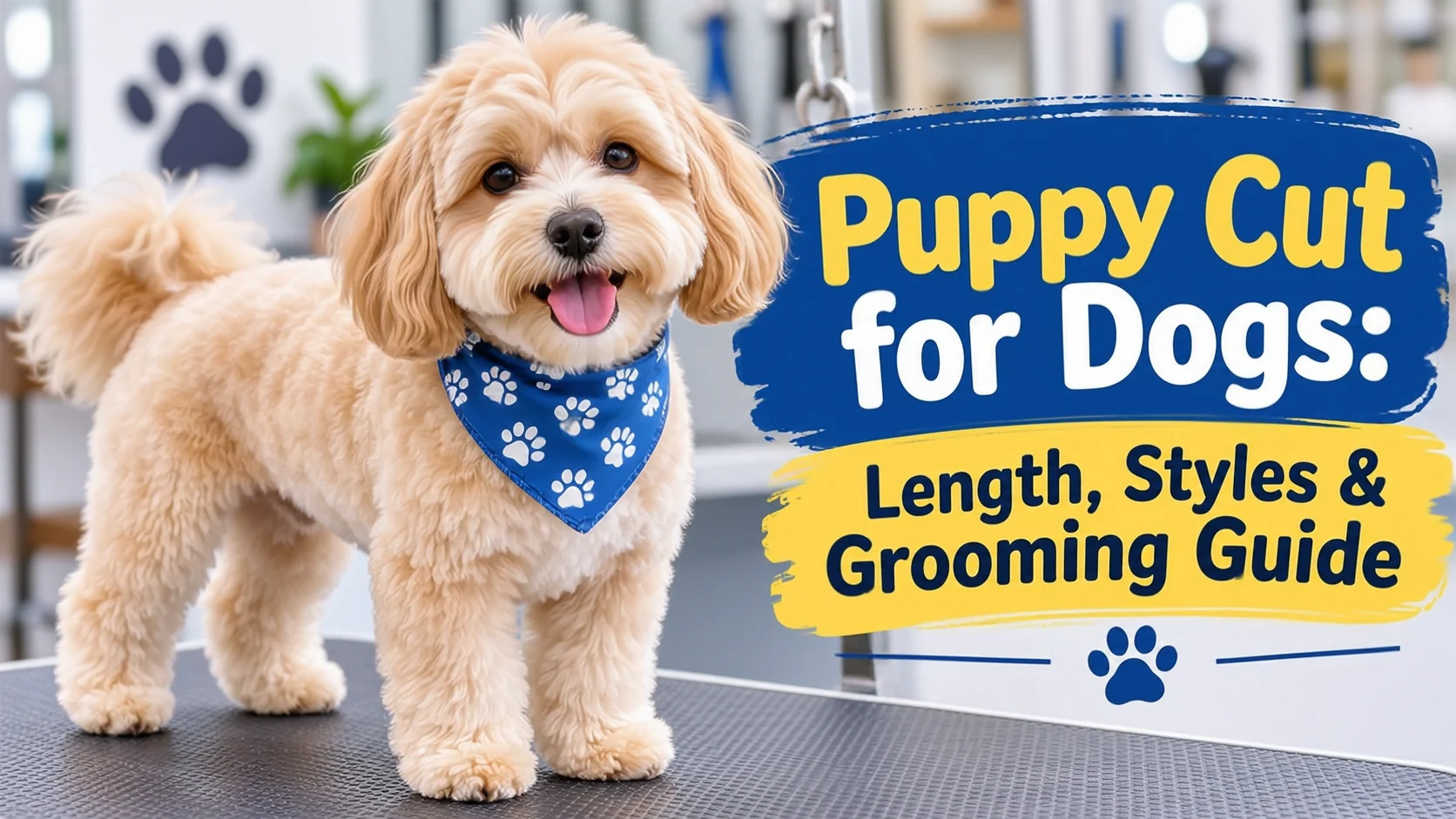
A puppy cut is a dog grooming style that leaves the coat relatively short and even, often between 1 and 2 inches long, with a soft, youthful appearance. It works well for many long-haired and curly-coated dogs, regardless of age. Because there is no universal puppy cut length, specify your preferred hair length and facial style to your groomer.
A puppy cut can give your dog a clean, fluffy appearance without the maintenance required by a long hairstyle. However, simply asking for a puppy cut does not guarantee that your groomer will create the look you have in mind.
Your dog’s coat texture, haircut length, brushing routine, and existing tangles all influence the finished result.
What Is a Puppy Cut for Dogs?
A puppy cut is a relatively uniform haircut designed to give a dog a soft, youthful appearance. The groomer usually shortens the body hair and blends the legs, face, and other areas to create a balanced finish.
Unlike elaborate breed-specific hairstyles, a puppy cut generally prioritizes comfortable everyday maintenance over detailed shaping.
A typical pet puppy cut may include:
- Evenly shortened hair across the body.
- Neatly blended leg hair.
- Soft facial shaping around the muzzle.
- Tidied hair around the paws.
- A sanitary trim when appropriate.
- Ear and tail hair adjusted to the owner’s preference.
Although the name suggests a haircut intended for puppies, adult and senior dogs can also wear this style. The term describes the appearance rather than the dog’s age.
There is also a distinction between an everyday pet puppy cut and the traditional puppy clip used in Poodle show grooming. The casual pet version is more flexible and can be adapted to different coat types.
How Long Is a Puppy Cut?
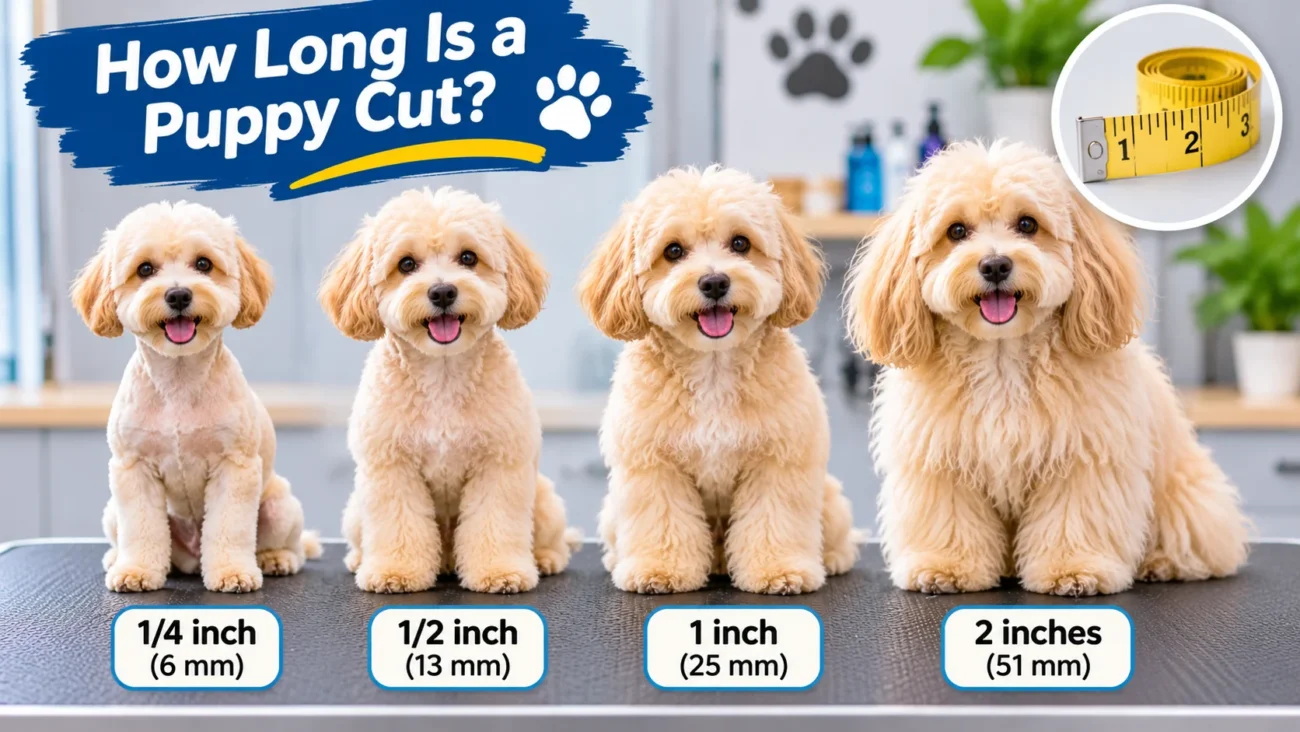
A puppy cut commonly leaves approximately 1 to 2 inches of hair, although shorter versions are also popular. Groomers may interpret the term differently, so the name alone does not establish an exact finished length.
The following are examples of lengths you can discuss with your groomer.
| Hair Length | Appearance | Maintenance |
|---|---|---|
| 1/4 inch (6 mm) | Very short and tidy | Lower brushing demands |
| 1/2 inch (13 mm) | Short and slightly fluffy | Relatively manageable |
| 1 inch (25 mm) | Soft and rounded | Frequent brushing |
| 2 inches (51 mm) | Full and fluffy | More intensive brushing |
A one-inch haircut offers a reasonable starting point for many suitable, mat-free coats. However, the same measured length can look considerably different on a curly Poodle and a straight-haired Yorkshire Terrier.
The lengths above are grooming preferences, not universal safety recommendations for every breed.
Which Dogs Look Best With a Puppy Cut?
Puppy cuts are particularly suitable for dogs with curly, wavy, or long coats that need regular haircuts. They can help owners manage hair growth while retaining a fluffy appearance.
Poodles and Doodles
Poodles, Goldendoodles, Labradoodles, and similar dogs can achieve a plush appearance with this haircut. Their curly or wavy coats often create natural volume even when shortened.
Dense curls can conceal tangles underneath the outer coat. Regular combing remains necessary, especially for longer styles.
Shih Tzus and Maltese
A puppy cut offers a practical alternative to maintaining the long, flowing coats associated with these breeds. Shorter hair around the body can make brushing, bathing, and cleaning after outdoor activities easier.
Bichon Frises and Havanese
These breeds can achieve a soft, rounded outline with a puppy cut. Leaving slightly more hair around the face can preserve a cuddly appearance while keeping the body manageable.
Yorkshire Terriers
Yorkies often wear shorter pet hairstyles because their long, fine hair requires considerable maintenance. Their straighter coat produces a smoother finish than the rounded appearance of a curly-coated dog.
Which Dogs Should Avoid a Short Puppy Cut?
Dogs with dense protective double coats should generally avoid close body clipping for cosmetic reasons. Examples include Siberian Huskies, Alaskan Malamutes, Golden Retrievers, and many Pomeranians.
These dogs have an insulating undercoat beneath their outer guard hairs. Removing too much of that protective coat can expose the skin and interfere with normal coat protection.
The American Kennel Club’s double-coated dog grooming guide explains why brushing and appropriate coat maintenance are normally preferable to shaving.
A groomer may recommend light shaping around the feet and feathering instead of shortening the entire body. Medical needs or severe matting can require a different approach.
Short-haired dogs, including Beagles and Boxers, generally do not need puppy cuts because they already have naturally short coats.
Puppy Cut vs. Teddy Bear Cut: What’s the Difference?
A puppy cut generally emphasizes a consistent body length, while a teddy bear cut emphasizes a fuller, rounded face. However, the names overlap considerably, and some groomers use them interchangeably.
| Feature | Puppy Cut | Teddy Bear Cut |
|---|---|---|
| Body | Relatively even length | Short or medium length |
| Face | Natural or softly shaped | Fuller and rounded |
| Overall appearance | Youthful and tidy | Plush and toy-like |
| Main priority | Manageable coat | Rounded facial styling |
You can combine both styles. For example, asking for a half-inch body puppy cut with a rounded teddy bear face provides clearer instructions than requesting either style by name alone.
How to Choose the Right Puppy Cut Style
The right puppy cut balances your preferred appearance with your dog’s coat condition, lifestyle, and tolerance for grooming.
Short Puppy Cut
A shorter body cut may suit dogs that frequently collect dirt, grass, or outdoor debris. It can also help owners who struggle to maintain longer coats between professional grooming appointments.
Choose a safe length for the coat type rather than assuming that the shortest possible haircut is always appropriate.
Fluffy Puppy Cut
A longer cut retains more of the dog’s natural texture and volume. It works best when the owner can maintain a consistent brushing routine and the coat is already free of significant tangles.
Longer leg and ear hair may require extra attention because those areas can develop knots independently of the body coat.
Rounded Face Puppy Cut
This variation leaves additional facial hair and uses careful shaping around the cheeks and muzzle. It creates a softer expression without requiring the entire body to remain long.
Keep comfort and visibility in mind when choosing how much hair to retain around the eyes.
How to Ask Your Groomer for a Puppy Cut
Describe your preferred finished length and the appearance of each major body area instead of relying only on the haircut’s name.
Use the following instructions during your grooming consultation:
- Body: Specify how much hair should remain after clipping.
- Face: Choose natural shaping or a fuller, rounded finish.
- Legs: Decide whether they should match the body or remain slightly fuller.
- Ears: Explain whether you prefer short, rounded ears or longer ear hair.
- Tail: Ask for a natural, feathered, or neatly trimmed finish.
- Coat condition: Ask whether tangles or matting will affect your preferred length.
Grooming Tip
Try saying: “I’d like approximately one inch of hair left on the body, a softly rounded face, blended legs, tidy paws, and a natural-looking tail. Please let me know if the coat condition makes that length unsuitable.”
Bring a reference photograph of a dog with a similar coat texture. A picture of a straight-haired Maltese may not accurately represent what the same haircut will look like on a curly Goldendoodle.
Discuss any necessary changes before the haircut begins, particularly if your dog’s coat contains mats.
Can You Give Your Dog a Puppy Cut at Home?
Experienced owners with appropriate grooming training can maintain a suitable puppy cut at home. Beginners are generally better served by having a professional groomer establish the haircut first.
Professional instruction is particularly useful for identifying the correct equipment and learning how to handle sensitive areas without injuring the dog.
At home, you can concentrate on these maintenance tasks:
- Brush the coat gently in small sections.
- Check for hidden knots using a suitable grooming comb.
- Keep the coat clean using dog-safe shampoo.
- Inspect the skin for redness, irritation, or unusual lumps.
- Arrange professional trimming before the coat becomes difficult to maintain.
The AKC’s home grooming guidance advises against attempting hair clipping or shaving without appropriate training.
Warning
Never attempt to remove tight mats with scissors. Dog skin can become pulled into tangled hair, making accidental cuts possible. Seek professional grooming assistance for extensive matting or veterinary care if the underlying skin appears injured.
How Often Does a Puppy Cut Need Maintenance?
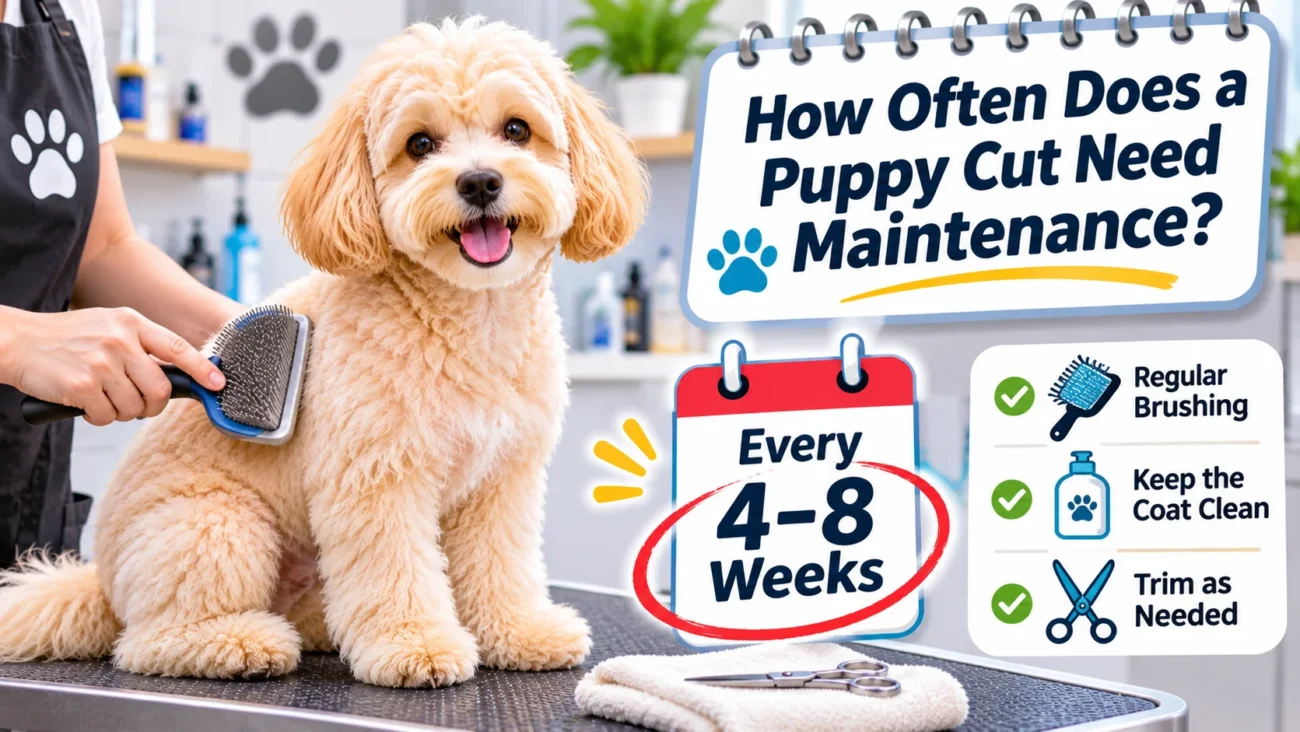
For many regularly clipped dogs, scheduling haircuts approximately every four to eight weeks provides a practical starting point. Adjust the interval according to hair growth, coat texture, and how easily the coat remains tangle-free.
Between appointments, keep up with routine brushing. Concentrate on areas where movement and friction encourage tangles:
- Behind the ears.
- Under the front legs.
- Around the collar and harness.
- Along the inner thighs.
- Around the tail and lower legs.
According to VCA Animal Hospitals’ coat care guidance, dogs with long, silky, or curly hair benefit from daily brushing to prevent tangles.
A useful maintenance check is to gently comb through the coat after brushing. If the comb repeatedly catches beneath an apparently smooth surface, additional attention or professional grooming may be needed.
Common Puppy Cut Mistakes to Avoid
- Giving vague instructions: Asking for a puppy cut without specifying length can lead to an unexpected finish.
- Ignoring coat type: A haircut suitable for a Poodle may be inappropriate for a Husky.
- Skipping brushing: Even relatively short, dense coats can develop tangles.
- Insisting on long hair despite matting: A shorter professional trim may be more comfortable than prolonged detangling.
- Waiting too long between appointments: Schedule the next haircut before the coat becomes unmanageable.
The most successful puppy cut is not necessarily the fluffiest one. It is a style that your dog tolerates comfortably and that you can realistically maintain.
Related Grooming Tool
Dog Grooming Slicker Brush and Metal Comb
A coat-appropriate slicker brush and grooming comb can help maintain a curly or long-haired dog’s puppy cut between professional grooming appointments.
As an Amazon Associate, I earn from qualifying purchases.
Frequently Asked Questions
At what age can a puppy get its first haircut?
The timing depends on vaccination status, coat needs, and behavioral readiness. Ask your veterinarian when salon visits are appropriate, and begin with gentle introductory grooming sessions before attempting a full haircut.
Does a puppy cut stop a dog from shedding?
No. Shortening the hair does not stop the natural shedding cycle. It may make loose hair easier to manage, but shedding primarily depends on the dog’s genetics, coat type, and health.
Can a dog have a puppy cut in winter?
Yes, provided the length is appropriate for the dog’s coat and environment. Dogs with shortened coats may need additional protection during cold outdoor conditions.
Will a puppy cut grow back the same?
Many regularly clipped coats grow back normally. However, adult coat development, health conditions, and double-coat clipping can affect regrowth and texture. Discuss unexpected coat changes with your veterinarian.
How much does a puppy cut cost?
Pricing varies by location, dog size, coat condition, temperament, and included services. Ask your groomer whether the quoted price includes bathing, drying, nail trimming, and the complete haircut.
Is a puppy cut the same as a sanitary trim?
No. A puppy cut changes the overall hairstyle, while a sanitary trim removes excess hair around areas where urine or feces may collect. A sanitary trim can be included in a puppy cut appointment.
Final Thoughts
A puppy cut offers an attractive, manageable hairstyle for dogs with suitable coats. Choose a length based on your dog’s individual needs, communicate your preferences clearly, and maintain regular brushing between grooming appointments.
Comfort, healthy skin, and a manageable coat should always take priority over achieving a particular fluffy appearance.


