
Quick Answer
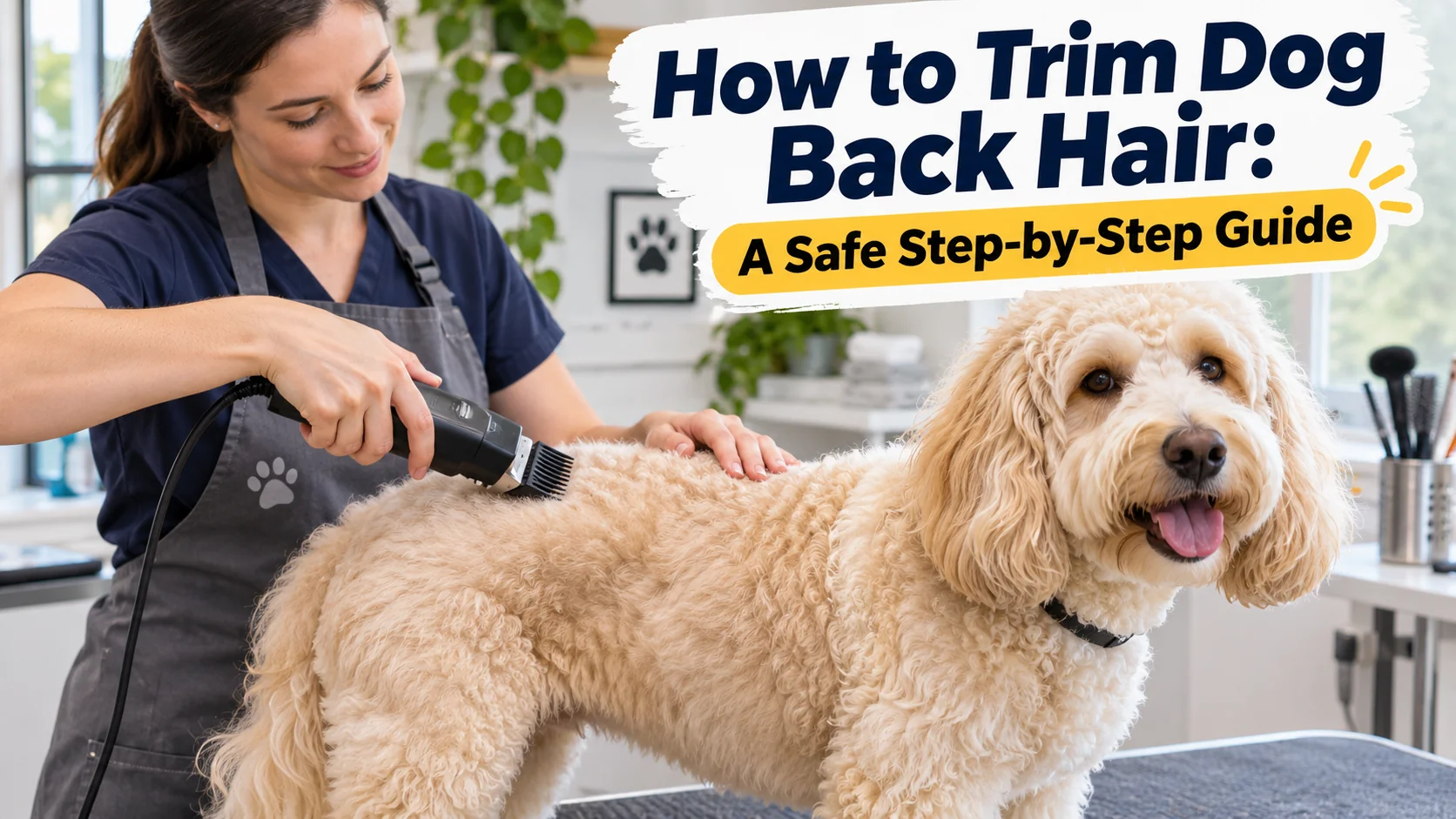
To trim dog back hair safely, brush and comb a clean, completely dry coat, attach a suitable longer guide comb to your pet grooming clippers, and work gently from the back of the neck toward the base of the tail, following the direction of hair growth. Avoid close clipping on double-coated dogs, never cut through tight mats with scissors, and stop if your dog becomes uncomfortable.
Trimming your dog’s back hair can make an overgrown coat easier to maintain between grooming appointments. However, the right technique depends on whether your dog has continuously growing hair, a protective double coat, or naturally short fur.
Before reaching for the clippers, determine whether your dog actually needs a haircut. In some cases, thorough brushing produces a better result without removing healthy coat length.
Should You Trim the Hair on Your Dog’s Back?
You can trim your dog’s back hair if its coat is suitable for clipping. Dogs such as Poodles, Shih Tzus, and Maltese often benefit from regular haircuts, while many short-haired and double-coated breeds need brushing rather than body trimming.
The hair along a dog’s back helps protect its skin from sunlight and environmental exposure. Removing too much can interfere with that protection.
Use your dog’s coat type to decide whether trimming is appropriate.
| Coat Type | Example Breeds | Recommended Approach |
|---|---|---|
| Curly, continuously growing | Poodle | Regular coat-appropriate clipping |
| Long, silky | Yorkshire Terrier, Maltese | Controlled trimming and frequent brushing |
| Double coat | Husky, Golden Retriever | Brush out loose undercoat; avoid shaving |
| Short, smooth | Boxer, Beagle | Routine brushing; generally no haircut |
| Wire coat | Border Terrier | Professional guidance on hand-stripping or clipping |
Mixed-breed dogs can inherit different coat characteristics. A Goldendoodle, for example, should not automatically receive the same haircut as every other Goldendoodle. Evaluate its actual coat or ask a groomer before choosing a length.
The American Kennel Club’s double-coat grooming guidance explains why removing the protective outer coat can affect regrowth and normal coat function.
Tools You Need to Trim Dog Back Hair
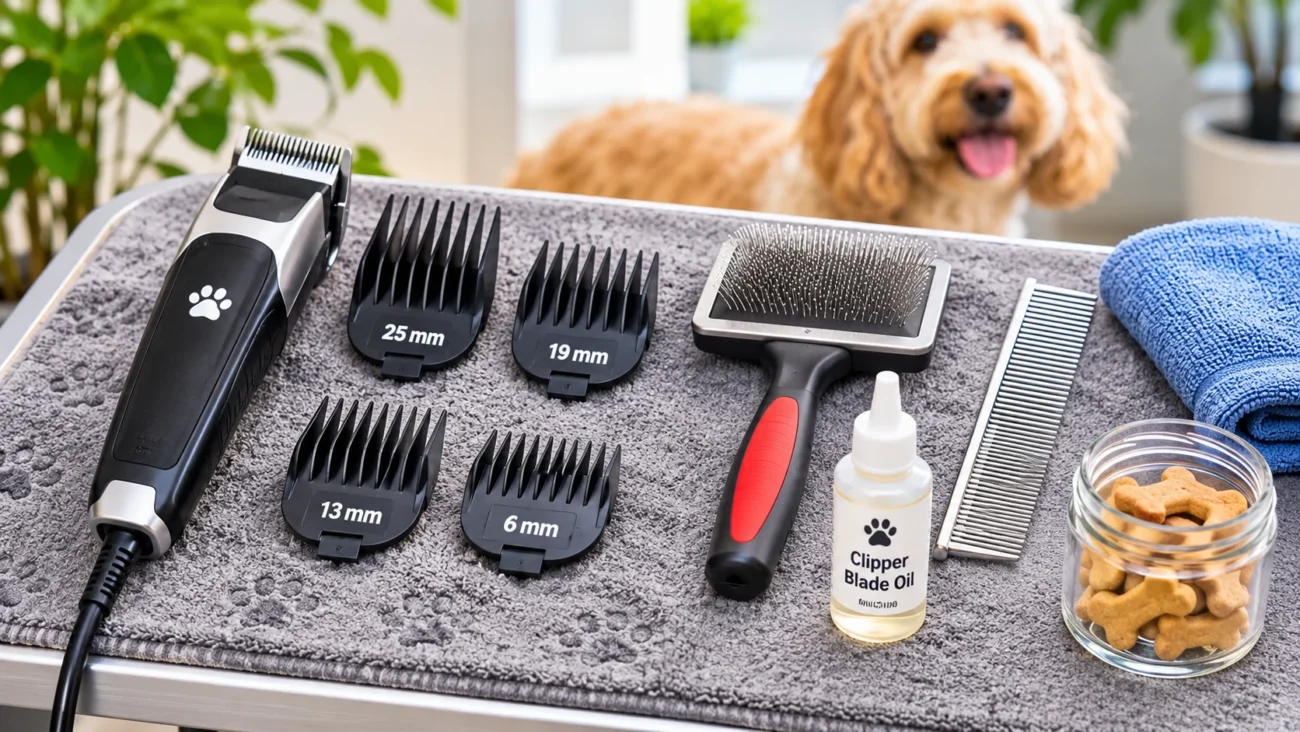
Electric pet grooming clippers with compatible guide combs are usually the most practical choice for maintaining an even length across a suitable body coat.
- Dog grooming clippers: Choose a model designed for your dog’s coat thickness.
- Guide comb attachments: Help control the remaining hair length.
- Grooming brush: Removes loose hair and minor tangles.
- Metal grooming comb: Checks for hidden knots beneath the surface.
- Clipper blade oil: Helps maintain the cutting mechanism according to manufacturer instructions.
- Non-slip mat: Provides a stable standing surface.
- Dog treats: Reward calm behavior during grooming.
A small detail worth checking is whether your guide comb fits the clipper blade correctly. An incompatible or loosely attached guard can cause an inconsistent cut or come off during grooming.
For a beginner, an adjustable setup with several longer guide combs provides more control than immediately using a short, uncovered blade.
How to Trim Your Dog’s Back Hair Step by Step
Start with a calm dog, a suitable coat, and enough time to work without rushing. A maintenance trim does not need to become a full-body haircut.
Step 1: Check the Coat and Skin
Part the hair in several places along the back and shoulders. Look for knots, irritated skin, scabs, lumps, parasites, and tight mats.
If the skin looks sore or your dog reacts painfully when touched, postpone clipping that area. Thick hair can conceal problems that are not visible from above.
Step 2: Brush Out Loose Hair and Tangles
Work through the coat in manageable sections using a suitable brush. Follow with a grooming comb to check that the hair is free of hidden knots.
The comb should travel through the coat without force. If it repeatedly catches in one area, investigate the obstruction rather than pushing the clippers through it.
Remove minor tangles gently before bathing. Tight or extensive matting requires professional attention.
Step 3: Wash and Completely Dry the Coat
If your dog is due for a bath, use a dog-specific shampoo after removing loose tangles. Rinse thoroughly and dry the coat completely before using clippers.
Damp or dirty hair can interfere with cutting performance. Once the coat is dry, brush and comb it again to check for remaining knots.
Step 4: Select a Longer Guide Comb
Choose a guide comb that leaves enough hair for the desired coat style. If you are uncertain about the finished length, start longer and shorten only when necessary.
Secure the attachment before turning on the clippers. Check that the blade is clean, properly maintained, and comfortably cool.
Let your dog become familiar with the sound and vibration before beginning the haircut.
Step 5: Begin Behind the Neck
Position the clippers gently against the coat behind the neck, keeping the cutting assembly flat rather than digging its edge into the hair.
Move toward the shoulders and along the back in the direction the hair naturally lies. Use light pressure and steady movements, allowing the clipper to cut without forcing it forward.
Stop before reaching sensitive areas around the tail and hindquarters if you have not learned how to groom those areas safely.
Step 6: Make Slightly Overlapping Passes
After completing one strip, move beside it and repeat using the same guide comb and clipping direction.
Slightly overlapping each pass helps reduce visible strips of uncut hair. Brush away loose clippings regularly so you can assess the actual finish.
As you approach the sides, follow the natural coat direction rather than forcing every stroke into a perfectly straight line.
Step 7: Check the Finish and Stop
Comb the trimmed hair into its natural position. Compare the length on both sides of the back and look for obvious missed patches.
Correct small inconsistencies using the same attachment. Avoid repeatedly shortening the entire back to eliminate minor imperfections.
Reward your dog and remove loose clippings. Clean and maintain your equipment according to its manufacturer’s directions.
How Short Should You Trim Dog Back Hair?
There is no universal haircut length suitable for every dog. Coat structure, existing hair length, skin condition, and the intended grooming style all influence the correct choice.
For dogs that can safely receive a body haircut, these guide-comb lengths provide a general illustration of the available options.
| Nominal Guide Length | General Result |
|---|---|
| 25 mm (1 inch) | Longer, fuller appearance |
| 19 mm (3/4 inch) | Moderate length with fullness |
| 13 mm (1/2 inch) | Shorter maintenance haircut |
| 6 mm (approximately 1/4 inch) | Relatively short finish |
These are illustrative attachment lengths, not breed-specific recommendations. The actual finish varies with the blade, attachment design, hair texture, and clipping direction.
A shorter guard is not the solution when a longer guard cannot pass through a tangled coat. Address the obstruction first.
Why Does Your Dog’s Back Hair Look Uneven After Trimming?
Uneven hair usually results from inconsistent clipping direction, inadequate brushing, changes in pressure, or differences in how the coat naturally lies.
- Visible clipper lines: Check your stroke direction and overlap.
- Long patches: Brush the hair into position and make another gentle pass.
- Clippers pulling hair: Stop and inspect the blade, attachment, and coat condition.
- One side looks shorter: Check whether you clipped against the grain on that side.
Hair around the shoulders and rump may grow at different angles. Adjust your movement to follow those changes instead of increasing pressure.
If you accidentally create a noticeably shorter patch, leaving it to grow out may be safer than reducing the entire coat to match it.
How to Avoid Injuring Your Dog While Trimming
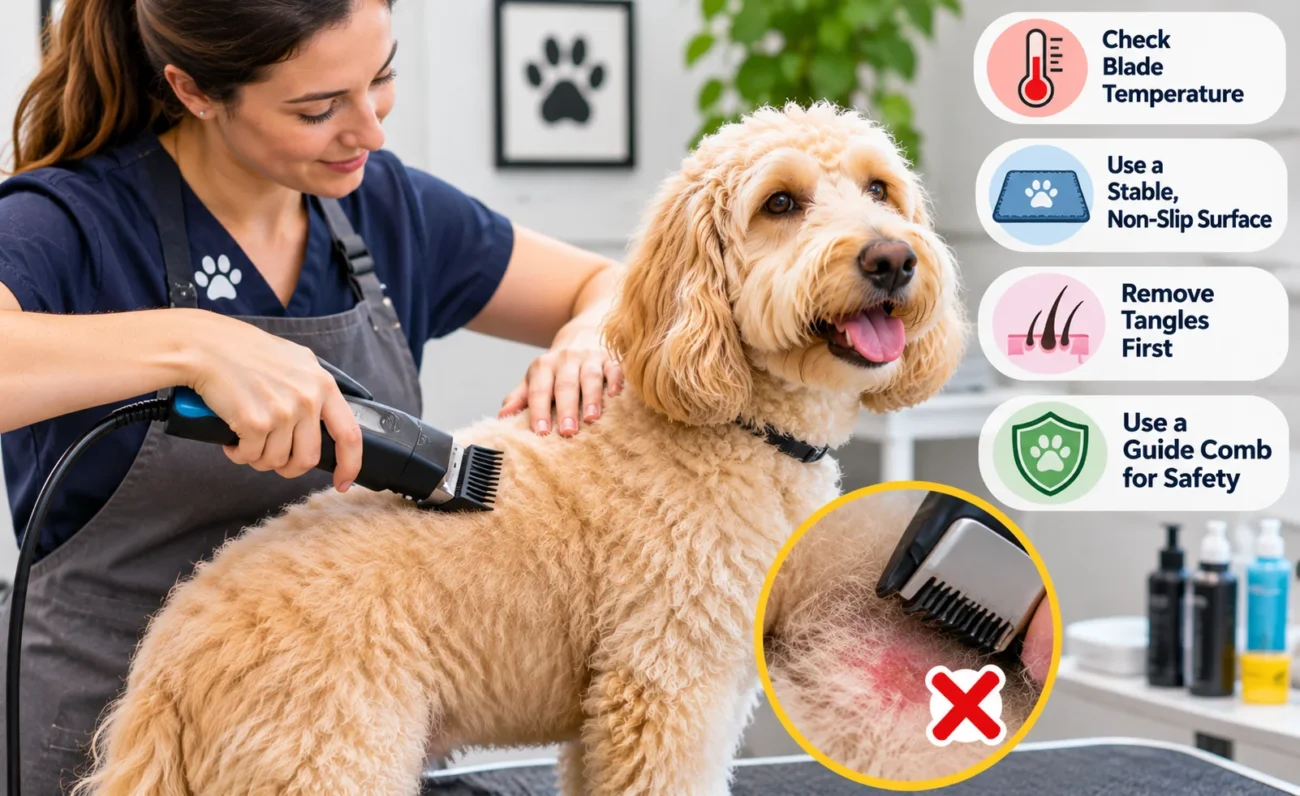
Even the relatively broad surface of a dog’s back contains skin folds, bony areas, and potentially hidden abnormalities. Clippers with a guide comb still require careful handling.
Follow these precautions throughout the haircut:
- Check the blade temperature frequently against your own wrist.
- Stop using the equipment if the blade becomes hot.
- Never force clippers through resistant hair.
- Avoid moving the blade directly over raised lumps or wounds.
- Do not restrain a struggling dog to finish a cosmetic haircut.
- Keep grooming sessions manageable and allow breaks.
Warning
Never slide scissors underneath a tight mat. Matted hair can pull the skin upward, making it difficult to distinguish skin from fur. Ask a professional groomer to remove severe mats and contact a veterinarian if the underlying skin appears injured or inflamed.
For additional guidance, VCA Animal Hospitals’ grooming and coat care recommendations explain how grooming methods should change according to coat type and matting severity.
When Should You Visit a Professional Groomer Instead?
Home trimming is most appropriate for a calm dog with a healthy, manageable coat and an established haircut style.
Professional grooming is a better option when your dog has extensive matting, a complicated coat, severe clipping anxiety, or an unfamiliar grooming requirement.
If you discover bleeding, painful swelling, irritated skin, unexplained hair loss, or a suspicious lump, arrange a veterinary assessment rather than attempting to disguise the problem with a haircut.
You can also ask a groomer to demonstrate the correct attachment length and clipping direction for your particular dog. This makes future maintenance sessions easier without requiring you to recreate a complete professional haircut.
How Often Should You Trim Your Dog’s Back Hair?
Dogs with continuously growing coats commonly need haircuts approximately every four to eight weeks, although the appropriate interval varies with coat growth, brushing habits, and the chosen haircut.
Many smooth-coated and double-coated dogs do not need routine back haircuts at all. Regular brushing and removal of shed hair are more appropriate.
Between haircuts, keep longer coats combed and check frequently for tangles. Addressing small knots early reduces the need for difficult grooming sessions later.
Related Grooming Tool
Dog Grooming Clippers With Guide Combs
Interchangeable guide combs help you control coat length during maintenance trims. Choose a model compatible with your dog’s coat texture and thickness.
As an Amazon Associate, I earn from qualifying purchases.
Frequently Asked Questions
Can I use human hair clippers on my dog’s back?
Pet grooming clippers are preferable because their cutting systems are designed for animal coats. Human clippers may struggle with dense or curly dog hair, causing pulling, overheating, or an uneven finish.
Can trimming a dog’s back hair reduce shedding?
Trimming shortens the hair but does not stop the natural shedding cycle. Regular brushing with a coat-appropriate tool is generally more effective for collecting loose fur before it spreads around your home.
What if my dog’s back hair stands up naturally?
Some dogs have natural hair ridges, growth patterns, or cowlicks. Hair can also rise temporarily when a dog is excited or alert. Avoid cutting it short simply because it does not lie flat.
Can I trim my dog’s back while it is lying down?
A comfortable standing position generally provides better access and more consistent coat tension. If your dog cannot stand comfortably, do not force it to remain upright for grooming.
Will my dog’s back hair grow back after trimming?
Healthy clipped hair generally regrows, but the speed and appearance depend on coat type and individual factors. Double-coated dogs can experience uneven or delayed regrowth after close clipping.
Why is my dog scratching after its back hair was trimmed?
Scratching may result from skin irritation, loose clippings, or an existing skin condition. If scratching persists or you notice redness, sores, pain, or swelling, contact your veterinarian.
Final Thoughts
The safest way to trim dog back hair is to respect the coat type, prepare the hair thoroughly, and use suitable grooming clippers with a longer guide comb. Follow the natural growth direction, check the blade temperature, and prioritize your dog’s comfort over a perfectly even finish. For coats that do not require clipping, regular brushing remains the better choice.


