
Quick Answer
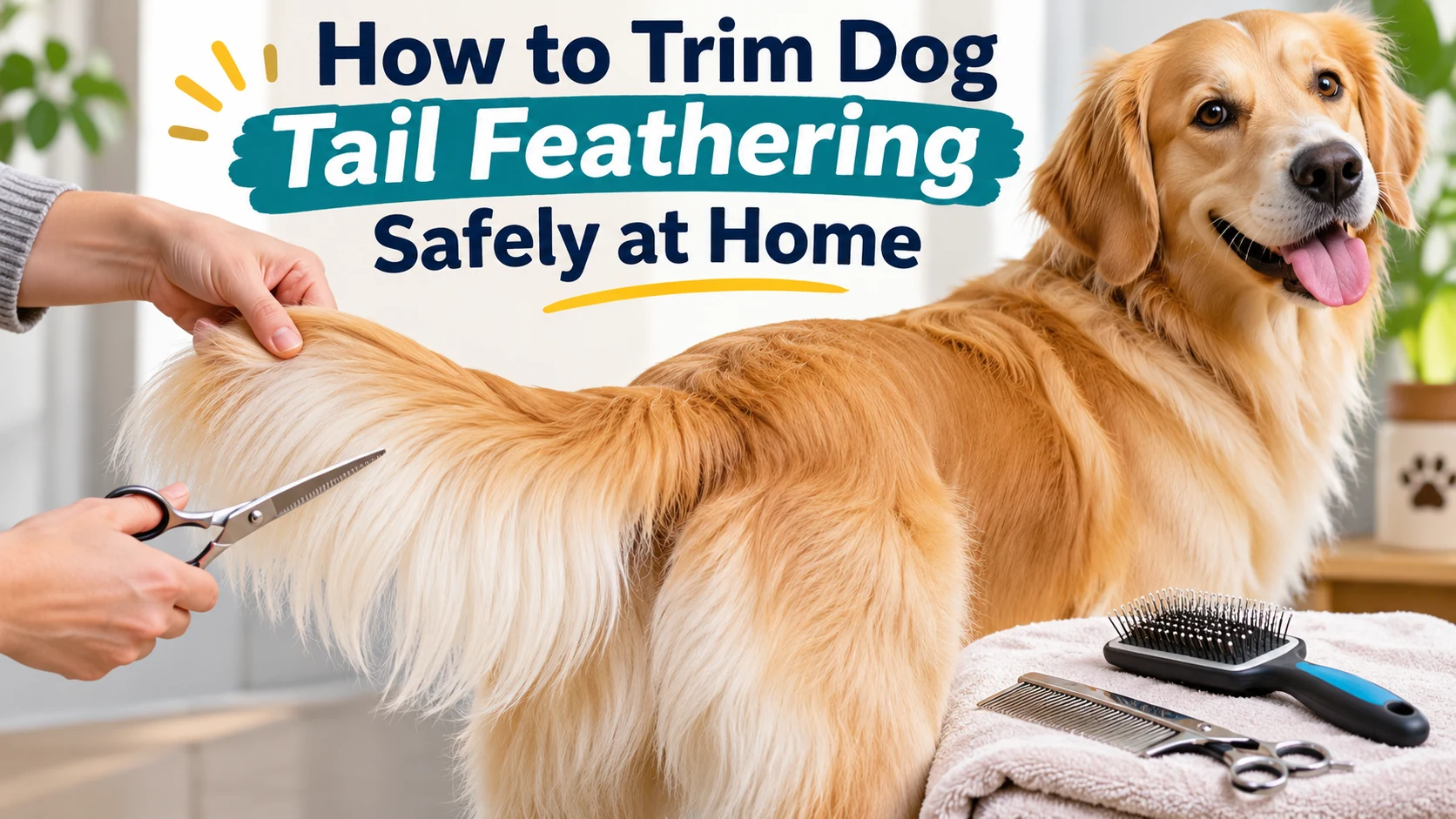
To trim dog tail feathering safely, brush and comb the dry tail first, identify the actual tail tip, then remove only small amounts of excess hair with rounded-tip grooming scissors or thinning shears. Preserve the tail’s natural outline, keep cutting tools away from skin, and stop if your dog moves, shows discomfort, or has tight mats.
Long, flowing tail hair looks attractive, but it can pick up debris, tangle, or develop an uneven outline. A careful tidy-up may help without removing the feathering that gives the tail its natural shape. The goal is a gentle trim, not a close shave.
What Is Dog Tail Feathering?
Tail feathering is the longer hair that hangs or fans out from a dog’s tail. It is especially noticeable on many retrievers, spaniels, setters, and long-coated mixed breeds. Depending on coat type, the feathering can create a plume, a flowing fringe, or a fuller rounded outline.
Not every dog needs tail feathering trimmed. If the coat is clean, easily combed, and comfortable, regular brushing may be sufficient. Trimming becomes more useful when the ends are ragged, collect dirt, or interfere with keeping the rear area clean.
Which Tools Are Safest for Trimming Dog Tail Feathering?
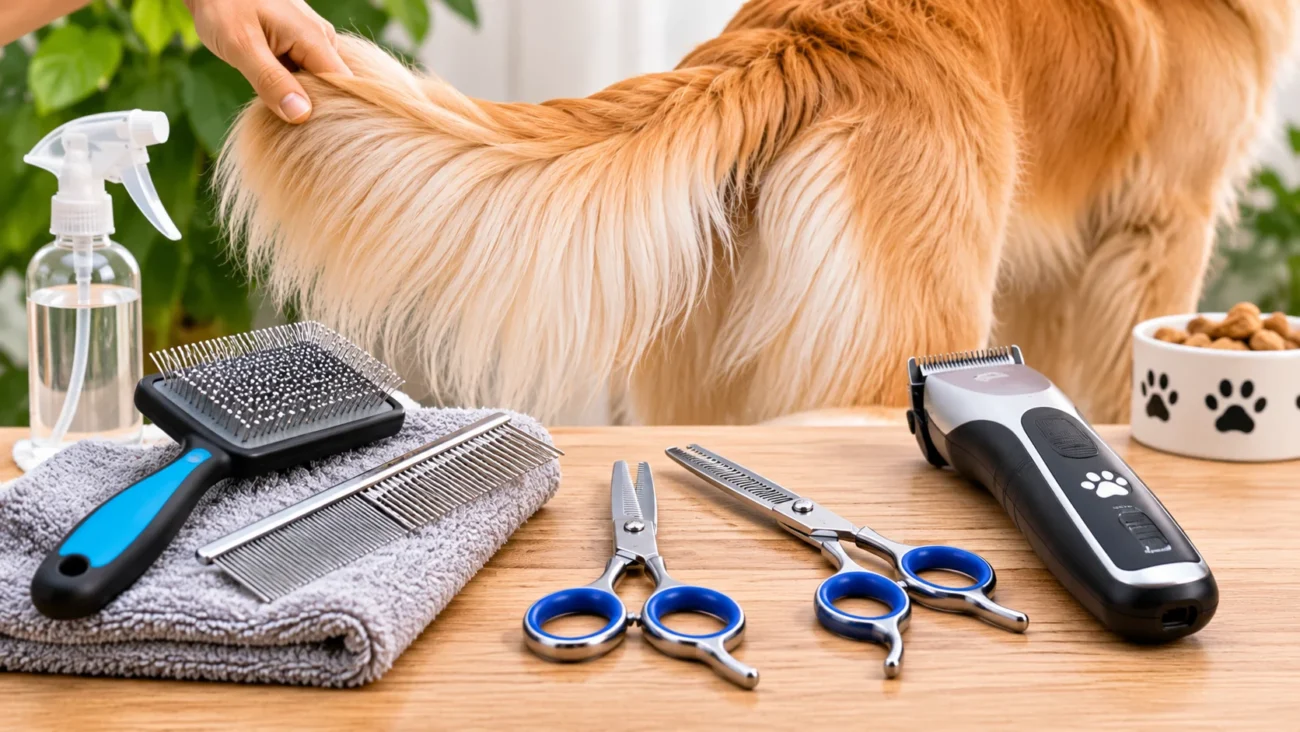
Use tools that let you work slowly and see exactly what you are cutting:
- Metal grooming comb: checks for tangles all the way through the feathering.
- Pin brush or appropriate slicker brush: separates the longer hairs gently before trimming.
- Rounded-tip grooming scissors: suitable for small, clearly visible outer-edge touch-ups when the dog is still.
- Thinning shears: help soften a heavy or blunt-looking outline when handled carefully.
- Non-slip surface and treats: help the dog remain steady and relaxed.
Avoid ordinary household scissors, especially near the tail tip or hidden tangles. If you are unfamiliar with scissors or the dog cannot stay still, have a professional groomer demonstrate the trim before attempting it yourself.
How to Trim Dog Tail Feathering in 7 Safe Steps
1. Make sure your dog is comfortable
Choose a quiet, well-lit spot with secure footing. Let your dog sniff the brush and scissors while the blades remain closed. If your dog pulls away whenever you touch the tail, practice brief, reward-based handling sessions instead of starting a haircut.
2. Brush and comb the tail thoroughly
Work gently in the direction of the hair. Support the tail without tugging it, and separate the fringe into manageable sections. Use a comb to check that the hair is free of snags before bringing scissors near it. The ASPCA’s dog grooming guidance specifically reminds owners not to neglect the tail when combing.
3. Find the tail tip before cutting
Feel for the end of the tail with your free hand while the scissors are closed. Note where the actual tail ends and where only long hair continues beyond it. Never assume the visible fringe shows where the tail bone stops. If you cannot confidently locate and protect the tail tip, leave the area untrimmed.
4. Decide on a natural outline
Let the feathering fall as it normally does. Look at the tail from the side and identify only the stray or noticeably overlong ends. A golden retriever’s fuller tail, for example, is generally shaped differently from the more tapered feathering seen in some setters. The Golden Retriever Club of America tail-grooming tutorial describes preserving a natural, rounded look rather than an obviously sculpted edge.
5. Trim small amounts from the outer ends
With the dog calm and the hair clearly separated from the skin, snip only a small amount at a time along the visible fringe. Keep your free hand aware of the tail’s position and never cut toward the skin or tail tip. For a beginner, the safest goal is a few minor corrections, not an entirely new tail shape.
6. Soften uneven edges without over-thinning
Comb the feathering again and check the shape. If you are comfortable with thinning shears, a few conservative cuts in the longer outer hair can soften a blunt line. Do not repeatedly thin the same area: removing too much hair can leave gaps that are difficult to disguise.
7. Recheck the tail in its natural position
Allow your dog to stand and hold or wag the tail normally. Look for obvious stray ends rather than trying to achieve perfect symmetry. Comb once more, reward your dog, and end the session. You can always take off a little more at another grooming session; you cannot immediately replace overcut feathering.
Safety Warning
Never cut out tight mats with scissors. Skin can be caught inside a mat, and sudden tail movement raises the risk of injury. Have a qualified groomer or veterinarian assess mats that are close to the skin, painful, or difficult to loosen.
How Much Tail Feathering Should You Remove?
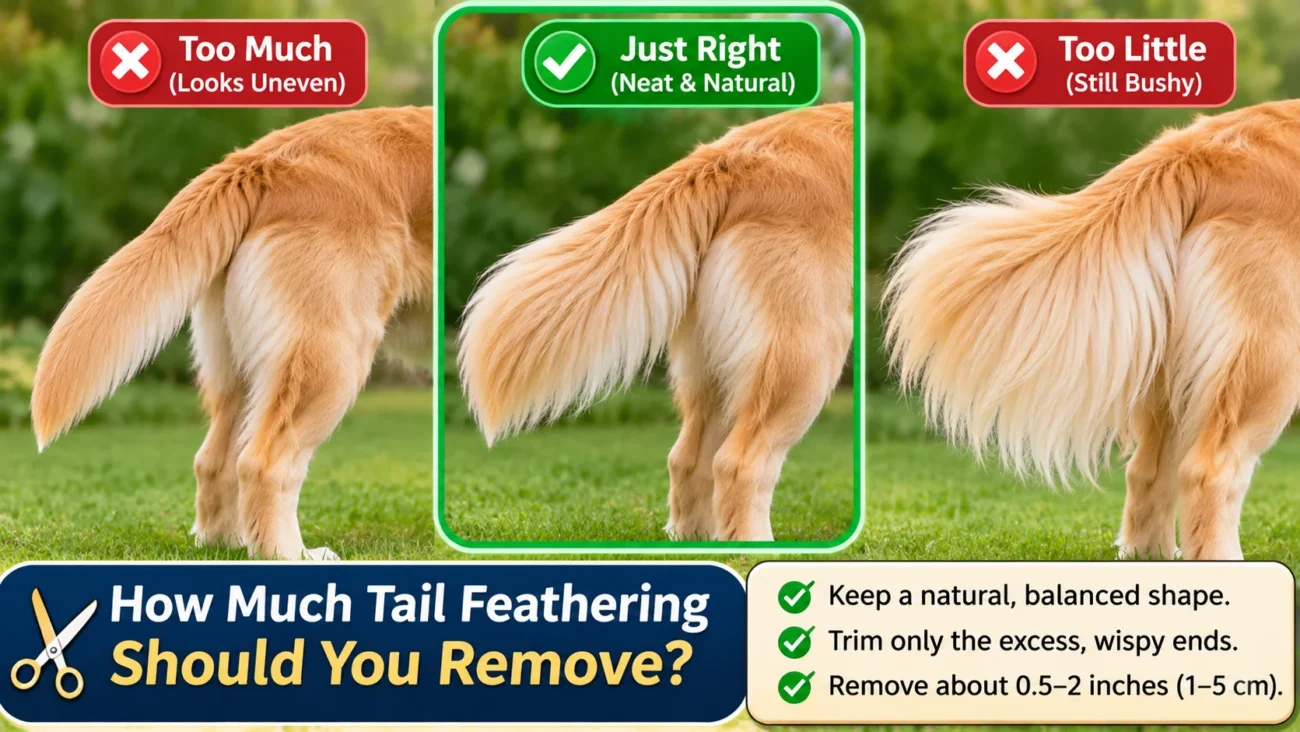
Remove only enough to tidy the fringe or solve a specific hygiene problem. There is no universal length that suits every dog’s tail. Coat structure, natural shape, and how the dog carries its tail all affect the finished appearance.
For a routine home tidy-up, begin with the longest stray ends and reassess before making another cut. If the hair needs major reshaping, especially near the base of the tail or underneath it, arrange a professional groom instead of attempting a dramatic change.
Dogs with double coats should generally have the natural coat preserved rather than having the entire tail shaved for cosmetic reasons. Ask a groomer familiar with the breed or coat type if you are unsure.
What Mistakes Should You Avoid?
- Cutting before detangling: hidden knots distort the outline and can conceal skin.
- Trimming while the dog is moving: a sudden wag or turn can move the tail into the cutting path.
- Pulling or lifting the tail forcefully: work within a comfortable, natural range of motion.
- Cutting a straight line across the whole fringe: this can create an abrupt, unnatural edge.
- Removing too much at once: take short breaks to assess the result.
- Trying to solve skin irritation with a haircut: redness, swelling, painful patches, or unusual discharge call for veterinary assessment.
How Do You Keep Tail Feathering Tidy Between Trims?
Regular combing is usually more important than frequent cutting. Check the fringe after muddy walks, swimming, or time outdoors. Remove leaves and debris gently, and make sure the hair is dry before evaluating its shape.
Adjust brushing frequency to the coat: dense or easily tangled feathering may need frequent attention, while a lighter fringe may need less. Use a comb to check below the surface rather than brushing only the outer layer. The RSPCA’s grooming advice emphasizes gentle brushing and stopping if the animal becomes distressed.
When Should a Groomer or Veterinarian Handle the Tail?
Choose a professional groomer if the tail has tight mats, the dog cannot stay comfortable during handling, or significant reshaping is needed. A groomer can also show you how to preserve your dog’s coat-specific outline.
Choose a veterinarian if you notice a painful tail, wounds, marked redness, swelling, discharge, a foul odor, or a sudden change in how the dog moves or carries the tail. These problems need assessment rather than a cosmetic trim. For more on the hazards of matting, see PetMD’s veterinarian-reviewed matting guidance.
Frequently Asked Questions
Can you trim a dog’s tail feathering with regular scissors?
Purpose-made rounded-tip grooming scissors are preferable for small visible touch-ups. Household scissors increase the risk of accidental cuts, particularly if the dog moves. Do not use scissors to remove mats.
Should you cut dog tail feathering when it is wet?
For a routine home trim, work on clean, thoroughly dry, combed hair. Wet hair clumps together and can make the natural outline harder to judge.
How often should tail feathering be trimmed?
There is no fixed schedule. Trim when the fringe genuinely needs tidying, and prioritize routine combing between cuts. The interval varies by coat growth, lifestyle, and the desired natural shape.
Can you shave all the feathering off a dog’s tail?
Usually that is unnecessary for cosmetic grooming. A close shave may be unsuitable for certain coat types. When severe matting or a medical issue makes clipping necessary, discuss the appropriate approach with a qualified groomer or veterinarian.
Bottom line: A good tail-feathering trim is conservative. Detangle first, protect the tail tip, shape only the visible excess hair, and stop as soon as the dog becomes uncomfortable.


