
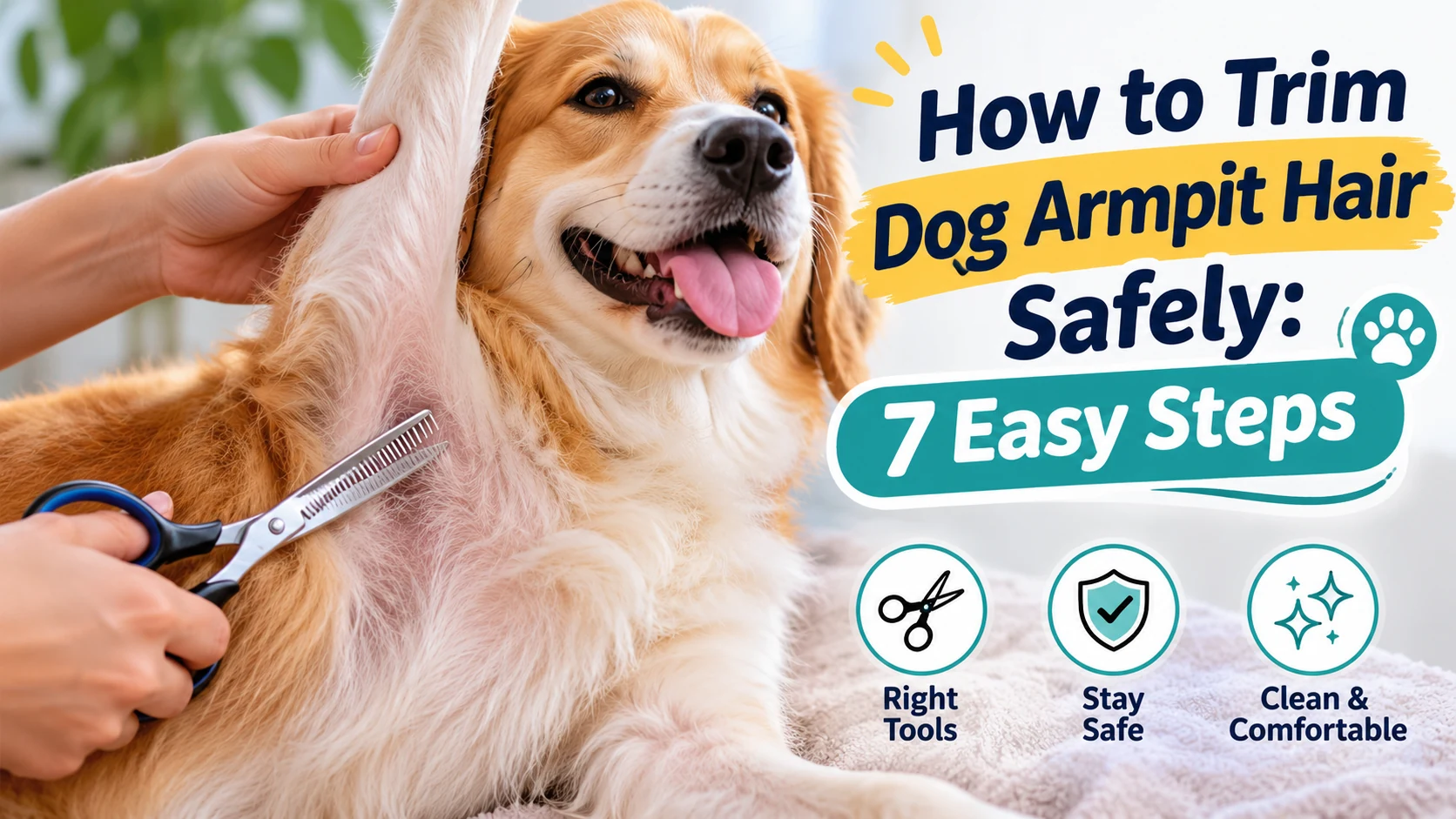
Quick Answer
To trim dog armpit hair safely, first check the skin and gently comb out only loose tangles. If the hair is unmatted and your dog stays relaxed, tidy the longer outer hair without cutting into the armpit fold. Never cut a tight mat with scissors or attempt close clipping against folded skin; let a trained groomer or veterinarian handle those areas.
Hair beneath a dog’s front legs can twist into knots where the leg moves against the chest. That makes the armpit one of the easiest places to miss during a quick brushing session—and one of the riskiest places to trim without a clear view of the skin.
The goal is not to shave every dog’s armpits. It is to keep the coat comfortable, spot developing tangles, and recognize when professional grooming is safer than a do-it-yourself trim.
Should You Trim Your Dog’s Armpit Hair?
Trim only when excess hair is tangling, collecting debris, or interfering with easy coat care. A healthy, short coat that stays clean and knot-free usually needs inspection rather than cutting.
- Loose, longer hair: A careful surface tidy may be appropriate if you can see the hair clearly and your dog accepts handling.
- Small, loose tangles: Try gentle finger separation and a suitable comb, stopping if there is resistance or discomfort.
- Tight mats against the skin: Arrange professional removal; do not put scissors underneath or pull the mat away from the body.
- Red, damaged, or painful skin: Stop grooming the area and speak to your veterinarian.
The USDA’s coat-care guidance identifies armpits as common matting sites because of friction. Matting may hide irritation or other skin problems.
What Grooming Tools Are Safest for the Armpit Area?
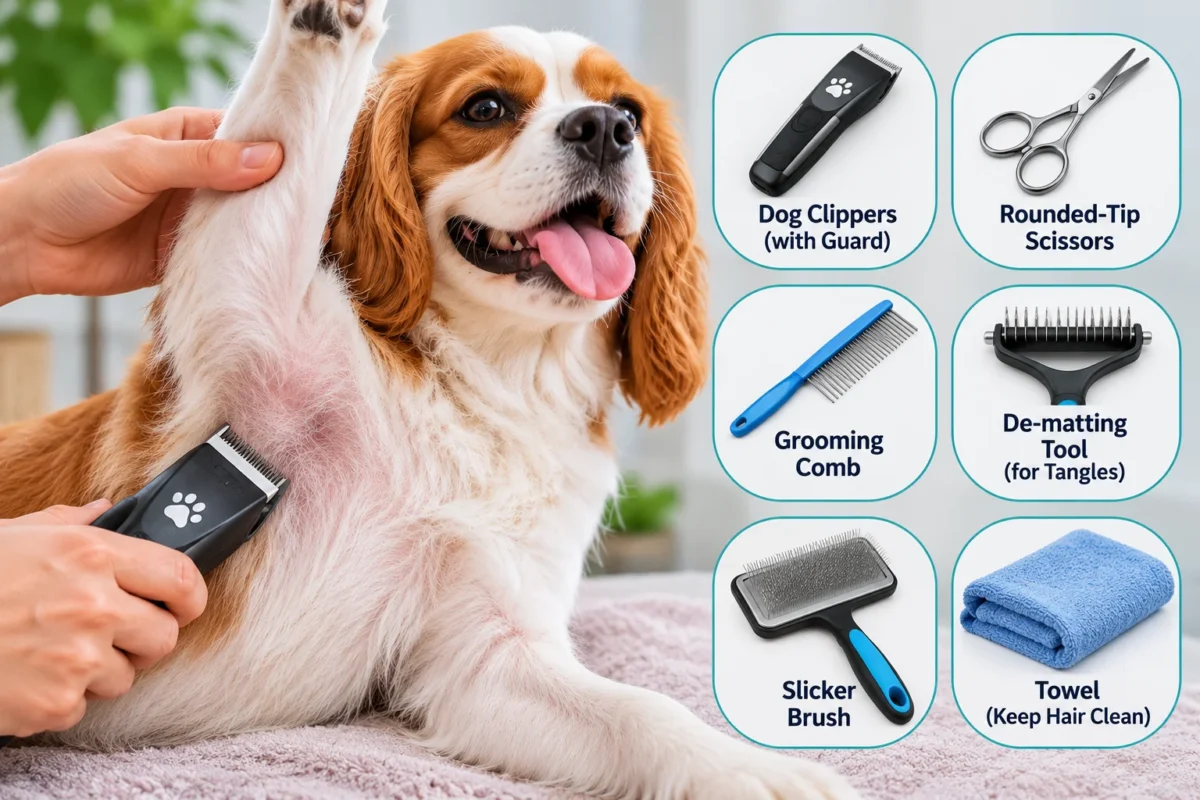
For home maintenance, start with tools that help you inspect and separate the coat rather than cut it close to the skin.
- Wide-tooth grooming comb: Checks for snags and helps loosen small tangles without aggressive pulling.
- Soft slicker brush, if suitable for the coat: Removes loose hair from longer coats with light pressure.
- Dog-safe detangling product: May help with mild tangles when used according to its label.
- Non-slip surface and good lighting: Help you see the crease and keep your dog stable.
- Quiet, dog-specific trimmer: For visible, unknotted outer hair only, and only if you already know how to control it safely.
Warning
Do not insert scissors between an armpit mat and the skin. A fold of skin may be hidden inside the knot. Close clipper work in this crease also carries a cut and irritation risk, even when using pet-grooming equipment.
How to Trim Dog Armpit Hair in 7 Safe Steps
These steps are for routine care of loose, unmatted hair, not for removing tight mats or shaving into the armpit crease. If you cannot clearly separate hair from skin, stop before using a cutting tool.
- Choose a calm moment. Work in a quiet, well-lit place with a non-slip surface. Have another adult calmly support your dog if needed; never restrain a struggling dog to finish a trim.
- Inspect both armpits. With your dog standing naturally, gently part the coat behind each front leg. Look for mats, redness, moist spots, lumps, grass seeds, or soreness. Do not proceed over abnormal skin.
- Find the natural skin fold. Move the front leg only within its comfortable range. Notice where the thin skin creases against the chest. Keep all cutting tools away from this crease.
- Loosen only easy tangles. Hold the coat near its base to limit pulling, then work from the free ends with your fingers or a wide-tooth comb. Do not tug at a knot that feels attached to the skin.
- Tidy accessible outer hair only if necessary. If a few long strands extend away from the body and you can see their full length, an experienced handler may use an appropriate guarded pet trimmer on that exposed hair. Avoid pressing a blade into the armpit, running it over creases, or attempting a close shave. When in doubt, leave the length for a groomer.
- Check comfort and skin again. Put the leg back into its normal position. Make sure the trimmed coat is not pulling, the skin is not irritated, and no loose hair remains trapped in the fold.
- Reward and finish early. Praise your dog, offer a treat if suitable, and stop after a short successful session. Repeat a gentle inspection on the other side rather than extending grooming until your dog becomes stressed.
Tip
Use the comb as a checkpoint, not a challenge: if it glides through freely, more cutting may be unnecessary. If it catches repeatedly or your dog flinches, stop and reassess the area.
What If the Armpit Hair Is Already Matted?
The safest response depends on whether the tangle is loose or tightly attached to the skin. A small, soft knot may separate with light finger work; a compact mat in the armpit crease should be removed by a professional.
Do not pull a mat upward to create space for scissors. This can raise a fold of skin into the cutting path. The VCA Animal Hospitals grooming guide advises clippers rather than scissors for mat removal and recommends professional help for severe tangles.
Armpit mats deserve particular caution because the skin moves as the front leg bends. If a groomer needs to clip close to the skin, they can assess the direction of hair growth, the skin fold, the dog’s tolerance, and the safest blade technique.
When Should a Groomer or Veterinarian Handle the Armpit?
Choose a professional groomer for a tight mat, an unclear skin boundary, or a dog that cannot stay comfortable during close trimming. Choose a veterinarian when the problem may involve the skin rather than just the coat.
- Groomer: Tight or extensive matting without obvious skin injury; recurring tangles that need a practical maintenance plan; a dog that resists home trimming.
- Veterinarian: Redness, swelling, sores, bleeding, discharge, bad odor, marked tenderness, or a suspicious lump under the hair.
Do not apply a close-shaving tool over an inflamed area to get a better look. The RSPCA’s dog-grooming advice recommends checking hard-to-see places such as the armpits for skin changes and seeking help when grooming is difficult or uncomfortable.
How Can You Prevent Armpit Mats Between Trims?
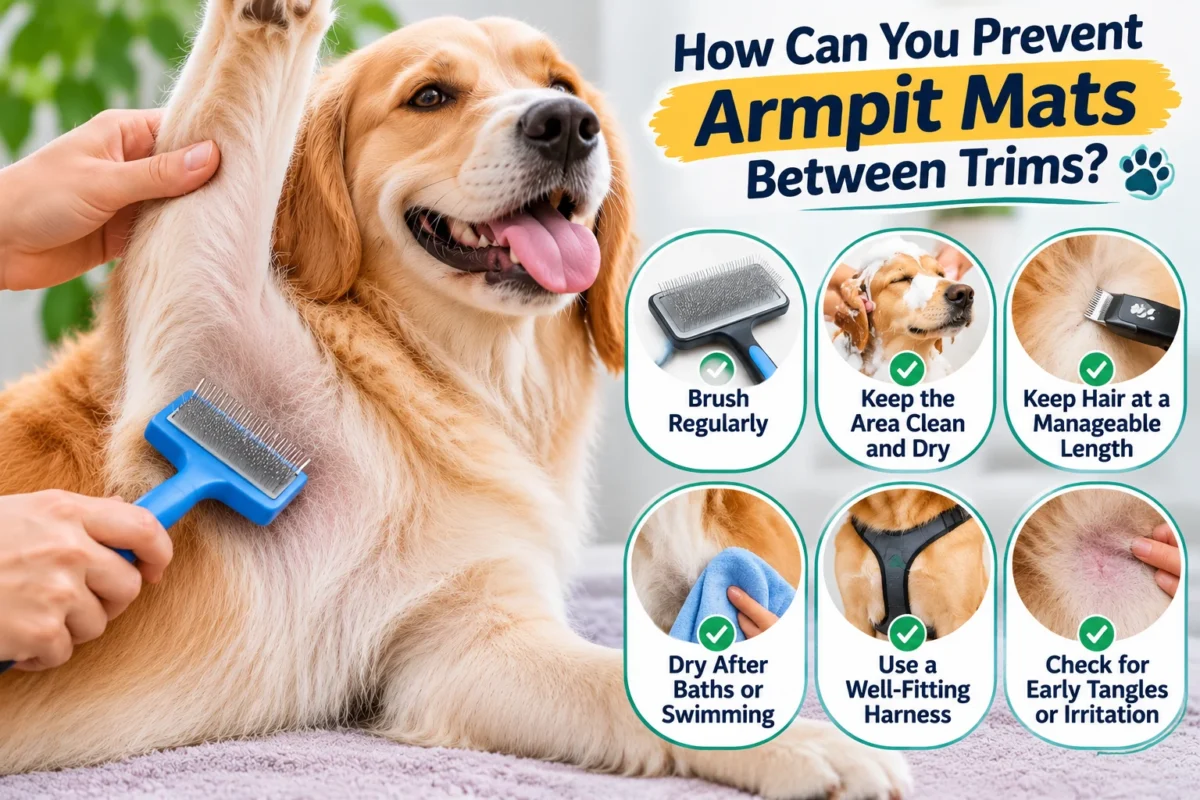
Frequent gentle checks work better than waiting for a large knot. During normal brushing, part the hair behind each front leg and make sure a comb passes through without dragging.
- Check under the front legs after activities that leave the coat wet, muddy, or tangled.
- Brush at a frequency appropriate to your dog’s coat type; some long or curly coats need more frequent attention than short coats.
- Inspect harness contact points for rubbing or trapped hair and make sure the harness fits correctly.
- Address small, loose tangles before bathing; wetting a matted coat can make knots harder to remove afterward.
- Ask your groomer to show you where to part the hair and how much, if any, armpit coat needs routine shortening.
The aim is a comfortable coat that allows natural movement—not perfectly bare skin under every front leg.
Frequently Asked Questions
Do all dogs need their armpit hair trimmed?
No. Short-coated dogs and dogs without tangles may not need armpit trimming. Check the area regularly and trim only when coat length or knots are creating a grooming problem.
Can I use scissors to cut a mat out of my dog’s armpit?
No. Skin can be caught inside a mat, especially in the armpit fold. Do not cut close mats with scissors; ask a professional groomer or veterinarian to remove them safely.
Can I use human hair clippers on my dog?
Dog-specific grooming clippers are generally better suited to canine coats. Even with pet clippers, the armpit fold is easy to nick, so an inexperienced owner should leave close clipping to a professional.
Should I bathe my dog before removing armpit tangles?
Check and gently loosen manageable tangles before bathing. Washing a tangled coat can make mats harder to remove once they dry.
Why does armpit hair keep tangling under a harness?
Movement and rubbing can twist loose hairs together. Inspect the coat where the harness sits, keep the harness properly fitted, and comb through the armpit area after walks when necessary.
What should I do if I find a red or sore patch under the hair?
Stop trimming and contact your veterinarian, particularly if the area is painful, swollen, moist, smelly, bleeding, or has discharge. Do not clip over irritated or broken skin.
Final Takeaway
For safe armpit grooming, inspect first, gently detangle only what releases easily, and shorten visible outer hair only when necessary. Never chase a smooth shave into the skin fold. A groomer is the safer choice for close mats; a veterinarian should check painful or abnormal skin.


