
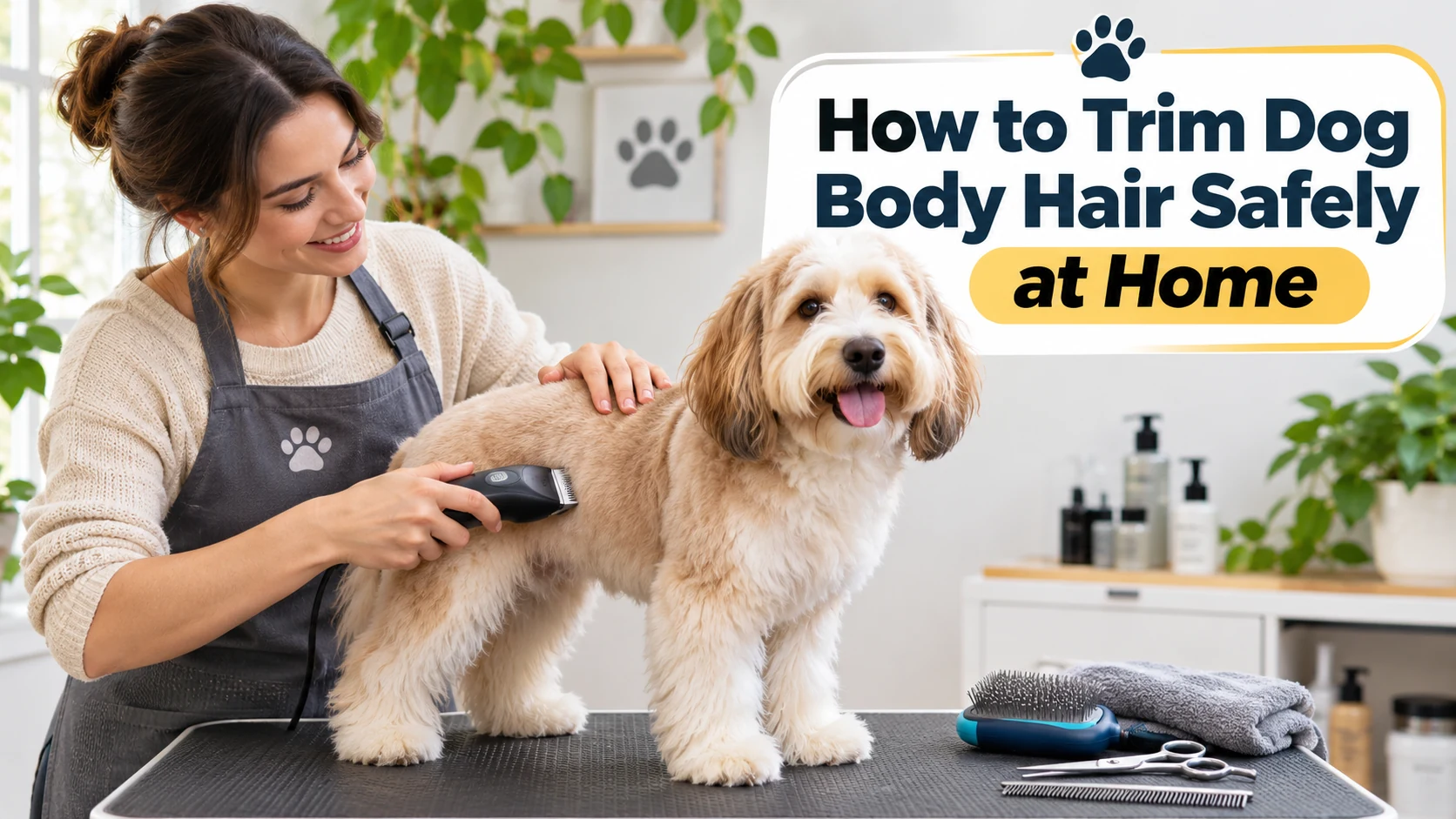
Quick Answer
To trim dog body hair safely, first confirm that your dog’s coat should be clipped. Brush and detangle the coat, bathe if needed, dry it completely, and use pet clippers fitted with a longer guide comb. Work in the direction the hair grows with gentle, even passes, check blade temperature frequently, and stop if your dog becomes distressed. Do not attempt to shave a thick double coat or remove tight mats at home without professional guidance.
Trimming a dog’s body hair can make a coat easier to maintain, but a haircut is not the right answer for every breed. A Poodle with a continuously growing coat has different grooming needs from a Husky with a dense protective undercoat. Before choosing a blade or length, identify the coat you are working with and decide whether home clipping is appropriate.
Should You Trim Your Dog’s Body Hair?
Trim the body when your dog’s coat type benefits from regular haircuts and the dog can tolerate grooming calmly. Dogs with continuously growing or low-shedding coats, including many Poodles and similar mixes, may need periodic clipping to keep the hair manageable and reduce tangles. Some long-coated dogs need only targeted tidying rather than an all-over cut.
Most short-coated dogs do not need a body haircut. Likewise, dogs with thick double coats—including many Huskies, Golden Retrievers, and Pomeranians—are generally better served by brushing, undercoat maintenance, and occasional professional grooming. Shaving can disturb coat regrowth and remove protection from the skin. The American Kennel Club’s double-coat guidance explains why routine shaving is usually discouraged.
If you are unsure what type of coat your dog has, ask a qualified groomer before using clippers. Look especially carefully for dense, soft fur beneath longer outer hairs; that combination often indicates a double coat.
What Tools Do You Need to Trim Dog Body Hair?
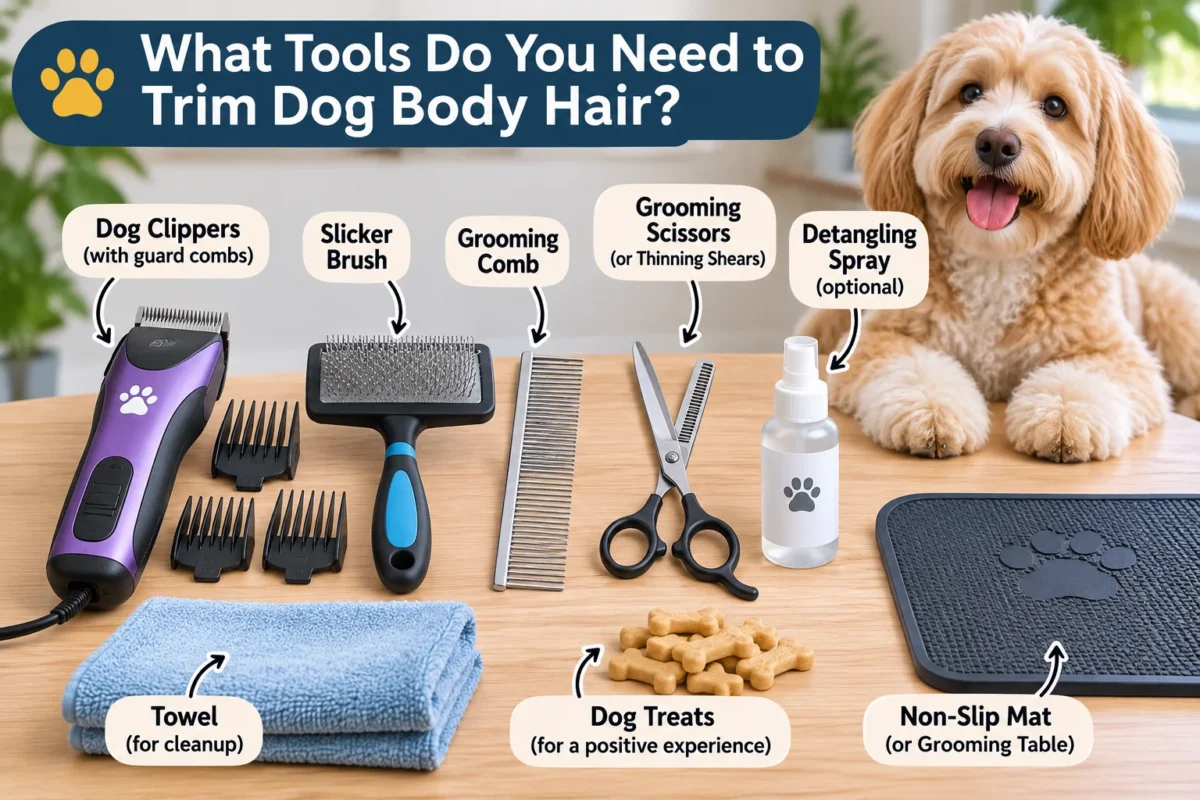
The most useful setup is simple: pet-specific clippers, an appropriate longer guide comb, a brush and metal comb suited to the coat, dog shampoo if bathing is needed, clean towels, and a nonslip surface. Good lighting makes it easier to see coat growth, skin folds, and areas that should not be clipped.
- Pet clippers: Choose a model intended for dog coats rather than assuming human hair clippers will handle the same texture.
- Guide combs: A longer attachment preserves more hair and gives beginners greater room for error. Confirm that the attachment fits the blade and coat.
- Brush and grooming comb: Use these to locate tangles and lift the coat before and after clipping.
- Nonslip mat: Stable footing helps a dog remain comfortable without being restrained forcefully.
- Rewards and breaks: Small treats and short sessions can help a dog accept the grooming process.
Check your clipper manufacturer’s instructions before use, including blade compatibility, lubrication, and cooling. Scissors are not a safe shortcut for cutting out mats close to the skin. The veterinary guidance from VCA Animal Hospitals specifically cautions against using scissors to remove mats.
How to Trim Dog Body Hair in 7 Safe Steps
These steps describe a basic maintenance trim on an appropriate, unmatted coat. They are not instructions for removing severe matting, shaving a double coat, or clipping delicate sanitary areas. For a first full-body haircut, having a groomer demonstrate the technique is the safer approach.
1. Check the Skin, Coat, and Your Dog’s Comfort
Look through the coat for lumps, sores, redness, scabs, ticks, and areas where the skin feels unusually tender. A raised lump or skin fold can be caught by a clipper if it is hidden under long hair. Do not clip over irritated skin or an unexplained growth.
Let your dog become familiar with the tools before you start. Show the clipper while switched off, reward calm behavior, and briefly switch it on at a comfortable distance. If your dog flinches, struggles, or repeatedly pulls away, return to gentle familiarization rather than forcing the haircut.
2. Brush Out Loose Hair and Assess Tangles
Brush small sections gently, following the coat type, then pass a comb through to check whether hair separates freely. Work without tugging the skin. Small, loose tangles may be eased apart with patient grooming, but tightly packed mats can conceal delicate skin.
Do not push a guide comb through a mat, pull it hard, or cut underneath it with scissors. Severe matting is a reason to stop and arrange professional care. If the skin underneath appears inflamed, painful, or infected, contact a veterinarian.
3. Clean and Completely Dry the Coat
For a coat that is free of troublesome mats, bathe with a suitable dog shampoo when necessary, rinse well, and dry fully before clipping. Clean, dry hair is easier for many clipper attachments to cut evenly. Damp hair can clump and make the machine drag or clog.
Use a comfortable drying method that your dog tolerates. Keep airflow and temperature gentle, and check that the dense hair near the skin is dry rather than merely the outer layer. Brush and comb again after drying to reveal remaining snags before turning on the clippers.
4. Choose a Longer Cutting Length First
Fit a compatible guide comb that leaves more hair than you think you need. A longer setting is more forgiving if the coat lies unevenly, and you can shorten it after reviewing the first pass. The length left behind also depends on coat texture, blade design, and clipping direction.
Test a small, accessible area along the back and inspect the result in natural light. Never assume that a clipper’s numerical blade marking equals the length of an attachment comb; follow the manufacturer’s guidance. Avoid close cutting as a beginner, especially over thin skin.
5. Clip the Back and Sides With the Hair Growth
Start where your dog is most comfortable, usually the upper back or shoulders. Hold the clipper so the attachment glides smoothly over the coat rather than digging an edge into the skin. Make controlled, overlapping passes in the direction the hair grows, generally from the neck toward the tail along the back.
Continue across the sides, adjusting your hand as hair direction changes. Do not press hard to make the tool cut. If it snags, stop and check for a tangle, clogged blade, or unsuitable attachment. Periodically brush away clipped hair so you can see the shape developing and avoid creating short patches.
6. Slow Down Near the Chest and Sensitive Areas
The chest may be included in a body trim when the coat allows it, but the armpits, groin, belly, ears, and skin folds need much greater care. Skin here is often thinner, loose, or difficult to see. For inexperienced owners, leave those areas to a groomer rather than trying to finish every part of the haircut.
Pause to check the blade’s temperature against your wrist or another sensitive area of your own skin. Blades can become hot enough to burn. The USDA coat-care guidance flags clipper heat as a burn risk. Allow equipment to cool and follow its maintenance instructions whenever warmth builds up.
7. Comb, Inspect, and Finish Gently
After the main body pass, comb through the coat again and look for uneven areas. Correct only easy-to-reach patches with the same guarded setup rather than repeatedly passing clippers over sensitive skin. An imperfect but comfortable trim is better than pushing a tired dog to obtain a perfectly even outline.
Brush off loose clippings, examine the skin for redness or irritation, and reward your dog. Clean hair from the clipper and maintain the blade according to the manufacturer’s instructions. If the dog seems sore afterward or you spot an accidental cut, seek veterinary advice appropriate to its severity.
Warning
Do not use scissors under tightly matted hair, force clippers through a mat, or continue clipping a panicking dog. Tight mats can pull skin into the cutting path. Professional removal is substantially safer when the skin cannot be seen clearly.
How Do You Get an Even Body Trim Without Cutting Too Short?

The easiest way to get an even finish is to prepare the coat thoroughly, maintain one cutting length across broad body areas, and follow hair growth consistently. Uneven results commonly come from hidden tangles, damp coat sections, inconsistent pressure, or moving against the coat in one area but with it in another.
Make your first pass a conservative one. Brush the coat out afterward, step back to inspect both sides, and adjust only where needed. Do not repeatedly shave an uneven spot shorter to match the shortest accidental patch; that approach can turn a minor cosmetic issue into skin irritation.
For curly coats, the finish may change as the hair springs back after combing. For silky coats, changes in direction become visible quickly. Matching the technique to the coat is more useful than aiming for an identical haircut across different breeds.
What Common Dog Body Trimming Mistakes Should You Avoid?
Most preventable mistakes happen before the first pass. Skipping coat identification can lead to unnecessary shaving; skipping combing can hide mats; and choosing a very short blade removes the option of making small adjustments later.
- Clipping through tangles: Stop and reassess instead of increasing pressure.
- Using hot blades: Check the temperature frequently and allow equipment to cool.
- Trimming while the dog struggles: Take a break; forced restraint raises injury risk.
- Working over unseen skin: Avoid folded or delicate areas until a groomer has demonstrated safe handling.
- Chasing a perfect finish: Accept minor unevenness rather than overworking the coat and skin.
The biggest distinction is between maintenance grooming and corrective grooming. Keeping a healthy coat tidy may be suitable for a prepared owner; removing extensive mats or clipping a frightened animal requires skills that a written tutorial cannot replace.
When Should a Professional Groomer or Veterinarian Handle the Trim?
Choose a professional groomer when the coat has widespread mats, the desired style requires close or intricate clipping, or your dog cannot remain comfortable during handling. A professional can also advise whether a particular double-coated breed needs trimming at all.
Choose veterinary care when mats are accompanied by sores, unusual odor, bleeding, marked tenderness, or inflamed skin. Likewise, a new lump or persistent skin problem should be evaluated rather than clipped over. If your dog has severe handling anxiety or reacts aggressively, speak with your veterinarian about safe ways to make necessary grooming possible.
Frequently Asked Questions
Can I trim my dog’s body hair with human clippers?
Pet-specific clippers are preferable because they are designed for dog-coat textures and compatible grooming attachments. Human clippers may struggle with dense fur, pull hair, or overheat.
Should I trim dog body hair against the grain?
For a beginner maintenance trim, work with the direction of hair growth. Going against it can cut noticeably shorter and make the result less predictable.
Can I trim my dog’s body hair while it is wet?
For routine clipper grooming, begin with a clean, completely dry, combed coat. Wet or damp fur can clog the cutting attachment and create an uneven finish.
How often does a dog need a body haircut?
It depends on coat type, growth, comfort, and the chosen style. Some continuously growing coats need regular trims every several weeks; many shedding or double-coated dogs need brushing rather than body clipping.
What if my dog is scared of the clippers?
Stop the haircut and introduce the sound and vibration gradually using short, reward-based sessions. If your dog remains highly distressed, arrange professional help instead of forcing the process.
Is it safe to shave a dog with matted fur at home?
Not when mats are tight to the skin or widespread. They can hide irritated skin and make clipping hazardous. A trained groomer or veterinarian should assess safe removal.
Final Thoughts
Safe body trimming begins with choosing the right dog and coat, not the shortest blade. For suitable coats, careful preparation, longer guide combs, slow passes, and frequent breaks make grooming more manageable. If the coat is heavily matted, double-coated, or your dog is uncomfortable, professional guidance is the safer next step.


