
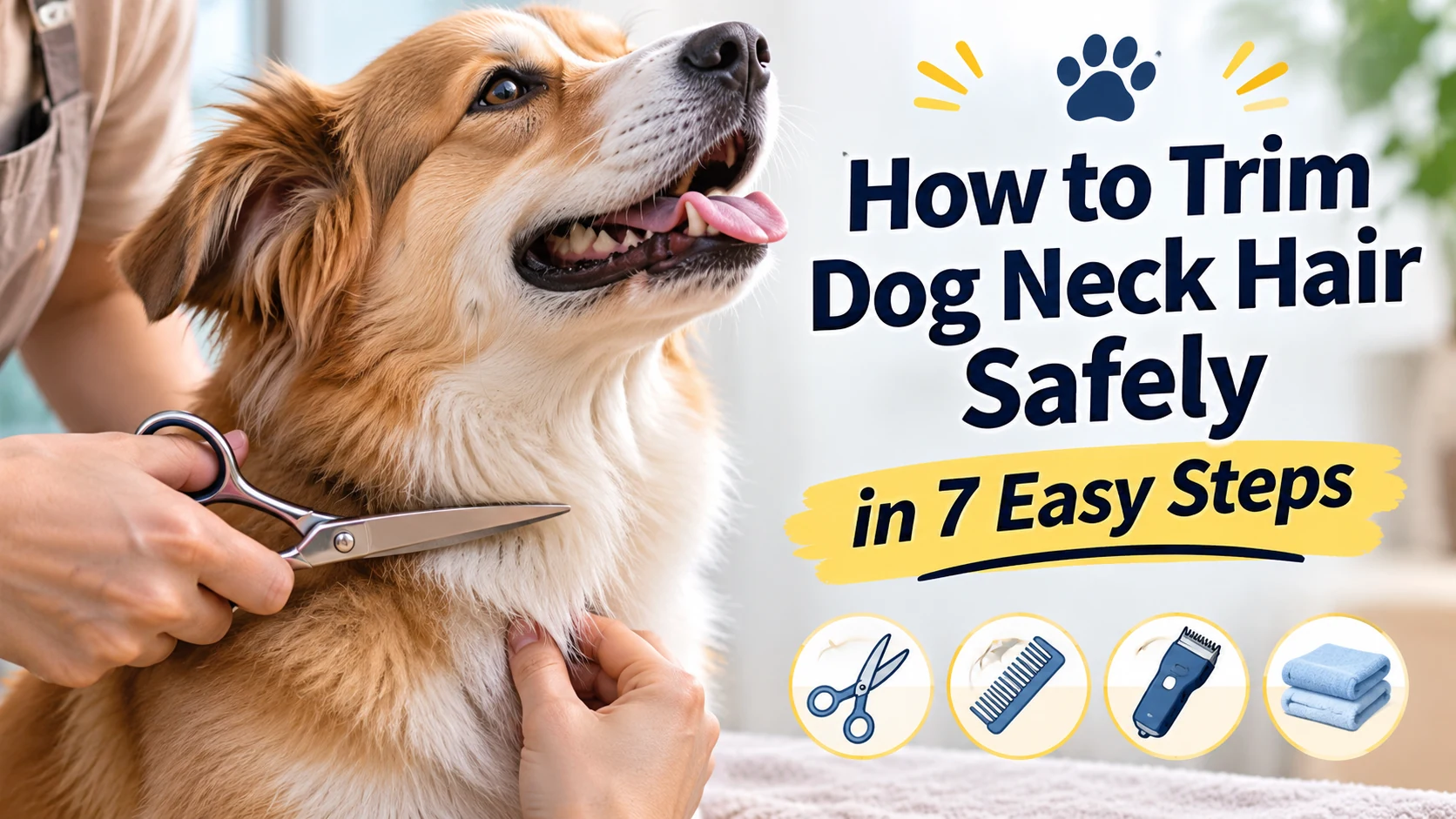
Quick Answer
To trim dog neck hair safely, remove the collar, inspect the skin, brush out loose tangles, and work only on clean, dry fur. For a coat suited to clipping, use pet clippers with a longer guard and make gentle passes in the direction the hair grows. Keep tools away from the throat, ears, skin folds, and close mats. Stop if your dog moves, becomes distressed, or the skin is irritated.
Neck hair can look uneven where it meets the shoulders, tangle under a collar, or form a thick ruff behind the ears. A small tidy-up may help some dogs, but not every neck coat should be cut. The safest method depends on coat type, how much hair needs removing, and whether the dog can remain comfortable and still.
Should You Trim Your Dog’s Neck Hair?
Trim only when there is a clear reason and the coat type allows it. Dogs with continuously growing coats may need their neck hair shortened to match the rest of a haircut. Short-coated dogs typically need brushing rather than a haircut. Dogs with thick double coats often benefit from de-shedding and detangling instead of shaving their protective ruff.
Before cutting, distinguish three situations:
- Loose or fluffy hair: Brush first. You may not need to cut anything.
- Long, healthy hair that looks untidy: A modest trim may work if the dog is calm and the hair is safely accessible.
- Tight mats, skin irritation, lumps, or sore areas: Do not cut into the problem at home; ask a professional groomer or veterinarian as appropriate.
The neck is not a flat grooming surface. Hair changes direction behind the ears and across the shoulders, while loose skin can fold near the collar and throat. A seemingly simple close trim can catch skin if the dog turns suddenly.
What Tools Do You Need to Trim Dog Neck Hair?
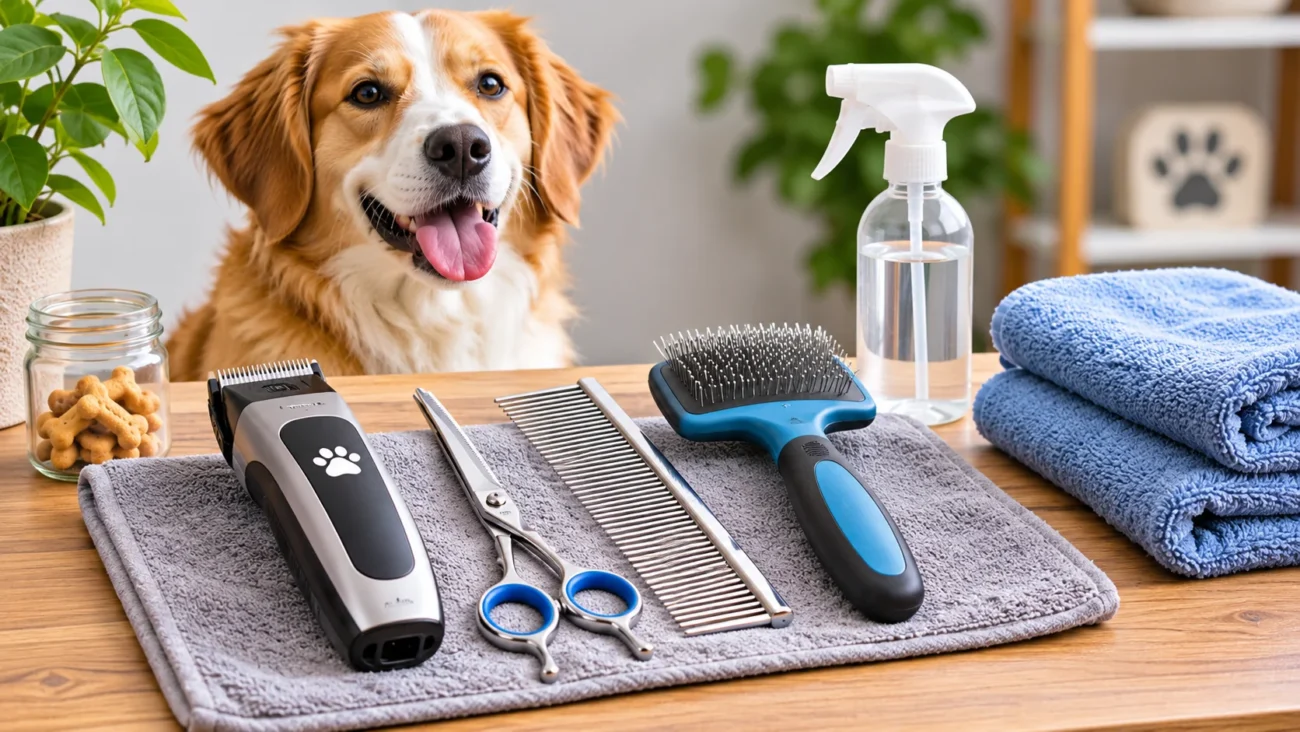
For a basic tidy-up, gather a suitable brush, a metal comb, pet-specific clippers with a compatible guide comb, and treats. A nonslip surface and good lighting make it easier to see the coat and skin.
- Brush and comb: Remove loose fur and check for hidden knots before cutting.
- Pet clipper with a longer guard: Helps maintain distance between the cutting blade and skin on a clipper-appropriate coat.
- Rounded-tip grooming scissors: For tiny, clearly visible finishing adjustments only when the dog is completely still; do not use them to cut neck mats.
- Clean towel: Useful for drying the coat thoroughly after washing.
- Treats: Reward calm handling and allow frequent breaks.
Use clean, maintained equipment. The USDA guidance on preventing matted hair cautions that hot clipper blades can burn skin and scissors can accidentally cut skin along with a mat.
How to Trim Dog Neck Hair in 7 Safe Steps
1. Remove the collar and check the skin
Take off the collar or harness so it cannot snag a tool. With your hands, part the fur around the back and sides of the neck. Look for redness, sores, scabs, lumps, ticks, loose folds, or knots close to the skin. If anything looks painful or unusual, avoid cutting over it.
2. Set up a calm, secure grooming space
Choose a quiet location with a stable, nonslip floor or grooming surface. Let your dog sniff the switched-off tools. Reward calm behavior, then introduce clipper noise from a comfortable distance. Never pull on a collar or restrain the neck tightly to force a haircut.
3. Brush and comb the neck gently
Start behind the ears and across the shoulders, following the natural lay of the hair. Use light strokes and work through the coat in small sections. Do not yank on a knot. If a comb cannot pass through a dense mat without pulling skin, leave that area for a qualified groomer.
4. Dry the coat and select a conservative length
If the coat needed washing, dry it completely before using clippers. Choose a longer guide rather than beginning with a close blade, and make sure the guide is appropriate for your clipper and coat. Check that your dog is relaxed before switching on the tool near the neck.
5. Trim the upper neck in the direction of growth
Begin with a small, accessible patch on the upper back of the neck, away from the ears and throat. Keep the clipper flat against the contour without pressing or digging into the skin. Move in slow, light passes that follow the fur’s natural direction, adjusting as its growth pattern changes.
Do not run a clipper across a skin fold, over a lump, or into a mat. Keep the dog’s head in a natural, comfortable position; avoid manipulating the throat to reach difficult areas.
6. Blend the neck into the shoulders
Step back and examine the outline from the side. If your dog still needs a little tidying, use gentle, overlapping passes with the longer guard on areas where you can clearly see what you are doing. Do not try to erase every line by repeatedly clipping the same patch. Avoid a sharply shaved band where the collar normally sits.
7. Check the finish and reward your dog
Turn the clippers off, brush away cut hair, and check for redness, sensitivity, or uneven areas. Feel the clipper blade cautiously away from your dog; pause if it becomes hot. Finish while your dog is comfortable rather than extending the session for a perfectly symmetrical result. Give a reward and check that the collar fits comfortably after grooming.
Warning
Never attempt to slide scissors beneath a tight neck mat. Mats can pull loose skin up into the hair, making it easy to cut the dog. If a mat is close to the skin, seek professional removal.
How Should You Handle Different Neck Coat Types?
Coat type matters more than the amount of visible fluff. Some dogs need routine clipping; others have a neck ruff that should be managed mainly with brushing.
| Coat type | Safer starting approach | Key caution |
|---|---|---|
| Continuously growing, curly or wavy coat | Detangle, then use a suitable guarded trim if needed | Dense curls can conceal mats and skin |
| Long, silky coat | Brush and make small, conservative adjustments | Avoid cutting near ear edges and folds |
| Dense double coat or thick ruff | Brush and remove loose undercoat | Do not shave the ruff simply to reduce shedding |
| Short, smooth coat | Routine brushing and skin checks | Haircut is usually unnecessary |
A mixed or unfamiliar coat may not fit neatly into one category. If you are uncertain, have a groomer assess the coat before removing length.
What Neck-Trimming Mistakes Should You Avoid?
- Cutting near a moving throat: Work on accessible upper and side areas only; leave difficult throat areas to a professional.
- Trimming over the collar line without checking skin: Collars can hide rubbing, tangles, or irritated patches.
- Using a very short blade from the start: A longer guard allows a more conservative finish.
- Cutting through tightly matted hair: The skin may be drawn into the mat.
- Ignoring heat or repeated passes: Warm blades and repeated contact can irritate skin.
- Forcing a nervous dog to stay still: Fear and sudden movement increase risk; stop and try another day or use professional help.
The RSPCA’s dog grooming guidance advises stopping when an animal becomes distressed and getting professional help for difficult tangles close to the skin.
When Should a Groomer or Veterinarian Handle the Neck?
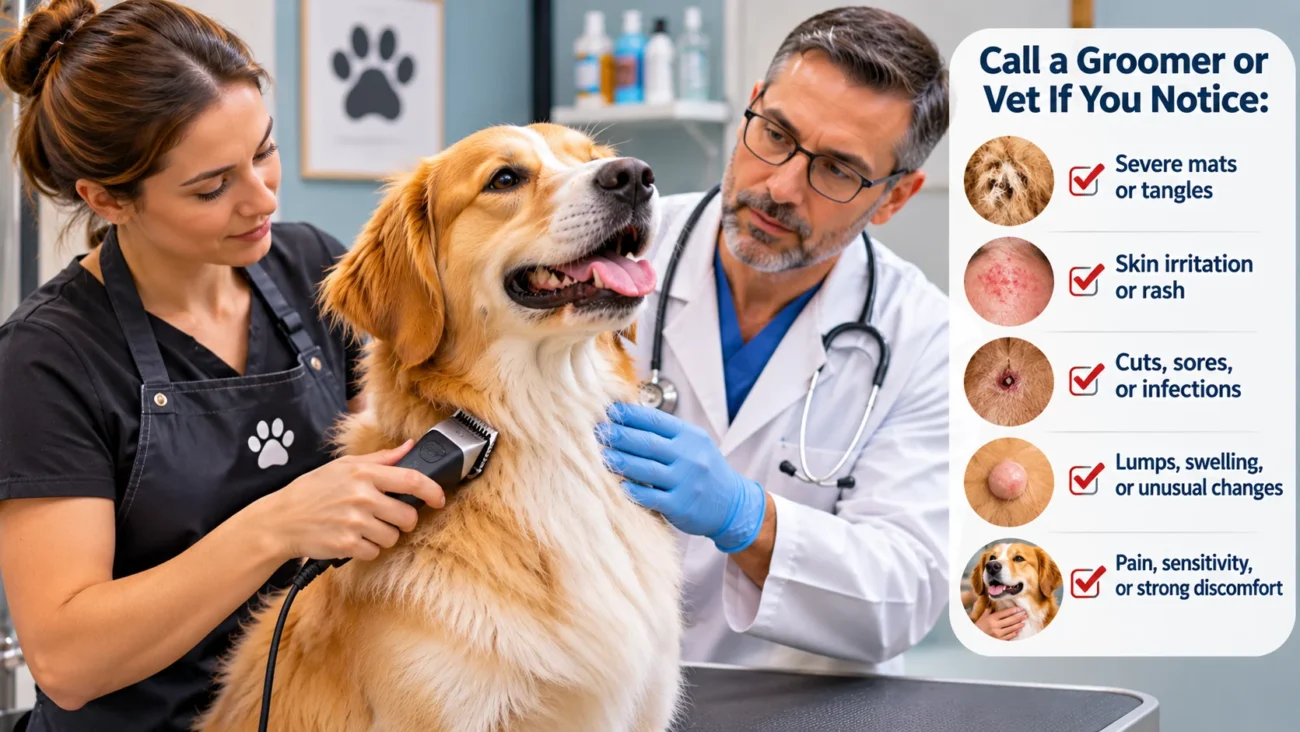
Choose a professional groomer if the coat is heavily matted, you cannot identify the skin beneath the fur, the dog cannot remain still, or a close trim is needed around delicate folds. Ask a veterinarian first if you notice a painful lump, wound, swelling, bleeding, or possible skin infection.
If your dog repeatedly scratches the neck or has persistent redness under the collar, trimming alone will not solve the underlying problem. Avoid grooming directly over the irritated area until it has been assessed.
Frequently Asked Questions
Can I trim my dog’s neck hair with regular household scissors?
Household scissors are not a good choice near neck skin. For small visible touch-ups, rounded-tip grooming scissors may be safer, but only on an exceptionally calm dog and never to remove mats.
Should I trim the hair directly under my dog’s collar?
First remove the collar and inspect the skin. If the area is merely fluffy, brush it; if it is irritated or matted, avoid cutting and address the underlying issue before putting the collar back on.
Can I shave a thick neck ruff to keep my dog cooler?
Do not assume shaving a double-coated ruff is helpful. Brushing out loose undercoat is generally a better first step. Ask a groomer or veterinarian before shaving for a specific medical or coat-care reason.
Why does neck hair look patchy after clipping?
Hair often changes growth direction around the ears, neck, and shoulders. Cutting against those changes, using inconsistent pressure, or repeatedly clipping one spot can make the finish appear uneven.
How can I stop my dog from turning its head during grooming?
Practice short, reward-based handling sessions without cutting first. If your dog still turns or pulls away when the clippers approach, stop instead of holding the head or throat tightly.
How soon can I trim the neck again?
There is no single schedule for every dog. Check coat growth, collar friction, tangles, and skin comfort; trim only when needed for a coat that should be cut, and maintain the area with regular brushing between sessions.
Final Thoughts
A safe neck trim starts with deciding whether cutting is necessary at all. Brush first, check the skin, work conservatively on an appropriate coat, and stop whenever your dog shows discomfort. For tight mats, sensitive folds, or skin problems, professional help is safer than trying to finish the haircut yourself.


