

Quick Answer
To trim dog chest hair safely, brush and comb the coat first, check for hidden skin and mats, then take off only the long, untidy ends with rounded-tip grooming shears or a guarded pet clipper suited to the coat. Work in small sections with the hair’s natural growth, and stop if your dog moves or becomes stressed. Leave tight mats and delicate skin folds to a professional.
Chest fur can collect tangles where a collar or harness rubs, and longer hair may hang unevenly below a dog’s neck. A small tidy-up can help some coats look neater, but not every dog needs chest trimming. For many short-haired and double-coated dogs, regular brushing is the better choice.
The goal is a comfortable, natural-looking chest—not the shortest possible cut. The chest transitions into the neck, shoulders and armpits, where loose skin and movement make careful handling especially important.
Should You Trim Your Dog’s Chest Hair?
Trim only if excess length is causing manageable tangles, snagging in a harness, or an uneven outline, and your dog’s coat type makes light trimming appropriate. If the fur is healthy and easy to maintain with brushing, there is no reason to cut it for appearance alone.
- Long, silky or continuously growing coats: A light outline trim may help manage wispy ends and keep the chest tidy.
- Curly coats: A guarded clipper may be useful for routine maintenance, but clip length and style should match the dog’s coat and grooming plan.
- Double coats: Prefer brushing and undercoat maintenance. Avoid close shaving unless a groomer or veterinarian identifies a specific need.
- Short coats: Usually need brushing rather than chest-hair cutting.
If you are unsure which category applies, ask a professional groomer before making an irreversible short cut. The American Kennel Club’s double-coat guidance explains why these coats require a different approach.
Which Tools Are Safest for Trimming Dog Chest Hair?
Start with grooming tools designed for dogs, and use the least aggressive option that solves the problem.
- Comb and appropriate brush: Separate fur, reveal tangles, and check the finish after every pass.
- Rounded-tip grooming shears: For tiny, clearly visible adjustments to free-hanging hair—not for cutting mats against skin.
- Thinning or blending shears: Optional for experienced handlers who need to soften an obvious edge.
- Pet-specific clippers with an appropriate guard: For an established clipped-coat style, used according to the manufacturer’s instructions.
- Non-slip mat and treats: Help keep the dog settled without force.
Do not use ordinary household scissors near the chest or armpits. Check clipper blades frequently for heat and keep the coat clean and dry before routine clipping. The RSPCA’s grooming guidance recommends stopping when the animal is uncomfortable and getting help with difficult tangles.
How to Trim Dog Chest Hair in 7 Safe Steps
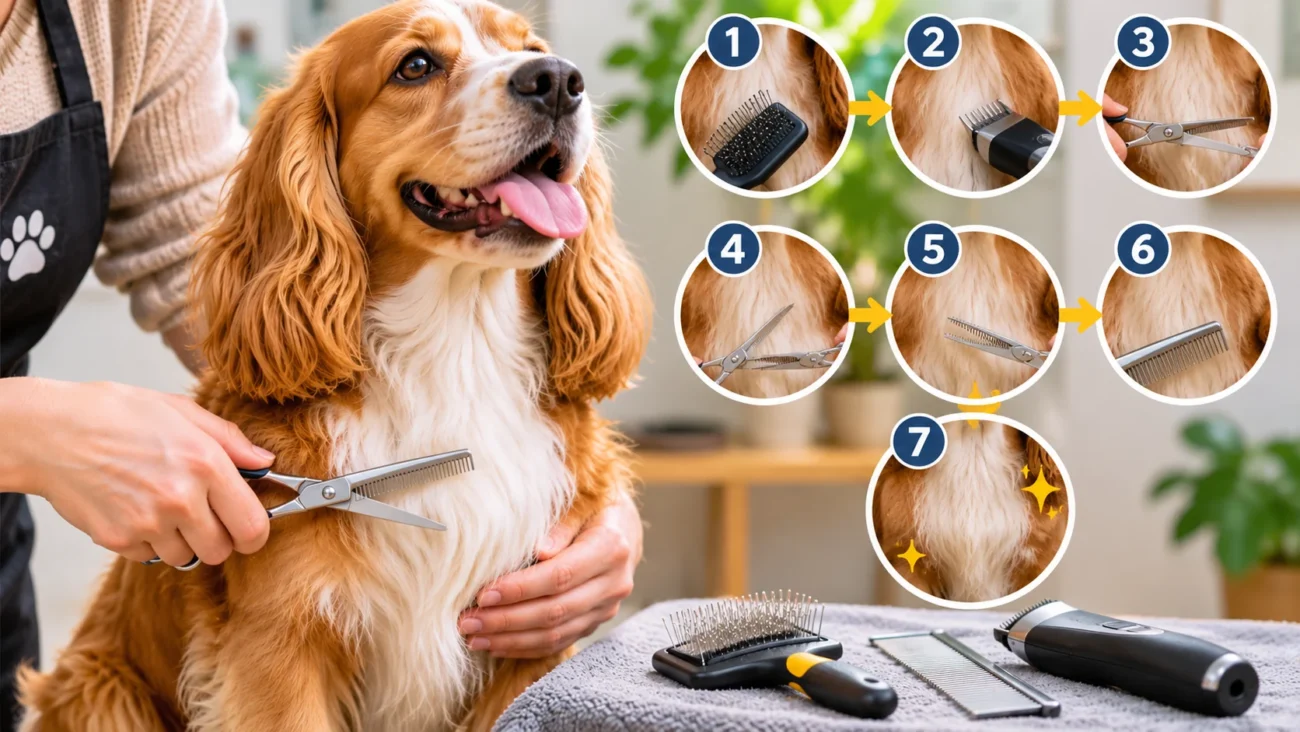
- Set up a quiet, stable space. Choose a non-slip surface with good light. Let your dog stand naturally if comfortable, and keep each session short. Never restrain a panicking dog to finish a trim.
- Brush and comb before cutting. Gently work in the direction of growth, separating the chest fringe from the neck and shoulder hair. If the comb catches on a tight mat, do not tug or continue trimming there.
- Inspect the skin and chest shape. Part the hair to look for redness, sores, lumps, nipples, skin folds and the transition into the armpits. Stop if anything looks painful or abnormal. Make sure you can always see the area beside a blade.
- Decide on a conservative outline. Comb the fur downward to see which ends stick out below the natural chest line. Plan to remove only a little at first; you can reassess after combing.
- Trim the visible ends a little at a time. For a light fringe tidy, hold rounded-tip shears away from the body and cut only hair that is clearly separated from skin. If your dog’s established coat style requires clippers, use a suitable guard on clean, dry, unmatted fur and move gently with the grain, avoiding folds and armpits.
- Blend into the neck and shoulders. Re-comb after every few careful snips. Soften obvious corners without making a hard horizontal line across the chest or trying to make both sides artificially identical.
- Check comfort and finish. Comb through again, look for missed uneven strands and inspect for redness. Stop if the dog is restless; praise and reward calm cooperation. Clean the tools before storing them.
Safety warning
Never use scissors to cut tight mats near the chest skin. A mat can pull skin into the hair, making an accidental cut easy. Stop when the skin boundary is not clearly visible and have a groomer or veterinarian handle it.
How Short Should You Trim Your Dog’s Chest Hair?
There is no universal chest length. For a simple tidy-up, preserve the natural outline and remove only stray ends. A dog whose coat is routinely clipped may need a different finish from a dog with a long, protective double coat.
Rather than picking a blade number from an online photo, base the decision on coat type, whether a comb glides through the fur, harness fit and the dog’s comfort. If you cannot tell how much hair is safe to remove, brush first and leave more length.
Check whether a harness is causing friction rather than assuming shorter fur will fix the problem. Adjusting the harness may be more useful than trimming additional chest hair.
What Common Chest-Grooming Mistakes Should You Avoid?
- Cutting before checking for mats: Hair can conceal trapped skin, irritation or debris.
- Trying to make the chest perfectly flat: The natural curve often looks uneven when the dog turns or moves.
- Clipping against the grain without a coat-specific plan: This can cut more closely than intended.
- Working into armpit folds: These are delicate areas and not suitable for blind cutting.
- Using a hot or dirty clipper blade: Heat and poor tool maintenance can irritate skin.
- Continuing when a dog is frightened: Sudden movement increases the chance of injury.
A recent veterinarian-reviewed guide to matting notes that tight mats can cause pain and hide skin problems, particularly around friction points such as collars and harnesses.
When Should a Groomer or Veterinarian Handle the Chest?
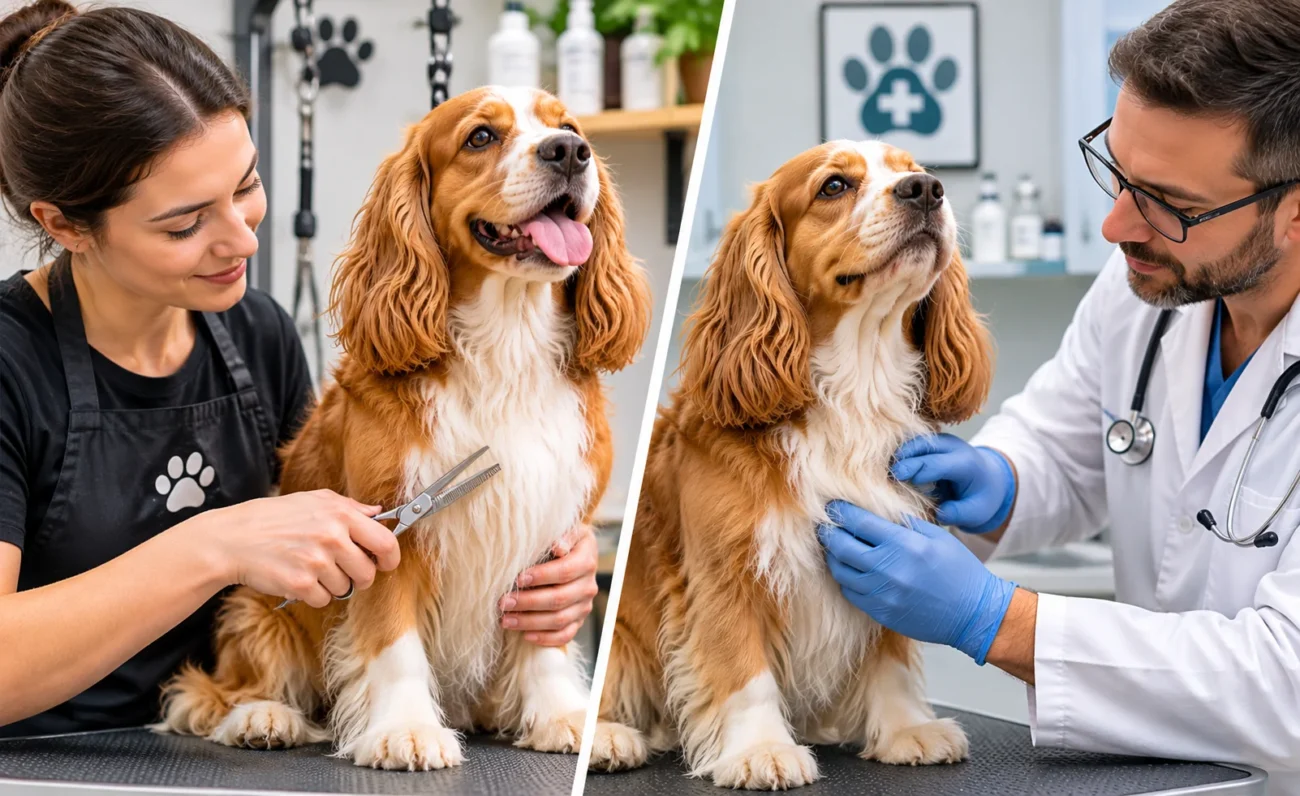
Choose a professional groomer when the chest coat is heavily tangled, the dog cannot stay comfortable for handling, you need a substantial haircut, or you are unfamiliar with the breed’s coat requirements. A veterinarian should assess painful skin, swelling, open sores, discharge or new lumps before any cutting.
If the chest fur is tightly felted against the skin, do not try to slide scissors underneath it. The ASPCA’s pet-grooming guidance specifically cautions against cutting close mats with scissors.
Between trims, regularly comb the chest, check where the harness sits and gently remove loose debris. Grooming frequency depends on how quickly your particular coat tangles, not on a fixed calendar.
Frequently Asked Questions
Can I trim my dog’s chest hair with regular scissors?
For small, visible amounts of loose hair, rounded-tip grooming shears are safer than household scissors. Never cut into a mat or trim where you cannot clearly see the skin.
Should I shave my dog’s chest in summer?
Usually not. Shaving a double coat can interfere with its protective function. Brush out loose coat instead, and ask a groomer before changing the coat length.
Can I trim chest hair while my dog is lying down?
A relaxed position can work for brushing, but avoid cutting while skin is folded or the chest is hidden. Choose a position that gives a clear view without forcing your dog to stay still.
What if my dog has a chest mat near the skin?
Do not pull it or cut underneath it with scissors. A professional groomer or veterinarian can assess and remove tight mats more safely.
How do I stop chest hair from looking choppy?
Comb the coat into its natural direction between light trimming passes. Remove only obvious uneven ends and blend gradually rather than cutting a straight line.
What should I do if I accidentally nick my dog?
Stop grooming immediately. Apply gentle pressure with clean gauze for minor bleeding and contact your veterinarian for guidance. Seek urgent veterinary care for deep, gaping, persistent-bleeding, or otherwise concerning wounds.
Final Takeaway
A safe chest trim is a light, controlled tidy-up—not an aggressive shave. Brush first, respect your dog’s coat type, trim only clearly visible loose ends and get professional help with mats or sensitive skin.


