
Quick Answer
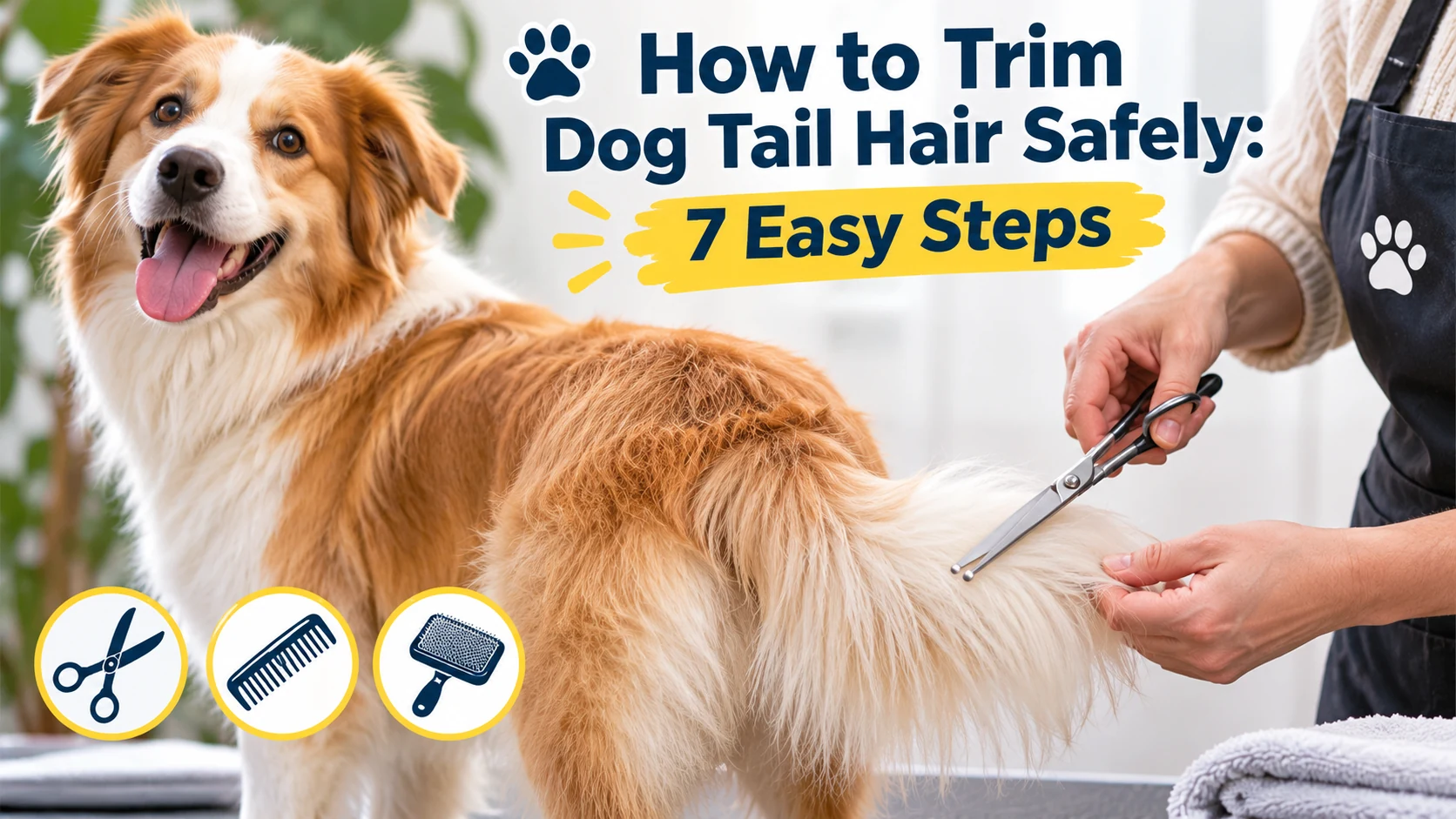
To trim dog tail hair safely, brush and comb the tail, locate the actual tail beneath the fur, and use rounded-tip grooming scissors to remove small amounts of excess hair. Work slowly on clean, dry fur, keep scissors away from the skin, and follow your dog’s natural tail shape. Never cut through mats or trim while your dog is struggling.
A dog’s tail can look untidy when long fur becomes tangled, collects dirt, or grows unevenly. A careful trim can improve its appearance and make everyday grooming easier without removing too much protective hair.
However, trimming tail fur requires extra attention. A dog’s tail contains skin, muscles, bones, nerves, and blood vessels. Long hair can hide its actual position, making careless scissor work dangerous.
This guide explains how to trim dog tail hair in seven manageable steps, which tools to use, how to handle different tail shapes, and when professional grooming is safer.
What Should You Know Before Trimming Dog Tail Hair?
Before trimming your dog’s tail, check the coat condition, tail movement, and your dog’s comfort with handling.
Not every dog needs a tail haircut. Short-coated breeds generally benefit more from regular brushing, while dogs with long or feathered tails may occasionally need light shaping.
Inspect the tail for:
- Mats or knots: Tangled hair may be tightly attached to sensitive skin.
- Redness or irritation: Inflamed areas should not be trimmed until the cause is understood.
- Lumps or wounds: Avoid cutting near unexplained changes in the skin.
- Signs of discomfort: Flinching, growling, or tail guarding may indicate pain or fear.
- Excessive movement: A constantly wagging or tucked tail makes accurate trimming difficult.
Tail handling should never be forced. Dogs that dislike having their tails touched may need several short, positive grooming sessions before scissors are introduced.
The RSPCA’s grooming guidance recommends gradually introducing grooming, using rewards, and stopping when an animal becomes uncomfortable or distressed.
Which Tools Are Safest for Trimming Dog Tail Hair?
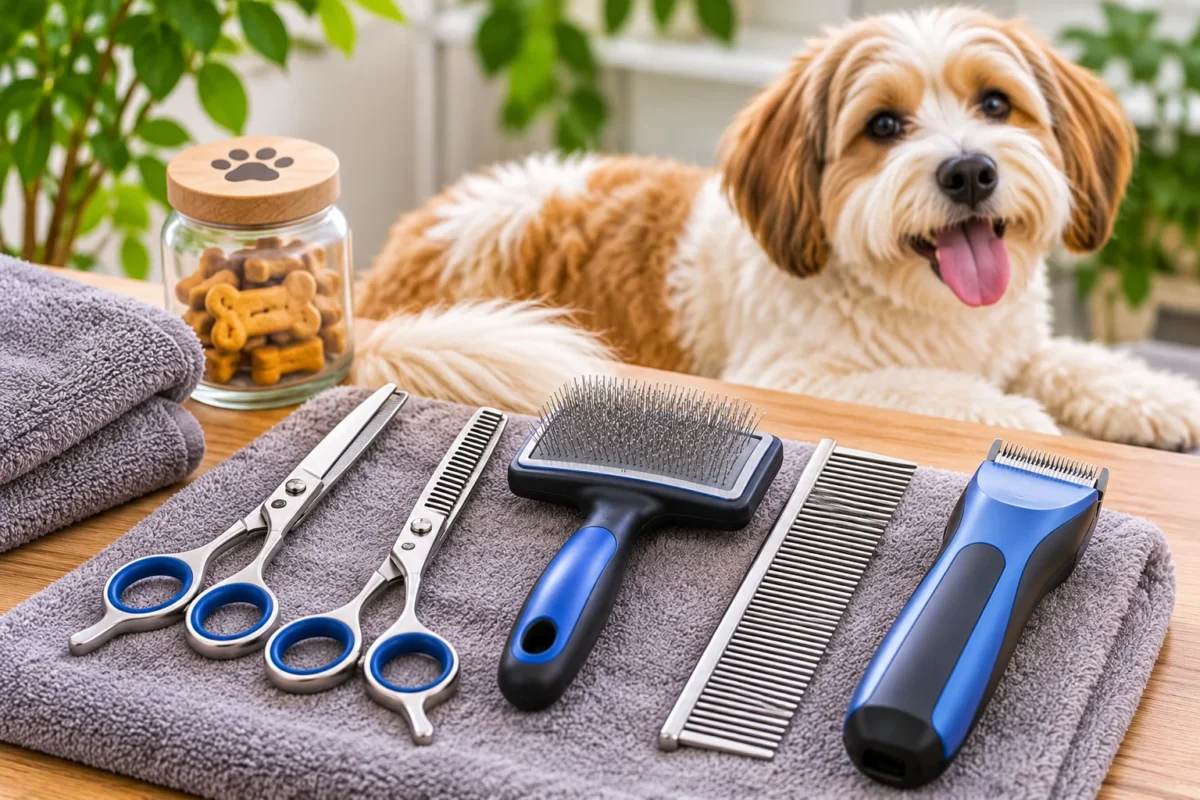
Rounded-tip grooming scissors, a suitable comb, and a gentle brush are the most useful tools for a basic tail trim.
You do not need an extensive grooming kit for a small amount of feathering or an uneven tail outline.
| Tool | Main Purpose |
|---|---|
| Rounded-tip grooming scissors | Carefully trimming visible excess hair |
| Metal grooming comb | Separating fur and identifying tangles |
| Soft brush or suitable slicker brush | Removing loose fur and gently smoothing the coat |
| Thinning shears | Optional blending of uneven hair by experienced users |
| Treats and non-slip surface | Encouraging calm behavior and secure footing |
Choose tools appropriate for your dog’s size and coat. For beginners, simple scissors and a comb generally provide more control than powered clippers for trimming loose tail feathering.
Clippers should not be used directly against the tail without the proper skill, especially when skin folds, mats, or unusual tail shapes are present.
How to Trim Dog Tail Hair in 7 Safe Steps
These steps are intended for a cooperative dog with an unmatted tail and excess hair that can be clearly separated from the skin.
Step 1: Prepare a Calm Grooming Area
Choose a quiet, well-lit location with a stable, non-slip floor. Keep your scissors, brush, comb, and treats within reach before bringing your dog into position.
Let your dog stand naturally rather than forcing the tail into an uncomfortable position. If another adult is helping, they can calmly reward your dog without restraining or pulling the tail.
Start with a short session. If your dog cannot remain comfortable, postpone the haircut.
Step 2: Brush and Detangle the Tail
Begin brushing gently from the hair ends and gradually work toward the base. Use a comb to separate the hair into manageable sections.
Support the hair near its roots to reduce pulling, but do not tug on the tail itself.
If you find a tight mat close to the skin, do not slide scissors underneath it. Skin can become trapped in matted fur, creating a serious cutting risk.
Seek professional grooming help for tightly matted areas.
Step 3: Identify the Actual Tail
Before making any cut, gently feel the position and length of your dog’s tail beneath the coat.
This step is especially important for dogs with fluffy or heavily feathered tails because the visible hair outline may extend well beyond the actual tail tip.
Use your comb to separate the hair from the tail. Only cut loose hair when the scissors can remain a safe distance from the skin.
Never make a blind cut into a thick bundle of fur.
Step 4: Trim the Longest Hair First
Identify the longest pieces of hair extending beyond the shape you want to maintain.
Using rounded-tip scissors, remove a small amount of hair at a time. Keep the blades directed away from the tail and avoid bringing the points close to the skin.
Do not try to create the final shape with a single large cut.
For a feathered tail, trimming just the irregular ends may be enough to improve the appearance.
Step 5: Follow the Natural Tail Shape
Allow the existing tail shape and coat pattern to guide your trimming.
A long, flowing tail may look best with its feathering preserved. A shorter, rounded tail may benefit from a subtle outline rather than a dramatic haircut.
Brush the hair into its natural position and inspect the silhouette from different angles.
Avoid repeatedly cutting one area in an attempt to create perfect symmetry. Natural tail movement changes how the fur hangs.
Step 6: Blend Uneven Sections
After the main trim, gently comb the tail again to reveal uneven sections.
Use tiny, controlled cuts to soften any noticeable edges. If you know how to use thinning shears safely, they may help blend longer sections without creating a harsh, straight line.
For beginners, brushing and making fewer cuts is preferable to aggressive blending.
Leave extra length rather than trying to achieve a very short finish.
Step 7: Check the Tail and Reward Your Dog
Put the scissors down before performing the final inspection.
Brush through the tail, check for loose clippings, and make sure the skin has not become irritated.
Allow your dog to move naturally so you can see how the coat falls when the tail is raised, relaxed, or wagging.
Reward calm cooperation with praise or treats. A successful grooming session does not require an absolutely perfect haircut.
Grooming Tip
Trim conservatively, then brush and reassess. Removing a little extra hair later is easier than correcting an overly short or uneven cut.
How Should You Trim Different Dog Tail Types?
The best trimming approach depends on tail shape, coat thickness, and whether the hair naturally forms feathering.
Long, Feathered Tails
Dogs with long feathering often need brushing more frequently than cutting.
Comb the hair downward and remove only uneven or excessively long ends. Preserve enough length for the tail to retain its natural appearance.
Do not shorten the entire feathered section simply because some strands are tangled.
Fluffy, Curled Tails
Curled tails require particular care because their shape can make the skin and tail tip difficult to locate.
Do not straighten, pull, or force a curled tail to simplify trimming.
Brush the coat in its natural position and limit home trimming to clearly visible excess hair. Professional grooming may be safer when the tail structure is hidden.
Short-Haired Tails
Dogs with naturally short tail hair rarely need a haircut.
Gentle brushing and routine inspection are usually more appropriate than trimming hair close to the skin.
Thick Double-Coated Tails
Double-coated tails often contain dense undercoat beneath longer outer hairs.
Regular brushing helps remove loose fur without unnecessarily shortening the protective coat.
Avoid shaving these tails for cosmetic reasons. If the coat is severely matted or a medical problem requires clipping, obtain advice from a veterinarian or qualified groomer.
How Short Should You Trim a Dog’s Tail Hair?
Trim only enough to remove unwanted length and maintain a comfortable, natural-looking tail.
There is no universal cutting length that suits every breed. The correct amount depends on coat structure, tail shape, and the purpose of the trim.
For routine home grooming, avoid cutting close to the skin or attempting to shave the tail completely.
If your dog has long feathering, start by shortening only the ends that hang noticeably below the desired outline. Reassess the result before cutting more.
Dogs with sensitive skin, previous injuries, or unusual coat conditions may need a different approach.
What Mistakes Should You Avoid When Trimming Dog Tail Hair?
The most important mistakes to avoid are cutting without seeing the skin, trimming through mats, and continuing when the dog becomes distressed.
- Cutting large sections at once: Thick hair can hide the tail underneath.
- Using pointed household scissors close to the skin: Unexpected movements can result in injury.
- Pulling or twisting the tail: Unnatural positioning can cause discomfort.
- Trimming wet hair: Wet fur can hang differently, making the final shape harder to judge.
- Trying to cut out severe mats: Tight mats may contain folded or stretched skin.
- Ignoring stress signals: A frightened dog may suddenly move, bite, or jerk away.
- Shaving a double-coated tail unnecessarily: This can remove protective coat without providing a meaningful benefit.
The ASPCA’s at-home grooming recommendations emphasize trimming clean, dry fur carefully, particularly around sensitive areas such as the tail.
Safety Warning
Never cut hair when you cannot clearly distinguish it from your dog’s tail or skin. Stop immediately if your dog struggles, cries, or shows pain. If an accidental cut occurs, apply gentle pressure with clean gauze and contact a veterinarian, particularly if bleeding continues or the wound is deep.
When Should a Professional Groomer or Veterinarian Trim the Tail?

A professional should handle tail grooming when the coat condition, your dog’s behavior, or the risk of injury makes home trimming unsafe.
Contact a qualified groomer when:
- The tail has thick, tightly attached mats.
- Your dog cannot tolerate having the tail handled.
- The tail shape makes the skin difficult to identify.
- You need a complicated breed-specific haircut.
- You are uncomfortable controlling grooming scissors.
A veterinarian should assess the tail first if you notice swelling, unexplained pain, bleeding, wounds, unusual lumps, or a sudden change in how your dog carries the tail.
These symptoms may indicate an issue that requires medical assessment rather than a cosmetic haircut.
How Can You Keep Dog Tail Hair Neat Between Trims?
Regular gentle brushing, early tangle removal, and checking for trapped dirt can reduce the need for frequent tail haircuts.
Develop a maintenance routine suited to your dog’s coat:
- Brush long or feathered tail hair regularly, increasing frequency when tangles develop.
- Check the tail after outdoor walks for leaves, burrs, and other debris.
- Use a suitable comb to identify knots before they tighten.
- Keep the coat clean and thoroughly dry after bathing.
- Watch for changes in skin condition or tail sensitivity.
Some long-haired dogs need daily attention, while other coats require only occasional maintenance. Adjust the schedule according to how quickly the tail becomes tangled.
Frequently Asked Questions
1. Can I trim my dog’s tail hair with regular scissors?
Purpose-made rounded-tip grooming scissors are generally a better choice. Household scissors may be difficult to control, especially around sensitive skin. Never cut hair close to the tail if you cannot clearly see where the skin is.
2. Does trimming dog tail hair hurt?
Cutting the hair itself should not hurt. However, pulling tangled fur, moving the tail forcefully, or accidentally contacting the skin can cause pain. Stop if your dog shows discomfort.
3. Can I use electric clippers on my dog’s tail?
Clippers may be appropriate for certain grooming styles, but they require skill and careful blade handling. Beginners should avoid clipping directly against sensitive tail skin, especially around mats or curved areas.
4. Should I cut the hair at the very tip of my dog’s tail?
You may carefully shorten loose hair that extends beyond the tail tip, but only when you can identify exactly where the tail ends. Never cut into a dense tuft if the tail tip is hidden.
5. Will dog tail hair grow back after trimming?
Tail hair usually grows again, but the rate and quality of regrowth vary by breed, coat type, health, and how closely the coat was clipped. Some double-coated dogs may experience delayed or uneven regrowth after shaving.
6. What should I do if my dog refuses to let me trim its tail?
Stop the session rather than forcing the haircut. Practice brief, reward-based handling without scissors. If your dog remains fearful, becomes aggressive, or seems painful, seek help from a professional groomer or veterinarian.
Final Thoughts
Learning how to trim dog tail hair safely starts with understanding the coat, choosing suitable grooming tools, and making only small, controlled cuts.
Brush the tail before trimming, identify the actual tail beneath the hair, and preserve its natural shape. A neat result is useful, but your dog’s safety and comfort matter more than a perfectly symmetrical haircut.
When the tail is heavily matted, painful, or difficult to handle, professional assistance is the safer choice.


