
Quick Answer
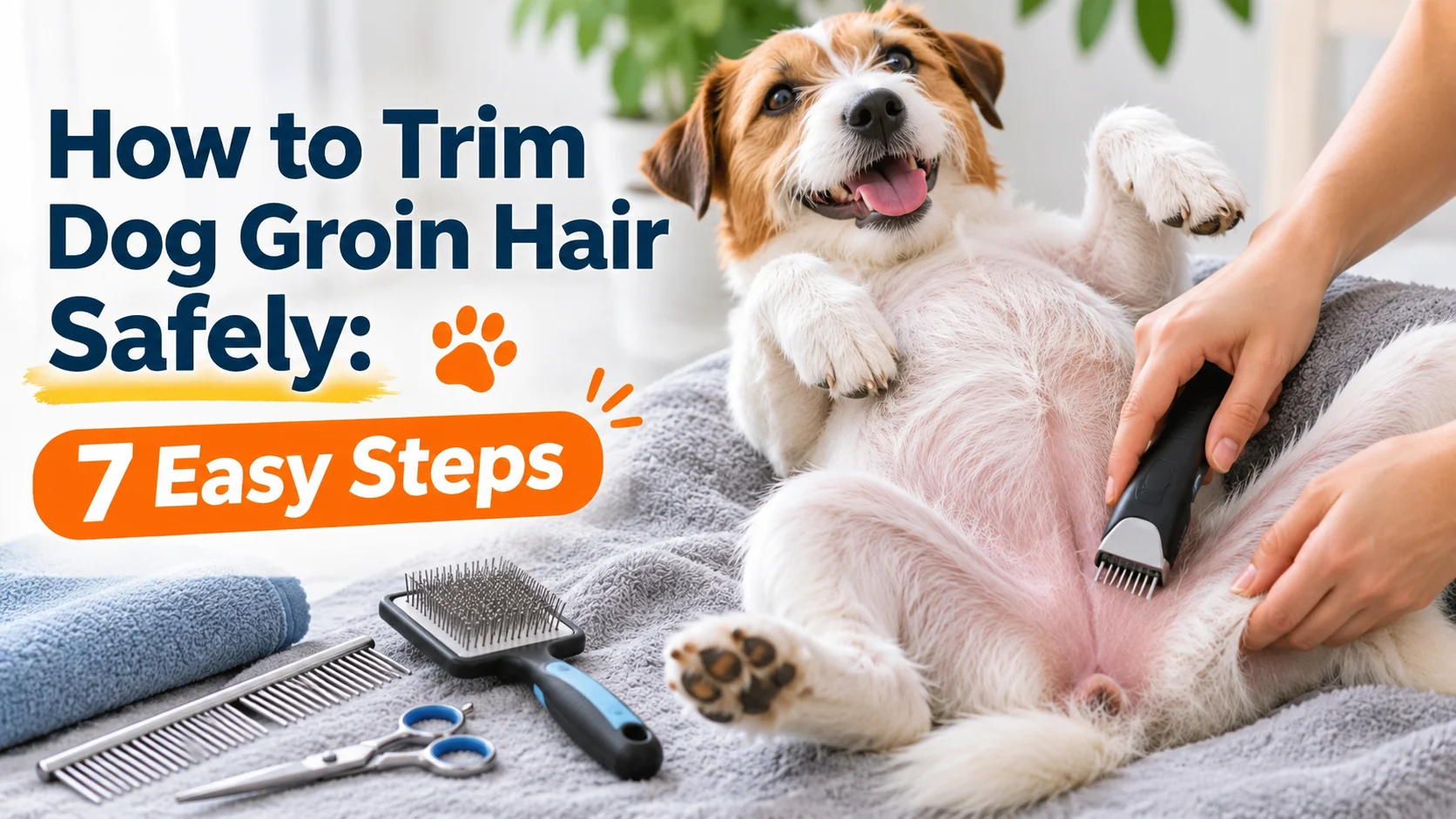
To trim dog groin hair safely, first check that the skin is healthy and your dog is calm. Clean and comb the coat, then tidy only clearly visible, accessible hair using a guarded pet trimmer if you have been shown how to use it. Keep blades away from skin folds, nipples, the penis, vulva and other sensitive tissue. Never cut tight mats yourself; ask a professional groomer or veterinarian for help.
Hair around a dog’s groin can collect urine, dirt and tangles, especially in long-coated dogs. A small, careful sanitary tidy may help keep the coat cleaner. But the groin is a high-risk grooming area: the skin is thin and loose, and an unexpected movement can cause injury.
The goal is not a perfectly smooth shave. It is to reduce soiling while keeping your dog comfortable and protecting the skin.
Should You Trim Your Dog’s Groin Hair at Home?
Only attempt a very light tidy at home if your dog is relaxed, the fur is not matted against the skin, and you know how to handle the tool safely. For close clipping around genitals or skin folds, professional grooming is the safer choice.
A trim may be useful when longer fur repeatedly gets wet with urine, catches debris, or forms minor tangles. Dogs with short, clean coats may not need any groin trimming at all.
Inspect the area before touching a trimmer. If you see redness, swelling, rash, sores, unusual discharge, swelling around the genitals, or signs of pain, postpone grooming and contact your veterinarian. Hair removal will not treat an underlying skin or urinary problem.
Which Tools Are Safest for Trimming Dog Groin Hair?
For a beginner, the safest plan is often to use a comb and gentle cleaning at home, then have a groomer perform any actual clipping. If a groomer has shown you how to maintain the area between appointments, prepare the following:
- A small pet grooming trimmer with an appropriate guard: suitable only for accessible coat, not for clipping directly over genital openings or loose skin.
- A fine or medium grooming comb: helps separate loose hair and reveal hidden tangles without tugging.
- A non-slip mat and good lighting: allow your dog to stand comfortably and help you see where hair ends and skin begins.
- A clean, soft cloth and lukewarm water: for removing superficial dirt and urine residue, followed by gentle drying.
- Treats and an optional calm helper: useful for rewarding cooperation without restraining a frightened dog.
Do not use household scissors near the genitals or try to slide blades underneath a mat. A comb or guard does not make a clipper injury-proof.
How to Trim Dog Groin Hair in 7 Safe Steps
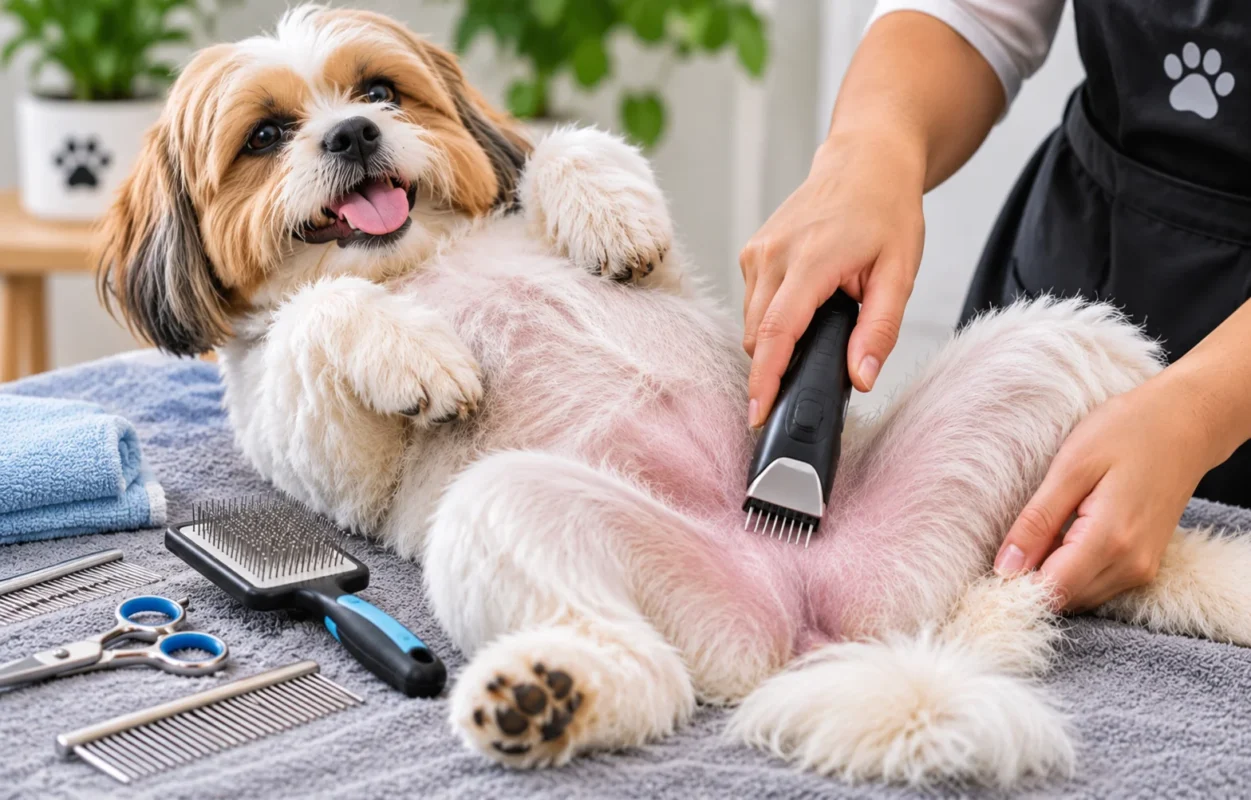
These steps describe a conservative hygiene tidy, not a close sanitary shave. If you are unfamiliar with groin clipping, ask a groomer to demonstrate on your own dog before attempting it yourself.
Step 1: Make Your Dog Comfortable
Choose a quiet, well-lit space and place your dog on a secure, non-slip surface. Let them stand naturally. Offer treats and allow them to investigate the switched-off trimmer. Stop if they pull away, freeze, growl, or repeatedly try to sit or escape.
Step 2: Examine the Groin Skin
Gently look at the inner thighs and lower belly without forcing the legs apart. Locate nipples, folds and genital tissue before considering where to trim. If you cannot clearly distinguish fur from skin, do not clip that spot.
Step 3: Clean and Dry the Fur
Remove superficial dirt with a damp, soft cloth and dry the coat thoroughly. A clean, dry coat is easier to examine, and it prevents you from mistaking clumped wet hair for a mat.
Step 4: Comb Only Loose, Comfortable Hair
Comb gently in the direction the coat grows, stopping if the hair pulls on the skin. Do not force the comb through a tight tangle. A mat attached close to sensitive skin requires professional removal.
Step 5: Tidy Accessible Outer Hair Only
If you have been taught to use a guarded pet trimmer, make short, light passes through loose, clearly visible hair on the outer inner-thigh or lower-belly fringe. Keep the tool steady and avoid applying pressure. Do not attempt to clip inside folds, directly over nipples, or across the penis, vulva, scrotum or anal opening.
Step 6: Pause and Check the Tool
Stop after brief passes to check both your dog’s comfort and the blade temperature. Trimmer blades can become hot enough to irritate or burn skin. If your dog moves suddenly, switch the trimmer off before repositioning.
Step 7: Inspect, Clean Up and Reward
Brush away loose clippings and check for redness, scratches or discomfort. Leave the remaining hair alone if trimming closer would mean approaching a fold or genital tissue. Reward your dog and monitor the area for irritation afterward.
Warning
Never chase a perfectly close trim. Loose groin skin can catch between clipper teeth, and scissors can cut skin concealed beneath a mat. Stop immediately if your dog is distressed or you cannot see the area clearly.
How Short Should Groin Hair Be Trimmed?
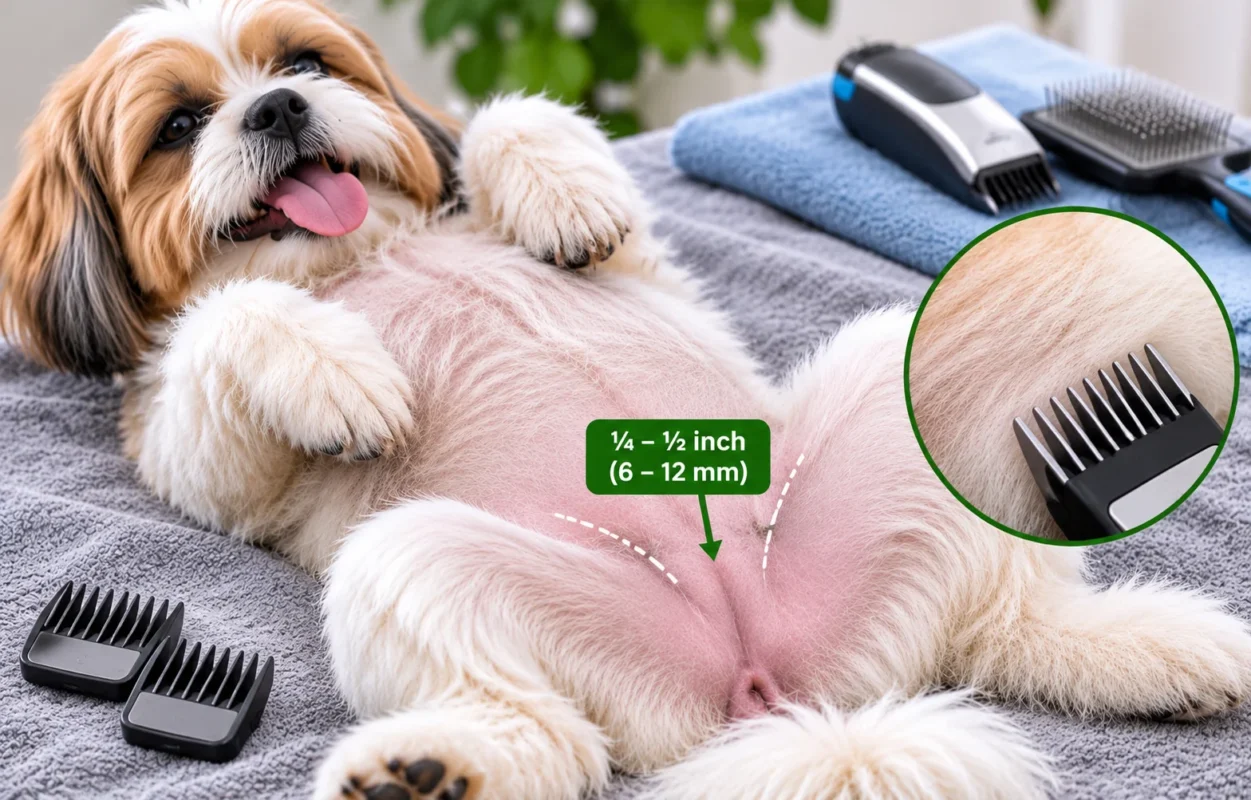
Trim only as much as is necessary to keep the outer coat from collecting waste. There is no universal safe hair length because coat type, skin sensitivity, anatomy and clipper attachments vary. For home maintenance, keeping a little hair is preferable to attempting a close shave.
A professional groomer can assess whether shorter sanitary clipping is appropriate and select a blade and technique for the individual dog. Avoid copying a blade number from an online tutorial without a hands-on demonstration.
What Mistakes Should You Avoid?
- Cutting close to hidden skin: folds and genital tissue can be difficult to distinguish from fur.
- Using scissors to remove tight mats: skin may be pulled into the mat and accidentally cut.
- Holding a struggling dog still: sudden movement increases injury risk; try another day or seek professional help.
- Applying heavy pressure with clippers: pressure, friction and hot blades can irritate thin skin.
- Shaving without a hygiene need: not every dog needs a sanitary clip, and unnecessary close shaving can cause discomfort.
- Ignoring irritated skin: persistent itching, redness or discharge needs assessment rather than repeated trimming.
When Should a Groomer or Veterinarian Handle the Area?
Choose a professional groomer for close sanitary clipping, thick or curly coats that obscure skin, or mats that cannot be gently combed free. Ask the groomer how to maintain the area between visits.
Choose a veterinarian if your dog has painful or inflamed skin, swelling, unusual discharge, repeated licking, difficulty urinating, or an injury. A veterinarian can determine whether cleaning, clipping or medical treatment is appropriate.
Guidance from VCA Animal Hospitals on dog grooming and coat care advises professional assistance with severe mats or skin irritation. The RSPCA’s grooming guidance similarly emphasizes stopping when a dog is stressed and using professional help for difficult clipping.
How Can You Keep the Groin Clean Between Trims?
Check the fur periodically for urine residue, dampness, debris and tangles. Clean only when needed with a soft damp cloth, then dry gently. Comb accessible long coat regularly and avoid scrubbing sensitive genital tissue.
The right grooming frequency depends on the coat and how quickly it becomes soiled. Instead of following a strict shaving schedule, monitor cleanliness and ask your groomer whether a periodic sanitary maintenance trim would help.
Frequently Asked Questions
Can I use human hair clippers on my dog’s groin?
Human clippers may not suit a dog’s coat or delicate anatomy. Use pet-specific equipment only after a groomer has demonstrated safe handling, and avoid close clipping around genital tissue.
Is it normal for dogs to have hair around their private parts?
Yes. Hair around the lower belly and genital area is normal. It only needs trimming when it causes a hygiene or grooming problem.
Can I trim groin hair if my dog has a skin rash?
Do not clip irritated skin yourself. Contact your veterinarian to determine the cause and whether the area should be trimmed or treated.
Why does my dog lick the groin after grooming?
Licking can occur with irritation or discomfort, but it does not identify the cause. Stop further trimming and ask your veterinarian if licking is persistent or accompanied by redness or pain.
Should I bathe my dog immediately after a groin trim?
A full bath is not automatically necessary. Gently remove loose clippings and keep the area clean and dry; if the skin looks irritated, avoid unnecessary products and seek veterinary guidance.
Do male and female dogs need different sanitary trimming?
Yes, the areas requiring protection differ anatomically. Both need careful avoidance of genital openings, skin folds and nipples. Ask a professional to demonstrate the appropriate pattern for your dog.
Final Thoughts
A clean groin area does not require a close shave. Gentle cleaning, occasional combing and a very limited outer-hair tidy may be enough. For sensitive areas, tight mats or an anxious dog, a professional sanitary trim is the safer and more comfortable option.


