
Quick Answer
To trim dog bum hair safely, clean and dry the area, gently brush away loose tangles, and shorten excess fur around the rear using an appropriate pet trimmer. Keep the cutting blade away from the anus and skin folds. If your dog moves suddenly, has tightly matted hair, or shows irritation, use a professional groomer instead. The American Kennel Club’s grooming guidance recommends professional help for sensitive clipping tasks.
7 quick steps
- Prepare your tools: Set up a suitable pet trimmer, comb, towels, and treats.
- Calm your dog: Choose a quiet area with stable, non-slip footing.
- Clean the fur: Soften and remove any dried waste without pulling.
- Check the skin: Look for redness, swelling, wounds, or painful mats.
- Trim conservatively: Shorten surrounding fur without clipping directly over the anal opening.
- Check your work: Stop when the area is clean and free of hanging hair.
- Reward and monitor: Praise your dog and check for irritation afterward.
Safety first: Never force a struggling dog to remain still. Ask a groomer or veterinarian to demonstrate the technique before attempting sensitive trimming yourself.
Learning how to trim dog bum hair can help you keep your dog’s rear cleaner between grooming appointments. Long fur often traps dirt, moisture, and waste, especially in fluffy breeds.
I recommend focusing on hygiene rather than making the area perfectly shaved. This guide explains what to check, which tools are appropriate, and when to leave trimming to a professional.
What Does Trimming Dog Bum Hair Mean?
Trimming dog bum hair means shortening excess fur around a dog’s rear to reduce soiling and make cleaning easier. Groomers commonly call this a sanitary trim or hygiene trim.
The goal isn’t to remove every hair. It’s to maintain a clean area without irritating sensitive skin.
- Under the tail: Long fur may collect dirt and dried waste.
- Around the rear: Excess hair can interfere with keeping the area clean.
- Upper inner thighs: Longer coats may develop tangles near the hindquarters.
- Lower tail: Feathered hair may become dirty after toileting.
Dogs with short, smooth coats often need little or no trimming. Longer-haired dogs may benefit from occasional maintenance.
Why Should You Trim Hair Around Your Dog’s Bum?
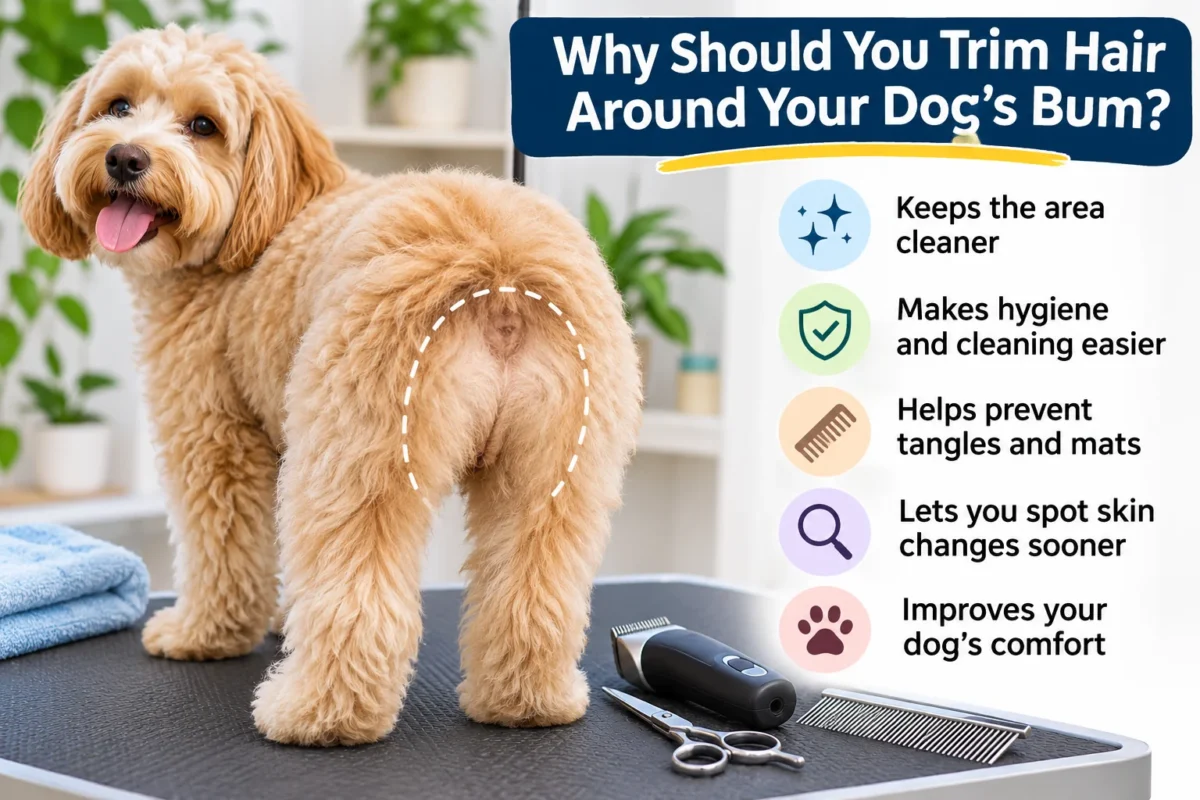
A sanitary trim can help prevent waste from collecting in long hair. It also makes daily inspection and cleaning easier.
The United States Department of Agriculture explains that matted hair can trap feces and interfere with normal bodily functions. Regular grooming helps reduce these problems.
For additional coat-care guidance, see the USDA Animal and Plant Health Inspection Service.
Benefits of a Well-Maintained Sanitary Area
- Cleaner fur: Less loose hair is available to catch fecal residue.
- Easier hygiene: Cleaning after a bowel movement becomes simpler.
- Fewer tangles: Regular coat maintenance helps prevent uncomfortable knots.
- Better visibility: Owners can spot changes in the surrounding skin more easily.
- Improved comfort: Removing dirty, hanging fur may reduce tugging and irritation.
However, a trim won’t solve diarrhea, anal gland disease, or persistent skin irritation. Those problems require veterinary attention.
What Tools Do You Need to Trim Dog Bum Hair?
The safest tool depends on your dog’s coat, behavior, and the area requiring attention. A compact pet trimmer can offer better control than a large grooming clipper.
Owners should receive practical instruction before using sharp grooming equipment near sensitive skin.
Essential Grooming Supplies
- Small pet trimmer: Choose a model designed for controlled detail work.
- Protective comb attachment: Use a manufacturer-approved guard when suitable.
- Metal grooming comb: Helps identify loose tangles without tugging.
- Soft towel: Keeps cleaned fur dry before trimming.
- Dog-safe cleanser: Helps remove dirt from the coat.
- Non-slip grooming mat: Provides secure footing.
- Small treats: Encourage calm cooperation during handling.
A second adult may help reassure and steady a cooperative dog. Never use forceful restraint to complete a cosmetic trim.
Dog Trimmer vs. Grooming Scissors: Which Is Safer?
A suitable guarded pet trimmer is often easier to control when shortening accessible outer fur. Scissors can cause serious injury if a dog moves unexpectedly.
Neither tool is automatically safe near the anus. Professionals understand how to work around delicate skin folds and moving animals.
| Feature | Pet Trimmer | Blunt-Tip Scissors |
|---|---|---|
| Best use | Controlled shortening of accessible fur | Limited outer-coat shaping by an experienced handler |
| Main risk | Skin nicks, irritation, and hot blades | Cuts from sudden movement |
| Noise | Motor noise and vibration | No motor noise |
| Close skin folds | Professional handling recommended | Avoid |
| For beginners | Only after proper instruction | Not recommended near the anus |
My practical recommendation is to choose control over speed. A short, unfinished trim is better than an injury caused by trying to achieve a perfect result.
How to Trim Dog Bum Hair in 7 Safe Steps
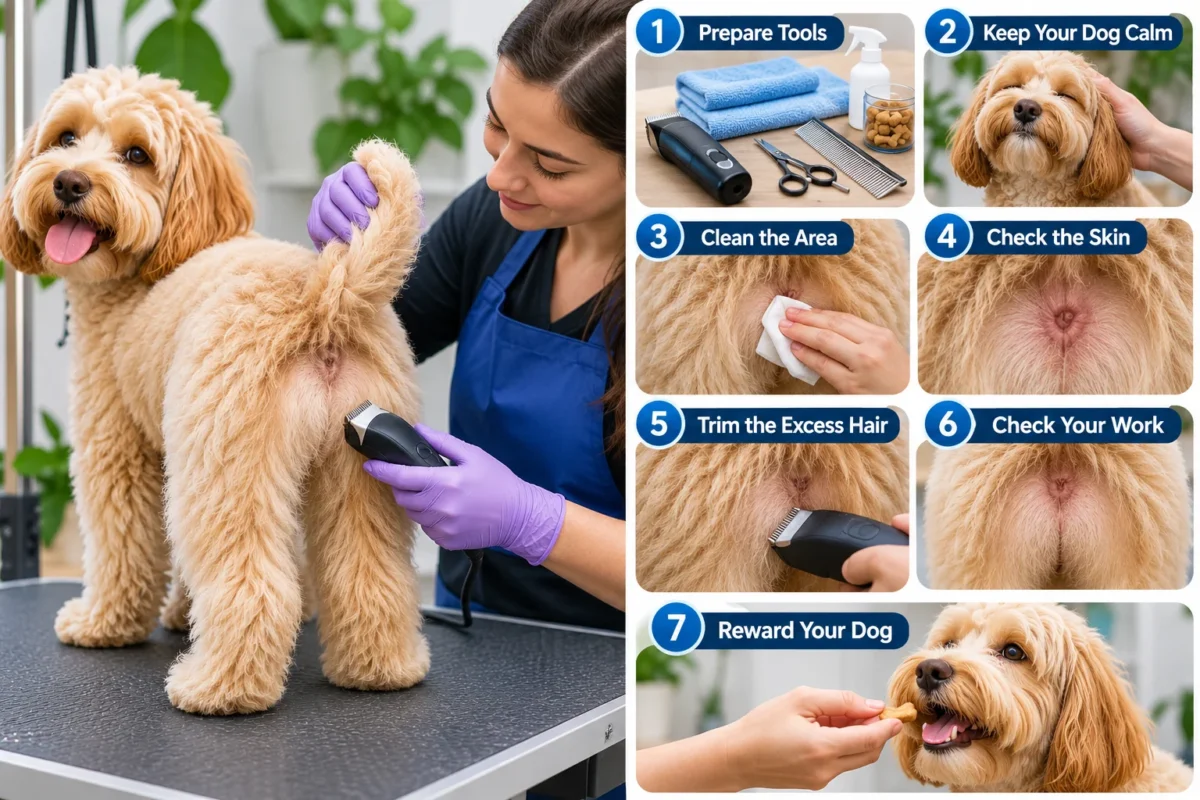
Begin only if your dog is comfortable with grooming and you understand how to operate the equipment. For the closest sanitary work, have a qualified groomer demonstrate the process first.
Step 1: Prepare a Quiet Grooming Area
Choose a well-lit space where your dog can stand comfortably. Place a non-slip mat on the floor to reduce slipping.
- Keep your tools within easy reach.
- Remove distractions and loud noises.
- Check the trimmer and guard before switching it on.
- Keep treats nearby for encouragement.
A floor-level setup is often easier for home grooming. Never leave a dog unattended on an elevated table.
Step 2: Help Your Dog Feel Comfortable
Allow your dog to sniff the grooming tools before starting. Reward calm behavior and gentle handling.
If you’re using a trimmer, introduce its sound away from your dog’s body. Stop if your dog becomes frightened or restless.
Step 3: Clean and Dry the Bum Area
Check the fur for waste, dirt, and moisture. Gently soften dried residue with lukewarm water rather than pulling it out.
Use a dog-safe cleaning product if needed, then rinse according to its directions. Pat the coat thoroughly dry.
If waste is tightly stuck to matted fur, don’t force a comb through it. A professional may need to remove the mat safely.
Step 4: Inspect the Skin and Remove Loose Tangles
Gently lift the tail only as far as your dog comfortably allows. Check the visible area for swelling, redness, wounds, discharge, or painful skin.
Use a comb to separate loose, accessible fur. Never pull a tight mat away from delicate skin with scissors.
- Healthy skin: Continue only if your dog remains relaxed and the area looks normal.
- Tight mats: Arrange professional removal.
- Red or swollen tissue: Stop grooming and contact a veterinarian.
- Strong odor or discharge: Seek a veterinary examination instead of trimming.
Step 5: Carefully Shorten Excess Fur
Only trim loose, clearly visible outer fur that you can safely separate from the skin. Follow the technique demonstrated by your groomer and the trimmer manufacturer’s instructions.
Use short, controlled movements without pressing the blade against the body. Keep the cutting edge away from the anus and surrounding folds.
Never clip directly across the anal opening. If you cannot clearly see the hair and skin boundaries, stop.
Step 6: Check for Uneven Hair and Irritation
Switch off the trimmer and inspect the area under good lighting. Remove loose cut hairs with a soft, clean cloth.
Don’t keep trimming simply to make both sides identical. A comfortable, clean result matters more than cosmetic symmetry.
Step 7: Reward Your Dog and Check Again Later
Finish with calm praise and a small treat. Let your dog move away from the grooming area naturally.
Check the skin afterward for redness, excessive licking, or discomfort. Contact your veterinarian if irritation develops or persists.
What Are the Biggest Mistakes When Trimming Dog Bum Hair?
Most avoidable problems come from rushing, poor visibility, or cutting too close to sensitive skin. The safest approach is conservative and patient.
Common Mistakes to Avoid
- Using pointed household scissors: Sudden movement can cause cuts.
- Shaving too closely: This may irritate sensitive skin and cause clipper rash.
- Ignoring hot blades: Friction can heat metal cutting surfaces.
- Trimming over mats: Tight mats can hide folds of skin.
- Forcing a nervous dog: Struggling makes sharp equipment dangerous.
- Ignoring symptoms: Swelling, persistent odor, and scooting may indicate a medical problem.
- Skipping cleaning: Dirty or wet fur can complicate trimming.
The RSPCA’s animal-care guidance emphasizes gentle grooming and seeking professional assistance for difficult mats.
How Often Should You Trim Your Dog’s Bum Hair?
There is no fixed schedule that works for every dog. Coat length, hair growth, toileting habits, and skin condition determine how often a sanitary trim may help.
Check your dog’s rear regularly and arrange trimming when excess hair starts collecting waste. Don’t shave on a rigid schedule if the area is already clean.
Grooming Needs by Coat Type
| Coat Type | Typical Maintenance | Trimming Priority |
|---|---|---|
| Short, smooth coat | Routine inspection and cleaning | Usually low |
| Long, silky coat | Frequent brushing and sanitary checks | Often moderate to high |
| Curly, continuously growing coat | Regular combing and professional grooming | Often high |
| Double coat | Brushing and selective hygiene maintenance | Depends on rear feathering |
These are general care patterns, not mandatory grooming intervals. Dogs with different coats can have very different needs.
Can You Trim Dog Bum Hair With Regular Scissors?
Regular household scissors are not recommended for trimming near a dog’s anus. Their sharp points and exposed blades create an unnecessary injury risk.
Blunt-tip grooming scissors may be useful for limited outer-coat shaping in trained hands. They still aren’t risk-free.
If you can’t safely separate the hair from the skin, leave the task to a groomer. Never attempt to cut tightly attached mats yourself.
How Do You Clean a Dog’s Bum Without Cutting Hair?
Sometimes cleaning is enough, especially if the coat isn’t excessively long. A gentle spot-clean can remove waste without exposing your dog to trimming risks.
A Simple Cleaning Routine
- Put on disposable gloves if needed.
- Use a soft cloth moistened with lukewarm water.
- Gently soften and lift away loose waste.
- Use a veterinarian-approved dog cleanser when necessary.
- Rinse away any product residue.
- Pat the fur dry with a clean towel.
- Check the area for remaining dirt or irritation.
Avoid harsh soaps, fragranced products, and aggressive rubbing. Persistent soiling may signal a coat-maintenance or digestive problem.
For additional advice, visit PetMD and search for guidance on cleaning dried feces from a dog’s coat.
When Should a Professional Groomer or Veterinarian Handle the Area?
Professional help is the better choice when the hair is tightly matted or the dog cannot remain calm. Veterinary care is necessary when the skin appears abnormal or painful.
Contact a Professional Groomer When:
- Your dog’s coat has tight mats near the anus.
- Your dog becomes anxious when the tail is handled.
- You cannot clearly see the surrounding skin.
- Your dog has never had a sanitary trim.
- You aren’t comfortable operating a trimmer near sensitive areas.
Contact Your Veterinarian When:
- Your dog repeatedly scoots its rear across the floor.
- You notice swelling, bleeding, or pus.
- The area has a strong, persistent odor.
- Your dog cries, strains, or appears painful when defecating.
- Excessive licking continues after cleaning.
These signs may indicate anal gland disease or another medical condition. According to PDSA veterinary guidance, suspected anal gland problems should receive veterinary assessment.
Don’t attempt to express your dog’s anal glands as part of a sanitary trim. That is a separate procedure requiring veterinary guidance.
How Can You Keep Your Dog’s Bum Clean Between Grooming Sessions?
Regular checks help catch minor hygiene problems before they turn into uncomfortable mats. Consistent maintenance is usually easier than a major cleanup.
- Inspect daily: Check long rear fur after bowel movements.
- Brush gently: Prevent small tangles from tightening.
- Clean promptly: Remove waste before it dries into the coat.
- Dry thoroughly: Avoid leaving damp fur against the skin.
- Maintain regular grooming: Ask your groomer about suitable sanitary maintenance.
- Watch stool quality: Persistent loose stools deserve veterinary attention.
Dogs should never need to tolerate painful pulling just to keep their rear clean. If routine maintenance becomes difficult, professional grooming can help.
Which Dog Grooming Tools Are Worth Considering?
A compact detail trimmer may help with hygiene maintenance after you’ve learned the correct technique. These two real products offer different features for small-area grooming.
The ratings below are editorial feature-fit assessments, not customer review scores or hands-on test results. Neither product eliminates the need for careful handling and professional instruction.
🏆 Compact Detail Trimmer
Oneisall FC13 Dog Paw Trimmer
★★★★☆ 4.3/5 editorial fit
This cordless detail trimmer features two speeds, a 19 mm cutting head, and an LED light. Its compact design makes it a reasonable option to consider for controlled outer-fur maintenance after proper grooming instruction.
🔧 Versatile Grooming Option
Oneisall N5 2-in-1 Pet Paw Trimmer
★★★★☆ 4.2/5 editorial fit
The N5 has interchangeable detail blades, a cordless design, and a manufacturer-stated runtime of up to 120 minutes. Its multiple blade options may suit owners maintaining several small grooming areas, provided they understand safe tool use.
Affiliate disclosure: This article contains affiliate links. Qualifying purchases may earn a commission at no additional cost to you.
Frequently Asked Questions About Trimming Dog Bum Hair
Is it safe to trim hair around a dog’s anus?
Trimming surrounding fur can be safe when performed by someone trained in sanitary grooming. The area has delicate skin and folds that sharp tools can injure. Beginners should ask a professional groomer to demonstrate safe technique rather than attempting close clipping independently.
Should I shave my dog’s bum completely?
No, complete shaving is usually unnecessary. A sanitary trim aims to reduce excess fur that collects waste while avoiding irritation. Removing too much hair or clipping against delicate skin may cause discomfort, so focus on hygiene rather than achieving a completely bare area.
Can I use human hair clippers on my dog’s bum?
Human hair clippers aren’t designed specifically for pet coats or sensitive animal grooming. Blade design, cutting performance, and attachments can differ from pet equipment. A suitable dog trimmer is preferable, but even pet-specific tools require proper handling and professional guidance for sanitary areas.
What should I do if poop is stuck in my dog’s bum hair?
Gently soften the waste with lukewarm water and remove loose residue without pulling the coat. If feces are trapped in tight mats, arrange professional grooming. Contact a veterinarian if your dog cannot defecate normally, shows pain, or has inflamed skin.
How often does a dog need a sanitary trim?
The ideal interval depends on coat growth and how easily the fur becomes dirty. Some long-haired dogs need regular sanitary maintenance, while short-haired dogs may never need clipping. Check the area frequently and ask your groomer for an individualized schedule.
Final Thoughts: Keep Your Dog’s Bum Clean and Comfortable
Knowing how to trim dog bum hair is useful, but safety matters more than a perfectly shaped coat. Clean, dry fur and a comfortable dog are the real goals.
Start with gentle cleaning and routine brushing. If trimming is necessary, learn the technique from a qualified groomer and avoid cutting near delicate skin without proper training.
Next step: Check your dog’s rear coat today for dirt, loose tangles, or irritation. If the area needs close trimming, book a sanitary grooming appointment and ask for a demonstration you can follow safely at home.


