
Quick Answer
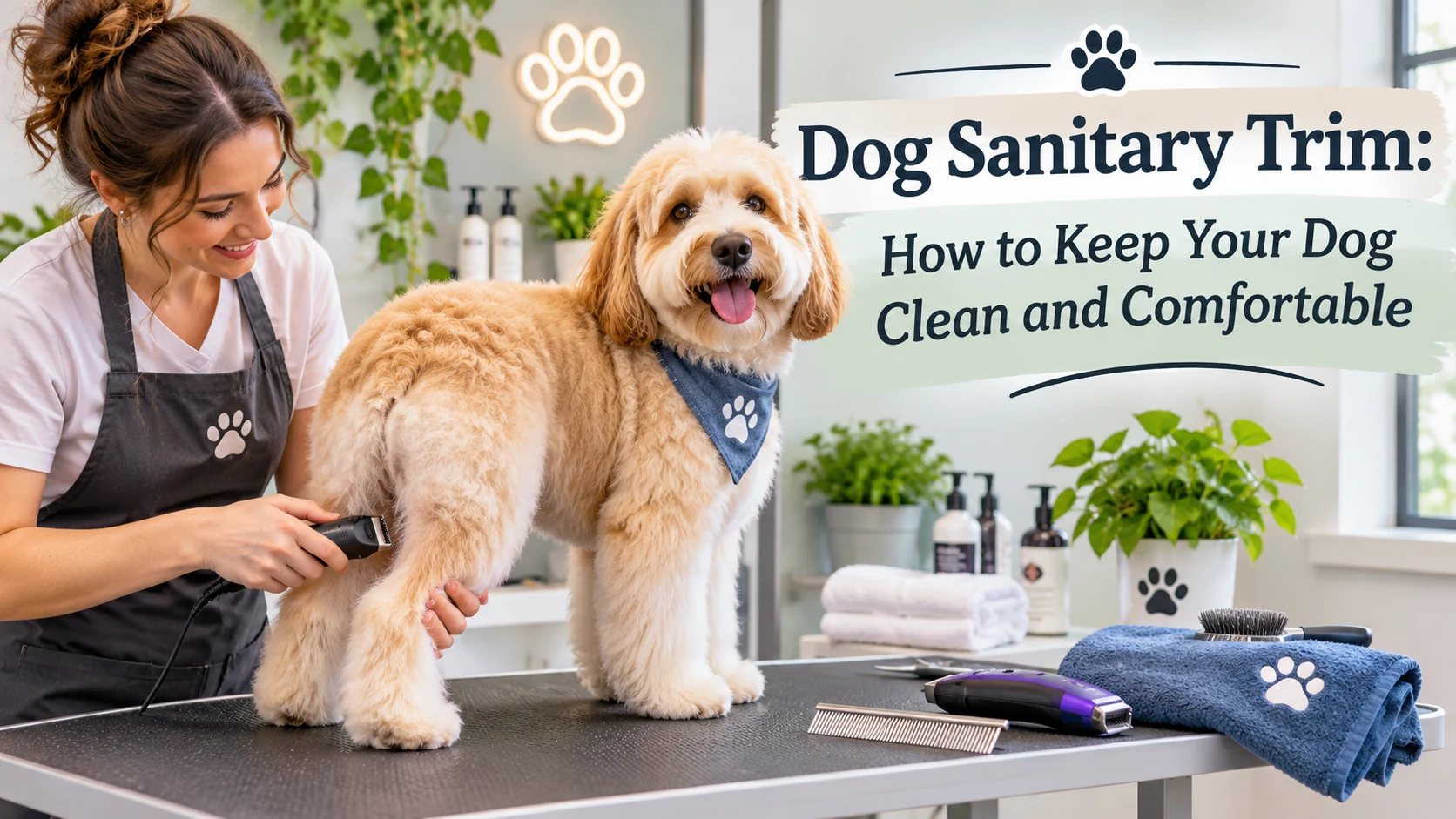
A dog sanitary trim removes excess fur around the anus, genitals, and nearby inner thighs to help prevent waste from sticking to the coat. The safest approach is to have a trained groomer demonstrate the technique before attempting it at home. The American Kennel Club’s grooming guidance recommends professional instruction before clipping sensitive areas.
Seven basic steps
- Inspect the skin: Check for redness, sores, swelling, or painful mats.
- Clean the coat: Remove visible dirt gently and dry the fur completely.
- Prepare equipment: Use clean, maintained pet-grooming tools appropriate for sensitive areas.
- Keep your dog comfortable: Choose a secure surface and avoid forceful restraint.
- Trim surrounding fur: Follow your groomer’s demonstrated technique without contacting delicate openings.
- Check the skin: Stop immediately if you notice irritation or discomfort.
- Clean up: Remove loose hair and disinfect equipment according to its instructions.
Important: Never run clippers directly over the anus, vulva, or penis. If your dog has tight mats or inflamed skin, leave the trimming to a groomer or veterinarian.
A dog sanitary trim is a small grooming task with an important purpose. It helps keep sensitive areas cleaner and reduces the buildup of waste in long fur.
But it isn’t the same as an ordinary haircut. I’ll explain where sanitary trimming helps, which tools are worth considering, and when professional grooming is the safer option.
What Is a Dog Sanitary Trim?
A dog sanitary trim is the careful shortening of hair around areas that collect urine, feces, and moisture. Groomers sometimes call this a hygiene trim, potty trim, or sanitary clip.
The goal is cleanliness, not shaving every hair away. A good trim preserves enough coat to protect the skin while removing fur that traps waste.
Which Areas Does a Sanitary Trim Include?
The exact trimming area depends on your dog’s anatomy and coat type. These are the main areas professionals assess:
- Around the anus: Excess surrounding fur can trap feces after bowel movements.
- Groin: Long hair can hold moisture and debris close to sensitive skin.
- Genital area: Fur around the penis or vulva may become wet or dirty.
- Inner thighs: Thick hair can collect debris or develop tangles.
- Under the tail: Longer coats can catch waste and make cleanup difficult.
Not every dog needs all these areas trimmed. A professional groomer can assess which hair actually causes hygiene problems.
Is a Sanitary Trim the Same as Shaving?
No. A sanitary trim targets selected areas, while shaving removes considerably more coat.
Removing hair too closely may expose delicate skin to friction or irritation. I favor a conservative approach: remove only the excess fur that interferes with hygiene.
Why Do Dogs Need Sanitary Trims?

Sanitary trims help dogs whose fur traps waste or moisture. They are particularly useful for long-haired dogs and those that struggle with normal self-cleaning.
The benefits depend on the dog’s individual needs. A sanitary trim is a grooming measure, not a treatment for infection or other medical problems.
Helps Prevent Feces From Sticking
Long hair around the anus can catch stool during bowel movements. Once waste dries, removal can become uncomfortable.
Shortening the surrounding fur may make cleanup easier. However, recurring diarrhea or fecal leakage requires veterinary attention rather than repeated trimming alone.
Reduces Moisture and Dirt Buildup
Urine can soak into longer fur around the groin and genital area. Damp hair may become smelly and uncomfortable.
Keeping the surrounding coat manageable helps with daily hygiene. Persistent urine scald, discharge, or abnormal odor needs veterinary evaluation.
Makes Routine Cleaning Easier
A tidy coat is easier to inspect after bathroom breaks. You can spot trapped debris before it causes additional discomfort.
This is useful for older dogs and pets with limited mobility. Their grooming needs may increase as activity and flexibility change.
Which Dogs Benefit Most From a Sanitary Trim?
Dogs with long, curly, or dense coats often need more hygiene maintenance. Short-coated dogs may need little or no sanitary trimming.
| Dog or Coat Type | Common Concern | Suggested Approach |
|---|---|---|
| Poodle | Curly hair traps debris | Regular grooming assessment |
| Shih Tzu | Long hair around the rear | Targeted hygiene maintenance |
| Maltese | Fine hair collects moisture | Gentle cleaning and selective trimming |
| Golden Retriever | Long feathering under the tail | Trim only problem areas while preserving coat |
| Labrador Retriever | Usually shorter sanitary-area coat | Clean when needed; trim only if necessary |
| Senior or Mobility-Limited Dog | Difficulty remaining clean | Individual hygiene plan with professional guidance |
These recommendations are based on common coat characteristics. They aren’t fixed schedules or requirements for every dog of a particular breed.
What Tools Do You Need for a Dog Sanitary Trim?
The most important tool is one you can control safely. Sensitive-area trimming calls for more precision than ordinary body grooming.
- Pet grooming clippers: A maintained clipper with a blade suitable for sensitive-area work.
- Narrow pet trimmer: Useful for small sections when recommended by your groomer.
- Stainless steel comb: Helps identify tangles in areas away from delicate skin.
- Soft towel: Removes moisture before and after grooming.
- Dog-safe cleaning supplies: Useful for gently removing surface dirt.
- Reward treats: Help create a positive grooming experience.
- Blade oil and brush: Keep the grooming equipment properly maintained.
Should You Use Clippers or Scissors?
Purpose-made clippers are generally preferable to scissors for close grooming, provided someone has taught you the correct technique. Scissors can cut folded skin when a dog moves unexpectedly.
Never use household scissors to cut tight mats. VCA Animal Hospitals’ coat-care guidance recommends professional assistance for severe matting.
What Clipper Blade Is Safest?
Professional groomers commonly use a number 10 blade for certain sanitary trimming tasks. However, blade selection alone does not make the process safe.
The correct choice also depends on skin condition, coat texture, clipper design, and technique. Ask a qualified groomer to demonstrate the appropriate blade and method for your dog.
Safety tip: Check blade temperature frequently away from your dog. Stop if the blade becomes warm or begins pulling hair.
How Do You Give a Dog a Sanitary Trim Safely?
The process starts with assessment and preparation. For actual clipper work around the anus or genitals, get hands-on instruction from a professional first.
These seven steps explain the safe workflow without encouraging untrained clipping of delicate tissue.
Step 1: Inspect the Skin and Coat
Look for redness, irritation, swelling, cuts, discharge, and tightly tangled fur. Healthy skin should not appear injured or excessively inflamed.
If you discover painful mats or unusual skin changes, stop. A veterinarian should assess unexplained lesions or significant discomfort.
Step 2: Clean and Dry the Fur
Gently remove surface debris with a damp cloth or dog-safe wipe. Avoid scrubbing irritated skin.
Dry the coat thoroughly before any clipper work. Wet, dirty hair can interfere with smooth trimming and make skin assessment harder.
Step 3: Prepare Your Grooming Area
Choose a quiet room with adequate lighting and a secure, nonslip surface. Keep the equipment within reach.
A second calm adult may help reassure your dog, but avoid forceful restraint. Never leave your dog unattended on an elevated grooming table.
Step 4: Introduce the Clippers Gradually
Let your dog inspect the switched-off clippers. Reward calm behavior before introducing sound or vibration.
Turn the clippers on at a comfortable distance and offer another reward. Stop if your dog becomes frightened or struggles.
Step 5: Trim Only the Necessary Fur
After professional instruction, follow the demonstrated method for shortening surrounding hair. Keep the blade away from the actual anus, vulva, penis, and any skin folds.
Use light, controlled movements only on the areas your groomer has identified. Never stretch the session just to achieve a perfectly even appearance.
- Keep delicate openings completely clear of direct blade contact.
- Avoid nipples, loose skin folds, and any inflamed tissue.
- Never pull tightly on mats near sensitive areas.
- Pause to monitor the clipper blade’s temperature.
- Stop immediately if your dog moves unpredictably.
Step 6: Check the Trimmed Area
Inspect the visible skin after trimming. Watch for redness, scratches, swelling, or signs of discomfort.
Don’t apply perfumes, alcohol, or human skin products. If you accidentally injure the area, stop grooming and contact your veterinarian.
Step 7: Reward Your Dog and Clean the Tools
End the session with praise and a suitable treat. A positive finish may make future grooming easier.
Brush loose hair from the equipment and follow the manufacturer’s cleaning instructions. Store the tools dry and protected.
How Do You Trim Around a Male or Female Dog?
The general hygiene goal is similar, but male and female dogs have different anatomy. Both require careful handling around sensitive tissues.
Male Dog Sanitary Trim
Male dogs may collect urine on fur surrounding the prepuce, the sheath covering the penis. Longer hair near the opening can become damp or dirty.
A groomer can shorten excess surrounding fur without clipping delicate tissue. Never shave directly across the preputial opening or pull on sensitive structures.
Female Dog Sanitary Trim
Female dogs may develop damp or tangled fur near the vulva. Skin folds can make this area particularly difficult to groom safely.
A professional should assess hair that needs shortening around the vulva. Never run a clipper over the opening, surrounding mucous membranes, or inflamed folds.
What About Trimming Around the Anus?
Long fur surrounding the anus can collect stool. A sanitary trim removes troublesome surrounding hair without cutting directly across the anal opening.
If your dog repeatedly scoots, strains, or develops swelling near the anus, seek veterinary advice. Trimming won’t resolve anal sac disease or other medical conditions.
How Often Should a Dog Get a Sanitary Trim?
There is no universal schedule. A sanitary trim should depend on hair growth, coat type, and whether waste is accumulating.
Many owners assess long-coated dogs during their regular grooming appointments, often around every four to eight weeks. That is a planning example, not a medically required interval.
- Fast-growing coats: Inspect regularly and shorten troublesome hair when needed.
- Medium-length coats: Check whether rear feathering collects stool.
- Short coats: Sanitary clipping may rarely be necessary.
- Senior dogs: Evaluate cleanliness more frequently if mobility is reduced.
- Dogs with medical problems: Follow your veterinarian’s individualized hygiene advice.
Watch your dog’s comfort rather than relying only on the calendar. If the area stays clean, there may be no reason to trim again yet.
What Are the Most Common Dog Sanitary Trim Mistakes?
Most preventable problems involve technique, excessive clipping, or ignoring discomfort. Sensitive skin leaves little room for mistakes.
- Trimming too closely: Overly short clipping can irritate skin and increase friction.
- Using hot blades: Clipper heat can injure sensitive skin.
- Using scissors near folds: Unexpected movement increases the risk of cuts.
- Pulling on mats: Tight tangles may conceal stretched or damaged skin.
- Forcing cooperation: A frightened dog may twist or suddenly sit down.
- Ignoring existing irritation: Grooming can worsen an untreated skin condition.
- Shaving unnecessary areas: Excessive hair removal provides little benefit and may increase discomfort.
A safe trim should never become a struggle. If your dog won’t remain comfortable and cooperative, stop and arrange professional assistance.
How Can You Keep Your Dog Clean Between Sanitary Trims?
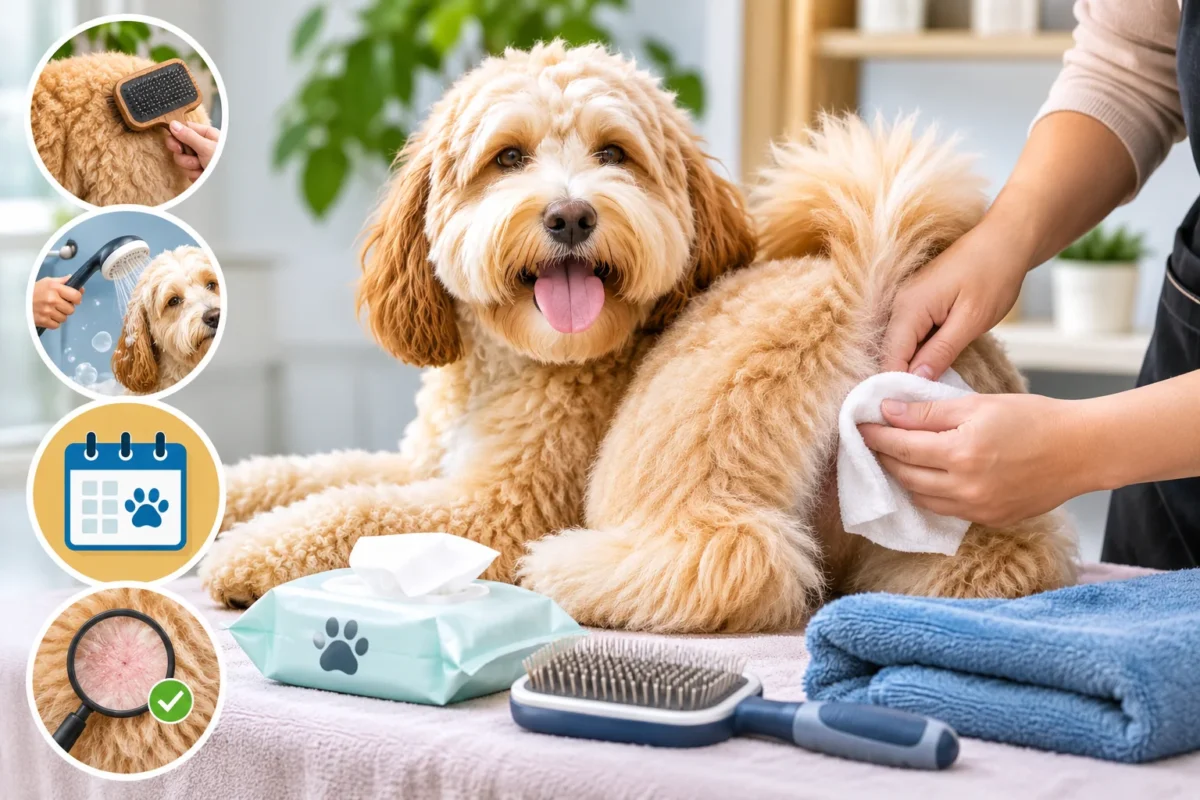
Regular hygiene checks can reduce how often a dog needs intensive grooming. Focus on cleanliness rather than constantly shortening the coat.
- Inspect after bathroom breaks: Check for stool or urine trapped in long fur.
- Remove fresh debris: Use a soft, damp cloth without harsh rubbing.
- Dry damp areas: Pat the coat gently instead of leaving moisture trapped.
- Brush accessible fur: Prevent tangles in surrounding coat areas.
- Monitor skin: Look for new redness, swelling, odor, or discomfort.
- Schedule grooming when needed: Have a professional maintain difficult-to-reach areas.
Use only cleaning products intended for dogs. The RSPCA’s dog-grooming guidance emphasizes gentle handling and stopping when a dog becomes uncomfortable.
When Should a Groomer or Veterinarian Handle the Trim?
Professional grooming is the safer choice when the area is difficult to access or the dog cannot remain still. Certain conditions require a veterinarian rather than a groomer.
Choose a Professional Groomer When:
- Your dog needs its first sanitary trim.
- You haven’t learned safe clipper technique.
- The dog has dense or tangled hair around sensitive areas.
- Your dog becomes distressed by handling or clipping.
- You cannot confidently identify the skin folds and structures to avoid.
Contact a Veterinarian When:
- The skin is red, swollen, bleeding, or painful.
- Your dog has persistent discharge or abnormal odor.
- There are wounds, sores, or suspected infections.
- Your dog repeatedly scoots or licks the genital area.
- There is difficulty urinating or passing stool.
- The dog has severe matting with inflamed skin underneath.
Difficulty urinating, especially with little or no urine produced, can be an emergency. Seek urgent veterinary care rather than attempting grooming.
The ASPCA’s dog grooming tips offer additional guidance on routine coat and hygiene care.
Which Dog Sanitary Trimming Tools Are Worth Considering?
Tool choice matters, but technique matters more. The following products offer different grooming functions rather than guaranteed safety for sensitive areas.
These are specification-based recommendations, not claims of personal hands-on testing. Confirm the blade’s suitability with your groomer before buying.
Affiliate disclosure: Qualifying purchases through the following Amazon links may earn a commission at no additional cost to you.
🏆 Best Versatile Clipper
Wahl Bravura Lithium
★★★★☆
This cordless clipper features an adjustable five-in-one blade and up to 90 minutes of runtime. I favor its versatility for owners who need general coat maintenance as well as professional-guided detail work.
Editorial suitability: 4.5/5; not a customer review score.
💰 Compact Detail Trimmer
Oneisall FC13 Dog Paw Trimmer
★★★★☆
The FC13 has a 19 mm trimming blade, two speed settings, and an integrated LED light. I consider it a practical detail-grooming option, though its narrow head doesn’t eliminate the risks around delicate skin.
Editorial suitability: 4.2/5; not a customer review score.
🐾 Best for Small Grooming Areas
Oneisall N5 2-in-1 Pet Paw Trimmer
★★★★☆
This cordless trimmer uses narrow detail blades and offers up to 120 minutes of advertised runtime. Its compact design suits small grooming sections, provided a professional confirms the appropriate technique.
Editorial suitability: 4.3/5; not a customer review score.
Frequently Asked Questions About Dog Sanitary Trims
Can I Give My Dog a Sanitary Trim at Home?
You can maintain basic hygiene at home, but trimming around the anus and genitals requires special care. Ask a qualified groomer or veterinary professional to demonstrate the procedure first. If your dog moves suddenly, has painful mats, or shows skin irritation, leave the clipping to a professional.
Does a Dog Sanitary Trim Hurt?
A correctly performed sanitary trim should not cause pain. However, dull or hot clipper blades, improper pressure, and accidental contact with skin folds can cause injury. Stop if your dog shows signs of discomfort, and seek veterinary advice if the skin becomes injured.
How Much Does a Dog Sanitary Trim Cost?
Prices vary by location, coat condition, dog size, and grooming salon. Some groomers offer a sanitary trim as a separate service, while others include it in a full grooming package. Ask about the final price and whether cleaning or dematting costs extra.
How Often Should I Trim My Dog’s Private Area?
Trim only when excess hair interferes with hygiene. Long-haired dogs may benefit from checking the area during grooming appointments every four to eight weeks, while short-haired dogs may rarely need clipping. A groomer can recommend a schedule based on your dog’s coat and skin condition.
Will a Sanitary Trim Stop My Dog From Smelling Bad?
A sanitary trim may reduce odor caused by urine or feces trapped in fur. It won’t treat infections, anal sac problems, or other medical causes of unpleasant smells. If odor continues after gentle cleaning, arrange a veterinary examination rather than repeatedly shaving the area.
Final Thoughts: Keep Your Dog’s Sanitary Trim Safe and Simple
A dog sanitary trim is about comfort and cleanliness, not achieving the shortest possible haircut. Remove only unnecessary fur and protect delicate skin.
For a first sanitary trim, I recommend starting with a trained groomer. Learning the correct technique is more valuable than buying expensive clippers.
Between appointments, keep the area clean, watch for irritation, and reward calm handling. A simple routine can make hygiene care easier for both you and your dog.


