
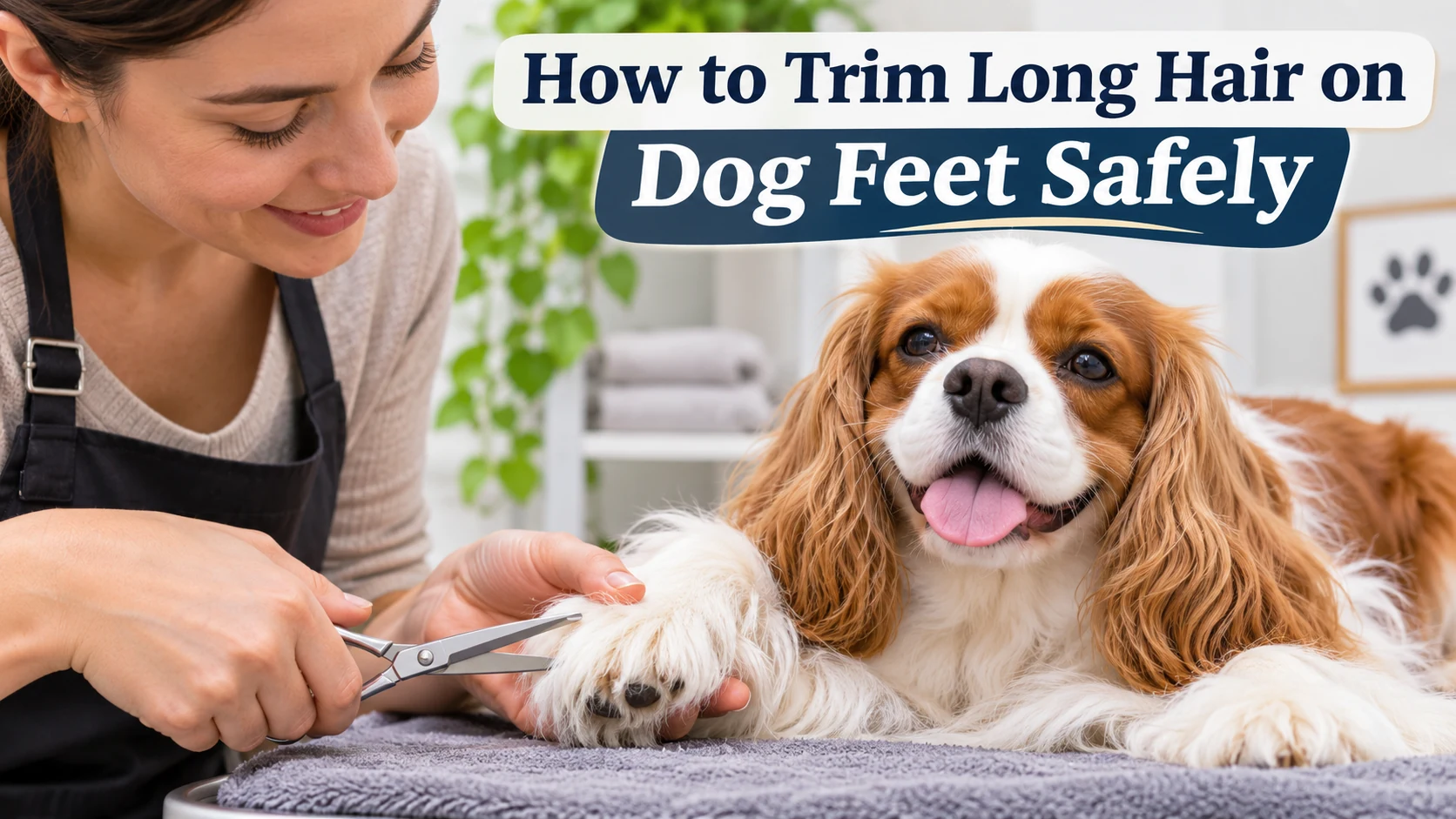
Quick Answer
To trim long hair on dog feet, first check that the paws are healthy and your dog will stay calm. Comb out loose fur, then carefully tidy only the hair protruding beyond the paw pads and foot outline using an appropriate pet grooming tool you know how to handle. Never dig between the toes, cut through mats, or force a struggling dog. Have a groomer handle sensitive or tightly matted areas.
Long hair around a dog’s feet can collect mud, trap small bits of debris, and hide the paw pads. It may also become tangled, particularly in dogs with feathered or continuously growing coats. A careful trim can make routine paw cleaning easier, but the goal is not to shave every hair away.
There are two different jobs here: tidying the visible outline of the foot and trimming fur that extends across the underside paw pads. The second job needs greater care because a moving paw, thin skin between the toes, and poor visibility can make a seemingly small trim risky.
Should You Trim the Long Hair on Your Dog’s Feet?
Trim or arrange for professional trimming when long fur covers the pads, repeatedly tangles, or collects debris. If the hair is neat, the pads remain exposed, and the dog has no discomfort, there may be no need to shorten it simply for appearance.
The American Kennel Club’s home-grooming guidance recommends checking paw pads regularly and notes that excess hair between the toes may need careful trimming to pad level or slightly shorter. It also cautions owners against clipping sensitive areas without appropriate training.
Look at the feet while your dog is standing on a secure, nonslip surface. Can you see the pads from underneath? Does the fur extend below their contact surface? Does it form damp or tangled clumps after ordinary walks? Those observations are more useful than a rigid haircut schedule.
Some breeds naturally have decorative foot feathering. Removing that hair is not automatically necessary. A tidy outline and a healthy underside can coexist with a longer coat on top of the foot.
What Should You Check Before Trimming Dog Paw Hair?
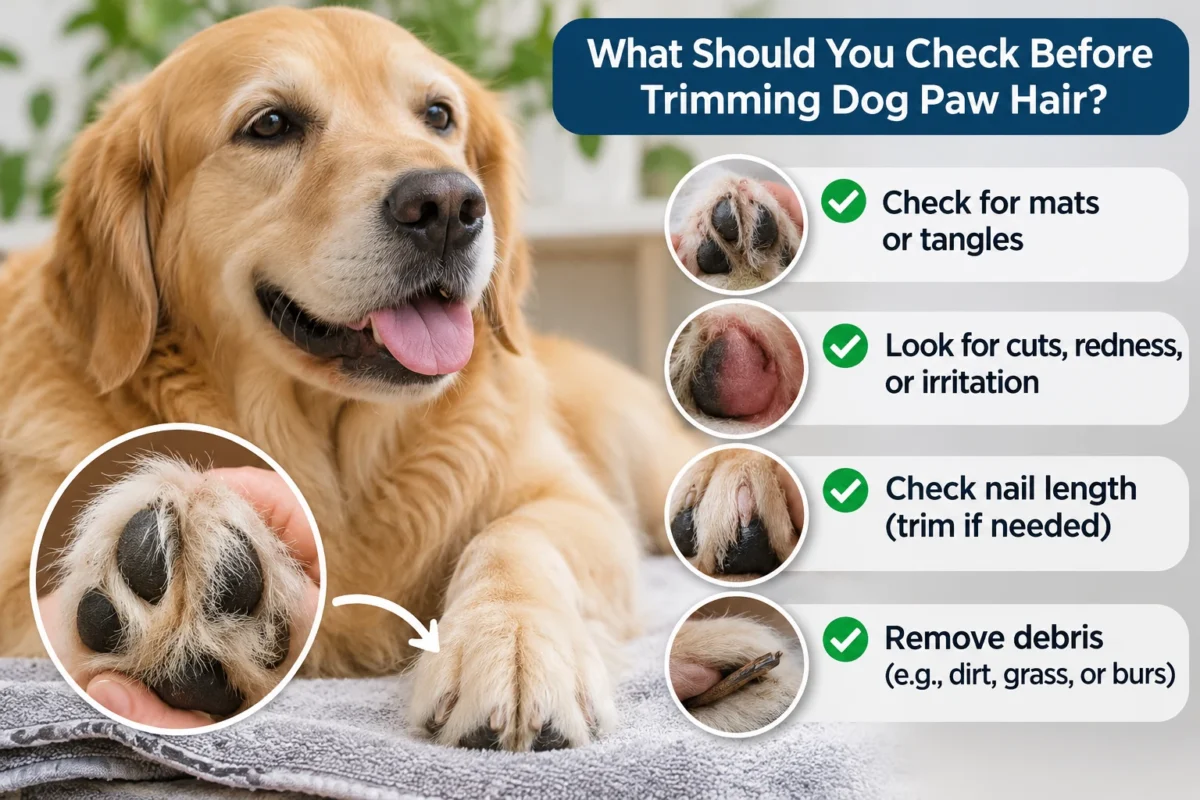
Inspect each paw before reaching for a cutting tool. Healthy, easily handled feet are a reasonable starting point for simple exterior tidying; painful, irritated, or matted feet are not.
- Skin and pads: Look for cracks, cuts, redness, swelling, unusual lumps, or tender areas.
- Between the toes: Check for visible debris, trapped seeds, moisture, and tangles without forcing the toes apart.
- Your dog’s response: Notice flinching, repeated paw withdrawal, growling, or other signs that handling is uncomfortable.
- The coat: Determine whether the hair is loose and combable or tightly felted against the skin.
- Footing: Choose a stable floor or low, secure grooming surface rather than a slippery table.
If you notice persistent licking, a limp, swelling, a wound, or significant pain, arrange veterinary advice before trimming. Grooming can conceal a problem temporarily without addressing its cause. Likewise, do not dig out an embedded object from a painful paw yourself.
Which tools make the job easier?
For a basic grooming session, gather a small comb, a soft brush suited to the coat, clean towels, rewards, good lighting, and a pet-specific paw trimmer if you have been shown how to use it safely. Rounded-tip grooming scissors may be useful for the outer silhouette in experienced hands, but they should not be used to explore pad crevices or remove mats.
Use only a trimmer intended for animal grooming, with a blade and guard appropriate for the task. Follow its operating instructions; check that the cutting head is clean, intact, and cool. A narrow head can improve visibility, but no design makes a moving paw risk-free.
Warning
Do not cut tight paw mats with scissors. Matted hair can pull skin into the tangle, making an accidental cut much more likely. A groomer or veterinarian should assess difficult mats, especially where the skin cannot be seen.
How Do You Trim Long Hair on Dog Feet Step by Step?
Start with a small, visible area rather than trying to create a perfectly groomed foot in one session. These steps cover gentle preparation and conservative exterior tidying. Work near or between the pads only if you have the necessary handling and clipping skills; otherwise, stop at inspection and let a professional do that portion.
- Set up a calm session. Choose a quiet space with bright light and firm footing. Let your dog investigate the comb or switched-off trimmer. Reward relaxed behavior before lifting a paw.
- Clean and dry the foot. Wipe away surface dirt with a damp cloth, then dry the coat and the areas around the pads. Wet fur clumps together, making it harder to judge where the hair ends and the skin begins.
- Brush the loose hair outward. Gently comb from the ankle toward the toes. Do not yank at resistance. If you encounter a knot that cannot be separated without pulling skin, leave it for professional removal.
- Support the paw naturally. Hold it only as far as the leg comfortably bends. Avoid twisting the wrist or holding the leg high behind the dog. If your dog pulls away, release the foot and take a break.
- Tidy the outside edge first. With the foot safely supported and the skin visible, remove small amounts of hair extending beyond the natural foot outline using a suitable technique you can control. Keep sharp edges away from skin and moving toes.
- Assess the underside. Identify hair extending past the pad surface. If you are trained to use a pet paw trimmer, make only gentle, superficial passes across visible excess hair, keeping the cutting surface away from pad tissue and toe webbing. Never push a blade into a gap to chase hidden hair.
- Recheck the shape while standing. Put the paw down and see whether the foot looks balanced. A slightly uneven trim is better than another risky pass around sensitive skin.
- Inspect and reward. Check that there are no obvious nicks, irritated spots, or caught hairs. Give your dog a reward, clean the tools, and repeat another day if the remaining paws require too much handling.
For a dog new to grooming, a successful session might consist of touching one paw, brushing for a few seconds, and stopping. There is no benefit in finishing four feet if doing so teaches the dog to fear the process.
How Short Should the Hair Around the Paw Pads Be?
Hair that protrudes beneath the pads generally only needs to be shortened until the pads are visible and can contact the walking surface. It does not need to be shaved down into the spaces between the toes. Exact grooming choices can vary by coat, foot shape, and health needs.
Think of the paw pads as the reference point, not bare skin. The outer foot can remain fluffy if that suits the breed or the owner’s preferred finish. Cutting deeply for an ultra-clean look adds risk without necessarily providing better hygiene.
According to AKC grooming advice from dog-show experts, keeping foot hair tidy can help the pads contact surfaces and reduce irritation associated with debris. That does not mean every slipping dog has excess fur: long nails, slick flooring, and mobility problems can also affect footing.
Should You Use Scissors or Clippers on Dog Feet?
For untrained owners, the safest choice is often to leave close pad trimming to a qualified groomer. A properly handled pet trimmer may offer greater control over visible protruding fur, while scissors near the pads or between toes can cause serious cuts if the dog moves suddenly.
| Tool or method | Reasonable use | Main caution |
|---|---|---|
| Comb or brush | Separating loose hair and checking tangles | Do not pull painful mats |
| Pet paw trimmer | Superficial trimming when the handler is trained | Risk of cuts, heat, or contact with webbing |
| Rounded-tip grooming scissors | Visible outer-foot shaping by a confident handler | Not for mats or digging between pads |
| Professional grooming | Close pad work, difficult coats, and tangled fur | Skin problems may still need a veterinarian |
VCA Animal Hospitals advises using clippers rather than scissors for removing mats and recommends professional care when tangles are extensive or skin irritation is present.
What If Your Dog Won’t Let You Touch Their Feet?
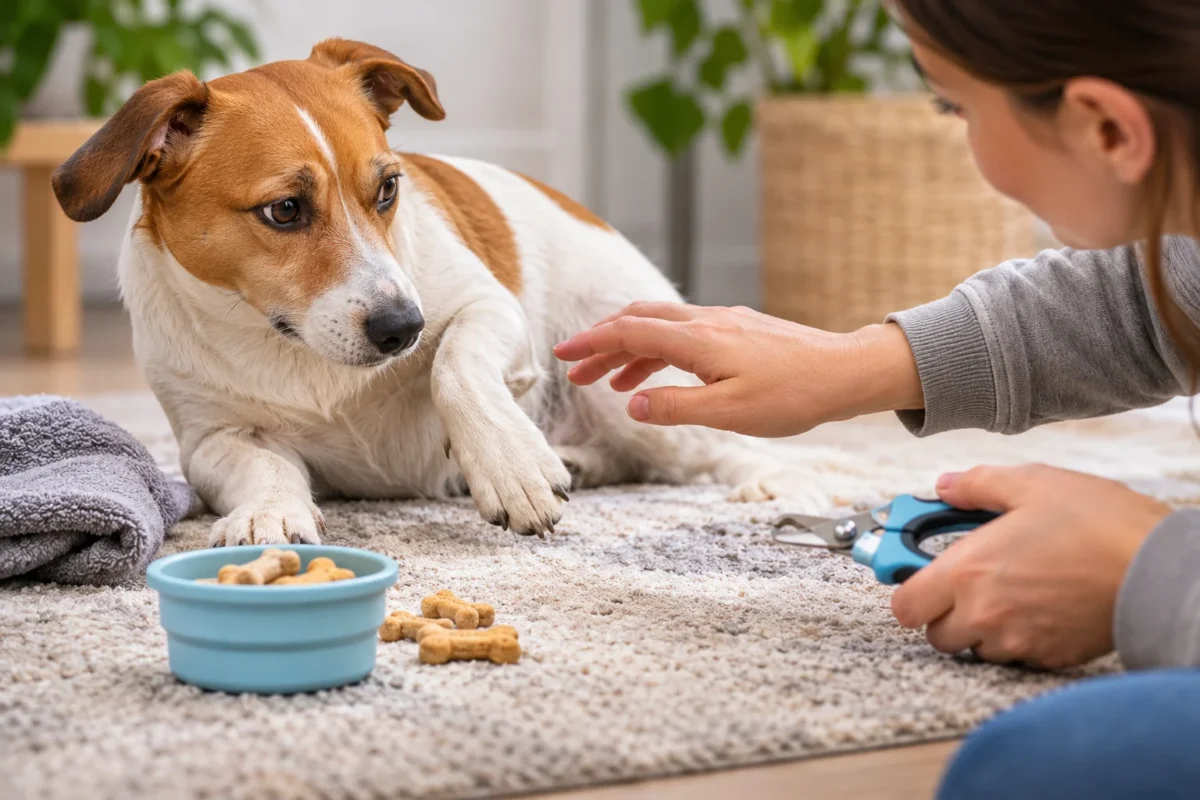
Stop cutting and build comfort with paw handling separately. Resistance does not mean the dog is being stubborn; the foot may be sensitive, the position uncomfortable, or the sound and movement of the tool unfamiliar.
Try very short practice sessions. Touch a shoulder or leg, reward, then gradually work toward briefly touching the paw. Later, introduce the grooming tool without using it. Only proceed when your dog remains relaxed and can choose to withdraw.
If handling causes panic, defensive behavior, or apparent pain, ask a veterinarian or qualified fear-aware groomer for a plan. Avoid forceful restraint to finish a cosmetic trim. A well-tolerated appointment can be more valuable than a stressful home attempt.
Which Paw-Hair Trimming Mistakes Should You Avoid?
- Cutting every hair you can see: Extra deep trimming can bring the blade close to delicate tissue without solving a real problem.
- Trying to snip out mats: Skin may be hidden inside tight tangles; seek professional removal.
- Working on a moving dog: A sudden jerk can turn a controlled motion into an injury.
- Using dull, dirty, or hot equipment: Poorly maintained tools can tug at fur or irritate skin.
- Ignoring a sore paw: Redness, licking, or a limp can require veterinary attention rather than another haircut.
- Trimming just for traction: If slipping continues after the pads are clear, investigate nails, flooring, or health concerns instead of shaving deeper.
An easy check is to pause whenever you cannot clearly identify the skin boundary or predict where the tool will move if the paw twitches. That is the point to stop, not a reason to grip harder.
How Often Should You Check and Trim Your Dog’s Foot Hair?
Check the feet during routine brushing, after muddy or debris-filled walks, and whenever the coat begins extending over the pads. Trim only when the condition of the hair calls for it; there is no single interval that fits every breed and coat.
Dogs with fast-growing or heavily feathered foot hair may need more frequent attention than short-coated dogs. Seasons and walking environments matter too: wet conditions can make tangled foot hair more troublesome, while certain outdoor surfaces collect burrs and small plant material.
Between trims, use a gentle clean-and-dry routine. AKC’s paw-cleaning advice emphasizes inspecting between the toes and drying the feet after washing. Routine observation helps you notice changes before they become difficult grooming problems.
When Should a Groomer or Veterinarian Handle the Feet?
Choose a professional groomer when fur is tightly matted, your dog cannot comfortably hold still, or close work between the pads is needed. Choose a veterinarian when the paw shows signs of injury or disease, including swelling, persistent redness, bleeding, discharge, limping, or pain.
These roles are different. A groomer can safely manage a difficult haircut, but a suspected infection, embedded foreign body, or painful lump needs clinical evaluation. A veterinarian may recommend delaying grooming until the skin has recovered.
If an accidental nick occurs, stop grooming and apply gentle pressure with clean gauze. Contact a veterinarian promptly if bleeding persists, the cut is deep, or the paw seems very painful. Do not continue trimming around an injured spot.
For most dogs, the best finish is simply a comfortable foot with visible, healthy pads and loose fur that stays manageable. Keep the trim conservative, pay attention to your dog’s response, and treat hidden skin as a boundary rather than an area to explore with cutting tools.


