
Quick Answer
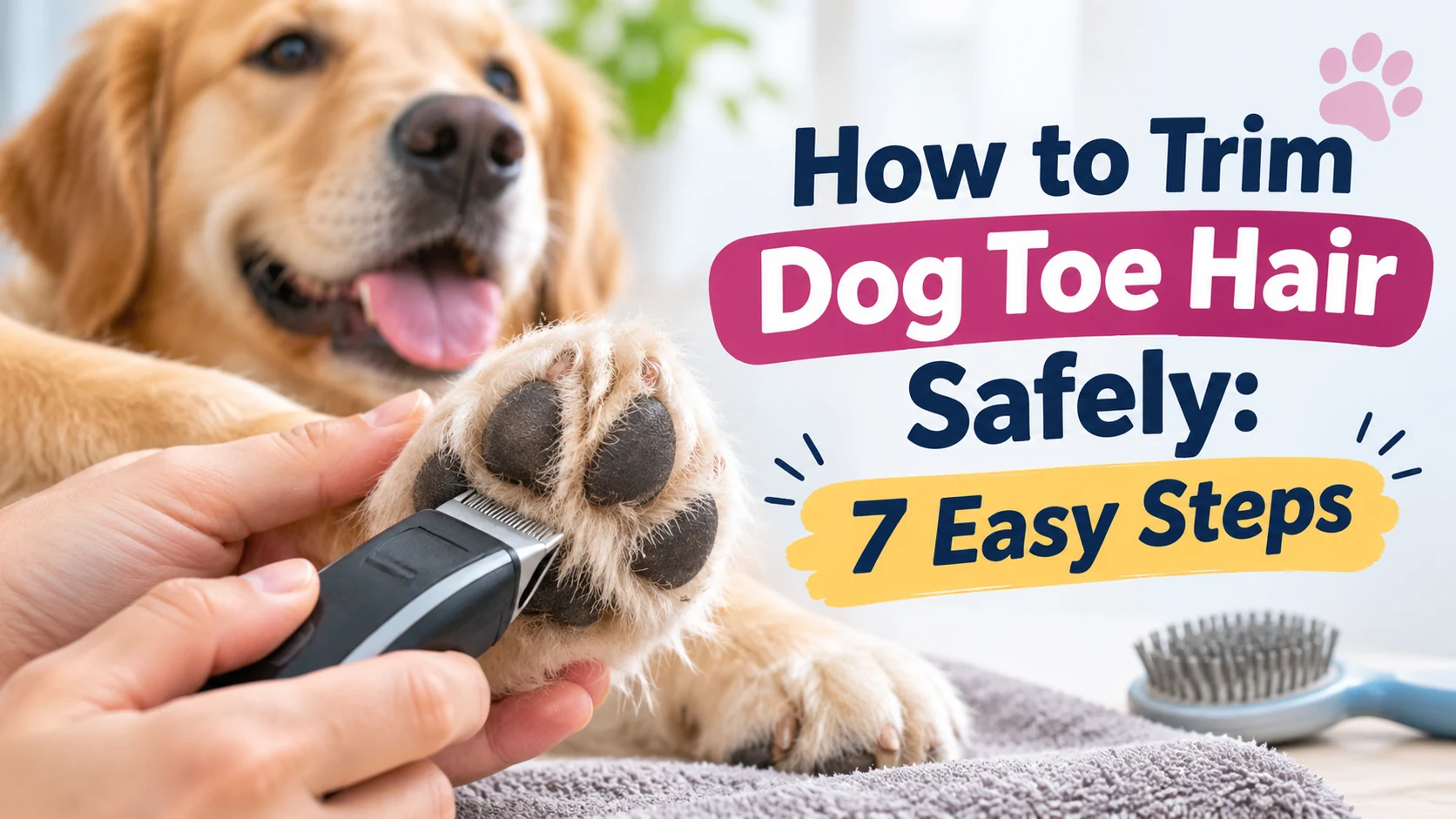
To trim dog toe hair safely, inspect the paw, gently comb out loose fur, and use a small, pet-safe clipper to shorten only hair extending over the paw pads. Keep the blade flat, avoid the delicate webbing between toes, reward calm behavior, and stop if your dog struggles. Leave painful mats, damaged skin, and deep trimming to a professional.
Long hair around a dog’s toes can hide grit, catch on rough surfaces, and form uncomfortable tangles. The goal of paw grooming is not to make every foot look shaved; it is to keep the pads visible and the dog comfortable without exposing sensitive skin to unnecessary risk.
What Should You Check Before Trimming Dog Toe Hair?
Check the skin before reaching for a trimmer. Look at the top of the toes, between the toes, and underneath the foot. Healthy-looking skin, a calm dog, and loose hair that extends past the pads make a simple maintenance trim more reasonable.
- Look for injury: cuts, cracks, redness, swelling, sores, or a new lump mean you should postpone grooming and seek advice if needed.
- Look for objects: check for burrs, grass seeds, stones, or other debris. Do not dig into skin to retrieve an embedded object.
- Assess mats: if a tight knot is attached close to the skin, do not try to snip underneath it.
- Check tolerance: a dog that jerks away or guards a paw needs more handling practice or professional help before clipping.
The ASPCA’s dog grooming guidance recommends checking paws for injury and debris and trimming hair between the toes to be even with the pads. The RSPCA’s grooming advice also recommends checking between toes for mats, grass seeds, and inflammation.
Which Tools Are Safest for Dog Toe Hair?
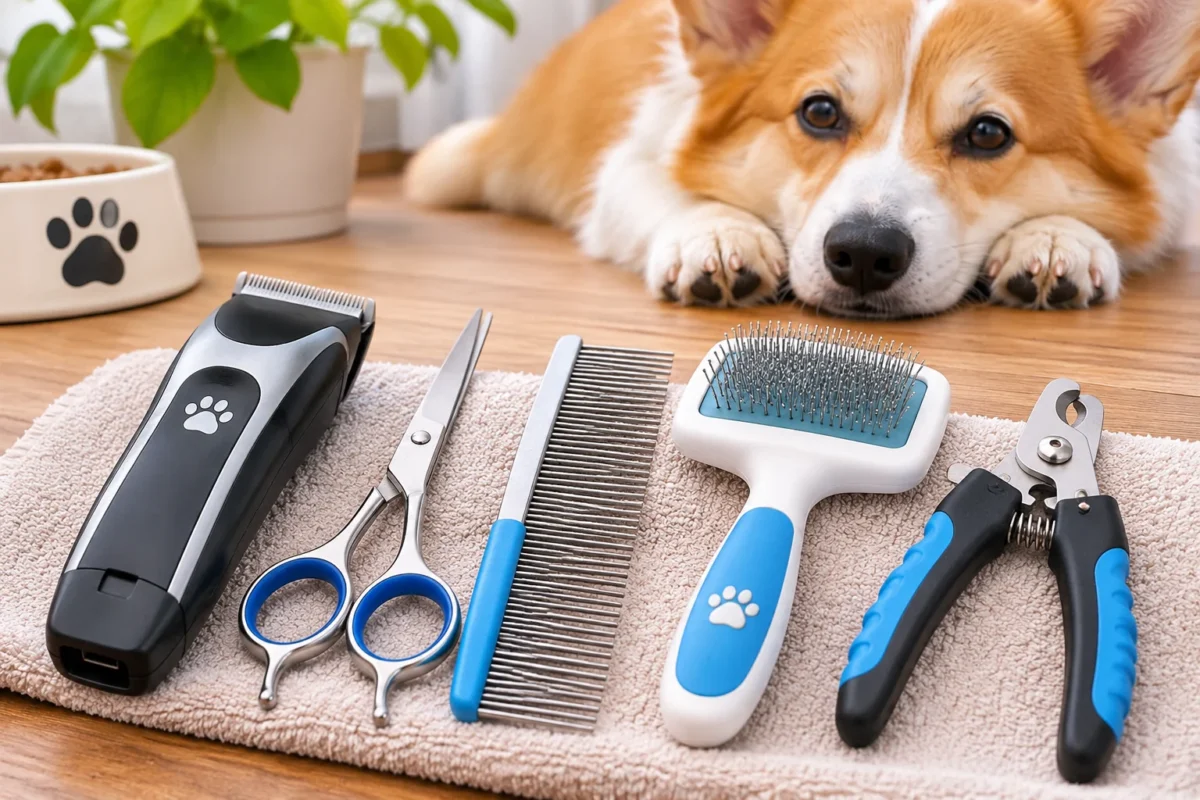
A small, quiet pet-grooming clipper is the most useful tool for loose hair around the underside of the paw. Choose an attachment and blade intended for sensitive pet areas, and follow the device manufacturer’s instructions. Have a fine comb, soft towel, treats, and a nonslip surface ready.
| Tool | Best use | Important limit |
|---|---|---|
| Small pet clipper | Loose fur protruding past paw pads | Do not press into folds or webbing |
| Fine-tooth comb | Separating loose strands and spotting debris | Never yank a tight mat |
| Soft towel and treats | Drying and rewarding calm cooperation | Do not use treats to force a frightened dog through grooming |
Scissors near the pads pose a greater risk if a dog moves unexpectedly. Zoetis Petcare’s paw-care guidance recommends clippers rather than scissors between the paws; professional grooming is the better choice when the area is difficult to access.
How to Trim Dog Toe Hair in 7 Safe Steps
Work on a dry paw in bright light. Keep each session short; finishing one paw calmly is better than rushing through four.
- Set up secure footing. Position your dog on a nonslip mat at a comfortable height or sit beside them on the floor. Keep the paw supported without twisting the leg.
- Introduce the trimmer. Let your dog see and hear it away from their body. Reward calm behavior. If the sound causes fear, practice on another day.
- Inspect and comb. Examine each pad and the skin around it. Comb only loose fur away from the pad surface so you can see what needs shortening.
- Support the paw naturally. Hold it gently and expose the underside without pulling the toes far apart. Never force a sensitive joint or stretch the webbing.
- Skim the protruding hair. With a cool, suitable clipper blade held flat, make short, light passes over hair extending beyond the pad surface. Keep the blade out of deep creases and stop wherever skin is not clearly visible.
- Tidy the outer toe outline. If necessary, lightly shorten loose hairs around the outside of the toes with the clipper, following the natural foot shape. Do not chase hairs deep between toes.
- Recheck and reward. Turn off the clipper, inspect for redness or nicks, remove loose fur, and give your dog a break and a reward.
Warning
Do not push a blade into the narrow spaces between toes, clip over broken skin, or use scissors to cut tight mats. Stop immediately if the dog pulls sharply, the blade becomes hot, or you cannot see the skin boundary.
For nervous dogs, the VCA Animal Hospitals handling exercises describe a gradual approach: build comfort with paw touches, reward tolerance, and introduce grooming equipment separately before attempting the actual task.
How Short Should Hair Around the Paw Pads Be?
Trim fur approximately level with the pad surface rather than shaving every crevice bare. When the dog is standing, the textured pads should be able to contact the floor without a thick curtain of hair covering them.
Hair on the top of the toes is a different issue from hair under the pads. Some coats naturally form a soft, rounded foot shape. You can leave that appearance intact if it is clean, unmatted, and not creating a practical problem.
Not every short-coated dog needs routine paw-hair clipping. If the pads are already exposed and fur does not mat, regular inspection may be enough.
What Mistakes Make Paw Grooming Risky?
- Trimming too deep: removing hair from hidden creases can bring the blade into contact with thin skin.
- Using household scissors: sudden movement can turn a small snip into a skin injury.
- Forcing cooperation: restraining a struggling dog increases the chance of accidental cuts and makes later handling harder.
- Ignoring clipper temperature: blades may heat during use, so check and cool them according to the manufacturer’s instructions.
- Cutting out painful mats: the skin can be pulled into a knot and may not be visible.
- Overlooking soreness: repeated licking, limping, or swelling is not simply a grooming problem.
When Should a Groomer or Veterinarian Handle the Paw?
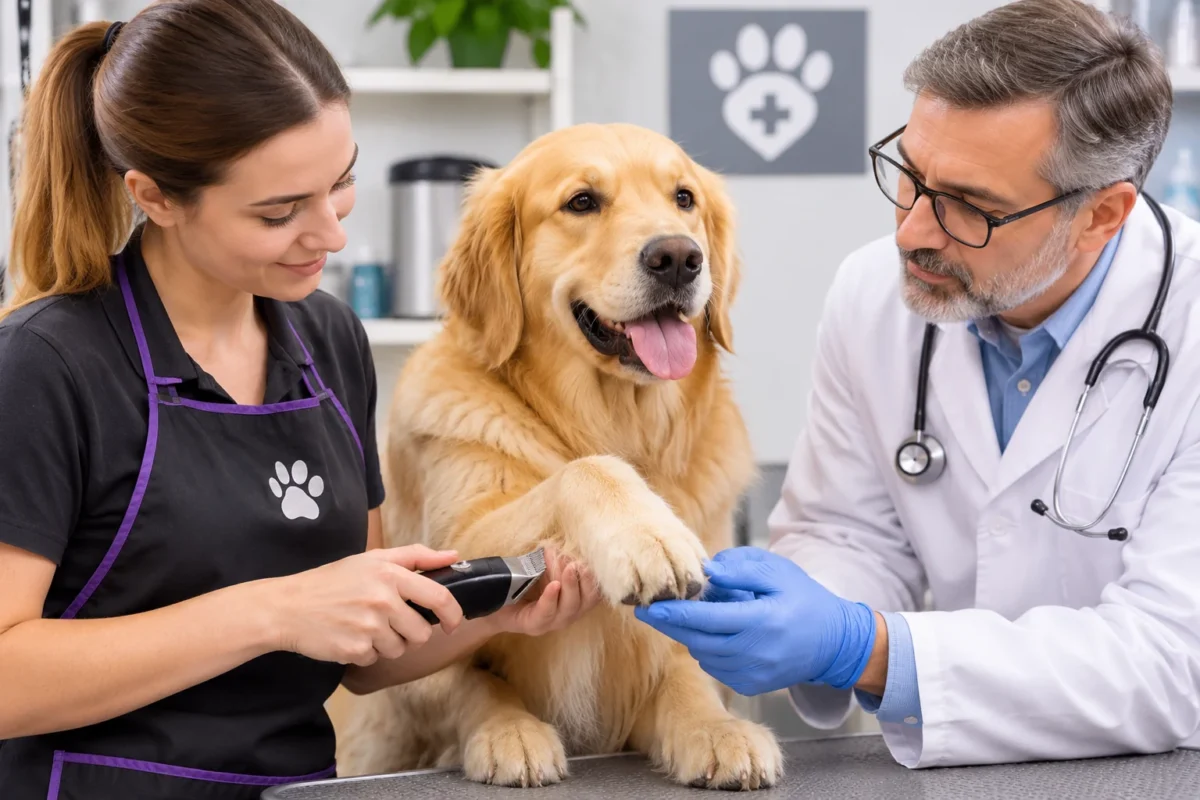
Choose a professional groomer when the hair is heavily matted, your dog does not tolerate paw handling, or you cannot safely reach the area with a clipper. A groomer can also demonstrate what a maintenance trim should look like for your dog’s coat.
Contact a veterinarian for painful or swollen toes, open wounds, bleeding, persistent licking, a change in walking, or a possible embedded foreign object. Do not cover these signs by clipping the fur first. The Preventive Vet paw-care guide specifically warns against attempting to remove tight paw mats with scissors at home.
How Can You Keep Dog Toe Hair Manageable Between Trims?
Make paw checks part of a normal routine after outdoor walks. Lift each foot briefly, remove loose surface dirt, and dry damp fur gently. Comb out small, loose tangles before they tighten, provided your dog is comfortable and the comb does not pull at the skin.
Do not groom by the calendar alone. Fast-growing coats may need attention sooner than short coats, while dogs that spend time in grass, mud, or snowy conditions benefit from more frequent paw inspections.
Frequently Asked Questions
Can I trim my dog’s toe hair with regular scissors?
Avoid household scissors around paw pads and between toes. A small pet-grooming clipper is usually the safer choice for this sensitive area; let a trained groomer handle difficult spots.
Should I remove all the hair between my dog’s toes?
No. Shorten excess hair that sticks beyond the pads, but do not dig into the webbing or shave deep between toes just to make the foot look bare.
How often should dog toe hair be trimmed?
Check the paws regularly and trim only when hair begins covering the pads, matting, or collecting debris. The interval varies with coat growth and activity.
What if my dog keeps pulling their paw away?
Stop using the clipper and practice brief, reward-based paw handling sessions. If your dog remains fearful or struggles, arrange a professional groom.
Can tangled hair between the paw pads cause discomfort?
Yes. Tight mats can pull on the skin and trap dirt or moisture. Do not cut a mat close to skin yourself; ask a groomer or veterinarian to assess it.
When should a veterinarian check my dog’s paw?
Seek veterinary advice for swelling, bleeding, persistent licking, limping, painful handling, a wound, or a suspected embedded grass seed or other foreign object.
Final Takeaway
The safest dog toe-hair trim is conservative: inspect first, shorten only excess fur over the pads, and stop before the clipper reaches hidden skin. Comfort and paw health matter more than a perfectly sculpted foot.


