
Quick Answer
To trim dog leg feathering, brush and comb the coat first, then make small cuts through the loose, hanging ends with grooming thinning shears while keeping the blades away from the skin. Follow the leg’s natural outline, comb between cuts, and stop if your dog becomes uncomfortable. Never use scissors to cut out tight mats.
Feathering is the longer, soft-looking hair that hangs from the backs of a dog’s front legs and parts of the hind legs. On breeds such as spaniels, setters, retrievers, and some mixed-breed dogs, it creates a flowing outline. A tidy-up can remove uneven ends and hair that drags through mud without stripping away the coat’s natural shape.
The key is to shorten only what needs shortening. Leg feathering is not the same as a knot or a mat, and trimming a hanging fringe requires a different approach from removing tangled hair close to the skin.
What Tools Do You Need to Trim Leg Feathering?
A comb and an appropriate pair of grooming shears are enough for a minor tidy-up. Prepare the following before bringing your dog into position:
- Metal grooming comb: checks whether hair is free of tangles from end to root.
- Coat-appropriate brush: gently loosens debris and small tangles before cutting.
- Dog-grooming thinning or blending shears: softens the edge of the feathering rather than making a sharp, straight cut. Use only if you can control them safely.
- Non-slip mat or stable floor: helps your dog stand securely without sliding.
- Good lighting and small treats: make it easier to see the coat and reward calm cooperation.
Clean, dry, fully combed hair shows its natural fall more accurately than damp or tangled hair. For a first attempt, avoid using sharp straight scissors close to the legs, hocks, armpits, or skin folds.
How to Trim Dog Leg Feathering in 7 Safe Steps
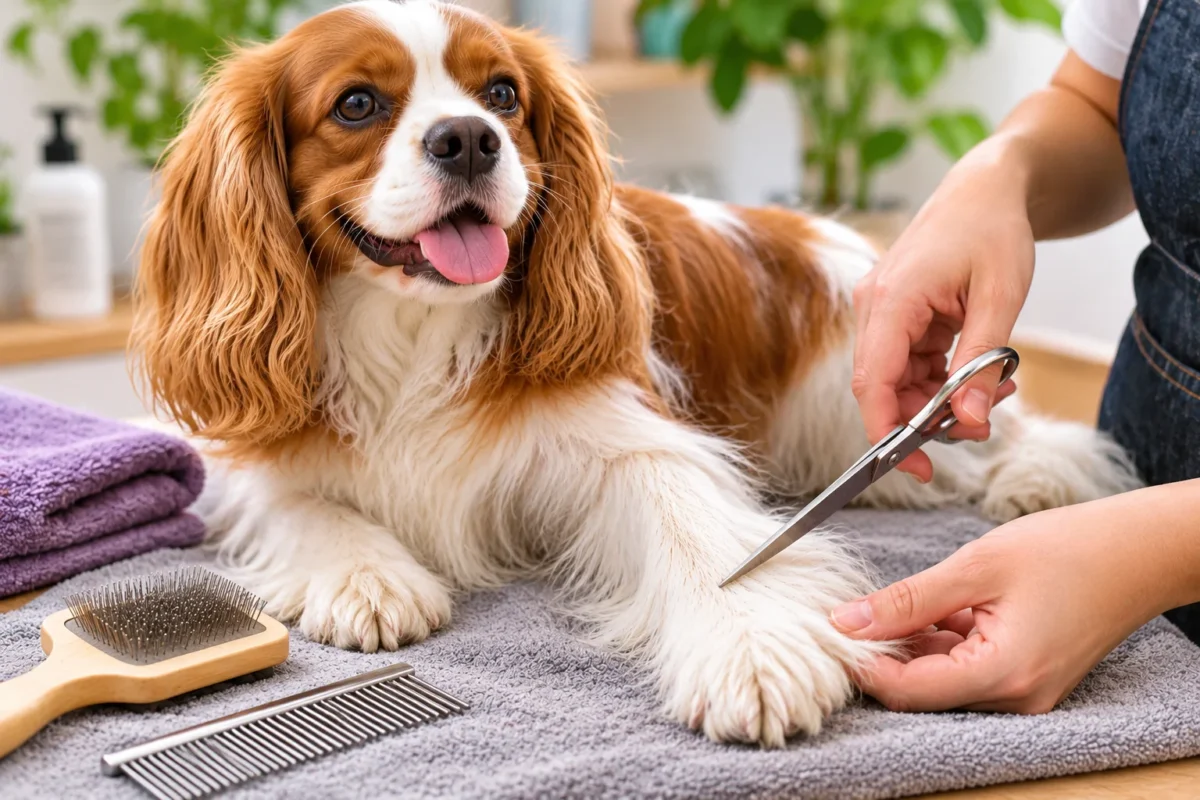
- Set up a calm grooming position. Ask your dog to stand naturally on a non-slip surface. Keep the session short. If the dog moves repeatedly, do not force the trim; try another time or use a groomer.
- Inspect the skin and coat. Look behind each leg and around the hocks for redness, lumps, burrs, painful spots, or dense mats. Stop if the skin looks irritated or the coat is tightly matted.
- Brush, then comb each feathered section. Work gently in the direction of hair growth, starting at the ends of the hair. The comb should pass through without snagging or pulling before any trimming begins.
- Choose a modest finishing line. Let the fringe fall naturally and identify only the wispy or uneven ends you want to shorten. Preserve the longer coat above the fringe and avoid trying to make both legs perfectly identical in a single pass.
- Trim the front-leg feathering a little at a time. With the dog standing steadily, comb the hair down from the back of a front leg. Where you can clearly separate the loose ends from the skin, use controlled, shallow cuts with thinning shears along the natural direction of the coat. Keep blades away from the leg itself.
- Tidy the hind-leg feathering conservatively. Comb the hair around the back of the thighs and upper hock. Lightly blend protruding ends rather than cutting a hard horizontal line. Do not reach blindly behind the hock, near the groin, or into folds of skin.
- Comb again and check the outline. Let the hair settle, view the dog from the side and front, and remove only obvious stray ends if needed. Reward your dog and stop before either of you becomes tired or frustrated.
Warning
Do not cut tightly matted fur with scissors. Mats can pull skin into the hair, making it easy to cut the dog accidentally. If you cannot freely comb through the section, pause the cosmetic trim and ask a professional groomer or veterinarian for help.
How Should Front and Back Leg Feathering Look?
Front legs: The fringe usually hangs from the rear of each leg. A light taper toward the paw often looks more natural than a blunt edge. Avoid cutting into the closely lying coat on the front of the leg.
Hind legs: Feathering may extend around the thighs and toward the hocks, depending on the dog’s breed and coat. Keep the outline soft and leave enough hair to blend naturally into the surrounding coat.
There is no universal trimming length for every dog. Breed standards and individual coat types differ; a companion dog’s comfortable, manageable trim may also differ from a show coat. For example, breed-specific grooming materials from spaniel clubs describe feathering that follows the dog’s natural contours rather than an exaggerated, squared-off shape.
Which Mistakes Make Feathering Look Uneven?
- Trimming before combing: hidden tangles make lengths appear inconsistent.
- Taking off too much in the first cut: once a fringe is shortened, blending it back into the coat can be difficult.
- Cutting straight across: a blunt line can look unnatural on a soft, flowing coat.
- Pulling a leg into an awkward position: this may distress the dog and makes precision less safe.
- Chasing perfect symmetry: coat growth and leg shape differ slightly, so repeated corrective cutting can remove more hair than intended.
If a section looks uneven, comb it back into place and reassess before cutting again. Sometimes the hair simply needs to settle.
When Should You Stop and Use a Professional Groomer?
Stop the home trim if your dog pulls away, growls, trembles, repeatedly shifts position, or shows pain. A groomer is also the safer choice when the coat contains tight mats, the hair is difficult to distinguish from the skin, or you cannot see the cutting area clearly.
For redness, swelling, wounds, or persistent tenderness underneath the feathering, ask a veterinarian to evaluate the area before grooming it. Mats can conceal skin problems and cause discomfort; removing them is not just a styling task. The ASPCA’s advice on matted coats specifically warns against cutting mats out with scissors.
How Do You Keep Leg Feathering Tidy Between Trims?
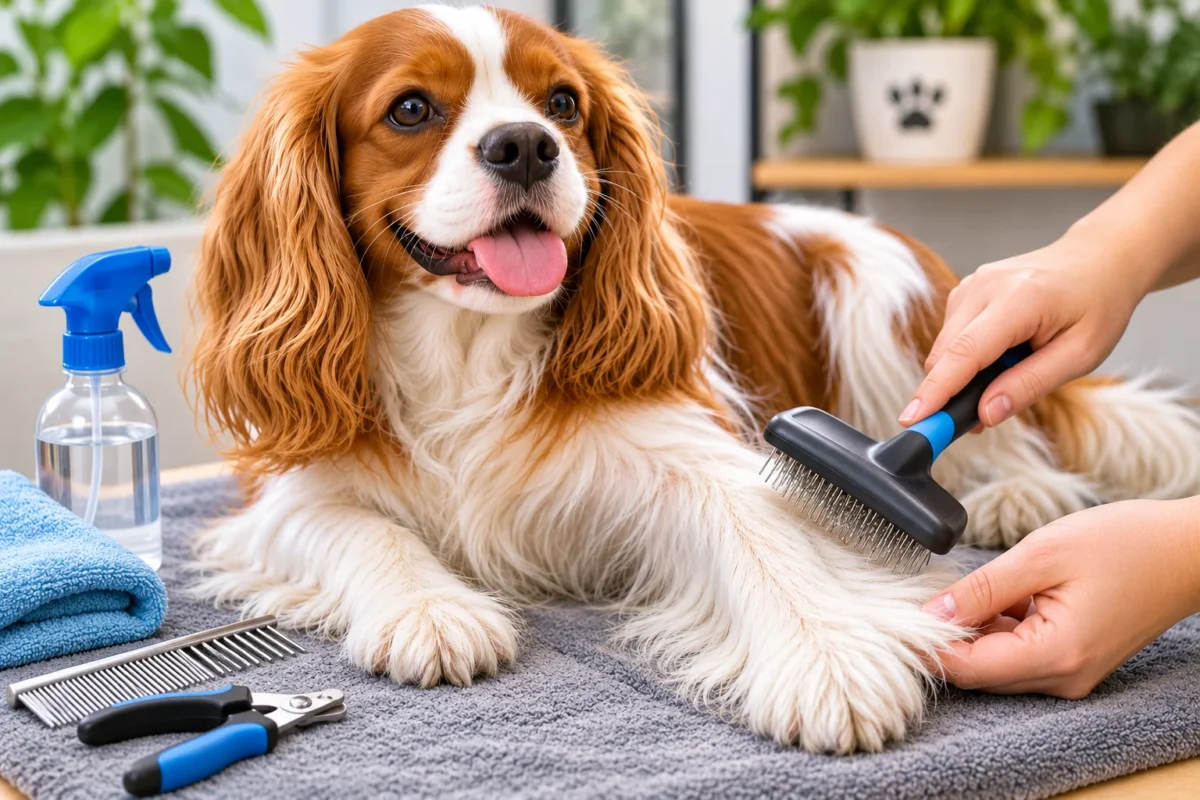
Consistent brushing usually matters more than frequent cutting. Check the feathering after walks for seeds, burrs, mud, and tangles, especially near the armpits and hind legs. Use a comb to verify that the coat remains loose rather than brushing only the surface.
How often you brush depends on the coat: longer or fine feathering may need daily attention, while other dogs need less frequent sessions. The RSPCA’s dog-grooming guidance recommends gentle brushing in the direction of growth and stopping if the animal becomes stressed or uncomfortable.
Tip
Before deciding that the feathering needs another haircut, comb it through and let it fall naturally. A tidy, untangled fringe may need far less trimming than it first appears to.
Frequently Asked Questions
Should you shave a dog’s leg feathering?
Usually not for routine tidying. Lightly shaping the longer ends preserves the feathered appearance. Shaving or close clipping may be appropriate for particular coat needs or severe matting, but that decision is best made with a qualified groomer or veterinarian.
Are thinning shears better than straight scissors?
Thinning or blending shears can produce a softer finish on loose feathering, but neither tool is safe if used close to skin or on a moving dog. The operator’s control and a clear view of the hair matter more than the tool alone.
Can you trim feathering when it is wet?
For an ordinary cosmetic tidy-up, thoroughly dry and comb the hair first. Wet hair tends to hang differently, making it harder to judge the final outline.
What if my dog’s leg feathering is matted?
Do not cut into the mat with scissors. Gently loosen minor tangles only when this can be done without pulling or discomfort. Tight, painful, or skin-level mats should be handled by a professional.
The Bottom Line
The safest way to trim dog leg feathering is to comb first, remove only a little loose length, and preserve the natural outline. Work only when your dog is comfortable and the hair is clearly separated from the skin. If the problem is matting rather than uneven feathering, seek appropriate grooming help instead of trying to cut it out.


