
Quick Answer
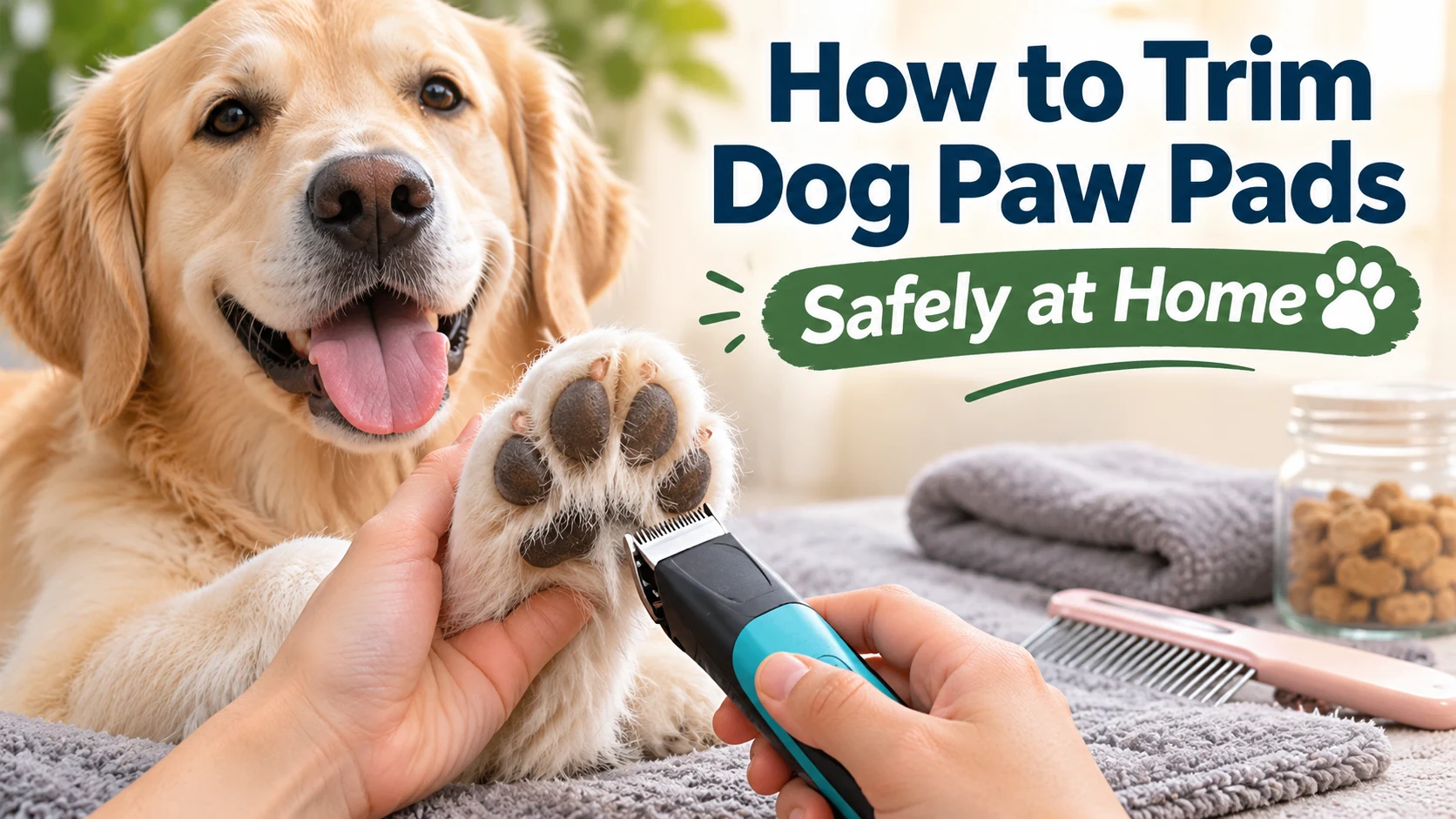
To trim dog paw pad hair safely, inspect and clean the paws, gently comb out loose fur, and use a small grooming trimmer to shorten only the hair extending beyond the pads. Keep the cutting head away from the pad edges and delicate skin between the toes. Stop if your dog struggles, and leave tight mats or difficult areas to a professional groomer.
Long hair underneath a dog’s paws can collect dirt, form painful tangles, and cover the textured pads that help provide traction. Regular paw grooming can make walking more comfortable while helping you notice problems before they become serious.
However, trimming this sensitive area requires more care than an ordinary haircut. The goal is to remove excess hair, not shave the spaces between the toes completely or cut the paw pads themselves.
Why Should You Trim Hair Between Your Dog’s Paw Pads?
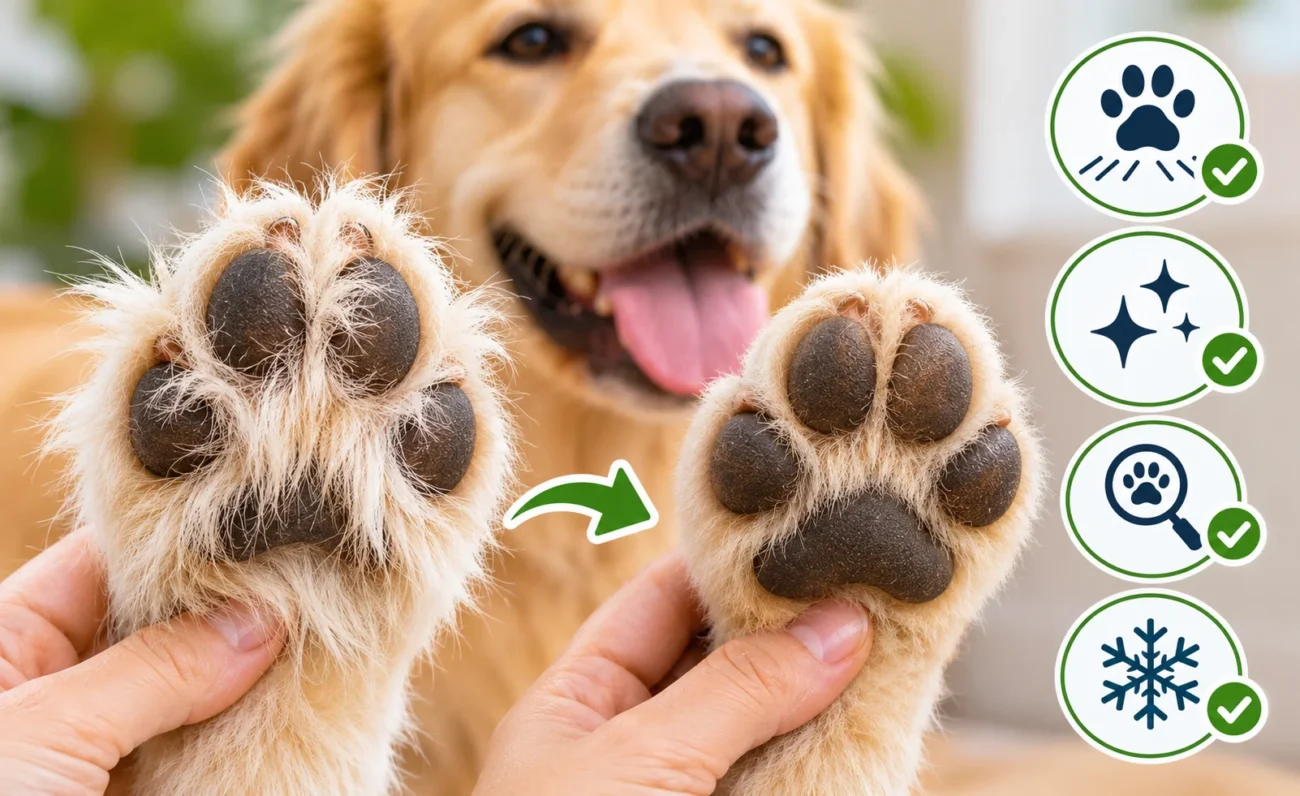
Trimming excess paw hair helps prevent matting, reduces debris trapped beneath the feet, and allows the paw pads to contact the walking surface more directly.
The paw pads are tough, specialized structures that cushion the feet and assist with traction. Hair that grows beyond them can interfere with contact on smooth flooring, although trimming alone cannot correct every slipping problem.
The main reasons to keep this hair tidy include:
- Preventing mats: Long fur can become tangled between the toes, particularly in dogs with dense or curly coats.
- Improving cleanliness: Shorter hair is easier to clean after muddy or wet walks.
- Supporting traction: Removing hair that covers the pads may help some dogs maintain better contact with indoor floors.
- Making inspection easier: Visible pads allow owners to notice redness, cuts, swelling, or trapped debris.
- Reducing ice accumulation: In cold climates, excess paw fur may trap snow and form uncomfortable ice balls.
According to the ASPCA’s dog grooming guidance, hair between the toes should be combed and trimmed level with the pads to help prevent painful matting.
Not every dog needs the same amount of trimming. Short-haired dogs may have little excess fur, whereas dogs with long or fluffy coats may require regular attention.
What Tools Do You Need to Trim Dog Paw Pad Hair?
A small grooming trimmer designed for delicate areas is usually the most practical choice for removing protruding paw hair. Choose tools you can control easily, and use only equipment suitable for your dog’s coat and skin.
- Small pet grooming trimmer: A narrow cutting head provides better visibility around the pads.
- Fine-tooth grooming comb: Helps separate loose hairs and reveal tangles.
- Soft towel: Keeps paws clean and dry before trimming.
- Non-slip mat: Provides stable footing during grooming.
- Good lighting: Helps distinguish hair from the pad edges and surrounding skin.
- Small treats: Reinforce calm paw handling and cooperation.
Avoid pointed household scissors around the spaces between the pads. Even rounded-tip scissors require appropriate technique, and a sudden movement can result in injury.
Keep the trimmer clean, properly maintained, and cool. A dirty or overheated blade can irritate sensitive skin.
How to Trim Dog Paw Pad Hair Safely: 8 Steps
Begin only when your dog is relaxed and the paws are healthy. If you have never trimmed this area before, ask a groomer or veterinary professional to demonstrate the technique before attempting close work.
Step 1: Choose a Calm Grooming Time
Choose a quiet location with bright lighting and a stable, non-slip surface. Avoid grooming immediately after vigorous play or during an anxious episode.
Let your dog settle naturally. Offer a treat, touch one paw briefly, and reward relaxed behavior before bringing the trimmer nearby.
If your dog regularly pulls away from paw handling, practice touching and lifting the feet during separate sessions before attempting a haircut.
Step 2: Inspect the Paw Pads Carefully
Look underneath each paw before cutting any hair. Check for cuts, redness, swelling, unusual growths, foreign objects, and painful tangles.
Gently separate the toes only as far as your dog comfortably allows. Do not stretch the delicate webbing to make room for the trimmer.
If you notice irritated or injured skin, stop and arrange appropriate veterinary advice instead of grooming over the problem.
Step 3: Clean and Dry the Paws
Remove loose dirt with a soft cloth or pet-safe cleaning method. Dry the paws thoroughly so the hair is easier to separate and the cutting area remains visible.
Pay attention to debris trapped around the toes, but never dig into a pad or pull out an object that appears deeply embedded.
Step 4: Gently Comb Out the Excess Hair
Use a small comb to lift loose hair away from the underside of the paw. The purpose is to identify the strands extending beyond the pads.
Comb gently without pulling. If the comb catches a tight mat, do not force it through or cut blindly underneath it.
Dense mats can hide folded skin and may require professional removal.
Step 5: Hold the Paw in a Comfortable Position
Support the leg and paw gently, keeping the joints in a natural position. Avoid twisting the foot backward or extending it farther than your dog finds comfortable.
Make sure you can clearly see the pads and the hair you intend to trim.
Never use force to hold a struggling dog still for a delicate trimming procedure. End the session if safe positioning becomes difficult.
Step 6: Trim Only the Hair Extending Beyond the Pads
With an appropriate small trimmer, carefully shorten loose hair that projects beyond the paw pad surface.
Keep the cutting head oriented so that it removes visible protruding fur without pressing into the pads or pointing into the gaps between them.
Use controlled, short movements rather than attempting to remove large amounts of hair at once.
The stopping point is approximately level with the paw pads. You do not need to remove every hair growing between the toes.
Never dig the trimmer into a narrow space to achieve a completely bare appearance. The skin there is delicate and may be caught by the cutting head.
Step 7: Check the Trimmer and Your Dog’s Reaction
Pause frequently to inspect the cutting head and observe your dog’s behavior. Check that the blade remains cool and that fur is not pulling or catching.
If your dog flinches, repeatedly withdraws the paw, growls, or becomes distressed, stop trimming.
Finishing every paw in one session is less important than keeping the experience safe and manageable.
Step 8: Inspect the Finished Paws and Reward Your Dog
Examine the trimmed areas for redness, scratches, or irritation. Check that the visible pads are clear of loose hair and that no tight tangles remain.
Reward your dog with praise or a treat. If only one or two paws were completed comfortably, finish the remaining paws during another session.
Afterward, clean and maintain your grooming equipment according to the manufacturer’s instructions.
Important Safety Warning
Never cut the actual paw pads, shave deeply into the toe spaces, or use scissors to remove tight mats close to the skin. If the cutting area is difficult to see or your dog will not remain comfortable, ask a trained groomer or veterinary professional for help.
How Short Should You Trim Dog Paw Pad Hair?
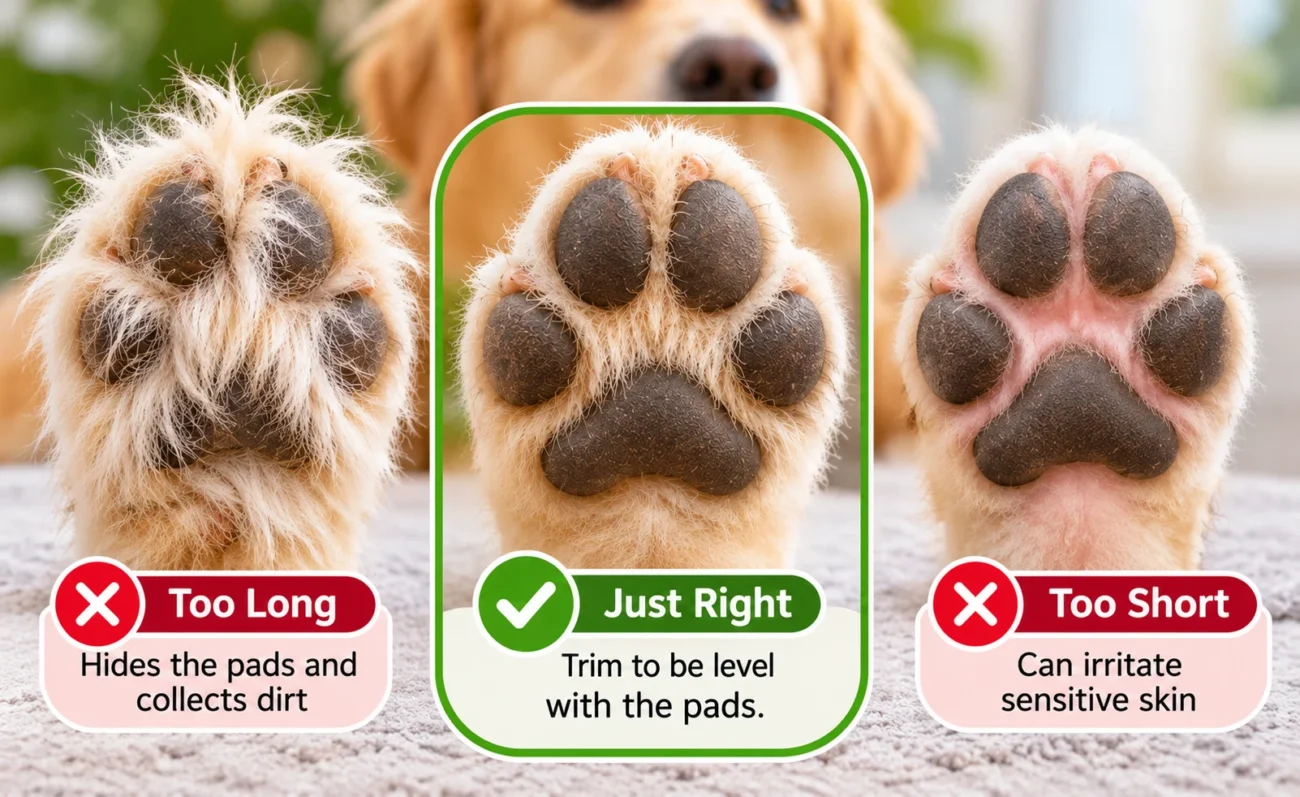
For routine maintenance, trim excess hair approximately level with the surface of the pads. This removes protruding fur while avoiding unnecessary close shaving.
The goal is to expose the pad surfaces naturally without trying to create completely hairless spaces between them.
Use these practical guidelines:
- If the pads are clearly visible and hair does not project beyond them, trimming may be unnecessary.
- If long tufts cover the pads, carefully shorten the protruding hair.
- If hair is tightly matted beneath the paw, seek professional grooming assistance.
- If the skin looks irritated, delay trimming until the cause has been assessed.
A closer cut is not automatically a better cut. Removing too much hair can unnecessarily increase the risk of blade contact with sensitive skin.
Can You Use Scissors Instead of Clippers?
Scissors may be used by trained groomers in certain circumstances, but they are not the preferred tool for an inexperienced owner working between paw pads.
A dog’s sudden movement can bring the skin into the cutting path. Mats make the situation more dangerous because the skin may be hidden underneath the tangled hair.
The Zoetis Petcare paw pad guidance specifically advises using clippers instead of scissors between the paws and recommends professional help when owners are uncomfortable performing the task.
For home maintenance, prioritize a suitable small trimmer, proper instruction, clear visibility, and a calm dog over attempting a precise cosmetic finish.
What If Your Dog Won’t Let You Touch Their Paws?
If your dog resists paw handling, work on comfort and cooperation before attempting to trim. Forcing the procedure may increase fear and make future grooming more difficult.
Start with brief sessions:
- Touch the shoulder or leg and offer a treat.
- Move your hand toward the paw only while the dog remains relaxed.
- Briefly touch or lift the paw, then release and reward.
- Introduce the switched-off trimmer at a comfortable distance.
- Gradually introduce its sound without moving directly into trimming.
- Attempt a small amount of grooming only after your dog tolerates the earlier stages.
Progress may take multiple sessions. If your dog becomes highly distressed, attempts to bite, or has painful feet, seek help from a groomer or veterinarian experienced with sensitive dogs.
What Common Paw Pad Trimming Mistakes Should You Avoid?
Most avoidable problems arise from cutting too closely, poor visibility, unsuitable equipment, or continuing after a dog becomes uncomfortable.
- Trimming too deeply: Keep the blade away from the skin between the toes instead of trying to remove every hair.
- Cutting through mats: Tight mats can conceal skin and should be handled professionally.
- Using an overheated blade: Check blade temperature regularly and stop if it becomes warm.
- Pulling the legs unnaturally: Support paws in comfortable positions without forcing joints.
- Ignoring skin problems: Check for irritation, injuries, and swelling before grooming.
- Rushing a nervous dog: Short, positive sessions are safer than attempting to complete all four feet at once.
Another common mistake is assuming that every dog needs frequent paw shaving. Grooming should respond to the condition of the hair and feet rather than a rigid schedule.
How Often Should You Trim Your Dog’s Paw Pad Hair?
Check your dog’s paws regularly and trim only when hair begins extending beyond the pads, collecting debris, or forming tangles.
The appropriate interval depends on coat growth, breed characteristics, activity level, and how quickly the hair becomes difficult to manage.
Long-haired dogs may need more frequent attention than short-haired dogs. Rather than trimming automatically every few weeks, inspect the paws during ordinary grooming and decide whether excess hair actually needs removal.
Regular inspection is also an opportunity to identify damaged nails, cracked pads, unusual licking, or signs of discomfort.
When Should You Stop Trimming and Contact a Professional?
Stop grooming when you discover a problem that could make trimming painful or unsafe.
Contact a veterinarian for persistent limping, swelling, unexplained pain, wounds, discharge, or ongoing licking associated with irritation. Deep cuts and bleeding that does not stop with gentle pressure also require prompt veterinary attention.
Choose a professional groomer for tightly matted paw hair, difficult coat removal, or a dog that cannot tolerate safe trimming. A veterinarian is more appropriate when injury, infection, or another medical problem is suspected.
Trimming can improve paw hygiene, but it is not a treatment for underlying skin disease, persistent slipping, or mobility problems.
Practical Grooming Tip
Inspect the underside of each paw during regular brushing. Catching excess hair before it becomes tightly matted makes routine maintenance easier and reduces the need for difficult close trimming.
Related Grooming Tool: Small Dog Paw Trimmer
A compact pet grooming trimmer with a narrow cutting head may help maintain excess paw hair once you have learned the correct technique. Choose a model designed for pet grooming, follow its instructions, and avoid using it on damaged skin or tight mats.
Browse small dog paw trimmers on Amazon
Affiliate disclosure: As an Amazon Associate, we may earn from qualifying purchases. This link opens search results, not a verified individual product listing.
Frequently Asked Questions
1. Is it safe to trim a puppy’s paw hair?
Yes, when necessary, but puppies need gentle handling and gradual introduction to grooming. Start with brief paw-touching exercises, use appropriate equipment, and ask a professional for help if the puppy is restless or frightened.
2. Should all dogs have the hair between their paw pads trimmed?
No. Dogs with little or no excess hair may not require trimming. Focus on hair that extends beyond the pads, collects debris, or becomes tangled rather than shaving every dog’s feet routinely.
3. Can long paw hair make dogs slip on hardwood floors?
Excess hair covering the pads can reduce direct contact with smooth flooring and may contribute to slipping. However, long nails, slippery surfaces, and medical mobility problems can also cause poor traction.
4. Can you trim paw hair while it is wet?
Dry, clean hair is generally easier to separate and inspect during routine trimming. If the paws are wet or muddy, clean and dry them first so you can clearly identify the hair and avoid hidden debris.
5. What should you do if you accidentally nick a dog’s paw?
Stop grooming immediately and apply gentle pressure with clean gauze or a clean cloth if the area is bleeding. Seek veterinary care for a deep wound, continuing bleeding, significant pain, or signs of infection.
6. Is trimming paw hair the same as trimming dog nails?
No. Paw hair trimming removes excess fur around the pads, while nail trimming shortens the claws without cutting into their sensitive quick. These are different grooming tasks requiring different tools and safety precautions.
Final Thoughts
Learning how to trim dog paw pad hair safely begins with understanding what should—and should not—be removed. Keep excess fur approximately level with the pads, use appropriate grooming equipment, and avoid cutting deeply into sensitive spaces.
Regular inspections, patient handling, and timely professional assistance can keep routine paw maintenance comfortable while reducing preventable grooming injuries.


