
Quick Answer
Dog clippers and human clippers look similar, but they are designed for different hair types and grooming needs. Dog clippers generally offer blades, motor performance, and attachments suited to animal coats. Human clippers may snag thick fur, create uneven cuts, or irritate sensitive skin. For routine dog grooming, I recommend choosing purpose-built dog grooming clippers.
Five key differences
- Blade design: Pet blades are available in configurations suited to different coat textures and cutting lengths.
- Motor performance: Many dog clippers are built for sustained cutting through dense coats.
- Noise levels: Some pet-specific models prioritize quieter operation and reduced vibration.
- Heat management: Grooming equipment still heats up, but professional pet models often support extended sessions.
- Coat compatibility: Dog clippers provide more appropriate blade and guide-comb choices for different coat types.
My recommendation
- For full-body grooming: Choose dedicated dog clippers matched to your dog’s coat.
- For occasional trimming: A compact pet trimmer may be sufficient.
- For severe matting: Ask a professional groomer or veterinarian for help.
If you’ve ever considered using your regular hair clippers on your dog, you’re not alone. Both tools look remarkably similar, and buying another grooming device can seem unnecessary.
However, the differences become important when you’re dealing with thick fur, sensitive skin, or a nervous pet. In this guide, I’ll explain where each tool works best and how to make a safer choice.
What Are Dog Clippers and Human Clippers?
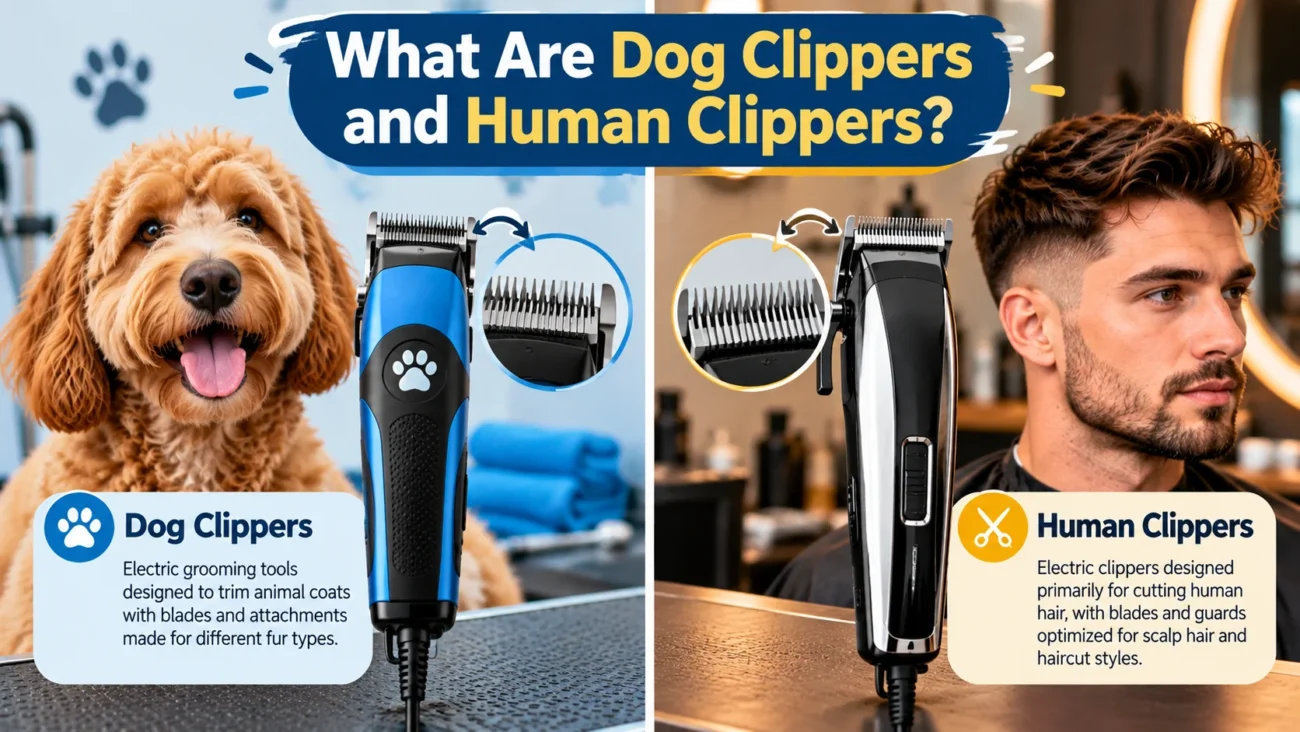
Dog clippers are electric grooming tools designed to trim animal coats using compatible blades and attachment combs. They range from small detail trimmers to professional machines capable of handling thick fur.
Human clippers are designed primarily to cut human scalp hair. Their blades, guards, ergonomics, and motors typically reflect shorter grooming sessions and different hair textures.
How Dog Clippers Work
Dog clippers use a motor to move a cutting blade rapidly against a stationary blade. This cutting action trims hair as the tool moves through the coat.
Professional models may support interchangeable blades, while home-grooming kits often include fixed or adjustable blades with guide combs.
Common features include:
- Blades designed for different coat lengths and grooming tasks.
- Detachable or adjustable cutting systems.
- Guide combs for controlling the finished hair length.
- Motors suited to the intended coat thickness.
- Corded or rechargeable cordless operation.
- Blade maintenance accessories and cleaning brushes.
Not every dog clipper includes every feature. A compact paw trimmer has very different capabilities from a professional full-body clipper.
How Human Hair Clippers Work
Human hair clippers use a similar moving-blade mechanism. They are generally optimized for cutting relatively clean, manageable human hair.
Barber-style clippers often emphasize precise fading, close cutting, and adjustable taper lengths. Those features are useful for hairstyles but don’t automatically translate to safe animal grooming.
The important distinction isn’t simply motor strength. It’s how the entire cutting system handles the coat without excessive pulling, heat, or irritation.
Dog Clippers vs Human Clippers: Side-by-Side Comparison
Dog clippers are generally the better choice for dog grooming because their blade systems and accessories are designed around animal coats. Human clippers remain better suited to their intended purpose.
| Feature | Dog Clippers | Human Clippers |
|---|---|---|
| Primary purpose | Trimming animal coats | Cutting human hair |
| Blade options | Pet-specific blade types and lengths | Haircut and fading blades |
| Dense-coat performance | Heavy-duty models handle thick fur | May struggle or snag |
| Noise and vibration | Low-noise options available | Varies considerably by model |
| Session length | Professional models support longer sessions | Often designed for shorter haircuts |
| Attachments | Pet grooming guide combs | Human haircut guards |
| Recommended use | Appropriate dog grooming tasks | Human haircuts |
Key takeaway: A powerful human clipper isn’t necessarily a good dog clipper. Blade compatibility, coat preparation, and safe handling matter just as much as motor performance.
Can You Use Human Clippers on Dogs?
Human clippers can sometimes cut a small amount of soft dog hair, but they aren’t my recommended choice. Their cutting systems may perform poorly on dense, curly, or tangled coats.
Using the wrong equipment increases the chance of pulling fur, uneven cutting, and skin irritation. Even an appropriate pet clipper can injure skin when used incorrectly.
When Might Human Clippers Work?
Some human clippers may trim a small section of clean, fine hair under controlled conditions. That doesn’t establish that they are suitable for routine grooming.
Consider these limitations before attempting any trim:
- Dense undercoats may resist the blade.
- Curly fur can feed unevenly into the cutting teeth.
- Close-cutting blades may expose delicate skin to injury.
- Unfamiliar vibration can frighten your dog.
- Attachments may not provide appropriate coat lengths.
I wouldn’t use human clippers for a full-body haircut. A compatible pet grooming tool is the more sensible purchase.
When Should You Never Attempt a DIY Trim?
Stop before clipping when you discover tight mats, irritated skin, or an injury. These situations may require professional handling rather than a different cutting attachment.
Seek help from a groomer or veterinarian when you notice:
- Matting tightly attached to the skin.
- Redness, open sores, bleeding, or suspected infection.
- Severe anxiety, snapping, or sudden movements.
- Tangles around skin folds or delicate body areas.
- A coat type that requires specialized grooming knowledge.
The RSPCA’s dog grooming guidance recommends professional assistance when mats are difficult to remove safely.
Why Are Dog Clipper Blades Different?
Dog clipper blades are available in cutting styles and lengths intended for different grooming tasks. Their suitability depends on tooth configuration, sharpness, attachment compatibility, and coat condition.
Hair clippers for humans often prioritize close, controlled haircutting. Dog grooming sometimes requires longer cutting lengths and efficient movement through thicker hair.
Fine-Tooth vs Skip-Tooth Blades
Professional pet blade systems may offer fine-tooth and skip-tooth versions. These are not interchangeable choices for every task.
- Fine-tooth blades: Commonly used for smoother finishing on suitable, prepared coats.
- Skip-tooth blades: Have wider tooth spacing and are used for particular coat-removal techniques by experienced groomers.
- Adjustable blades: Offer multiple settings within the manufacturer’s supported cutting range.
- Guide combs: Fit compatible blades to leave longer, more controlled coat lengths.
Skip-tooth blades can catch loose skin, so they require additional care. I wouldn’t recommend them as a beginner’s solution for severe matting.
What Do Dog Clipper Blade Numbers Mean?
With many common detachable pet blade systems, higher blade numbers produce shorter cuts. However, lengths and compatibility must always be checked against the specific manufacturer.
| Common blade | Approximate hair left | Consideration |
|---|---|---|
| #3F | 13 mm (1/2 inch) | Longer finish |
| #4F | 9.5 mm (3/8 inch) | Moderate coat length |
| #7F | 3.2 mm (1/8 inch) | Short finish; greater skin exposure |
| #10 | 1.5 mm (1/16 inch) | Close trimming by trained handlers |
These are typical nominal lengths, not universal specifications. Cutting against the coat’s growth and using different attachment systems may change the result.
For beginner full-body grooming, I prefer selecting a suitable longer guide comb over attempting a very close cut. Always confirm that the blade and comb are compatible.
Are Dog Clippers Quieter Than Human Clippers?
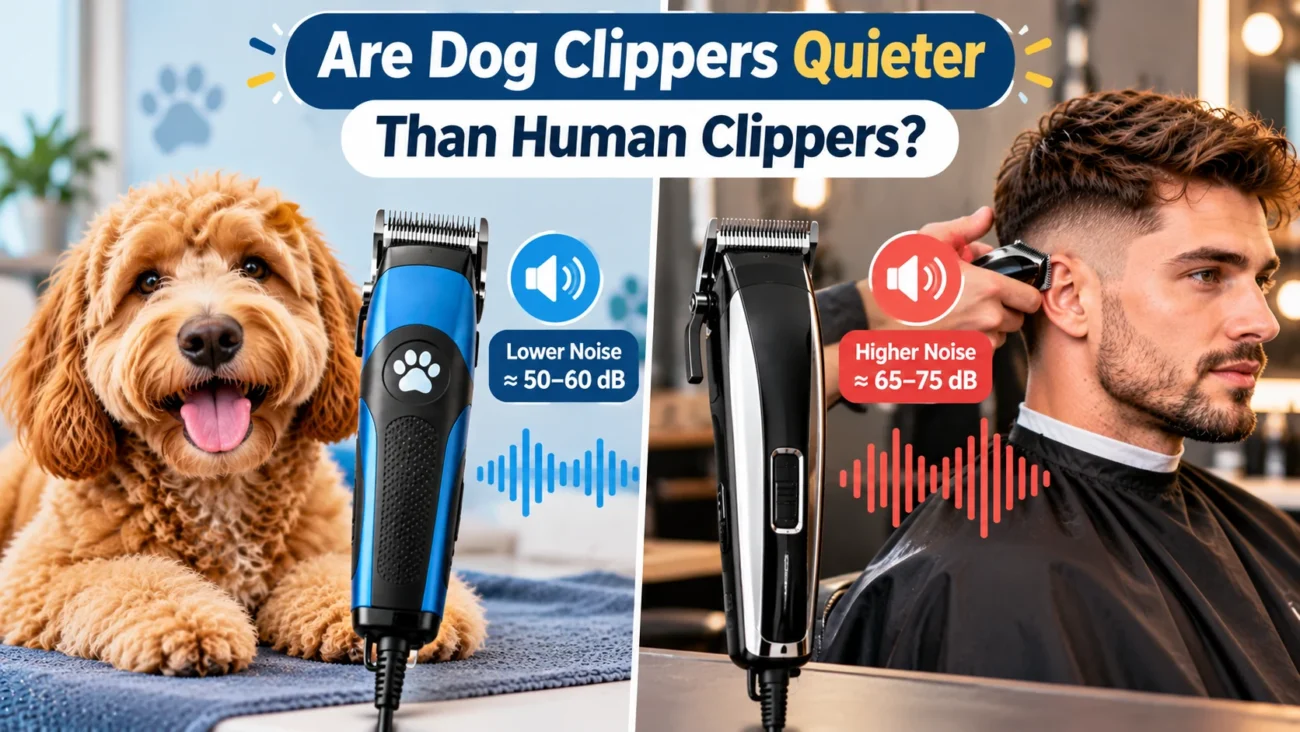
Some dog clippers are designed to run quietly with reduced vibration, but not all pet models are quieter than human clippers. Actual sound depends on the motor, blade condition, cutting load, and individual design.
A nervous dog may react strongly to an unfamiliar buzzing noise. A lower-noise device can help, but gradual introduction remains important.
How to Introduce a Dog to Clipper Noise
Before trimming, create short, positive sessions where your dog can observe the equipment without pressure. Don’t begin by switching on the clipper against the coat.
- Place the switched-off clipper nearby and reward calm curiosity.
- Turn the clipper on at a comfortable distance.
- Reward relaxed behavior while the motor runs briefly.
- Gradually decrease the distance when your dog remains comfortable.
- Introduce gentle contact using the switched-off device first.
- Attempt brief grooming only when your dog accepts the sound and handling.
If your dog shows fear, increase the distance or end the session. Forcing the process can make future grooming harder.
The VCA Animal Hospitals handling guidance explains gradual desensitization and positive reinforcement for grooming-related handling.
Which Clippers Work Best for Different Dog Coat Types?
There is no single ideal clipper for every breed. Coat thickness, length, texture, and grooming frequency should guide the decision.
I’d organize the choice by coat type rather than assuming one brand works equally well everywhere.
Short, Smooth Coats
Dogs with short, smooth coats often need brushing more than full-body clipping. Some breeds gain little benefit from having their coat shaved.
- Prioritize appropriate brushing and shedding tools.
- Use a pet trimmer only where trimming is genuinely needed.
- Avoid unnecessary close shaving.
Curly or Woolly Coats
Poodles and many doodles may require regular haircuts because their coats continue growing and can become tangled. A capable pet clipper and compatible longer guide combs are useful.
- Choose equipment rated for thick or curly coats.
- Comb thoroughly before clipping.
- Make sure the guide comb can move through the coat.
- Use professional grooming for tight matting.
Dense Double Coats
Dogs such as Siberian Huskies and Golden Retrievers typically have insulating double coats. Routine full-body shaving may be inappropriate unless a veterinarian recommends it for a specific reason.
Brushes, undercoat tools, and professional coat maintenance are often more suitable than clipping everything short.
Fine, Long, or Silky Coats
Long-coated dogs may benefit from controlled trimming with appropriately sized guards. Sharp blades and gentle handling help reduce snagging.
The coat should be clean, dry, and thoroughly detangled before using most guide-comb systems.
How Do You Safely Use Dog Clippers at Home?
Safe grooming starts with preparing the coat and helping your dog feel comfortable. Expensive equipment cannot compensate for rushed technique or poor blade maintenance.
The following routine is a useful starting point for simple, non-matted coat trims.
Step 1: Prepare Your Grooming Area
Choose a stable, non-slip surface with enough light to see the coat and skin. Keep your grooming tools within easy reach.
Never leave a dog unattended on an elevated grooming table.
Step 2: Brush and Check the Coat
Brush away loose hair and check for tangles, sores, or skin irritation. Carefully comb through areas you intend to clip.
If you find tight mats close to the skin, stop and seek professional help.
Step 3: Select a Suitable Blade and Guard
Start with a manufacturer-approved attachment that leaves a conservative amount of hair. A longer finish gives beginners more room to assess the result.
Check that the blade sits correctly and has been cleaned and lubricated according to its instructions.
Step 4: Clip Slowly With the Coat
Use gentle, controlled strokes in the direction the hair grows. Keep the cutting surface positioned correctly without digging into the skin.
Avoid pressing heavily or making repeated passes over irritated areas.
Step 5: Check Blade Temperature Frequently
Clipper blades can heat up during use and burn skin. Stop regularly and check the blade’s temperature according to the manufacturer’s safety instructions.
If it becomes hot, stop cutting and allow the equipment to cool. Use only cooling products approved for that blade system.
Step 6: Finish and Clean Your Equipment
Inspect the coat and skin before ending the session. Reward your dog for calm cooperation.
Remove trapped hair, clean the blade, and follow the instructions for lubrication and storage.
The PetMD home dog grooming guide also highlights blade heat, delicate skin, and the importance of professional help when you’re unsure.
What Mistakes Should You Avoid When Grooming Your Dog?
Many common grooming problems come from preparation and technique rather than the clipper brand. Avoiding these mistakes can make the process safer and more comfortable.
- Clipping dirty fur: Dirt and debris can affect blade performance and increase wear.
- Ignoring tangles: Knotted hair may snag or prevent a guide comb from moving smoothly.
- Using dull blades: Worn cutting edges can pull hair instead of cutting cleanly.
- Pressing into skin folds: Loose skin can catch in the blade teeth.
- Ignoring blade heat: A hot blade can cause painful skin irritation or burns.
- Forcing an anxious dog: Stress and unexpected movement increase grooming risks.
- Shaving too closely: Removing excessive coat length can expose delicate skin.
- Using incompatible attachments: Incorrectly fitted guards can create unsafe cutting conditions.
Grooming should never become a struggle. If your dog repeatedly pulls away, short training sessions or professional assistance are better options.
The American Kennel Club’s home grooming advice provides broader guidance on maintaining your dog’s hygiene safely.
Are Expensive Dog Clippers Worth Buying?
Expensive dog clippers can be worthwhile for frequent grooming, but price alone doesn’t guarantee better results. The right tool must suit your dog’s coat and your experience.
I would prioritize cutting performance, blade availability, and reliable maintenance support over decorative features.
Budget Clippers vs Professional Clippers
- Budget pet clippers: Suitable for some light home trimming and manageable coats.
- Mid-range pet clippers: Often provide a useful balance of performance, ergonomics, and convenience.
- Professional clippers: Better suited to regular, demanding grooming when matched to the coat and blade system.
A household trimming a small area occasionally may not need a heavy-duty professional clipper. A family maintaining a thick, continuously growing coat has different requirements.
Corded vs Cordless Dog Clippers: Which Should You Choose?
Corded clippers offer uninterrupted power while connected to a suitable outlet. Cordless clippers offer greater freedom of movement but rely on battery capacity.
| Factor | Corded | Cordless |
|---|---|---|
| Power source | Wall outlet | Rechargeable battery |
| Movement | Limited by cable | More flexible |
| Runtime | No battery limit | Depends on model and battery |
| Best fit | Stationary grooming sessions | Flexible home trimming |
For occasional touch-ups, I like the convenience of cordless designs. For repeated full-body grooming, a quality corded model deserves serious consideration.
What Should You Look for When Buying Dog Clippers?
Focus on features that solve your actual grooming problems. A long feature list means little if the clipper cannot handle your dog’s coat.
- Coat suitability: Check whether the manufacturer supports your dog’s coat type.
- Blade system: Look for compatible replacements and useful cutting lengths.
- Motor performance: Prioritize consistent cutting under the expected workload.
- Noise and vibration: Consider calmer-running options for noise-sensitive dogs.
- Ergonomics: Weight, grip, and balance affect handling comfort.
- Maintenance: Replacement blades and cleaning supplies should be available.
- Power source: Choose corded or cordless operation based on your setup.
- Manufacturer support: Check warranty terms and parts availability.
My practical advice is to choose the grooming system first and the brand second. A compatible blade and guard can matter more than an attractive motor specification.
Recommended Dog Clippers for Home Grooming in 2026
If you’re ready to replace human clippers with a dedicated pet grooming tool, these three models represent different priorities. They’re established grooming products, although availability and included accessories can vary by listing.
The star displays below are editorial suitability scores for their suggested use cases, not customer-review ratings or claims of hands-on testing.
🏆 Best for frequent grooming
Andis AGC2 2-Speed Pet Clipper
★★★★½
The Andis AGC2 uses a corded, two-speed design with a detachable-blade system. I consider it a strong option for owners who need dependable equipment for repeated grooming sessions, provided the selected blade suits their dog’s coat.
🔋 Best cordless flexibility
Wahl Bravura Lithium Ion Pet Clipper
★★★★☆
The Wahl Bravura combines rechargeable operation with an adjustable 5-in-1 blade system. I’d shortlist it for owners who prioritize flexible handling and controlled trimming, while checking coat compatibility before attempting demanding full-body work.
✂️ Best classic corded option
Oster Golden A5 2-Speed Animal Clipper
★★★★☆
The Oster Golden A5 is a traditional corded animal clipper with two-speed operation and a detachable-blade design. I’d consider it when blade interchangeability and established professional-style construction are more important than cordless convenience.
Buying tip: Check the exact model, included blade, voltage, replacement parts, and warranty before purchasing. A listing may represent a different kit configuration than the one you expect.
Frequently Asked Questions About Dog Clippers vs Human Clippers
Can I use regular hair clippers to cut my dog’s hair?
Regular human hair clippers may cut small amounts of fine dog hair, but they aren’t recommended for routine dog grooming. Thick or tangled coats can cause snagging, pulling, and uneven cutting. Dedicated pet clippers provide more appropriate blade and attachment options for different grooming needs.
Are dog clippers sharper than human clippers?
Dog clippers aren’t automatically sharper than human clippers. Both rely on properly maintained cutting blades. The important differences involve blade design, tooth arrangement, cutting length, and suitability for particular coat textures. A sharp but inappropriate blade can still injure a dog’s skin.
Can dog clippers be used on human hair?
Some pet clippers may physically cut human hair, but manufacturers generally design them for animal grooming. Their blade lengths and accessories might not suit human haircut styles. I recommend using separate equipment for each purpose and following the manufacturer’s intended-use and cleaning instructions.
Why do human clippers pull dog fur?
Human clippers can pull dog fur when the coat is too dense, tangled, or difficult for the cutting system to handle. Dull blades, improper lubrication, and inadequate preparation can make the problem worse. Stop immediately when pulling occurs rather than forcing the clipper through the coat.
Do professional dog groomers use regular human clippers?
Professional dog groomers typically use dedicated animal grooming clippers and compatible pet blades. These systems provide cutting lengths and performance suited to different coats. Some equipment manufacturers produce tools for both industries, but an individual model should still be used according to its intended purpose.
Final Verdict: Should You Buy Dog Clippers or Human Clippers?
For grooming a dog, dedicated dog clippers are the better choice. They’re designed around the challenges of animal coats, with blade systems and accessories suited to different grooming requirements.
Human clippers belong in your personal grooming kit. Their apparent similarity to pet clippers doesn’t make them an equally suitable alternative.
My recommendation is to match your purchase to your dog’s coat, grooming frequency, and tolerance for handling. A quiet, well-maintained clipper with a suitable blade is more useful than a powerful tool that pulls fur.
As of 2026, pet owners can choose from compact cordless trimmers to professional corded grooming machines. You don’t need the most expensive option, but you do need the right one.
Ready to improve your home grooming setup? Start by identifying your dog’s coat type, choose compatible pet equipment, and keep grooming sessions calm and comfortable. When matting or skin problems make clipping risky, let a qualified groomer or veterinarian handle the job.


