
Quick Answer
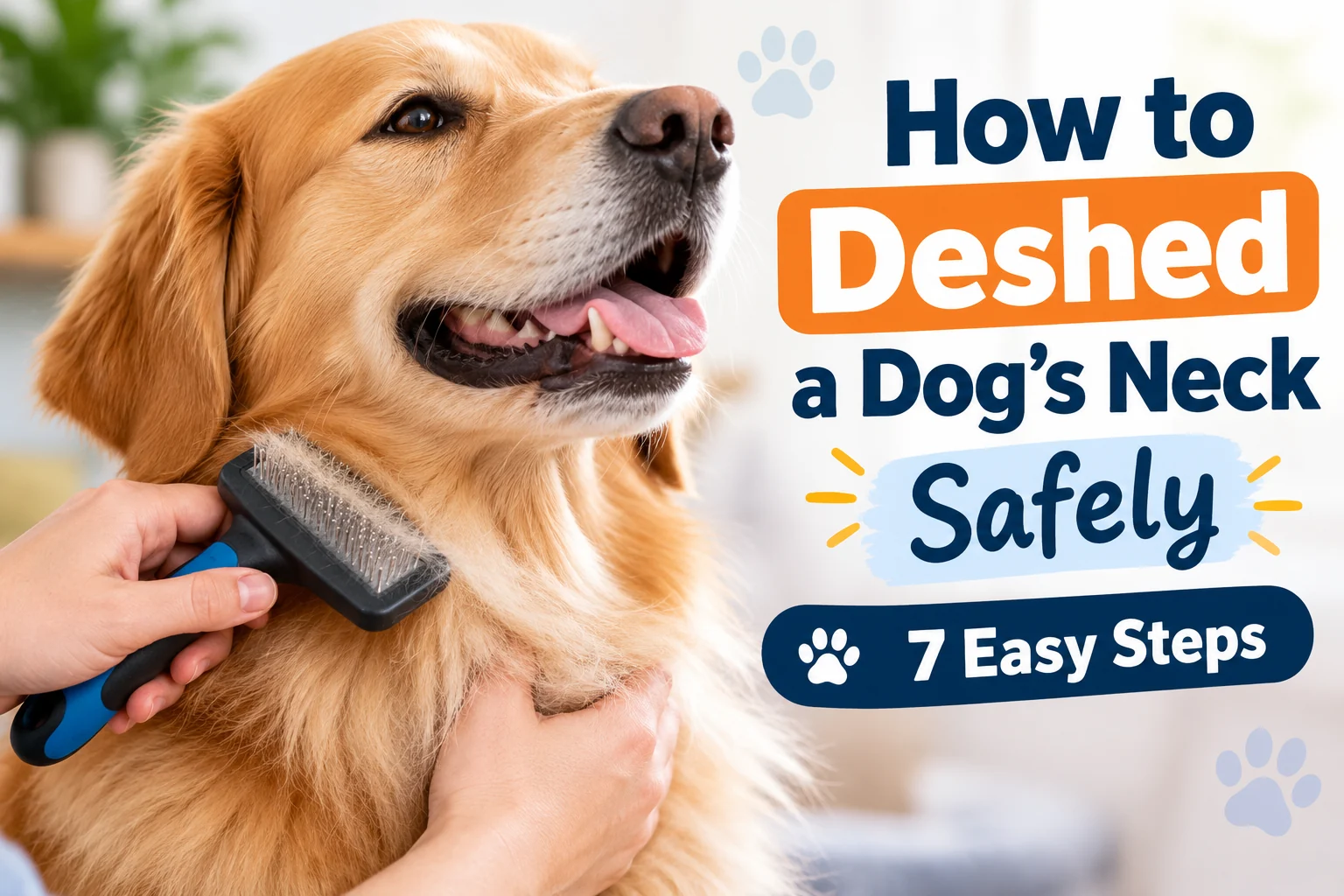
To deshed a dog’s neck safely, remove the collar, inspect the skin, and gently brush the neck ruff in the direction of hair growth. Use a slicker brush or appropriate undercoat rake for a thick double coat, working in small sections with light pressure. Avoid scraping the throat, pulling tangles, or repeatedly brushing the same spot. Stop if your dog shows discomfort or irritation.
A dog’s neck can collect surprising amounts of loose fur, particularly around the thick ruff behind the ears and above the shoulders. This area can also develop tangles where collars rub against the coat.
Learning how to deshed a dog’s neck requires a slightly different approach from brushing the back. Neck fur changes direction, the skin may be sensitive, and some areas have much less protective hair.
The goal is to remove already-loose hair while keeping the healthy coat and skin intact. You do not need to strip away every soft hair or make the neck ruff noticeably thinner.
Why Does a Dog’s Neck Collect So Much Loose Fur?
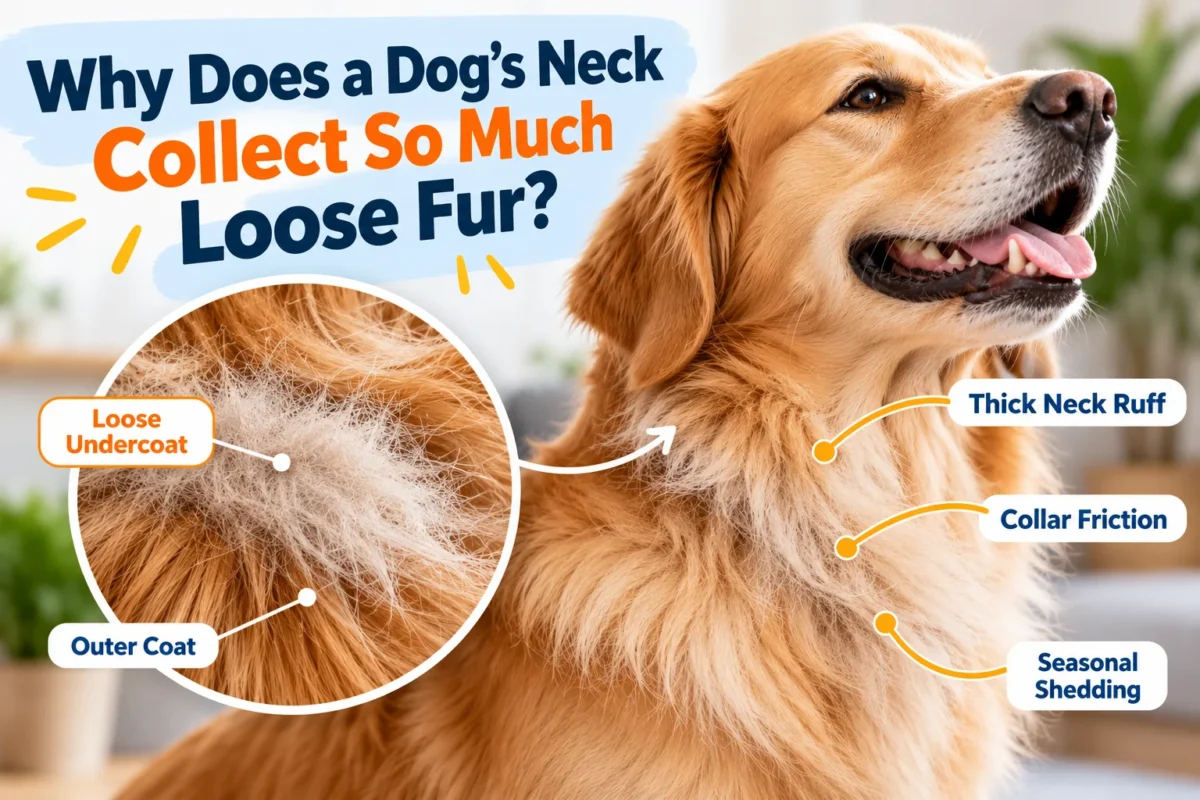
Dogs with double coats often have a dense layer of insulating undercoat beneath their longer or coarser outer hairs. Around the neck and shoulders, this undercoat may form a visibly thicker ruff.
Breeds such as German Shepherds, Huskies, Golden Retrievers, and some Collies can have especially full neck fur. During seasonal shedding, loose undercoat may collect beneath the outer coat rather than falling away immediately.
Collars can also contribute to tangles by rubbing against longer hair. Behind the ears, finer fur may knot even when the main neck coat looks smooth.
However, not every dog has a thick undercoat. Short, smooth-coated dogs may need only a soft brush or grooming mitt, while curly and continuously growing coats require more emphasis on detangling.
Important distinction: Deshedding removes loose hair. Detangling separates knotted hair. A deshedding rake should not be forced through a mat as though it were loose undercoat.
How to Deshed a Dog’s Neck in 7 Safe Steps
Begin with a dry, comfortable coat and a calm dog. Choose a place with secure footing and enough light to inspect the skin beneath the fur.
Step 1: Remove the Collar and Examine the Neck
Take off your dog’s collar before brushing. This exposes the coat underneath and prevents the brush from catching on straps, buckles, or collar hardware.
Use your fingers to separate the fur around the sides and back of the neck. Look for redness, flaky skin, irritation, small wounds, parasites, and tight knots.
Pay particular attention to the collar line and the soft hair behind each ear.
If you discover a painful lump, sore, significant skin irritation, or tightly matted hair, avoid brushing directly over it. Skin problems may need veterinary assessment, while severe matting is better handled by an experienced groomer.
Step 2: Select a Brush That Matches the Coat
For a thick double coat, begin with an appropriately sized slicker brush or another gentle grooming brush. A suitable undercoat rake can help lift loose fur from deeper layers when necessary.
Choose rounded, smooth tool tips where appropriate and avoid tools that scratch when moved lightly through the fur.
For short, smooth coats, a rubber grooming mitt or soft bristle brush may be sufficient. Do not use a heavy undercoat rake simply because a dog is shedding.
The Texas A&M College of Veterinary Medicine emphasizes matching grooming tools to the dog’s coat and comfort rather than relying on one tool for every breed.
Step 3: Separate the Neck Fur Into Small Sections
Begin near the upper shoulder or back of the neck, where your dog is comfortable with handling.
Lift a small layer of the outer coat with your free hand. This exposes the loose hair beneath without requiring you to push the brush forcefully into the skin.
Work gradually through the back of the neck and then the sides. Keep your strokes controlled instead of dragging the tool across the entire ruff.
On long double coats, this section-by-section approach is often called line brushing. It helps you check the undercoat more carefully and reduces repeated brushing over the same surface.
Step 4: Brush Gently in the Direction of Hair Growth
Follow the natural direction of your dog’s coat using short, light strokes. On the back of the neck, hair often lies toward the shoulders, but the direction can change along the sides and beneath the ears.
Keep the tool moving through the hair rather than pressing its teeth against the skin. If it catches, pause and investigate the obstruction.
Do not yank a brush through a knot. Support the surrounding fur with your fingers and carefully separate a minor tangle using an appropriate comb or brush.
Remember that the front of the neck and throat may have thinner or more sensitive skin. Use a softer tool there, and avoid applying pressure over the windpipe.
Step 5: Lift Loose Undercoat Without Overbrushing
Once the surface coat is manageable, use an undercoat rake only if your dog’s coat type calls for one.
Choose a tool with teeth suitable for the coat length and density. Guide it through the fur lightly, removing loose hair in manageable sections.
Clean collected hair from the rake frequently. A packed tool may catch instead of gliding smoothly.
A useful sign of progress is that the tool begins collecting less loose hair while the coat remains comfortable and the skin looks normal.
Do not keep scraping simply because additional strands still appear. Some healthy hair will always remain in the coat, and excessive brushing can cause irritation or coat damage.
Grooming Tip
Use your free hand to support the coat near the area being brushed. Short strokes, frequent brush cleaning, and brief pauses are preferable to pulling through resistant fur.
Step 6: Carefully Check Behind the Ears and Around the Collar Line
After brushing the thicker ruff, examine the smaller areas that are easily overlooked.
Behind the ears, hair can be finer and more prone to knotting. Use a soft brush or suitable comb with minimal tension.
Along the collar line, separate the fur and check for friction-related tangles. If your dog has a harness, examine the shoulder and chest areas where straps contact the coat.
Avoid sharp grooming blades around loose skin, folds, the throat, and other sensitive areas. Never use scissors close to the skin to cut out a tight mat.
If the fur is severely tangled or your dog resists handling near the ears, a professional groomer can help prevent painful pulling.
Step 7: Finish With a Gentle Comb Check and Reward
For a medium or long coat, carefully pass an appropriate metal comb through the areas you have brushed. The comb should move without painful tugging.
If it catches, stop and determine whether you have found a tangle rather than trying to force the comb through.
Finish by smoothing the coat with a soft brush or grooming mitt. Inspect the skin for new redness, then reward your dog with praise or a treat.
End the session while your dog is still comfortable. A calm, incomplete session is preferable to prolonged brushing that creates anxiety or skin irritation.
What Is the Best Brush for Deshedding a Dog’s Neck?
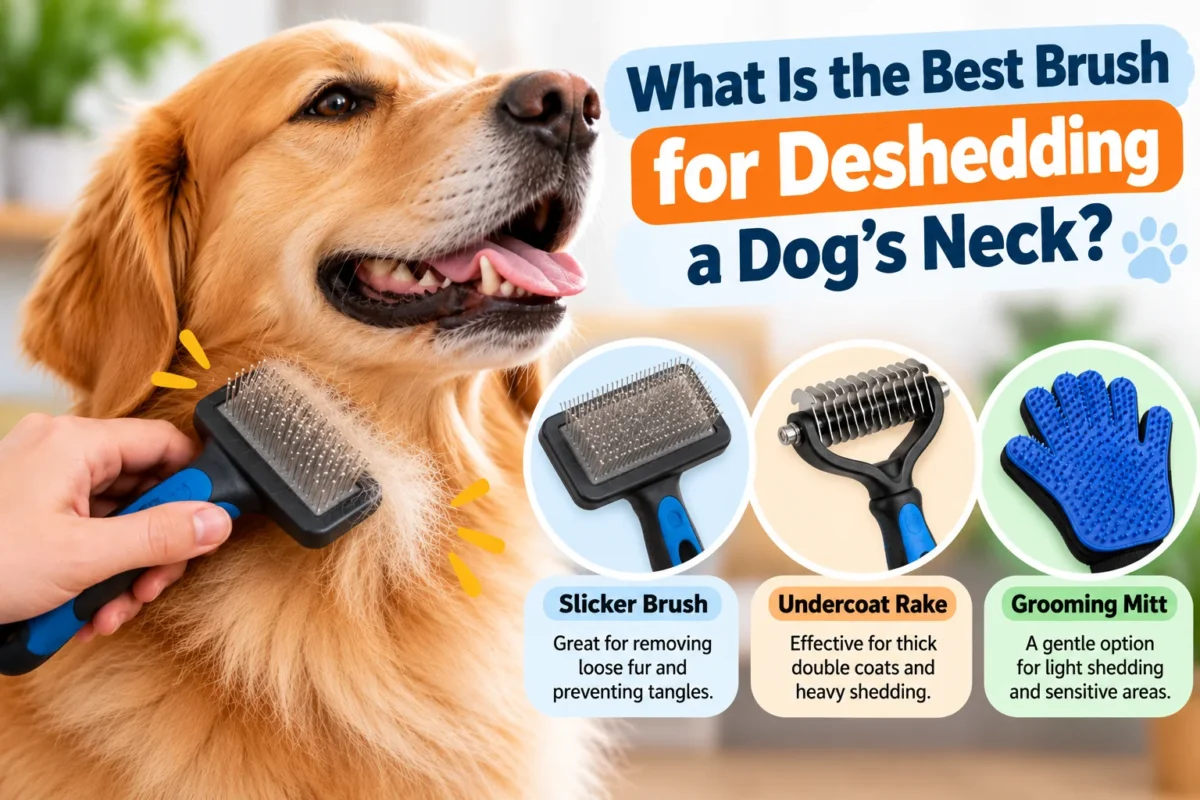
The best brush depends on coat type, undercoat density, skin sensitivity, and whether tangles are present.
For a dense double-coated neck ruff, a gentle slicker brush combined with a suitable undercoat rake may work well. However, not every dog needs both tools.
| Coat or Situation | Suitable Tool | Main Purpose |
|---|---|---|
| Thick double-coated neck | Slicker brush or undercoat rake | Loosen and collect undercoat |
| Long fur behind ears | Gentle slicker and wide-tooth comb | Check and ease minor tangles |
| Short, smooth coat | Rubber grooming mitt or soft brush | Collect loose surface hair |
| Sensitive throat area | Soft bristle brush or grooming mitt | Gentle surface grooming |
Choose the gentlest tool that accomplishes the task. A brush that works well across the shoulders may be inappropriate for the thinner coat beneath the jaw.
How Often Should You Deshed Your Dog’s Neck?
There is no universal deshedding schedule for every dog’s neck. The appropriate frequency depends on the coat, shedding cycle, skin condition, and type of grooming tool.
Many dogs benefit from regular gentle brushing, especially during periods of heavier shedding. However, routine brushing and intensive undercoat removal are not the same activity.
Check the neck coat regularly for loose hair and developing tangles. Use an undercoat tool only as needed, following its instructions and your dog’s tolerance.
During spring or autumn shedding, some double-coated dogs release considerably more fur. You may need more frequent gentle sessions, but not necessarily more pressure or longer sessions.
Reduce the frequency if you notice redness, irritation, broken hair, or increased sensitivity. If shedding becomes unusually severe or is accompanied by bald patches, seek veterinary advice.
Should You Deshed the Neck Before or After a Bath?
It is usually useful to remove loose fur and manageable tangles before bathing, then gently check the coat again after it has been thoroughly dried.
Dry brushing helps prevent existing tangles from becoming more difficult to manage during washing.
After bathing, rinse completely and dry the neck ruff carefully. Thick undercoat can retain moisture close to the skin even when the outer hair looks dry.
Avoid dragging a deshedding rake through a wet, tangled neck coat. If you use a dryer, choose a safe temperature and gentle handling appropriate to the dog.
For the complete bathing process, see our guide to bathing a dog safely at home, including coat preparation, rinsing, and drying.
What Mistakes Should You Avoid When Deshedding the Neck?
The most common problems come from using excessive pressure, choosing an unsuitable tool, or confusing stubborn tangles with loose hair.
- Brushing over the collar: Remove collars and check the underlying fur before grooming.
- Pressing against the throat: Avoid forceful strokes across the windpipe and thinly coated areas.
- Using a rake on every coat: Match the tool to the dog’s actual coat structure.
- Pulling through mats: Address tangles separately and refer tight mats to a groomer.
- Repeatedly scraping one patch: Move between sections and stop before the skin becomes irritated.
- Ignoring discomfort: Flinching, turning away, or trying to escape can indicate pain or stress.
Warning
Never shave a double-coated dog’s neck simply to stop normal shedding. Clipping or shaving may change the coat’s appearance and should be discussed with a qualified groomer or veterinarian when medically or practically necessary.
When Is Neck Shedding a Health Concern?
Normal shedding typically involves loose fur without significant skin damage. Bald patches, persistent scratching, inflamed skin, unpleasant odor, or painful areas suggest that something other than routine shedding may be occurring.
A tight collar may cause friction, but itching and hair loss can also have other causes, including parasites, allergies, or skin disease.
Do not assume that repeated brushing will fix these problems. Stop deshedding the affected area and arrange a veterinary examination when symptoms persist or appear significant.
The RSPCA’s dog grooming guidance recommends short, gentle brushing strokes and avoiding pulling or scraping the skin, particularly around sensitive areas.
How Can You Keep Your Dog’s Neck Comfortable Between Sessions?
Maintaining the neck coat is easier when you prevent severe tangles instead of waiting for them to develop.
Check the hair under the collar and behind the ears during normal handling. Make sure collars fit correctly and do not create persistent rubbing.
Use a gentle brush to collect loose surface hair when needed, and remove leaves or debris before they become trapped in the ruff.
Introduce grooming gradually to dogs that dislike having their neck touched. Brief brushing followed by a reward can help create a positive association without restraint or force.
For long-haired dogs, consider a professional grooming appointment when the coat becomes too tangled to maintain comfortably at home.
Related Product
Dog Undercoat Grooming Rake
A suitably sized undercoat rake with smooth, rounded teeth can help collect loose fur from a thick double-coated neck ruff. Check coat compatibility before choosing one.
As an Amazon Associate, we earn from qualifying purchases.
Frequently Asked Questions
1. Can I use a FURminator on my dog’s neck?
Only if the specific tool is suitable for your dog’s coat and its instructions permit use on that area. Use very light pressure over thick fur and avoid the throat, irritated skin, and tangled sections.
2. Why does my dog dislike having its neck brushed?
Your dog may dislike pulling, tool pressure, sensitive skin contact, or handling near the ears and throat. Try a softer brush and shorter sessions. Stop if the reaction suggests pain.
3. Should I brush upward against the neck fur?
Start by following the natural hair-growth direction. Gently lifting the coat with your hand can expose the undercoat without scraping backward against the skin. Avoid forceful reverse brushing.
4. Can deshedding make my dog’s neck fur thinner?
Removing loose undercoat may temporarily make a thick ruff look less bulky. Healthy hair should remain intact. Noticeable bald spots or broken hair may indicate overgrooming or an underlying problem.
5. Is it safe to deshed a puppy’s neck?
Gentle brushing with a soft, age-appropriate tool can help a puppy become comfortable with grooming. Avoid aggressive undercoat removal, especially before an adult double coat develops.
6. What should I do if the neck fur keeps tangling?
Check collar fit, brush regularly with a coat-appropriate tool, and gently separate minor tangles before they tighten. Ask a professional groomer to handle mats close to the skin or knots that cause pain.
Final Thoughts
Deshedding your dog’s neck safely is about removing loose fur without irritating the skin or damaging the healthy coat. Start with the right tool, work in small sections, and pay extra attention to the collar line, neck ruff, and fur behind the ears.
Keep the process gentle, watch your dog’s response, and stop when the coat is manageable rather than trying to remove every last hair. Consistent, comfortable grooming is more useful than an aggressive deshedding session.


