

Quick Answer
To deshed a Golden Retriever, gently remove loose undercoat using a pin or slicker brush, a suitable undercoat rake, and a metal comb. Work in small sections, follow the direction of hair growth, and avoid scraping the skin. Brush at least weekly, increasing to daily gentle brushing during heavy shedding. For more general techniques, see this double-coat brushing guide.
How to deshed a Golden Retriever in 7 steps
- Prepare your tools: Gather a suitable brush, undercoat rake, metal comb, and treats.
- Inspect the coat: Check for mats, redness, sores, and sensitive skin.
- Brush the outer coat: Loosen surface hair and minor tangles without pulling.
- Remove loose undercoat: Gently rake small sections where dead undercoat collects.
- Check problem areas: Carefully groom behind the ears, chest, legs, and tail.
- Comb and inspect: Check for remaining tangles and signs of irritation.
- Finish comfortably: Reward your dog and clean up the collected fur.
Important safety rule
- Never shave the double coat: Golden Retrievers need their protective coat, even during warm weather.
- Stop when uncomfortable: Excessive pulling, redness, or pain means the session needs to end.
Golden Retrievers are wonderful companions, but their shedding can leave fur across furniture, clothing, and floors. The solution isn’t stronger brushing; it’s understanding how their double coat works.
I prefer a gentle, section-by-section approach because it helps avoid unnecessary pulling. This guide explains the tools, technique, grooming schedule, and mistakes that matter most.
What Is Deshedding a Golden Retriever?
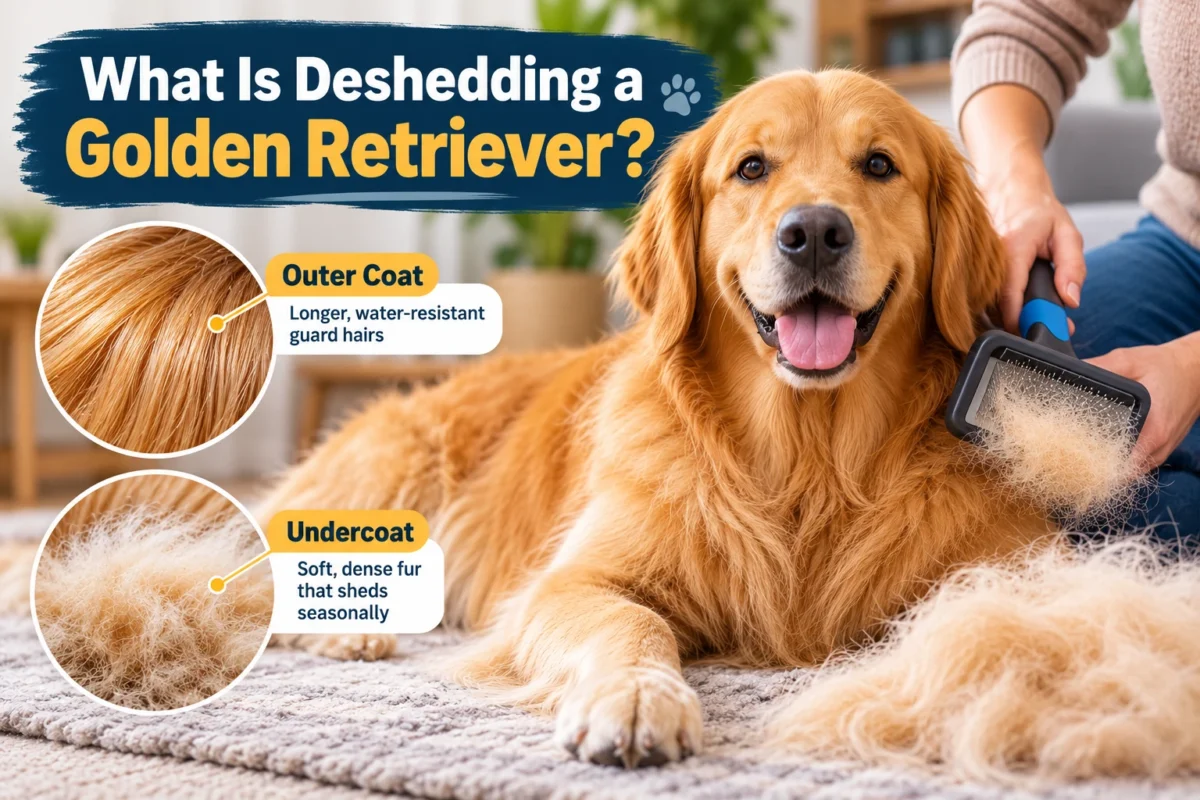
Deshedding is the process of removing loose, dead hair from a dog’s coat before it naturally falls out. For Golden Retrievers, the main goal is collecting loose undercoat while protecting healthy hair and skin.
A Golden Retriever has two distinct coat layers. Each performs an important function.
- Outer coat: Longer, water-resistant guard hairs help protect against moisture, debris, and environmental exposure.
- Undercoat: Shorter, softer, dense fur provides insulation and changes with seasonal conditions.
The undercoat can release substantial amounts of hair during seasonal changes. Deshedding helps collect that hair without removing the coat your dog still needs.
According to the Golden Retriever Club of America, shedding is a normal part of the breed’s hair-growth cycle. Grooming manages loose fur rather than stopping that cycle.
Why Do Golden Retrievers Shed So Much?
Golden Retrievers shed because their double coats naturally replace old or damaged hair. They lose some fur throughout the year, with heavier shedding during coat changes.
Spring and fall often bring noticeable increases. Indoor temperature, daylight exposure, health, and individual coat density can influence the pattern.
Normal Shedding vs. Unusual Hair Loss
Regular shedding usually produces loose hair while the coat remains reasonably full. Sudden thinning, bald patches, or inflamed skin suggest something different.
- Normal: Loose hair on brushes, bedding, and clothing without skin inflammation.
- Seasonal: Larger amounts of loose undercoat released over several weeks.
- Concerning: Bald patches, sores, intense scratching, or sudden changes in coat density.
Parasites, allergies, infections, and some medical conditions can contribute to abnormal hair loss. Contact your veterinarian if shedding comes with noticeable skin changes.
What Tools Do You Need to Deshed a Golden Retriever?
A pin or slicker brush, appropriate undercoat rake, and stainless-steel comb cover most Golden Retriever deshedding needs. You don’t need numerous specialized tools.
I would start with these three basics before investing in expensive grooming equipment. Proper technique matters more than having a large collection.
| Tool | Main Purpose | When to Use | Precaution |
|---|---|---|---|
| Pin brush | General coat maintenance | Routine brushing | Avoid pulling tangled fur |
| Slicker brush | Removes loose hair and light tangles | Regular grooming | Use light pressure |
| Undercoat rake | Reaches loose undercoat | Heavy shedding | Avoid repeated forceful passes |
| Metal comb | Finds hidden tangles | Final coat check | Never force through mats |
| Pet dryer | Dries coat and loosens dead hair | After bathing | Use safe temperature and airflow |
Long, dense coats need tools that reach below the surface. A shallow brush may leave substantial loose undercoat behind.
However, specialized blade-style deshedding tools deserve caution. Incorrect pressure or repeated use can remove healthy hair and irritate skin.
How to Deshed a Golden Retriever Step by Step
The safest method uses short, controlled brushing sessions and small coat sections. Work gradually rather than trying to remove every loose hair at once.
A calm dog makes grooming easier. Begin with the areas your Golden already tolerates.
Step 1: Prepare a Comfortable Grooming Area
Choose a quiet place with sufficient light and a secure, non-slip floor. Outdoor grooming can simplify cleanup when the weather is comfortable.
Place the tools within reach before bringing your dog over. Keep treats nearby to reinforce relaxed behavior.
- Use a stable, non-slip surface.
- Keep fresh water accessible.
- Avoid intense heat or direct midday sun.
- Allow your dog to move and take breaks.
Step 2: Inspect the Skin and Coat
Run your fingers gently through the fur before brushing. Look for mats, burrs, redness, lumps, and sensitive areas.
Pay attention behind the ears and beneath the collar. These areas can hide tangles even when the visible coat appears smooth.
If you discover tight mats against the skin, avoid pulling them out. A professional groomer can assess whether safe removal requires specialized handling.
Step 3: Brush the Outer Coat First
Begin with a pin brush or suitable slicker brush. Use gentle strokes along the natural direction of hair growth.
I recommend starting at the shoulders before moving toward the back. Sensitive areas are easier to approach once the dog settles.
- Separate dense hair with your free hand.
- Brush manageable sections rather than the whole body at once.
- Remove loose fur from the brush regularly.
- Ease small tangles apart without pulling the skin.
Step 4: Remove Loose Undercoat Carefully
Use a suitable undercoat rake where dense, loose hair remains. Guide it gently through the fur without pressing the teeth into the skin.
Work with the coat’s growth direction and inspect the fur after several strokes. Don’t repeatedly scrape one location simply because hair keeps appearing.
For thicker areas, separate the coat into narrow sections. This lets the rake reach loose hair without excessive force.
The American Kennel Club’s shedding guidance also recommends gentle handling with coat rakes and deshedding tools.
Step 5: Groom the Ears, Chest, Legs, and Tail
These areas need extra attention because longer feathering can trap loose hair. Feathering means the longer, flowing fur found around the legs and tail.
Use a suitable brush and metal comb to work through small sections. Hold longer hair near its base to reduce uncomfortable pulling.
- Behind the ears: Check for small knots near the skin.
- Chest: Separate dense fur and brush gently.
- Front legs: Comb longer feathering without tugging.
- Hindquarters: Remove loose undercoat carefully.
- Tail: Support the hair while combing toward its ends.
Never force a grooming tool into a tight knot. Sensitive areas may require a softer brush or professional assistance.
Step 6: Check the Coat With a Metal Comb
After brushing, gently pass a metal comb through each finished section. The comb helps reveal tangles or loose hair missed earlier.
It should move through the coat without strong resistance. If it catches, inspect the area rather than pulling harder.
Check your Golden’s skin once more for redness. Stop grooming if irritation appears.
Step 7: Reward Your Dog and Clean Up
Finish with praise, treats, and a calm break. Rewarding cooperation helps your Golden associate grooming with a positive experience.
Collect the removed fur before it spreads through your home. Clean the tools and let them dry before storing them.
You don’t need to remove every loose hair in one session. A consistent grooming routine is safer than exhausting your dog with prolonged brushing.
How Often Should You Deshed a Golden Retriever?
Most Golden Retrievers benefit from at least weekly thorough brushing. During heavy shedding, daily gentle brushing may help control loose fur.
Dedicated rake sessions should depend on coat condition and tool instructions. They aren’t necessarily appropriate every day.
| Coat Condition | Suggested Brushing | Main Priority |
|---|---|---|
| Normal shedding | At least weekly | Remove loose hair and prevent tangles |
| Heavy seasonal shedding | Gentle daily brushing as needed | Collect releasing undercoat |
| Tangle-prone feathering | Inspect several times weekly | Prevent mat formation |
| Sensitive or irritated skin | Pause affected-area grooming | Seek veterinary advice when needed |
These are practical starting points rather than rigid rules. Adjust them according to your dog’s coat, comfort, and shedding.
For broader scheduling guidance, read how often to deshed a dog safely.
Should You Bathe a Golden Retriever Before Deshedding?

Bathing can loosen dead undercoat, making removal easier after the coat dries. However, you should first brush out loose hair and manageable tangles.
Water can make existing mats harder to handle. Never rely on shampoo to remove stubborn knots.
Safe Bathing and Drying Routine
- Brush first: Remove surface debris, loose fur, and manageable tangles.
- Wet thoroughly: Use comfortably warm water to reach the skin.
- Apply dog shampoo: Choose a product intended for canine skin.
- Rinse completely: Work through the dense coat until residue disappears.
- Dry safely: Towel dry, then use a pet-safe dryer if tolerated.
- Brush again: Gently remove remaining loose hair after drying.
The Golden Retriever Club of America notes that baths and drying can help release dead coat. Professional groomers may also use high-velocity pet dryers for this purpose.
Always introduce dryers gradually and control airflow and temperature. Never direct strong airflow into your dog’s ears, eyes, or nose.
What Are the Biggest Golden Retriever Deshedding Mistakes?
The most common problem is trying to remove too much hair too aggressively. Gentle, consistent brushing is safer than forceful grooming.
- Shaving the coat: Removes protective hair and may disrupt normal coat function.
- Applying excessive pressure: Can irritate the skin beneath dense fur.
- Using blades too frequently: May damage healthy hair when used incorrectly.
- Ignoring hidden mats: Allows uncomfortable tangles to tighten.
- Brushing one spot repeatedly: Increases the risk of irritation.
- Skipping drying: Leaves moisture trapped inside the thick coat.
- Ignoring pain signals: Can make future grooming stressful.
One mistake deserves special attention: shaving. Golden Retrievers rely on their natural double coat for protection and insulation.
The AKC’s double-coated dog guidance explains why preserving both coat layers matters. Don’t shave your Golden to reduce shedding or help with summer heat unless a veterinarian advises it for a medical reason.
How Can You Reduce Golden Retriever Shedding at Home?
You cannot eliminate natural shedding, but you can keep loose fur under better control. Combining grooming with simple cleaning habits makes a noticeable practical difference.
Create a Consistent Routine
Use the same quiet location and grooming sequence whenever possible. Predictable sessions can improve cooperation and make missed tangles easier to spot.
For wider household strategies, see these dog shedding control methods.
Support Healthy Skin and Nutrition
Feed a complete, balanced diet appropriate for your dog’s life stage. Avoid starting supplements solely because your dog sheds heavily.
If the coat changes suddenly or your Golden develops persistent itching, consult a veterinarian. Skin conditions and nutritional problems need proper assessment.
Keep Your Home Easy to Clean
- Vacuum carpets and furniture regularly.
- Wash removable dog bedding according to its care label.
- Use a reusable lint roller on upholstery and clothing.
- Groom outdoors when weather and safety permit.
- Keep washable throws on your dog’s favorite resting spots.
These habits won’t change how much hair grows or falls out. They make natural shedding easier to manage.
When Should You See a Groomer or Veterinarian?
A professional groomer can help with extensive loose undercoat and difficult tangles. A veterinarian should evaluate hair loss accompanied by skin abnormalities or illness.
The distinction matters because ordinary shedding and medical hair loss are not the same problem.
- See a groomer: Dense matting, difficult coat maintenance, or a dog that needs professional grooming support.
- See a veterinarian: Bald patches, persistent itching, skin redness, sores, unusual odor, or sudden hair loss.
- Seek prompt care: Painful, wet, inflamed skin or a rapidly worsening skin problem.
Don’t treat unexplained hair loss by increasing deshedding sessions. Repeated brushing could worsen an existing skin condition.
Which Deshedding Tools Are Worth Considering?
If you’re building a home grooming kit, I would prioritize a comfortable slicker brush, a non-cutting undercoat rake, and a finishing comb. They perform different jobs without requiring aggressive coat removal.
The following are tool recommendations based on design and intended use, not products I’ve personally tested. The ratings are editorial suitability estimates rather than customer-review averages.
Affiliate disclosure: As an Amazon Associate, we may earn from qualifying purchases at no extra cost to you.
🏆 Best for routine brushing
Safari by Coastal Self-Cleaning Slicker Brush
★★★★½
Designed to remove loose hair and help maintain a tidy coat, with a self-cleaning feature. I would consider this a practical everyday option for Golden Retriever owners who want simpler cleanup. Use gentle pressure on sensitive skin.
🐕 Best for dense undercoat
Safari by Coastal Double Row Undercoat Rake With Rotating Pins
★★★★½
This rake features two rows of rotating pins designed for thick coats. It’s my preferred design type to consider for controlled undercoat work because it offers a non-cutting approach. Never force it through compact mats.
🔍 Best for finishing checks
Safari by Coastal Dog Grooming Comb for Medium and Coarse Coats
★★★★☆
A finishing comb helps locate tangles the brush may miss. I would include one in a Golden Retriever kit for checking feathering and confirming that groomed sections are manageable.
Frequently Asked Questions
Can you deshed a Golden Retriever every day?
Yes, gentle daily brushing can help during heavy seasonal shedding. However, daily use of aggressive blades or intensive undercoat-removal tools may irritate the skin or damage healthy hair. Adjust your routine according to your dog’s comfort and the tool manufacturer’s instructions.
Is a slicker brush or undercoat rake better for Golden Retrievers?
Both tools serve different purposes. A slicker brush helps remove loose surface hair and light tangles, while an undercoat rake reaches deeper loose fur. Many Golden Retrievers benefit from using both gently, followed by a metal comb.
How long does it take to deshed a Golden Retriever?
The time depends on coat thickness, tangles, shedding intensity, and your dog’s tolerance. Start with short sessions of about 10–15 minutes, taking breaks as needed. A dense coat may require several sessions rather than one prolonged grooming attempt.
Will shaving a Golden Retriever stop shedding?
No. Shaving removes hair temporarily but does not stop the natural shedding cycle. It can also interfere with the protective double coat and normal regrowth. Routine brushing and careful undercoat removal are better options for managing shedding.
Why is my Golden Retriever still shedding after deshedding?
Deshedding removes loose hair present during grooming, but healthy coats continue their natural hair cycle. More hair may become loose afterward, especially during seasonal changes. Regular gentle brushing helps manage that ongoing process without attempting to eliminate shedding completely.
Final Takeaway: Keep Your Golden Retriever’s Coat Healthy
Learning how to deshed a Golden Retriever is about maintaining a healthy coat, not stripping away as much hair as possible. Gentle brushing, appropriate tools, and a consistent schedule are the foundations.
Start with short sessions, inspect the skin, and adjust grooming frequency during heavy shedding. Protect the double coat and ask for professional help when mats, pain, or unusual hair loss appear.
For your next grooming session, follow this step-by-step dog brushing guide to build a calm and effective routine.


