Quick Answer
Dog coat type affects how much a dog sheds, when shedding increases, and which grooming tools work best. Short-haired dogs can shed heavily, while curly and continuously growing coats often release less visible hair but need more detangling. Double-coated breeds commonly lose large amounts of undercoat during seasonal changes. A consistent dog brushing routine helps manage loose fur safely.
Shedding by Coat Type
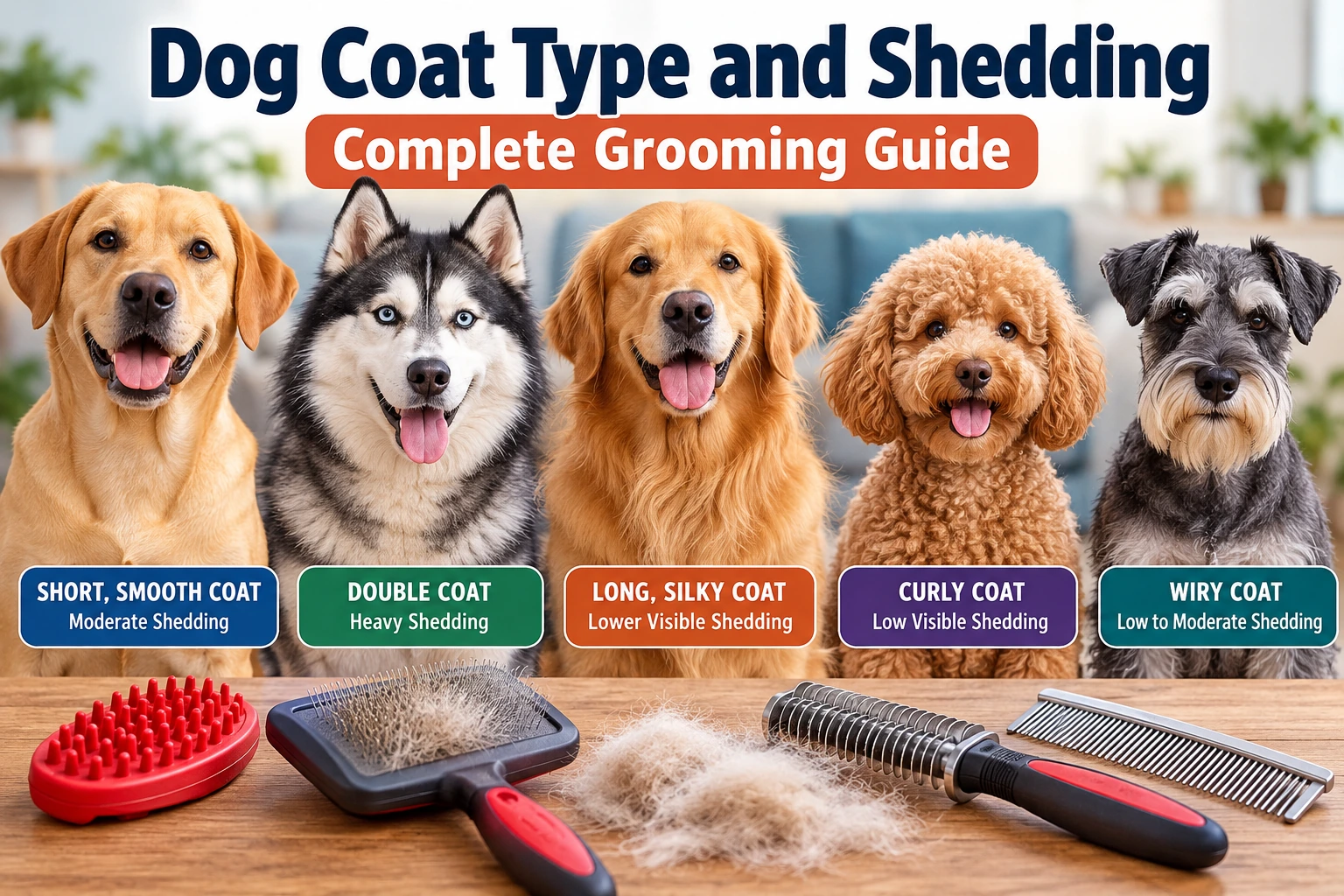
- Short, smooth coats: Often shed moderately throughout the year, despite their short hair.
- Double coats: Frequently shed heavily during seasonal undercoat changes.
- Long, silky coats: Shedding varies, but loose hairs can become trapped in tangles.
- Curly coats: Often produce less visible loose hair but require frequent grooming.
- Wiry coats: May shed lightly or moderately, depending on breed and coat care.
How to Check Your Dog’s Coat
- Part the fur: Look for a soft, dense undercoat beneath longer guard hairs.
- Check loose hair: Notice whether brushing releases fine undercoat or longer individual hairs.
- Watch the skin: Bald patches, redness, or sudden excessive hair loss need veterinary attention.
Finding dog hair on your sofa doesn’t always mean your dog is shedding too much. Some healthy dogs simply lose more hair than others.
I prefer starting with coat type rather than buying the strongest deshedding tool available. This guide explains how to identify your dog’s coat, understand normal shedding, and build a safer grooming routine.
What Is a Dog Coat Type?
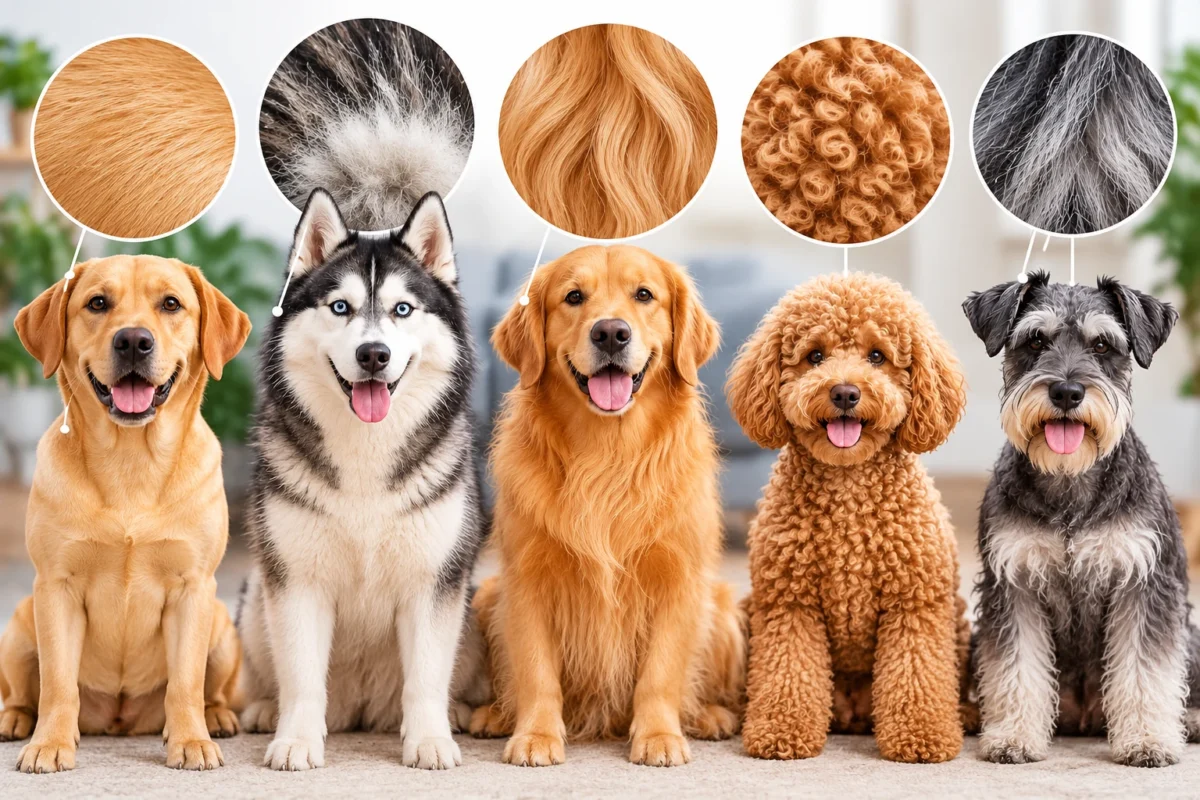
A dog coat type describes the length, texture, growth pattern, and layering of a dog’s hair. These characteristics influence shedding, matting, grooming frequency, and tool selection.
Coat length alone tells only part of the story. A short-coated Labrador Retriever can shed more visibly than a much longer-haired Maltese.
Dog coats are commonly described using several overlapping characteristics:
- Length: Short, medium, or long hair.
- Texture: Smooth, wiry, silky, wavy, or curly.
- Layering: Single coat or double coat.
- Growth pattern: Hair that cycles and sheds regularly or grows for longer periods.
- Density: The amount of hair covering a particular area.
These characteristics can overlap. A Golden Retriever has a long double coat, while a Poodle usually has a dense, curly coat with relatively low visible shedding.
How Does Dog Coat Type Affect Shedding?
Coat type influences the amount of hair released, how easily that hair becomes visible, and whether shedding changes seasonally. Hair length alone does not reliably predict how much fur ends up around your home.
Dogs naturally replace older hairs through growth cycles. Breed genetics, undercoat density, daylight exposure, health, and living conditions influence those cycles.
What Is the Difference Between a Single Coat and a Double Coat?
A single coat lacks the distinct, dense insulating undercoat found in many double-coated breeds. A double coat contains longer protective guard hairs and a softer undercoat.
The two layers work together. The outer hairs help protect the skin, while the undercoat adds insulation.
- Single coats: Often have less seasonal undercoat shedding, although shedding varies widely.
- Double coats: Can release significant amounts of soft undercoat during seasonal changes.
- Continuously growing coats: Often need regular trimming and thorough detangling.
The American Kennel Club’s double-coat guidance explains how protective guard hairs and insulating undercoats serve different functions.
Dog Coat Types and Shedding Comparison Chart
This chart compares common coat characteristics, expected shedding patterns, and practical home grooming routines. Breed differences and individual health can change the results.
| Coat Type | Common Breeds | Typical Shedding | Starting Brush Schedule | Useful Tools |
|---|---|---|---|---|
| Short, smooth | Boxer, Beagle | Low to moderate; sometimes substantial | 1–2 times weekly | Rubber curry brush |
| Short double | Labrador Retriever, Corgi | Moderate to heavy | 2–3 times weekly | Slicker, undercoat rake |
| Long double | Golden Retriever, Husky | Moderate to very heavy | 3–5 times weekly; more during heavy shedding | Long-pin slicker, rake, comb |
| Long, silky | Maltese, Yorkshire Terrier | Often low visible shedding | Daily for longer coats | Pin brush, metal comb |
| Curly | Poodle, Bichon Frise | Usually low visible shedding | Daily or every other day | Slicker, metal comb |
| Wiry | Border Terrier, Schnauzer | Low to moderate | 1–3 times weekly | Comb, suitable terrier grooming tools |
Important: These frequencies are starting guidelines, not fixed requirements. Increase gentle grooming when loose hair or tangles accumulate, and reduce pressure if your dog’s skin becomes irritated.
Which Dog Coat Types Shed the Most?
Dense double coats often produce the heaviest visible seasonal shedding. However, short-coated breeds can also leave considerable hair on furniture and clothing.
Short and Smooth Coats
Short-haired dogs may look low-maintenance, but their hairs still grow, shed, and replace themselves. Individual hairs can work into upholstery and carpets.
Beagles, Boxers, and similar breeds benefit from gentle brushing. A rubber grooming brush usually works well for removing loose surface hair.
Double-Coated Dogs
Double-coated dogs often experience pronounced undercoat shedding. Their soft insulating hair can loosen in noticeable amounts during coat changes.
Common examples include:
- Labrador Retrievers
- German Shepherds
- Siberian Huskies
- Alaskan Malamutes
- Golden Retrievers
- Pembroke Welsh Corgis
When the undercoat starts releasing, a normal brushing session may fill a brush repeatedly. That alone does not indicate disease if the skin looks healthy and the shedding follows your dog’s usual pattern.
Long and Silky Coats
Some long-haired dogs shed less visibly because their coats grow for extended periods. Loose hairs may also remain tangled in surrounding hair.
This creates a different problem: matting. A low-shedding dog can require more daily grooming than a heavy shedder.
Curly and Wavy Coats
Curly coats can trap shed hairs within their curls instead of dropping them onto the floor. Poodles and Bichon Frises illustrate this grooming challenge.
Regular brushing, combing, and professional trimming are important. A coat that appears tidy on the outside may still contain tight knots near the skin.
Wiry Coats
Wire-coated terriers often have coarse protective hairs and breed-specific grooming requirements. Their shedding varies by coat structure and how the coat is maintained.
Some benefit from professional hand-stripping, which removes mature dead coat hairs. Ask an experienced groomer whether this approach suits your dog.
Why Do Dogs Shed More During Certain Seasons?
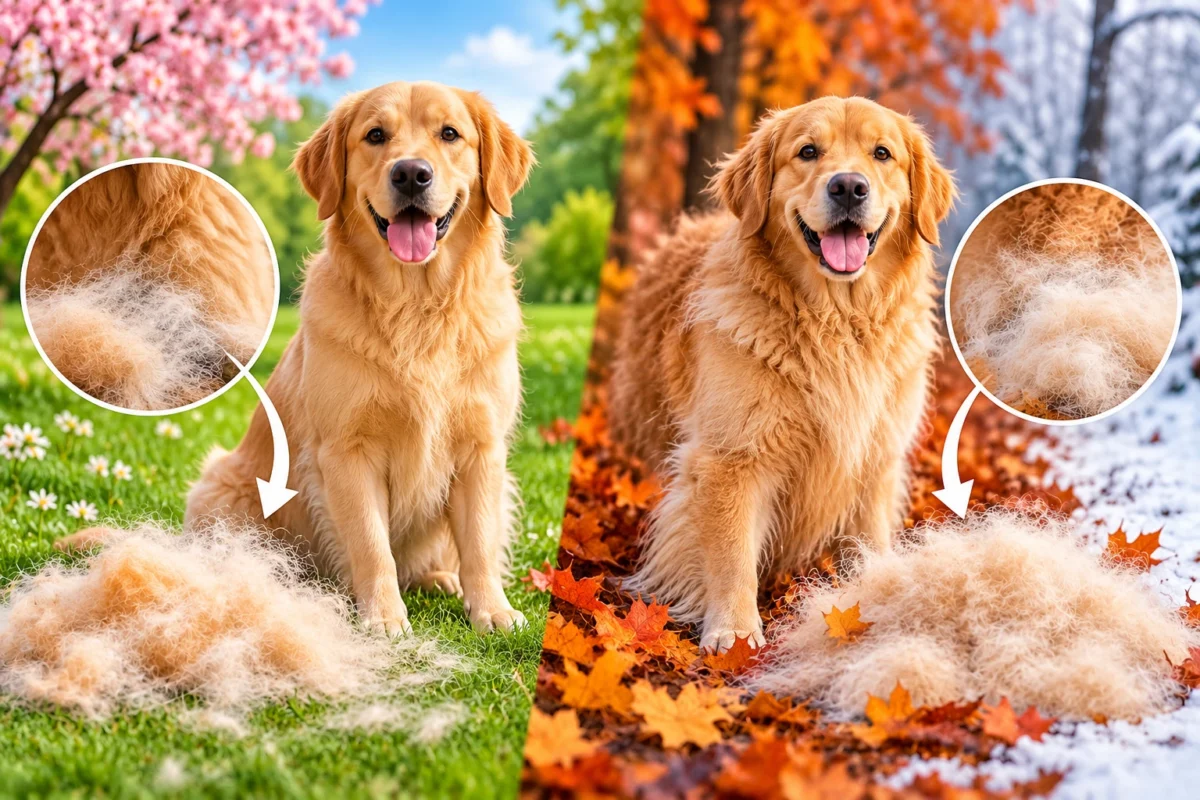
Many double-coated dogs shed more during seasonal changes because their coats respond to changing daylight and environmental conditions. These changes often become noticeable in spring and autumn.
Owners commonly call this process blowing coat. Large amounts of loose undercoat may come away over several weeks.
- Spring: Many dogs lose thicker insulating undercoat as warmer weather approaches.
- Autumn: Coat changes may accompany the transition toward colder conditions.
- Year-round: Indoor dogs may shed more continuously because of stable temperatures and artificial lighting.
The timing varies by breed, climate, and individual dog. Dogs living in warm regions may not follow a dramatic twice-yearly shedding pattern.
Seasonal shedding usually produces loose hair without leaving inflamed or bald skin. If shedding causes visible patches of missing hair, investigate further.
How Can You Identify Your Dog’s Coat Type at Home?
You can identify many coat characteristics by examining hair length, texture, and undercoat density. A simple inspection helps you choose gentler grooming tools.
- Look at the outer coat: Notice whether it is short, long, smooth, wiry, wavy, or curly.
- Part the fur: Check whether a softer, denser layer sits beneath the longer hairs.
- Feel the hair: Compare the texture of outer hairs with the hair closer to the skin.
- Observe shedding: Notice whether your dog drops individual hairs or releases fluffy undercoat.
- Check for tangles: Inspect behind the ears, under the legs, and near the collar.
- Ask a groomer: Get help if your mixed-breed dog’s coat combines several textures.
Mixed-breed dogs can have less predictable coats than their appearance suggests. Even littermates may inherit noticeably different coat characteristics.
Focus on the actual coat rather than the breed label. Your dog’s current hair density, comfort, and tendency to mat should guide grooming decisions.
What Is the Best Brush for Each Dog Coat Type?
The best brush depends on coat density, length, texture, and your dog’s skin sensitivity. No single deshedding tool is ideal for every dog.
Rubber Curry Brushes for Short Coats
Rubber brushes are useful for short, smooth coats. Their flexible surface helps collect loose hairs without requiring sharp metal teeth.
Use gentle circular or directional movements as appropriate for the product. Avoid excessive pressure or prolonged rubbing on the same area.
Slicker Brushes for Long and Curly Coats
Slicker brushes use fine pins to separate hairs and remove loose fur or manageable tangles. They are useful for many long, curly, and dense coats.
Select a brush with a suitable pin length and head size. Use short strokes without scraping the skin.
Undercoat Rakes for Double Coats
An undercoat rake helps reach loose hair beneath a protective outer coat. It can be useful for Huskies, Retrievers, and similar breeds.
Choose an appropriate tooth spacing and work gently. Aggressive scraping can damage healthy coat hairs and irritate skin.
Metal Combs for Checking Tangles
A quality metal comb helps identify knots missed by a brush. It is especially useful after working through curly or longer coats.
The comb should move through the hair without force. If it repeatedly catches, return to gentle detangling rather than pulling harder.
The AKC guide to dog brushes provides additional guidance on matching common grooming tools to coat characteristics.
How Often Should You Brush a Dog Based on Coat Type?
Most dogs benefit from weekly brushing, but long, curly, dense, and easily tangled coats need more frequent attention. Heavy shedding also increases the need for gentle maintenance.
I recommend starting with a manageable schedule and adjusting it based on the amount of loose fur and the dog’s tolerance.
- Short, smooth coats: Begin with one or two sessions weekly.
- Short double coats: Try two or three sessions weekly.
- Long double coats: Brush several times weekly, increasing during shedding periods.
- Long, silky coats: Check daily for knots, especially when the coat is kept long.
- Curly coats: Brush and comb frequently to prevent hidden matting.
- Wiry coats: Maintain regular brushing and follow breed-specific grooming advice.
Read the full dog brushing frequency guide for a more detailed schedule.
What Should You Do During Heavy Shedding?
Short, frequent brushing sessions are usually better than infrequent, aggressive deshedding. Stop before the skin becomes red or your dog becomes uncomfortable.
For thick double coats, carefully separate the hair into manageable sections. Remove loose undercoat without cutting healthy guard hairs.
Intensive undercoat tools should not automatically be used every day. See the safe dog deshedding schedule for guidance on balancing routine brushing with targeted deshedding.
How Can You Reduce Dog Shedding at Home?
You cannot eliminate normal hair replacement, but you can manage loose fur and support healthier skin. Focus on consistent coat care instead of products promising to stop shedding completely.
1. Maintain a Regular Brushing Schedule
Brushing collects loose hairs before they spread around the house. It also gives you an opportunity to check for unusual skin changes.
Use the least aggressive effective tool. Gentle, consistent grooming is usually easier on your dog than forceful deshedding.
2. Bathe Your Dog When Needed
Bathing helps remove dirt and loosen dead hair. Use a shampoo formulated for dogs and rinse thoroughly.
Avoid unnecessary frequent bathing, especially if your dog has dry or sensitive skin. Bathing frequency should reflect coat condition, activity, and veterinary advice.
3. Feed a Complete and Balanced Diet
Healthy skin and coat growth depend on appropriate nutrition. A complete diet suited to your dog’s age and health needs provides essential nutrients.
Do not assume every shedding problem requires a supplement. Ask your veterinarian before adding oils, vitamins, or other products.
4. Keep Up With Parasite Prevention
Fleas, mites, and other parasites can cause itching, irritation, and abnormal hair loss. Follow a veterinarian-recommended prevention plan.
Check for scratching, chewing, and irritated areas during regular grooming. These signs may indicate a problem beyond normal seasonal shedding.
5. Keep Your Home Grooming-Friendly
Controlling loose hair also requires basic household cleaning. A consistent cleaning routine makes shedding easier to live with.
- Wash washable dog bedding regularly.
- Vacuum frequently used sleeping and resting areas.
- Use a lint roller on clothing and upholstery.
- Keep grooming tools clean and dry.
- Brush in an easy-to-clean area when possible.
Should You Shave a Double-Coated Dog to Reduce Shedding?
Usually, no. Shaving a double coat does not stop its hair growth cycle and may interfere with coat protection or normal regrowth.
The outer guard hairs protect the skin, while the undercoat contributes insulation. Removing both layers is not a reliable method for keeping a dog cool.
Instead, concentrate on these safer options:
- Remove loose undercoat with suitable grooming tools.
- Keep the coat free from compacted hair and tangles.
- Provide shade, fresh water, and a comfortable resting area.
- Limit strenuous activity during extreme heat.
- Consult a professional before any major coat clipping.
There are medical and severe-matting situations where clipping becomes necessary. Those decisions should involve an experienced groomer or veterinarian.
For more information, read the AKC’s double-coated grooming recommendations.
When Is Dog Shedding a Sign of a Health Problem?
Normal shedding generally leaves an even-looking coat and healthy skin. Sudden hair loss, bald patches, inflammation, or significant itching may indicate a medical condition.
Monitor changes from your dog’s usual shedding pattern rather than comparing only with another breed.
Warning Signs That Need Attention
- Bald patches: Clearly visible areas with missing or thinning hair.
- Red or inflamed skin: Persistent irritation or tenderness.
- Severe itching: Frequent scratching, biting, or licking.
- Unusual odor: Strong smells accompanied by skin changes.
- Heavy dandruff: Persistent flaking, especially with other symptoms.
- Sudden excessive shedding: A marked change without an obvious normal seasonal pattern.
Possible causes include allergies, parasites, infections, hormonal disorders, stress, or nutritional problems. A veterinarian must determine the underlying reason.
The VCA Animal Hospitals guide to healthy skin and coats explains why changes in hair and skin condition deserve attention.
Practical rule: If the hair loss comes with discomfort, skin changes, or other illness signs, schedule a veterinary examination instead of increasing brushing intensity.
Common Dog Shedding Mistakes to Avoid
Many grooming problems come from choosing the wrong technique rather than brushing too little. Avoid these common mistakes when managing different coat types.
- Using one brush for every coat: Match the tool to hair texture and density.
- Brushing too aggressively: Repeated scraping can irritate skin and break healthy hairs.
- Ignoring hidden mats: Check underneath longer hair and around friction areas.
- Shaving double coats unnecessarily: Protect the coat’s natural structure.
- Overbathing: Excessive washing can contribute to dryness.
- Forcing painful grooming: Stop and get professional help for tight mats.
- Ignoring sudden coat changes: Abnormal shedding may require medical attention.
The simplest routine is often the best one. Use gentle tools, work systematically, and adjust when your dog shows discomfort.
Recommended Grooming Tools for Different Dog Coat Types
If you’re choosing grooming equipment, begin with the coat problem you need to solve. These real KONG grooming products serve different needs rather than promising the same result for every dog.
Product suitability scores below are editorial assessments, not verified customer review averages or hands-on test results.
🏆 Best Versatile Grooming Kit
KONG 4-in-1 Interchangeable Dog Grooming Tool
★★★★☆ 4.5/5 Editorial Fit
Includes interchangeable rake, slicker, comb, and pin brush heads. I favor this style of multi-tool setup for households dealing with several coat textures because each head serves a different task.
✨ Best for Medium and Long Coats
KONG Large Self-Cleaning Slicker Brush
★★★★☆ 4.4/5 Editorial Fit
Features long angled metal pins and a push-button hair-release mechanism. I would prioritize this design for regular loose-fur removal on suitable medium-to-long coats, while still using gentle pressure.
🐕 Best for Dense Undercoats
KONG Double-Sided Rake & Deshedding Tool
★★★★☆ 4.3/5 Editorial Fit
Combines a detangling side with a deshedding side for dense or mixed coats. I would reserve this type of rake for appropriate undercoat maintenance rather than repeatedly using it on thin, smooth fur.
Affiliate disclosure: As an Amazon Associate, we may earn from qualifying purchases through eligible links, at no additional cost to you. Product availability and pricing may change.
Frequently Asked Questions About Dog Coat Type and Shedding
Do short-haired dogs shed less than long-haired dogs?
Not necessarily. Short-haired dogs can shed a substantial amount throughout the year, particularly when they have dense coats. Hair length is not a reliable measure of shedding volume.
A Labrador Retriever may release more visible hair than a longer-haired dog with a continuously growing coat. Undercoat density and hair growth patterns matter more.
Which dog coat type sheds the least?
Many continuously growing curly or silky coats produce relatively little visible shedding. Poodles, Maltese, and some other breeds are common examples.
However, low shedding does not mean maintenance-free. These coats often require frequent brushing, combing, and professional trimming to avoid painful matting.
Does brushing a dog stop shedding?
No. Brushing does not stop the natural hair growth and replacement cycle. It removes loose hairs before they fall around the home and helps prevent tangles.
The best results come from using appropriate tools consistently. Excessive brushing or aggressive deshedding can damage the coat and irritate the skin.
How can I tell if my dog is shedding too much?
Compare shedding with your dog’s usual pattern and inspect the skin. Seasonal increases can be normal, especially in healthy double-coated breeds.
Bald patches, redness, persistent itching, or sudden unexplained hair loss are warning signs. Contact your veterinarian if you notice these changes or other symptoms of illness.
Can a low-shedding dog still cause allergies?
Yes. Dog allergies are commonly triggered by proteins found in dander, saliva, and other biological materials, not simply by the amount of loose hair.
No breed is guaranteed to be allergen-free. If someone in your home has allergies, discuss suitable precautions with a qualified healthcare professional before choosing a dog.
Final Takeaway: Match Grooming to Your Dog’s Coat
Understanding dog coat type and shedding makes grooming simpler and safer. A heavy-shedding double coat needs a different routine from a curly, low-shedding coat.
Start by identifying the coat layers, selecting suitable tools, and creating a consistent schedule. Watch for changes in your dog’s skin and comfort as you groom.
For your next step, follow the complete dog brushing and combing guide to improve your technique and keep your dog’s coat comfortable.