
Quick Answer
Yes. Brushing reduces the loose dog hair that reaches your floors, furniture, and clothing by collecting fur that is ready to shed. It cannot stop a healthy dog’s natural hair-growth cycle. For the best results, choose a brush suited to the coat, use gentle strokes, and adjust the routine when seasonal shedding increases.
Finding a brush full of hair can feel like proof that your dog is shedding more. Usually, it means you have collected fur that would otherwise have fallen around the house. The goal is a comfortable dog and less loose fur indoors.
How Does Brushing Reduce the Hair You Find at Home?
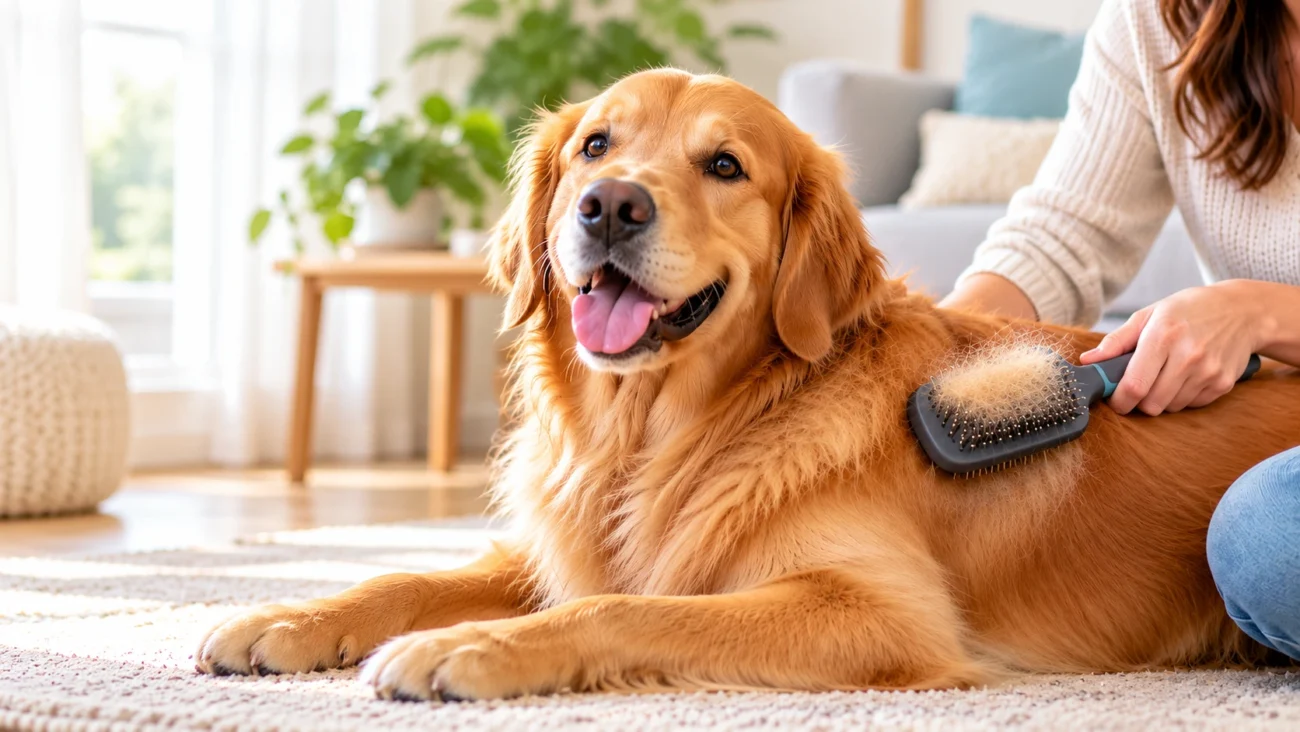
Brushing catches loose or detached hairs while they are still resting in the coat. Instead of dropping onto the sofa or scattering when your dog shakes, much of that hair ends up in the brush, comb, or grooming glove.
Dogs naturally grow and replace hair. Some release small amounts throughout the year; others lose more undercoat during seasonal changes. A brush does not turn off either process. It changes where loose hair is collected and can prevent dead undercoat from building up among healthy hairs.
The ASPCA’s dog grooming guidance makes the distinction clear: routine brushing can reduce hair around the home, but healthy shedding cannot be stopped entirely. Regular grooming also gives you a chance to notice tangles, irritation, or changes in the skin.
Expect the brush to collect more hair during a heavy seasonal shed. That alone does not mean brushing caused additional hair loss.
Which Dogs Benefit Most From Regular Brushing?
Nearly every coat benefits, but the results look different from dog to dog. Coat length, density, and texture matter.
Short, smooth coats
Dogs with smooth coats can leave surprisingly noticeable short hairs on fabric. A soft bristle brush or rubber grooming mitt lifts surface hair without demanding much force.
Thick double coats
Dogs with a dense undercoat, including many retrievers, shepherds, and northern breeds, may hold considerable loose hair beneath the outer coat. Working gently through small sections can make a larger difference during seasonal coat changes. If you need undercoat-specific technique, see how to brush a double-coated dog.
Long, silky, or curly coats
Some long and curly coats release less visible hair onto floors because loose strands stay caught in the surrounding hair. Brushing remains important: trapped strands can contribute to tangles and mats. Here, checking the coat with a suitable comb can matter as much as collecting shedding hair.
How Often Should You Brush to Control Shedding?
Start with the coat, not a rigid calendar. Many short-coated dogs do well with brushing once or twice weekly. Dense, long, or easily tangled coats often need several sessions weekly, and some need daily attention. During a heavy shed, short daily sessions may help collect hair before it spreads.
Watch what happens between sessions. If loose clumps reappear quickly or the undercoat feels packed, brush more often with a gentle, appropriate tool. If the skin becomes red or your dog starts avoiding contact, shorten sessions, reduce pressure, and reconsider the brush.
Daily light brushing is not the same as daily intensive deshedding. Bladed tools and deep undercoat rakes may be too aggressive when repeatedly used on the same areas. For a fuller schedule by coat type, use our guide on how often to brush your dog.
What Is the Safest Brushing Routine for Less Loose Fur?
The best routine removes hair efficiently without scraping skin, pulling at knots, or making the dog dread grooming. You do not need to brush until absolutely no hair comes out; with an actively shedding dog, that endpoint may never arrive.
- Check the skin and coat. Look for painful areas, redness, sores, parasites, mats, and burrs before starting. Skip injured skin.
- Choose a coat-appropriate tool. A rubber mitt suits many smooth coats, while a suitable slicker, pin brush, or undercoat tool may suit denser coats. Do not assume the strongest tool is best.
- Choose a calm starting point. Let your dog see the brush and begin on the shoulders or back, where handling is often easier.
- Use light, controlled strokes. Generally follow the direction of hair growth. On dense coats, part the hair into manageable sections rather than repeatedly brushing the top layer.
- Work across the body. Cover the back, sides, chest, hindquarters, and tail where comfortable. Be especially gentle near the belly, joints, ears, and sensitive areas.
- Remove collected fur frequently. Empty the brush so it continues picking up loose strands rather than pushing them through the coat.
- Stop while your dog is comfortable. Use a comb to check longer coats when appropriate, then reward your dog. Stop immediately if the skin becomes irritated or grooming causes pain.
For an illustrated, technique-focused explanation, follow the step-by-step dog brushing guide.
Practical Tip
Make grooming predictable: use the same comfortable spot, keep sessions short, and check how much loose fur accumulates over several days rather than judging one unusually hairy brushing session.
Which Brush Is Most Useful for Your Dog’s Coat?
A brush that matches the coat is usually more useful than an expensive all-purpose deshedding tool. These are starting points, not guarantees for every individual dog.
| Coat type | Tool to consider | Main caution |
|---|---|---|
| Short and smooth | Rubber grooming mitt or soft bristle brush | Avoid harsh scraping |
| Medium and dense | Appropriate slicker or pin brush | Check for hidden tangles |
| Double coat | Suitable undercoat rake or slicker | Do not overwork one spot |
| Long or curly | Pin or slicker brush plus comb | Do not brush only the surface |
Remove loose hair without scraping skin. If you cannot tell whether a tool is suitable for your dog’s coat, a professional groomer can demonstrate a safer option.
Why Is Your Dog Still Shedding After Brushing?
Continued shedding after a good brushing session is usually normal. Hair follicles do not all release hair at the same moment. Brushing collects what is loose now; other strands may naturally release later that day or week.
- Seasonal coat change: A dense undercoat can shed over an extended period, not all at once.
- Surface-only brushing: A brush may smooth the outer coat while leaving loose undercoat underneath.
- Tool mismatch: A soft finishing brush cannot always reach a thick coat, while a harsh tool can irritate a fine coat.
- New fur continues to release: A clean brush at the end of one session does not mean shedding has ended.
If ordinary brushing no longer removes loose undercoat effectively, targeted deshedding may be worth considering. Our separate guide explains how deshedding differs from routine brushing. Do not respond to continued hair loss by brushing harder or indefinitely.
What Brushing Mistakes Can Make Shedding Management Worse?
The most common mistake is trying to remove every last hair in one session. Repeated scraping, especially with a rigid or bladed tool, may irritate the skin or damage the coat without changing the underlying shedding cycle.
- Too much pressure: You should see loose hair collecting, not red skin or visible scratches.
- Forcing knots: Pulling through mats hurts and can injure the skin; tight mats may need professional help.
- Using a tool designed for another coat: Deep undercoat equipment is not a universal solution.
- Ignoring stress signals: Flinching, repeated turning away, growling, or yelping means the session should stop.
- Shaving a double coat as a shortcut: Shaving is not a reliable solution to natural shedding and can interfere with the coat’s normal protective function.
Less pressure and better coverage usually beat longer, more aggressive brushing.
When Should Heavy Shedding Be Checked by a Veterinarian?
Normal shedding usually leaves a reasonably even coat and healthy-looking skin. A sudden change, especially alongside irritation or hair loss in patches, deserves more attention than extra brushing.
Contact your veterinarian if you notice bald spots, persistent itching, scabs, redness, sores, obvious parasites, dull or brittle fur, or a sharp unexplained change in the coat. Problems such as allergies, parasites, infections, and some internal illnesses can cause abnormal hair loss. Brushing does not treat those conditions.
VCA Animal Hospitals’ guide to healthy skin and coat explains why coat appearance and grooming findings can be useful clues about overall health. Do not diagnose the cause from the amount of hair in your brush alone.
What Else Helps Keep Shedding Hair Under Control?
Brushing works best as part of a sensible coat-care and cleaning routine. Occasional dog-safe bathing can help loosen hair and debris, but frequent unnecessary baths may dry or irritate skin. Brush out manageable tangles before a bath and dry the coat properly afterward.
Wash bedding and vacuum high-traffic areas regularly. These tasks do not change how much your dog sheds, but they stop collected hair from spreading through the house again. If coat quality changes despite appropriate care, ask your veterinarian about skin health and nutrition rather than adding supplements without a clear need.
For dogs with unusually thick coats, a groomer may help remove loose undercoat safely. Think of that service as additional hair collection, not permanent shedding prevention.
Related Product
Dog grooming brushes for shedding
Compare rubber grooming mitts, slicker brushes, and other coat-appropriate tools that can help collect loose fur comfortably.
As an Amazon Associate, we earn from qualifying purchases.
Frequently Asked Questions
Does brushing help even if my dog has very short hair?
Yes. Short-coated dogs still release hair, and a rubber grooming mitt or soft bristle brush can collect loose strands before they reach fabrics. Use light pressure because skin is easier to irritate beneath a thin coat.
Can brushing make a dog appear to shed more?
Yes, temporarily. A brushing session may bring out a surprising amount of already-loose fur, especially during seasonal shedding. That does not automatically mean the brush increased the natural shedding rate. Stop if hairs seem to be pulled out painfully or the skin reddens.
Should I brush a shedding dog outside?
Outdoor brushing can help keep collected fur out of indoor rooms if your dog is comfortable and the weather is suitable. Collect and dispose of loose hair rather than leaving piles where wind can scatter them.
Can a puppy be brushed to reduce shedding?
Yes, provided you use a gentle brush suitable for the puppy’s coat and make the experience brief and positive. Early brushing is also useful handling practice. Avoid forceful deshedding tools on delicate skin.
What if my dog dislikes the brush?
Begin with the brush nearby, reward relaxed behavior, and try only one or two light strokes on an easy area. Increase slowly over several sessions. Sudden new resistance, pain, or skin tenderness calls for a closer check rather than forced grooming.
Will brushing eliminate dog hair allergies in the home?
No. Brushing may reduce loose fur and some dander in the environment, but dog allergies involve proteins found in dander, saliva, and other sources. Grooming alone cannot make a dog allergen-free, and brushing may stir up allergens during the session.
Conclusion
Brushing can make a real difference to the amount of loose fur you see at home, even though your dog’s natural shedding continues. Match the brush to the coat, work in gentle sections, and increase light brushing when more hair is coming loose. A comfortable, repeatable routine is better than trying to collect every strand in one sitting.
If shedding suddenly changes or comes with bald spots, itching, or irritated skin, do not simply brush more. Have your veterinarian check the cause. For ordinary shedding, consistency and the right technique are the useful starting points.


