
Quick Answer
To remove loose undercoat from a dog, start by checking the skin and clearing gentle tangles. Use an undercoat rake or suitable slicker brush to lift out dead fur in small sections. Brush with the direction of hair growth, apply light pressure, and stop if the skin becomes irritated. For more background, follow this dog deshedding guide.
7 Steps to Remove Loose Undercoat
- Check the coat: Look for loose fur, mats, redness, and sensitive skin.
- Choose the tool: Match the rake, brush, or comb to the coat’s length and density.
- Remove tangles: Gently loosen small knots before deeper brushing.
- Work in sections: Lift the outer fur and remove loose undercoat with short, gentle strokes.
- Protect sensitive areas: Reduce pressure around the belly, legs, ears, and tail.
- Check your progress: Stop when less loose hair comes away or your dog becomes uncomfortable.
- Finish gently: Use a finishing brush, inspect the skin, and reward your dog.
Finding soft clumps of fur on your floor can make you wonder whether your dog is shedding too much. I’ve found that understanding the difference between loose undercoat and healthy fur makes grooming advice much easier to follow.
In this guide, I’ll explain how to remove loose undercoat from a dog, which tools work best, and which common mistakes to avoid. You’ll also learn when heavy shedding needs professional attention.
What Is a Dog’s Undercoat?
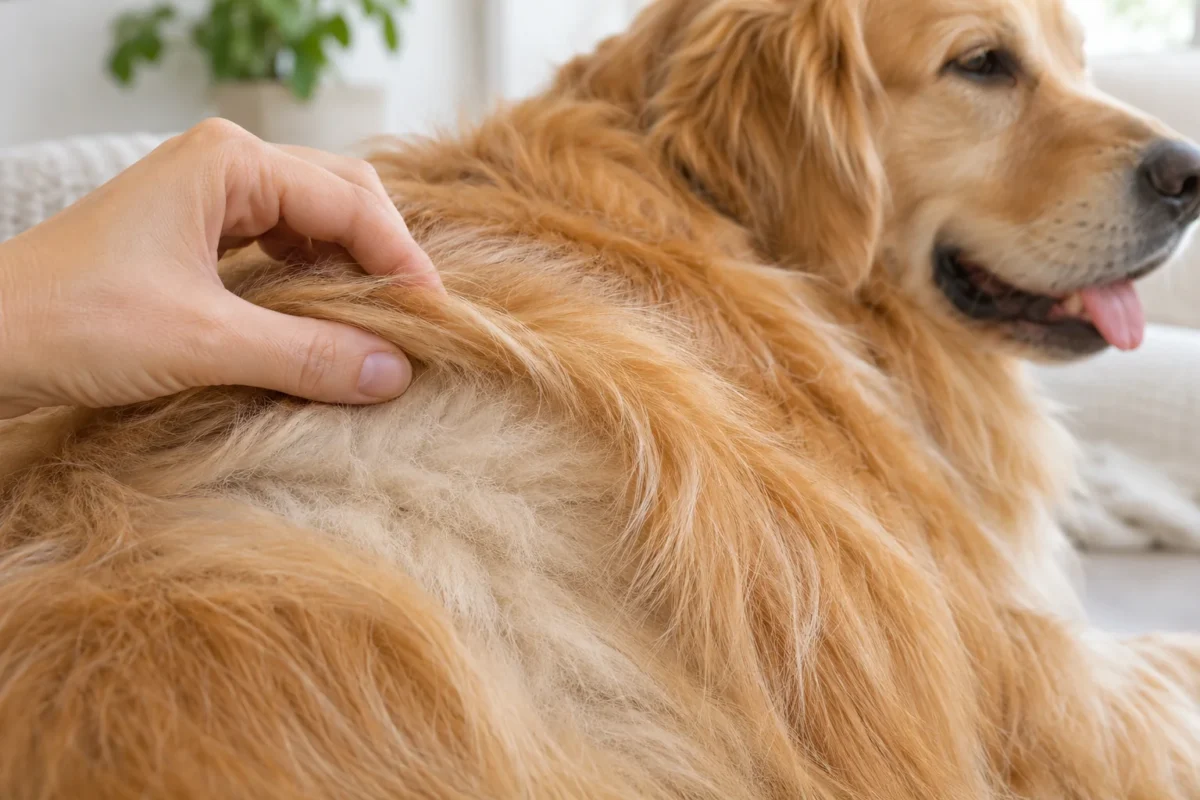
A dog’s undercoat is the soft, dense layer of hair beneath the longer protective outer coat. It provides insulation and works alongside the outer coat to help protect the skin.
Dogs with both layers are called double-coated dogs. Their undercoats often shed more heavily during seasonal changes.
What Is the Difference Between Undercoat and Topcoat?
The undercoat consists of softer, shorter hairs that provide insulation. The topcoat contains longer guard hairs that help protect against dirt, moisture, and environmental exposure.
Both layers matter. Removing loose undercoat is helpful, but stripping away healthy protective hair can damage the coat.
- Undercoat: Soft, dense fur that can shed heavily during coat changes.
- Topcoat: Longer, stronger guard hairs that protect the skin.
- Loose undercoat: Naturally released hair that may remain trapped beneath the outer coat.
- Compacted undercoat: Dense, tangled hair that can trap moisture and become difficult to remove.
Common double-coated breeds include Siberian Huskies, Golden Retrievers, German Shepherds, and Labrador Retrievers. Their coat lengths differ, so they don’t all need the same grooming tools.
The American Kennel Club explains these coat differences in its guide to double-coated dog breeds.
How Can You Tell If Your Dog Has Loose Undercoat?
Loose undercoat often appears as soft, fluffy hair that separates easily during gentle brushing. You may also notice small tufts sticking out of your dog’s coat.
Seasonal shedding is common in many double-coated breeds. However, unusual hair loss and irritated skin deserve closer attention.
Signs of Normal Loose Undercoat
- Soft tufts of fur appear around the hips, shoulders, or chest.
- Loose hair comes away easily with gentle brushing.
- Your dog’s skin looks normal beneath the coat.
- Shedding increases during a seasonal coat change.
- Your dog remains comfortable during grooming.
Signs That Shedding May Be Abnormal
- Bald spots or sharply thinning patches appear.
- The skin looks red, swollen, flaky, or irritated.
- Your dog scratches, licks, or bites certain areas repeatedly.
- There is an unusual odor, crusting, or discharge.
- Hair loss increases suddenly without an obvious seasonal cause.
If you notice these warning signs, contact your veterinarian rather than increasing brushing. Grooming alone cannot treat skin infections, parasites, allergies, or other medical causes of hair loss.
What Tools Do You Need to Remove Loose Dog Undercoat?
The best tools depend on your dog’s coat length, density, and skin sensitivity. A rake that works well on a thick Husky coat may not suit a short-coated dog.
I prefer choosing the gentlest tool that can reach the loose hair effectively. Stronger pressure isn’t a substitute for choosing the correct brush.
| Grooming Tool | Best Use | Main Advantage | Precaution |
|---|---|---|---|
| Undercoat rake | Medium to long, dense double coats | Reaches loose hair beneath the topcoat | Match tooth length to coat depth |
| Slicker brush | Medium and long coats | Collects loose hair and helps manage tangles | Avoid scraping delicate skin |
| Steel grooming comb | Checking tangles and finishing | Helps identify remaining knots | Never force it through mats |
| Rubber grooming mitt | Short, smooth coats | Gentle surface hair removal | Won’t reach deep, dense undercoat well |
| Blade-style deshedding tool | Compatible shedding coats | Collects substantial loose hair | Requires careful use to avoid coat damage |
Tool instructions also matter. Read the manufacturer’s coat recommendations before using any specialized deshedding tool.
The AKC’s dog grooming advice explains why brush selection should match the dog’s coat.
How to Remove Loose Undercoat From Dog Step by Step
Start with a dry, manageable coat and a calm dog. Work slowly, checking the skin and your dog’s body language throughout the session.
These seven steps offer a practical routine for maintaining most healthy double coats. Adjust the tools and session length to your dog’s individual needs.
Step 1: Inspect Your Dog’s Coat and Skin
Before brushing, use your fingers to separate the fur and examine the skin. Look for mats, redness, bumps, scabs, or areas that seem painful.
Pay extra attention to places where loose fur collects.
- Behind the ears
- Around the neck and shoulders
- Under the chest
- Behind the front legs
- Near the hips and thighs
- Around the base of the tail
If you find tight mats close to the skin, don’t pull at them. A professional groomer can help determine whether they can be removed safely.
Step 2: Choose a Brush That Matches the Coat
Choose a grooming tool based on coat type rather than the amount of hair on the floor. A long-toothed rake may be appropriate for a thick coat but uncomfortable on a thin one.
- Short double coat: Begin with a rubber grooming tool, gentle brush, or suitable short-coat shedding tool.
- Medium double coat: Use a compatible slicker brush and undercoat rake.
- Long double coat: Consider a long-pin slicker, wide-tooth comb, and suitable rake.
- Sensitive skin: Start with a gentle brush and ask your veterinarian or groomer for advice.
Test your chosen brush on a small area first. If your dog flinches or the skin becomes red, stop and reconsider the tool.
Step 3: Gently Remove Small Tangles
Use your fingers or a suitable comb to loosen manageable tangles before deshedding. Hold the hair near its base to reduce pulling on the skin.
Begin at the outer ends of tangled fur and gradually work inward. Never yank a brush through a knot.
For severe matting, professional help is safer than aggressive home brushing. Tight mats can hide irritated or damaged skin.
Step 4: Brush the Undercoat in Small Sections
Lift a small section of outer hair to expose the loose undercoat beneath it. Brush gently in the direction of hair growth, working through one section at a time.
Start around the shoulders and move toward the back and hindquarters. Keep each stroke short, controlled, and comfortable.
- Separate a small section of hair.
- Position the brush within the coat without pressing hard into the skin.
- Move the tool gently in the direction of hair growth.
- Remove collected fur from the brush.
- Repeat briefly before moving to the next section.
A useful practical check is how easily the brush moves. If you need substantial force, stop rather than pushing through resistance.
Your goal is to collect naturally loose hair. It isn’t to remove every strand of undercoat.
Step 5: Groom Sensitive Areas Carefully
The belly, groin, inner thighs, ears, and tail require extra care. These areas may have thinner skin or sensitive tangles.
Use a softer brush or comb if needed. Avoid repeatedly dragging a metal rake across the same spot.
- Behind the ears: Check carefully for small mats.
- Under the legs: Use shorter strokes and minimal pressure.
- Around the belly: Avoid scraping delicate skin.
- Near the tail: Support the hair and avoid pulling.
If your dog resists, give them a break. You can finish the remaining areas during another session.
Step 6: Check Whether Enough Loose Fur Has Been Removed
After working through the coat, inspect the areas you brushed. You’ll often notice that less loose hair comes away as the session progresses.
Don’t continue brushing just because more hair is available. Excessive brushing can irritate the skin and damage healthy coat fibers.
Stop when the coat feels manageable and your dog remains comfortable. Short, consistent sessions are generally preferable to one exhausting grooming session.
Step 7: Finish With a Gentle Brush and Reward
Use a soft finishing brush or suitable comb to collect remaining surface hair. Check that the coat lies naturally and that the skin looks comfortable.
Reward your dog with praise, a treat, or playtime. Positive experiences can make future grooming sessions easier.
Dispose of the collected fur, then clean and dry your grooming tools. Keep a simple record if your dog has recurring skin sensitivity.
How Often Should You Remove a Dog’s Loose Undercoat?
Most double-coated dogs benefit from regular brushing, but deeper undercoat removal depends on breed, coat density, and shedding activity. A dog blowing its coat may need more frequent gentle grooming than one shedding lightly.
The following schedule is a starting point, not a fixed rule.
| Coat Situation | Suggested Starting Routine | Main Goal |
|---|---|---|
| Light seasonal shedding | Brush 1–2 times weekly | Prevent loose hair buildup |
| Moderate double-coat shedding | Brush 2–3 times weekly | Manage undercoat accumulation |
| Heavy seasonal coat blow | Brief daily gentle brushing as tolerated | Collect released undercoat gradually |
| Sensitive or irritated skin | Pause deep deshedding and seek advice | Prevent further irritation |
These frequencies refer mainly to gentle maintenance, not daily use of aggressive shedding blades. Follow product instructions and adjust according to your dog’s comfort.
For a broader routine, see whether deshedding actually reduces shedding and what results owners can expect.
Should You Bathe a Dog Before Removing Loose Undercoat?
Bathing can help loosen dirt and shed hair, but it isn’t required before every undercoat-removal session. Many dogs can be groomed effectively with dry brushing alone.
If your dog needs a bath, remove manageable tangles first. Use dog-safe shampoo, rinse thoroughly, and dry the coat appropriately before finishing the grooming process.
When Can Bathing Help?
- When the coat is dirty or coated in outdoor debris.
- When loose fur remains trapped in a dense coat.
- When your grooming routine already includes a scheduled bath.
- When a professional groomer recommends a bath-and-dry deshedding treatment.
A properly used dog grooming dryer can help loosen shed hair in thick coats. However, high-velocity dryers are noisy and can distress some dogs.
Avoid directing strong airflow into the eyes, ears, nose, or sensitive areas. Seek professional help if you aren’t familiar with safe dryer handling.
Can You Remove Too Much Undercoat From a Dog?
Yes. Repeated scraping, excessive pressure, and inappropriate tools can irritate the skin or damage healthy hair.
Your dog needs an intact coat for protection. The aim is to remove released fur, not to thin the entire coat as much as possible.
Common Undercoat Removal Mistakes
- Using too much pressure: This can scrape or irritate skin.
- Brushing the same spot repeatedly: Excess passes can cause discomfort.
- Using the wrong rake: Teeth that are too long or sharp may be unsuitable.
- Pulling through mats: Tugging can be painful and may injure skin.
- Grooming irritated skin: Brushing can worsen existing inflammation.
- Ignoring body language: Panting, avoidance, and repeated flinching may signal stress.
- Shaving to control shedding: This removes protective coat layers rather than fixing normal hair loss.
For most double-coated breeds, shaving is not a routine shedding solution. The protective outer coat may regrow unevenly after clipping.
The AKC’s double-coat grooming recommendations offer more details about coat preservation and shaving concerns.
How Can You Reduce Loose Dog Undercoat Around the House?
Regular coat care helps collect loose fur before it spreads across furniture, floors, and clothing. It won’t permanently stop natural shedding.
I recommend treating grooming and household cleanup as two related habits. One manages your dog’s coat, while the other handles hair that has already fallen.
- Brush regularly: Maintain a consistent, coat-appropriate schedule.
- Use washable bedding: Wash dog blankets and bed covers as needed.
- Vacuum frequently: Focus on carpets, upholstery, and your dog’s favorite resting spots.
- Maintain a balanced diet: Ask your veterinarian about nutrition if the coat looks unusually dull.
- Provide parasite prevention: Follow your veterinarian’s recommended plan.
- Watch for skin changes: Treat unusual shedding as a possible health signal.
If shedding increases suddenly, don’t assume your dog simply needs more brushing. Changes in coat condition sometimes indicate a medical concern.
When Should You Get Professional Help for Undercoat Removal?
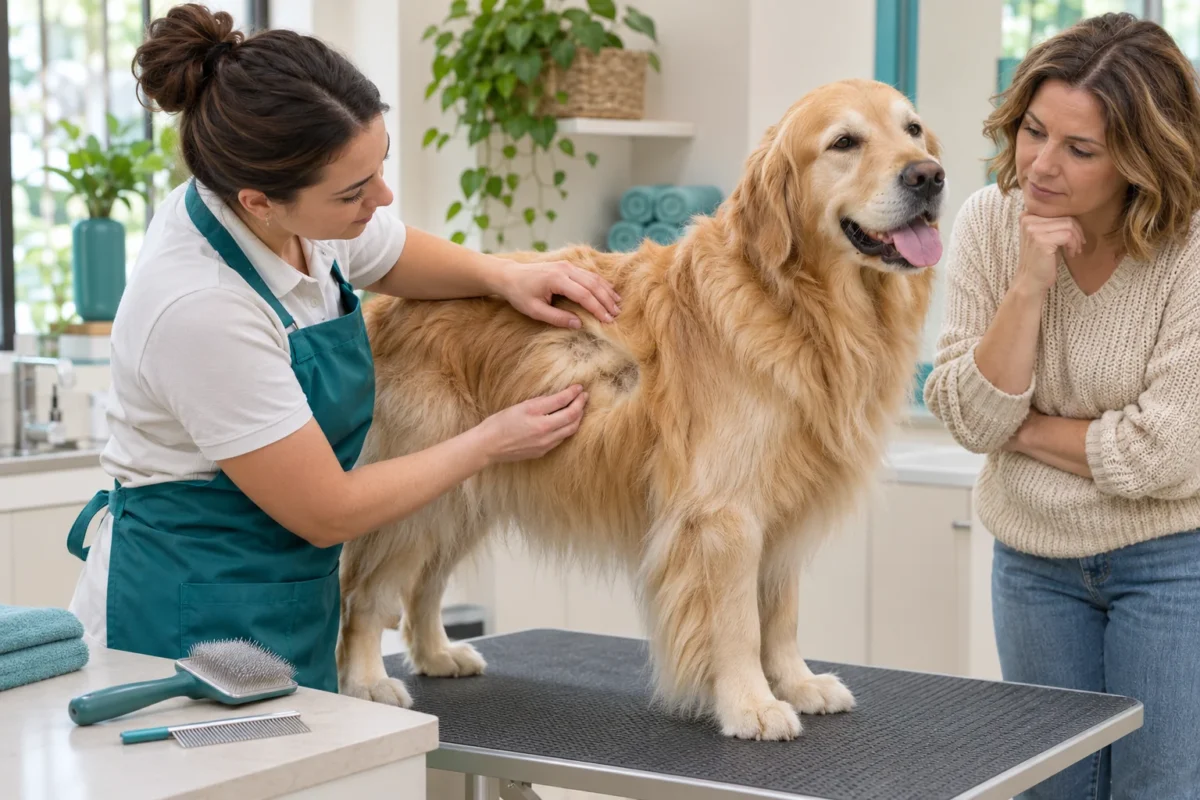
A professional groomer can help when your dog’s undercoat is severely compacted or difficult to manage safely. Veterinary care is more appropriate when hair loss occurs alongside skin symptoms.
When to Visit a Professional Groomer
- Your dog’s coat contains extensive tangles or packed undercoat.
- Home brushing repeatedly pulls or snags the hair.
- Your dog has an exceptionally dense coat that needs specialized equipment.
- You aren’t sure which grooming tools are safe.
- Your dog becomes too distressed for safe home grooming.
When to Contact a Veterinarian
- Your dog develops bald patches or sudden thinning.
- Skin becomes inflamed, painful, or infected.
- Scratching or licking becomes excessive.
- Shedding changes alongside other signs of illness.
- Your dog shows persistent discomfort during grooming.
Healthy shedding varies between dogs, but unusual hair loss deserves attention. Your veterinarian can assess whether the problem involves the skin, parasites, hormones, nutrition, or another cause.
See VCA Animal Hospitals’ skin and coat guidance for additional veterinary context.
Recommended Tools for Removing Loose Dog Undercoat
If you’re choosing grooming equipment, I’d prioritize coat compatibility, gentle handling, and easy cleaning. These three tools suit different grooming needs rather than representing a single best choice for every dog.
The ratings below are editorial suitability estimates, not verified customer review averages or hands-on test scores.
Affiliate disclosure: As an Amazon Associate, we may earn from qualifying purchases through eligible links, at no additional cost to you.
🏆 Best for Dense Undercoats
Safari by Coastal Dog Single Row Undercoat Rake
★★★★☆ 4.5/5 editorial suitability
This rake uses tapered pins designed for reaching into medium and long coats. I would consider this design for routine undercoat maintenance where a gentle rake is appropriate, rather than using aggressive pressure or a cutting tool.
🐕 Best for Routine Brushing
Safari by Coastal Dog Self-Cleaning Slicker Brush
★★★★☆ 4.3/5 editorial suitability
A slicker brush can collect loose surface hair and help maintain compatible medium or longer coats. I would favor this option for regular gentle brushing, provided the pins and brush size suit the dog.
✨ Best for Gentle Short-Coat Grooming
Safari by Coastal Soft Tip Curry Brush for Dogs
★★★★☆ 4.2/5 editorial suitability
This curry-style brush is intended for gentler coat maintenance and surface hair collection. I’d consider it for short-coated dogs that don’t need a deep rake, although it won’t remove packed undercoat from thick coats.
Frequently Asked Questions
What is the fastest safe way to remove a dog’s loose undercoat?
The most efficient safe approach is to use a coat-appropriate rake or slicker brush in small sections. Remove gentle tangles first, follow the direction of hair growth, and avoid excessive pressure. For thick coats, a professional bath-and-dry deshedding service may help remove substantial loose fur without prolonged home brushing.
Can I remove my dog’s undercoat with a regular brush?
Yes, some regular brushes can remove loose undercoat, especially when shedding is light. However, thick double coats may require a suitable rake or long-pin slicker to reach deeper hair. A soft surface brush alone may leave trapped undercoat behind. Always match the tool to your dog’s coat.
Should I remove all my dog’s undercoat?
No. Remove naturally loose or dead undercoat, not all undercoat hair. The undercoat and protective topcoat serve important functions, and aggressive removal can damage healthy fur or irritate the skin. Stop when brushing produces less loose hair, the coat feels manageable, or your dog shows discomfort.
Will removing loose undercoat stop my dog from shedding?
No. Undercoat removal helps collect hair that has already loosened, but it cannot stop the normal hair growth cycle. Dogs will continue shedding according to their breed, coat type, environment, and health. Regular gentle brushing can reduce the amount of loose fur that reaches furniture and floors.
Is it safe to remove loose undercoat every day?
Brief, gentle daily brushing may be appropriate during heavy seasonal shedding, depending on the dog’s coat and skin. However, daily aggressive rake or blade use can cause irritation and coat damage. Watch your dog’s comfort, follow the tool instructions, and reduce grooming intensity when shedding slows.
Final Takeaway: Remove Loose Undercoat Without Damaging the Coat
Learning how to remove loose undercoat from a dog starts with understanding the coat and choosing gentle tools. The safest routine focuses on released hair, small grooming sections, and protecting the skin.
Don’t judge success by how much fur you collect. A comfortable dog with a healthy, manageable coat is the better goal.
Start with short sessions, monitor your dog’s skin, and contact a professional whenever grooming becomes difficult. With consistent care, loose undercoat is much easier to manage at home.


